
Reviewed · ANNAPURNA CIRCUIT TREKS
Annapurna Circuit Trek with Tilicho Lake
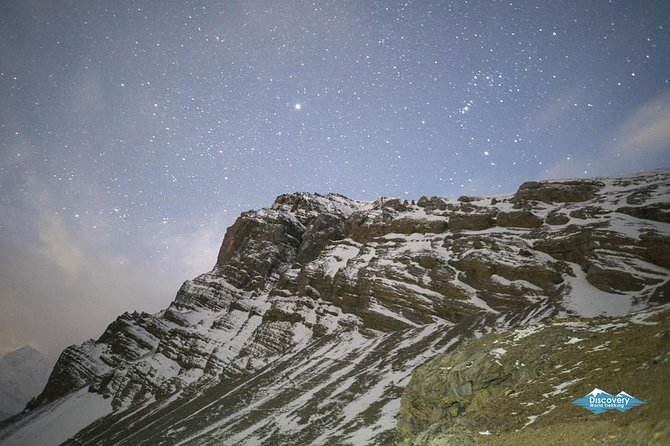
Tilicho Lake makes this trek feel unreal. This 16-day Annapurna Circuit plan takes you through pine forests, high desert valleys, and dramatic passes, with a detour to Tilicho Lake and a finish that includes Poon Hill sunrise views. You also get a practical version of the classic route, with planning handled by a licensed team and a guide who keeps you moving and oriented.
What I like most is the way the package handles the stuff that can slow you down. Meals, tea house lodging, and permits are included, so you can focus on the walking and the altitude. I also appreciate the human touch that comes through in reviews, with guides and porters such as Hari Gurung, Suresh, Dev, and others known for being friendly, supportive, and good at explaining the mountains and the villages along the way. One consideration: this is a high-altitude, challenging trek, with very early mornings like the Thorong La day, so you’ll want solid fitness and an easygoing attitude toward cold air and long walking days.
In This Review
- Key things to know before you go
- Why this Annapurna Circuit route works for active trekkers
- Price and what it really buys you at $1,093
- Kathmandu to Besishar and the first taste of mountain Nepal
- Days of forests, waterfalls, and first real views (Days 2 to 4)
- Manang acclimatization and the upper route to big mountain walls (Days 5 to 7)
- Tilicho base camp and the climb to Tilichol Lake (Days 8 to 9)
- Crossing the Thorong La approach: Khangsar monastery and Thorong Phedi (Days 10 to 11)
- Thorong La pass day, then Muktinath and Tatopani (Days 12 to 13)
- Ghorepani and Poon Hill sunrise: the closing chapter (Days 14 to 15)
- Comfort on the ground: tea houses, meals, and how the trip feels day to day
- Safety, fitness, and what to expect from the guide team
- Should you book this Annapurna Circuit with Tilicho Lake?
- FAQ
- How long is the Annapurna Circuit Trek with Tilicho Lake?
- Where does the trek start and end?
- What is the group size limit?
- Are permits included in the price?
- What kind of lodging and meals should I expect?
- Is local transport included?
- Do I get any help with rescue or difficult health situations?
- What happens if the trek is affected by poor weather?
Key things to know before you go
- Tilicho Lake timing: you start early to reduce the effects of afternoon wind and to make the steep climb feel more manageable
- A guided, small-group approach: you’ll walk with a licensed guide and a team of support staff, capped at 15 travelers
- Permits and TIMS covered: the package includes ACAP and TIMS fees, so you are not hunting paperwork mid-trip
- Acclimatization built into the schedule: there is intentional time around Manang before you push toward Thorong La
- Finish with sunrise views: the route ends with a climb to Poon Hill at 3,210m for Himalayan panoramas
- Hot springs after the hard days: Tatopani is included, giving you a deserved soak after crossing the big pass area
Why this Annapurna Circuit route works for active trekkers
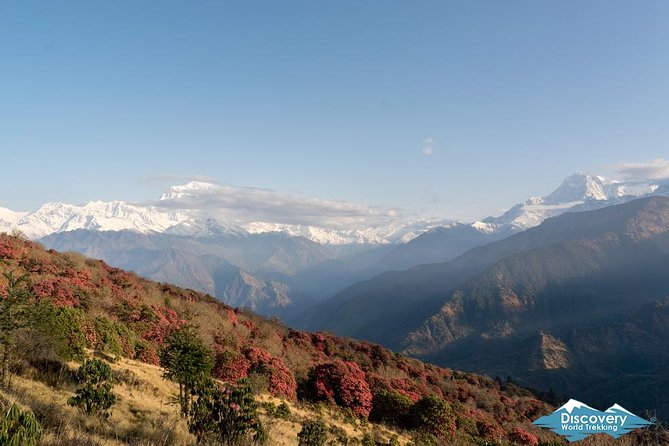
The Annapurna Circuit is famous for a reason, but Tilicho Lake is what turns this itinerary into a bigger story. You’re not just hiking from village to village. You’re also dealing with frequent altitude changes, colder air as you climb, and that “start early, move steady” rhythm that high passes demand.
This version is built for active travelers who want more than a checklist. You get a guided trek that reduces the stress of route-finding and logistics, and you spend enough time in key areas like Manang to help your body adjust before the hardest crossing. The result is a circuit that feels demanding, but not chaotic.
I also like that the trek includes cultural stops and viewpoints, not only high points. You’ll pass through monasteries and small settlements, and there are days that feel more like exploring than grinding, such as wandering around Manang and hiking to a lake area before the big pass.
More Treks in Kathmandu
- Everest Base Camp Trek – 14 Days
★ 5.0 · 1,499 reviews - Everest Base Camp Trek
★ 5.0 · 842 reviews - Everest Base Camp Trekking
★ 5.0 · 485 reviews
Price and what it really buys you at $1,093
At $1,093 for about 16 days, this package looks reasonable when you map it to what’s included. You’re not just buying a guide. You’re also getting:
- Accommodation and meals during the trek, using tea house or lodge style lodging with breakfast, lunch, and dinner included
- Permits for the Annapurna Conservation Area (ACAP) and the TIMS card fee
- Support staff costs covered, including guides and porters meals, insurance, salary, and lodging and transportation
- Ground transportation options, including transfers and return routing through Pokhara and Kathmandu
Where this becomes good value for many people is that it limits the “surprise bills” part of trekking. When permits, meals, and guide support are already handled, you can manage your money and energy better. It also reduces decision fatigue, which matters on long mountain trips.
The main tradeoff is that the package is structured. If you like total freedom to wander, linger, or change plans day-to-day, a guided schedule can feel less flexible. But for most people tackling Thorong La and Tilicho Lake, structure is a feature, not a bug.
Kathmandu to Besishar and the first taste of mountain Nepal
Your trek starts with a drive from Kathmandu, taking about 6 to 7 hours to reach the first trekking area around Besishar. This day is long in the car, but that’s normal on the Annapurna circuit style of itineraries. The upside is that you ease in with scenic river valleys, farms, and villages before your walking days become all-consuming.
A stop on Day 1 includes Sandup Choeding Gompa. It’s the kind of moment that helps you switch from city mindset to mountain mindset. Even if you only spend a short time there, it gives you context for how communities organize life around faith, weather, and seasons.
Practical tip: on this kind of ride, you’ll feel stiff later. Pack a light layer and be ready to loosen up as soon as you start walking, even if Day 1 feels more like travel than trekking.
Days of forests, waterfalls, and first real views (Days 2 to 4)
On Day 2, you begin the trekking proper with a suspension bridge crossing, then climb into the Manang region area around the village named Tal. The itinerary mentions waterfalls gathering into a river through sandy beaches, and that combination of bridge energy plus water sounds is a nice way to get your attention on the environment.
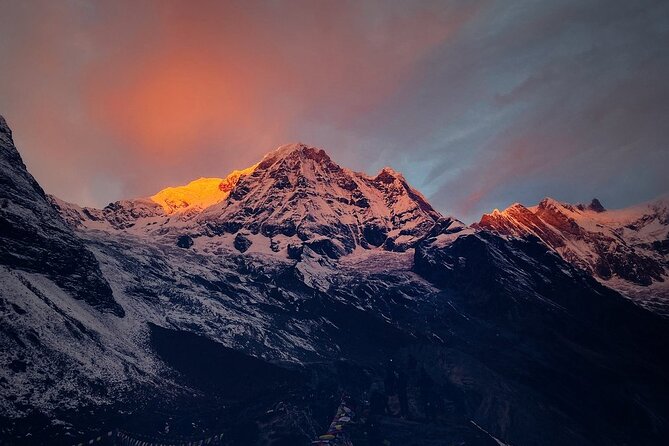
Day 3 and Day 4 build altitude gradually while giving you strong visual payoffs. You’ll trek through forest with pine, fir, oak, and maple, moving alongside a river toward Chame, the district headquarters of Manang. Day 4 includes a steep and narrow valley and a first major viewpoint moment at Paungda Danda, where you also catch clear views of Annapurna II and Pisang Peak.
What makes these days valuable is that they balance effort and reward. You’re not just climbing. You’re collecting those first big glimpses that make the higher days feel worth it. The drawback is that these early days can trick you into thinking the trek is always like this. It isn’t. Your best strategy is to keep a steady pace and save energy for the colder and drier air later.
More Annapurna Circuit departures:
- Annapurna Circuit Trek
★ 5.0 · 94 reviews - Annapurna Circuit Trek
★ 5.0 · 67 reviews - Annapurna Circuit Trek
★ 5.0 · 49 reviews - Annapurna Circuit Trek
★ 5.0 · 46 reviews
Manang acclimatization and the upper route to big mountain walls (Days 5 to 7)
Day 5 leans into higher-elevation scenery. You go on an upper trail through upper Pisang via Geru, with outstanding views named in the plan, including north face Annapurna II, Annapurna III, Annapurna IV, Gangapurna, Tilicho, and Pisang Peak. The air turns colder, drier, and harsher as you ascend, which is your cue that acclimatization days matter.
Then Day 6 gives you a classic acclimatization buffer. Instead of pushing straight to the pass area, you explore Manang and hike to Gangapurna Lake and base camp. You’ll spend time admiring peaks like Annapurna III, Tilicho, Pisang, and Chulu Peaks, and then roam around Manang village and monasteries.
Day 7 is described as a little easier, using an upper route that follows down to a river and through conifer forests. You cross to Khangsar, described as a Tibetan settlement, giving you a shift in feel as you move deeper into the higher terrain.
Why I think this scheduling is smart: it helps your body adjust while keeping your mind engaged. You’re not bored on “easy days,” but you also aren’t asking your lungs to do everything at once.
Tilicho base camp and the climb to Tilichol Lake (Days 8 to 9)
Day 8 is a transition day toward Tilicho. The route mentions an easy path through a landslides area with impressive rock formations, then trekking up to Tilicho base camp. This sets up your main Tilicho moment by letting you see what kind of terrain you’ll be handling.
Day 9 is the highlight day: you start early to avoid afternoon wind, then make a steep, consistent climb of about 2 to 3 hours to reach Tilichol Lake. The plan calls it the highest lake in the world and also refers to it as the Great Ice Lake, attributed to the leader of a French expedition team. Even if you don’t care about the expedition history, the effect of that setting is what matters: cold air, high views, and a sense of being off the main trail into something rare.
Possible drawback: Tilicho Lake is not a “quick stop.” Even with a guide, you are still dealing with altitude and a steep climb. If you go into the day thinking it will be casual, you might get frustrated. If you go in with patience and pace, it tends to feel like a real accomplishment.
Crossing the Thorong La approach: Khangsar monastery and Thorong Phedi (Days 10 to 11)
Day 10 is about descent and reorientation. You descend to the uninhabited Khangsar village, pass Tare gumba, described as a thousand-year-old monastery, and then follow a route down through the Thorong Khola valley. You cross a bridge, go across a river, and hike up toward a plateau area (the plan mentions yak kharka).
This kind of day can feel less dramatic than Tilicho, but it’s important. You’re positioning yourself for the biggest early morning in the trip. Those monastery and route moments also help you stay mentally awake when the terrain becomes repetitive.
Day 11 brings you to Thorong Phedi, described as a small busy settlement with amazing views of multiple peaks, including Mt. Gundang, Mt. Syagang, Thorung Peak, and Mt. Khatungkan. This is where you’ll likely notice how quickly “the trip” shifts into “the pass day.”
Practical tip: treat the evening here like prep time. Eat well, sleep as best you can, and don’t overplan your head. Tomorrow is an early one.
Thorong La pass day, then Muktinath and Tatopani (Days 12 to 13)
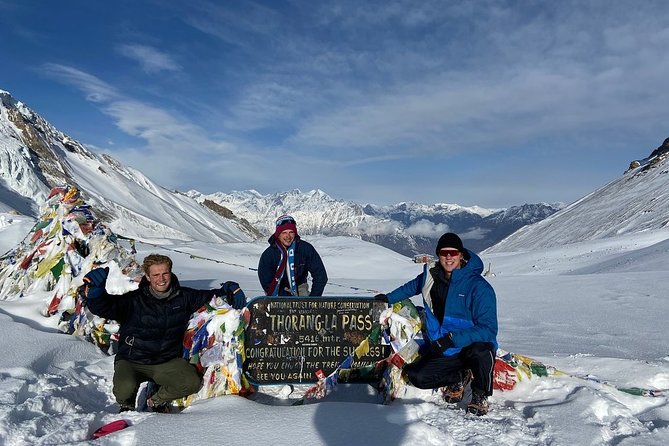
Day 12 is the toughest part of the trek. You wake up at 3:00 am and cross Thorong La, one of the highest passes in the world and the highest point of the trek. The plan doesn’t sugarcoat it, and you should go in ready for pushing through cold, exertion, and a long day.
One reason guided trips matter on pass days is that logistics and timing become the difference between calm and chaos. Here, your guide helps you keep moving with the right pace, the right priorities, and the right cues for altitude response.
Then Day 13 brings emotional relief and physical recovery. You visit Muktinath Temple, then take a car ride to Tatopani, famous for natural hot springs. This is a huge morale checkpoint. After a pass day that asks for everything, soaking in hot water helps your body bounce back, and it helps your mind shift gears into “enjoy the last stretch.”
Ghorepani and Poon Hill sunrise: the closing chapter (Days 14 to 15)
Day 14 walks you toward Ghorepani through villages of Sikha and Chitre, mentioned as ethnic Thakali communities. You move through terraced farmland with mountains around you, then pass forests filled with rhododendron, birch, and magnolia. You stop in Ghorepani and continue the rhythm of waking up, eating, and walking, but with the comfort that you’re nearing the final viewpoint climax.
Day 15 is the Poon Hill sunrise day. You ascend to Poon Hill at 3,210m early to view sunrise over a panorama described in the plan: the whole Annapurna and Dhaulagiri massif, plus Machhapuchhre (Fishtail), Manaslu, and surrounding rice terraces. It’s a favorite spot for photographers, but even if you never care about photos, sunrise from Poon Hill is one of those “everyone gets it” moments.
After that, you visit Poon Hill, then continue down to the next stop before your final travel day.
Comfort on the ground: tea houses, meals, and how the trip feels day to day
This tour keeps things practical with tea house or lodge accommodation during the trek, with breakfast, lunch, and dinner included. That matters because it removes the constant question of where you’ll eat and what you’ll pay.
In reviews, one big positive theme is how the guide and porters treat the group as people, not cargo. Names that stand out include Hari Gurung, Suresh, Dev, and porters such as Damar, Sangkar, Rupesh, Surya, Bikesh, Asis, and Monis. Reviews also mention porters being relaxed and supportive, and even helping morale with small extras like fruit platters in the evenings.
That doesn’t mean every lodge experience will be identical, but it does suggest the team you get can influence how the trek feels. Good communication, helpful mountain context, and genuine friendliness can turn long days into something you remember for the right reasons.
Safety, fitness, and what to expect from the guide team
This trek is rated for active travelers with a moderate physical fitness level requirement. That’s your best clue: it’s not a gentle walk, even if you get easier days.
You’ll rely on your guide for route and timing, especially around high-altitude sections. The plan explicitly emphasizes trekking safely with a guide to reduce the chance of getting lost. It also includes assistance in arranging rescue operation in complicated health situations, and it covers guide and porter insurance and staffing costs.
Altitude reality check: the schedule includes acclimatization support around Manang and a structured approach before Thorong La. Still, you need to listen to your body, keep pace steady, and take breathing seriously. If you rush early, you usually pay later.
Fit best if you:
- Enjoy steady multi-day hiking and can handle cold mornings
- Want a guided trek with the logistics handled
- Want the added big moments of Tilicho Lake and Thorong La, plus an easy-to-understand finish at Poon Hill
Less ideal if you:
- Want a fully flexible itinerary with no early mornings
- Struggle with steep climbs or altitude without frequent breaks
- Prefer not to wake up before sunrise on multiple days
Should you book this Annapurna Circuit with Tilicho Lake?
I’d say yes if you want the classic Annapurna Circuit experience, plus Tilicho Lake, without trying to micromanage permits, meals, and the daily logistics yourself. The combination of ACAP and TIMS covered, meals and tea house lodging included, and a licensed guide team is exactly what makes a huge difference on routes where weather and timing matter.
You should think twice if you know you dislike early starts, steep climbs, or cold air once you climb. Also consider that the experience requires good weather, so there is a dependence on conditions for the dates to work as planned.
If you book, do it with the mindset of a careful climber: steady pace, layers ready, and trust the guide’s rhythm. The payoff is a trek that mixes remote lake drama, major pass achievement, and end-of-trip sunrise views that feel like a proper sendoff.
FAQ
How long is the Annapurna Circuit Trek with Tilicho Lake?
It’s approximately 16 days.
Where does the trek start and end?
It starts in the Kathmandu area and finishes back in Kathmandu. Day 16 is the drive back to Kathmandu.
What is the group size limit?
The maximum group size is 15 travelers.
Are permits included in the price?
Yes. The package includes the Annapurna Conservation Area Permit (ACAP) fee and the TIMS card fee.
What kind of lodging and meals should I expect?
During the trek, you stay in tea house or lodge accommodation with breakfast, lunch, and dinner included. There is also one night hotel accommodation in Pokhara with breakfast.
Is local transport included?
Yes. Local overland transport is included, including public transportation from Muktinath to Tatopani, and a tourist bus from Pokhara to Kathmandu.
Do I get any help with rescue or difficult health situations?
Yes. The package includes assistance in arranging rescue operation in case of complicated health condition.
What happens if the trek is affected by poor weather?
The experience requires good weather. If it’s canceled due to poor weather, you’ll be offered a different date or a full refund.
More Tilicho Lake treks
- Annapurna Circuit with Tilicho Lake
★ 5.0 · 9 reviews - Annapurna Tilicho Lake Trek
★ 5.0 · 5 reviews - Annapurna Circuit Trek With Tilicho Lake :Best Trek in Nepal
★ 5.0 · 4 reviews
Latest additions near Kathmandu
- White Water River Rafting – 1 Day★ 4.3 · 3 reviews
- Traditional Momo Making Class★ 5.0 · 10 reviews
- Kathmandu to Pokhara Premium sofa bus ticket★ 4.0 · 17 reviews
- Ghorepani Poon Hill Trek★ 5.0 · 16 reviews
- Amazing 1 Day Trekking Experience in Kathmandu Nepal★ 5.0 · 24 reviews
- Ghorepani Poonhill Trek★ 5.0 · 5 reviews
- Walking tour of real Kathmandu through back streets.★ 5.0 · 3 reviews
- Wildlife Adventure in Chitwan Nepal★ 4.0 · 4 reviews
Annapurna Circuit Treks, compared.
Browse the lists this tour appears in