
Reviewed · ANNAPURNA CIRCUIT TREKS
Annapurna Circuit with Tilicho Lake
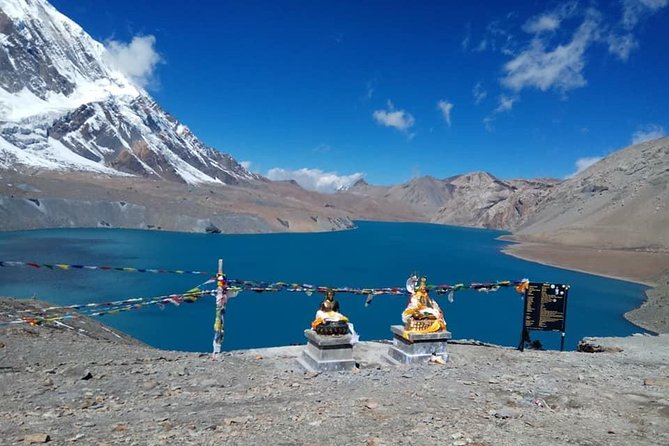
Tilicho Lake turns the trek up a notch. This Annapurna Circuit route adds Tilicho Lake and then crosses Thorong La, with Poon Hill sunrise views to close the loop. You get big Nepal variety in one go, from green valleys and villages to high, cold air and serious passes.
What I like most is how the trip is set up for people who want structure without feeling rushed. You travel with an experienced, English-speaking guide team, plus a porter service (the plan is 2 trekkers to 1 porter), and the staff bring a medical kit. I also like that your core costs are wrapped in, with teahouse lodging and all trek meals included, and 3-star hotels with breakfast in Kathmandu and Pokhara.
One drawback to consider is the altitude workload. You are dealing with long days, big elevation changes, and an early wake-up for the pass day, so you’ll need a smart pace and realistic expectations about energy.
In This Review
- Key highlights to know before you go
- Why this Annapurna Circuit route is more than a standard trek
- Price and what $1,599 buys you in real trekking terms
- Kathmandu start: Thamel hotels and a practical pre-trek setup
- Days 3 to 6: Drive to Syange, then step into Manang territory
- Days 7 to 9: Upper Pisang, Barge Monastery, and acclimatization in Manang
- Tilicho days (Days 10 to 11): From Tilicho Base Camp up to the highest lake day
- Days 12 to 13: Rejoining the main circuit toward Thorong Phedi
- Thorong La crossing (Day 14): Early start, cold air, and that pass panorama
- Muktinath to Tatopani (Days 15): Temples and hot springs as your recovery tool
- Ghorepani and Poon Hill sunrise (Days 16 to 17): A classic view, done the right way
- Returning to Kathmandu: Pokhara reset and departure day
- Guides, porters, and the small things that actually change your trip
- What your body needs: altitude pacing that matches this itinerary
- Who should book this trek, and who should think twice
- Should you book this Annapurna Circuit with Tilicho Lake?
Key highlights to know before you go
- Tilicho Lake (4,949m): The high-water day that turns this trek into something extra.
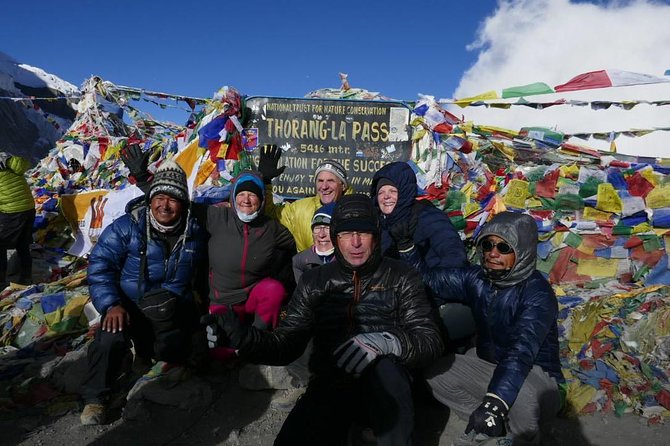
- Thorong La crossing (5,416m): A true high pass objective, done in the safer early schedule.
- Manang acclimatization support: Optional short hikes and an AMS briefing opportunity during your stay.
- Poon Hill sunrise (3,210m): Classic viewpoint timing for Annapurna and Dhaulagiri views.
- Teahouse trek comfort plan: Meals included and teahouse stops that keep the route practical.
- Guide leadership examples: You’ll see a consistent approach from leaders like Bishnu and Sanam Sherpa, plus friendly guidance styles such as Ganesh.
Why this Annapurna Circuit route is more than a standard trek
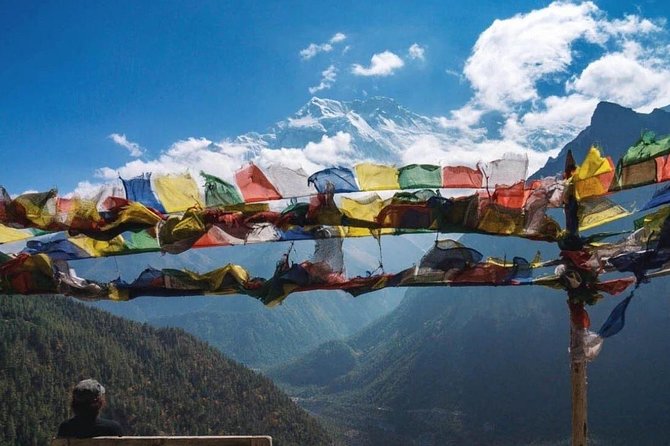
The Annapurna Circuit is already a legend for a reason, but the hook here is simple: you do the circuit rhythm, then you detour west to Tilicho Lake and come back to rejoin the main trail for Thorong La. That means you get the classic valley-to-pass arc of the Annapurnas, plus the rare sight of trekking up to what’s described as the world’s highest lake.
For most people, that mix is the whole point. You do not just hike between villages. You see the vegetation shift, the air get drier and colder as you climb, and the mountains keep changing their character as light moves across them.
And you also get a clean finish. After Muktinath and Tatopani, the trek drops into the warmer village network before you climb to Ghorepani and finally do Poon Hill for sunrise. It is the kind of structure that feels like a complete story, not just an open-ended hike.
More Annapurna Circuit departures:
- Annapurna Circuit Trek with Tilicho Lake
★ 5.0 · 368 reviews - Annapurna Circuit Trek
★ 5.0 · 94 reviews - Annapurna Circuit Trek
★ 5.0 · 67 reviews
Price and what $1,599 buys you in real trekking terms
At $1,599 per person for about 19 days, the best way to judge value is not the number, it’s what’s included that would otherwise cost you time, stress, or both.
This package covers:
- Airport pickup and drop-offs in private vehicle
- 3-star hotels in Kathmandu and Pokhara with breakfast
- Teahouse accommodation during the trek
- All meals on trek days (breakfast, lunch, dinner)
- Most ground transportation as per the route
- Guided Kathmandu city tour by private vehicle
- An English-speaking, government-licensed guide team plus assistant leadership
- Porter service (2 trekkers per 1 porter)
- Permits (ACAP and TIMS) and paperwork
- A medical kit carried by your trek leader
- Taxes included
What that means for you: when the hike turns hard, you are not also trying to coordinate meals, logistics, permits, and transport. You can focus on altitude management and pacing. That is usually where budget trekking packages break down.
What is not included is also important:
- Nepalese visa, international flights, and travel or rescue insurance
- Tips for guide and porter and driver
- Extra nights if your schedule changes
- Personal expenses like phone calls, battery recharge, bottle water, and shower costs (if you want them)
If you’re the type who hates last-minute math, this price structure is a big deal.
Kathmandu start: Thamel hotels and a practical pre-trek setup
You land in Kathmandu, then you get transferred to a hotel in Thamel for the first night. On day two you do a city tour that hits the major spiritual highlights: Boudhanath Stupa, Pashupatinath Temple, Patan Darbar Square, and Swayambhunath (Monkey Temple), with that famous hilltop view over Kathmandu.
After sightseeing, you get a pre-trip discussion where you meet your trek leader and team. This matters because it’s not just small talk. It’s your chance to ask direct questions about what’s next, and it sets expectations for the trekking rhythm.
If you want an easy win, use this day to rest, sort your gear, and keep hydration in mind. You’re heading into high altitude soon, and Kathmandu can still make you feel fresh while quietly draining your energy.
Days 3 to 6: Drive to Syange, then step into Manang territory
The long drive from Kathmandu to Syange takes about 8 hours, with countryside views along the way. It’s a big travel day, but it’s also your transition from city pace to trekking pace.
From Syange you trek to Dharapani. This leg is marked by farmland walking and bridge crossings, and you enter Manang district after passing a large bridge near Tal. You also move through villages like Kodo and see waterfalls along the trail. This is the part where the route still feels human-sized. You’re warming up your legs while getting your first sense of the mountain valley layout.
Then you head from Dharapani to Chame, and that’s where the scenery starts getting more dramatic. You walk through forests, with pine, fir, oak, and maple trees near the river, and you come across a small hot springs stop. Even if you keep it short, it’s a morale booster on a day that includes some steep forested ridges and landslide sections.
The next leg to Pisang ramps up the viewpoint energy. You pass a rock face called Paungda Danda and get strong views toward Annapurna II and Pisang Peak. This is also when your breathing changes slightly as you keep gaining altitude.
More Tilicho Lake treks:
- Annapurna Tilicho Lake Trek
★ 5.0 · 5 reviews - Annapurna Circuit Trek With Tilicho Lake :Best Trek in Nepal
★ 5.0 · 4 reviews
Days 7 to 9: Upper Pisang, Barge Monastery, and acclimatization in Manang
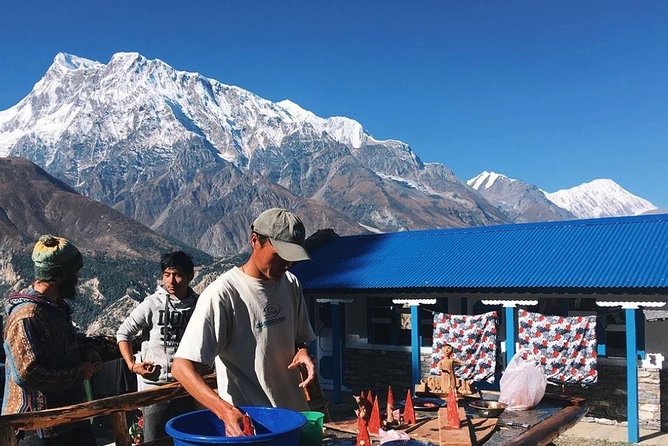
From Pisang to Manang, you choose the upper route via Upper Pisang and Geru. The trade-off is effort for views, and the payoff is your first strong look at the north faces and a better sense of the bigger mountain walls ahead.
You also get a short cultural moment with a visit to Barge Monastery, described as the biggest in Manang District. It’s not a long stop, but it breaks up the constant attention you’ll give to terrain and altitude.
The next big deal is acclimatization in Manang. This tour gives you a dedicated day to rest strategically, not just sit. You can hike to Gangapurna Lake (or Bhojo Gumba), and you can also visit the Himalayan Rescue Association in Vraga village for a briefing about acute mountain sickness (AMS), including symptoms and prevention.
That AMS briefing is one of the most practical inclusions on the whole trip. It turns altitude from a scary headline into a checklist you understand.
Then day nine moves toward Siri Kharka (4,060m). The walking includes a river crossing and conifer forest, then you climb toward Siri Kharka with Gungang Himal and Mt. Chulu in the backdrop. This is a good reminder: you’ll often feel tired more from sustained effort than from any one brutal climb.
Tilicho days (Days 10 to 11): From Tilicho Base Camp up to the highest lake day
Day ten takes you from Siri Kharka to Tilicho Base Camp (4,140m). The trail isn’t described as super steep, but it can still exhaust you because it runs along narrow paths through loose scree and landslide areas. This is one of those routes where careful foot placement matters more than speed.
Day eleven is the payoff day. You start early to avoid afternoon wind, then climb for 2 to 3 hours to reach Tilicho Lake at 4,949m. The description notes it as the world’s highest lake and also refers to it as the Great Ice Lake. When you reach it, you spend time there, then return the same way back to Siri Kharka.
What I think makes this day so memorable for most people is the contrast. You spend the morning working, the air gets sharper, and then you’re standing by a high glacial lake experience that feels removed from everything else you’ve seen in Nepal.
Days 12 to 13: Rejoining the main circuit toward Thorong Phedi
After Tilicho, day twelve brings a descent and a move through places that feel quieter and more seasonal. You descend toward the uninhabited Khangsar area, pass Tare Gumba (described as a thousand-year-old monastery), and then follow the trail out toward the Thorong Khola valley.
You hike to Yak Kharka, and from there you can see Annapurna ranges and peaks, and you might spot wildlife like bharal (blue sheep). The route also mentions the chance of seeing a snow leopard, but that’s naturally a luck factor, not a plan.
Day thirteen climbs toward Thorong Phedi (the last staging area before the pass). You’ll see Mt. Gundang, Mt. Syagang, Thorung Peak, and Mt. Khatungkan along the way. This is also where the mood often changes in the group. You’re close enough to Thorong La now that the pass day stops being abstract.
The practical takeaway: use this day to pack for the next morning. Layers, gloves, and a plan for wind matter more than you think.
Thorong La crossing (Day 14): Early start, cold air, and that pass panorama
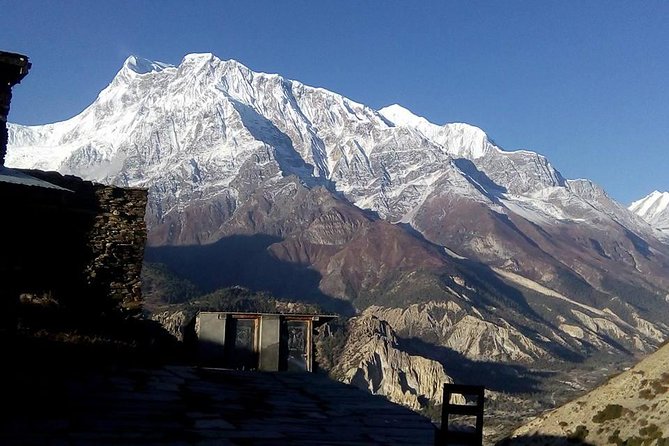
Day fourteen is the big objective. You wake up around 3:00am and hike up to Thorong La at 5,416m, then descend all the way to Muktinath (3,800m).
The tour description is honest about the feeling: icy air, high altitude, and a push you must make. The reward is a panorama of Himalayan peaks stretching northward toward Tibet, and a view of main Annapurna peaks in the back.
Also, notice the direction detail. The pass is crossed from east to west (Manang to Muktinath), described as the easier and safer direction for this tour. That’s a small logistical point, but it can matter on route planning.
When you reach Muktinath, you overnight there. It helps that your legs are already at maximum challenge on the pass day. The days afterward focus on culture and recovery rather than another immediate high objective.
Muktinath to Tatopani (Days 15): Temples and hot springs as your recovery tool
On day fifteen you visit Muktinath Temple, sacred for both Hindus and Buddhists. The tour notes the Tibetan name Chumig Gyatsa, meaning hundred waters.
Then you continue by public transportation to Tatopani. The key reason to care about Tatopani is simple: it’s famous for natural hot springs. After Thorong La, a soak is not a luxury. It’s a reset button for tired muscles and stiff joints.
This is also a mental shift day. You go from one of the toughest physical moments of the trek into a place where the trail has less drama and you can breathe again.
Ghorepani and Poon Hill sunrise (Days 16 to 17): A classic view, done the right way
Day sixteen climbs from Tatopani to Ghorepani (2,850m). The trail goes through terraced farmland and villages like Shikha and Chitre, and then into forests described with rhododendron. When rhododendrons are in bloom, those sections can look almost like someone turned up the color settings.
Day seventeen is your Poon Hill sunrise plan. You go early to Poon Hill (3,210m) for sunrise over the Annapurna and Dhaulagiri massif, and you can also see peaks like Machhapuchhre (Fishtail) and Manaslu. After the sunrise and views, you trek down toward Nayapul, then drive to Pokhara.
If you’re trying to understand why Poon Hill is so popular, it’s this: it’s a viewpoint day that feels achievable after a big route. It lets you see a huge portion of the Himalayan panorama without making you fight through another technical altitude wall.
Returning to Kathmandu: Pokhara reset and departure day
Day eighteen is a drive from Pokhara back to Kathmandu. Day nineteen is your final transfer to Tribhuvan International Airport for your onward flight.
Even though you’re not trekking here, it still helps to plan your energy. After days of being outdoors and climbing, long car hours can feel heavier than expected. Keep snacks, hydrate, and try to avoid the temptation to rush through souvenir shopping on an empty tank.
Guides, porters, and the small things that actually change your trip
This trip is built around a guide team, assistant leadership, and porter support. That matters for two reasons.
First, it reduces decision fatigue. You have route structure, meal rhythm, and a plan for the hardest days. Second, it adds safety thinking. A government-licensed trek leader and a medical kit carried by the leader is not a guarantee against altitude issues, but it is part of a sensible system.
In the real world, leadership styles vary by person. I’ve seen examples of that support in past departures, including organizers and leaders like Bishnu, plus guides such as Sanam Sherpa, who were described as adapting the trekking to the group’s needs. Another guide name that came up is Ganesh, praised for being friendly and guiding well through the route.
You should still come prepared to hike at your own pace, but having a leader who notices how your body is doing makes a real difference.
What your body needs: altitude pacing that matches this itinerary
This route includes multiple altitude anchors: Manang at around 3,500m, Siri Kharka around 4,060m, Tilicho Base Camp 4,140m, Tilicho Lake 4,949m, then Yak Kharka around 4,040m, Thorong Phedi around 4,420m, and the pass at 5,416m.
That means the most important skill is not fitness alone. It’s pacing and staying calm when the air feels thin. The tour even gives you an acclimatization day in Manang, plus an optional AMS briefing. Use that, not just as paperwork, but as a reason to slow down and check in with yourself daily.
A simple mindset helps: treat every ascent as partly training, not purely conquest. The goal is finishing well.
Who should book this trek, and who should think twice
This is a strong match if:
- You want a classic Annapurna Circuit experience plus a rare Tilicho Lake detour
- You’re comfortable with teahouse trekking and want meals handled
- You can handle early starts, including the pass day around 3:00am
- You want a guided, permit-managed trek rather than self-planning
Think twice if:
- You’re very altitude-sensitive or cannot commit to smart pacing
- You hate long travel days like the drive to Syange and the long return drives
- You want a totally relaxed itinerary, because this route is built around climbing and fixed staging towns
Should you book this Annapurna Circuit with Tilicho Lake?
If your dream includes both circuit vibes and the one-off Tilicho Lake summit feeling, this is an efficient way to get it. The value is in the structure: meals, lodging, permits, and guide leadership are covered, which means you spend your effort on the trail, not on coordinating logistics.
Book it if you are willing to take altitude seriously, you can hike for long stretches, and you’re excited by Thorong La as a real objective. Skip it if you need a low-stress trip with minimal climbing, because this one is high, early, and earned.
Latest additions near Kathmandu
- White Water River Rafting – 1 Day★ 4.3 · 3 reviews
- Traditional Momo Making Class★ 5.0 · 10 reviews
- Kathmandu to Pokhara Premium sofa bus ticket★ 4.0 · 17 reviews
- Ghorepani Poon Hill Trek★ 5.0 · 16 reviews
- Amazing 1 Day Trekking Experience in Kathmandu Nepal★ 5.0 · 24 reviews
- Ghorepani Poonhill Trek★ 5.0 · 5 reviews
- Walking tour of real Kathmandu through back streets.★ 5.0 · 3 reviews
- Wildlife Adventure in Chitwan Nepal★ 4.0 · 4 reviews
Annapurna Circuit Treks, compared.
Browse the lists this tour appears in