
Reviewed · POON HILL TREKS
Ghorepani Poonhill Trek
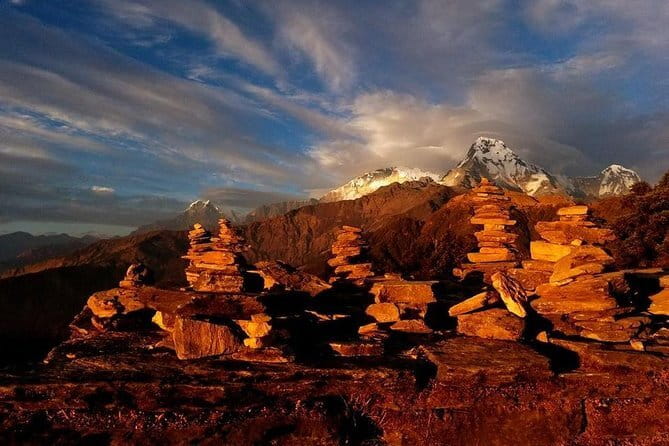
Poon Hill sunrise is the main event. I like the big mountain payoff for the effort, especially when you’re already surrounded by lush rhododendron country. I also like the teahouse routine and local food that keeps you fed and moving day to day. The one thing to consider is fitness: several hike days are 3 to 6 hours of uphill and steps, so you’ll want a moderate baseline before you go.
This route also balances mountains with culture. You’ll meet Gurung people, get a feel for village life, and end your week with Kathmandu Valley UNESCO sights and Pokhara’s lakeside atmosphere. Expect a private group setup, an experienced guide, and a porter arrangement that helps you stay focused on the trail and not your pack.
In This Review
- Key Highlights You Actually Feel on the Ghorepani Poonhill Trek
- Why This Annapurna Foothills Trek Feels So Worth It
- Kathmandu Arrival, Temple Sights, and a Smooth Setup Before Hiking
- The Kathmandu to Pokhara Transfer That Sets the Tone
- Trek Day 4 to Ghorepani: Nayapul to Tikhedunga, First Steps on Annapurna Country
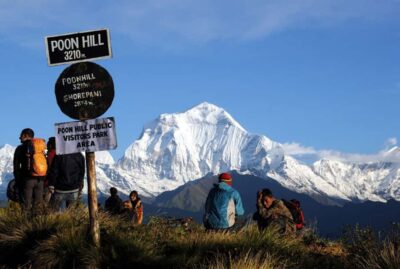
- Day 6: Poon Hill Sunrise at 3,210 M, Then the Move to Tadapani
- Day 7 to Ghandruk: Villages, Steps, and a Clear Sense of Place
- Day 8: Back to Nayapul and a Return to Pokhara’s Comfort
- Pokhara Sightseeing, Kathmandu Farewell, and the Human Side of Nepal
- Price and Value: What You Get for $299, and What You Must Budget
- Guide and Porter Support: Where the Trek Gains Its Pace and Confidence
- Teahouses, Food, and What Comfort Actually Means on This Route
- Who This Ghorepani Poonhill Trek Is Best For
- Should You Book This Ghorepani Poonhill Trek?
- FAQ
- How long is the Ghorepani Poonhill Trek package?
- What time does the experience start?
- Where do you start and end the trek?
- What meals are included, and what should I budget for?
- Is pickup and drop-off included?
- Is there a vegetarian option?
- Is there an extra cost for solo travelers?
Key Highlights You Actually Feel on the Ghorepani Poonhill Trek
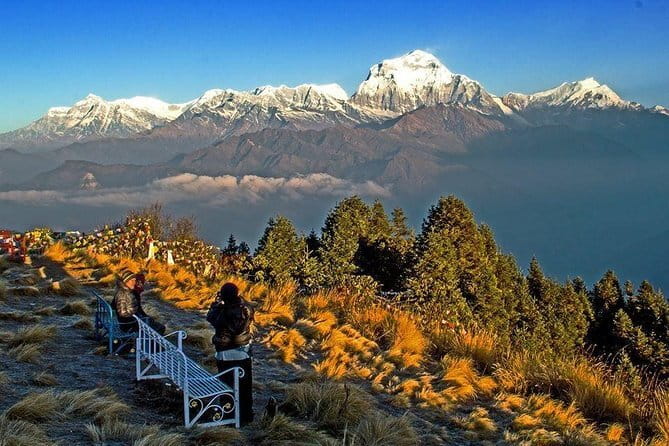
- Poon Hill sunrise and panoramic range views: Annapurna massif plus Gangapurna, Himchuli, Dhaulagiri, Manaslu, Ganesh Himal, and the Fish Tail (Machapuchare) skyline
- Rhododendron country on working trails: flowering forests, birdsong, stone steps, and lots of water from creeks and waterfalls
- Teahouse stays that make logistics easy: cozy lodges, twin or double sharing options, and breakfast included
- Human moments with Gurung culture: friendly hospitality and everyday village rhythms
- Guide support that helps you see more: route guidance to better viewpoints and clear explanations of local culture and history
- Built-in Kathmandu and Pokhara time: temple-area sightseeing in Kathmandu and a full Pokhara day after your trek
Why This Annapurna Foothills Trek Feels So Worth It
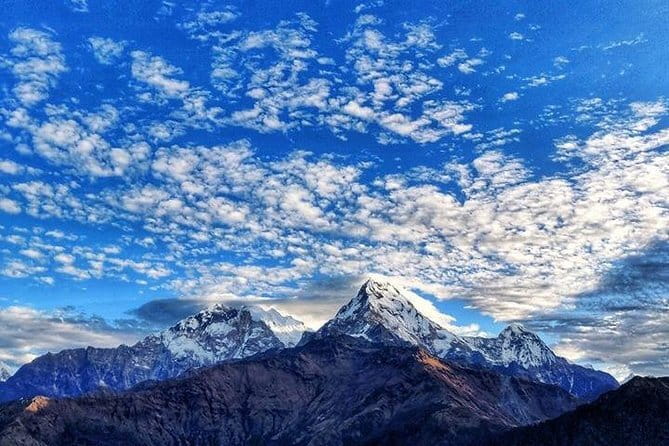
The Ghorepani Poonhill Trek is popular for a reason, and it’s not just the postcard stuff. You’re working on the Annapurna foothills where the trail moves through believable, lived-in Nepal, not only remote wilderness. Rhododendron forests show up in a way that feels seasonal and real, with water nearby and plenty of time to pause and look up.
What you’ll like most is the timing and the layering of views. You get big scenery moments not only at the top of the trek but also from Ghorepani and throughout the route as the mountains gradually open up. Then Poon Hill becomes your payoff day, when sunrise turns the whole Annapurna region into a dramatic stage.
There’s also a practical side. You sleep in teahouses, eat simple meals along the way, and keep your days structured. That matters because the trek is only one part of this package, you’re also cycling through Kathmandu and Pokhara with travel days planned in.
More Treks in Kathmandu
- Everest Base Camp Trek – 14 Days
★ 5.0 · 1,499 reviews - Everest Base Camp Trek
★ 5.0 · 842 reviews - Everest Base Camp Trekking
★ 5.0 · 485 reviews
Kathmandu Arrival, Temple Sights, and a Smooth Setup Before Hiking
Your trip starts in Kathmandu with an arrival day and a pre-trip meeting at your hotel. That small step is more important than it sounds. It’s where you can confirm timing, go over gear basics, and set expectations for the kind of walking ahead.
Day 2 is a full day recreational tour of Kathmandu, described as a capital valley full of temples and UNESCO World Heritage sites. If you like travel days that still feel meaningful, this is a good use of time. You arrive, settle in, and then spend the next day seeing the culture without any pressure.
This package also includes private pickup and drop-off from the hotel and the airport by private vehicle. I like that for two reasons: it reduces stress on arrival and it avoids the usual guesswork of how to get around with luggage and jet lag. It also means your first real trekking decision is simply how quickly you want to explore Kathmandu on your terms.
The Kathmandu to Pokhara Transfer That Sets the Tone
On Day 3, you drive from Kathmandu to Pokhara, about 200 km and roughly 6 to 7 hours. This is not a quick hop, so treat it as a transition day. You’re moving from city energy into lakeside calm, which helps your body adjust before the first hiking day.
The trek begins out of Pokhara, and the flow of this itinerary is built around that. You’ll handle the longer road travel early, then you start walking in smaller controlled segments, with drive portions interspersed.
Pokhara is also a useful buffer town. It’s close enough to feel like you’re still in the same trip, but different enough that after days of stairs and mountain air, it feels like a proper reset.
Trek Day 4 to Ghorepani: Nayapul to Tikhedunga, First Steps on Annapurna Country
Day 4 starts with a drive from Pokhara to Nayapul, about 1 hour, then trekking to Tikhedunga in roughly 3 to 4 hours. This is your first taste of the trail system around the Annapurna foothills. It’s the day where you learn how your legs respond to elevation and the rhythm of steps.
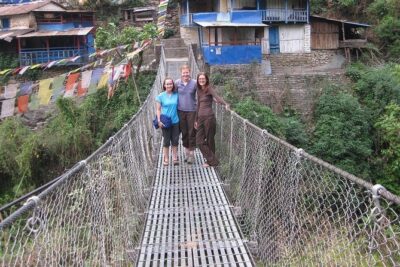
Tikhedunga is a common first-night stop because it makes day 5 manageable. It also gives you time to settle into the teahouse rhythm early. You’ll likely start noticing what this route does differently: it’s not just about reaching a viewpoint. The walking is a tour of villages, stone paths, and water nearby.
Then Day 5 takes you from Tikhedunga to Ghorepani, about 5 to 6 hours. Ghorepani is where the mountains start to become your constant companion. It’s also a key logistical point because it positions you well for the early push to Poon Hill the next morning.
If you’re wondering whether this is a hard trek, here’s the honest answer based on the daily time blocks: it’s steady work. The route can feel challenging if you go too fast early, but it’s also very doable if you keep a consistent pace and use short breaks.
More Poon Hill treks:
- 4 Days Poon Hill Trek
★ 5.0 · 94 reviews - Ghorepani(Poonhill Trek)
★ 5.0 · 81 reviews - 4-day Poon Hill Trek
★ 5.0 · 74 reviews - Ghorepani Poon Hill Trek
★ 5.0 · 61 reviews
Day 6: Poon Hill Sunrise at 3,210 M, Then the Move to Tadapani
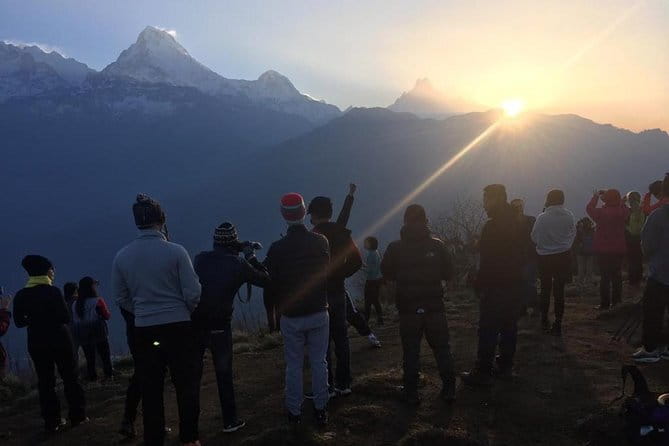
Day 6 is the emotional peak. You hike to Poon Hill at 3,210 m (10,530 ft) and then continue trekking to Tadapani, about 5 to 6 hours total on the day.
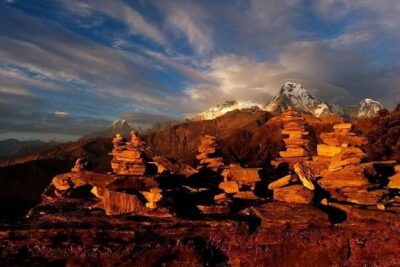
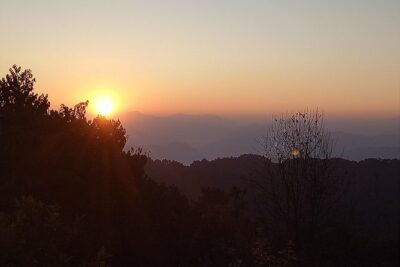
The sunrise climb is the highlight, and it’s not just about the view. It’s about what happens when you step out into the cold morning and the mountains suddenly look close enough to touch. You’re given that front-row experience of Annapurna massif scenery, including major peaks named in the highlights list like Himchuli, Dhaulagiri, Manaslu, and Ganesh Himal, plus the Fish Tail in the wider skyline.
After sunrise, you’re not stuck waiting around. You keep moving to Tadapani, which is a smart design. It reduces the risk of spending the entire day in one place just to chase daylight.
Tadapani is also where you’ll start appreciating the practical side of this route: it’s teahouses at reasonable intervals, so you can eat, rest, and stay comfortable instead of improvising. If you’ve ever done a trek that feels logistically chaotic, you’ll appreciate how this one is organized around predictable stops.
Day 7 to Ghandruk: Villages, Steps, and a Clear Sense of Place
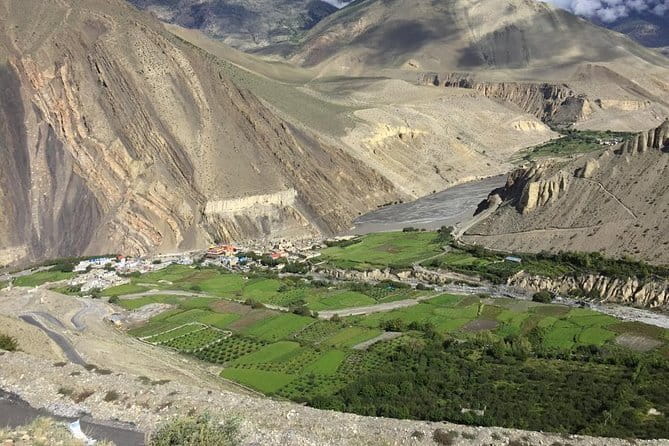
Day 7 is Tadapani to Ghandruk, about 3 to 4 hours. This is a lighter day compared to Day 5 or Day 6, which is helpful. After Poon Hill, your body often needs a bit of recovery, even if you feel good.
Ghandruk is one of those places where the trek starts to feel like a social journey. You’re spending time in classical settlement country, and the itinerary emphasizes meeting Gurung people and learning about their culture. Even if you’re not a formal museum type traveler, you’ll likely notice it through conversations and the way local life works around you.
It’s also a day where the mountains can keep rewarding you. On clear mornings and late afternoons, the view can shift quickly as clouds move and angles change. This is the kind of trek where you learn that every break has a reason.
Day 8: Back to Nayapul and a Return to Pokhara’s Comfort
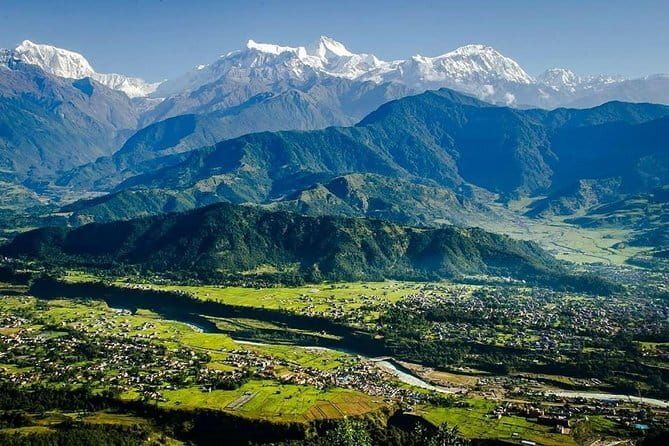
Day 8 brings Ghandruk back to Nayapul and then drive to Pokhara. The trekking portion is about 4 to 5 hours, followed by the transfer.
This is a good day to plan as a decompression phase. The trail work is still there, so you’re finishing strong, but you’re clearly moving toward a real shower, a proper meal without trail timing, and a lakeside evening.
Once you’re back in Pokhara, you can feel the trip shift from hiking mode to sightseeing mode. That matters because some treks end with an exhausting travel day only. Here, the itinerary gives you space to reset.
Pokhara Sightseeing, Kathmandu Farewell, and the Human Side of Nepal
Day 9 is a full day Pokhara sightseeing tour, described as the city of lakes. This is your chance to experience the softer side of the trip. If you like a post-trek day with minimal pressure, this fits. Think scenic walks, viewpoints, and a calmer pace than the trail.
Then Day 10 returns to Kathmandu, either by drive (about 6 to 7 hours) or a 25-minute flight. I like that you have options. If road travel sounds like too much after days of hiking, the flight option helps you protect energy for your last day.
Your farewell dinner in Kathmandu is included, at a typical Nepali restaurant with a cultural dance program. That’s not just a nice extra. It’s a structured way to celebrate the hard part of the trip while still staying grounded in local entertainment, food, and atmosphere.
Day 11 is departure day, with transfer to the international airport. It keeps your final hours from turning into a scramble.
Price and Value: What You Get for $299, and What You Must Budget
At $299 per person for about 11 days, the value here comes from logistics, people support, and consistent overnight planning. You’re not just buying a map and hoping for the best.
Included items that change the experience include:
- pick up and drop off by private vehicle from your hotel and airport
- a tourist bus between Kathmandu and Pokhara, plus private vehicle transfers to trek start and end
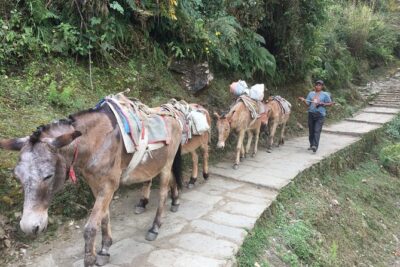
- an experienced guide and porters, with a porter arrangement of 1 porter for 2 people
- teahouse and guest house accommodations with breakfast on the trek
- down jackets, duffle bags, and route maps if necessary
- a farewell dinner with cultural dance
- Kahtmandu Valley sightseeing tied to UNESCO World Heritage sites
What’s not included matters for your budget. International airfare and airport departure tax are not included. Lunch and dinner during Kathmandu, Pokhara, and trekking days are not included. The tour notes meal costs about $3 to $7 per item depending on where you eat, which is a helpful range to plan around.
So the real budgeting advice is simple: if you’re the type who wants to eat three meals a day exactly where you feel like it, you’ll want extra cash for lunch and dinner. If you’re okay with local teahouse style meals during the trek, that cost range should feel manageable.
Single travelers also have an extra charge of USD 300. If you’re traveling solo, that’s a big factor when judging value, because it changes the per-person math.
Guide and Porter Support: Where the Trek Gains Its Pace and Confidence
The difference between a good trek and a great one is often the guide and the pace. This package includes an experienced, helpful, friendly guide and porters, including pay, food, drinks, accommodation, transportation, and insurance for them.
From prior experience in this trek style, I’ve seen names like Mountain Ram and Niraj praised for smooth, efficient organization on similar short treks around the Annapurna region. I’ve also seen guides like Pradip get credit for skill and pace, and porters like Sunil for keeping things efficient. Another guide name that shows up in this walking style is Rupak Kadel, described as attentive and cheerful, with a knack for helping people feel like they’re trekking with someone who cares.
You might be with any guide in the team, but the key point is what you should look for in your own day to day: route guidance, viewpoint timing, and a calm explanation of what you’re seeing. This kind of support helps you avoid the common trap of losing time on turns or chasing the wrong viewpoint.
It also helps you maintain steady pacing. A porter’s expertise can quietly reduce fatigue, especially when you’re tired from stairs and altitude.
Teahouses, Food, and What Comfort Actually Means on This Route
Teahouse accommodation is part of what makes this trek accessible. You’re not sleeping in tents, and that’s a real quality of life advantage. The tour uses twin or double bed arrangements in lodges and guest houses during the trek, plus breakfast is included.
Food is local and, as described, includes local organic options. I can’t promise every lodge has the same selection each night, but you generally get simple trekking meals that are meant for hikers. Also, vegetarian options are available, which is important if you don’t want to gamble on the kitchen.
Down jackets are included if necessary. That matters because early mornings for sunrise can feel colder than you expect, especially up high. If you pack light, having jacket support from the outfit can reduce stress.
One practical comfort tip: plan to layer. Even if you’re given a down jacket, the walk itself creates heat, then the air cools again during breaks and sunrise periods. Layering is your best friend.
Who This Ghorepani Poonhill Trek Is Best For
This trek fits best if you want:
- a classic Annapurna foothills route with rhododendron scenery and village walking
- a realistic daily schedule without extreme expedition logistics
- big views, especially the Poon Hill sunrise moment
- meaningful cultural context with Gurung communities
- an itinerary that includes Kathmandu and Pokhara, so your trip doesn’t end abruptly after one hike
You should have a moderate physical fitness level. That phrase is doing real work here. Some days are 5 to 6 hours, including stairs and uphill walking, even if the route is not described as technical.
If you hate early starts, this might be tougher because sunrise is central to the design. If you also strongly dislike simple teahouse living, you might find the accommodation style limiting, though it’s described as cozy and well-arranged.
Should You Book This Ghorepani Poonhill Trek?
Yes, if you want a well-structured Annapurna foothills trek that delivers the famous Poon Hill sunrise and doesn’t leave you scrambling for logistics. The strongest reasons to book are the combination of mountain views, teahouse stays, and a guide plus porter setup that keeps the trip moving at a good pace.
I’d think twice if you know you can’t handle moderate hiking days of several hours, or if you expect meals to be fully included every day. Lunch and dinner costs in Kathmandu, Pokhara, and on trekking days are on you, and solo travelers should factor in the USD 300 single supplement.
If you’re flexible, enjoy village walking, and want that early-morning mountain payoff, this package is an easy choice for a Nepal trip that feels both active and culturally grounded.
FAQ
How long is the Ghorepani Poonhill Trek package?
It runs for about 11 days, including Kathmandu and Pokhara sightseeing days plus the trek portion.
What time does the experience start?
The start time is 9:00 am.
Where do you start and end the trek?
The trek starts from Pokhara (with a drive to the trek starting point) and ends back at the same point area, returning to Pokhara at the end.
What meals are included, and what should I budget for?
Breakfast is included for 10 days. Dinner is included, and lunch and dinner are not included during Kathmandu, Pokhara, and trekking days, with meal costs noted as about $3 to $7 per item depending on where you eat.
Is pickup and drop-off included?
Yes. You get pickup from and drop off at your hotel and the airport on private vehicle service.
Is there a vegetarian option?
Yes. Vegetarian options are available, and you should request them at booking.
Is there an extra cost for solo travelers?
Yes. A single traveler pays an additional USD 300.
Latest additions near Kathmandu
- Traditional Momo Making Class★ 5.0 · 10 reviews
- White Water River Rafting – 1 Day★ 4.3 · 3 reviews
- Kathmandu to Pokhara Premium sofa bus ticket★ 4.0 · 17 reviews
- Ghorepani Poon Hill Trek★ 5.0 · 16 reviews
- Amazing 1 Day Trekking Experience in Kathmandu Nepal★ 5.0 · 24 reviews
- Walking tour of real Kathmandu through back streets.★ 5.0 · 3 reviews
- Wildlife Adventure in Chitwan Nepal★ 4.0 · 4 reviews
- Visit Swayambhunath and Bauddhanath Stupa with Guide★ 5.0 · 5 reviews
Poon Hill Treks, compared.
4-Day Ghorepani, Poonhill & Ghandruk Mountain Trek
Read our review →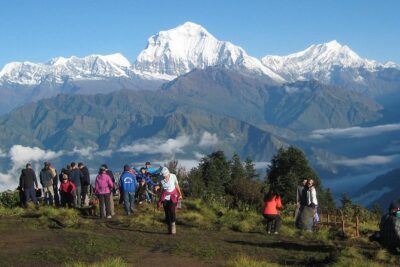
Browse the lists this tour appears in