Reviewed · TREKS IN KATHMANDU
Annapurna Tilicho Lake Trek
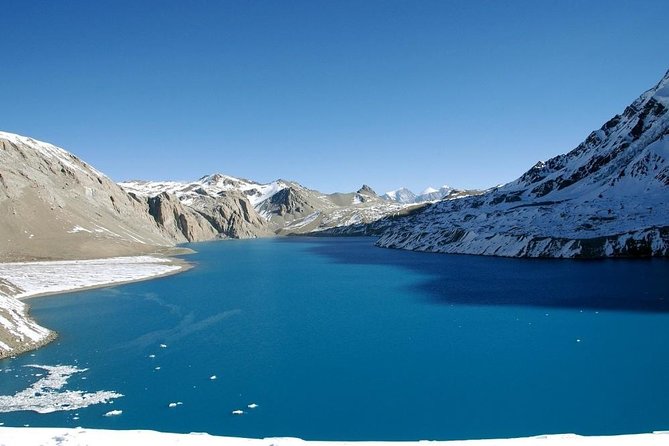
Tilicho Lake feels like a secret you can hike to. This 20-day Annapurna Circuit plus Tilicho Lake route strings together Tilicho Lake, the big Thorong La crossing, and the classic Poon Hill sunrise, all with small-group support.
I like the way the plan builds in real acclimatization, especially your full day in Manang. I also like that the trip handles the heavy admin, with permits (ACAP, TIMS), an English-speaking trek leader team, and porter support, plus loan sleeping gear and a down jacket.
The main drawback is altitude stress. You’re going to deal with high elevation and long travel days, including Thorong La at 5,416m, and some steep, loose sections near Tilicho, so this is not a casual hike.
In This Review
- Key things to know before you go
- Why this trek hits hard on the Annapurna classics
- Day 1 to Day 2: Kathmandu setup, then Syange begins the real trip
- Into the Marshyangdi valley: Dharapani, Chame, and Pisang
- The Manang day that makes the rest possible
- West to Tilicho: Khangsar Sadak, Tilicho Base Camp, and the changing trail
- Tilicho Lake day details, then Yak Kharka for the recovery rhythm
- Thorong Phedi to Thorong La: the long pass day that defines the trek
- Muktinath, Marpha, and the wind reality around Jomsom
- Kalopani to Tatopani: views, the gorge, and a hot spring dip
- Ghorepani and Poon Hill: the last big climb, then sunrise
- The ride home to Kathmandu, plus a farewell dinner in Thamel
- Price and logistics: is $1,430 good value for this trek?
- What to pack, and what to confirm before your first step
- Who should book this trek, and who should rethink
- Should you book the Annapurna Tilicho Lake Trek with Accessible Adventure?
- FAQ
- How long is the Annapurna Tilicho Lake Trek?
- Where does the trek start and end?
- What time is the meeting point on the first day?
- What permits are included?
- Is porter service included?
- Are down jacket and sleeping bag provided?
- Are hot showers included during the trek?
- What is the group size limit?
Key things to know before you go
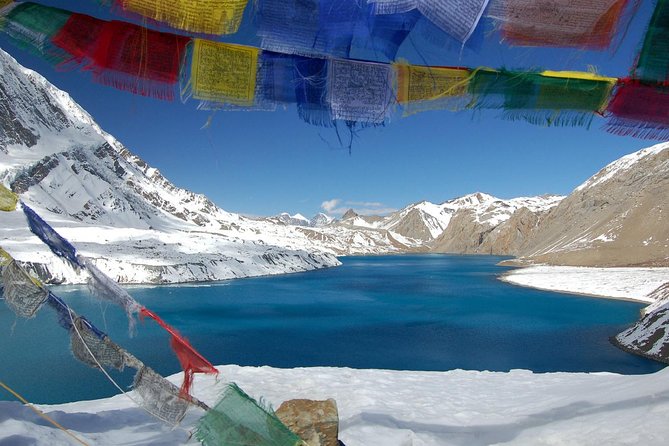
- Tilicho Lake gets stitched into the Annapurna Circuit rather than feeling like a side quest
- A full acclimatization day in Manang includes time for short walks and optional sights like Bodzo Gompa or Gangapurna Lake
- Thorong La pass is the headline moment with an early start and a memorable top-day
- Poon Hill sunrise is built in with a pre-dawn climb from Ghorepani
- Small group, structured staffing with a maximum of 12 trekkers, plus an assistant guide ratio and porters
- Permits and loan gear are included (ACAP, TIMS, down jacket, sleeping bag), so you travel lighter than you might expect
Why this trek hits hard on the Annapurna classics
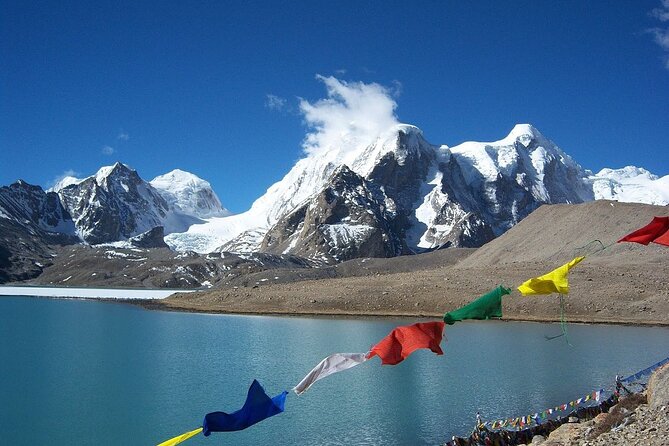
This is not just an Annapurna Circuit repeat. You start on the Circuit-style route, then swing west from Manang into the Mail Valley area to reach Tilicho Lake, which the itinerary describes as the world’s highest lake. After that high-lake chapter, the route re-joins the Circuit line, climbs over Thorong La, and then keeps hitting the viewpoints and villages you came for.
Then it adds Poon Hill at the end, giving you the best-of-Nepal views when most people are tired and ready for one last payoff. That timing matters. You’re not rushing Poon Hill on day two of the trek. You reach it after a full trek rhythm, so the sunrise feels like a reward, not a chore.
More Treks in Kathmandu
- Everest Base Camp Trek – 14 Days
★ 5.0 · 1,499 reviews - Everest Base Camp Trek
★ 5.0 · 842 reviews - Everest Base Camp Trekking
★ 5.0 · 485 reviews
Day 1 to Day 2: Kathmandu setup, then Syange begins the real trip
Your tour officially starts in Kathmandu, with an airport representative meeting you and transferring you to a hotel. The schedule keeps the day simple: land, get sorted, sleep, and prepare. If you’ve never trekked in Nepal, that quiet first day is useful.
Day 2 moves toward Syange, passing key route towns like Dumre and Bensishahar. The day’s vibe shifts as you leave the main highway and head toward a bumpy, winding road. You finish by taking a local jeep to Syange, which is one of those small details that changes the feel of the start. You get a first taste of the “Nepal transport is part of the adventure” reality.
What to watch for: after airport travel, sitting long in cars and jeeps can leave your legs stiff. I’d treat this as a gentle day and focus on hydration and slow walking rather than trying to “make up time.”
Into the Marshyangdi valley: Dharapani, Chame, and Pisang
From Syange you head into the trekking corridors along the Marshyangdi River. Day 3 is a classic river-valley push: trail rises and falls, you cross a suspension bridge, then climb through oak forest. The itinerary notes a dramatic narrowing to a deep gorge with waterfalls across the valley, which matches what you expect in this region. You’ll feel the valley “tighten,” and it makes the walking more interesting than flat grind.
You also pick up cultural texture. The plan specifically mentions mani stones and the local custom of walking on the left-hand side of mani walls. That’s the sort of small practice that makes you more aware of where you are, instead of just stepping through scenery.
Day 4 to Day 5 builds altitude steadily. You move through oak forest into pine and fir changes, and the vegetation shift is part of why this trek feels like more than a single long hike. Chame, Temang, Thanchok with apple orchards, and then Pisang bring more variety in village feel and in how the hills look above you.
A practical note: the route names old villages like Brathang and hints at a past Tibetan resistance camp history. You don’t need to be a historian to enjoy it, but it helps you notice why these settlements were placed where they are, not just that they exist.
The Manang day that makes the rest possible
Manang is more than a halfway stop. Day 7 is a full acclimatization day, and that is one of the best parts of this whole plan. The itinerary recommends staying active with short walks at higher altitudes, rather than treating the day as total rest. The reason is simple: your body needs time to adapt without losing all trekking momentum.
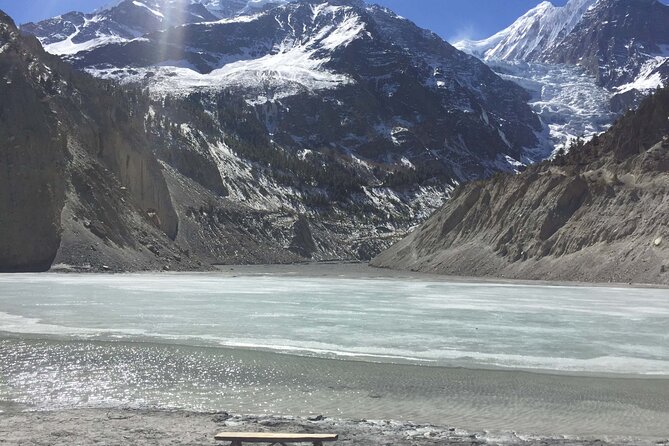
This day also gives you optional, meaningful stops. Bodzo Gompa and Gangapurna Lake are mentioned as worth visiting. And there’s a strong practical bonus: Manang village is described as housing the Himalayan Rescue Association, where volunteer western doctors work during trekking seasons. Even if you never need medical help, having that kind of presence nearby is reassuring. I’d use the day to ask questions, double-check how you’re feeling, and adjust your pacing for the big upcoming push.
Then Day 8 transitions westward toward Khangsar. The itinerary notes a steep, exposed scree slope section. That’s a good reminder that acclimatization doesn’t mean “easy.” It means “your system is ready enough.”
More Tilicho Lake treks:
- Annapurna Circuit Trek with Tilicho Lake
★ 5.0 · 368 reviews - Annapurna Circuit with Tilicho Lake
★ 5.0 · 9 reviews - Annapurna Circuit Trek With Tilicho Lake :Best Trek in Nepal
★ 5.0 · 4 reviews
West to Tilicho: Khangsar Sadak, Tilicho Base Camp, and the changing trail
The road to Tilicho is where the trek turns from familiar valley hiking into higher-altitude, more serious terrain. Day 9 starts from the Khangsar area and describes a newly constructed path up toward a high ridge, plus an important fork in the trail.
The route explains two options at one intersection. The old path is steeper with truly challenging scree. The new path keeps you on a different line. I like that the itinerary is explicit about why you’ll take one route over the other, because it removes guesswork. You’ll follow the safer or more manageable choice when the footing turns nasty.
You also reach Tilicho Base Camp, which the plan frames as a launch point for the lake day. The progression makes sense: ridge travel, switchbacks carved through scree slopes, then descent to a side valley where Tilicho Base Camp sits.
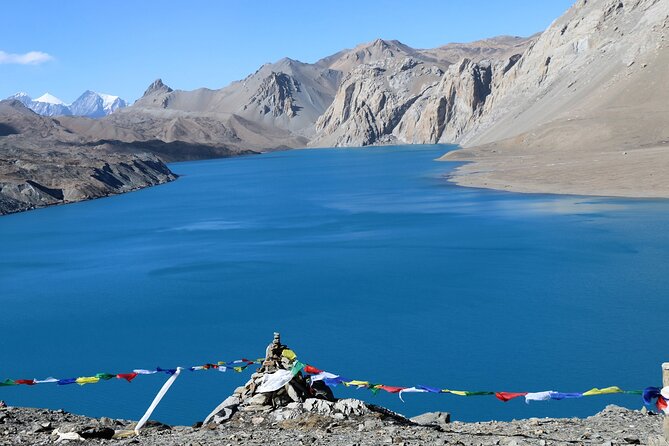
Day 10 is the lake day itself, starting from Tilicho Base Camp. The itinerary says the path covers loose scree and boulders, then includes a glacier section described as flat and safe, with no crevasses. You then move left (south) upwards, cross through a watershed, and navigate over saddles before descending into a valley near the lake shore again.
This is the kind of day where you’ll feel the trek’s true altitude level. Take it slow. Loose rock punishes fast walkers, and your energy will matter more than your ambition.
Tilicho Lake day details, then Yak Kharka for the recovery rhythm
After Tilicho Lake, the plan brings you back down with purpose. Day 11 starts with trekking down to Kangsar, then continuing toward Yak Kharka. The route emphasizes gradual ascent to avoid altitude issues, and it also notes pleasant meadows plus ancient mani walls.
That blend matters. You’re not bouncing back to straight-up grind. You get a stretch of gentler walking that helps your body reset. Overnight at Yak Kharka keeps you in a workable altitude zone before Thorong La day.
If you’re prone to getting anxious on altitude treks, this is where you’ll breathe. The itinerary’s language is clear that gradual walking is key. Don’t fight that logic. Your best strategy on high treks is often to look boring.
Thorong Phedi to Thorong La: the long pass day that defines the trek
Day 12 is Thorong Phedi, framed as a small busy settlement for tired trekkers and climbers. The plan says some visitors hike to high camp to make day 13 easier, but the team leader does not advise for the risk of sleeping higher. Instead, you sleep at Thorong Phedi so you can start the pass day more rested and safer.
That choice is practical. High altitude sleep can be rough, and one bad night can make a pass day feel longer than it should.
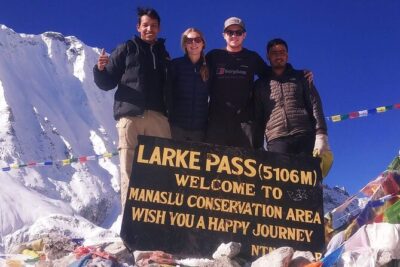
Day 13 starts early and climbs gradually toward Thorong La Pass. The itinerary calls it strenuous and one of the longest days, with lots of false summits. When you finally hit the top at 5,416m, the views are described as breathtaking, and the route also reminds you to expect a lethargic walk because of the height.
You don’t need heroics here. You need patience. False summits are a psychological game as much as a physical one. Keep moving, keep your pace steady, and let the pass come to you.
Muktinath, Marpha, and the wind reality around Jomsom
After Thorong La you reach the Muktinath area. Day 14 begins with an early visit to the holy temple of Muktinath, then breakfast and a gradual downhill toward Ekley Bhatti. The itinerary specifically warns that the downhill is steep, so proper use of trekking poles is important.
Then you push onward toward Jomsom, and the plan gets very honest about conditions. It says Jomsom is a windy place, and that you may need a full face mask and wind stopper jacket to avoid windblast. That’s not “maybe.” It’s a reminder to pack for wind, not just cold.
Day 15 returns to the lower-elevation apple-world vibe with Marpha. The itinerary calls out an apple day celebration, with apple brandies and the “bhattis” tea shops where you can grab coffee or tea. You also get scenic stops and photo points, including the Dhaulagiri icefall area (a viewpoint stop for landscape views).
And there’s a neat extra option here. The plan mentions an industrial visit to the Tikuche Distillery, described as supplying drinking water to nearby villages and towns. Even if you skip it, it’s a reminder that trekking routes in Nepal connect to real local economies.
Kalopani to Tatopani: views, the gorge, and a hot spring dip
Day 15 takes you to Kalopani, with views of Annapurna I and surrounding peaks from the area. Day 16 then moves more than 1,000m down to Tatopani. The itinerary includes a stop at Dana for lunch, with the deepest Kali Gandaki gorge mentioned as a highlight.
Tatopani is also where the trek gives you a recovery moment. The plan says there’s a natural hot spring, and you can take a dip there to relax. That matters because you’re not just walking all the time. You’re also managing fatigue and making your next climb possible.
If you’re the type who worries about “should I skip the dip to save time,” I’d say no. A short soak after a big descent is the kind of small comfort that keeps you feeling human.
Ghorepani and Poon Hill: the last big climb, then sunrise
Day 17 climbs from about 1,190m up to 2,780m to reach Ghorepani. The plan describes this as a challenge day with cultural and natural influences along the way. It lists villages you pass through, including Ghare, Shika, Phalate, and Chhitre, and says many locals belong to Magar and Gurung communities.
Along the trail you get views of the Annapurnas, but the itinerary clearly labels the real prize as the next morning from Poon Hill.
Day 18 is the payoff day. You hike up early before sunrise for panoramic views from different sides, then return for breakfast at Ghorepani. After that, you continue down toward Nayapul using the popular route via Ulleri, Tikhedhunga, and Birethanti.
This is where trekkers who get excited about viewpoints finally stop thinking and just start watching. The sunrise at Poon Hill is the moment you can point to and say, yes, it was worth it. And because it happens after Thorong La and Tilicho, it lands differently.
The ride home to Kathmandu, plus a farewell dinner in Thamel
Day 19 takes you by tourist bus back to Kathmandu in the morning, arriving near Icicles Adventure Office. Then you get hotel transfer and have an option to join a farewell dinner at a cultural restaurant in Thamel.
Day 20 finishes with transfer from your hotel to Tribhuvan International Airport, three hours before your scheduled international flight. The schedule keeps that last day simple, which is exactly how you want your ending to go.
Price and logistics: is $1,430 good value for this trek?
At $1,430 per person for about 20 days, the key question is what’s included that would otherwise cost you extra or force you to plan on your own.
Here’s what the package includes, based on the tour details you provided:
- Guiding and staffing: an experienced, English-speaking trek leader plus assistant trek leader (with a stated ratio of trekkers to assistant) and porter service (2 trekkers to 1 porter).
- Permits and paperwork: ACAP and TIMS are handled in the included list.
- Medical and safety support: a medical kit carried by your trek leader.
- Loan equipment: down jacket and a sleeping bag (to be returned after the trip).
- Stuff you can take home: trekking bag/duffel bag, t-shirt, and a trekking map.
- Lodging and key transfers: two nights in Kathmandu with breakfast, one night in Pokhara with breakfast, plus transfers by public vehicle and private vehicle segments, and the bus back to Kathmandu.
- Meals and dinners: welcome and farewell dinners are included, but the package also lists trek meals as not included. This means you should treat on-trail meals as something you’ll likely pay for unless your booking confirmation states otherwise.
So is it good value? For a route that includes Tilicho Lake, Thorong La, and Poon Hill in one connected itinerary, plus the pass-day logistics and permit handling, it is priced in the “serious trekking” range. The biggest value boosters are the permit processing, the porter support, and loaning heavy cold-weather gear, so you’re not paying to bring everything from home.
If you were self-organizing, you’d still need permits, a licensed guide team, and a safe staffing plan for porters. This price is basically paying for that structure, and it’s what makes the trek feel manageable even when the trail is tough.
What to pack, and what to confirm before your first step
You’ll want to pack for cold and wind. The itinerary explicitly mentions wind protection around the Jomsom area and suggests a full face mask and wind stopper jacket there. You’ll also likely need strong layers for high altitude.
At the same time, the tour does provide critical cold-weather gear: a down jacket and sleeping bag (returned after the trip). That’s a big cost and weight saver.
What you should confirm before departure:
- Personal trekking equipment is not included, so double-check what you personally need versus what you’ll be loaned.
- Hot showers during the trek are listed as not included, so plan on basic washing.
- Cold drinks and WiFi during the trek are listed as not included.
Finally, go into this with a moderate fitness base. The trip is clearly described as requiring moderate physical fitness, and the itinerary includes several long walking days plus the 5,416m pass.
Who should book this trek, and who should rethink
This trek fits best if you:
- Want the classic Annapurna feel plus the headline extras (Tilicho Lake and Thorong La)
- Prefer a guided structure rather than figuring out permits and trail logistics alone
- Like small-group travel, since the tour caps at 12 travelers
- Appreciate acclimatization planning, especially the full Manang day
You should reconsider if you:
- Struggle with altitude already, even on shorter hikes
- Hate steep, loose scree, since multiple days describe rocky, exposed sections
- Want a light, day-hike style experience, because this is a long trek with major effort days
The reviews you provided also line up with this fit. People specifically mention supportive, informative staff and that the tour helped them get through the tough parts, including first-time trekking confidence.
Should you book the Annapurna Tilicho Lake Trek with Accessible Adventure?
If you’re drawn to Tilicho Lake, you want Thorong La in the same trip, and you still want the bonus of Poon Hill sunrise views, this itinerary makes sense as a single 20-day story. The best reasons to book are the built-in acclimatization rhythm, the permit and guide handling, and the practical staffing with porters plus loan cold-weather gear.
I’d book it if you can commit to the physical demands and you’re comfortable with basic lodge life, cold nights, and at least one truly intense pass day. If you want a guarantee of comfort over challenge, look elsewhere. If you want a well-run trek that connects the big Annapurna moments, this is a strong choice.
FAQ
How long is the Annapurna Tilicho Lake Trek?
It runs for about 20 days, with the itinerary starting in Kathmandu and ending in Kathmandu after the trek and transfers.
Where does the trek start and end?
The trip starts in Kathmandu. The trekking ends at Nayapul, then you transfer to Pokhara, and later return to Kathmandu by tourist bus.
What time is the meeting point on the first day?
The start time is listed as 7:00 am.
What permits are included?
The included list states that permits and necessary paperwork are handled, including ACAP and TIMS.
Is porter service included?
Yes. The tour includes porter service, listed as 2 trekkers to 1 porter.
Are down jacket and sleeping bag provided?
Yes. A down jacket and sleeping bag are included in the trip, and they are to be returned after completion.
Are hot showers included during the trek?
Hot showers during the trek are listed as not included.
What is the group size limit?
The experience has a maximum of 12 travelers.
Latest additions near Kathmandu
- White Water River Rafting – 1 Day★ 4.3 · 3 reviews
- Traditional Momo Making Class★ 5.0 · 10 reviews
- Kathmandu to Pokhara Premium sofa bus ticket★ 4.0 · 17 reviews
- Ghorepani Poon Hill Trek★ 5.0 · 16 reviews
- Amazing 1 Day Trekking Experience in Kathmandu Nepal★ 5.0 · 24 reviews
- Ghorepani Poonhill Trek★ 5.0 · 5 reviews
- Walking tour of real Kathmandu through back streets.★ 5.0 · 3 reviews
- Wildlife Adventure in Chitwan Nepal★ 4.0 · 4 reviews
Treks in Kathmandu, compared.
Nagarkot Sunrise View and Day Hiking from Kathmandu
Read our review →