
Reviewed · ANNAPURNA CIRCUIT TREKS
Annapurna Circuit Trek
This trek stitches temples to high passes.
You get Annapurna Circuit Trek scenery with a real plan, from Kathmandu’s sacred sites to Pokhara’s lakeside culture, then up to the big moment: Thorong La pass. It is small-group trekking, guided end to end, with rest days where it matters and transport that keeps you from wasting time.
I especially like the structure around altitude. The day in Manang for acclimatization, plus the gradual climb to higher camps, makes the hard days feel more controlled than random hopping.
One possible drawback: it still means early starts and weather risk. Strong winds and snow can turn the Thorong La crossing into a serious challenge, and the company notes the trek depends on good weather.
In This Review
- Key things I’d circle before you go
- Kathmandu first, not last: temple days that set the tone
- Pre-trek meeting: paperwork that protects you on the mountain
- Getting to the trail: bus to Besisahar, 4WD to Syange
- Tal to Danakyu to Chame: warmup days that still deliver views
- Upper Pisang and Ngawal: the first strong Annapurna II moments
- Manang acclimatization: walking and sightseeing with breathing room
- Yak Kharka to Thorong Phedi: the climb gets serious
- Thorong La pass: start early, respect the cold
- Jomsom and the Kali Gandaki gorge: dry air, big river energy
- Tatopani hot springs: two days to loosen up
- Ghorepani to Poon Hill: sunrise payoff on a short hike
- Pokhara unwind days: temples, caves, and river gorges
- Back to Kathmandu, then a farewell dinner with performances
- Price and logistics: does $2,240 feel fair?
- Guides and support quality: names I see repeatedly
- How hard is it, really? (And what to plan for)
- Who should book this Annapurna Circuit trip
- Should you book Ace the Himalaya for the Annapurna Circuit?
- FAQ
- How many people are in the group?
- What time does the trip start, and where?
- Are airport transfers included?
- Is there a rest or acclimatization day in Manang?
- What gear does the trek include?
- Which permits are covered?
- Where do the hot springs happen?
- Are meals included?
- What if weather is poor?
Key things I’d circle before you go
- Small group size, 15 maximum keeps it easier to move and easier for the guide to notice who needs help
- One porter for two clients means you travel with less weight than a DIY trek
- A true acclimatization day in Manang includes walking and sightseeing, not just resting at the lodge
- Tatopani hot springs as a reset button gives your legs a chance to recover mid-trek
- Thorong La timing is early so plan for a pre-sunrise start and cold conditions
- Most meals and key fees are included so you can budget less and focus more on trekking
Kathmandu first, not last: temple days that set the tone
If you’re coming to Nepal for the mountains, you’ll still appreciate the warm-up in Kathmandu. Day 1 begins right at Tribhuvan International Airport, with an airport representative holding an Ace the Himalaya sign. You transfer to your hotel in a private tourist vehicle, so you start the trip without the usual first-day chaos.
Day 2 is classic Kathmandu spirituality and art. You visit Pashupatinath Temple on the Bagmati River, but plan to stay on the eastern bank since you cannot go inside the temple. Then you head to Boudhanath Stupa, where pilgrims spin prayer wheels, and it feels like a working religious site, not a museum stop. Bhaktapur Durbar Square follows, with major temple highlights like Nyatapola and the famous Palace of 55 windows.
More Treks in Kathmandu
- Everest Base Camp Trek – 14 Days
★ 5.0 · 1,499 reviews - Everest Base Camp Trek
★ 5.0 · 842 reviews - Everest Base Camp Trekking
★ 5.0 · 485 reviews
Pre-trek meeting: paperwork that protects you on the mountain
Either on Day 1 or Day 2, you’ll do a pre-trek meeting at the office. This is where you meet your trek leader, clear any due balance, and sign the legally binding trip form and the non-liability disclaimer. They also ask for your passport, three copies of passport-size photos, and a readable copy of your travel insurance policy.
Why this matters: it saves time later and reduces the stress when you’re trying to focus on altitude and weather. It’s also a good sign of a well-run operation, because the logistics are handled before you’re deep into the trek.
Getting to the trail: bus to Besisahar, 4WD to Syange
On Day 3 you take a public bus from Kathmandu to Besisahar, around 6 hours. From there, a shared 4WD ride takes you to Syange, about 2 more hours. You’ll pass rivers and waterfalls, and this day is less about athletic achievement and more about getting your legs used to being in motion.
Day 4 starts the real walking. You follow the Marsyangdi River with a gradual ascent and repeated water and waterfall scenery along the way, then sleep in Tal. Day 5 continues in a similar spirit, leaving the river behind and moving through old villages with views that include Annapurna II and Pisang Peak.
Tal to Danakyu to Chame: warmup days that still deliver views
These early walking days are a smart way to get momentum without burning out. Day 4 is described as slightly ascending, and Day 6 is an easier day after Chame, with about 4 hours of walking before you reach the Manang district headquarters.
Chame is a small town but with more facilities than earlier villages. That matters because it gives you a more comfortable base as the trek starts climbing toward Manang and higher terrain. If you’re the type who needs decent food options and simple comforts before the big altitude push, Chame fits the bill.
More Annapurna Circuit departures:
- Annapurna Circuit Trek with Tilicho Lake
★ 5.0 · 368 reviews - Annapurna Circuit Trek
★ 5.0 · 94 reviews - Annapurna Circuit Trek
★ 5.0 · 49 reviews - Annapurna Circuit Trek
★ 5.0 · 46 reviews
Upper Pisang and Ngawal: the first strong Annapurna II moments
On Day 7 you head to Upper Pisang after breakfast. The route goes through dense forest and along the Marsyangdi River, then opens into panoramic views of meadows and mountains. A stand-out visual on the way is Paungda Dada, described as a rock face curved like a bowl.
Day 8 adds an early wake-up. You go out for sunrise to catch the first rays on Annapurna II, then trek to Ngawal, which sits about 400 m higher than the lower trail. This is where high-altitude flora and fauna have a better chance of showing up, and the gorge and peak views become more dramatic.
Manang acclimatization: walking and sightseeing with breathing room
Day 9 takes you into Manang after roughly 6 hours. You’ll pass big hills, jungle and wetlands, plus local features like stupas and a lama school. It’s also a more active place on the trek, so it feels like the world is slowing down just enough for you to catch your breath.
Day 10 is your official acclimatization day in Manang. You do some walks and sightseeing, visiting a monastery and going to Gangapurna Glacier Lake during the day walk, then returning to your accommodation for the night. Even if you feel fine, this kind of planned breathing space is what keeps people from turning Thorong La into a panic exercise.
Yak Kharka to Thorong Phedi: the climb gets serious
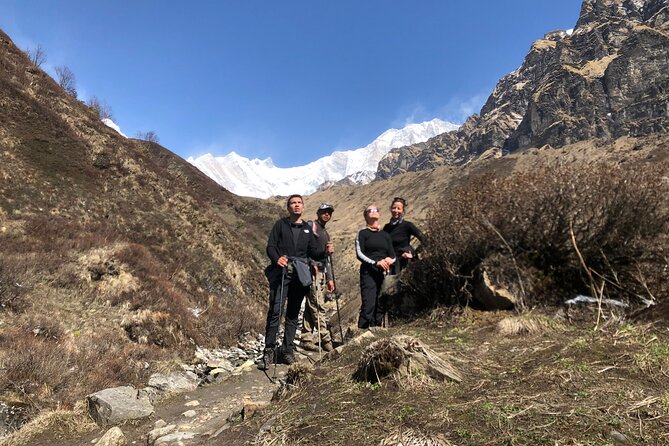
After the Manang day, you start Day 11 for Yak Kharka. The trek ascends about 500 m and reaches around 4,000 m, with herds of yaks and thinner vegetation as you go. This is a shift day, where the air feels different and your pace matters more.
Day 12 climbs to Thorong Phedi, around 4,450 m. The route includes a descent to cross a river around 4,310 m before you climb again. Thorong Phedi now has guesthouses built in recent years, which helps with the night before the pass, since you’re not searching for shelter at the last minute.
Thorong La pass: start early, respect the cold
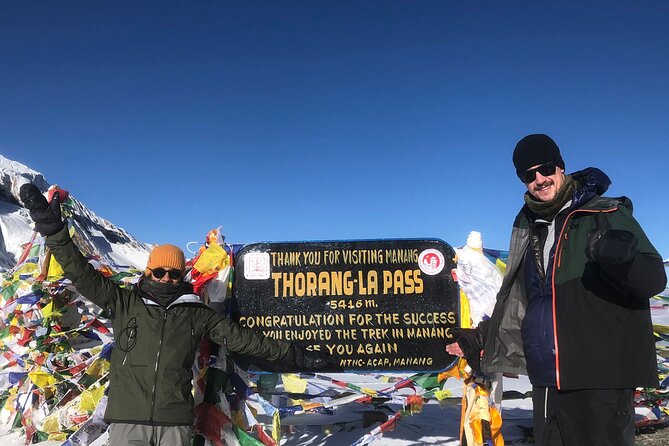
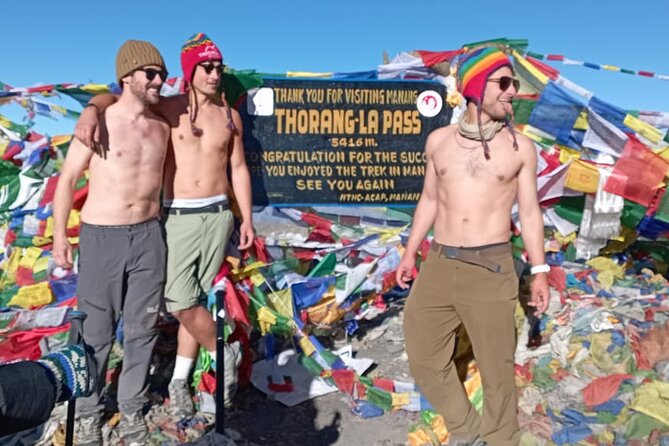
Day 13 is the big one. You start before sunrise, around 4 am, aiming to reach Thorong La by about 9 to 10 am. The note here is important: strong winds and snow can strongly affect the journey, especially if heavy snow covers the pass.
You’ll climb steeply on a regular route marked with chortens and prayer flags. Once you reach the top, you get rewarded with stunning views from the pass, then walk for another four hours to Muktinath. Muktinath is described as a holy town, and you’ll arrive after a long day where altitude and temperature are both in play.
Jomsom and the Kali Gandaki gorge: dry air, big river energy
On Day 14 you reach Jomsom after descending on the other side of Thorong La. The trek notes that much of what you see is dry and looks desert-like. You also walk along the Kali Gandaki River, with closer views of stupas and old traditional houses tied to Mustang culture.
Day 15 keeps the descent going through Kali Gandaki Valley, and this is where Kopchepani comes in. It is described as the world’s deepest gorge, and then you reach Tatopani, famous for hot springs. The timing is smart because it puts recovery right where you need it most.
Tatopani hot springs: two days to loosen up
Tatopani gets two days, Day 15 and Day 16. You spend time relaxing after the long trekking stretch, with a natural hot spring soak that’s aimed at helping your body recover. The plan also includes time for a shower, then dipping in the springs, plus local food and drinks.
This is one of the more enjoyable parts of the trek because it breaks the routine. You go from altitude exertion to a warm, low-pressure day where you can reset. If your knees tend to complain around Day 12 to Day 14, this stop is a gift.
Ghorepani to Poon Hill: sunrise payoff on a short hike
Day 17 moves you from Tatopani to Ghorepani, about 7 hours with an ascent of roughly 1,620 m. From Ghorepani, the views are described as including Annapurna South, Himchuli and Tukuche Himal. You also pass Magar and Gurung villages, which adds human scale to the scenery.
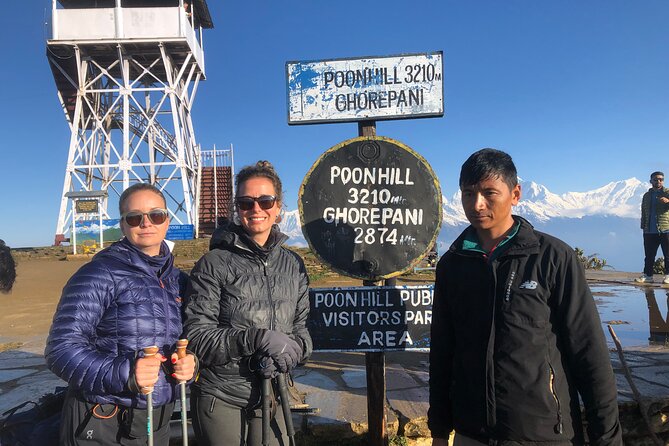
Day 18 is an early highlight. You hike about an hour to Poon Hill at around 3,210 m for sunrise, then spend about an hour at the viewpoint. Views depend on weather, which is a recurring theme in the mountains. Afterward you return to Ghorepani for a hot breakfast, then trek down toward Tikhedhunga through ridges and rhododendron forests before reaching Tikhedhunga.
Pokhara unwind days: temples, caves, and river gorges
Day 19 brings a change of pace. You trek lightly to Nayapul at about 1,010 m, then drive around an hour to Pokhara. This is a good moment to wash your trekking day off and switch into sightseeing mode.
Pokhara has several focused stops. You visit Shree Bindhyabasini Temple in the center of the old bazaar area, then head to Devi’s Fall. You also see Gupteshwor Mahadev Cave, a cave complex about 3 km long with sections where you crawl on all fours, and it is tied to Hindu symbolism around a Shiva phallic form preserved as discovered. Seti River Gorge comes next, where you view the deep gorge carved by the Seti Gandaki River from bridge viewpoints. Finally you visit the Tibetan Refugee Camp, Tashi Ling, known for woolen carpet production and handicrafts.
Back to Kathmandu, then a farewell dinner with performances
On Day 21 you drive back to Kathmandu in the morning. In the evening you get a farewell dinner at a traditional Nepalese restaurant with cultural performances. It’s a neat way to close the loop, because you started with Kathmandu religious sites and you finish with Nepal’s live culture.
Then Day 22 is straightforward: you’re dropped at Tribhuvan International Airport for your departure.
Price and logistics: does $2,240 feel fair?
At $2,240 per person, this trek price is less about a bargain ticket and more about buying time, safety structure, and included overhead. Here’s what you’re getting that reduces your extra spending and planning:
- Kathmandu and Pokhara three-star hotel nights (3 in Kathmandu, 2 in Pokhara)
- Licensed English-speaking trekking guide plus a porter support structure, 1 porter for two clients
- Permits listed as ACAP and TIMS
- Gear support: down jacket and sleeping bag provided to be returned
- Transport that handles the heavy lifting, including public bus, shared 4WD, tourist vehicle to Pokhara, and tourist bus back to Kathmandu
- Most meals counted as 21 breakfasts, 16 lunches, and 17 dinners, plus many sightseeing entrance fees
What you should not count on, because it’s not included: international airfare, Nepal entry visa, travel insurance that covers emergency high-altitude rescue and evacuation, alcohol, and personal trekking equipment. Tips for staff and drivers are also expected.
Is it good value? For me, it is, if you want a guided trek with real logistics handled and you do not want to micromanage permits, transport, and the day-to-day flow. If you’re already an independent trek planner who has gear, permits, and a solid backup plan for altitude, you might find cheaper options. But you would likely trade that structure for more stress.
Guides and support quality: names I see repeatedly
Even without knowing your exact trek leader at booking, I like what the past departures show about support. In similar Annapurna Circuit departures with Ace the Himalaya, guides named Aamod, Madan, Ram, Ganesh Khanal, Nimesh, and Janardan, often show up in feedback tied to professionalism and safety focus. Porters like Aashis, Bin, Ajeet, Amish, Kalish, Ramesh, Sumon, Ulijual, and Anish are also repeatedly credited for being attentive and helpful.
What I take from that: this is the kind of operation that invests in people, not just scheduling. You still need to do your part on altitude and pacing, but the human support seems to be a real strength.
How hard is it, really? (And what to plan for)
This is described as suitable for people with moderate physical fitness. That phrase matters because the trek includes long walking days, mountain weather, and a high point crossing at Thorong La Pass.
Plan for:
- Early starts, especially for the pass day that starts around 4 am
- Altitude effects, with major elevations like Yak Kharka around 4,000 m, Thorong Phedi around 4,450 m, and the pass crossing itself
- Weather dependence, since the notes call out strong winds and snow at Thorong La
Also, the company states the experience requires good weather. If they cancel due to poor weather, they will offer a different date or a full refund.
Who should book this Annapurna Circuit trip
This works well if you want:
- A guided trek where transport, permits, and lodging are handled
- A balanced mix of mountains plus culture in Kathmandu and Pokhara
- A thoughtful acclimatization plan in Manang, plus recovery time at Tatopani hot springs
It might be less ideal if you want total independence, or if you hate early mornings and long walking days. This trek is not a casual stroll, but it is paced with rest and support.
Should you book Ace the Himalaya for the Annapurna Circuit?
If you’re aiming for the Annapurna Circuit experience without juggling permits, logistics, and daily planning, I’d book. The price includes the big backbone items that usually trip people up: guide, porter support, permits, key transport, and gear basics like a down jacket and sleeping bag.
My final check before you commit: be honest about your fitness and your comfort with altitude and cold, and understand that weather can affect the pass day. If you can handle that trade-off, you’ll get a well-run route with memorable anchors, sunrise from Poon Hill, hot springs at Tatopani, and the Thorong La crossing that makes this trek famous.
FAQ
How many people are in the group?
The maximum group size is 15 travelers.
What time does the trip start, and where?
It starts at 8:00 am, and the meeting point is Tribhuvan International Airport in Kathmandu.
Are airport transfers included?
Yes. Airport transfers are included, with an airport representative meeting you at Tribhuvan International Airport and dropping you at the end of the trip.
Is there a rest or acclimatization day in Manang?
Yes. You spend a day acclimatizing in Manang, including walks and sightseeing such as a monastery visit and a trip to Gangapurna Glacier Lake.
What gear does the trek include?
The tour includes a down jacket and a sleeping bag for the trek. These are to be returned after the trek. You also receive a free Ace the Himalaya duffel or kit bag and a sun hat.
Which permits are covered?
ACAP and TIMS permits are included.
Where do the hot springs happen?
Tatopani is the hot springs stop, and you spend two days relaxing there.
Are meals included?
Breakfast is included for 21 days, lunch for 16 days, and dinner for 17 days. Lunch and dinner in Kathmandu and Pokhara are not included.
What if weather is poor?
The experience requires good weather. If it’s canceled due to poor weather, you’ll be offered a different date or a full refund.
Latest additions near Kathmandu
- White Water River Rafting – 1 Day★ 4.3 · 3 reviews
- Traditional Momo Making Class★ 5.0 · 10 reviews
- Kathmandu to Pokhara Premium sofa bus ticket★ 4.0 · 17 reviews
- Ghorepani Poon Hill Trek★ 5.0 · 16 reviews
- Amazing 1 Day Trekking Experience in Kathmandu Nepal★ 5.0 · 24 reviews
- Ghorepani Poonhill Trek★ 5.0 · 5 reviews
- Walking tour of real Kathmandu through back streets.★ 5.0 · 3 reviews
- Wildlife Adventure in Chitwan Nepal★ 4.0 · 4 reviews
Annapurna Circuit Treks, compared.
Browse the lists this tour appears in