
Reviewed · ANNAPURNA CIRCUIT TREKS
Annapurna Circuit Trek
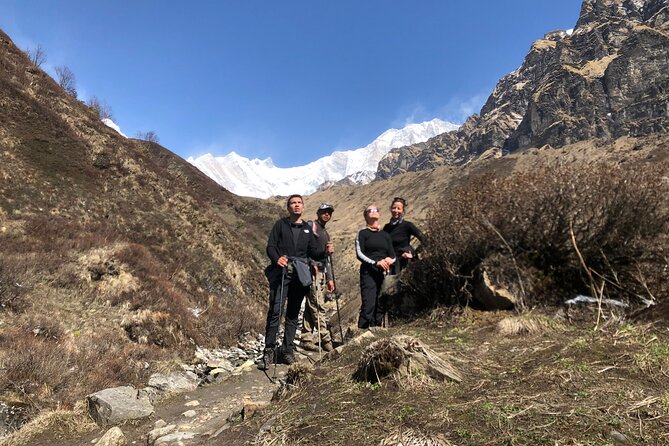
Thorung La waits, one step at a time. This trek is interesting because it mixes classic Annapurna Circuit villages with real logistical help, like pickup and day-after-day transportation planning. I also like that the trek comes with a pro guide team built for safety and smooth logistics, with people often calling out leaders such as Balaram Khadka.
The big thing to consider is the physical load around the pass. Crossing Thorung La at 5,416m is hard, and the following descent into Muktinath is described as a knee pounding drop of about 1,600m, so you will want trekking poles and solid shoes.
In This Review
- Key things I’d circle before you book
- Why the Annapurna Circuit here feels more practical than just pretty photos
- Price and logistics: what $994 buys you, and what it does not
- Kathmandu start, UNESCO day, then out toward the trail
- Day 1 to 4: Chamje, Dharapani, Chame, and finding your trekking legs
- Day 1, Chamje: Kathmandu to the trail rhythm
- Day 2, Dharapani: suspension bridges and steep switchbacks
- Day 3, Chame: Annapurna II in view and pine-oak forest walking
- Day 4, Manang zone: apple orchards and high, winding trail sections
- Day 5 to 8: acclimatization in Manang and the slow march toward Thorung La
- Day 5, Manang: ridges, airstrip area, and big views
- Day 6, Manang rest day: optional walks that actually help
- Day 7, Yak Kharka: feeling the thinner air
- Day 8, Thorung Phedi: instability sections and a setup night
- Day 9 and 10: Thorung La, Muktinath, then Tatopani by jeep
- Day 9, crossing Thorung La and descending to Muktinath
- Day 10, Muktinath to Tatopani: a faster moving day
- Day 11 to 12: Ghorepani, Poon Hill sunrise, then back down to Pokhara
- Day 11, Ghorepani: villages, rhododendron, and wildlife
- Day 12, Pokhara via Poon Hill: the sunrise payoff
- Kathmandu and Pokhara extras, plus the Sarangkot angle
- Lodges, packing, and altitude reality checks that help you enjoy the trek
- Guides and group size: why the people behind the scenes matter on Annapurna
- Who this trek suits best
- Should you book this Annapurna Circuit Trek?
- FAQ
- What is the duration of the Annapurna Circuit trek?
- Where does the tour start and what time do we meet?
- What does the trek price include?
- Are airport or hotel pickups included?
- Is a porter included?
- What is the highest point on the route?
- Are meals included while in Kathmandu and Pokhara?
- What accommodations should I expect?
- What is the cancellation policy?
Key things I’d circle before you book
- Pickup and transfers: hotel or airport pickup, then ground transport into and out of key trek sections
- Acclimatization built in: a rest day in Manang with optional walks and an aid-post visit option
- Small group size: maximum 10 travelers, with a guide structure that can scale for bigger groups
- Big-view days: sunrise at Poon Hill with a long list of peaks, plus dramatic Thorung La scenery
- Tea house lodging on the trail: included overnight stays during the trek, with you carrying a day pack
Why the Annapurna Circuit here feels more practical than just pretty photos
You are not just buying a list of views. You are buying a system that helps you get through a tough route with fewer surprises. The day by day plan uses buses and jeeps where it makes sense, then shifts you back to trail time so you do not spend all day stuck in traffic.
I also like that this version of the Circuit leans into the human side of the trek. You pass Gurung village areas, terraced farmlands, and smaller settlements where the daily rhythm is farming and living with big mountains overhead. Even the “steep scary bits” described on the route are paired with local bridges, established paths, and guides who know where the effort is.
One more quiet win: the tour is designed with a realistic group size and guide support. People highlight guides such as Ram, Indra, Jitu, Hom, Kapil, and lead leader Bala, plus porters who help with the day’s pace. That matters because Annapurna is not one long hike. It is a pile of small logistical moments stacked together: getting moving on time, finding the right lodge, adjusting the plan when the trail feels tougher than expected.
More Treks in Kathmandu
- Everest Base Camp Trek – 14 Days
★ 5.0 · 1,499 reviews - Everest Base Camp Trek
★ 5.0 · 842 reviews - Everest Base Camp Trekking
★ 5.0 · 485 reviews
Price and logistics: what $994 buys you, and what it does not
At $994 per person, the value is strongest if you like having a guide, having lodging handled, and not turning the trip into a DIY project. The included items cover all accommodations in lodges or tea houses during the trek, plus government taxes and service charges. You also get an experienced guide, and guide-related support like meals, drinks, accommodation, transportation, and insurance for the guide.
You also get key ground transfers that remove the most annoying parts of the journey. Ground transportation is listed from Kathmandu to Chamje, Muktinath to Tatopani by jeep, and Hile to Pokhara by local bus. On top of that, airport or hotel pickup and private vehicles for Kathmandu sightseeing and transfers are offered.
What you should budget separately is just as important:
- Alcohol, non-alcohol drinks, and dessert are not included
- City meals while you are in Kathmandu and Pokhara are not included
- Tips for the guide and porter are not included
- Your travel insurance is not included
- The Nepal entry visa fee is not included
If you are traveling solo, a single supplement is mandatory for single bookings, and the listing shows a single supplement of 00.00 USD payable directly on arrival. That is a weird number, but the message is clear: expect a solo payment step once you are in Nepal.
Kathmandu start, UNESCO day, then out toward the trail
Before you hit the high passes, you get a full day of sightseeing in Kathmandu focused on UNESCO-listed attractions. That is more than a “stretch break.” It gives you context for what you are seeing and why Nepal feels like more than a hiking catalog.
In Kathmandu you also get the convenience piece: pickup is offered, and private vehicles are available for airport transfers and sightseeing. That means you are not figuring out schedules on arrival day.
Then you head out early. The meeting time is listed as 6:15am, and day one includes pickup around 7am from your hotel, breakfast prep beforehand, then a ride to the bus terminal.
Day 1 to 4: Chamje, Dharapani, Chame, and finding your trekking legs
More Annapurna Circuit departures:
- Annapurna Circuit Trek with Tilicho Lake
★ 5.0 · 368 reviews - Annapurna Circuit Trek
★ 5.0 · 94 reviews - Annapurna Circuit Trek
★ 5.0 · 67 reviews - Annapurna Circuit Trek
★ 5.0 · 49 reviews
Day 1, Chamje: Kathmandu to the trail rhythm
You leave Kathmandu by road for Besisahar, then shift to a local jeep for the drive up to Chamje. The highway ride is described as comfortable following the Kathmandu-Pokhara highway to Dumre, then more thrilling after Dumre with the Marshyangdi River running nearby.
What to know: your day one success is mostly about energy management. You will want an early breakfast, not a late sleep-in, and you will want to keep your day pack light because tomorrow starts real walking.
Overnight: Chamje (lodge/tea house). Admission tickets are listed as included on this day.
Day 2, Dharapani: suspension bridges and steep switchbacks
Day two starts with a descent toward the river, then a suspension bridge crossing. After that, you climb toward Sattale at 1,550m, and the description makes it clear the path can feel very steep.
The route then follows an undulating path above the river and enters a narrower section where the trail becomes high and winding, even hewn into rock in places. You pass Karte around 1,900m and continue toward your overnight stop in the Dharapani area.
Potential drawback: this is not a gentle warmup day. Even when the walking duration is reasonable, the steepness can take more out of you than expected.
Day 3, Chame: Annapurna II in view and pine-oak forest walking
On day three you move through a narrow field area by Dudh Khola, and you start seeing Annapurna II appear ahead. You arrive at Bagarchhap, described as a Bhote village with Buddhist prayer flags around a monastery. Then you climb through pine and oak forests.
You pass Danaque at 2,210m, cross a wooden bridge, and take a steep ascent toward Timang, then shift to a flatter level section before reaching Chame for the night.
Why you will like this day: it is a nice mix of culture and vegetation. You are not only staring at peaks. You are walking through different terrain, and it helps your body settle into the rhythm.
Day 4, Manang zone: apple orchards and high, winding trail sections
Day four pushes into the Manang region. The route includes climbing toward Pisang and passing an apple orchard, then continuing through fir and pine forest. You will also spend time in a steep-sided valley, with tricky-feeling passages such as high winding paths and crossings over wooden bridges around areas like Bhratang at 2,950m.
Overnight: Manang.
What to know: this is the kind of day where your feet and calves learn the trail. If you have shin splints or hot spots, address them early with rest, blister care, and shoe fit.
Day 5 to 8: acclimatization in Manang and the slow march toward Thorung La
Day 5, Manang: ridges, airstrip area, and big views
Day five is another trekking day in the Manang region. You climb to steep ridges where views include the Manang valley and Tilicho peak in the distance. Then you descend past Manang’s airstrip at about 3,320m.
The route continues across a wooden bridge over the Marsyangdi Khola and reaches the tiny village of Mungji, with cultivated fields around. You also get sightlines toward Braga, described as having splendid views.
Overnight: Manang.
Day 6, Manang rest day: optional walks that actually help
This day is your acclimatization key. You hang around town, and you have optional day walks:
- crossing the river to see a tremendous icefall coming down from the Annapurnas
- climbing high above the village for a full panorama of the Annapurna range and Manang Valley
- visiting a Himalayan Rescue Association aid post for education and context
- visiting Ganagapurna Glacier Lake
Why this day is valuable: it is not just a break. You get a chance to practice “move higher slowly, then return” behavior before the big pass day. If you skip the optional walks entirely, you still get the benefit of rest, but the guided options can help you feel more confident.
Day 7, Yak Kharka: feeling the thinner air
Day seven ascends gently all the way to Yak Kharka, passing through Gunsang village at 3,960m. The plan emphasizes that it may feel like short trekking, but you will still feel it because you are going higher into less oxygen air.
Practical advice: hydrate early and do not treat the day as easy just because the gradient sounds manageable. Your pace needs to match your breathing.
Day 8, Thorung Phedi: instability sections and a setup night
Day eight starts with a gentle climb to a ridge, then descends to the headwaters of the Marshyangdi and crosses a covered wooden bridge. After that, you follow a narrow trail and cross an unstable spree slope, then descend to Thorung Phedi for the night.
Why this matters: Thorung Phedi is your final staging point. Your goal is arriving with enough energy to start early the next day.
Day 9 and 10: Thorung La, Muktinath, then Tatopani by jeep
Day 9, crossing Thorung La and descending to Muktinath
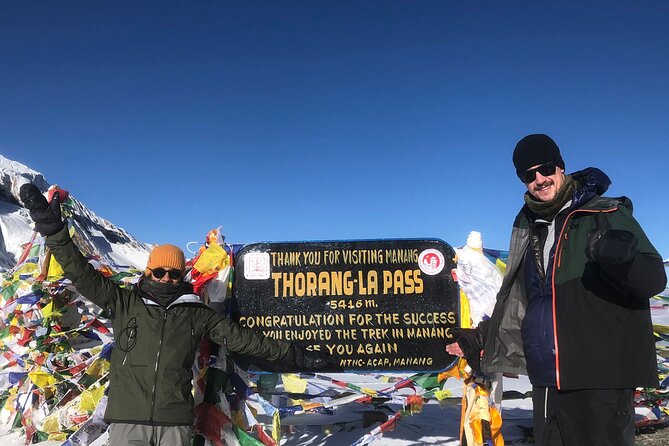
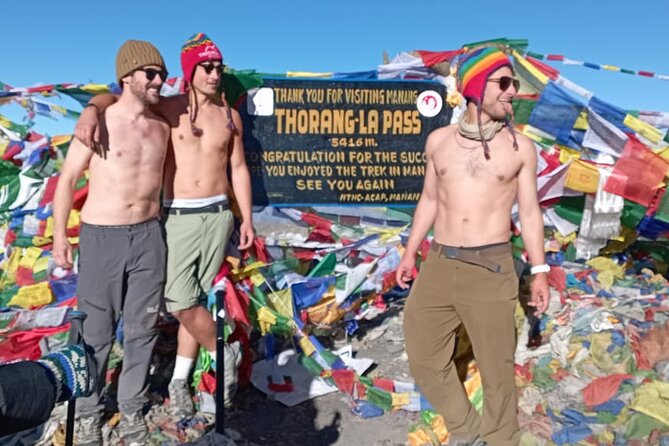
Day nine is your early start pass day. You cross Thorung La at 5,416m, and the route is described as steep immediately after leaving camp but well defined because local people use it for hundreds of years.
After about four hours of steady climbing, you reach a chorten and prayer flags at the pass. Views are described as dramatic, from snow-covered mountains to the head of the Kali Gandaki valley below and the brown and purple hills of Mustang.
Then comes the part your knees will notice: descent to Muktinath involves about 1,600m of knee pounding drop, though it is paired with excellent views of Dhaulagiri.
Overnight: Muktinath area.
Day 10, Muktinath to Tatopani: a faster moving day
You start by praying at Muktinath, then breakfast is ready when you return to your lodge. After collecting your things, you take another jeep ride, this time from Muktinath to Tatopani along the Kali Gandaki River.
The plan calls this about a 5 hour travel period, so it feels like a change of pace compared with pure trail days.
Why it is a smart design: you get the pass and the long descent on day nine, then a semi recovery day with vehicle travel on day ten. That helps you roll into the final trekking stretch without feeling completely shredded.
Day 11 to 12: Ghorepani, Poon Hill sunrise, then back down to Pokhara
Day 11, Ghorepani: villages, rhododendron, and wildlife
Day eleven starts with flat sections, then you climb steeply for at least an hour, moving through villages with different caste and farming land. The route notes that many local people serve in the Gorkha Regiment and Indian Regiment, which you may notice in how the community talks and moves.
You also hike through rhododendron forests and may spot wildlife like monkeys and birds.
Overnight: Ghorepani.
What to watch: even though you are close to the finish, the hills still have power. Keep your pace steady.
Day 12, Pokhara via Poon Hill: the sunrise payoff
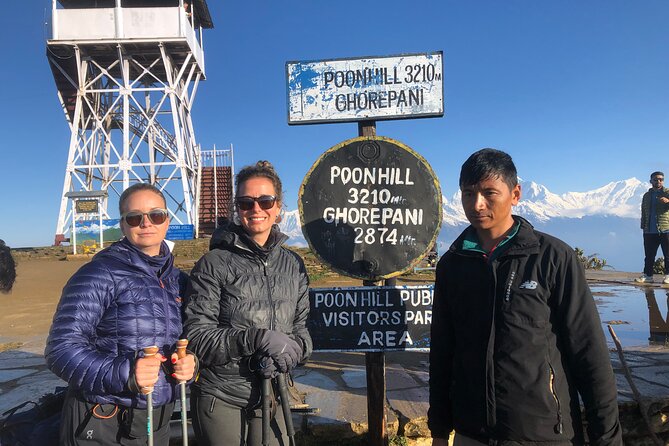
You start with an early morning trip to Poon Hill at 3,232m. The sunrise view list is long and specific, including Dhaulagiri (8,167m), Annapurna peaks, Machhapuchhre, and several other peaks.
After sunrise, you return for breakfast, then descend through rhododendron and oak forests. You pass Banthanti for a pause with hot and cold drinks, and you continue down toward Pokhara to finish the trek.
Why you will remember this day: it is your high reward for the week-plus of walking. You see many of the main Himalaya giants in one morning window, and then the day shifts from effort back into comfort.
Kathmandu and Pokhara extras, plus the Sarangkot angle
The overall tour idea includes Kathmandu sightseeing and Pokhara time, not just trekking days. That matters because the hike ends at altitude, then you want at least a bit of a reset and a chance to enjoy the cities.
In Pokhara, there is also mention of a Sarangkot Dhampus hike for single people, up to a maximum of 14 at once, with groups split if needed. Even if your trek ends in Pokhara, ask ahead about whether that side trip fits your dates and your energy.
Also note: lodging options are flexible. The tour mentions 2 or 3 star hotels, with 3 nights in Kathmandu and 2 nights in Pokhara, and it also says 4 or 5 star upgrades can be booked if you want more comfort after long days.
Lodges, packing, and altitude reality checks that help you enjoy the trek
Tea houses and lodges are included during the trek, which removes a big headache: figuring out bookings every night. Still, plan on basic comfort. What matters is warm layers, dry socks, and taking care of your feet.
Your packing setup is practical. You carry a day pack with water bottle, camera, sun screen, spare jacket, and similar items. Your main luggage is carried by porter, and the listing says a porter can carry about 20 kg total (around 10 kg per trekker). If you need porter support, a cost of 20 USD per day is listed, so clarify how many porters you will need versus what is already assigned.
A big logistics note: if you fly domestically to or from Pokhara, the weight allowance is listed as 15 kg including your hand bag, and excess weight can cost USD 1 or more and is charged as extra on your tour cost. If you are coming in from abroad, plan your airline baggage strategy so you are not paying surprise overage fees.
Guides and group size: why the people behind the scenes matter on Annapurna
This kind of trek succeeds or fails based on daily decisions: pace, timing, lodge choices, and how you handle problems like sore feet or gear issues. The feedback you get for this operator centers on guide support, with named examples like Ram, Indra, Jitu, Hom, Kapil, and lead Bala or Balaram Khadka.
What you should take from that, even without meeting the guide ahead of time, is this: you will want a guide who can read conditions and keep you safe. The route crosses a major high pass, and it also includes long days with steep segments. Having a guide team that people describe as professional, attentive, and focused on safety is not a luxury here. It is part of getting through.
Small group size helps too. This program sets a maximum of 10 travelers. A smaller group usually means more space for questions, better pace matching, and less pressure when you are trying to keep your breathing steady on climbs.
Who this trek suits best
This is a guided trek with a big altitude day and a knee-heavy descent. It fits you if:
- you want the Annapurna Circuit experience with less DIY stress
- you like a structured plan, guides who handle logistics, and small-group trekking
- you are comfortable walking many hours most days
- you are willing to take acclimatization seriously, especially with the Manang rest day
It may not be the best fit if you want a fully easy hike with no steep sections, because multiple days include steep climbing, narrow paths, and rough-feeling trail segments.
Should you book this Annapurna Circuit Trek?
If you want Annapurna without spending most of your trip managing transportation, lodge logistics, and daily planning, this is a strong option. The value comes from included trek accommodations, real guide support, and built-in acclimatization before Thorung La.
I would book if you also care about how the trip connects with Kathmandu and Pokhara, not only the mountain days. The Poon Hill sunrise setup is another big reason to choose this itinerary, because it sets up a dramatic morning payoff before you head back down.
I would pause before booking if you have knee issues or you know you struggle with long descents, because day nine includes a steep drop of roughly 1,600m after the pass. If your knees are good and your training is solid, you are in the right place.
FAQ
What is the duration of the Annapurna Circuit trek?
The trek is listed as 12 days approximately.
Where does the tour start and what time do we meet?
The meeting time is listed as 6:15am, and day one includes hotel pickup around 7am for the drive to the bus terminal.
What does the trek price include?
Included items cover lodge or tea house accommodations during the trek, government taxes, an experienced guide, guide support (including food, drinks, accommodation, transportation, and insurance for the guide), and listed ground transportation segments. It also lists some meals as included: dinner (day 11), lunch (day 12), and breakfast (day 12).
Are airport or hotel pickups included?
Yes. Pickup is offered, and private vehicles are mentioned for airport transfers and sightseeing in Kathmandu.
Is a porter included?
The extra-info section says the company provides porters, with a porter carrying about 20 kg total, and it also lists a cost of 20 USD per day if you need a porter. If you care about porter planning, confirm how this is handled for your specific group size.
What is the highest point on the route?
The itinerary describes crossing Thorung La at 5,416m on day 9.
Are meals included while in Kathmandu and Pokhara?
Meals (lunch and dinner) while you are in the city are not included.
What accommodations should I expect?
During the trek, lodges or tea houses are included. For city stays, the program mentions 2 or 3 star standard hotels with 3 nights in Kathmandu and 2 nights in Pokhara, with 4 or 5 star upgrades available.
What is the cancellation policy?
You can cancel up to 6 days before the experience for a full refund. Cancel 2 to 6 days before for a 50 percent refund. Less than 2 days before is not refunded, based on the local time cut-off.
Latest additions near Kathmandu
- White Water River Rafting – 1 Day★ 4.3 · 3 reviews
- Traditional Momo Making Class★ 5.0 · 10 reviews
- Kathmandu to Pokhara Premium sofa bus ticket★ 4.0 · 17 reviews
- Ghorepani Poon Hill Trek★ 5.0 · 16 reviews
- Amazing 1 Day Trekking Experience in Kathmandu Nepal★ 5.0 · 24 reviews
- Ghorepani Poonhill Trek★ 5.0 · 5 reviews
- Walking tour of real Kathmandu through back streets.★ 5.0 · 3 reviews
- Wildlife Adventure in Chitwan Nepal★ 4.0 · 4 reviews
Annapurna Circuit Treks, compared.
Browse the lists this tour appears in