
Reviewed · PEAK CLIMBING
Kyajo Ri Peak Climbing
Kyajo Ri tests you, then pays you back. This 17-day climb in Nepal takes you from Kathmandu to Lukla by scenic flight, then up through Sherpa villages and high camps toward a 6,186-meter summit with big views. I love how much care goes into the human side of altitude, with multiple acclimatization pauses, not just a rushed push upward. I also like the way the trip is built around real Sherpa culture, from camp setup and gear checks to the day-to-day guidance you get on the trail.
There is one drawback to plan for: Kyajo Ri includes technical sections where you’ll rely on fixed ropes and crampons, and altitude can still hit even if you feel fine. If you do not have strong fitness and solid stamina, this is the kind of challenge that can turn stressful fast, especially with mountain weather.
In This Review
- Key things I’d circle on your planner
- Why Kyajo Ri at 6,186 meters feels like a real challenge
- Getting There: Kathmandu, Lukla, and the mountain flight rhythm
- Kathmandu Days 1-2: welcome dinner, UNESCO sights, and paperwork that keeps the climb smooth
- Trek Day 3: Lukla to Phakding through rhododendron and mani walls
- Trek Day 4: Sagarmatha National Park entry and the Sherpa capital, Namche Bazaar
- Trek Day 5: Namche rest day for acclimatization and view hikes
- Trek Day 6: Bhote Khosi Valley, waterfalls, and steeper climbing toward Mende
- Trek Day 7: Kyajo Drangka and base camp setup under big peak walls
- Trek Day 8: Rest at base camp above 4,500 meters
- Trek Day 9: Camp I at 5,200 meters, with glacial lake views
- Trek Day 10: Another acclimatization pause at Camp I
- Trek Day 11: Camp II near a glacial lake at 5,700 meters, and technical terrain
- Summit Day (Day 12): Start early, aim to reach before noon, and enjoy the peak list
- Trek Day 13: Down to base camp, take it easy, and reset your legs
- Trek Days 14-15: Back through Mende, rhododendrons, and the Lukla celebration
- Day 16-17: Flight back to Kathmandu, rest, and fitting in UNESCO sights you missed
- Guide, Sherpa crew, and support that shows up in the details
- Price and logistics: what $3,350 really covers, and what you must plan
- Who this Kyajo Ri climb fits best, and who should be cautious
- FAQ
- How high is Kyajo Ri Peak on this itinerary?
- How long is the Kyajo Ri Peak Climbing trip?
- What is the starting point and start time?
- Do you get a scenic flight to Lukla and back?
- Is airport pickup and transfer included?
- What is included in the price?
- What is not included?
- Do I need travel documents?
- Is this a private tour?
- Can I get a full refund if I cancel?
- Should you book this Kyajo Ri Peak Climbing?
Key things I’d circle on your planner
- Scenic flight routing: Kathmandu to Lukla and back, which keeps the trek focused on the mountains, not travel days.
- Smart acclimatization rhythm: rest days at Namche, base camp, Camp I, and Camp I again before the final push.
- Technical summit day: fixed ropes and crampons come into play on the higher sections.
- Big-peak view checklist: Everest, Lhotse, Makalu, Cho Oyu, Baruntse, Pumori, Ama Dablam, and more on a clear day.
- Sherpa-led camp work: your Sherpa crew handles camp setup and does frequent gear and health checks.
- Weather can change flight plans: if Lukla flights get canceled due to bad weather, the schedule can shift by a day.
Why Kyajo Ri at 6,186 meters feels like a real challenge
Kyajo Ri sits in the Everest region, and that matters. You don’t just climb a “peak on a map.” You move through the same high-country geography that frames the world’s tallest mountains. The summit elevation is listed as 6,186 meters, and the route is paced with altitude in mind, but it is still a serious climb.
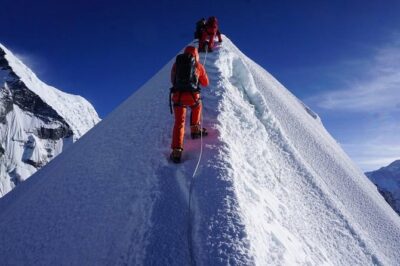
What makes Kyajo Ri special is the mix of trekking and climbing. You’ll hike for many days, but you also get technical. On the higher days, the plan calls for fixed ropes and crampons, which means you are not only walking up a trail. You’re moving on the kind of terrain where footing and timing matter.
I also like the way the itinerary is built around the “why” of acclimatization. Rest days are not treated like optional extras. They are scheduled at points where your body needs time to adjust, especially after you’re already above 3,000 meters.
More climbing peaks in Kathmandu:
- Mera Peak Climbing
★ 5.0 · 33 reviews - Island Peak Adventure
★ 5.0 · 15 reviews - Everest Base Camp Trek with Island Peak Climbing
★ 5.0 · 14 reviews
Getting There: Kathmandu, Lukla, and the mountain flight rhythm
Your trip starts in Kathmandu with pickup and transfers, then moves to Lukla by an early morning scenic flight. That Lukla gateway step is huge for two reasons.
First, it saves you from an extra travel-heavy approach. Second, it sets the tone. You’re in Nepal, but the climb really begins when you hit the Khumbu side and start trekking along the Dudh Koshi river and Sherpa villages.
One practical note: mountain flights can change. In one trip account tied to this operator, a Lukla flight was canceled due to bad weather, then they flew the next day. So you should expect that the schedule can flex. If you’re the type who needs everything locked to the minute, plan to stay flexible once you’re in Nepal.
Also, you’ll return to Kathmandu by another scenic flight after the trek. That means you get a clean landing back into Kathmandu rather than trekking for days just to “escape” the mountains.
Kathmandu Days 1-2: welcome dinner, UNESCO sights, and paperwork that keeps the climb smooth
Kathmandu is not just a staging area here. Day 1 includes an airport meeting, transfer to a central hotel, and a welcome dinner. On paper, that sounds standard. In practice, it helps you settle, get your bearings, and sort out trip details while you’re still at low altitude.
Day 2 is for Kathmandu valley UNESCO sightseeing and, just as importantly, for completing paperwork and trip preparations. The itinerary notes that you can’t realistically see every UNESCO site in one day, so the practical approach is to choose 3 to 4 places that match your interests and energy level.
This matters because the next days are physical. If you try to cram every site, you’ll come to the mountains tired. If you pick a handful, you’re set up to sleep better on the flight day.
Trek Day 3: Lukla to Phakding through rhododendron and mani walls
After breakfast in Kathmandu, you take the early flight to Lukla. Once you land, you start trekking immediately, passing through Sherpa villages and dense rhododendron forest. The route follows the left bank of the Dudh Koshi river.
This is a classic early acclimation move: you get elevation gain, but the pace is manageable compared to the later days. The trail also includes painted mani walls, which feel like a quiet reminder that this region is lived in, not just visited.
You end in Phakding for an overnight stay. This day is about getting your legs used to the trail rhythm and your lungs to the air.
Another way to spend the time in Nepal:
- Everest Base Camp Trek – 14 Days
★ 5.0 · 1,499 reviews - Everest Base Camp Trek
★ 5.0 · 842 reviews - Private Kathmandu Sightseeing Tour | UNESCO World Heritage sites
★ 5.0 · 756 reviews - Kathmandu: 7 UNESCO Sites with Lunch
★ 4.8 · 744 reviews
Trek Day 4: Sagarmatha National Park entry and the Sherpa capital, Namche Bazaar
From Phakding, you cross suspension bridges and follow a route that goes through smaller villages like Benkar and Monjo. You’ll cross the Dudh Koshi river again, then climb toward Sagarmatha (Everest) National Park entry.
That entry stop is not just a formality. It’s a marker that you are firmly in protected high-country territory, and the process is part of how the region is managed.
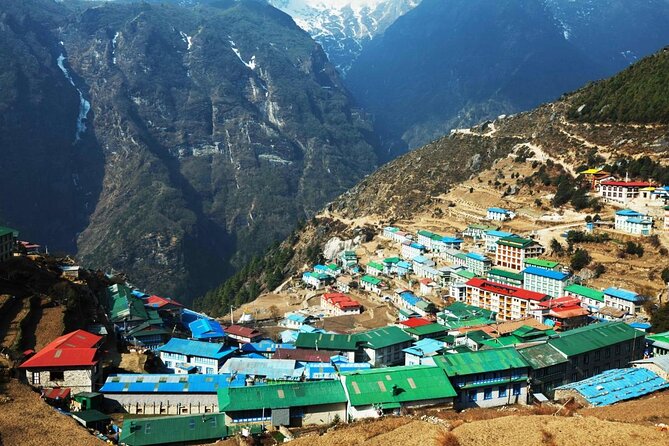
Then you descend over stone steps, cross another suspension bridge, and climb again until you reach Namche Bazaar, described as the Sherpa capital. Namche is the emotional shift point of the trek. Before Namche, the trail feels like getting started. After Namche, you start thinking like an acclimatizer and a climber.
Trek Day 5: Namche rest day for acclimatization and view hikes
By now you’re over 3,000 meters, and the plan treats acclimatization as essential. Day 5 is a rest day in Namche Bazaar, and it’s built for you to explore and adjust without rushing.
Namche is a large market town with options for low-stress movement. The itinerary also suggests hikes that are useful for acclimatization, especially climbing options to Khunde Hospital and Syangboche. Khunde Hospital is mentioned as being set up by Sir Edmund Hillary, which adds a meaningful historical anchor to the hike.
The Syangboche hike is also about views. You can get eye-catching panoramas of Everest, Lhotse, Cho Oyu, Nuptse, Thamserku, Kusum Kanguru, and Ama Dablam. Even if weather blocks one peak, you’ll feel the scale of the region.
This is one of the best days to be smart about pacing. You want to hike enough to get comfortable, but not so much that you’re wiped out for the next trekking day.
Trek Day 6: Bhote Khosi Valley, waterfalls, and steeper climbing toward Mende
Day 6 moves west into the Bhote Khosi Valley, once a popular trading route into Tibet. The route is described as cascading waterfalls, dense rhododendron forest, and a climb that becomes steep around the Thamo area.
You’ll head toward Mende for the overnight. This stretch is where the walk starts to feel more “mountain” than “village trekking.” The good news is you’re still supported by the structure of the trip and the camp planning team.
Trek Day 7: Kyajo Drangka and base camp setup under big peak walls
From Mende, you follow a faint yak trail over passes into Kyajo Drangka, an isolated broad valley south of Kyajo Ri. This is one of those sections where it feels like the itinerary is matching the geography. Less traffic, more open valley, and strong mountain views.
The route includes views of Thamserku, Kusum Kangaru, Kwangde Peak, Parchamo Peak, and other snow-capped peaks. Eventually you reach summer yak pasture ground, where you set up base camp.
A key detail is that your Sherpa crew sets up camp and prepares for higher-altitude camps. They also start checking climbing gear. For you, that means you’re not constantly worrying about logistics while you’re already focused on altitude and effort.
Trek Day 8: Rest at base camp above 4,500 meters
You reach over 4,500 meters by this point. Day 8 is a rest day at base camp for altitude safety and acclimatization. You’re still high, but you’re not climbing higher that day.
The plan suggests you can hike around the base camp area for acclimatization while enjoying mountain valleys and peaks. In other words, you’re using small movements to help your body adjust.
At the same time, your crew continues gear checks and preparations. That balance is what makes the summit bid possible.
Trek Day 9: Camp I at 5,200 meters, with glacial lake views
After a full base camp rest day, you move upward. You climb over grassy spurs and boulders, then follow a steep rocky trail to reach a camping site at 5,200 meters for Camp I.
This is where the route begins to feel more like an expedition than a hike. The plan emphasizes views of Kyajo Ri Peak and pristine glacial lakes. You’ll feel that “near-summit” energy, but you still have more acclimatization to do.
You camp at Camp I before heading higher.
Trek Day 10: Another acclimatization pause at Camp I
Day 10 is another rest day for acclimatization at Camp I. The goal is to reduce mental and physical stress that can come from altitude. Your crew also checks health conditions and climbing equipment.
If you want one practical takeaway from this itinerary, it’s this: it builds in time for your body to catch up to your altitude gains. You’re not just climbing. You are conditioning yourself to climb.
Trek Day 11: Camp II near a glacial lake at 5,700 meters, and technical terrain
Day 11 includes more serious climbing over rocks and glaciers. The plan notes that you’ll need fixed ropes and crampons here. You arrive at a campsite near a big glacial lake at 5,700 meters, then the Sherpa crew sets up camp quickly and starts final preparations for the summit climb the next day.
This day is often the tipping point emotionally. You’re close enough that you can feel the summit day pressure. The good structure helps you focus on controlled effort.
Summit Day (Day 12): Start early, aim to reach before noon, and enjoy the peak list
Summit day starts early with a target to reach the top before noon. The itinerary explains the reason clearly: strong winds after midday can create barriers making the summit impossible.
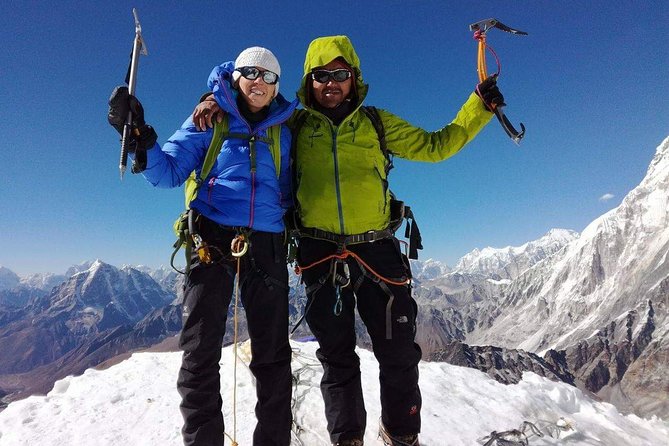
You climb following instructions and guidance from experienced climbing experts. You move through technical sections, then reach the sharp summit of Kyajo Ri Peak.
Once you’re up, you get rewarded with splendid views of world’s towering mountains. The view list includes Everest, Lhotse, Makalu, Cho Oyu, Baruntse, Ama Dablam, and other surrounding high peaks. Even if you can’t see everything in one lighting condition, the scale of the region is unforgettable.
You spend short quality time at the top, then descend back to Camp II.
Trek Day 13: Down to base camp, take it easy, and reset your legs
After the summit, Day 13 is about recovery. You take it easy after breakfast and retrace your steps from Camp II, going through Camp I and descending to base camp for an overnight.
A good summit day can leave you wired. But descent is still hard work on the knees and ankles. This day is where you’ll want to slow your stride and stay careful with footing.
Trek Days 14-15: Back through Mende, rhododendrons, and the Lukla celebration
Day 14 returns through Mende and transitions back into alpine to sub-tropical forest. Rhododendron trees are mentioned again, so the scenery shifts as your altitude drops.
Then Day 15 brings you from Namche Bazaar back toward Lukla with a pleasant walk, short uphill sections, and multiple crossings of the Bhote Koshi River, crossing it three times. You finish with a last uphill climb of about 45 minutes before reaching Lukla.
After arriving in Lukla, you celebrate the successful completion of Kyajo Ri Peak Climbing together with your team.
Day 16-17: Flight back to Kathmandu, rest, and fitting in UNESCO sights you missed
On Day 16, you take an early morning scenic flight from Lukla back to Kathmandu and then transfer to your hotel. You can rest, or visit any UNESCO sites you couldn’t cover on Day 2.
Thamel market streets are suggested as a good place to spend quality time. After that, you share a final meal together to mark the end of the climb.
Day 17 is a drop-off to the international airport based on your flight schedule.
Guide, Sherpa crew, and support that shows up in the details
This trip leans hard on team support. The itinerary includes a professional guide and a porter for every two people, plus hotel pickup and drop-off. But what stands out more is what the guides and Sherpa crew do during the climb itself.
Gear checks happen at multiple points, and camp setup is handled by the Sherpa crew as you move to higher camps. That reduces uncertainty, which matters because altitude already creates enough of that.
The review notes also include real guide names, which is a nice credibility signal. You might work with climbing hero Dendi Sherpa, or guides like Sona Sherpa and Lakpa Sherpa. One account also mentioned Prakash being around to answer questions. When staff show up consistently like that, it usually means fewer stressful moments during technical or weather-related changes.
Price and logistics: what $3,350 really covers, and what you must plan
The price is listed as $3,350.00 per person for roughly 17 days. To judge value, I look at what you are not scrambling to arrange yourself.
Included:
- Meals (breakfast, lunch, dinner) and accommodation as per the itinerary
- All taxes, national park fees, and handling charges
- A professional guide, plus one porter for two people
- Hotel pickup and drop-off
- Scenic flight Kathmandu to Lukla to Kathmandu
- Mobile ticket
Not included:
- Personal climbing gear
- Personal insurance
- Alcoholic beverages
- Personal expenses
- Tips for staff
So where is the value? It’s in the total logistics chain. Flights to Lukla, park handling, camp support, and meals remove a lot of planning load. You’re paying for a system that keeps you moving toward the summit rather than booking every small piece on your own.
Your part is still big. Make sure you budget for personal climbing equipment and insurance. Also, pack smart. At high altitude, a cold day can cost you more energy than another hour of climbing.
Who this Kyajo Ri climb fits best, and who should be cautious
This tour is for you if:
- You have a strong physical fitness level
- You want a structured acclimatization plan with multiple rest days
- You’re comfortable with a technical element that uses fixed ropes and crampons
- You want Sherpa-led culture and support, not just a route on paper
You should be cautious if:
- You struggle with altitude even on moderate hikes
- You don’t like uncertainty around mountain flights and weather
- You are not ready for technical climbing sections late in the trek
This is not a casual trekking holiday. It’s an expedition style climb with a summit bid that depends on timing and conditions.
FAQ
How high is Kyajo Ri Peak on this itinerary?
The summit listed for Kyajo Ri Peak is 6,186 meters.
How long is the Kyajo Ri Peak Climbing trip?
The duration is approximately 17 days.
What is the starting point and start time?
The meeting point is Kathmandu Valley, and the start time is 7:00 am.
Do you get a scenic flight to Lukla and back?
Yes. The plan includes a scenic flight from Kathmandu to Lukla and then back to Kathmandu.
Is airport pickup and transfer included?
Yes. Hotel pickup and drop-off are included, and there is an airport representative for the end of the trip.
What is included in the price?
Breakfast, lunch, dinner, and accommodation as per the itinerary, plus taxes, national park fees, and handling charges are included, along with a professional guide and one porter for two people.
What is not included?
Personal climbing gears, personal insurance, alcoholic beverages, personal expenses, and tips for staff are not included.
Do I need travel documents?
Yes. A current valid passport is required, and passport details are needed at booking.
Is this a private tour?
Yes. It is private, and only your group will participate.
Can I get a full refund if I cancel?
You can cancel up to 24 hours in advance for a full refund.
Should you book this Kyajo Ri Peak Climbing?
If you want a serious Everest region peak climb with a real acclimatization plan, this makes sense. You’re getting the full chain of support: flights to Lukla, guided trekking, meals, camp work by a Sherpa crew, and a summit strategy that targets before winds pick up after midday.
Book it if you match the fitness level requirement and you’re ready for technical climbing with fixed ropes and crampons. If you know altitude hits you hard or you dislike technical terrain, choose something lower first, build your experience, then come back for Kyajo Ri when you’re ready to move confidently at high altitude.
Latest additions near Kathmandu
- White Water River Rafting – 1 Day★ 4.3 · 3 reviews
- Traditional Momo Making Class★ 5.0 · 10 reviews
- Kathmandu to Pokhara Premium sofa bus ticket★ 4.0 · 17 reviews
- Ghorepani Poon Hill Trek★ 5.0 · 16 reviews
- Amazing 1 Day Trekking Experience in Kathmandu Nepal★ 5.0 · 24 reviews
- Ghorepani Poonhill Trek★ 5.0 · 5 reviews
- Walking tour of real Kathmandu through back streets.★ 5.0 · 3 reviews
- Wildlife Adventure in Chitwan Nepal★ 4.0 · 4 reviews
Peak Climbing, compared.
Everest Base Camp Trek with Island Peak Climbing
Read our review →
Browse the lists this tour appears in