
Reviewed · PEAK CLIMBING
Island Peak Climbing – 20 Days
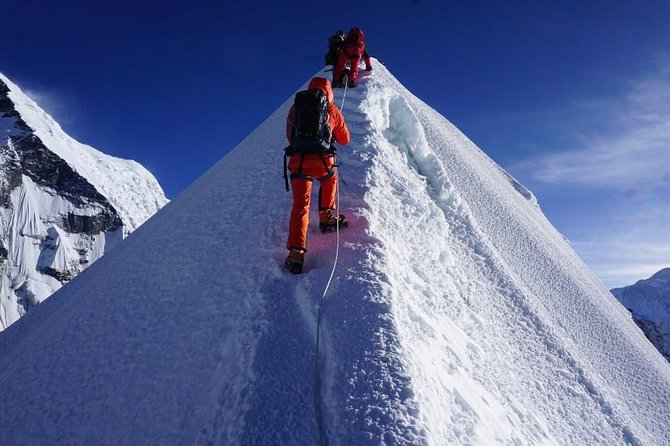
A 45-degree snow wall leads to real bragging rights. This 20-day adventure pairs the classic Everest Base Camp trek with an Island Peak climb, capped by a 300 meter headwall of 45 degree snow to an exposed summit ridge. I like that the trip runs with an English speaking, certified Sherpa guide and climbing support, and I also like that gear, permits, and the Kathmandu to Lukla flights are built into the package. The tradeoff is serious altitude time, and a long summit day with a steep descent, so strong fitness matters.
You’ll start in Thamel, Kathmandu, with pickup and a welcome dinner that includes a live Nepalese cultural program, then you get four nights in Kathmandu before heading for Lukla and the high country. You’ll sleep in local lodges on the trek, then shift to camping at Island Peak base camp and high camp, so you feel how quickly comfort changes at altitude.
In This Review
- Key things that make this Island Peak climb work
- Island Peak climbing plus Everest Base Camp: the appeal of the combined route
- Kathmandu warm-up: Thamel location, pickup, and a welcome night
- Day-by-day trekking rhythm: from Lukla up to the Everest Base Camp doorstep
- Days 3 to 7, Lukla to Namche, then toward the higher villages
- Day 8, the second acclimatization reset
- Lobuche, Gorak Shep, Everest Base Camp, and Kala Pattar: the big altitude days
- Day 9 to Day 11, hitting the Everest Base Camp arc
- Chhukung to Island Peak base camp: moving from trekking mode to climbing mode
- Summit day for Island Peak: the 45-degree headwall and exposed ridge
- How the rest of the trek feels after the summit
- Guides, care, and small comforts that matter at 5000 m plus
- Price and value: what $3,250 covers, and what you should budget separately
- Who should book this Island Peak program, and who should think twice
- Should you book it?
- FAQ
- How long is the Island Peak climbing trip?
- Where do you start in Kathmandu?
- Is the trip private?
- What flights are included?
- Are permits included?
- What accommodation do you get during the trek and in Kathmandu?
- Do you get a guide and porters?
- What climbing and camping equipment is included?
- What is not included in the price?
- What happens if weather is bad?
Key things that make this Island Peak climb work
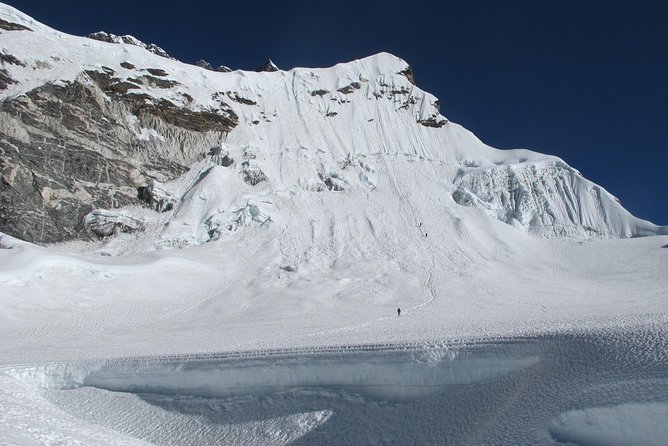
- A true high-alpine summit approach: a 300 meter, 45 degree snow headwall to the exposed summit ridge
- Everest Base Camp built in: trek up to Gorak Shep, then hike to Everest Base Camp, plus Kala Pattar
- Clear acclimatization structure: built in rest and altitude hikes around Namche Bazaar and the Dingbuche area
- Summit logistics include support: certified Sherpa guide, climbing crew, kitchen and camp staff, and porters (one porter for two trekkers)
- Food and fuel are thought through: lodge meals on trek, plus energy supplies like Snickers, Mars, Bounty, and fresh or canned fruit
- Weather gets a safety valve: a reserve day is included if conditions are unfavorable
Island Peak climbing plus Everest Base Camp: the appeal of the combined route
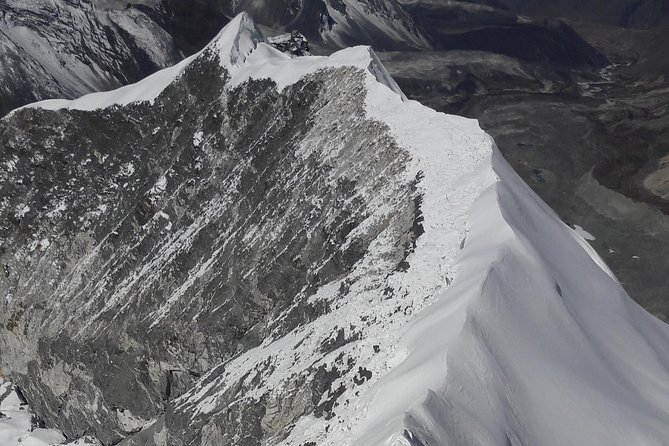
What I like about this combo is that it gives you two kinds of payoff. First you earn your altitude with the Everest Base Camp trek, then you cash it in with a real summit attempt on Island Peak at 6189 m.
Island Peak is often described as a “6000 meter climb,” but the details here are more intense than that label. The approach includes a 45 degree snow headwall and an exposed summit ridge, which is exactly the sort of terrain that turns a trip from scenic trekking into hands-on mountaineering.
If you want a single package that makes sense of logistics, acclimatization, and the summit day rhythm, this route is built for that. You are not just walking uphill and hoping for the best. You stage carefully, you train briefly, and you get a reserve day in case weather slows the plan.
More climbing peaks in Kathmandu:
- Mera Peak Climbing
★ 5.0 · 33 reviews - Island Peak Adventure
★ 5.0 · 15 reviews - Everest Base Camp Trek with Island Peak Climbing
★ 5.0 · 14 reviews
Kathmandu warm-up: Thamel location, pickup, and a welcome night
Your trip begins in Thamel, Kathmandu, with pickup arranged from the airport to the hotel and back again at the end. You also get a welcome dinner with an authentic Nepali meal and a live cultural program, which is a nice, low-key way to start because it helps you settle into Nepal without immediately sprinting into planning and gear issues.
You’ll have four nights on a twin share bed and breakfast basis in Kathmandu. That matters because you need sleep before Lukla, and you usually need time to confirm you have everything for cold weather and climbing, even though this package includes required personal and group climbing gear.
One more practical benefit: the tour uses a mobile ticket. That is not glamorous, but it saves friction on travel days when plans are tight and you are juggling flights, timing, and high-altitude schedules.
Day-by-day trekking rhythm: from Lukla up to the Everest Base Camp doorstep
Days 3 to 7, Lukla to Namche, then toward the higher villages
After flying to Lukla, you trek to Phakding in about 4 hours. It’s a gentle start by Everest standards, and it sets the tone for how the trek works here. You move steadily, you eat on schedule, and you start your altitude education early.
Day 4 is a longer climb to Namche Bazaar in about 6 to 7 hours. Day 5 is your acclimatization day in Namche Bazaar, where you’ll trek around the area. This is not wasted time. It helps your body adjust before you keep climbing, and it also gives you a buffer if your first days feel rough.
Day 6 treks to Tengbuche (about 5 to 6 hours). Day 7 goes on to Dingbuche (about 5 hours). By the time you reach Dingbuche, the air is thinner and the walking feels different. That is where the trip starts to feel like a real mountain program rather than a casual trek.
Another way to spend the time in Nepal:
- Everest Base Camp Trek – 14 Days
★ 5.0 · 1,499 reviews - Everest Base Camp Trek
★ 5.0 · 842 reviews - Private Kathmandu Sightseeing Tour | UNESCO World Heritage sites
★ 5.0 · 756 reviews - Kathmandu: 7 UNESCO Sites with Lunch
★ 4.8 · 744 reviews
Day 8, the second acclimatization reset
Day 8 is another acclimatization day, and you get options: a hike to Nagarjun Hill or Chukkhung Valley. The key idea is the same either way. You gain altitude in a controlled way, you keep your body adapting, and you reduce the odds that a later high point hits you harder than it should.
If you’re the type who gets anxious about altitude, these built-in adjustments are a relief. You are not guessing. The schedule is designed to help you move higher without charging straight into the danger zone.
Lobuche, Gorak Shep, Everest Base Camp, and Kala Pattar: the big altitude days
Day 9 to Day 11, hitting the Everest Base Camp arc
Day 9 takes you to Lobuche at 4915 m, around 5 hours. This is a classic staging move, and it’s where the trek starts stacking time at higher elevations.
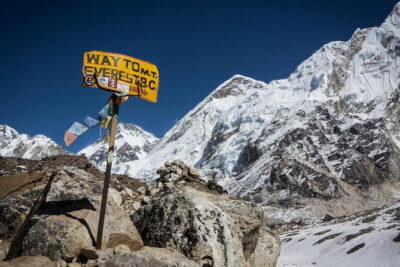
Day 10 climbs to Gorak Shep at 5130 m in about 3 hours, then you hike to Everest Base Camp at 5364 m. Even without extra sightseeing stops, this day is mentally demanding because you are gaining altitude and staying alert at the same time. You will likely feel the altitude by the time you reach base camp, and you will want to move efficiently rather than leisurely.
Day 11 is the push to Kala Pattar at 5545 m and then a descent to Dingbuche at 4400 m in 6 to 7 hours. Kala Pattar is often where people remember the trek as a whole, because it gives you one of the strongest sightlines in the region. The descent afterwards is equally important. You are not just chasing views. You are restoring your legs so you can continue toward Island Peak.
If you are worried about being “done” after Everest Base Camp, do not be. The trek after Kala Pattar is shorter on paper, but the climb to Island Peak is still its own challenge.
Chhukung to Island Peak base camp: moving from trekking mode to climbing mode
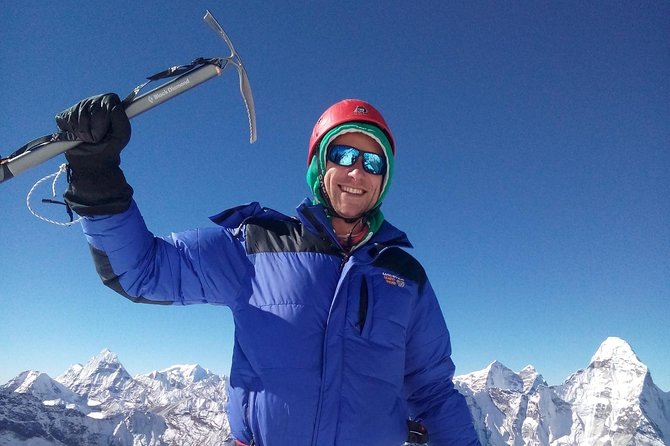
Day 12 treks from Dingbuche to Chhukung, then on to Island Peak base camp at 5200 m in about 3 to 4 hours. This is a transition day, and it’s where the trip starts to feel like mountaineering training rather than high trekking.
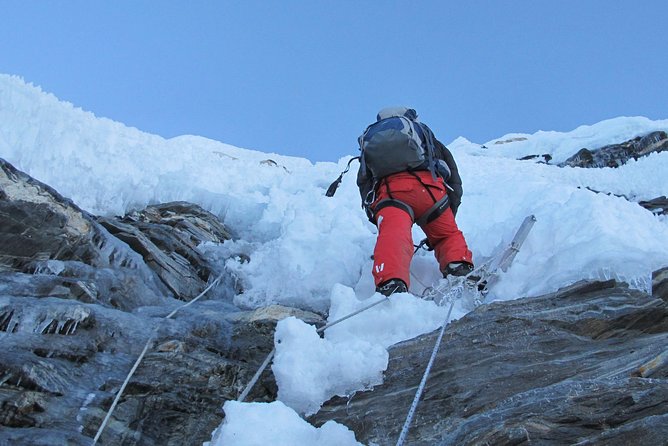
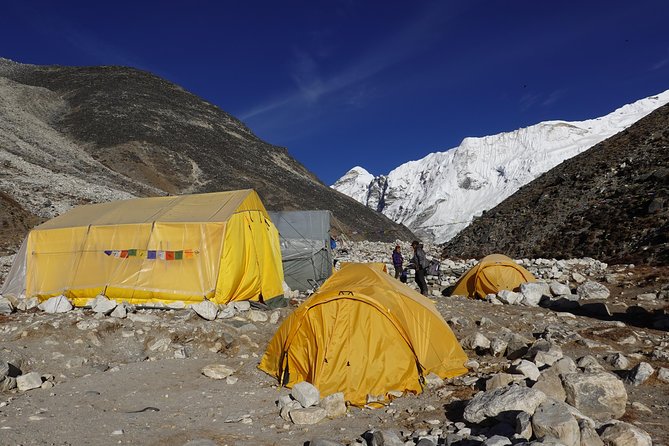
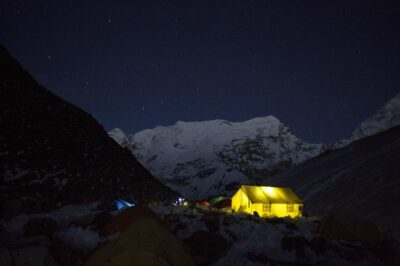
Day 13 includes pre-climb training and a trek to high camp at 5450 m in about 2 hours. That short high camp push is intentional. You are not spending a whole day wandering. You are staging for the summit attempt and learning the movement rhythm needed for steep, icy terrain.
This is also where I think the support team matters most. When the plan shifts from trekking pace to climbing pace, you want guidance, gear checks, and practical help. The package includes not only the Sherpa guide but also climbing support staff, including a cook and kitchen staff for the camp side.
Summit day for Island Peak: the 45-degree headwall and exposed ridge
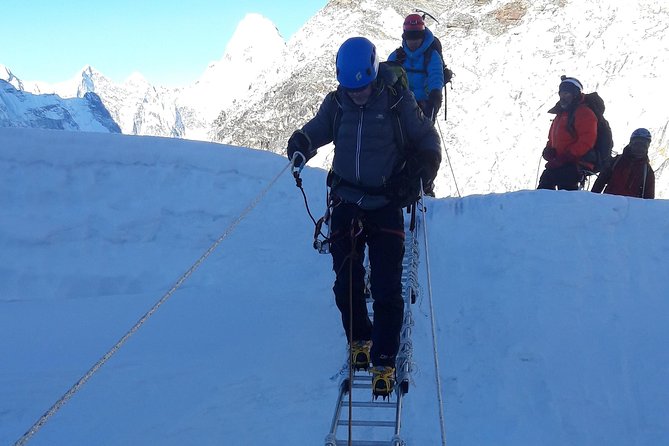
Day 14 is the big day. You ascend Island Peak to 6189 m and descend back to Chhukung at 4710 m in 10 to 12 hours. That long time on your feet is the real challenge, not only the altitude number.
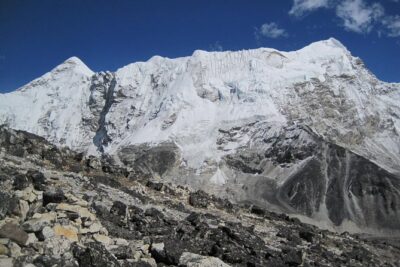
Now let’s talk terrain. The route includes a 300 meter headwall of 45 degree snow slopes leading to the exposed summit ridge. This is the part you should take seriously. You are not going to summit by being lucky or by pacing casually. You need controlled footwork, steady breathing, and to follow your guide’s technique.
From the summit, the view description tells you the reward is huge. You can see Nuptse, Lhotse and Lhotse Middle Peak, plus the unclimbed Lhotse Shar. To the east, you get the striking pyramid of Makalu and the icy waves of the Lhotse Shar Glacier. Toward the south, you’ll be looking at Baruntse and Ama Dablam. That means your summit day is not only a personal achievement. It’s also a front-row lesson in how the Himalayan skyline layers together.
Also, this route includes a reserve day on Day 15 if conditions turn unfavorable. That is not just a nice-to-have. In mountains, weather is a schedule thief.
How the rest of the trek feels after the summit
Day 16 returns you to Namche at 3441 m in 7 to 8 hours. Day 17 goes back to Lukla at 2810 m in 7 to 8 hours. After a summit day, those hours can feel tougher, not because the distance changes, but because your body is already spent.
Day 18 is your flight back to Kathmandu. Day 19 is a free day in Kathmandu, which gives you breathing room. If you have laundry, phone top-ups, or just want to eat something warmer and less altitude-flavored, this is when you do it.
Day 20 is departure, and the tour ends back at your meeting point. In other words, you are not left with the awkward end-of-trip scrambling. The schedule wraps up cleanly.
Guides, care, and small comforts that matter at 5000 m plus
One of the most praised strengths tied to this operator is guide care. In past climbs with the company, Tenzing and Mingma have been singled out for taking good care of groups and for solving unexpected problems quickly.
You should expect the vibe to match: an organized team behind the scenes, with the climbing side supported by porters and staff. You get a first aid medicine kit, and the team includes trekking cook, kitchen staff, porters, and other support staff during the climbing portion.
I also appreciate the simple “fuel” approach. The package brings energy supplies like Snickers, Mars, Bounty, plus fresh or canned fruit on the trek. At altitude, small calorie hits can be the difference between feeling steady and feeling fragile.
Then there’s the porter plan: one porter for two trekkers during climbing trips. That is a practical way to keep you moving without turning the trek into a load-hauling contest.
Price and value: what $3,250 covers, and what you should budget separately
At $3,250 per person, this is not a cheap trip, but it is also not the kind of tour where you later discover surprise add-ons. The package includes a long list that usually costs extra when you piece things together yourself.
Here’s what you should treat as built-in value:
- Round-trip airfare between Kathmandu and Lukla, with airport tax included
- Permits and fees including Island Peak climbing permit, Sagarmatha National Park fee, and TIMS permits plus required documentation
- Accommodation in Kathmandu for four nights (twin share, bed and breakfast)
- Local lodge meals during the trek for 13 nights (breakfast, lunch, dinner)
- Camping gear and camp setup for base camp and high camp (sleeping tents and mattresses, kitchen tent and equipment)
- Climbing equipment and gears, including personal and group items
- Support staff: guide, Sherpa support, cook and kitchen staff, and porters
- Safety basics: a first aid medicine kit
What is not included:
- Your personal travel insurance and the Nepal entry visa fee
- Lunch and dinner in cities (plan for $10 to $14 per meal in tourist restaurants)
- Beverages like soft drinks, mineral water, boiled water, and beer
- Tips for guide, porters, and driver
If you want a quick value check, ask yourself this: Are you paying for flights and permits in your budget already? If not, this package often makes more sense than DIY planning, especially when you factor in the climbing equipment and camp logistics that are easy to underestimate.
Who should book this Island Peak program, and who should think twice
This is best for you if:
- You have strong physical fitness and can handle long days above 4000 m
- You want the combination of Everest Base Camp trekking and a 6000 m class summit
- You like a structured plan with acclimatization days and a reserve day
Think twice if:
- You are uncomfortable with a long 10 to 12 hour summit day
- You have no mountaineering comfort at all. This trip includes training, but the route still includes steep snowy terrain and an exposed ridge.
- You cannot handle cold and altitude impacts. The schedule is demanding by design.
Should you book it?
I would book this if your priority is a well-run Island Peak climb that does not leave you to figure out the hard parts alone. You get the Everest Base Camp experience built in, plus the summit attempt with a clear staging plan and real summit terrain.
If you want a trip that feels organized from Thamel pickup through the Lukla flights and the final Kathmandu day, this one fits. If you only want short days and low pressure, this is not that.
FAQ
How long is the Island Peak climbing trip?
It’s scheduled for about 20 days.
Where do you start in Kathmandu?
The meeting point is Thamel, Kathmandu (44600), Nepal, and the tour ends back at the same meeting point.
Is the trip private?
Yes. It’s a private tour/activity, so only your group participates.
What flights are included?
You get round-trip airfare between Kathmandu and Lukla, and it says airport tax is included.
Are permits included?
Yes. The package includes Island Peak climbing permit, Sagarmatha National Park fee, and TIMS permits, plus all required permits or official documentation.
What accommodation do you get during the trek and in Kathmandu?
In Kathmandu, you get four nights in twin share bed and breakfast. During the trek you stay in local lodges for 13 nights with breakfast, lunch, and dinner. During climbing you do one night at base camp and one night at high camp with meals included.
Do you get a guide and porters?
Yes. You’ll have an English speaking experienced and certified Sherpa guide. You also get porters with a one porter for two trekkers arrangement on climbing trips, plus additional trekking and climbing staff.
What climbing and camping equipment is included?
The package includes all required personal and group climbing equipment and gears, plus camping equipment for base camp and high camp (sleeping tents and mattresses, kitchen tent, and kitchen equipment).
What is not included in the price?
Not included are personal travel insurance, Nepal entry visa fee, lunch and dinner in cities (budget $10 to $14 per meal), beverages, and tips for guide, porters, and driver.
What happens if weather is bad?
The trip requires good weather, and there is a reserve day (Day 15) if conditions are unfavorable. If it’s canceled due to poor weather, you’ll be offered a different date or a full refund.
Latest additions near Kathmandu
- White Water River Rafting – 1 Day★ 4.3 · 3 reviews
- Traditional Momo Making Class★ 5.0 · 10 reviews
- Kathmandu to Pokhara Premium sofa bus ticket★ 4.0 · 17 reviews
- Ghorepani Poonhill Trek★ 5.0 · 5 reviews
- Ghorepani Poon Hill Trek★ 5.0 · 16 reviews
- Amazing 1 Day Trekking Experience in Kathmandu Nepal★ 5.0 · 24 reviews
- Walking tour of real Kathmandu through back streets.★ 5.0 · 3 reviews
- Wildlife Adventure in Chitwan Nepal★ 4.0 · 4 reviews
Peak Climbing, compared.
Everest Base Camp Trek with Island Peak Climbing
Read our review →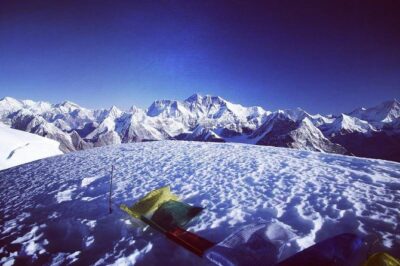
Browse the lists this tour appears in