
Reviewed · PEAK CLIMBING
Island Peak Climbing
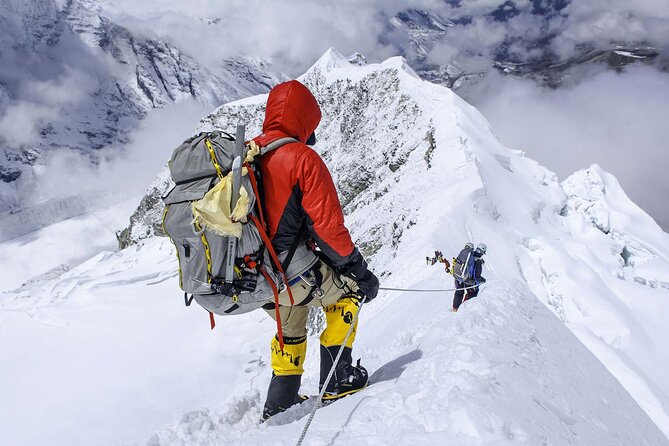
Island Peak is a proper training summit, mixing Everest-style scenery with real ice-climbing practice. I like that the climb is built on a classic Everest region trek, walking through Sherpa villages and gaining altitude step by step before your crampons ever come out. It feels like a bridge from trekking to mountaineering, not a random “hike with ropes.”
My second favorite thing is the human support. You get a local English-speaking trekking guide, plus an Island Peak climbing Sherpa guide from base camp for the summit and back. The one drawback to think about is that high altitude plus weather still rules the calendar, and you may need extra patience even with a contingency day, so you should be comfortable with the idea of flexibility at 6,189 m.
In This Review
- Key highlights to watch for
- Island Peak climbing, the “first mountaineering” style that makes sense
- Kathmandu to Lukla, and why you start with an altitude “warm up”
- Days on the trail: Phakding, Namche, Tengboche, Dingboche, and the Everest vibe
- Chhukung Ri and Chhukung: where trekking turns into a climbing mind-set
- Island Peak summit day at 6,189 m, plus the return that matters
- The contingency day, why it’s included and what it signals
- Guides and organization: the Accessible Adventure factor (and Himal’s name comes up)
- Accommodation and comfort: where this itinerary is smarter than it looks
- What’s included in the price, and how to think about value
- Equipment and what you should pack, so you are not scrambling
- Kathmandu days: not a sightseeing tour, but you still get a base
- Who this trip suits best, and who should reconsider
- Should you book this Island Peak climb?
- FAQ
- How long is the Island Peak climbing experience?
- What is included in the tour price?
- What do I need to handle that is not included?
- What kind of accommodations are provided during the trek and climb?
- Is there a contingency day if weather prevents the summit?
- What is the cancellation policy?
Key highlights to watch for
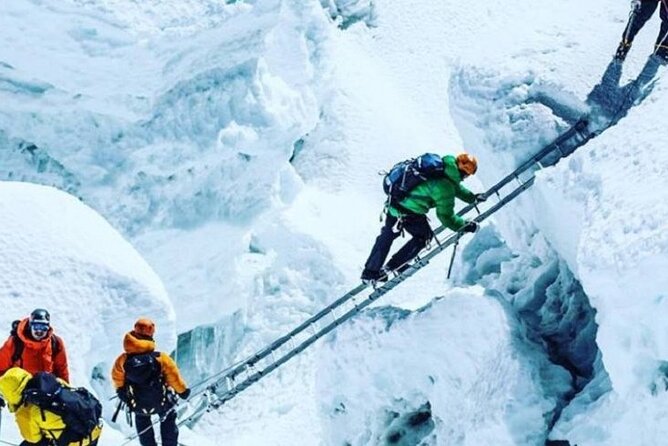
- Everest-region trekking first, via Lukla and the classic trail that helps your body adapt before the ice work begins
- Chhukung Ri acclimatization on the way to Island Peak, at 5,546 m, not just a “walk and hope” setup
- A summit-focused Sherpa from base camp, with group gear support for the climb
- Solid lodging plan for the trek, including private bathrooms and hot shower at Phakding, Namche, and Lukla
- Weather backup built in, with a dedicated contingency day for the targeted summit attempt
- Accessible Adventure’s organized, friendly leadership, including manager Himal and a guide you can actually ask questions to
Island Peak climbing, the “first mountaineering” style that makes sense
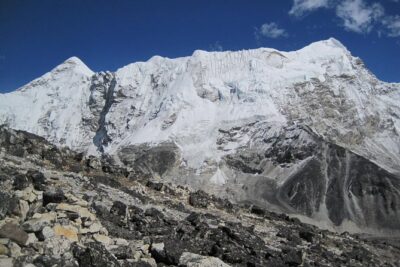
Island Peak sits in that sweet spot for many hikers who are ready for mountaineering, but not ready for a full-on expedition. It is one of Nepal’s popular trekking peaks, and the whole program is designed to teach you how the mountains feel when the goal is not just a view, but a summit at high altitude.
The big value here is the progression. You start in Kathmandu, then fly to Lukla and spend days trekking through villages and elevation. Only after that do you move into the climbing rhythm. That matters because Island Peak is not just distance, it is oxygen and technique, and those two things are easiest to handle when you arrive already acclimatized.
More climbing peaks in Kathmandu:
- Mera Peak Climbing
★ 5.0 · 33 reviews - Island Peak Adventure
★ 5.0 · 15 reviews - Everest Base Camp Trek with Island Peak Climbing
★ 5.0 · 14 reviews
Kathmandu to Lukla, and why you start with an altitude “warm up”
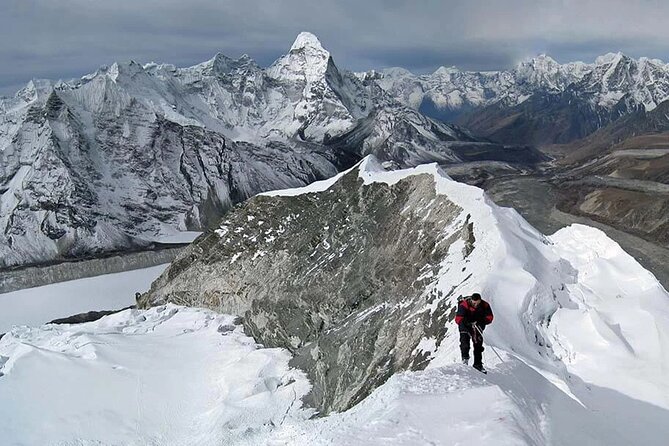
Most people picture the climb as the exciting part. I actually think the trek up to the Everest region is where your success gets shaped.
Your trip begins in Kathmandu (1,338 m). You get two nights in a 3-star category hotel with breakfast, in twin sharing rooms. The program also includes all ground transportation by private vehicle, plus pickup is offered, so you are not spending vacation time figuring out logistics after landing.
Then comes the signature move, the round trip flight Kathmandu to Lukla to Kathmandu, including departure taxes. Lukla is the gateway to the trail, at about 2,800 m, and it throws you high quickly. That is why the next days are so structured: you trek to Phakding first, then keep climbing with breaks that let your body catch up.
Days on the trail: Phakding, Namche, Tengboche, Dingboche, and the Everest vibe
Here is how the route works, and what each segment is really doing for you.
Phakding (2,652 m) from Lukla (2,800 m)
You transition from flight to trail with a manageable day, reaching Phakding at 2,652 m. It is a useful buffer after the initial lift to Lukla, and it sets the pace for what follows. Accommodation at Phakding includes private bathrooms and hot shower, which is more important than people think when you are wearing layers all day.
Namche Bazaar (3,440 m), plus a day to acclimatize
Namche is the elevation hub of the Khumbu region. You reach it from Phakding at 3,440 m. After that, the itinerary includes an acclimatization day with a hike to an Everest view hotel. That is a key element of a smart high-altitude plan, because it gives you exertion without rushing the next altitude jump.
Tengboche (about 3,860 m)
From Namche you move onward to Tengboche, around 3,860 m. Tengboche is often used as a staging point where the trail feels more “mountain serious.” You will be walking at higher altitude, but you are still in the trekking zone, where your day is mostly rhythm, breathing, and steady effort.
Dingboche (4,410 m)
The next stop is Dingboche at 4,410 m. At this level, you start feeling altitude in a way that changes your pacing. The program keeps you moving through the classic Everest area, which also means you are surrounded by a trail culture that understands high-altitude hikers and climbers.
The practical win of this setup is that you are not thrown directly from trekking altitude into climbing altitude. By the time you reach the Chhukung area, your body has already been trained for the grind.
Chhukung Ri and Chhukung: where trekking turns into a climbing mind-set
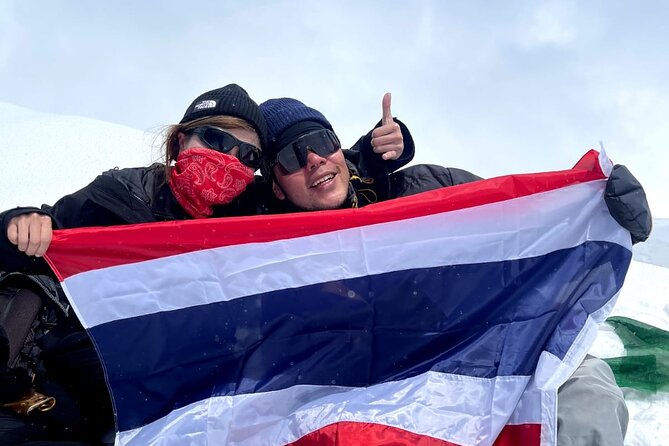
The itinerary then makes a big acclimatization move: you climb Chukkung Ri to 5,546 m, then trek to Chhukung at 4,730 m.
This is one of the most important parts of the whole plan. It is high enough to matter, but it is also an acclimatization climb that is paired with time to recover. When you reach Chhukung, you are transitioning from “walk with views” to “walk with purpose,” because the Island Peak base camp approach follows.
Chhukung is your staging zone. You spend the day trekking onward, and then you reach Island Peak base camp on the way to the summit.
Another way to spend the time in Nepal:
- Everest Base Camp Trek – 14 Days
★ 5.0 · 1,499 reviews - Everest Base Camp Trek
★ 5.0 · 842 reviews - Private Kathmandu Sightseeing Tour | UNESCO World Heritage sites
★ 5.0 · 756 reviews - Kathmandu: 7 UNESCO Sites with Lunch
★ 4.8 · 744 reviews
Island Peak summit day at 6,189 m, plus the return that matters
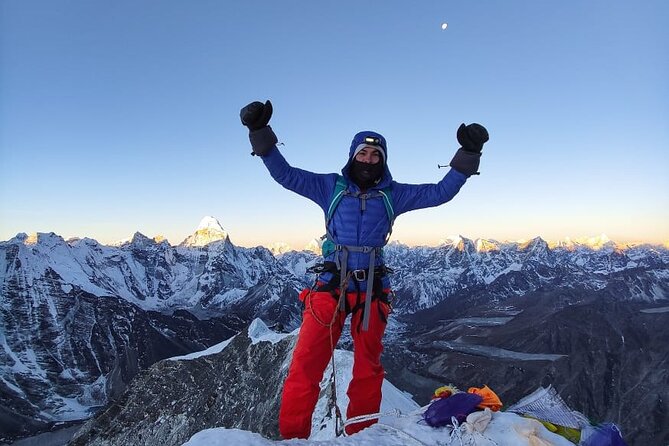
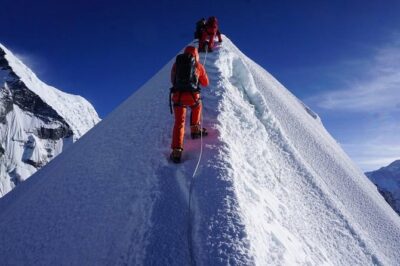
The program’s main summit day targets Island Peak at 6,189 m. The plan then includes the return from the summit back to Chhukung at 4,730 m.
That descent part is not a small detail. After pushing hard at the top, you are usually tired, and your legs can feel heavy. The return trek back to Chhukung is part of what makes the whole experience a real mountaineering day, not just a photo op.
You also get a summit Sherpa guide from Island Peak base camp for the summit and back. That is a comfort factor, especially if you are new to ice work. It means the people who know the route are with you at the moments that matter most.
The contingency day, why it’s included and what it signals
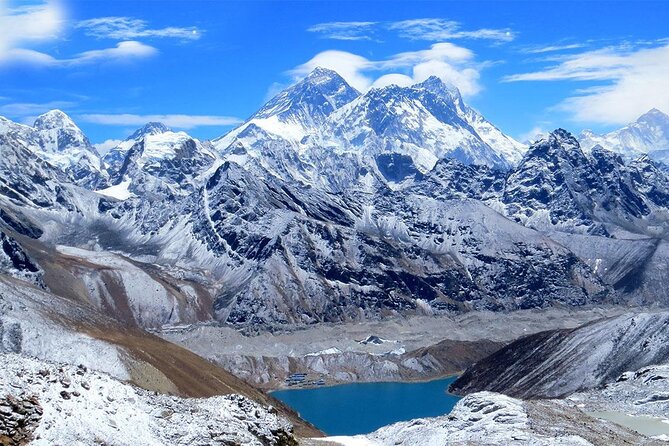
You get a dedicated contingency day in the itinerary if the targeted summit day has unfavorable weather conditions.
This is a good sign for how the trip is managed. In the mountains, a “scheduled summit” is never guaranteed. A contingency day means your climb planning is built around reality, not an optimistic timetable. It also helps you avoid the rushed feeling that happens when a trip is trying to fit a summit into tight timing.
Guides and organization: the Accessible Adventure factor (and Himal’s name comes up)
Your trip is led by a professional, knowledgeable, friendly English speaking climbing leader, supported by an assistant guide and porters or helpers. The group climbing support is planned with an assistant guide ratio of 6 trekkers to 1 assistant guide.
That structure matters because you are not just looking for someone to point the way. You want a team that can explain the plan, keep you moving at a safe pace, and handle the day-to-day mountain rhythm. Based on the feedback about Accessible Adventure, the standout is how approachable the guides feel. The manager, Himal, also gets specific praise for being a great person, and that kind of leadership usually shows up in calmer coordination and better communication.
If you are the type who likes to ask questions, this setup should feel good. You are more likely to understand what is happening and why, instead of just taking instructions and hoping for the best.
Accommodation and comfort: where this itinerary is smarter than it looks
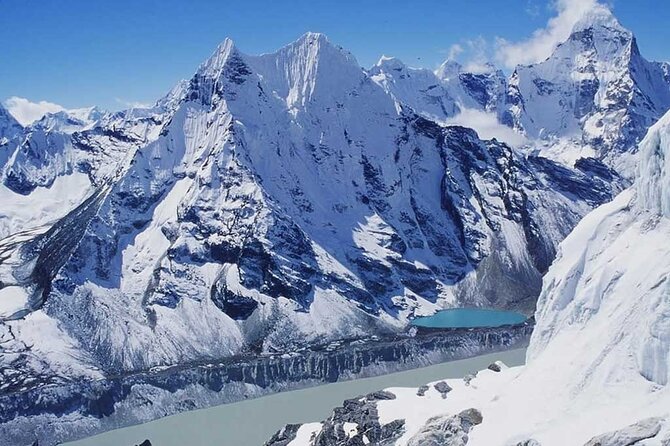
This program is not all roughing it. In Kathmandu, you get two nights in twin sharing rooms in a 3-star category hotel with breakfast. That gives you a proper base before you head to Lukla and start the trekking routine.
During the trek, you use local lodges as the “best available accommodation,” and you get private bathrooms and hot shower at Phakding, Namche, and Lukla. That is a real quality upgrade. When you are moving through cold mountain mornings, a hot shower after a hard day can be the difference between feeling worn out and feeling reset.
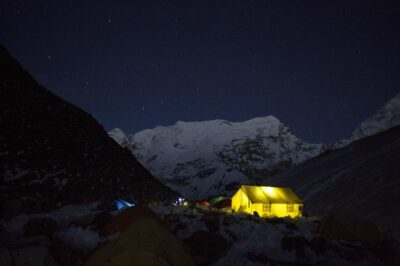
During the climb, you switch to tented accommodation. That is normal for a peak climb, but the program keeps the trek side comfortable so you are not exhausted before the climbing phase begins.
What’s included in the price, and how to think about value
At $2,900 per person for about 14 days, this is not a budget trek. You should judge value by what is covered and how much risk is managed through planning and support.
What you get included:
- Round trip flights Kathmandu to Lukla to Kathmandu, including departure taxes
- Permits: Island peak climbing permit plus National Park permits
- Meals during trek and climb, including tea or coffee
- Guides and staff: local English-speaking trekking guide, a climbing leader, assistant guide, and porters/helpers
- Group climbing equipment: climbing rope, ice screw, snow bar, ice hammer
- Summit support: an Island Peak climbing Sherpa guide from base camp for summit and back
- Accommodation: 3-star hotel nights in Kathmandu, lodge stays on trek, and tented accommodation during the climb
- Medical support: first aid medical kit
- Extra trip extras: duffle bag, sleeping bag, down jacket, plus a T-shirt, trekking map, and trip achievement certificate
A lot of the real cost in a peak climb is not the scenery, it is skilled staff time and the gear, permits, and risk controls. This itinerary pays for a full climbing support structure, and you are not left alone with random rentals.
Equipment and what you should pack, so you are not scrambling
A big win is that the program provides group climbing equipment and several key items. You get the climbing rope and essential hardware like an ice screw, snow bar, and ice hammer. You also get a sleeping bag, a down jacket, and a duffle bag for use during the trek and climb.
However, personal trekking and climbing gear is not included. That means you still need to cover your own basics. If you do not already own them, plan time and budget to buy or rent locally before you leave. Do not leave that until the last minute.
Also note a permit detail: you need to bring two passport size photos for the Island Peak permit. It is easy to forget, and it is also easy to fix, if you handle it early.
Kathmandu days: not a sightseeing tour, but you still get a base
This trip is mainly a mountain program. Sightseeing activities in Kathmandu are not included, and lunch and dinner in Kathmandu are not included either. You do get breakfast at the hotel, plus the hotel itself and transport.
That means your “Kathmandu time” is for reset and preparation. If you love museums and temple-hopping, you might want to add extra days. If you prefer to arrive, sleep, and organize gear, this format fits nicely.
Who this trip suits best, and who should reconsider
This climb is built for adventure lovers with some high-altitude trekking experience. It is not marketed as an entry-level walk-up, and the altitude supports that idea.
You will likely love this if you:
- Have trekking experience and are comfortable walking at elevation for multiple days
- Want a structured step into mountaineering on a popular “trekking peak”
- Prefer a guided plan with real summit support and a contingency day
- Appreciate lodging comfort where possible, like hot shower at several stops
You should think twice if:
- You hate the idea of weather delaying the summit, even with a contingency day
- You are not willing to handle personal gear requirements because the essentials provided do not replace everything
Should you book this Island Peak climb?
Book it if you want a mountaineering first step that still respects altitude. The biggest reason is the way the route is staged, trekking through Everest region villages, acclimatizing with a high point like Chhukung Ri, then moving into a proper summit day at 6,189 m with summit Sherpa support. It is ambitious, but it is not chaotic.
I also like the organizational feel. Accessible Adventure’s leadership stands out through praise for friendliness, helpfulness, and professional support, with manager Himal specifically named. That kind of care matters when conditions change.
Skip it or choose a different style if your priority is a low-pressure, no-weather-delay plan, or if you do not want to handle personal gear sourcing. A peak is a peak, and Island Peak is still a real high-altitude climb.
If you want the next step from trekking to mountaineering, this is one of the more sensible pathways in the Everest region.
FAQ
How long is the Island Peak climbing experience?
It runs for about 14 days.
What is included in the tour price?
The price includes private vehicle ground transportation, a local licensed English-speaking trekking guide, trekking permits and government taxes, two nights twin sharing hotel in Kathmandu with breakfast, round trip flights Kathmandu to Lukla to Kathmandu with departure taxes, Island Peak climbing permit and National Park permits, group climbing equipment, an Island Peak climbing Sherpa guide for the summit and return, meals during the trek and climb, accommodations during the trek and tented accommodation during the climb, guide and staff costs, duffle bag, sleeping bag, and down jacket for use, and a first aid medical kit.
What do I need to handle that is not included?
Not included are the Nepal visa arrangement, international airfare, excess baggage charges, travel and rescue insurance, Kathmandu sightseeing, added nights in Kathmandu, lunch and dinner in Kathmandu, alcohol and cold drinks, personal expenses, and personal trekking and climbing gears. You also need two passport size photos for the permits.
What kind of accommodations are provided during the trek and climb?
In Kathmandu, you get two nights twin sharing accommodation in a 3-star category hotel with breakfast. During the trek you stay in local lodges, with rooms that have private bathrooms and hot shower at Phakding, Namche, and Lukla. During the climb, you use tented accommodation.
Is there a contingency day if weather prevents the summit?
Yes. The itinerary includes a contingency day if the targeted summit day has unfavorable weather conditions.
What is the cancellation policy?
Free cancellation is available. You can cancel up to 24 hours in advance for a full refund, and changes made less than 24 hours before the start time are not accepted.
Latest additions near Kathmandu
- White Water River Rafting – 1 Day★ 4.3 · 3 reviews
- Traditional Momo Making Class★ 5.0 · 10 reviews
- Kathmandu to Pokhara Premium sofa bus ticket★ 4.0 · 17 reviews
- Ghorepani Poon Hill Trek★ 5.0 · 16 reviews
- Amazing 1 Day Trekking Experience in Kathmandu Nepal★ 5.0 · 24 reviews
- Ghorepani Poonhill Trek★ 5.0 · 5 reviews
- Walking tour of real Kathmandu through back streets.★ 5.0 · 3 reviews
- Wildlife Adventure in Chitwan Nepal★ 4.0 · 4 reviews
Peak Climbing, compared.
Everest Base Camp Trek with Island Peak Climbing
Read our review →
Browse the lists this tour appears in