
Reviewed · PEAK CLIMBING
Ama Dablam expedition with Island peak- 30 Days
Ama Dablam and Island Peak pull you into Nepal’s high country fast. Over 30 days, you climb from busy Kathmandu to big mountain walls, with real time built in for altitude and a base camp setup that keeps you functioning when the air gets thin. Ama Dablam means Mother’s necklace, and Island Peak sits above Imjatse Valley like a landmark you can feel in your bones.
I really like how this trip is organized for the mountain, not just the trekking boxes. The expedition includes practical base-camp comforts like a shower tent, charging help, and daily support so you can focus on moving and resting. One thing to consider up front: climbing-specific gear like climbing rope and fixed ropes is not included, and helicopter rescue by your plan is not included either, so you’ll want to plan logistics and safety coverage carefully.
In This Review
- Key Things That Matter on This Ama Dablam and Island Peak Combo
- Ama Dablam and Island Peak, Two Peaks With Different Personalities
- Why 30 Days Feels Like the Right Amount of Time
- Kathmandu Arrival and Expedition Prep, Getting Set Without Stress
- Lukla to Phakding to Namche: The First Altitude Shake
- Tengboche and Dingboche: A Better Rhythm Before Island Peak
- Imjatse Valley and Island Peak Base Camp, 4,970m of Focus
- Island Peak Summit at 6,189m, Then Back Down to Reset
- Ama Dablam Base Camp at 4,600m, Comfort You Actually Use
- The Long Climb to 6,812m: What That 13-Day Block Really Means
- Trek Back Down: Namche, Phakding, Lukla, and Kathmandu Without a Freefall
- Price and Value at $4,500, What You Get and What You Should Budget
- Who This Expedition Fits Best, and Who Should Reconsider
- Should You Book This Ama Dablam and Island Peak Expedition?
- FAQ
- How long is the Ama Dablam and Island Peak expedition?
- What is the price per person?
- Where does the trip start, and is pickup offered in Kathmandu?
- What climbing permits are included?
- Are meals and Kathmandu lodging included?
- What camp facilities are included at base camp?
- What is not included, and what is the cancellation policy?
Key Things That Matter on This Ama Dablam and Island Peak Combo
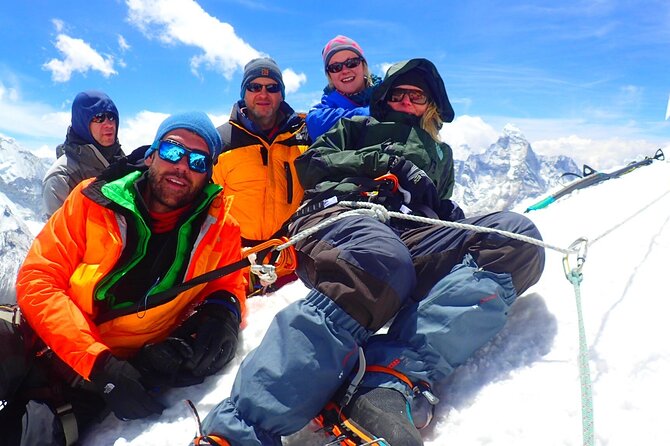
- A real acclimatization ladder through Namche, Tengboche, and Dingboche before you commit to high camps
- Island Peak support at 4,970m and 5,600m, with a clear climb rhythm up to the 6,189m summit
- Base camp comfort at Ama Dablam BC (4,600m), with dining, toilet, shower tents, and a solar power setup for charging and lighting
- 13 days of dedicated Ama Dablam climbing time, which is a big deal when weather and fatigue play games
- Small-group feel with a maximum of 15 travelers, which usually means less chaos in tight mountain spaces
Ama Dablam and Island Peak, Two Peaks With Different Personalities
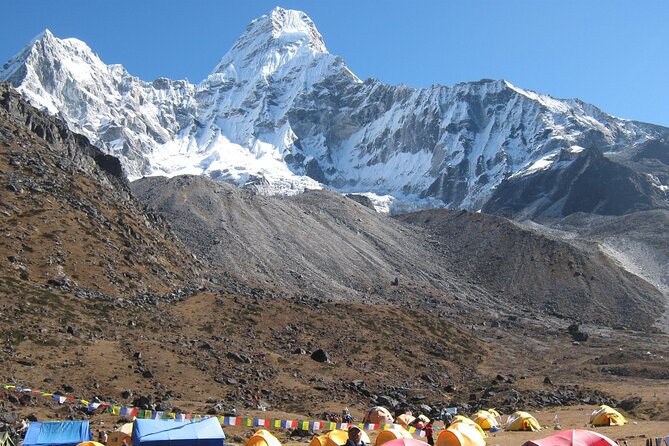
This is one of those Nepal routes where you get two very different kinds of satisfaction. Island Peak is your high-altitude training ground with a top that rewards sharp effort and steady pacing. Ama Dablam is the long, serious objective, known for its dramatic setting and the sense that you’re working your way up a wall rather than strolling toward a point on a map.
What makes this pairing work is the way the days are staged. You don’t jump from lodge trekking straight into summit mode. You build altitude gradually, you get rest, then you climb Island Peak, then you shift gears and settle in for a long run at Ama Dablam. That tempo matters for both your body and your decision-making.
The expedition also has a clear “team” vibe. You’re not left to figure everything out in the middle of a storm. There is a liaison officer, and the logistics for tents, meals, and base-camp basics are covered.
More climbing peaks in Kathmandu:
- Mera Peak Climbing
★ 5.0 · 33 reviews - Island Peak Adventure
★ 5.0 · 15 reviews - Everest Base Camp Trek with Island Peak Climbing
★ 5.0 · 14 reviews
Why 30 Days Feels Like the Right Amount of Time
One of the smartest parts of this trip is the total duration. 30 days gives you time to acclimatize without turning the whole journey into a nonstop treadmill. You get a trekking sequence that builds altitude step by step, then the high-camp work for Island Peak, then a long stay for Ama Dablam.
If you’ve done altitude trips before, you already know the pattern. Your legs can feel fine, then altitude nudges you, sleep changes, appetite shifts, and motivation gets weird. A month-long plan helps you ride those waves instead of getting forced into a bad schedule.
Also, the trip includes climbing permits for both Island Peak and Ama Dablam, which simplifies one of the annoying admin tasks you don’t want on your mind when you’re hauling gear.
Kathmandu Arrival and Expedition Prep, Getting Set Without Stress
Day 1 is arrival in Kathmandu, then a straightforward airport to hotel transfer. On Day 2, you prepare for the expedition, and on Day 3 you get a briefing at the Department of Tourism hotel. This kind of early prep day is underrated. It’s not just paperwork, it helps you understand the rhythm of the climb and the expectations of the team.
If you’re new to Nepal mountaineering, Kathmandu is where you learn the difference between “I can trek” and “I can climb.” Trekking teaches endurance and hiking technique. Climbing adds rope systems, cold management, and the mental discipline to keep going when the day slows down.
Pickup is offered, which also helps. In Kathmandu, saving a chunk of time means you can focus on packing the right layers and not wandering around with a sore back the day before a flight.
Lukla to Phakding to Namche: The First Altitude Shake
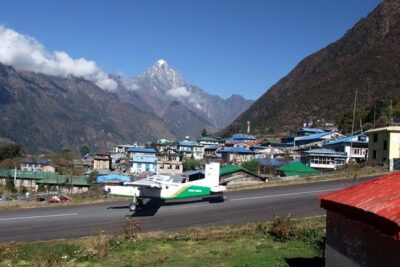
Day 4 brings the flight to Lukla and then trekking toward Phakding, staying in lodges. This is your first real step into the Everest region style of logistics: short travel days are normal, but the altitude is still doing its quiet work.
Day 5 moves you up to Namche Bazaar at 3,440m, again with lodge lodging. Namche is a hub. You’ll feel it right away in how busy it gets compared to smaller stops. It’s also a good place to keep your routine steady, eat well, hydrate, and avoid the urge to overdo it because the view looks amazing.
Day 6 is an acclimatization or day hiking day from the lodge. That pause is valuable. People often think acclimatization is just about climbing higher, but it’s also about your body learning how to function. The plan gives you the chance to adapt before you keep climbing.
Another way to spend the time in Nepal:
- Everest Base Camp Trek – 14 Days
★ 5.0 · 1,499 reviews - Everest Base Camp Trek
★ 5.0 · 842 reviews - Private Kathmandu Sightseeing Tour | UNESCO World Heritage sites
★ 5.0 · 756 reviews - Kathmandu: 7 UNESCO Sites with Lunch
★ 4.8 · 744 reviews
Tengboche and Dingboche: A Better Rhythm Before Island Peak
On Day 7 you trek to Tengboche at 3,800m and stay at a lodge. Tengboche is one of those stops where the air can feel crisp and clear, and the setting encourages calm. It’s a good day to keep effort controlled and focus on steady steps.
Day 8 takes you to Dingboche, where the plan continues the altitude ladder. This matters because your later climbing days at 4,970m and above are not forgiving. If you arrive high without good pacing habits, you’ll feel it during breaks, not just on the summit day.
By the time you’re ready for Island Peak base camp, you’re not just higher. You’ve trained your breathing and your decision-making to match the altitude.
Imjatse Valley and Island Peak Base Camp, 4,970m of Focus
Day 9 is the big transition day: trek to Island Peak Base Camp at 4,970m. At this point, the experience shifts from trekking to expedition mode. You’re closer to the gear reality, closer to the weather reality, and your daily life revolves around conserving energy.
Island Peak sits in the Imjatse Valley, surrounded by towering peaks and known as Imja Tse. The name Island Peak comes from how early explorers described it as something standing out like an island in a sea of mountains. In practical terms, that means the route feels like you’re working toward a clear objective. You can look up, orient yourself, and feel the mountain getting closer each day.
Day 10 puts you at Island Peak high camp at 5,600m. This is where you learn what “camp day” really means. It’s not only about altitude, it’s about managing cold, eating enough, and staying warm even when you feel sluggish.
Island Peak Summit at 6,189m, Then Back Down to Reset
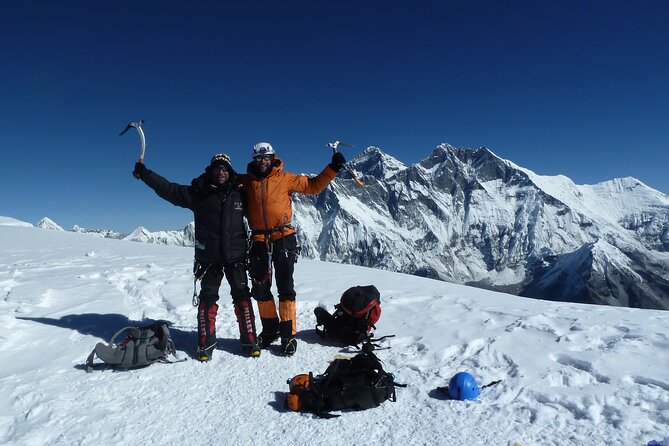
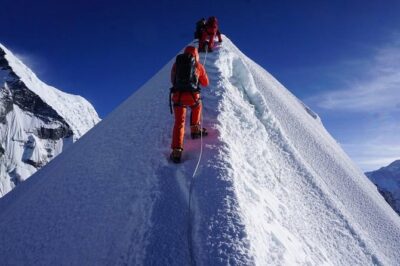
Day 11 is summit day for Island Peak at 6,189m. This is the payoff for your earlier effort and acclimatization work. Summit days are never just physical. They’re also mental and timing-based. You’ll be making decisions in cold air with limited margin for error.
Then you trek back to Chukkung and stay in a lodge on Day 11. That descent and reset is practical and important. You don’t want to turn the Island Peak summit into a permanent exhaustion problem. You need enough recovery to move toward Ama Dablam base camp next.
Day 12 takes you to Ama Dablam Base Camp at 4,600m. Notice the drop from Island Peak high altitudes. That’s not a coincidence. It helps you regain some normalcy before you step into a much longer climbing block.
Ama Dablam Base Camp at 4,600m, Comfort You Actually Use
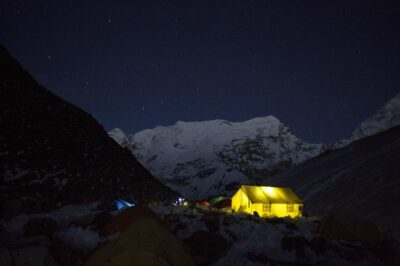
Ama Dablam base camp setup is one of the best parts of this experience. You’re not living in a totally bare camp where you sleep cold, eat awkwardly, and hope your gear survives. The expedition includes mattresses and a dining tent, plus a toilet tent and table and chair setup.
There is also a shower tent, and the base camp includes a solar panel for batteries charging and lighting. That may sound like “nice to have” until you’re stuck in a cycle of cold, wind, and damp gear. Then it becomes sanity-saving. Being able to charge electronics helps you manage communication and keep your mindset steady. Even if you’re not using much, it reduces that frantic feeling of losing contact with the outside world.
Meals are included, with 3 meals during the trek and climbing. Eating well in mountain country is not luxury, it’s fuel. If camp food is consistent and plentiful, you can focus on your next move instead of hunting for energy.
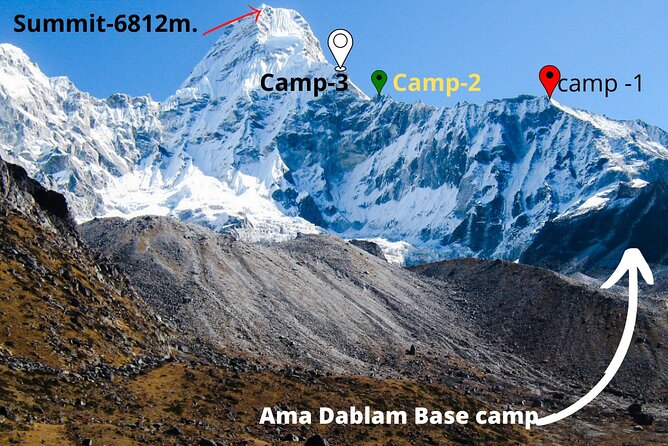
You’ll spend Day 13 through Day 26 with a climbing block at Ama Dablam, described as 13 days of climbing time aimed at the 6,812m summit. That’s a long commitment. It means you’re more likely to have weather windows, and it also means you have time to adjust rather than rushing a single attempt on a single day.
The Long Climb to 6,812m: What That 13-Day Block Really Means
Ama Dablam at 6,812m is not a quick summit like a morning jaunt. In practical terms, the multi-day climb gives your body time to adapt to the ongoing stress of high altitude and cold work. It also gives the team time to manage logistics as conditions change.
A long climb also changes how you experience the mountain. Early days feel like you’re learning the system. Middle days feel like endurance. Final days feel like you’re chasing a window while keeping fatigue under control. With this kind of timeline, you’re not just preparing once. You’re preparing again and again, day by day.
The expedition includes climbing permits for Ama Dablam, and the team includes a liaison officer. You get a structure that supports the climbing process rather than treating the objective as a solo adventure.
Most important: the base-camp support is designed to keep you functioning. Comfortable, spacious tents and a camp setup that includes shower and charging means you can recover properly. When you’re climbing multiple days, recovery is part of the climb.
Trek Back Down: Namche, Phakding, Lukla, and Kathmandu Without a Freefall
Day 27 brings the trek from Ama Dablam Base Camp back to Namche Bazaar, then Day 28 continues to Phakding and Lukla. Day 29 is the flight from Lukla to Kathmandu and a hotel transfer. Then Day 30 is transfer to the airport for your final departure.
This descending sequence is what you want after a long high-altitude push. It gives you time to return to lower altitudes without turning the descent into a forced sprint. Even when you’re eager to get home, you’ll feel better if you treat this phase like part of your mountain training, not just the end credits.
By the time you’re back in Kathmandu, you can breathe easier. But you should still plan some recovery time, because extended altitude work can leave you drained even when your mind feels ready to go.
Price and Value at $4,500, What You Get and What You Should Budget
The price is $4,500 per person for about 30 days, and it’s worth evaluating what’s inside the package versus what you must still handle yourself.
What feels like strong value here:
- Permits for both Island Peak and Ama Dablam
- Kathmandu airport to hotel and hotel to airport transfers
- 3 meals during trek and climbing
- Kathmandu accommodation on a bed and breakfast basis
- Base-camp infrastructure, including mattresses and multiple tents, plus table and chair setup
- Solar panel power for battery charging and lighting in base camp
- A liaison officer and support team logistics
What you should plan to pay separately:
- Personal climbing equipment
- Lunch and dinner in Kathmandu (only bed and breakfast is included)
- Rescue evacuation by helicopter is not included
- Climbing rope and fixed ropes are not included
- Extra porter costs for carry bags
So the real question isn’t only whether the price is good. It’s whether you’re prepared for the not-included pieces. If you show up with the right gear and you’ve planned for your own safety coverage, the package looks built for efficiency. If you show up missing key items, the price can feel less attractive quickly.
Who This Expedition Fits Best, and Who Should Reconsider
This is best for you if you want an organized, structured expedition with real base-camp support and a timeline that respects acclimatization. You’ll also like this if you want both peaks in one trip, rather than doing a shorter climb and calling it a day.
You should have strong physical fitness, because you’re dealing with trekking days and then high-altitude climbing. Also, the Ama Dablam objective is long, with about 13 days of climbing time. That means stamina is a must, and patience is a requirement.
This may not be for you if you want a minimalist camping style. The trip is not bare-bones. It’s built around comfort at camp, with shower and charging, and that’s great, but you should know what you’re signing up for.
Should You Book This Ama Dablam and Island Peak Expedition?
If you want a serious Nepal mountain adventure with solid logistics, supportive base camp setup, and time to acclimatize, this is a strong option to consider. The combination of climbing permits, included meals during the mountain phase, and camp comforts like showers and solar charging makes a real difference when the days get long.
If you’re still sorting your climbing gear, or you rely on helicopter rescue for peace of mind, you should plan carefully before booking. With the right prep, this trip has the kind of structure that helps you keep your focus where it belongs, on the mountain and your next step upward.
FAQ
How long is the Ama Dablam and Island Peak expedition?
It runs for 30 days approximately.
What is the price per person?
The price is $4,500.00 per person.
Where does the trip start, and is pickup offered in Kathmandu?
The meeting point is Tribhuvan Airport in Kathmandu, Nepal. Airport to hotel transfers and hotel to airport transfers are included in Kathmandu arrival and departure, and pickup is offered.
What climbing permits are included?
Climbing permits for Island Peak and Ama Dablam are included.
Are meals and Kathmandu lodging included?
Yes. The package includes 3 meals during the trek and climbing. In Kathmandu, accommodation is provided on a bed and breakfast basis. Lunch and dinner in Kathmandu are not included.
What camp facilities are included at base camp?
The expedition includes mattresses and camp tents such as a dining tent, toilet tent, and shower tent, plus table and chair. A solar panel is provided for batteries charging and lighting in base camp.
What is not included, and what is the cancellation policy?
Not included are personal climbing equipment, lunch and dinner in Kathmandu, helicopter rescue evacuation, climbing rope and fixed ropes, bar bills and beverages during the expedition, any evacuation and medical charges, and extra porter cost for carry bags. Cancellation is free, and you can cancel up to 24 hours in advance for a full refund.
Latest additions near Kathmandu
- White Water River Rafting – 1 Day★ 4.3 · 3 reviews
- Traditional Momo Making Class★ 5.0 · 10 reviews
- Kathmandu to Pokhara Premium sofa bus ticket★ 4.0 · 17 reviews
- Ghorepani Poon Hill Trek★ 5.0 · 16 reviews
- Amazing 1 Day Trekking Experience in Kathmandu Nepal★ 5.0 · 24 reviews
- Ghorepani Poonhill Trek★ 5.0 · 5 reviews
- Walking tour of real Kathmandu through back streets.★ 5.0 · 3 reviews
- Wildlife Adventure in Chitwan Nepal★ 4.0 · 4 reviews
Peak Climbing, compared.
Everest Base Camp Trek with Island Peak Climbing
Read our review →
Browse the lists this tour appears in