
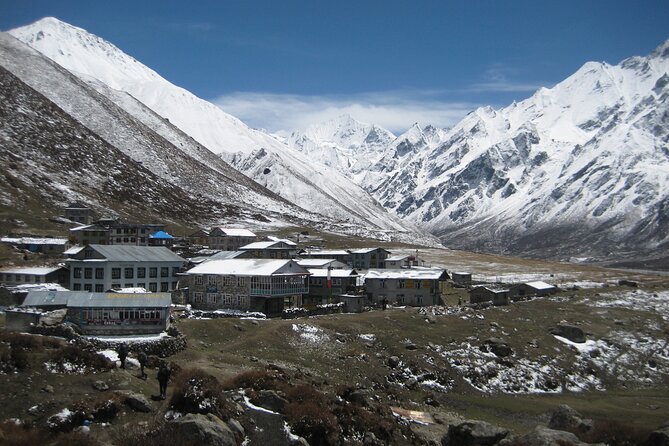
Reviewed · MANASLU CIRCUIT TREKS
Tsum Valley and Manaslu Trek
Tsum Valley feels like another world. This Tsum Valley plus Manaslu trek pairs Tibetan Buddhist village life with big mountain days, starting in Kathmandu and moving into the region that was restricted until 2008. I especially like how the route strings together gompas, chortens, mani walls, and little hamlets, not just viewpoints.
What I’d call the best value is the support package: a highly experienced guide, a porter for every two people, and even down jacket and sleeping bag use for the mountain nights. One drawback to consider up front is that this is a serious trek with long walking days and high passes, and you should be ready for cold conditions and limited comfort (for example, no hot shower during the trek).
In This Review
- Key things I’d track before you book
- Where the trek really starts: Kathmandu prep and cultural warm-up
- Day-by-day: from Macha Khola into the river gorge world
- Entering Tsum Valley: Lokpa, the checkpoint moment, and Tibetan-influenced daily life
- Chumling and the school stop: learning through a community project
- Nile to Mu Gompa: monastic calm and the highest feeling in the valley
- Rachen Gompa and nunnery nights: Bursi and the quieter side of Buddhism
- Leaving Tsum for the Manaslu Circuit: Deng, Budhi Gandaki crossings, and stone-arch days
- Samagaon rest energy and Sama village culture
- Samdo and the long approach to Larkya La
- Larkya La summit day and the moraine test
- Karcha La to Tilje: finishing strong without pretending it’s easy
- What’s included, and why the gear package is a big deal
- Price and logistics: where value is real, and where you still need to plan
- Who should book this trek, and who should reconsider
- Should you book this Tsum Valley plus Manaslu trek?
- FAQ
- How long is the Tsum Valley and Manaslu trek?
- What time is the start time?
- Are airport transfers included?
- Are trekking permits included?
- What trekking gear does the tour provide?
- Can I cancel for a full refund?
Key things I’d track before you book
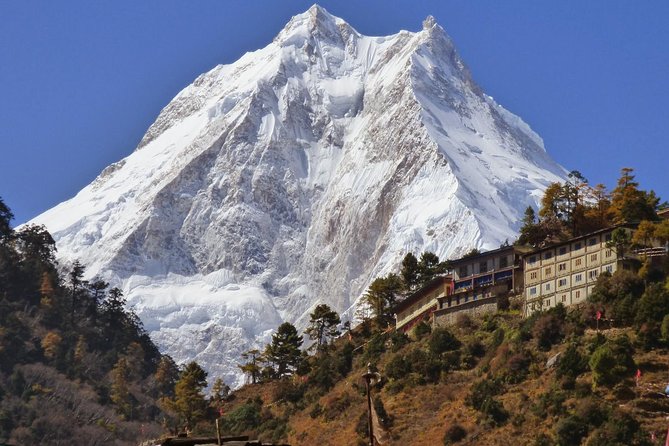
- Tsum Valley access via checkpoints: you’ll officially enter the restricted region and keep your permits handy at check posts
- Mu Gompa and Rachen areas: monastery visits that give real religious context, not just photos
- Manaslu Circuit switch at Deng: you get two distinct trekking styles in one trip
- Larkya La pass days: the highlight, with slippery moraine walking and prayer flags near the top
- Small group size: up to 15 people, which usually means less waiting around
Where the trek really starts: Kathmandu prep and cultural warm-up
Kathmandu sets the tone, and this trip keeps it practical. You land at Tribhuvan International Airport, then get picked up and driven to a hotel in Thamel, about 5 km from the airport. After you settle in, you get a welcome dinner with Nepali food, a good low-stress way to start.
The next day is all about getting your head in the right place for Nepal. You’ll meet the team, then handle trekking permits and documents. After that, you explore Kathmandu Durbar Square at Basantapur (also known as Freak Street) with temples and shrines, then head up to Swayambhunath for panoramic views. The day also includes time near Pashupatinath, famous for Hindu pilgrims.
Why this matters: trekking days in Nepal feel easier when you’ve already lined up permits and you’ve taken a few hours to adjust to the city’s rhythm. It also helps you understand what you’ll see later, since Tsum is shaped by both Tibetan Buddhism and Nepali culture.
More Treks in Kathmandu
- Everest Base Camp Trek – 14 Days
★ 5.0 · 1,499 reviews - Everest Base Camp Trek
★ 5.0 · 842 reviews - Everest Base Camp Trekking
★ 5.0 · 485 reviews
Day-by-day: from Macha Khola into the river gorge world
You’ll drive from Kathmandu toward the trailhead area via paved roads first, then rougher surfaces. The itinerary starts with the kind of day that doesn’t tire you out too much. Still, you’ll feel the early rhythm of Nepal travel: more time in vehicles than you might expect, then a gradual shift into foot travel.
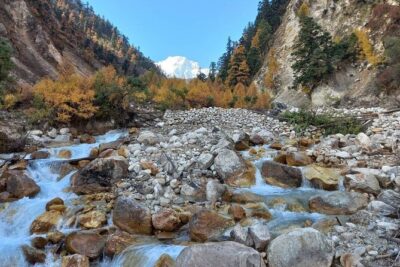
From the river gorge stage, the trek begins building character. The path follows the river through a narrow trail with plenty of ups and downs. You’ll cross multiple rivers, including Tharo Khola, and reach places like Khorlabesi. Then comes Tatopani, with natural hot springs, which is exactly the kind of muscle reset that makes a long trek feel manageable.
You also cross suspension bridges and climb stone staircases, including a rise toward Tharo Bharyang. Then you reach Jagat, where you’ll show trekking permits at a check post because the area beyond is restricted. Overnight in Jagat keeps you close to the next big step: entering Tsum Valley for real.
If you like to travel light, this is where you’ll appreciate the planning behind the trek. Lodges will take care of the basics for the night, and your bigger work is simply getting the next day done.
Entering Tsum Valley: Lokpa, the checkpoint moment, and Tibetan-influenced daily life
Day five is a turning point. You move from the outside region into the heart of Tsum Valley, and the trek makes it clear you are entering a controlled area. There’s a checkpoint where you show your permits.
Right after that, the walking becomes more about remoteness. You cross the Dudh Pokhari Khola and trek toward villages like Salleri and Siridibas, then descend toward the Budhi Gandaki River bridge. You’ll also pass through the larger village of Philim, then continue to Lokpa, which sits between the Budhi Gandaki and Siyar Khola.
What I like here is that Lokpa is described as living proof of how separated this region can feel. You’re not just passing through; you can spend time interacting with locals, seeing daily work and community patterns that many trekkers never experience anywhere else.
A small but very real cultural detail is that Tsum has a distinct social tradition. In this region, families may practice polyandry, described here as brothers being married to a single girl. You won’t be forced into any cultural lesson, but it’s the kind of fact that makes the place feel specific, not generic.
Chumling and the school stop: learning through a community project
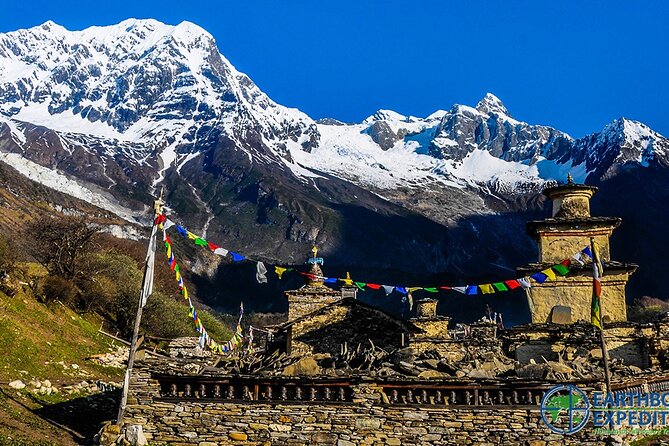
One of the most meaningful stops in the early-middle stretch is the Chumling school (Tsum community school project). The walk to Chumling takes you across khola crossings and through forest paths, then gradually up to the village.
This is where Tsum stops feeling like scenery and becomes human. You’ll see Tibetan Buddhist communities living by their traditions, and you’ll also catch the Ganesh Himal range in the east from the village area. Overnight in Chumling means you get time to slow down and notice the details: village routines, monastery presence, and the way the mountains shape movement.
Practically, this kind of stop works because it builds meaning without adding extra altitude stress. If you’re the type who likes to understand what your money supports, this is the part that gives you something more than a viewpoint.
More Manaslu Circuit departures:
- Manaslu Circuit Trek
★ 5.0 · 292 reviews - Manaslu Circuit Trek:
★ 5.0 · 106 reviews - Manaslu Circuit Trek (15 Days)
★ 5.0 · 50 reviews - Manaslu Circuit Trek
★ 5.0 · 35 reviews
Nile to Mu Gompa: monastic calm and the highest feeling in the valley
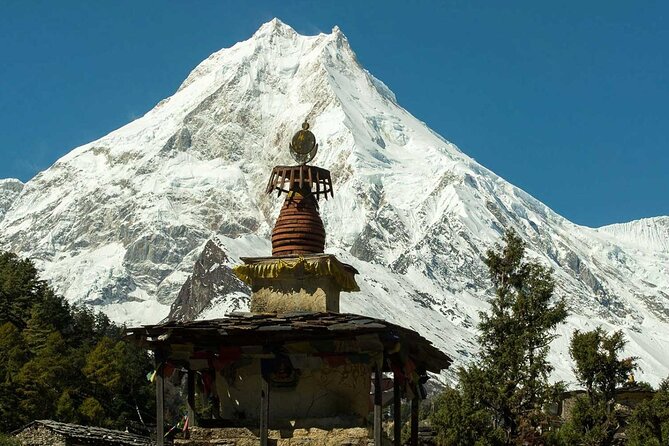
As you trek deeper, the route becomes a chain of smaller village stops. You’ll walk along the north of the Siyar Khola on a flatter trail and pass through several secluded villages, including Lamagaun, Bursi, Lar, Phurbey, Chhule, and Pungdun. You may also stop at places like Rachen Gompa and Milerapa Cave along the way.
That sequence matters because it shows you how a Himalayan trek can be both spiritual and practical. You get steady walking, chance to rest, and time around religious sites without it turning into a museum day.
Then comes Mu Gompa, described as a monastery and also the highest point in the valley. It was established by Drupa Rinpoche, a Bhutanese lama who meditated in nearby caves. The itinerary also mentions monks meditating and praying there, plus clear mountain views from higher altitude.
Why this is a highlight: you’re not only reaching a height, you’re reaching a place that holds religious activity. That makes it feel different from a pure summit day, and it fits Tsum Valley’s whole identity as a region that still feels “on its own.”
Rachen Gompa and nunnery nights: Bursi and the quieter side of Buddhism
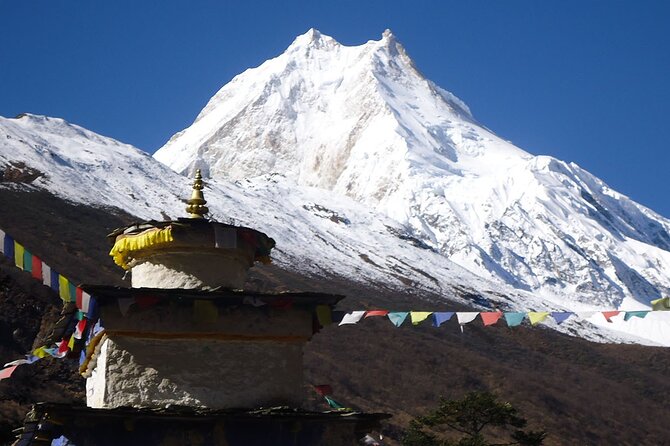
Next, you head toward Bursi, passing villages such as Kalung and Bhajyo. The route includes visiting one of the oldest monasteries in the area, Rachen Gompa, plus a nunnery where nuns reside.
An important detail here is the lodging possibility, meaning you can experience what it’s like when a religious compound is also part of local hospitality life. That is not the kind of thing you can easily replicate elsewhere.
After that, the itinerary sends you back down toward Chumling. Even though you’re descending, the views of Ganesh Himal are still highlighted. Then you start the most dramatic transition in the whole trip: leaving Tsum Valley.
Leaving Tsum for the Manaslu Circuit: Deng, Budhi Gandaki crossings, and stone-arch days
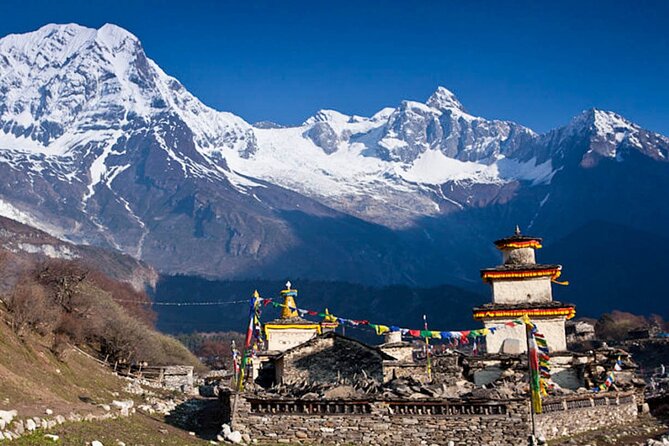
Day 12 marks the change. You leave Chumling and descend to Deng. You’ll pass Lokpa on the way out and cross the Budhi Gandaki River, then you join the Manaslu Circuit.
You’ll start seeing different styles of trail character. The itinerary notes Buddhist stone arches as part of what you’ll pass, and you’ll continue through a mix of river scenes, forest sections, and villages in huts.
Day 13 includes crossing Budhi Gandaki again, to join Bihi Phedi, then dropping into Shringi Khola valley. There’s also mention of a large waterfall and a wooden bridge out of a canyon. Then comes Ghap with mani walls on the southern side of the river, before reaching Namrung.
Why the change feels worthwhile: Tsum is tight, cultural, and village-to-village. Manaslu shifts toward big-distance trekking along the circuit, with more emphasis on valleys, river crossings, and pass-building days.
Samagaon rest energy and Sama village culture
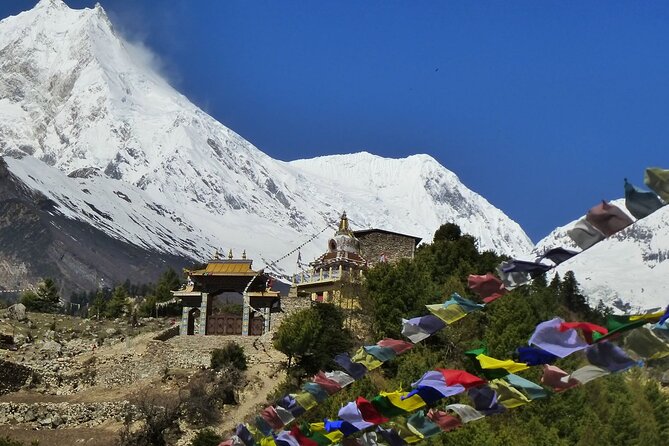
You’ll move onward to Namrung, then the next big area in the Manaslu rhythm is Namrung through to Samagaon. The day-by-day details here focus on viewpoints and a climb through forests to villages like Lihi, then to Sho and Lho, and onward to Shyala and Sama.
There’s a viewpoint day described with a full sight of Siring, Ganesh Himal, and Himal Chuli. You’ll also explore places like Ribung Gompa, and you’ll spend the evening in Sama with the Manaslu glacier visible straight ahead.
Then you get a rest day in Sama. I like rest days that are used well. This one includes interacting with Sherpas and seeing mani walls with Buddhist texts, plus a walk to Pungyen Gompa, described as ancient and sacred to locals with amazing glacier views.
This is also where you’ll feel the group size advantage. With a maximum of 15 people, you’re less likely to have the day swallowed by slow lines at teahouses or gompas.
Samdo and the long approach to Larkya La
The trek continues to Samdo. You descend toward the Budhi Gandaki River, cross a bridge, and pass by mani walls in the village. The route then gets closer to the Tibetan border, and the itinerary mentions juniper and birch forest before reaching Kermo Kharka, then a wooden bridge and a vantage point.
Overnight in Samdo matters because it sets you up for the pass day. It’s also a reminder that even when you think you’re in the “upper region,” the real high trekking still waits.
The next morning you begin the ascent to Larkya La pass. The route is described as descending through terraced fields, passing old mani walls and stone arches, then crossing a wooden bridge. After that, you move through juniper forestation and see the Larkya Glacier. The steep section near the gorge leads to Larkya Phedi for the night.
Larkya Phedi is described as having a small lodge and no real settlements, which makes the spot feel isolated. If you’re someone who likes quiet, this is the kind of “stop” you remember. If you don’t handle cold well, this is where you should lean into warmth and pacing.
Larkya La summit day and the moraine test
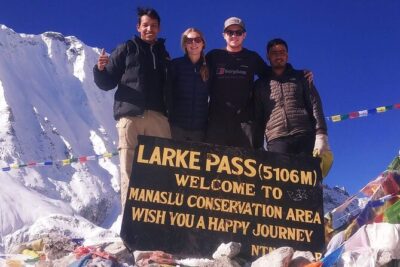
Day 18 is the big one. The itinerary describes starting with a trek to a small lake, then staying on a moraine ridge which becomes challenging. You’ll eventually see prayer flags in the Larkya La area.
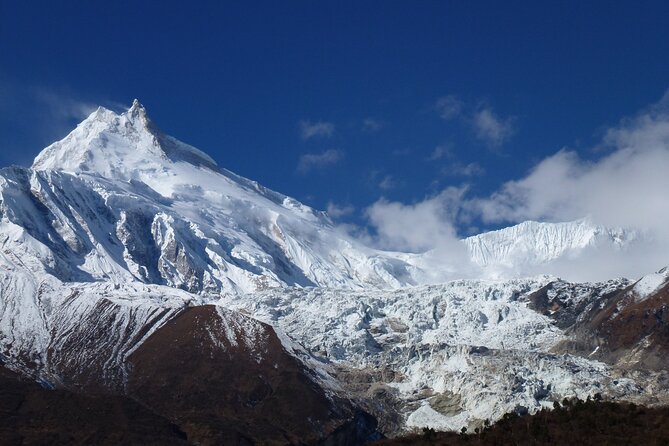
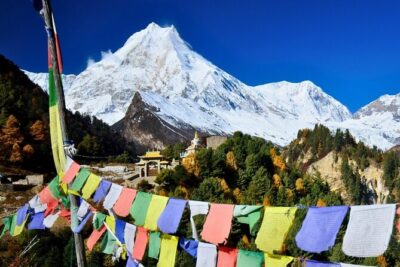
From there, you cross grady slopes and reach rustic villages and glacier lakes, then make the final gradual ascent to the summit. The reward is a close and clear view of Mt Manaslu. The route also warns that the path can be slippery, so you need careful footing.
Then it’s back down. You descend to a steep slope, reach a grassy moraine, and eventually get to a meadow and spring, before continuing to Bimthang for the night.
This day is why trekking poles are not optional. It’s also why your attitude matters. You’re not racing. You’re moving deliberately because footing comes first.
Karcha La to Tilje: finishing strong without pretending it’s easy
After Larkya La, the route keeps moving. You gently climb through paddy fields toward the small Karcha La pass. Then the trek descends through fig trees and rhododendron forests down to Tilje, where you’ll overnight at a guesthouse.
This section can feel deceptively “softer” compared with Larkya La. But you’ll still be tired, and the rhythm of frequent ups and downs adds up. If your legs feel heavy, that’s normal. Keep your steps short and steady.
What’s included, and why the gear package is a big deal
This tour is priced at $1,495 per person for about 21 days. It sounds high until you look at what’s covered and what you would otherwise need to manage yourself.
On the included side, you get:
- Private airport transfers and ground transportation
- Three nights in Kathmandu at a 3-star hotel with breakfast
- Twin sharing lodge to lodge accommodation during the trek
- A guide plus porter support, with one porter for two people, and staff meals, accommodation, salary, equipment, and accidental insurance
- Manaslu and Tsum special trekking permits plus Annapurna and Manaslu conservation fee
- Down jacket and sleeping bag use while trekking
- Duffle bag, trekking map, and a trip achievement certificate
- First aid medical kit, plus government taxes and office service charge
- Breakfast (with other meals not listed as fully included)
Why that gear detail matters: lots of travelers underestimate how quickly cold attacks sleep and breathing at higher altitude. Having the sleeping bag and down jacket handled for you usually means you travel lighter and avoid last-minute gear scrambling in Kathmandu.
Price and logistics: where value is real, and where you still need to plan
The cost becomes more reasonable when you look at the “hidden hassles” it removes: permits, conservation fees, and the people system that keeps the trek running. With up to 15 travelers, you also have a better chance of smooth logistics than on a huge group tour.
Still, you should plan for the parts that are not included or not clearly covered:
- Meals other than breakfast are not clearly listed as fully included
- Cold drinks, bottled or boiled water, snacks, and personal expenses are not included
- Hot showers during the trek are not included
- Personal trekking equipment is not included
My practical advice: budget for lunches and dinners day by day as needed, and plan your layering system around cold nights. Your feet will also care more than you think, so bring shoes and socks that are already broken in.
Who should book this trek, and who should reconsider
This trip fits best if you want a mix of cultural trekking and serious high-mountain scenery. You’ll get Tibetan-influenced villages, monasteries like Mu Gompa and Rachen Gompa, and then the bigger Manaslu circuit feel with Larkya La.
You should be comfortable with a moderate physical fitness level requirement, but also understand that “moderate” in Nepal often still means many hours on your feet, plus pass days that test strength and balance.
This also fits well if you prefer a small group and want support that does real work, like careful guide planning and porter coordination. The trekking support from guides such as Mahendra and assistance from porters like Ratskumar is noted in past experiences, and that kind of team matters on pass days.
If you hate cold, dislike minimal facilities, or want a trip that is more comfort-driven than challenge-driven, you’ll likely feel frustrated here. This is a climb and a culture walk at the same time.
Should you book this Tsum Valley plus Manaslu trek?
I’d say yes if you want one trip that combines rare Tsum Valley culture with the signature drama of the Manaslu Circuit and a real shot at close views of Manaslu from Larkya La.
Before you book, check your comfort level with:
- High-pass conditions and slippery trail sections
- Cold nights without hot showers
- Meal flexibility on the trail
- A long 21-day rhythm
If you’re ready for that tradeoff, this feels like good value. You’re paying for planning, permits, guide and porter support, and enough included gear to reduce stress in the mountains. For the kind of trekking that still feels remote and culturally specific, it’s an easy recommendation.
FAQ
How long is the Tsum Valley and Manaslu trek?
It’s about 21 days.
What time is the start time?
The meeting point start time is 7:00 am.
Are airport transfers included?
Yes. The trip includes all ground transportation by private vehicle, including airport transfers.
Are trekking permits included?
Yes. Manaslu and Tsum Valley special trekking permits are included, along with Annapurna and Manaslu conservation fees.
What trekking gear does the tour provide?
The tour provides down jacket and sleeping bag use while trekking, plus a duffle bag and a trekking map.
Can I cancel for a full refund?
Yes, free cancellation is available. You can cancel up to 24 hours in advance for a full refund. If you cancel less than 24 hours before the start time, the amount paid is not refunded.
Latest additions near Kathmandu
- White Water River Rafting – 1 Day★ 4.3 · 3 reviews
- Traditional Momo Making Class★ 5.0 · 10 reviews
- Kathmandu to Pokhara Premium sofa bus ticket★ 4.0 · 17 reviews
- Ghorepani Poon Hill Trek★ 5.0 · 16 reviews
- Amazing 1 Day Trekking Experience in Kathmandu Nepal★ 5.0 · 24 reviews
- Ghorepani Poonhill Trek★ 5.0 · 5 reviews
- Walking tour of real Kathmandu through back streets.★ 5.0 · 3 reviews
- Wildlife Adventure in Chitwan Nepal★ 4.0 · 4 reviews
Manaslu Circuit Treks, compared.
Browse the lists this tour appears in