
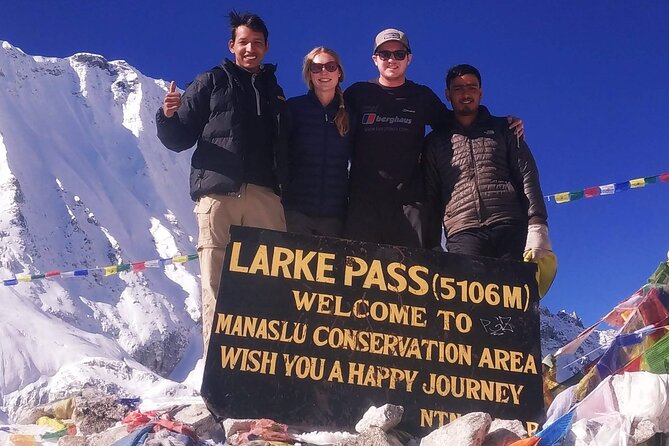
Reviewed · MANASLU CIRCUIT TREKS
Manaslu Circuit Trek
First off, this trek feels quietly wild. The Manaslu Circuit is a controlled trekking route that keeps crowds down, while still delivering big Himalayan days, village nights, and that calm feeling you get when you are not sharing every bend in the trail. I especially like how the trip is built around acclimatization, with a full rest-and-explore day in Samagaun before you go higher.
Two things I really loved. First, the team support is practical, not just friendly, with a licensed English-speaking guide plus a porter for every two clients, so you can focus on walking and staying steady. Second, the route mixes comfort and challenge in the right places, from warm-up days through terraced villages to the big high-pass day over Larkya La.
One drawback to consider: it is a serious trek. You should plan for long driving days, guesthouse nights, and a true altitude effort around the pass, so if you hate cold mornings or long climbs, this may not be your style.
In This Review
- Key highlights you will actually care about
- Price and logistics: what $1,900 buys you on this trek
- Where the day starts and what your first meetings look like
- Controlled route trekking: why Manaslu feels different
- Kathmandu-to-trail transition: the long drive days you must plan for
- Tatopani to Deng: hot springs, river rapids, and first culture pockets
- Ghap and Lho: mustard fields, stone art, and Manaslu getting closer
- Lho to Samagaun: Ribung Gompa and the big “oh wow” moments
- Samagaun acclimatization day: choose the pace, choose the view
- Samdo and Dharamsala: remote settlement nights before the pass
- Larkya La pass: what the long day feels like in real life
- Tilje and Tal: when the route eases and the villages feel busier
- Final drive to Kathmandu: trading trekking legs for 4WD comfort
- Guides and porters: the team is the real upgrade
- Gear you do not want to guess on: what Ace provides and what you still must pack
- Lodging and meals: guesthouse reality with fewer surprises
- Weather and altitude: how to think about risk without panicking
- Should you book the Manaslu Circuit Trek with Ace the Himalaya?
- FAQ
- How long is the Manaslu Circuit Trek?
- Where does the trek start and when?
- What is the maximum group size?
- What is included in the price?
- Do they provide trekking sleeping gear?
- How does porter support work?
- Is travel insurance, visa, and airfare included?
- What if weather is poor, or I need to cancel?
Key highlights you will actually care about
- Controlled Manaslu route that’s designed for organized trekkers, meaning fewer people on trail.
- Acclimatization in Samagaun with options to Pungyen Gompa and Birendra Tal, or walk toward Manaslu Base Camp.
- Larkya La pass day with sweeping views from the top and a steep descent afterward.
- Porter support (1 porter for every 2 clients) plus a trekking guide who handles logistics.
- Gear provided for the trek, including a down jacket and sleeping bag (returned at the end).
Price and logistics: what $1,900 buys you on this trek
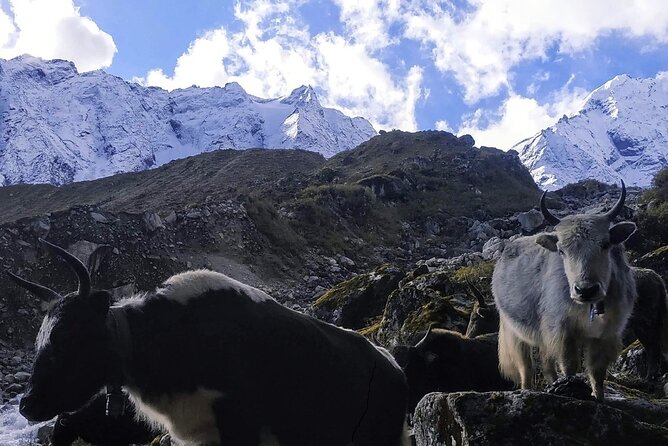
At $1,900 per person, this is not a budget weekend. But for the Manaslu Circuit, the value is clearer when you look at what is included.
You are getting a lot of the heavy lifting handled: airport transfers, Kathmandu hotel nights (twin-share in a three-star hotel for 2 nights), guided sightseeing, plus guesthouse accommodation for 12 nights during the trek. Most of your meals are included too, with breakfast (14), lunch (13), and dinner (13), which matters because options along the route are not always what you would call flexible.
The package also covers permits for trekking, including restricted area access, and it includes the main people you rely on out there: a licensed English-speaking trekking guide and porters (1 porter per every two clients). On top of that, you get down jacket and sleeping bag for the trek. That is real savings if you do not own proper cold-weather gear already.
The main extras you should plan for:
- Your Nepal entry visa and international flights
- Travel insurance that covers emergency high-altitude rescue and evacuation
- Personal trekking equipment
- Tips for trekking staff and driver (expected)
- Alcohol and drinks
- Lunch and dinner in Kathmandu
So my take: the price feels justified if you want a guided, permit-covered route with real support. If you already have your own gear and you love self-navigating, you might find cheaper ways to trek. But if you want less hassle and more attention on the walk and views, this structure makes sense.
More Treks in Kathmandu
- Everest Base Camp Trek – 14 Days
★ 5.0 · 1,499 reviews - Everest Base Camp Trek
★ 5.0 · 842 reviews - Everest Base Camp Trekking
★ 5.0 · 485 reviews
Where the day starts and what your first meetings look like
Your experience begins in Kathmandu at Tribhuvan International Airport. You will be met by a representative holding an Ace the Himalaya signboard outside the terminal, then transferred to your hotel in a private tourist vehicle.
There is also a pre-trek meeting in the office either on Day 1 or Day 2. This is where you meet your guide, confirm details, and submit key paperwork. Bring your passport, three copies of passport-size photos, and a readable copy of your travel insurance policy. You will also be asked to settle any remaining balance if needed, and sign trip forms plus a non-liability disclaimer.
If you are the type who likes to know what happens next, this meeting style is a plus. It helps you go into the trek with fewer surprises, and you can ask direct questions about pacing, cold weather expectations, and what to pack.
Controlled route trekking: why Manaslu feels different
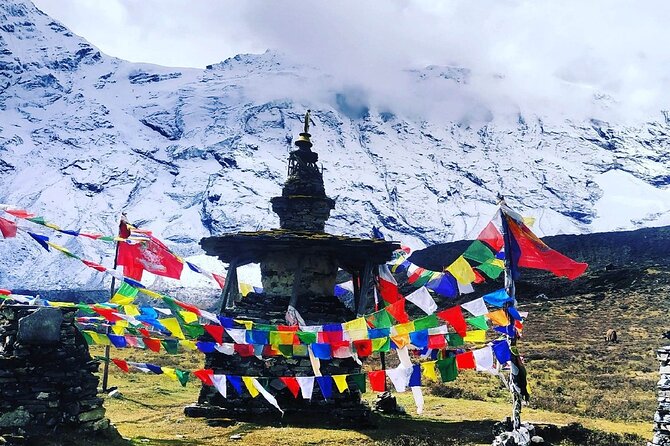
Manaslu opened for trekking in 1991, and today it is handled as a controlled trekking route. That means access is managed through permits for organized groups. For you, the practical effect is simple: fewer random trekkers, less pressure in villages, and a route that still feels lived-in instead of theme-park busy.
The region sits along the Nepal and Tibet border, and the mix of terrain supports a rich range of plants and wildlife. You are not just hiking from viewpoint to viewpoint. You are walking through changing ecosystems: forests, bamboo areas, terraced farming zones, river corridors, and higher rocky sections as elevation ramps up.
The tradeoff is that you are on an established plan, not a free-form adventure. If you hate schedules at all, you might find that frustrating. But for most people, especially first-time or mid-level trekkers, the structure is exactly what keeps the trip smooth and safe.
Kathmandu-to-trail transition: the long drive days you must plan for
Before you even start hiking, the trek asks for patience. Day 2 is a huge travel day. From Kathmandu, you drive to Dhading Besi by paved road, then switch to bumpy, winding dirt road toward Machha Khola. Expect roughly 8 to 10 hours total driving, with traffic and road conditions shaping the timeline.
The trek operator assigns a private 4WD vehicle and an experienced driver. That matters on this part of Nepal because the road is not always an easy ride, and fatigue can sneak up on you.
If you are prone to getting sore, this is where you protect yourself:
- Bring a small seat cushion or something soft for the ride
- Pack your most important items in a day bag you can access fast
- Hydrate, and keep snacks handy even though meals during the trek are covered
Then on Day 3 you cross the Machha River area and move into the trail world proper. That’s when the first big relief hits: boots on dirt, air colder than the city, and the day starting to feel like a real trek.
More Manaslu Circuit departures:
- Manaslu Circuit Trek
★ 5.0 · 292 reviews - Manaslu Circuit Trek:
★ 5.0 · 106 reviews - Manaslu Circuit Trek (15 Days)
★ 5.0 · 50 reviews - Manaslu Circuit Trek
★ 5.0 · 25 reviews
Tatopani to Deng: hot springs, river rapids, and first culture pockets
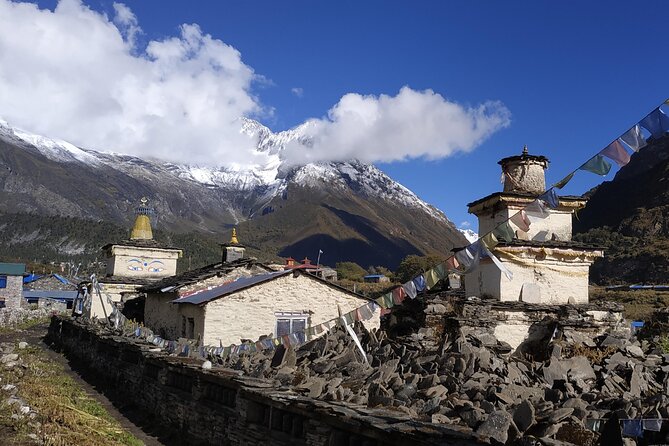
Day 3 steers you toward Jagat, and one of the highlights on this early section is Tatopani, a hot spring stop. It is not a full rest day, but it gives you that classic mountain moment: warm water paired with cold air and a trail that starts to climb.
As you go, the scenery changes fast. The path follows a forest stretch down by the river, and you begin to see the Budhi Gandaki’s massive presence in the background. River noise becomes a guide. You feel it in your ears before you see the biggest sections in person.
Day 4 continues toward Deng, moving through terraced hills and a bamboo forest corridor. You arrive in Deng, a tiny village by the river. This is a good day to notice how the trail bends with local life. The route is not just scenic. It’s practical, and it connects communities.
Potential drawback on these early days: if you have fragile knees, your body will still be adjusting from long driving. Take the first few days slow. Save your energy for the high-pass effort later.
Ghap and Lho: mustard fields, stone art, and Manaslu getting closer
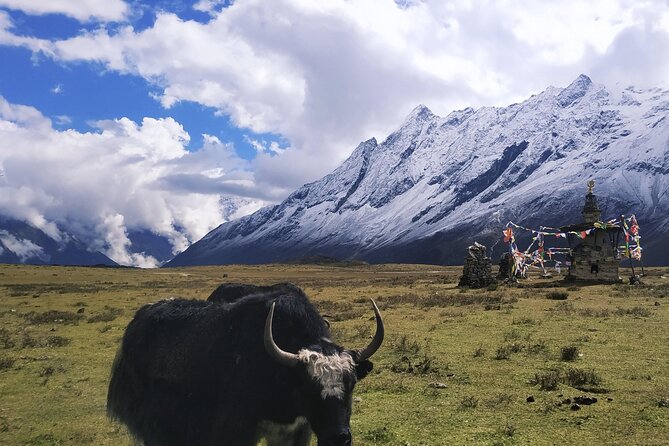
Day 5 is where the trek starts to feel longer and harder than the early segment. You will see flowering mustard fields along the way. It is one of those surprises that makes you pause without even realizing it.
After walking, you reach Ghap at 2,660 m. The description of this day includes the sound of a nearby waterfall and also ancient writings and art in the stones. I like days like this because they break up the routine of just walking and staring. You get a sense that people have been moving through these places for a long time.
Day 6 pushes onward to Namrung village for lunch with fantastic views of Ganesh and Siringi Himal. Then you continue toward Lho. Along the way, you cross terrain tied to glacial water, including the Hinan River that originates from the Linda Glacier. It is one of the natural threads connecting the trek to the high mountains you came to see.
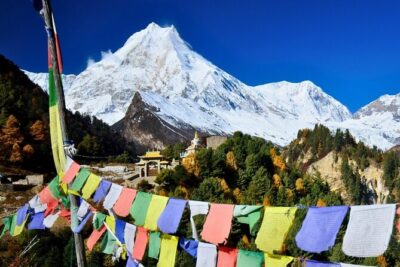
When you reach Lho Gaon, the view of Mt Manaslu is a real payoff. You are now in the section where the trek starts to feel like it has a theme: mountains, monasteries, and working villages all in the same frame.
Lho to Samagaun: Ribung Gompa and the big “oh wow” moments
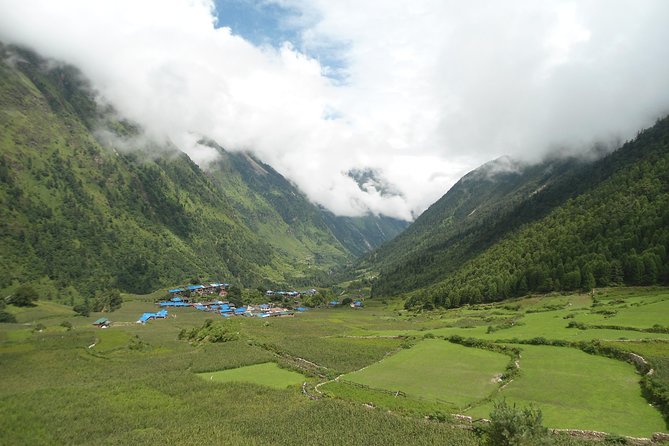
From Lho, Day 7 heads toward Samagaun. On this stretch, you get viewpoints that make the whole circuit feel focused. You can see Naike Peak, Manaslu North, and Manaslu itself. That is the kind of visual concentration that makes a difficult trek feel worth it.
The trek also includes a stop at Ribung Gompa, a Buddhist monastery area on a hilltop. Even if you are not a big temple person, it helps you understand how high-altitude communities structure their lives around faith, weather, and seasons.
You then arrive in Samagaun, your base for acclimatization. This is important. You are not just racing higher. The plan gives your body time to adapt.
Samagaun acclimatization day: choose the pace, choose the view
Day 8 is your acclimatization day in Samagaun. You stay here and can explore on foot with options.
One option is Pungyen Gompa and glacial Lake Birendra Tal, which takes about 4 to 5 hours. Another option is walking to Manaslu Base Camp and returning, which can take 7 to 8 hours. Both are set up so you can pick a day that matches your energy and your altitude comfort.
This is one of the most praised parts of treks like this, because it gives control to you. If you feel strong and want a longer day, you can. If you feel tight legs or a grumpy headache, you still get out and enjoy the area without forcing a push.
Practical tip: on acclimatization days, do not use the extra time to hike like you are trying to win a race. Go steady, drink water, and watch how your body responds.
Samdo and Dharamsala: remote settlement nights before the pass
Day 9 is a trek toward Samdo, described as one of the most remote permanent settlements in the region. You walk up on terraced hills on the opposite bank of the Budhi Gandaki River, and the remoteness becomes part of the atmosphere.
Day 10 goes to Dharmashala, also known as Larke Phedi. Lodging here is basic, with one small stone guesthouse and dormitory-style rooms. This is a realistic “prepare for the high day” stop.
The benefit of spending time in Samdo and Dharmashala is mental. You arrive knowing the next day is the major effort. It helps you sleep with your plan in mind, instead of wondering what comes next.
Larkya La pass: what the long day feels like in real life
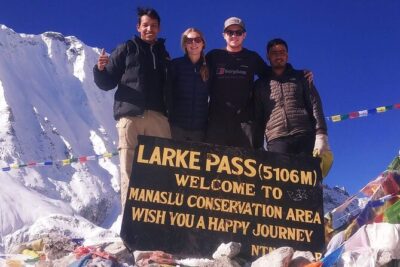
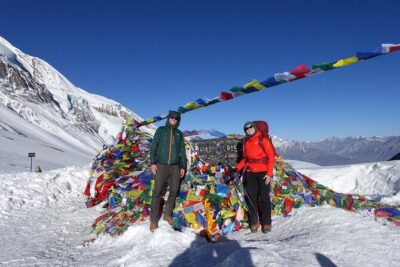
Day 11 is the big one. You climb toward Cho Chanda, then continue steeply uphill to the snowy pass of Larkya La. From the top, you get magnificent panorama views, including Himlung Himal, Cheo Himal, Gyagi Kung, Kang Kuru, and Annapurna II.
Then comes the part people do not always talk about enough: the descent is steep, through moraines, toward Bhimtang.
This day typically feels long because you have two different physical challenges. First is the grind up. Second is managing your legs downhill. If you have ever finished a hike and felt like your quads filed a complaint, this is that day.
What helps:
- Start the climb slowly. Save the power for the higher section.
- Take short breaks. A “rest” that is 10 minutes beats a “rest” that turns into a long do-nothing stop.
- On descent, keep steps shorter than you think you need.
Tilje and Tal: when the route eases and the villages feel busier
Day 12 is described as easier, with gentle climbs through paddy fields and a pass crossing at Karcha La. You then descend through fig trees and rhododendron forests to Tilje.
Day 13 continues toward Tal. You pass through villages with denser population, enter the Annapurna Circuit section, and walk through streams and wheat fields. You cross a suspension bridge over the Marshyangdi River and arrive in Tal, a riverbank village with a large waterfall.
This is the section where you often feel mentally grateful. Not because it stops being difficult, but because it is less of that constant high-strain feeling. Also, the change in village life adds texture. The trek shifts from remote calm to a more connected rhythm.
Final drive to Kathmandu: trading trekking legs for 4WD comfort
Day 14 brings the 4WD ride back to Kathmandu via Besisahar. The road is rough and bumpy up to Besisahar, then smoother after. The drive takes about 8 to 9 hours, depending on conditions.
This is not a time to plan tight connections right away. Build in buffer, because mountain roads run by mountain rules.
Day 15 ends simply, with your airport representative dropping you at Tribhuvan International Airport for your final flight. It is a clean finish after 15 days of trail time.
Guides and porters: the team is the real upgrade
The most consistently praised part of this trek is the human support. Across multiple trips, guides like Janu, Sunil, Shyam, Sushanta Neupane, Ganesh Khanal, and Ram are described as organized, caring, and excellent at logistics. Porters like Rohin, Dilip, Ajit Gurung, Ramesh, Ronan, and others are credited with making the trek feel safe and manageable.
Even better, the tone in the camps is not stiff. People talk. Some groups play cards at night. You learn small bits of local culture in everyday conversation. It is not just transportation from one bed to another.
If you care about safety and clarity, pay attention to this. You will rely on your guide for pace decisions, accommodation choices, and how you handle altitude. A good guide turns tough terrain into a solvable puzzle.
Gear you do not want to guess on: what Ace provides and what you still must pack
This trek includes a down jacket and sleeping bag for the trek, to be returned afterward. That is a big help because cold nights above tree line can be brutal, and buying gear just for one trip rarely feels smart.
Still, you should plan to bring your personal trekking equipment. The listing does not spell out which items you need, so think in terms of your own comfort gear: boots that fit well, layers you can adjust, day pack, and any personal items you use to stay calm and warm.
Also, do not underestimate your need for warm layers. Even if daytime feels fine, mornings around the pass can feel like a different planet.
Lodging and meals: guesthouse reality with fewer surprises
Accommodation is a mix of Kathmandu hotel comfort and trekking guesthouses. During the trek you get twin-share and dormitory rooms in guesthouses. Meals are included on trekking days, which is a relief because you do not want to spend your best energy negotiating food options while also adjusting to altitude.
One practical takeaway: you will eat simple meals, and you will want meals that keep you warm and fueled. Stick with what feels easy to digest. Then pair it with rest and steady hydration.
If you have a sensitive stomach, keep meals consistent on days when you are climbing. Your body tends to reward routine.
Weather and altitude: how to think about risk without panicking
This experience explicitly requires good weather. That does not mean it will be perfect every day. It means the trek depends on mountain conditions staying workable.
Altitude also has its own rhythm. The route includes an acclimatization day, then pushes higher with the high-pass crossing. That means your job is not to force speed. Your job is to be patient with your breathing, and let the plan do its work.
A calm mindset is part of the gear you carry. You will feel tired at points. You do not have to interpret every tired moment as danger. Just use it as a cue to slow down.
Should you book the Manaslu Circuit Trek with Ace the Himalaya?
Book it if you want a Manaslu Circuit trek that feels organized, smaller in feel, and supported by a guide and porter team that makes daily logistics easy. If you value the controlled route, fewer people on trail, and villages that still feel real, this trek fits well.
I would also book it if you like a mix of highlights: hot spring day early on, monastery and glacial lake options in Samagaun, then the dramatic payoff of Larkya La views, followed by a smoother push toward Tal and the Annapurna Circuit section.
Skip it if you do not handle long days well, if steep climbs and steep descents sound like misery, or if you prefer full independence. This is a guided trek with a plan, and you will get the best experience by working with that structure.
If you are ready for a meaningful high-mountain trek, this one is a solid bet.
FAQ
How long is the Manaslu Circuit Trek?
The duration is listed as 15 days (approx.).
Where does the trek start and when?
It starts at Tribhuvan Airport in Kathmandu. The start time is 8:00 am.
What is the maximum group size?
The trek has a maximum of 15 travelers.
What is included in the price?
The included items are airport transfers, Kathmandu hotel accommodation for 2 nights (twin-share in a three-star hotel), guided Kathmandu sightseeing, trekking accommodation, a licensed English-speaking guide, porter support (1 porter per every two clients), all trekking permits including restricted areas, 4WD transfers, down jacket and sleeping bag for the trek (returned), Kathmandu entrance fees, and meals (breakfast 14, lunch 13, dinner 13).
Do they provide trekking sleeping gear?
Yes. The trek includes a down jacket and sleeping bag for the trek, and you return them at the end.
How does porter support work?
There is 1 porter for every two clients.
Is travel insurance, visa, and airfare included?
No. Travel insurance is not included, and you are responsible for Nepal entry visa and international airfare.
What if weather is poor, or I need to cancel?
The trek requires good weather. If it is canceled due to poor weather, you will be offered a different date or a full refund. The cancellation policy also depends on timing: you can cancel up to 6 days in advance for a full refund, 2 to 6 days for a 50% refund, and less than 2 days will not be refunded.
Latest additions near Kathmandu
- White Water River Rafting – 1 Day★ 4.3 · 3 reviews
- Traditional Momo Making Class★ 5.0 · 10 reviews
- Kathmandu to Pokhara Premium sofa bus ticket★ 4.0 · 17 reviews
- Ghorepani Poon Hill Trek★ 5.0 · 16 reviews
- Amazing 1 Day Trekking Experience in Kathmandu Nepal★ 5.0 · 24 reviews
- Ghorepani Poonhill Trek★ 5.0 · 5 reviews
- Walking tour of real Kathmandu through back streets.★ 5.0 · 3 reviews
- Wildlife Adventure in Chitwan Nepal★ 4.0 · 4 reviews
Manaslu Circuit Treks, compared.
Manaslu Circuit Trek 8th Highest in the World
Read our review →Browse the lists this tour appears in