
Reviewed · MANASLU CIRCUIT TREKS
Private 12-Day Manaslu Circuit Trekking in Kathmandu
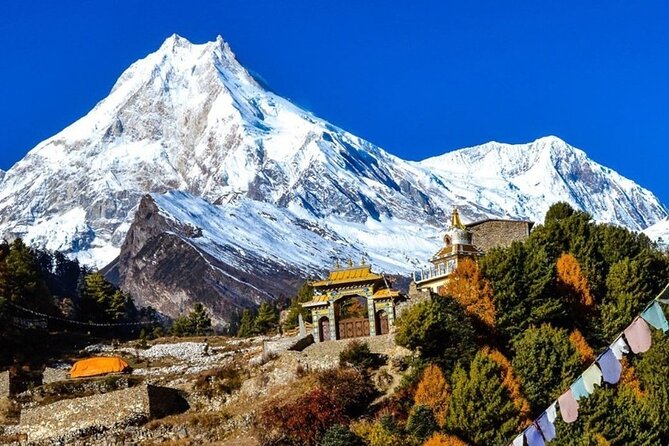
This is one of those treks where the scenery feels earned, day after day, not dumped on you at once. You’ll get Gurung community culture in the villages, then the sense of stepping into a more Tibetan world higher up. And the payoff is real: crossing Larkya La Pass with huge views over several Himalayan giants. One thing to consider is the trek is genuinely serious in places, especially with exposed altitude and rough, sometimes hazard-prone ground on the way toward the pass.
What I like most is how well the trip is supported for a private trek. You travel with a guide, porters, and the permits and entry fees needed for the Manaslu region, plus practical add-ons like a trek map, first aid, and a water purification setup. Still, you’ll want to plan for cold and long walking days, and confirm the details on Kathmandu lodging since the inclusions and exclusions list talk about it in two different ways.
In This Review
- Key things I’d bookmark before you go
- Gurung villages, Tibetan stone walls, and the Manaslu feel
- Kathmandu to Machhakhola: the road drive that sets the tone
- Day 2 to Jagat: sal forest hiking plus Tatopani hot springs
- Day 3 to Deng: tropical forest, wildlife habitat, and bamboo crossing
- Day 4 to Namrung: Ghap’s roughness and the Magar villages vibe
- Day 5 to Lho: entering the Tibetan-style zone (and reading the mani walls)
- Day 6 to Sama Gaon: pine and rhododendron forest with altitude pressure
- Day 7: rest in Sama Gaon, then hike to Pung Gyan Gompa
- Day 8 to Samdo: barren high ground and a quieter Budhi Gandaki
- Day 9 to Dharmashala: rocky terrain with key Himalayan sightlines
- Day 10: Larkya La Pass around 5,100 to 5,160m, then the drop to Bimthang
- Day 11 to Dharapani: pine and rhododendron on the way down
- Day 12: jeep to Besisahar, bus back to Kathmandu, and a proper finish
- Price and logistics: is $960 good value for this trek?
- Lodges, hot showers, and daily comforts you can plan around
- Guides and emergency readiness on a serious high pass
- Who should book this private Manaslu Circuit, and who should think twice
- Should you book this Manaslu Circuit with Nepal Alternative Treks & Expeditions?
- FAQ
- How long is the Manaslu Circuit trek?
- What is the price per person?
- Do you get pickup from Kathmandu?
- What permits and fees are included?
- Is a guide and porters included?
- What meals and accommodation are included during the trek?
- Are travel insurance and tips included?
- What is the cancellation and weather policy?
Key things I’d bookmark before you go
- Private, with a built-in pacing advantage: it’s just your group, so your schedule can breathe a bit more than group departures.
- Permits and regional fees handled: MCAP, ACAP, local entry fee, and the Manaslu special permit are part of the package.
- Route variety you can feel: sal forests to hot springs, then Tibetan-style stonework and mani walls higher up.
- A real high point, Larkya La: the pass sits around the 5,100 to 5,160m range depending on how it’s described.
- Practical safety gear: oxygen meter, first aid, and water purification support are included.
- Team names you might meet: guides such as Laxman, Nauser, Sanjay, and Kumar show up in past trips under this operator led by Tej.
Gurung villages, Tibetan stone walls, and the Manaslu feel
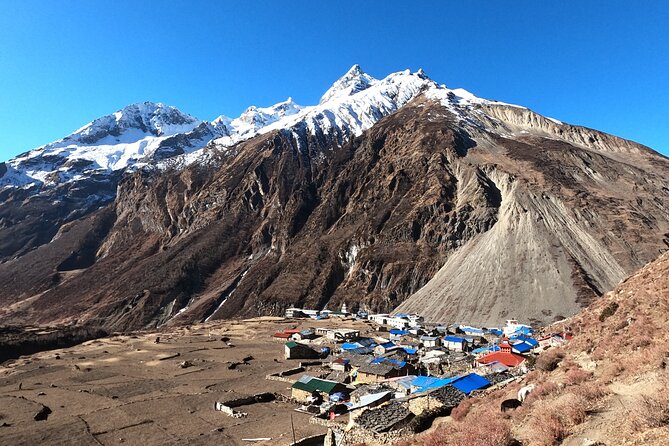
The Manaslu Circuit is special because it doesn’t just go up and over a pass. It takes you through lived-in communities, especially around the Gurung villages, where you’ll see stone houses, terraced farming, and everyday life that feels more local than touristy. Even your rest day gives you a reason to slow down and talk with people rather than just recover.
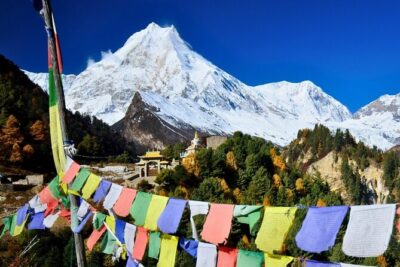
As you gain elevation, the culture changes. You move from lush forests into a higher, drier world where you start seeing mani walls and the feel of Tibetan-influenced architecture. That shift is part of why the trek works even if you are not chasing every single viewpoint. You’ll feel the transition in real time.
The view part is big too, with clear panorama days that pull in Manaslu, Annapurna range views, and the Ganesh Himal area when conditions allow. It’s the kind of trekking where mountain names are more than trivia because you see the peaks repeatedly as you move through valleys and ridgelines.
More Treks in Kathmandu
- Everest Base Camp Trek – 14 Days
★ 5.0 · 1,499 reviews - Everest Base Camp Trek
★ 5.0 · 842 reviews - Everest Base Camp Trekking
★ 5.0 · 485 reviews
Kathmandu to Machhakhola: the road drive that sets the tone
Day 1 is a long overland transfer, not a quick “warm up hike.” You’ll ride a bus along the Prithvi Highway out of Kathmandu, then branch toward the smaller roads that climb and drop with the terrain. The route includes crossing the Budhi Gandaki River and passing through a chain of river valleys and terraced settlements.
This day matters because it preps your body for the next phase. You are not dumping altitude on day one, but you are getting used to travel time, changing weather, and that early start energy you’ll keep repeating for the rest of the trek. You end the day in Machhakhola, after about a ten-hour drive, with views of Manaslu and Ganesh in the mix when skies cooperate.
One practical note: after a long drive, you’ll likely want to keep your pack simple for day two. If you’re carrying extra items you don’t use, this is a good day to decide what stays in your duffle bag and what actually goes with you.
Day 2 to Jagat: sal forest hiking plus Tatopani hot springs
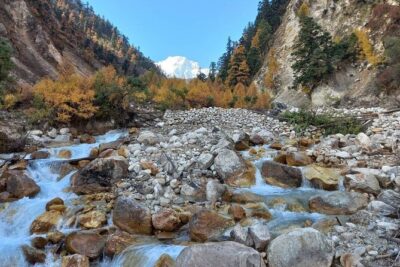
After breakfast on day two, you trek to Jagat. The trail starts along the bank of the Budhi Gandaki River, then climbs through dense sal forests. This is a good “legs find their rhythm” day because the forest cover often makes the walk feel less exposed.
You’ll also pass through Tatopani, known for natural hot water springs. If your body is stiff or you’re feeling the day’s effort in your lower back, a dip can be a nice reset. You continue trekking along the Budhi Gandaki River to reach Jagat for the night.
Timing wise, this day is about a seven-hour trek. For many people, that’s a sweet spot: enough hiking to feel like a trek, not so long that you arrive wrecked before the higher country begins.
Day 3 to Deng: tropical forest, wildlife habitat, and bamboo crossing
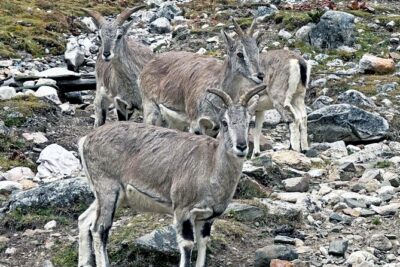
Day three starts after permits are approved. Then you trek through dense tropical forest alongside the Budhi Gandaki River. This section is described as shelter to rare wildlife, which is your reminder that the trail is in real habitat, not a sterile corridor.
You pass through villages such as Bhatti Khola and Philim, then cross a bamboo forest over the Budhi Gandaki to reach Deng. In practice, bamboo and river crossings can mean short, uneven footing. It’s the kind of day where trekking poles help and where slow steps beat fast ones.
You finish after about eight hours. Expect a gradual sense of altitude gain and a shift in air feel by the time you reach camp.
More Manaslu Circuit departures:
- Manaslu Circuit Trek
★ 5.0 · 292 reviews - Manaslu Circuit Trek:
★ 5.0 · 106 reviews - Manaslu Circuit Trek (15 Days)
★ 5.0 · 50 reviews - Manaslu Circuit Trek
★ 5.0 · 35 reviews
Day 4 to Namrung: Ghap’s roughness and the Magar villages vibe
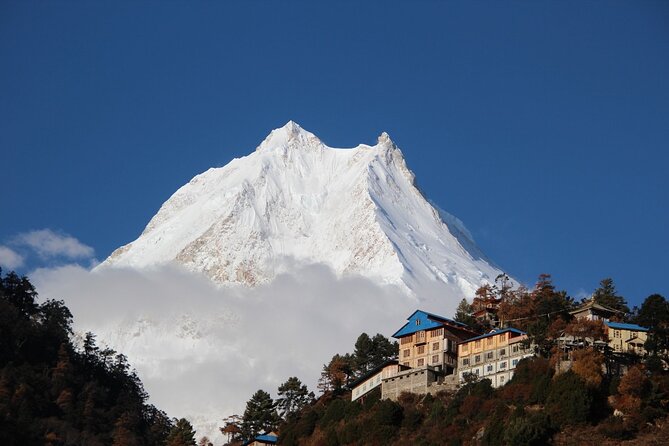
Day four is a shorter trek, around five hours, but it’s not necessarily easier. You cross a suspension bridge, then move onto uneven trails. The route goes toward Bihi Phedi and then Ghap.
Here’s the important caution: the Ghap stretch is described as prone to dry landslides. That doesn’t mean you can’t do it, but it does mean you should take footing seriously and follow your guide’s pace and line choice.
After you cross the landslide-prone zone, you pass Magar villages and then reach Namrung. Namrung is a classic point where the trek begins to feel more “mountain culture” than river valley culture.
Day 5 to Lho: entering the Tibetan-style zone (and reading the mani walls)
On day five, the vegetation and culture shift more noticeably. You slowly enter Tibetan cultured areas as you trek from Namrung to Lho. The trail includes mani walls and stone houses, and the landscape changes from greenery toward a more rugged high-country feel.
You also get long mountain glimpses along the way, including views of Mt Manaslu at 8,163m. That number sounds abstract until you’re seeing the peak from multiple angles as you hike.
This day is about four hours. That can be helpful if you are starting to feel altitude. Shorter walking days are a good chance to keep your breathing steady and avoid the temptation to power up too fast.
Day 6 to Sama Gaon: pine and rhododendron forest with altitude pressure
Day six goes to Sama Gaon, about five hours. You trek through pine and rhododendron forests, with views of Mt Manaslu following you through much of the route when visibility is good.
This is a day where you’ll feel altitude gain more than on the river-valley sections. You might not feel sick, but you may notice you take breaks a little more often. That’s normal. Your goal isn’t to win a race. It’s to arrive feeling ready for the next step.
Day 7: rest in Sama Gaon, then hike to Pung Gyan Gompa
Day seven is a rest day in Sama Gaon. I love rest days on treks because they stop the whole trip from turning into a daily grind. You explore the village and interact with locals, and you also hike to Pung Gyan Gompa.
A monastery visit at altitude is more than a photo stop. It gives you a sense of how people live with the mountains nearby, and it’s a calmer setting than the harder walking days. You’ll often find the air feels thinner up here, so the gompa hike is a good way to get movement without a punishing distance.
Dinner and evening local foods are part of the experience too, and it’s a chance to recharge rather than just “recover in bed.”
Day 8 to Samdo: barren high ground and a quieter Budhi Gandaki
Day eight is about four hours to Samdo. The pine forest starts getting sparser, and the land becomes more barren as you move higher. The Budhi Gandaki River is described as reduced by this point, and you feel that change in the valley scale.
This is one of those days that can feel both beautiful and exposed. When you’re in barren zones, the sky and light do more work, so you can get dramatic views fast or hit flat visibility quickly if clouds roll in.
If you’re the type who likes to take photos often, this is a good day to keep your stop time reasonable. You want to enjoy the views, but you also want to stay warm and keep your energy for tomorrow.
Day 9 to Dharmashala: rocky terrain with key Himalayan sightlines
Day nine takes you to Dharmashala, about five hours. You cross a suspension bridge early on, then hike through uneven and rocky trail.
On this route, you get views of peaks such as Naike and Pangbuche, plus the Himal Chuli range as you move toward Dharmashala. This is a day where you feel like you’re getting closer to the pass even when the walking time is moderate.
If you want one day to pay extra attention to footwear grip, this is it. Rocky uneven trail punishes sloppy steps, especially when you’re tired.
Day 10: Larkya La Pass around 5,100 to 5,160m, then the drop to Bimthang
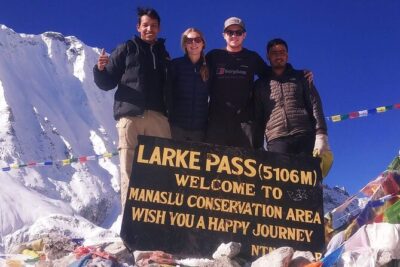
Day ten is the big one, with the ascent to Larkya La Pass and the dramatic descent after. The pass is described as 5,106m in one place and 5,160m in another, so I’d plan your expectations around that full range and treat it as a high-altitude crossing either way.
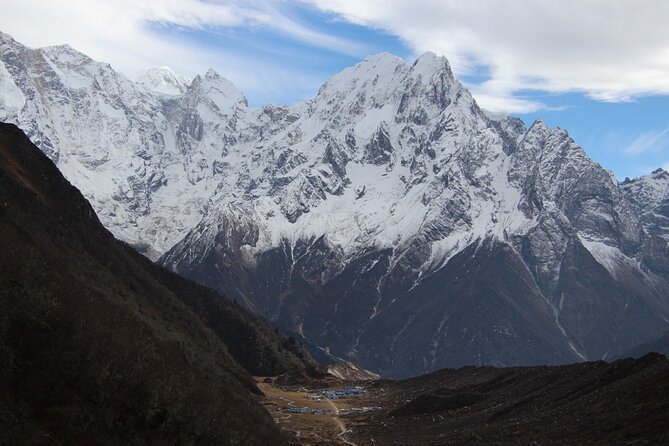
The trail is rough and can be snowy, and you’ll climb to the top across challenging terrain. From the pass you can see Larkya, Mansiri, Cheo, and the Himlung Himal range. That view is often what people remember most because you’re above the valley drama and staring across a broad wall of mountains.
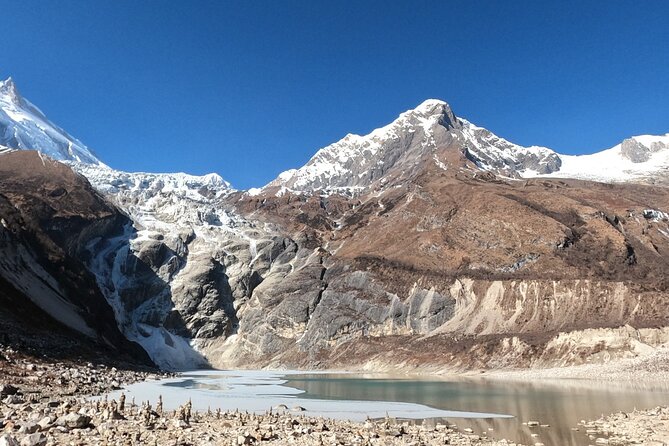
After the pass, you descend with panoramic views of mountains and glaciers, reaching Bimthang for the night. This is a long day, about eight hours total, and it often feels longer because the pass segment is mentally heavy.
My practical advice here is simple: treat the ascent as a breathing project. Small steady steps, consistent rhythm, and early warming layers usually work better than pushing speed.
Day 11 to Dharapani: pine and rhododendron on the way down
Day eleven heads to Dharapani, about seven hours. You descend through pine and rhododendron forests, and the walk tends to feel more comfortable than the previous days in the higher barren zone.
You still get mountain views while moving down, but you’re not fighting the same exposure. This is a day to take advantage of that relief, eat well, and give your legs time to recover before the long return travel.
Day 12: jeep to Besisahar, bus back to Kathmandu, and a proper finish
Day twelve is travel day. You trek ends and you ride a jeep to Besisahar, described as about four hours. Then you board a bus to Kathmandu, with a drive that can take about four more hours, including time along the Trishuli River and the return to Kathmandu.
This day is about nine hours total travel time. It’s long, but it’s also one of the best ways to finish because you don’t have to invent extra logistics. You end back at the meeting point in Kathmandu.
If you can, keep your final day clothing practical, not just fancy. You’ll likely want layers, a dry change of socks, and something comfortable for the ride.
Price and logistics: is $960 good value for this trek?
At $960 per person for a private 12-day trek, you’re paying for more than “walking days.” You’re covering the big cost drivers that make Manaslu possible: permits and regional fees, plus a professional guide and porters with their expenses.
The package also includes overland transportation, oxygen meter, duffle bags, first aid, water purification support, and lunch and dinner and breakfast counts through the trek. It also lists public liability insurance and assistance for emergency rescue evacuation. For many people, that is where the value comes from, because it reduces what you would otherwise coordinate yourself.
Now the part you should double-check before paying: the document includes Kathmandu accommodation in the included section, but the not included section also says hotel accommodation in Kathmandu. I’d contact the operator and get a clear written answer on exactly where you sleep in Kathmandu and how many nights.
Also note what’s not included: travel insurance and tips for guide and porters. In a trek like this, travel insurance is not a luxury. It matters.
Lodges, hot showers, and daily comforts you can plan around
You’ll stay in hotels/lodges during the trek, and the trip includes breakfast, lunch, and dinner counts. That means you’re not hunting for meals on the trail, which is a big deal when the weather turns.
But comfort is not the same as luxury. Hot water and hot showers are listed as not included, and alcoholic drinks and other table drinks are not included. I’d budget for that reality. Bring layers you can manage without a warm shower fix, and plan your hydration around the included water purification.
If you tend to get chilled easily, plan to use trekking poles for stability and to keep warm while taking breaks. The higher portion can get cold even if the days start with sun.
Guides and emergency readiness on a serious high pass
One reason people go with established operators is the human part when things get complicated. The team behind this trek is led by Tej, and guides you may be paired with include Laxman, Nauser, Sanjay, and Kumar, with support staff such as Brian appearing in past trips.
You’re also getting practical gear support like an oxygen meter and a first aid kit, plus water purification and evacuation assistance. That matters most on high-altitude days when you want timely decisions rather than improvising.
There is also evidence the team can handle emergencies. One past trek account describes a case where a helicopter rescue became necessary after someone could not finish. That does not mean you should plan to struggle, but it does tell me the operator takes response seriously, which is what you want on a route with a real pass day.
Who should book this private Manaslu Circuit, and who should think twice
This trek fits best if you’re comfortable with a demanding mountain itinerary and you like being in the villages as much as you like the views. The fitness level requested is moderate, but the high-altitude pass crossing and long travel segments mean you should train before you go, not just rely on willpower.
It also works well for small groups because it’s private. If you want pacing that matches your group, this style of tour is usually better than huge tour buses of strangers.
If you hate cold, dislike long days, or want guaranteed hot showers, you might find the comfort level frustrating. This is trekking comfort, not resort comfort, and that’s part of the bargain.
Should you book this Manaslu Circuit with Nepal Alternative Treks & Expeditions?
If you want a private Manaslu Circuit that handles permits, logistics, guide and porters, and the practical trekking support like oxygen meter and water purification, I’d say it’s a strong option. The route itself is a great mix of forests, hot springs, Tibetan-influenced villages, and a genuine high pass day.
Before you commit, do two things. First, confirm what Kathmandu lodging includes since the included and not included sections conflict. Second, budget for travel insurance and remember hot water and hot showers are not part of the package.
If those boxes are checked, this is the kind of trek that gives you both mountain drama and community texture, with enough structure that you can focus on walking and absorbing the route.
FAQ
How long is the Manaslu Circuit trek?
It runs about 12 days.
What is the price per person?
The price is $960.00 per person.
Do you get pickup from Kathmandu?
Pickup is offered.
What permits and fees are included?
The package includes MCAP, ACAP, local entry fee, and the Manaslu special permit.
Is a guide and porters included?
Yes. You get one professional guide and the required porters, along with their expenses.
What meals and accommodation are included during the trek?
The trip includes breakfast (12), lunch (12), and dinner (11), plus hotel or lodge accommodation during the trek. Kathmandu hotel lodging is not consistent across the included and not included lists, so confirm the exact Kathmandu lodging arrangement.
Are travel insurance and tips included?
No. Travel insurance is not included, and tips for the guide and porters are not included.
What is the cancellation and weather policy?
You can cancel for a full refund if you cancel up to 24 hours in advance. The experience requires good weather, and if it is canceled due to poor weather you’ll be offered a different date or a full refund.
Latest additions near Kathmandu
- White Water River Rafting – 1 Day★ 4.3 · 3 reviews
- Traditional Momo Making Class★ 5.0 · 10 reviews
- Kathmandu to Pokhara Premium sofa bus ticket★ 4.0 · 17 reviews
- Ghorepani Poon Hill Trek★ 5.0 · 16 reviews
- Amazing 1 Day Trekking Experience in Kathmandu Nepal★ 5.0 · 24 reviews
- Ghorepani Poonhill Trek★ 5.0 · 5 reviews
- Walking tour of real Kathmandu through back streets.★ 5.0 · 3 reviews
- Wildlife Adventure in Chitwan Nepal★ 4.0 · 4 reviews
Manaslu Circuit Treks, compared.
Browse the lists this tour appears in