
Reviewed · MANASLU CIRCUIT TREKS
Manaslu Trek with Larke Pass
Manaslu Larke Pass is a high mountain trek that keeps its promises. What I like most is the route’s mix of Budi Gandaki river valley walking and the long cultural shift into Buddhist, Tibetan-style places. I also like that the trip is set up for the real demands of a restricted trek, with a licensed guide and permits handled for you. One drawback to consider: this is a serious altitude and weather game, and the pass day involves rough, rocky conditions plus wind and icy lakes in the description.
You’ll start with Kathmandu sights and trek with tea houses and lodges for most of the journey. You’ll reach one of Nepal’s most famous high crossings, Larkya La at 5,135m, then drop toward the Annapurna trail connection near Dharapani. If you want a straightforward hiking holiday with no logistical thinking, this may feel more intense than you expect.
In This Review
- Key highlights worth your attention
- Manaslu and Larke Pass: why this restricted route feels like a different Nepal
- Permits and a licensed guide: the real meaning of the Manaslu restricted region
- Kathmandu base and preparation day: temples, pace, and trek readiness
- From Aarughat to Machhakhola: following the Budi Gandaki early on
- Suspension bridges and hot springs: the Jagat and Deng challenge
- Entering Tibetan-style country: Bagarchhap to Namrung
- Namrung to Samagaon and the rest day: why you need that pause
- Samdo viewpoints: the best payoff before Larkya La
- Larkya La crossing at 5,135m: the long, windy day you plan for
- Descent via Bimthang to Tilje: rhododendrons and orchard-country
- Tilje to Dharapani, then Besi Sahar: when the Annapurna link shows up
- Price and value: what $1,797 covers, and what you still manage
- Support on the trail: guide and porter help that can matter in real life
- Should you book this Manaslu Larke Pass trek?
- FAQ
- What is the duration of the Manaslu Trek with Larke Pass?
- What is the highest point on this trek?
- Is airport pickup and drop included?
- Are permits and fees included?
- Do I need a guide for the Manaslu restricted region?
- What is the porter arrangement?
- Where do you stay during the trek?
- Are meals during the trek included?
- What Kathmandu sightseeing is included?
- What is not included in the price?
Key highlights worth your attention
- Restricted-region trekking with permits and a licensed guide included
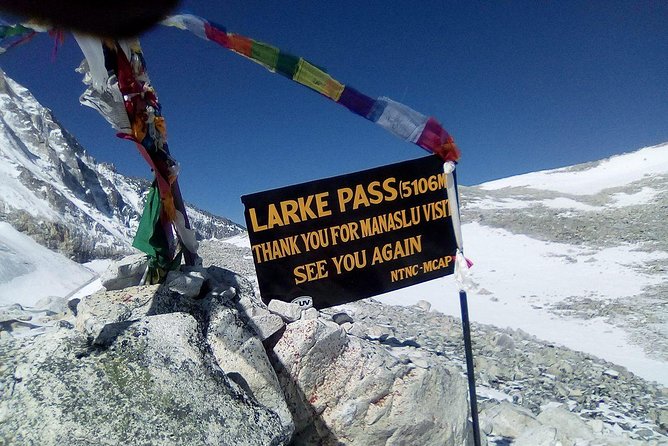
- Larkya La (5,135m) crossing, then a dramatic downhill to Bimthang
- Acclimatization built in at Samagaon plus a full viewpoint day at Samdo
- Tea house and lodge stays, with breakfast, lunch, and dinner during the trek
- One porter for every two trekkers, plus first-aid kits in the group
Manaslu and Larke Pass: why this restricted route feels like a different Nepal
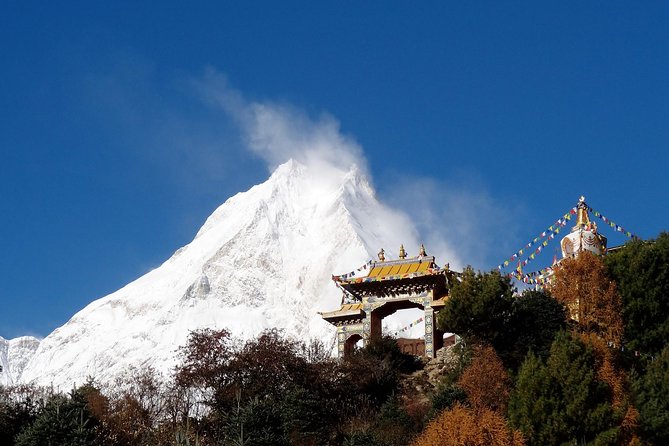
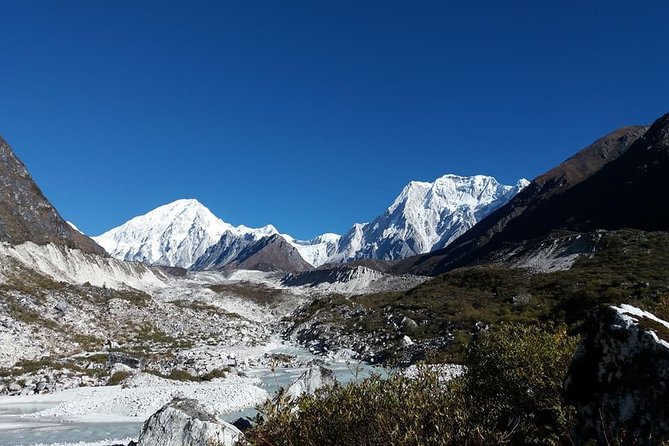
This trek earns its reputation because it does not feel like a highway of souvenir shops. Manaslu Trek with Larke Pass follows the upstream of the Budi Gandaki River, starting in warmer forested terrain and gradually moving into dry, high, Tibetan-influenced zones. You’ll feel the change in air and scenery as altitude rises, even before the big pass day.
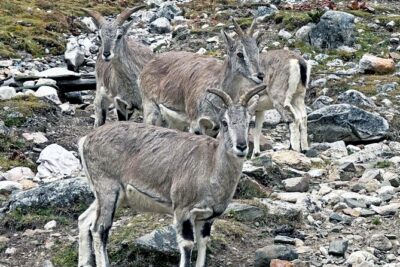
I like that the route is designed around gradual height gain instead of jumping straight upward. You get a real sense of place, from village tea houses to wide alpine pastures, then into an area where stone mani walls and Buddhist markers start showing up more often. The result is a trek that feels about more than just the top photo.
More Treks in Kathmandu
- Everest Base Camp Trek – 14 Days
★ 5.0 · 1,499 reviews - Everest Base Camp Trek
★ 5.0 · 842 reviews - Everest Base Camp Trekking
★ 5.0 · 485 reviews
Permits and a licensed guide: the real meaning of the Manaslu restricted region
Manaslu is not one of those regions where you can casually self-navigate. The trek is restricted for individual travelers and requires a special immigration-related permit through Nepal’s process, plus a licensed guide for the trek. What matters to you is that the organizer includes the required trekking permits and the special permit/TIMS in the package price.
In practical terms, this reduces stress. Instead of trying to understand the paperwork maze yourself, you show up and follow the plan. It also changes the vibe on the trail, because you’re trekking in a regulated way with a team that knows checkpoints and timing.
Kathmandu base and preparation day: temples, pace, and trek readiness
Day 1 is a smooth start, with airport pickup and drop plus a transfer to a Kathmandu hotel in Thamel. Day 2 is a full day of Kathmandu Valley sightseeing by private vehicle, including Pashupatinath Temple, Boudhnath Stupa, Patan Durbar Square, and Swayambhunath Stupa.
This matters because it gives you a proper pre-trek day without making you feel rushed. You also get time to check gear, sort practical items, and mentally shift from city logistics to mountain time.
From Aarughat to Machhakhola: following the Budi Gandaki early on
The trekking begins after a long drive day. On Day 3 you travel from Kathmandu toward Aarughat, then continue to Aarkhet Bazaar and sleep in Soti Khola. It’s not a short transfer, so plan to treat this as a getting-in-the-rhythm day rather than a day to chase extra views.
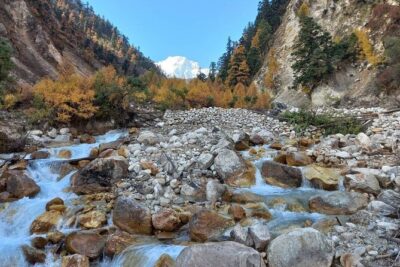
Day 4 starts your river valley travel in earnest. You’ll follow the Budi Gandaki River, climb briefly toward Kyoropani, then descend again to the river at a confluence area. The trail runs below steep valley sides until you reach Machhekhola, a place at about 1,300m, with the “Fish stream” name showing how tied these villages are to the water.
More Manaslu Circuit departures:
- Manaslu Circuit Trek
★ 5.0 · 292 reviews - Manaslu Circuit Trek:
★ 5.0 · 106 reviews - Manaslu Circuit Trek (15 Days)
★ 5.0 · 50 reviews - Manaslu Circuit Trek
★ 5.0 · 35 reviews
Suspension bridges and hot springs: the Jagat and Deng challenge
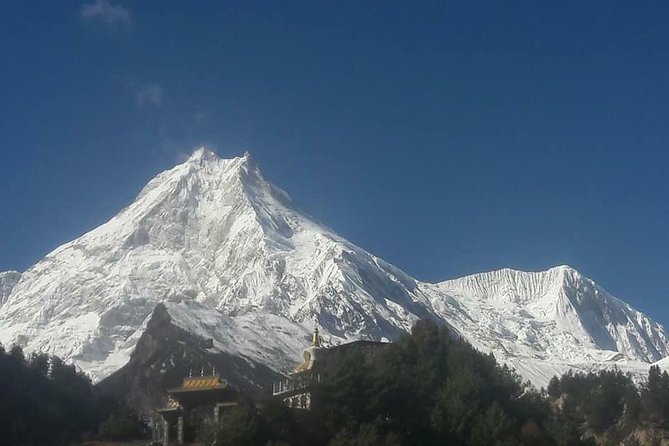
Day 5 brings you through a mix of villages and exposed sections. You’ll cross the Machhekhola, move upstream, pass Khorla Bensi, and visit the hot springs at Tatopani. From there, the route becomes more dramatic, with the trail switched to the left bank by suspension bridge after steep sides narrow the options.
You’ll reach Jagat at around 1,360m. Day 6 continues upstream and includes multiple river crossings to avoid difficult valley sides. The gorge section with towering walls is where you start feeling how powerful this valley can be, even when the trail is straightforward on paper.
Then comes Deng at about 1,800m. This is still “lower Manaslu,” but the terrain is already doing real work, with steep spurs and a trail that keeps you moving and alert.
Entering Tibetan-style country: Bagarchhap to Namrung
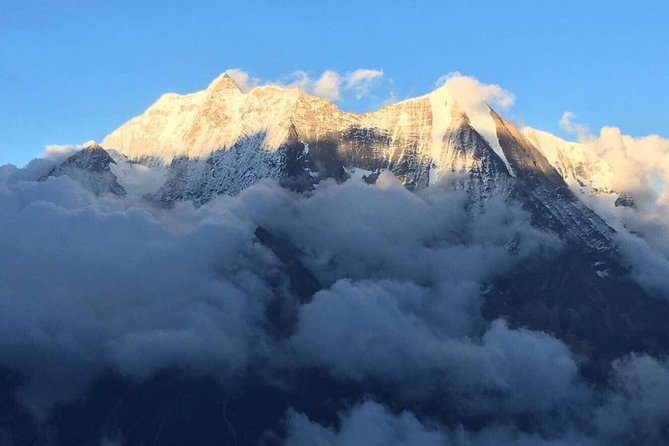
The trip’s character changes as you climb. Day 7 reaches Bagarchhap area, with Mani stones appearing as a sign you are entering high country Buddhist regions. The climate also cools in a noticeable way, which is a big deal because it changes what a “hard day” feels like. Instead of sweating through everything, you’ll likely feel cold sooner, especially near mornings and evenings.
Day 8 takes you onward to Namrung at about 2,550m. The valley opens up with pastures, and the route includes more crossings of the Budi Gandaki. You’ll also get permit checks mentioned around this stage, so it’s helpful to remember you’re not just hiking, you’re moving through regulated trekking territory.
Namrung to Samagaon and the rest day: why you need that pause
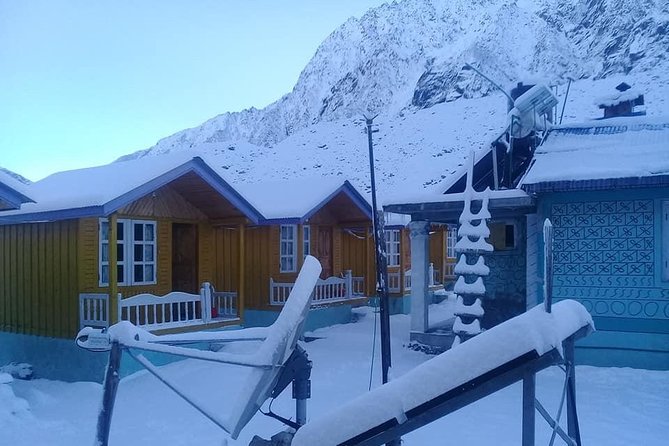
Day 9 brings you to Samagaon at about 3,350m to 3,360m, passing Lho along the way. Lho has a monastery, chortens, and mani stones, plus views back toward peaks like Ganesh I. You also get a detour possibility toward Honsansho Gompa and the Pungen Glaciers, which can add a viewpoint boost for the day.
Day 10 is a rest day in Samagaon. This is not wasted time. It’s an acclimatization window where you can hike toward Manaslu Base Camp for views of Samdo (Pang phuchuli), Nagdi chuli, the Manaslu glacier and icefall, plus Birendra Kunda nearby. Even if you do a short walk, you’ll benefit from the slow rhythm and the extra time at altitude before the high pass segment.
Samdo viewpoints: the best payoff before Larkya La
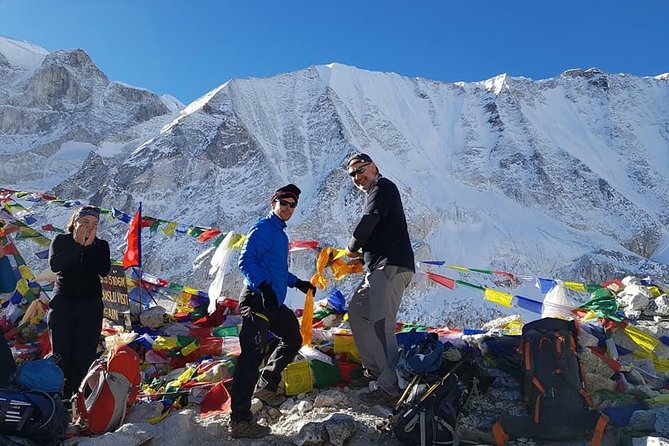
Day 11 goes from Samagaon to Samdo at about 3,690m. The trekking is described as gentle uphill through a desert path and windy valley, and the Tibetan border is close though visitors are not allowed to pass. Samdo includes a Tibetan refugee village, giving the area a lived-in feel rather than just “scenery.”
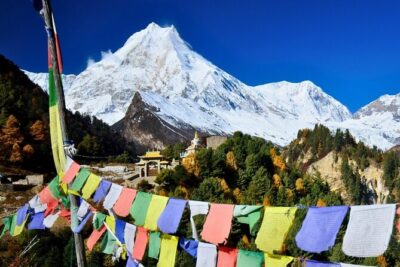
This is where you get strong views of Mount Manaslu plus nearby peaks like Samdo (Pang phuchuli), Nagdi chuli, and other snow-capped giants. If you’re the type who likes a calm morning with big views, this day tends to be memorable because you’re not doing the pass yet, but the mountains are already right there.
Larkya La crossing at 5,135m: the long, windy day you plan for
Day 12 takes you to Larkya La Phedi or Dharmashala around 4,460m. The trail is described as rocky and zigzagging, and there’s a market stop at Larkya Bazaar where seasonal fairs may happen and goods are brought from Tibet. It’s a useful contrast to the steep walking, and it can feel like a breather before the real crossing effort.
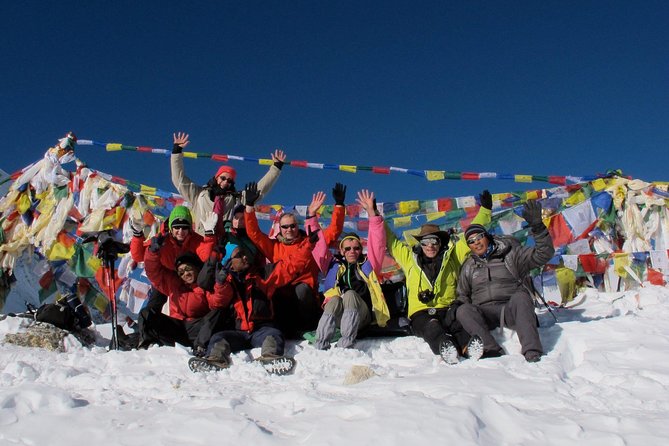
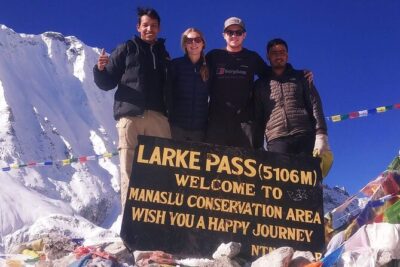
Day 13 is the pass day. You start early and trek a steep ascending path through rocky, windy terrain to Larkya La at 5,135m. You carry a packed lunch, then cross into a steep downhill through rock and ice, with icy lakes along the way. You finish at Bimthang at around 3,590m.
This is the part of the trek where weather and your own pacing matter most. If it’s windy or visibility is low, you’ll feel it instantly on the pass. The good news is the downhill to Bimthang comes as a relief, and Bimthang itself is described as a broad, level ablation valley with mani walls and deserted houses.
Descent via Bimthang to Tilje: rhododendrons and orchard-country
Day 14 continues downhill from Bimthang to Tillje at about 2,360m. It takes about 4-5 hours and passes through a high pasture, then descends the valley of the Burdin Khola toward the base camp area for the west side of Manaslu. From a ridge around 4,150m, you get excellent views of Manaslu to the southeast and Annapurna II to the southwest.
Then the trail changes again. You cross a bridge over headwaters of the Dudh Khola, descend into a rhododendron forest, and walk through a narrow valley until you reach Karche around 2,785m. The day ends in Tilje, which has an apple orchard known for local wine.
That apple orchard detail is not just cute. After days of dry, high country, it gives you a sense that you’re moving into lower, more cultivated terrain. It can make the descent feel less brutal, because you’re no longer just chasing altitude changes.
Tilje to Dharapani, then Besi Sahar: when the Annapurna link shows up
Day 15 is Tilje to Dharapani, about 1,860m. You leave Tilje and trek uphill for about 45 minutes to reach Dharapani by crossing a bridge over the Marshyangdi River. This is a logical reset day before the transportation segment.
Day 16 brings you down toward Syange for 3/4 hours, then a jeep or bus ride to Besi Sahar for 2/3 hours. The point of this day is getting you off the remote trail without making you walk longer than necessary.
Finally, Day 17 returns to Kathmandu by local bus for 4-5 hours, then includes a cultural dinner in the evening. Day 18 is departure day with airport transfer timed for your international flight connection.
Price and value: what $1,797 covers, and what you still manage
At $1,797 per person for about 18 days, you’re paying for an operation that handles the big-ticket parts of a restricted trek. The included items list airport pickup and drop, a 3-star hotel in Kathmandu with breakfast, full day Kathmandu sightseeing by private vehicle, and tea house or lodge accommodations during the trek. Meals are included during the trek at tea houses, covering breakfast, lunch, and dinner.
The value is especially strong when you look at permits and support. The package includes national park fees and all required trekking permits, plus the special permit and TIMS. It also includes a guide and porters, with one porter for every two trekkers, plus general first-aid kits.
What’s not included is equally important for planning. Meals in cities are not included, along with personal expenses like laundry and drinks, travel insurance, tips for staff, and Nepal visa fees plus sightseeing entrance fees. Also, personal trekking gear is not listed as included, so you’ll still need to bring your own core kit.
Support on the trail: guide and porter help that can matter in real life
Support is where you often see the difference between a trek that feels organized and one that turns messy. The package includes a licensed guide and porters, and one of the strongest signals from past experiences is how quickly the team can handle urgent moments.
One example shared with the team included Bishbu Bhatta helping organize overnight assistance when timing and urgency were tight during a Manaslu Circuit trek. The takeaway for you is that this is not just a walk with a map. It’s a team that can coordinate when plans need to change.
You’ll also feel the human side of support in smaller ways. The guide, Karma, is named in positive experiences for good on-trail handling, and that kind of consistent leadership is exactly what you want on Larkya La day when conditions can be windy and rough.
Should you book this Manaslu Larke Pass trek?
I think this is a great fit if you want a true Manaslu experience, not a sightseeing shortcut. You’re getting the restricted-region permits and licensed guiding built in, you have an acclimatization rest day in Samagaon, and you reach Larkya La with a clear downhill transition plan afterward.
You should think twice if you dislike high-altitude trekking that is weather-dependent. The itinerary includes a long, steep pass crossing and trail descriptions that mention rocky, windy sections plus icy lakes. You’ll need moderate physical fitness and the patience to let your body adjust.
If your goal is a demanding trek through changing ecological zones and Tibetan-influenced villages, with the logistics handled, this package looks like solid value. If your goal is easy hiking with guaranteed comfort every day, pick a different route.
FAQ
What is the duration of the Manaslu Trek with Larke Pass?
The trek is listed as 18 days approximately.
What is the highest point on this trek?
The highest point is Larkya La (Larke Pass) at 5,135m.
Is airport pickup and drop included?
Yes. The package includes airport pickup and drop in Kathmandu.
Are permits and fees included?
Yes. It includes national park fees and all required trekking permits, plus special permit and TIMS.
Do I need a guide for the Manaslu restricted region?
Yes. This trek needs a licensed guide, and the package includes a guide and porters.
What is the porter arrangement?
Porters are included, with 1 porter for 2 trekkers.
Where do you stay during the trek?
The package includes tea house or lodge accommodation during the trek, and a 3-star category hotel in Kathmandu with breakfast.
Are meals during the trek included?
Yes. Tea house or lodge meals during trekking include breakfast, lunch, and dinner.
What Kathmandu sightseeing is included?
The full day Kathmandu sightseeing includes Pashupatinath Temple, Boudhnath Stupa, Patan Darbar Square, and Swayambhunath Stupa.
What is not included in the price?
Not included are meals in cities, personal expenses, travel insurance, personal trekking gears not mentioned in the contract, tips for staff, personal first aid kit, plus Nepal visa fee and sightseeing entrance fees.
Latest additions near Kathmandu
- White Water River Rafting – 1 Day★ 4.3 · 3 reviews
- Traditional Momo Making Class★ 5.0 · 10 reviews
- Kathmandu to Pokhara Premium sofa bus ticket★ 4.0 · 17 reviews
- Ghorepani Poon Hill Trek★ 5.0 · 16 reviews
- Amazing 1 Day Trekking Experience in Kathmandu Nepal★ 5.0 · 24 reviews
- Ghorepani Poonhill Trek★ 5.0 · 5 reviews
- Walking tour of real Kathmandu through back streets.★ 5.0 · 3 reviews
- Wildlife Adventure in Chitwan Nepal★ 4.0 · 4 reviews
Manaslu Circuit Treks, compared.
Browse the lists this tour appears in