
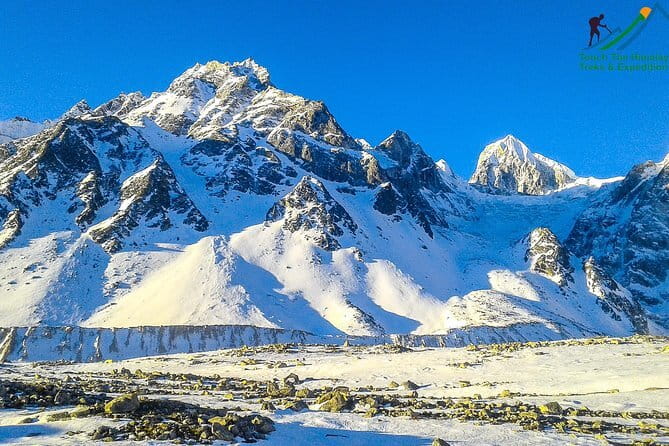
Reviewed · MANASLU CIRCUIT TREKS
Manaslu, Nar Phu and Annapurna Three Passes Trek
Three big passes, one epic Himalayan arc. This Manaslu, Nar Phu and Annapurna Three Passes trek strings together Manaslu, Tsum Valley, and the Nar Phu villages with breathtaking high-altitude payoffs. I like that it is a single continuous adventure, not a pick-and-choose patchwork, with well-paced acclimatization built in.
What I really like most is the human side of the route, the Tibetan Buddhist flavor of Tsum and Phu, plus the practical logistics that keep you moving on schedule. Second, I like the way the trek hits iconic altitude stages, Larkya La (5,160m), Kang La (5,306m), and Thorung La (5,416m), while still giving you standout detours like Tilicho Lake.
One drawback to consider: the trip pricing sounds simple, but meals and mountain accommodation can be “provided if required,” with extra costs possible. Also, you are on the hook for your personal insurance and gear, and high-altitude success depends heavily on weather and your fitness.
Key takeaways before you go
- Tsum Valley and Nar Phu culture, not just mountain views, with gompas, mani walls, and chortens along the way
- Three major pass crossings at Larkya La, Kang La, and Thorung La, plus acclimatization days that matter
- Tilicho Lake timing, with an early push from Tilicho base area to reach the lake viewpoint
- Operator-supported logistics, including permits, an expert local guide, and a porter system (ratio included)
- Practical travel flow, airport pickup, Kathmandu staging, road transfer to the trek start, and a return route via Pokhara
In This Review
- Why This Manaslu, Nar Phu, and Three Passes Trek Feels Like a Single Big Journey
- Kathmandu Staging: Durbar Square, Monkey Temple, and Your Trek Briefing
- Road Into the Trek Country: Bus to Arughat, Local Drive to Soti Khola, and First Views
- Entering the Tsum Valley: Philim, Lokpa, and the Tibetan Culture Shift
- From Tsum to Samagaon and Samdo: Acclimatization That Makes the Passes Possible
- Larkya La to Annapurna West Side: Big Views, Big Altitude, and Bhimtang to Dharapani
- Kang La and Nar Phu Days at Phu: Prayer Wheels, Himlung Base Camp, and Quiet Mountain Drama
- Tilicho Lake and the Road to Thorung La: Highest-Lake Morning and Yak Kharka Hydration
- Thorung La to Muktinath to Jomsom: The Finish Line With Cultural Stops and Apple Orchards
- Permits, Guides, and Porter Support: What’s Included and What You Should Double-Check
- Price and Value: Is $2,426.67 Fair for a 34-Day Three-Pass Trek?
- Fitness, Weather, and the Practical Reality of Three Passes
- Should You Book It? My Take on Who This Trek Fits Best
- FAQ
- How long is the trek?
- What are the three high passes on this route?
- Does the trip include airport pickup and drop-off?
- Are permits included?
- Is this a private tour?
- What trekking fitness level do you need?
- What is not included in the price?
Why This Manaslu, Nar Phu, and Three Passes Trek Feels Like a Single Big Journey
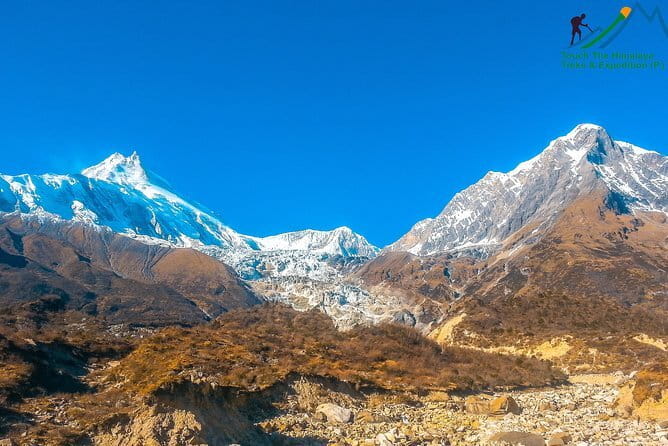
This trek is interesting because it combines three different “Nepal trekking identities” into one storyline. You start in the Manaslu region, slip into the quiet Tibetan world of Tsum Valley, then head toward the more remote-feeling Nar Phu villages. After that, you connect into the Annapurna circuit energy, ending with Thorung La and the Kali Gandaki corridor.
You get the kind of route that makes you pay attention day after day. One day the trail is about village life and prayer wheels. The next day it is about long, steady climbs and high, thin-air breaks. That mix is exactly what makes this trek feel like a lifetime journey instead of a checklist.
The pass sequence is the headline, but the real value is the pacing around it. You are not just thrown toward altitude. You have acclimatization built around key elevation points like Samagaun and Samdo before Larkya La, and again in the Nar Phu area before Kang La.
And if you care about smooth execution, this operator has shown a focus on planning and responsiveness, including organizing at short notice for past clients. That matters because in high mountains, the little timing choices can make the whole experience feel calmer.
Kathmandu Staging: Durbar Square, Monkey Temple, and Your Trek Briefing
Your trek doesn’t start with a flight hop and a scramble. It starts in Kathmandu with an airport greeting, then a transfer to your hotel. You also get time to reset after travel, which is underrated when you are about to spend weeks trekking.
Before the mountains, you get a proper briefing at the office. You’ll go over what you need, so you can stop guessing about permits, the trekking flow, and what to expect as your elevation rises. This is where you benefit from asking the questions you forgot to ask at home, like charging limits, pacing, and what your team expects from you on steep days.
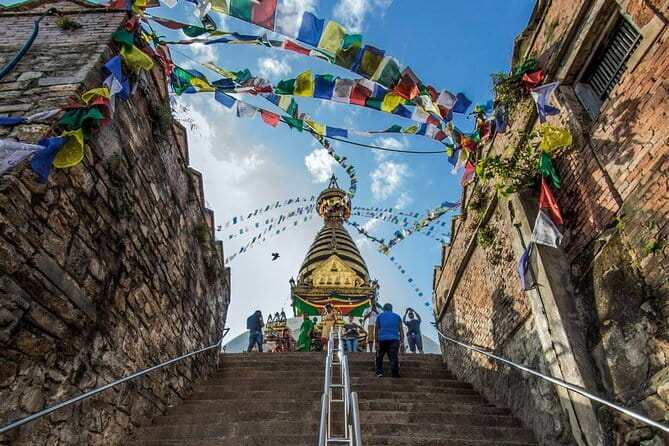
On sightseeing day, you hit Kathmandu Durbar Square, a UNESCO World Heritage site, and then Swayambhunath Stupa, also called Monkey Temple. I like this pairing because it gives you both the historical layers of Kathmandu and the quick hilltop payoff where the city spreads out below you.
A practical note: admission tickets for these sights are not included, so budget a little for entry fees and any optional stops your guide suggests.
More Treks in Kathmandu
- Everest Base Camp Trek – 14 Days
★ 5.0 · 1,499 reviews - Everest Base Camp Trek
★ 5.0 · 842 reviews - Everest Base Camp Trekking
★ 5.0 · 485 reviews
Road Into the Trek Country: Bus to Arughat, Local Drive to Soti Khola, and First Views
Once Kathmandu is done, you shift into travel mode. The route takes you by bus toward the trek start area, reaching Arughat, then you continue by local vehicle up toward Sotikhola. This part of the trip matters because it gradually changes your surroundings from city rhythm to rural river valleys.
On the trek’s early days, you pass terraced fields, local villages, waterfalls, and stone features like mani walls. Those first hiking days are also your first real taste of the Ganesh Himal area, and on a clear-weather day you may even spot early views of Ganesh Himal from the road.
This is a good moment to get your gear system working. Laces, water, rain layer, snack cadence. Short days at the start can still become uncomfortable if your packing is chaotic. I recommend using this period to test everything, especially footwear and your daypack setup.
One small upside: the itinerary notes a chance of waterfalls and monkeys on the early stretch. In Nepal, those sightings are often weather and timing dependent, so keep your camera ready but your expectations flexible.
Entering the Tsum Valley: Philim, Lokpa, and the Tibetan Culture Shift
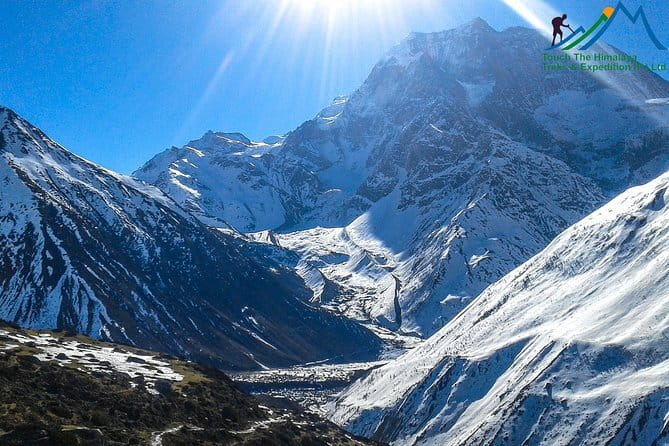
After a suspension bridge crossing over the Bhudi Gandaki, you move into Tsum Valley, starting in the Philim area and trekking through villages toward Lokpa. This is where the feel of the trail changes. You are still hiking hard, but the cultural tone becomes unmistakable.
Tsum Valley is famous for its Tibetan Buddhist character. You see mani walls, prayer-related features, and the whole landscape feels more spiritual and quiet than the more mainstream routes. It’s not just decorative. The trail structure and village rhythm reflect that culture.
Chumling is a highlight for many reasons. You hike uphill for about four hours, then you get time to visit the gompas. You also get a choice in how you handle your day, either camping there or returning to Lokpa for the night. Either way, you gain that classic “high valley” feeling, with big angles on the Shingri Himal and views over toward Ganesh Himal.
Chhokan Paro also earns a mention for being one of the bigger settlements in the Tsum Valley. Even if you do not linger long, you still get a sense of how community life concentrates in the valley.
And Mu Gompa is another standout. It is tied to Buddhist ceremonies and includes a visit to the Milarepa Cave. That combination, spiritual features plus a specific story-linked site, gives you more than just scenic trekking. It gives you context for why people keep returning to these places.
If you like photography, these days are extremely rewarding because the prayer wheels, chortens, and village layouts create “human scale” frames, not just mountain backdrops.
From Tsum to Samagaon and Samdo: Acclimatization That Makes the Passes Possible
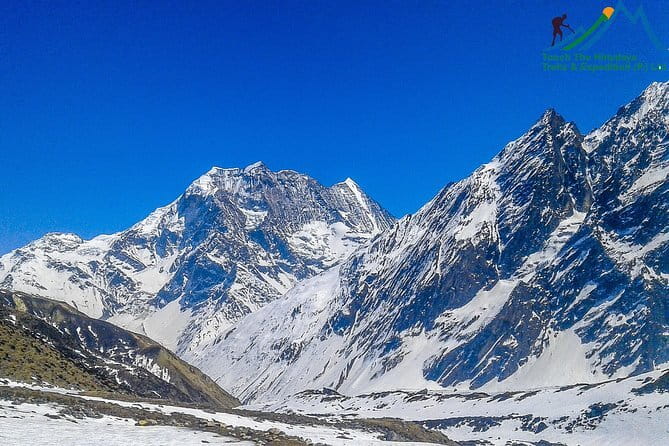
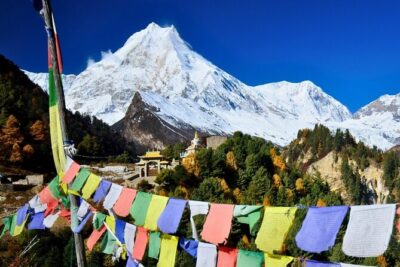
After the Tsum stretch, the route continues west toward Manaslu region villages like Namrung, Lho, and then Samagaun (listed as Sama, locally known as Samagaon). This section builds steadily while also giving you big mountain introductions, including a day where Manaslu sighting is right on cue.
Samagaun is where you gain your first real acclimatization breathing space. You start with a rest day, then options include hiking around Birendra Lake and Manaslu Base Camp, or heading toward Pungen Gumpa. I like having options because it lets you match effort to how your body is handling altitude. There is no prize for forcing a maximum hike on an acclimatization day.
Later you reach Samdo. This village is higher and slower on purpose. The itinerary encourages you to climb slowly due to elevation, and it gives you an afternoon choice to rest or hike up to Samdo Peak. If you have the stamina, that short extra climb can reward you with intense views of Manaslu.
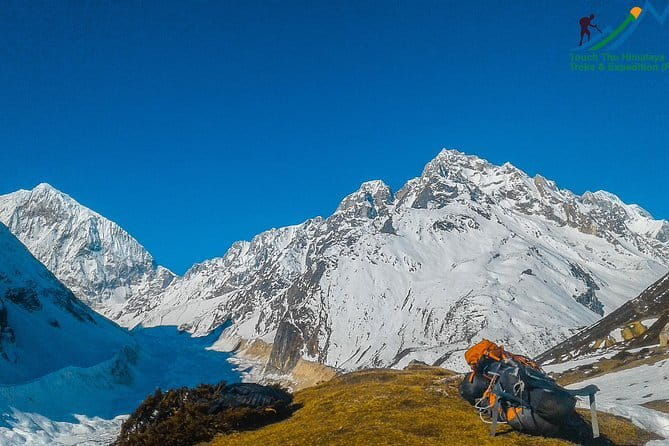
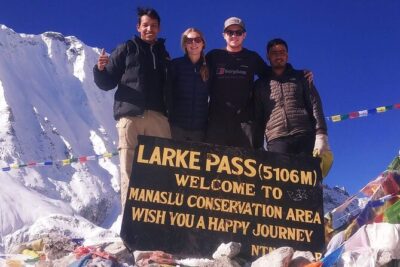
You also shift toward Dharmasala, also known as Larkya Phedi. This sets you up for the first major pass, Larkya La (5,160m). Getting into the right “sleep high, move smart” zone before the pass day is one of the simplest ways to improve your odds.
More Manaslu Circuit departures:
- Manaslu Circuit Trek
★ 5.0 · 292 reviews - Manaslu Circuit Trek:
★ 5.0 · 106 reviews - Manaslu Circuit Trek (15 Days)
★ 5.0 · 50 reviews - Manaslu Circuit Trek
★ 5.0 · 35 reviews
Larkya La to Annapurna West Side: Big Views, Big Altitude, and Bhimtang to Dharapani
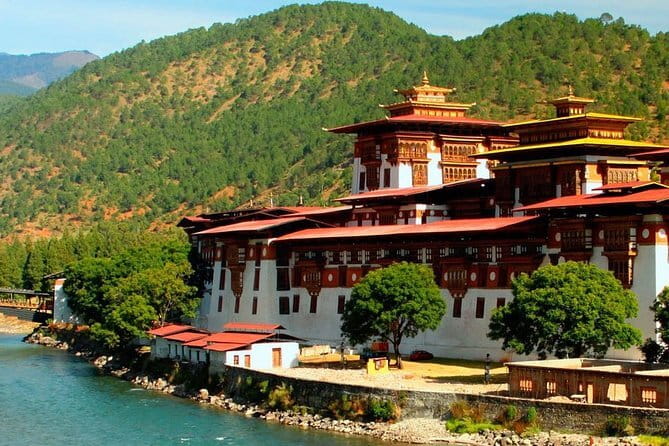
Your Larkya La crossing begins with an early start and slow trail progress, then a break at the pass for views. That pattern matters. At high altitude, steady movement beats speed. You are more likely to stay comfortable, conserve energy, and enjoy the views when you take the pass like a rhythm instead of a race.
After crossing, you go downhill toward Bhimtang, another key stop in the route. On this side of the pass, you can see other heavy hitters, including Cheo Himal, Gyaji Kung, Kang Guru, and Annapurna II from the pass area. That is a lot of high, stacked geography in one day, even if you only look for a few minutes each time the cloud cover shifts.
Later you descend further to Gho and then Dharapani. The itinerary notes a sunrise possibility from the teahouse if you wake up early. That is the kind of small timing detail that can make the day feel richer without adding extra distance.
Practically, this period is also where you can appreciate the Annapurna region pine forests and village trails. The route continues with a mix of forest walking and settlement crossings, which helps break up the monotony that can happen on long ridgelines.
Koto also shows up as a last goods restock stop for that area. If you need snacks, basic supplies, or small comfort items, that is where you use the chance.
Kang La and Nar Phu Days at Phu: Prayer Wheels, Himlung Base Camp, and Quiet Mountain Drama
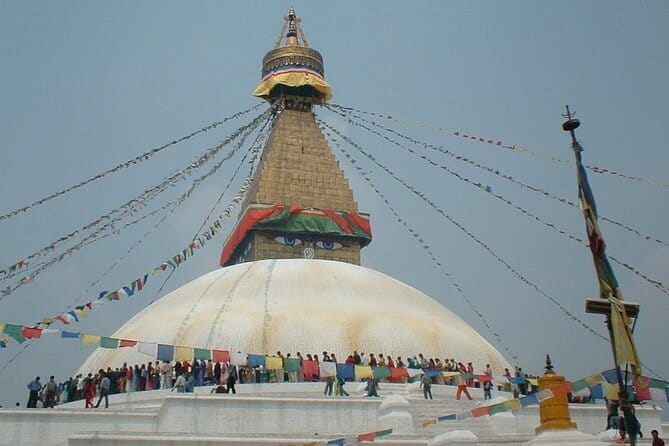
Once you move north along the Nar Khola river, you reach the Nar Phu region around Phu and surrounding villages. The trail here feels more remote and more “lived in” than just a scenic corridor.
Phu is where the spiritual texture becomes obvious. The area is described as filled with chortens, mani prayer wheels, and an 18th-century old stupa. That sort of detail matters because it means you are walking through a place that still has deep religious purpose, not just tourist-installed features.
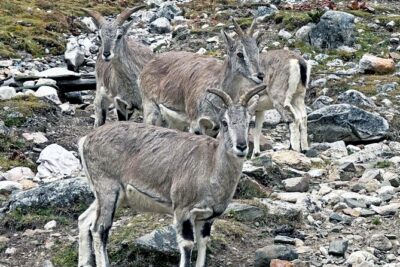
You also get an acclimatization day by hiking to Himlung Base Camp and returning to Phu. This is not a random detour. It helps you adjust before Kang La, the highest point of this part of the trek. The itinerary even frames Phu as a bird watching spot and notes the possible presence of elusive snow leopards along blue sheep herds. You cannot count on wildlife, but this kind of note is a reminder to keep your eyes up, not just down at your feet.
Kang La itself then becomes the next pass day. You start heading out, move up toward Kang Phedi, cross the pass, then drop steeply down toward Nawal (Ngawal). The steep downhill after a pass crossing can be tough on knees, so use shorter steps and plan for it mentally. Your body may feel fine at the pass itself, then get challenged on the descent.
Later, the trek brings you through Manang area and up toward Khangsar. This section gives you a sense of scale because Manang is a bigger town where you may refill supplies. Bigger villages can feel like a pause button, but they also remind you how far you’ve come from the quieter valleys.
Tilicho Lake and the Road to Thorung La: Highest-Lake Morning and Yak Kharka Hydration
Tilicho Lake is a major reason many people want this route. You reach Tilicho base camp area, described as Hotel New Tilicho, then you push out early for Tilicho Lake. The itinerary suggests around a 6am start. That early departure matters because you want daylight, cooler hiking conditions, and enough time to reach the viewpoints comfortably.
The trail to Tilicho is described as gradually upwards, then about three hours to reach Tilicho. After you spend time enjoying views, you hike back down to base camp and then take a northern trail toward Siri Kharka.
This section adds a special kind of altitude day. Even if you are not technically crossing a new pass, you still feel the thinning air and the “more time spent outside, less time sheltered” feeling. I treat these days like a chance to slow down, eat often, and keep water in your plan.
From Siri Kharka you move to Yak Kharka, and then toward Thorung High Camp. Yak Kharka is called out for having a safe drinking water station, which is useful because water planning becomes more important as the days get colder and harder.
At Thorung High Camp, the next morning targets Thorung La, the highest pass on this trek. The itinerary notes blue sheep in the area and the possibility of snow leopards. Keep your expectations flexible, but do not ignore the wildlife chance. The real trick is sleeping well so you can get moving early.
Thorung La to Muktinath to Jomsom: The Finish Line With Cultural Stops and Apple Orchards
Thorung La crossing is set for a very early morning, with breakfast around 4 to 4.30am and then the climb and pass crossing. This is the classic “start before the day gets loud” pattern. Crossing early often means colder air and better trail footing.
After the pass, the route drops into barren lands and continues toward Muktinath. Muktinath is not just a checkpoint. The itinerary notes its Hindu connection, that it is named after the Hindu god of salvation, and it has 180 healing and purifying water taps. Even if you only glance at the taps, this is a meaningful cultural stop because it gives your trek a spiritual ending, not just a transportation ending.
From Muktinath you head toward Jomsom. You can take a jeep or follow the pitch road as part of the descent corridor. The route passes through Kagbeni on the bank of the Kali Gandaki River, then continues to Jomsom.
Kagbeni and Jomsom are known for apple orchards, and that means you get a visual change from rocky altitude routes to cultivated river valleys. It also gives you photo opportunities that feel different from the rest of the trek.
Finally, you reach Pokhara for your reset. The itinerary offers either a flight back from Jomsom, which is about 25 minutes, or a half-day drive. Pokhara gets your last night, and it gives you time to explore before heading back to Kathmandu.
Permits, Guides, and Porter Support: What’s Included and What You Should Double-Check
This route includes the major paperwork pieces. You get TIMS, ACAP/MCAP permits, and restricted special permits for Tsum Valley, Manaslu, and Nar Phu. Those restrictions can be a headache when arranged on your own, so having them handled is a big practical win.
You also get an expert Manaslu local guide. The itinerary text also spells out the staffing ratios: each two clients gets one porter, and each five trekkers gets one assistance guide. That porter system is important for a long trek where fatigue can quietly build up. It also means you can keep your daypack manageable, which helps you move better on steep pass approaches.
Rescue arrangements are listed, along with a basic first-aid kit carried by your trekking guide. You also receive government and local taxes, plus agency service charges and VAT, which reduces surprise costs.
One thing to double-check before you commit: meal and accommodation in the mountains may be treated as “provided if required,” with costs possibly added additionally. The document also lists all meals and mountain accommodations as not included unless arranged by the company per the package agreement. So you want to confirm exactly what is covered for the days in the mountains, and what would be an extra charge.
Price and Value: Is $2,426.67 Fair for a 34-Day Three-Pass Trek?
At $2,426.67 per person, you are paying for a trek that combines remote restricted areas, three major pass days, and a staffed support model. In other words, you are not just buying miles. You are buying access, permits, guides, and a full plan.
Here is where the value really shows up:
- Permits are included, including restricted special permits for Tsum Valley, Manaslu, and Nar Phu. That alone can be hard to coordinate cleanly.
- Guides and porters are part of the structure, not an optional add-on you must scramble to arrange.
- Logistics are handled, including airport pickup and return routing, and transfers to and from the trek zones.
Where the price can feel tricky:
- You still need to budget your international airfare and Nepal visa fee, plus personal insurance that includes medical and emergency evacuation. For high passes, this is not a place to cut corners.
- Mountain meals and accommodations might not be fully included depending on how the package agreement is written. Since the pricing info is a bit conditional in wording, you should ask for a clear breakdown in writing before you pay.
If you want a trek with a single team planning the whole arc, and you want the comfort of a known rhythm and staffing, this price starts to make sense. If you want to build your own, you might find cheaper options, but you would also be taking on the paperwork and risk that a more structured operator handles.
Fitness, Weather, and the Practical Reality of Three Passes
This trek is for travelers with moderate physical fitness and real stamina, because you cross three passes at high elevations, including Larkya La at 5,160m, Kang La at 5,306m, and Thorung La at 5,416m. The biggest danger is not failing on one day. It is accumulating fatigue and then struggling when the next pass day arrives.
Weather also plays a big role. The experience notes that cancellation can happen due to poor weather, and that you may be offered a different date or a full refund in that case. In practice, you should be mentally ready for schedule changes, especially around pass crossings when conditions can shift quickly.
So plan like this:
- Train for long uphill and downhill walks before you go.
- Expect early mornings around the highest pass days.
- Keep a steady snack and hydration rhythm. Notes like the drinking water station at Yak Kharka are there for a reason.
And pack smart for cold. Even if you are not told the exact temperature range, altitude treks in Nepal are reliably chilly once you get into pass regions. Bring layers you can adjust, not one thick jacket that forces you to sweat uphill and freeze downhill.
Should You Book It? My Take on Who This Trek Fits Best
Book this trek if you want a serious long trek that combines culture and altitude in one continuous journey. It is especially a good fit if you care about Tsum Valley Tibetan Buddhist life and you also want Nar Phu’s quieter spiritual vibe before you tackle the big pass finish.
You should think twice if you hate conditional costs. Confirm whether mountain meals and accommodations are included in your specific booking. You should also think twice if you have only light trekking experience, because the three-pass sequence and long trekking days require real endurance and careful pacing.
If you like clear structure, and you want permits handled and a guide plus porter system in place, this is the kind of trek that delivers exactly that. And if you are trying to start on a tight timeline, the operator’s track record of organizing at short notice is a good sign.
FAQ
How long is the trek?
The trek is listed at approximately 34 days.
What are the three high passes on this route?
You cross Larkya La (5,160m), Kang La (5,306m), and Thorung La (5,416m).
Does the trip include airport pickup and drop-off?
Yes. Airport pickup and drop-off are included.
Are permits included?
Yes. Permits listed include TIMS, ACAP/MCAP permits, and restricted special permits for Tsum Valley, Manaslu, and Nar Phu.
Is this a private tour?
Yes. Only your group participates.
What trekking fitness level do you need?
The information says travelers should have moderate physical fitness.
What is not included in the price?
International airfare and Nepal visa fee are not included, along with personal insurance, personal gear and equipment, tips for guide and porter, and meals and accommodations in Kathmandu beyond the two nights mentioned, as well as all meals and accommodations in the mountain unless arranged under the package agreement.
Latest additions near Kathmandu
- White Water River Rafting – 1 Day★ 4.3 · 3 reviews
- Traditional Momo Making Class★ 5.0 · 10 reviews
- Kathmandu to Pokhara Premium sofa bus ticket★ 4.0 · 17 reviews
- Ghorepani Poon Hill Trek★ 5.0 · 16 reviews
- Amazing 1 Day Trekking Experience in Kathmandu Nepal★ 5.0 · 24 reviews
- Ghorepani Poonhill Trek★ 5.0 · 5 reviews
- Walking tour of real Kathmandu through back streets.★ 5.0 · 3 reviews
- Wildlife Adventure in Chitwan Nepal★ 4.0 · 4 reviews
Manaslu Circuit Treks, compared.
Browse the lists this tour appears in