
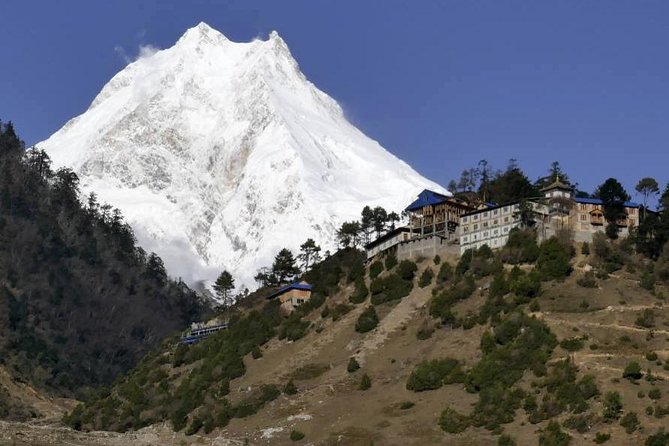
Reviewed · MANASLU CIRCUIT TREKS
Manaslu Circuit Trekking – 17 Days
A high pass, then forests and hot river valleys. This 17 day Manaslu Circuit trek is built around a serious altitude test, plus big Himalayan views that change with every day. You get a clear path from Kathmandu acclimation to the Larkya La crossing and then a long descent into greener country.
I especially like two things: first, the English speaking, license holder Sherpa guide team, with real porter support (one porter for every two trekkers). Second, the logistics are handled in a practical way, including lodge stays with full meals on the trek, required permits, and ground transport organized from Kathmandu to the trailhead and back.
One consideration: the pass day is long and high, with snow possible at about 5,215 m, so you need strong fitness and a calm mindset for slow, cold hours.
In This Review
- Key highlights worth your attention
- Kathmandu, then straight into real trekking days
- Road-to-trail transition: from Kathmandu toward Soti Khola
- Old villages and steady climbs: Machha Khola to Deng
- Namrung and Lho: where the scenery starts flexing
- Sama Gaon acclimatization: the day your body will thank you
- Samdo and Larkya Phedi: warming up for the pass
- Larkya La crossing near 5,215 m: the big day
- Bhimphedi to Gho: easing into the Marsyangdi valley
- Tal and the last descent: finishing with a true sense of completion
- Price and value: what $1,600 includes on this trek
- Guides, care, and real-world support you can feel
- Who should do the Manaslu Circuit, and who should rethink it
- Should you book this Manaslu Circuit trekking package?
- FAQ
- How long is the Manaslu Circuit trek?
- Where does the tour start and end?
- What is the highest point on the route?
- Is an English speaking Sherpa guide included?
- Are meals included during the trek?
- How does accommodation work in Kathmandu?
- Are permits and official documentation included?
- What about porters and group support?
- How are transfers handled from Kathmandu to the trail and back?
- What happens if the trek is canceled due to weather?
Key highlights worth your attention
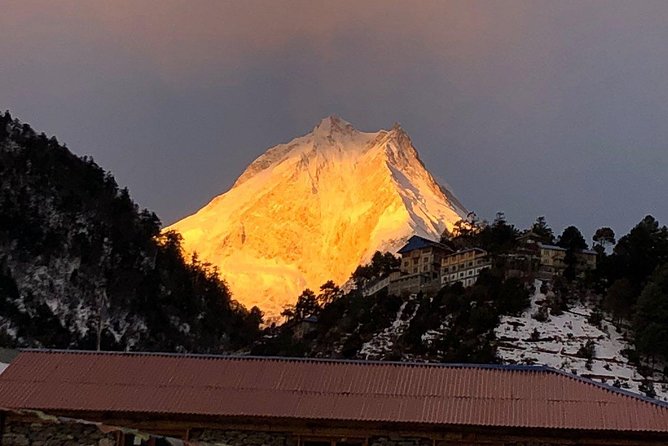
- Larkya La pass at about 5,215 m, a real stamina checkpoint with 10 to 12 hour walking on crossing day
- Full trek meals in local lodges (breakfast, lunch, dinner for 13 nights), so you are not hunting for food each day
- Acclimatization at Sama Gaon around 3,541 m, giving your body a chance to adjust before the highest section
- A private trek setup where only your group participates, with an assistant Sherpa when group size is over four
- Good support structure with a first aid kit, energy snacks, and a porter ratio that prevents you from feeling alone
Kathmandu, then straight into real trekking days
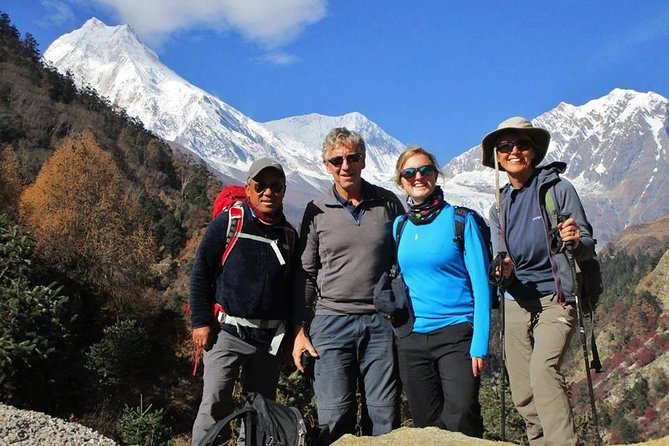
Kathmandu is where most treks feel like a gear check, and this one starts the same way: you arrive around 1,300 m and get a preparation day. That matters because Manaslu is not a “walk and chill” route. Even if you are fit, you still want a smooth start so your trekking legs are fresh when the altitude starts stacking up later.
Expect three nights in Kathmandu on a bed and breakfast plan. That gives you time to rest, eat normal food, and get your final questions answered by your Sherpa guide team. The meeting point is Thamel, which is useful because it is close to a cluster of shops, pharmacies, and places to buy last minute trail basics if you forgot something.
If you are coming in on a later flight, keep your first day flexible. You will be in Kathmandu at altitude, then you will quickly shift toward a long drive and a first trek day.
More Treks in Kathmandu
- Everest Base Camp Trek – 14 Days
★ 5.0 · 1,499 reviews - Everest Base Camp Trek
★ 5.0 · 842 reviews - Everest Base Camp Trekking
★ 5.0 · 485 reviews
Road-to-trail transition: from Kathmandu toward Soti Khola
Day 3 is a long day on the move, a drive from Kathmandu to Soti Khola via Arughat that takes about 8 to 9 hours over roughly 145 km. This part is often underestimated by people who think the real trek starts the moment they lace up. In Nepal, that drive is part of the trek. The roads are long, the views can be stunning, and you end with the satisfaction of reaching a real trail start point.
Then Day 4 steps into the trekking rhythm with a walk to Machha Khola, about 6 hours over around 15 km. This is where I like to think about the “daily system” for your trek: how you break up snacks, when you go slow, how you manage water, and how you keep your pack weight reasonable. You will do this many times on the circuit, so get it right early.
Practical tip: on these first days, do not treat the walk like a sprint. Set a pace you can repeat for weeks.
Old villages and steady climbs: Machha Khola to Deng
From Machha Khola, the route continues to Jagat on Day 5, then to Deng on Day 6. These are not “landmark only” days. They are village days, where the day’s value comes from rhythm and atmosphere as you gain height.
- Day 5 to Jagat is roughly 6 to 7 hours and about 22 km, stepping up to around 1,340 m.
- Day 6 to Deng takes about 6 to 7 hours over around 20 km, reaching roughly 1,860 m.
What makes this section work is that you are not thrown into thin air immediately. The Manaslu Circuit steadily raises your altitude without going full drama on Day 5. You also start to notice the mix of terraced farming, the way villages are built to survive mountain weather, and how the trail feels like a working corridor, not just a scenic walkway.
Namrung and Lho: where the scenery starts flexing
Day 7 brings you to Namrung, up to about 2,630 m. It is a long day, around 7 to 8 hours for roughly 19.5 km. Then Day 8 pushes higher to Lho, around 3,200 m, about 6 to 7 hours over roughly 10 km.
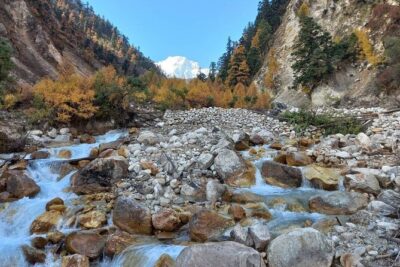
This is where the trip begins to feel like more than a hike. You start getting wider views and a stronger sense of the surrounding peaks. The overview also points to the dramatic ecological shift you experience on Manaslu: moving through alpine zones and then down toward more tropical growth. On this trek, that shift is not just a line on paper. You feel it as the air changes, and as you see ferns, bamboo, and waterfalls as the route begins to descend later.
A small but real benefit here: you spend enough days climbing that acclimatization feels like a process, not a cliff edge.
More Manaslu Circuit departures:
- Manaslu Circuit Trek
★ 5.0 · 292 reviews - Manaslu Circuit Trek:
★ 5.0 · 106 reviews - Manaslu Circuit Trek (15 Days)
★ 5.0 · 50 reviews - Manaslu Circuit Trek
★ 5.0 · 35 reviews
Sama Gaon acclimatization: the day your body will thank you
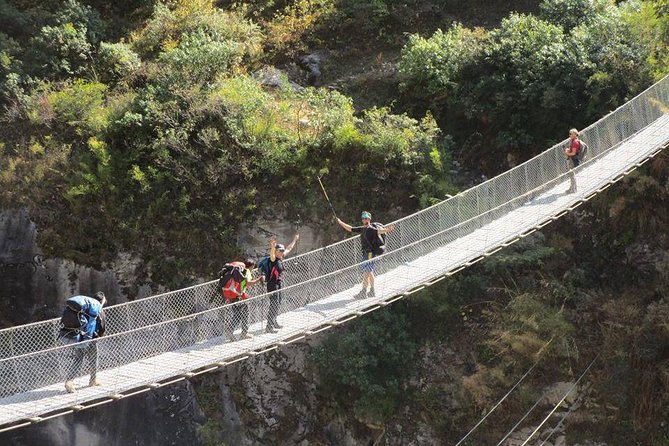
Day 9 takes you to Sama Gaon, around 3,541 m, about 5 to 6 hours for roughly 8.5 km. Then Day 10 is an acclimatization day at the same altitude.
This is the part that separates a good plan from a painful one. You cross higher terrain later, including the pass around 5,215 m. That is why spending a full day at about 3,541 m is valuable. It gives your body time to adjust to thinner air before you go further upward.
Your days around Sama Gaon are also typically about slow walking and listening to how you feel. If your head feels off, if you have nausea, or if you get unusually tired, that is not the time to “push through” stubbornly. The best treks are the ones where you manage altitude instead of fighting it.
Samdo and Larkya Phedi: warming up for the pass
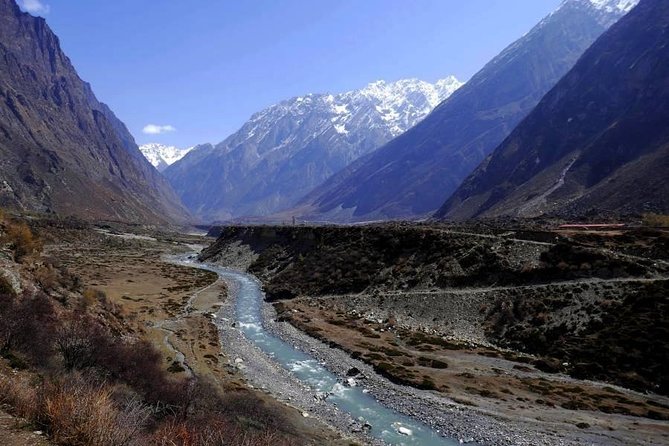
Day 11 is a trek to Samdo at about 3,872 m, around 4 to 5 hours and roughly 7.5 km. Day 12 continues to Larkya Phedi, up near 4,500 m, about 4 to 5 hours over roughly 7 km.
This is the high camp build up. The trail starts to feel colder and more exposed, and the air starts to bite more. If snow conditions happen, the overview specifically flags the Larke La pass area as snow terrain, so you should be prepared for slick ground and the kind of walking where every step counts.
Here is a practical approach that helps: when you are tired, shorten your stride and keep your upper body calm. People often try to “power up” their way through altitude cold. You get farther with steady effort than with drama.
Also, note that the itinerary includes energy supplies like Snickers, Mars, and Bounty during the trek. That is not just a sweet touch. On long cold days, quick calories help you keep your pace and mood stable.
Larkya La crossing near 5,215 m: the big day
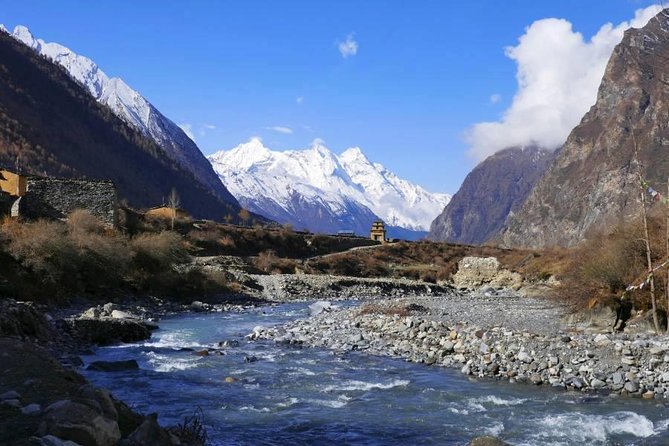
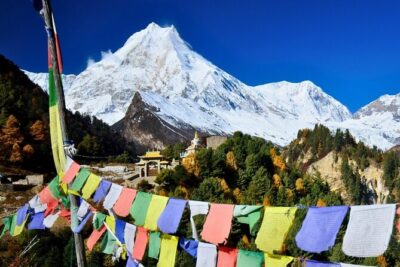
Day 13 is the star and the stress test: you cross Larkya La at about 5,215 m, then descend to Bhimphedi around 3,590 m. Plan on 10 to 12 hours, roughly 24 km.
This is the day to treat like a controlled expedition, not a hike you finish because you want to. When you are this high, speed is optional. What matters is breath management, warm layers, steady footwork, and not getting discouraged by the slow rhythm.
After the pass, you descend into a lower zone, and that descent is often emotionally satisfying because it flips the experience from extreme cold and exposure to something more alive. The overview mentions a transition from alpine areas into more tropical growth, with ferns, bamboo, waterfalls, and blue-green lakes. Even if you do not see every described feature in a single glance, you will feel the ecological change as the altitude drops.
One more thing: your Sherpa guide is here for safety and pacing. In the reviews, there are clear hints of how much care the guide team brings when conditions get tough. For example, one reviewer highlighted Ngima at arrival and Jangbu for going above and beyond when sickness hit. That kind of attentive support is exactly what you want on pass day, when you may need adjustments to keep yourself stable.
Bhimphedi to Gho: easing into the Marsyangdi valley
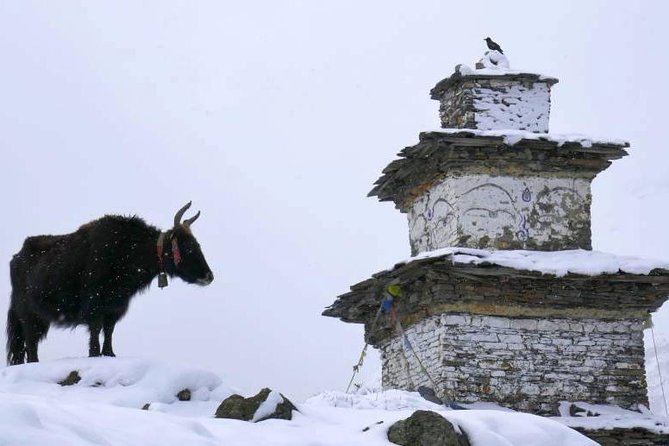
Day 14 takes you to Gho, around 2,515 m, about 6 to 7 hours for roughly 22 km. This day is often where you start to breathe easier. You are still working, but you are no longer in the highest, thinnest zone.
The overview also mentions the heavily forested valley of the Marsyangdi River until you meet up with the popular Annapurna Circuit trail. That means you are not just descending through empty mountain space. The route drops you into greener terrain and more established trekking traffic. The benefit is that life feels closer again, and the days can feel less like an isolated expedition.
If you get cravings for comfort, this is also where they show up. Not because the trek is bad, but because after a huge day, you start appreciating every small thing: a warm meal, a dry layer, a chance to rest without freezing.
Tal and the last descent: finishing with a true sense of completion
Day 15 walks to Tal, around 1,700 m, about 5 to 6 hours for roughly 15 km. This is part of the final downshift. Your body may be tired, but psychologically, you are approaching the end of the circuit.
Day 16 is the long travel day back: a drive to Kathmandu via Besisahar, about 8 to 9 hours and roughly 220 km. Even though this is transport, not trekking, it is still part of how you judge the value of the trip. You do not want to spend your last day negotiating connections. You want to arrive, shower, eat, and finally stop thinking about elevation for a minute.
By Day 17, the itinerary says happy departure, ending back at the meeting point.
Price and value: what $1,600 includes on this trek
At $1,600 per person, you are paying for a lot of built-in structure. This is not the cheapest way to trek in Nepal, but it is one of the more organized options.
Included in the trek package:
- Local lodge accommodation for 13 nights, with breakfast, lunch, and dinner
- English speaking experienced Sherpa guide who is government trained and licensed
- One Sherpa guide assistant if the group size is more than four trekkers
- Porters based on one porter for every two trekkers
- Trek staff costs including salary, insurance, equipment, food, and accommodation
- Energy supplies such as Snickers, Mars, and Bounty during the trek
- First aid medicine kit
- Special permit fees, TIMS permits, and required official documentation
- Ground transfers: Kathmandu to Soti Khola by local bus, plus Tal to Besi Shar to Kathmandu by local bus
- Kathmandu accommodations for 3 nights on a bed and breakfast plan
What is not included:
- Your personal travel insurance and Nepal entry visa fee
- Lunch and dinner in cities, with a suggested budget
- Beverages, including soft drinks and bottled or boiled water
- Tips for guide, porters, and driver
Here is the value angle I think you should care about: you are buying time and risk reduction. Permits, documentation, staffing, and food logistics matter at high altitude and in remote areas. A setup like this costs money because it removes you from a lot of “planning stress.” If you have the skills and patience to self-organize, you could do something cheaper. If you want a smoother, guided circuit with less negotiation, this price can feel fair.
Guides, care, and real-world support you can feel
The reviews you were given offer a clue about what good looks like on this trek. One reviewer described a warm welcome on arrival from Ngima and then support from Jangu or Jangbu when they got sick. That is a meaningful detail. On a high altitude trek, sickness can change everything, and you want a team that responds quickly and thoughtfully.
Another reviewer praised the guide and Sherpa who took great care of them, calling out the feeling of being made very small by the sheer scale of the mountains. That emotional part is real on the Manaslu Circuit. You are not just checking boxes. You are spending days in a place where the mountains dominate your sense of scale.
The route can also face weather issues. One review mentioned landslides after rain, leading to diversions and uncertainty. You should treat that as a reminder to stay flexible. This is Nepal in the monsoon season or shoulder seasons sometimes, and natural hazards can affect trail routing.
Who should do the Manaslu Circuit, and who should rethink it
This trek is a strong fit if you:
- Have strong physical fitness
- Enjoy long days and can handle a slow pace at altitude
- Want expert Sherpa-led guidance and a structured plan
- Like village trekking, not just summit chasing
It may not be the right choice if:
- You want short walking days and lots of lounging
- You are not comfortable with high altitude cold and long exposure
- You prefer to handle permits and staffing yourself
If you are traveling with family or first-timers, choose your preparation carefully. The trek is often doable with the right pace and attitude, but the pass day still demands respect.
Should you book this Manaslu Circuit trekking package?
If your priority is a guided, permit-managed trek with solid support and full meals in lodges, I would say yes, especially given the included English speaking Sherpa guide and the porter ratio. The itinerary is designed around altitude reality, including an acclimatization day at Sama Gaon, and it clearly schedules the hardest effort on Day 13.
I would book with extra confidence if you are someone who likes structure and hates last minute problem solving. You are paying for that calm.
Before you go, be honest with yourself about the one big variable: the Larkya La crossing. With snow possible and a 10 to 12 hour day at about 5,215 m, you need to be ready to move slowly, keep warm, and not rush. If that sounds exciting rather than scary, this circuit can be a life-shaped trek. If it sounds stressful, consider a lower-altitude alternative and save Manaslu for when you are fully ready.
FAQ
How long is the Manaslu Circuit trek?
The trek is listed as 17 days approximately, including time in Kathmandu, walking days, and the return drive to Kathmandu.
Where does the tour start and end?
It starts in Thamel, Kathmandu, and ends back at the same meeting point.
What is the highest point on the route?
The itinerary includes crossing Larkya La pass at about 5,215 m.
Is an English speaking Sherpa guide included?
Yes. The package includes an English speaking experienced Sherpa guide who is government trained and licensed.
Are meals included during the trek?
Yes. The itinerary includes accommodation during the trek at local lodges for 13 nights with breakfast, lunch, and dinner.
How does accommodation work in Kathmandu?
You get 3 nights in Kathmandu on a bed and breakfast plan.
Are permits and official documentation included?
Yes. Special permit fees, TIMS permits, and all required permits or official documentation are included.
What about porters and group support?
Porters are included based on one porter for 2 trekkers. There is also one Sherpa guide assistant if the group size is more than 4 trekkers.
How are transfers handled from Kathmandu to the trail and back?
Transfers are included by local bus for Kathmandu to Soti Khola, and Tal to Besi Shar to Kathmandu. Upgrades are available to private jeep and car, with listed total upgrade costs.
What happens if the trek is canceled due to weather?
It requires good weather. If canceled due to poor weather, you are offered a different date or a full refund. If you cancel, the amount paid is non-refundable and cannot be changed.
Latest additions near Kathmandu
- White Water River Rafting – 1 Day★ 4.3 · 3 reviews
- Traditional Momo Making Class★ 5.0 · 10 reviews
- Kathmandu to Pokhara Premium sofa bus ticket★ 4.0 · 17 reviews
- Ghorepani Poon Hill Trek★ 5.0 · 16 reviews
- Amazing 1 Day Trekking Experience in Kathmandu Nepal★ 5.0 · 24 reviews
- Ghorepani Poonhill Trek★ 5.0 · 5 reviews
- Walking tour of real Kathmandu through back streets.★ 5.0 · 3 reviews
- Wildlife Adventure in Chitwan Nepal★ 4.0 · 4 reviews
Manaslu Circuit Treks, compared.
Browse the lists this tour appears in