
Reviewed · MANASLU CIRCUIT TREKS
Manaslu Circuit Trek – Untouched trail
Manaslu feels like Nepal without the crowds. This pristine conservation trek pairs rugged mountain days with the Larkya La pass at 5,160m. You’ll move through Gurung villages, glacial terrain, and monasteries where the views are part of everyday life, not a once-in-a-while photo stop.
I like that the trip handles the paperwork and trail access items, including TIMS and special permits. I also like the structure of tea-house lodging plus set meals, so your daily energy math is simpler when the trail gets steep.
The main consideration is effort and conditions: the plan assumes moderate fitness, and the trek requires good weather. If weather turns, the experience can be rescheduled or refunded, so it helps to keep your schedule flexible.
In This Review
- Key highlights worth planning around
- Why the Manaslu Circuit feels different from the usual trek
- Price and what $1,350 includes (and what it doesn’t)
- Kathmandu warm-up: Durbar Square, then UNESCO stops
- Trek Day 3 to Day 5: Gurung villages, river crossings, and your first real climb
- Day 6 to Day 7: Namrung, Lho village, and gompa time
- Day 8 acclimatization in Samagaon: Mani stones and Pungyen Gompa
- Day 9 to Day 10: Samdo, alpine grasslands, and Larkya glacier views
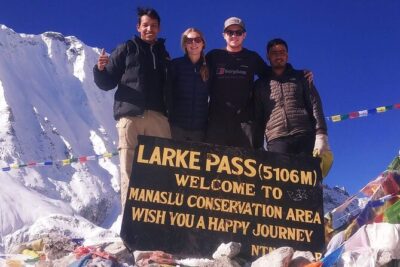
- Day 11 over Larkya La at 5,160m: the pass day with real stakes
- Day 12 down toward Dharapani: Sangure meadows to rhododendron forests
- Wildlife and birding in Manaslu Conservation Area
- Comfort on the trail: tea houses, meals, and what to pack
- Best for whom, and who should think twice
- Booking with Trek Around Himalayas, and the guide factor
- Should you book this untouched Manaslu Circuit trek?
Key highlights worth planning around
- Permits and TIMS handled for you so you spend less time sorting paperwork in Kathmandu
- Tea-house nights in twin-sharing rooms with breakfast, lunch, and dinners included on most trek days
- Acclimatization day in Samagaon to help you adjust before the high pass day
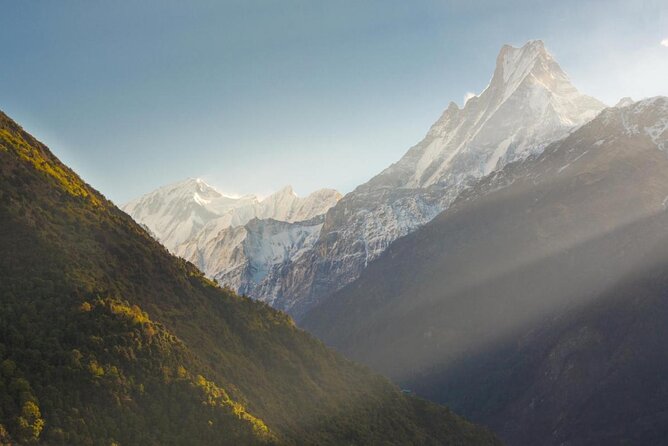
- Larkya La at 5,160m for big Himalayan views, including Larkya Peak and Annapurna II
- Mani stones and gompas for cultural stops that actually fit between trekking hours
- Wildlife country in Manaslu Conservation Area with chances for Himalayan tahr, blue sheep, and more
Why the Manaslu Circuit feels different from the usual trek
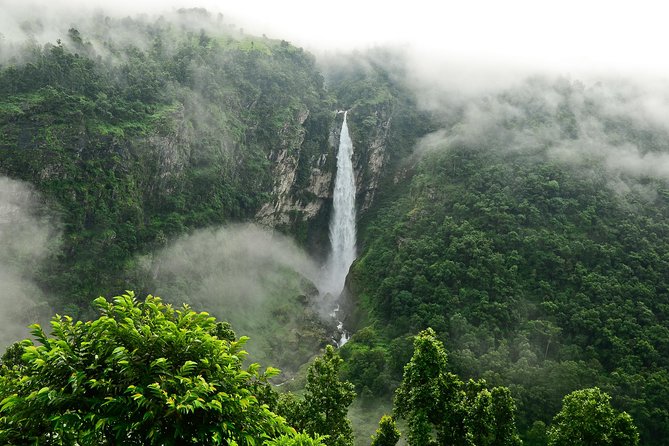
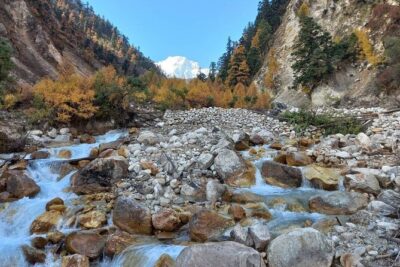
Manaslu Circuit Trek is built around the Manaslu Conservation Area, a protected region of about 1,663 square kilometers. Instead of simply hiking from viewpoint to viewpoint, you’re moving through a working wilderness zone: forests, river valleys, high pastures, and glacial country.
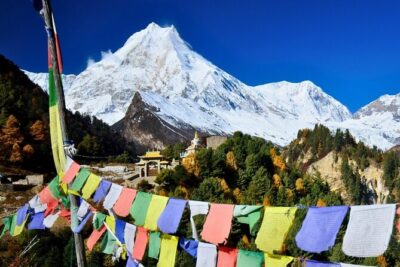
The big magnet is Mount Manaslu itself, at 8,163m. Along the way, you also get views of Annapurna, Ganesh, and Langtang, plus plenty of smaller peaks that frame the trail. That mix is what makes the circuit feel “wide open,” even when you’re just walking uphill for a few hours.
More Treks in Kathmandu
- Everest Base Camp Trek – 14 Days
★ 5.0 · 1,499 reviews - Everest Base Camp Trek
★ 5.0 · 842 reviews - Everest Base Camp Trekking
★ 5.0 · 485 reviews
Price and what $1,350 includes (and what it doesn’t)
At $1,350 per person for roughly 13 days, the value comes from what’s bundled rather than from cutting corners. The package includes airport pickup and drop, Kathmandu sightseeing time, a trekking guide who speaks English, and daily logistics handled on the ground.
Most importantly, you get the permits and access items listed as special permits, MCAp/ACAP permits, and TIMS. For many trekkers, that paperwork is the slow part. Having it arranged means you can focus on walking and adjusting to altitude.
Meals and lodging are also part of the cost. During the trek you’ll have twin-sharing tea-house accommodation, plus 12 breakfasts, 11 lunches, and 10 dinners (based on the itinerary days). On longer days, that consistency matters, because it reduces decision fatigue when you’re hungry and tired.
What’s not included is also clear. Your Nepali visa and international airfare are on you, and so are many personal items like hot showers, laundry, phone use, and drinking water. Also plan on tipping for the guide and porters, since tipping is not included.
Kathmandu warm-up: Durbar Square, then UNESCO stops
Your trek starts with Kathmandu, where the goal is simple: get oriented, rest a bit, and handle any last-minute prep. After landing at Tribhuvan International Airport, you’ll meet a company representative and go to your hotel by private vehicle.
Day 1 includes Kathmandu Durbar Square time with an admission ticket included. It’s a good first taste of the city because the details pull you in fast, and it’s close to where most travelers already end up.
Day 2 is about culture anchors around UNESCO-listed sites: Boudhanath, Pashupatinath, and Monkey Temple. The sightseeing time is listed as about 5 hours, and the admission ticket for these stops is not included in the plan. So bring a little cash or payment flexibility for entry fees.
Practical tip: if you hate shopping sprees, keep your energy for the mountain. The plan includes time for trekking prep and shopping, so you can use it for things like batteries, socks, or a backup layer.
Trek Day 3 to Day 5: Gurung villages, river crossings, and your first real climb
Day 3 is where the trek starts to feel like a trek, not a sightseeing day. You wake up in Soti Khola, have breakfast, and begin the hike toward Machha Khola. The route distance is listed as 14.1 km with roughly 6 to 7 hours on the trail, climbing from about 700m to 869m.
The standout here is the sense of village trail life. The path goes through Gurung areas, with places like Lapubesiu and Khanibasi mentioned along the route. You’re walking through cultivated patches and local communities, not just following a high-altitude promenade.
You also get introduced to the trail’s rhythm: steady effort, repeated river drama, and tea-house pacing. That routine becomes your mental anchor for the whole circuit.
Day 4 keeps the altitude work going as you approach the Machhakhola region at 1,340m. The trek time is listed at about 6 hours, and the route is described as offering particularly strong views due to elevation.
One nice break is the mention of a hot spring in Khola Besi. Even if it’s brief, a warm stop like that can change how you feel later in the day.
Day 5 is more of a cultural and environmental mix. You trek via Gurung village Philim and continue through cultivated lands to Ekle Bhattai. You cross the Budi Gandaki river, move through a bamboo forest, and reach Deng for the night.
What I like about Days 3 to 5 is that they build you up slowly. You start getting the rhythm before you hit the high pass, which is crucial on a circuit.
More Manaslu Circuit departures:
- Manaslu Circuit Trek
★ 5.0 · 292 reviews - Manaslu Circuit Trek:
★ 5.0 · 106 reviews - Manaslu Circuit Trek (15 Days)
★ 5.0 · 50 reviews - Manaslu Circuit Trek
★ 5.0 · 35 reviews
Day 6 to Day 7: Namrung, Lho village, and gompa time
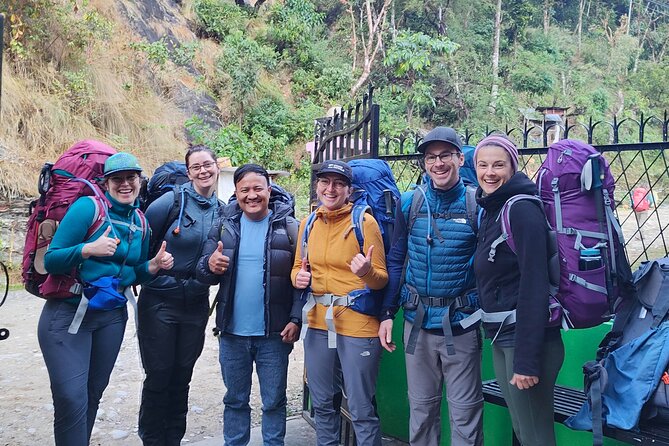
Day 6 pushes into the Budi Gandaki valley, with a route via Prok village. The trail includes stunning views of Mount Siringi as you head upstream, crossing the river several times along the way before reaching Namrung.
The practical point here: river crossings mean you’ll be paying attention to footing. Even when the route is “only” a few hours, the conditions can slow you down. A good guide helps you keep your pace steady without rushing.
Day 7 is one of the culture-and-views days. From Namrung, you get views of Mount Ganesh, Siringi, and Himchuli, then head through forest and farm areas to Lihi village and onward.
The itinerary places strong emphasis on the Lho village area, where you can get magnificent views of Manaslu. You’ll also explore Ribung Gompa in Lho village. After that, you continue to Shyala for dramatic views, including Himchuli, Peak 29, and Manaslu plus multiple snowcapped peaks, before reaching Samagaon for the night.
If you like trekking that has meaning, this is a good day. You’re not only walking, you’re also seeing how religion and mountain life overlap.
Day 8 acclimatization in Samagaon: Mani stones and Pungyen Gompa
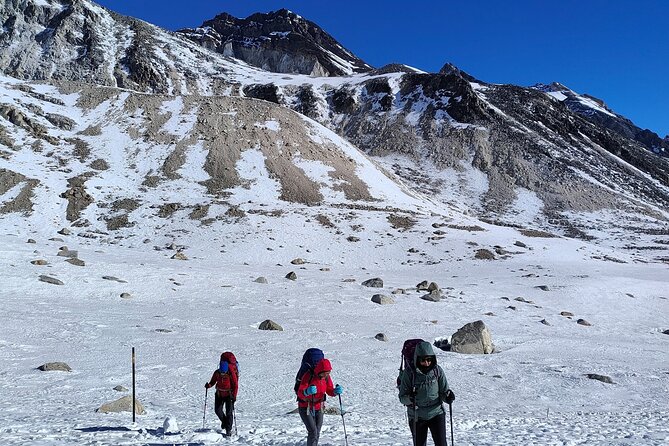
Day 8 is an acclimatization day in Samagaon, and I think it’s one of the smartest moves on the whole itinerary. You spend about 5 hours exploring and adjusting instead of stacking another long altitude push.
You can find thousands of Mani stones in the village. These stone markings are a small detail, but they add texture to the day. When you’re trying to rest, it helps to have something calm to look at without feeling like you’re wasting time.
The plan also calls out village life as mostly Sherpa community, and you’ll visit Pungyen Gompa. Your guide shares stories about the village and mountains, which helps connect what you’re seeing with why it matters.
This day matters because Larkya La at 5,160m is coming soon. Acclimatization is not a luxury here, it’s part of staying comfortable and safe.
Day 9 to Day 10: Samdo, alpine grasslands, and Larkya glacier views
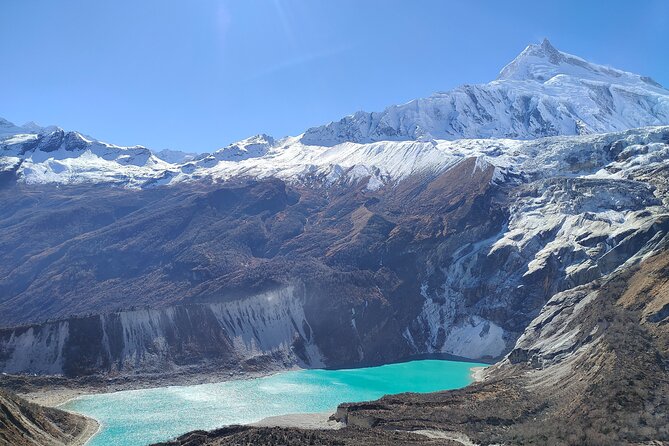
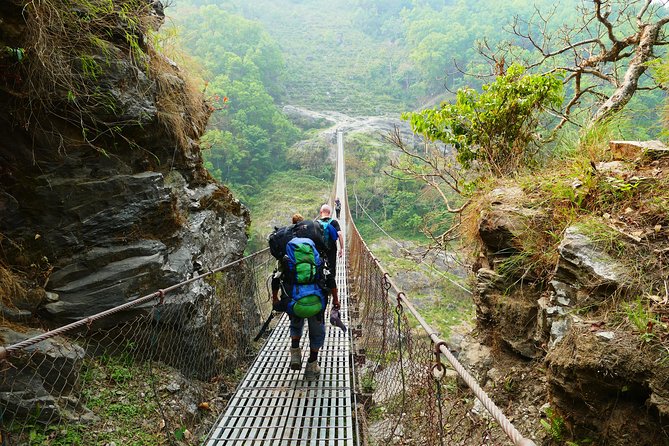
Day 9 continues toward Samdo through birch and juniper forest. You’ll also pass Kermo Kharka, described as alpine grassland, then cross the Budi Gandaki on a wooden bridge.
Crossing on a wooden bridge is usually quick, but it can feel like a “trial” moment. If you tend to get nervous on rickety spans, tell your guide and take it slow.
You reach Samdo for overnight. From here, you can expect the terrain to feel more high and exposed, with big sky and fewer trees.
Day 10 shifts you into glacier country. The trek goes around the Salka Khola valley, and you’ll be gazing at the Larkya glacier. You then head to Dharmashala, a stone hut, for overnight.
This is a transition day, and it prepares you for the pass day not just physically, but mentally. If you’ve ever felt the moment when the mountains stop being background and start becoming the main event, this day is close to that.
Day 11 over Larkya La at 5,160m: the pass day with real stakes
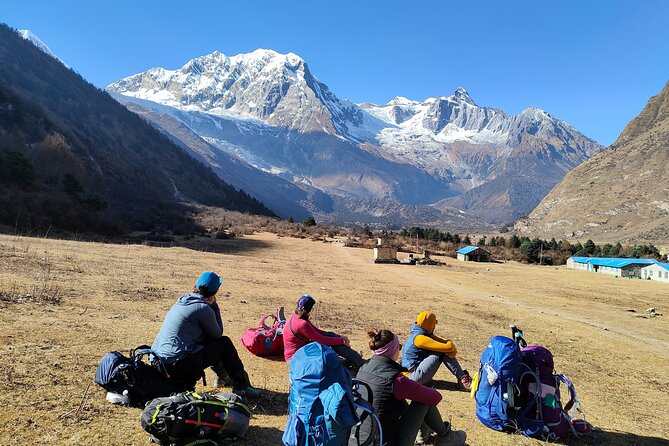
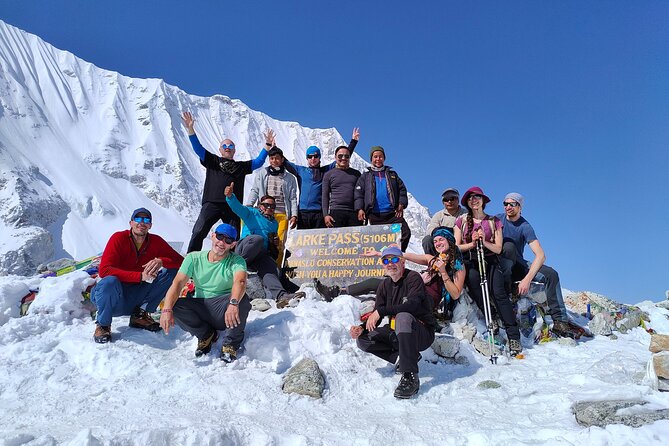
Day 11 is the long one, listed at about 9 hours. You trek through the moraines of the glacier, then reach Larkya La at 5,160m.
The views from the pass are described in detail: Larkya Peak, Himlung, Cheo, Kangguru, and the “bold” Annapurna II. You also enter into the magnificent sight of Manaslu as you cross and continue.
This is the day where good planning helps most. You’ll want to pace yourself, keep warm, and avoid burning energy too early. Even with a guide, your body dictates the pace here.
Then you continue to Bimthang for the night. Bimthang is where the pass day turns into recovery, and it’s a good place to watch the mountains change color as light moves.
Day 12 down toward Dharapani: Sangure meadows to rhododendron forests
Day 12 is a descent day with plenty of variety. You descend through Sangure alpine meadow and cross the Dudh river. You’ll continue with dramatic views of Manaslu, Lamjung, Himlung, and Cheo.
Then the trail shifts into rhododendron forests and farm fields before reaching Gho and continuing to Dharapani for overnight. The plan notes that you step into the Annapurna Conservation Area today.
This day is important because your legs are doing most of the work now, not just your lungs. Descents can be harder than they look, especially after a high pass. If your knees are touchy, walking poles can help a lot, but the data doesn’t specify whether poles are provided, so bring your own if you use them.
Wildlife and birding in Manaslu Conservation Area
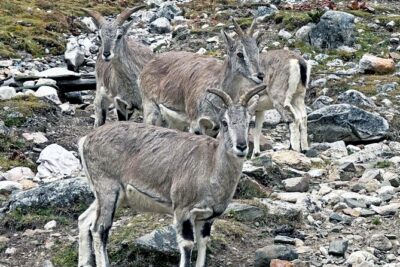
Manaslu Conservation Area isn’t just scenic, it’s biologically active. The overview lists a strong chance to see wildlife like snow leopard, grey wolf, musk deer, blue sheep, and Himalayan tahr.
You also get a sense of scale with the wildlife and plant counts mentioned: 21 species of mammals, 193 species of birds, and 587 species of vascular plants, plus about 2,500 species of flora. Those numbers are impressive, and the practical takeaway is that the trek passes through multiple habitat types.
Specific birds named in the information include Variegated laughing-thrush, Grandala, and Northern Goshawk. You probably won’t see all of them, but the presence of listed species is a reminder that your best “birding strategy” is simply walking slowly when safe and watching tree lines and ridge edges, especially around forest transitions.
If you care about wildlife, this is a trek where conservation framing makes sense. You’re moving through a protected area, not cutting through random zones.
Comfort on the trail: tea houses, meals, and what to pack
The trek uses tea-house accommodation on the route. Rooms are twin-sharing, and meals are scheduled as part of the package: breakfast, lunch, and dinner on most days. This helps because you don’t have to hunt for food each time you arrive.
Still, you should expect some tradeoffs. Personal expenses like hot shower and drinking water are not included. That means you may pay for additional comforts beyond the basics provided with tea-house service.
Packing matters more on a cold pass day. Your itinerary hits high altitude and glacier moraine terrain, so layering is key. Bring a warm hat and gloves you can actually tolerate while walking, plus a layer for when you stop for photos near the pass.
Also, the plan includes emergency rescue service, but emergency rescue cost is listed as not included. In other words, help is part of the package, but the money side of rescue is not guaranteed.
Best for whom, and who should think twice
This trek is best for you if you want a private, guided circuit through a conservation area where scenery, wildlife, and culture all fit into the walk. The private setup matters too, because it means your pace and stops can be adapted to your group, with one English-speaking guide leading.
It also suits people who like a circuit structure rather than point-to-point hikes. You’ll get early village trekking, a cultural highlight day with gompas, an acclimatization pause, then a real pass day at 5,160m, followed by a descent that changes the ecosystem.
Think twice if you struggle with steep descents or you’re not ready for a long day on pass terrain. The plan calls for moderate physical fitness, and that’s not just a label. If you’re nervous about altitude, take acclimatization seriously, and don’t treat the Samagaon rest day like a free sightseeing day.
Booking with Trek Around Himalayas, and the guide factor
The experience is offered by Trek Around Himalayas Pvt. Ltd. The information includes an English-speaking trekking guide and emergency rescue service, plus airport pickup and Kathmandu valley sightseeing.
What I’d pay attention to is the way the guide supports the route. In past experiences shared with the operator, the theme is that guidance is professional and responsive. One named contact that comes up is Bimal, described as efficient, fair, and helpful across planning and guide support. That kind of relationship can matter when you want the trip to fit your timeline and comfort level.
If you prefer clear communication and someone who can answer questions without hand-waving, this operator’s reputation for organization and support is a good sign.
Should you book this untouched Manaslu Circuit trek?
Book it if you want a circuit that feels grounded in real conservation country, with permits handled, a guide who can navigate the route, and a plan that includes acclimatization before the high pass. The mix of Gurung villages, mani stones and gompa visits, plus the big Larkya La view day is a strong combination for value and variety.
Don’t book it if you need a low-effort trek, or if your schedule cannot handle weather uncertainty. The trek requires good weather, and that can affect timing.
If you’re ready to walk, pay attention to altitude, and like having your days planned but your experience still feeling wild, this is a smart choice.
Latest additions near Kathmandu
- White Water River Rafting – 1 Day★ 4.3 · 3 reviews
- Traditional Momo Making Class★ 5.0 · 10 reviews
- Kathmandu to Pokhara Premium sofa bus ticket★ 4.0 · 17 reviews
- Ghorepani Poon Hill Trek★ 5.0 · 16 reviews
- Amazing 1 Day Trekking Experience in Kathmandu Nepal★ 5.0 · 24 reviews
- Ghorepani Poonhill Trek★ 5.0 · 5 reviews
- Walking tour of real Kathmandu through back streets.★ 5.0 · 3 reviews
- Wildlife Adventure in Chitwan Nepal★ 4.0 · 4 reviews
Manaslu Circuit Treks, compared.
Browse the lists this tour appears in