
Reviewed · MANASLU CIRCUIT TREKS
Manaslu circuit trek and side trips
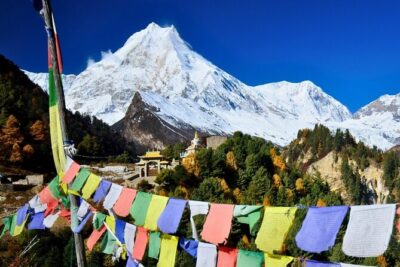
This trek is a real change of pace in the Himalaya. The Manaslu Circuit is a protected, restricted area since 1991, so you get mountain views plus Tibetan and Nepalese village life without the same crowd feel as more famous routes. I like how the route moves through pine, bamboo, and rhododendron forests, with prayer flags and Mani walls showing up again and again.
One drawback to think about up front: you are walking a long day after long day, and the plan still expects a lot of effort even with an acclimatization break.
A huge plus is the trip team. In past guest feedback, communication before travel was quick through Bikash, and coordination on the ground was credited to Hari and Bimal, with smooth Kathmandu start details like airport pick-up and local sightseeing, plus a memorable final moment. You’ll also have an English-speaking trek guide and a private setup, so you are not getting shuffled into a giant group.
The other consideration is budget clarity: the trip lists food in the included items, but it also lists food and beverages as not included, and tea house fees are also called out as extra, so you should confirm exactly what meals and lodging costs are covered for each night.
In This Review
- Key things that make this Manaslu Circuit trek worth your time
- Manaslu Circuit: why the restricted route feels more like Nepal
- Price and logistics: what your $600 likely covers, and what to double-check
- Fitness, altitude rhythm, and the kind of day schedule to expect
- Day-by-day: what each stop is really like, and what to watch for
- Day 1: Kathmandu to Machhakhola, a long transfer to start your engine
- Day 2: Jagat and the hot spring detour, plus lots of bridges
- Day 3: Philim to Deng, gorge walking into bamboo valley time
- Day 4: Budhi Gandaki valley to Ghap, with Prok gompa as a bonus
- Day 5: Namru check-post day to Lho, views start getting dramatic
- Day 6: Shyala to Samagaun, monastery area and big panoramas
- Day 7: Samagaun acclimatization and Pung-gyen Gompa
- Day 8: Samdo and the Manaslu Glacier foot trail toward Larkya La
- Day 9: Larkya Bhanjyang and the Dharmashala stop near Larkya Phedi
- Day 10: Larkya La Pass day, moraines, then yak pastures to Bimtang
- Day 11: Bhimtang to Dharapani, riverbank walking and a stone-paved village
- Day 12: back to Kathmandu via Beshisahar and bus on the Prithivi Highway
- Side trips that actually add meaning, not just extra walking
- Where this trek delivers the most value for the right traveler
- Should you book Nepal Trek Ways for this Manaslu Circuit trek?
Key things that make this Manaslu Circuit trek worth your time
- Restricted-access Manaslu region (since 1991): more preserved culture and fewer crowds on the trail
- A planned acclimatization day in Samagaun: helps you settle before the higher section
- Side-trip options with Tibetan monasteries: like Pung-gyen Gompa and the Prok Gompas area
- Big pass day views at Larkya La: with wide mountain sightlines as you cross from yak pastures down toward Bimtang
- Useful local transport mix: public deluxe bus plus jeep, then bus back via the Prithivi Highway
- A guide-led, private group pace: you get real support rather than a loose self-guided shuffle
Manaslu Circuit: why the restricted route feels more like Nepal
Manaslu is the kind of trek where the scenery does not just sit there. You earn it. As the circuit works its way through valleys of pine, bamboo, and rhododendron, you keep switching environments: rocky climbs, river crossings, forest shade, then sudden wide outlooks. The area’s restricted status since 1991 is a big reason the culture feels intact, with prayer flags and Mani walls part of the daily visual rhythm, not just photo props.
I also like the cultural blend here. The route is described as a mix of Tibetan and Nepalese influences, and that shows in what you pass: chortens with detailed paintings, Tibetan-style gompas you can visit on side trips, and small communities where daily routines keep going while trekkers pass through.
One more thing: this is not built as a checklist of famous summits. It is more about wilderness, off-the-beaten-track walking, and “small life” moments in villages like Jagat, Deng, Shyala, and Samagaun, where you stop overnight and actually live the pace for a bit.
More Treks in Kathmandu
- Everest Base Camp Trek – 14 Days
★ 5.0 · 1,499 reviews - Everest Base Camp Trek
★ 5.0 · 842 reviews - Everest Base Camp Trekking
★ 5.0 · 485 reviews
Price and logistics: what your $600 likely covers, and what to double-check
At $600 per person for about 12 days, the value depends on one key detail: what portion of meals and tea house costs are truly included.
Here is what the trip lists as included:
- One English-speaking trekking guide
- Food, accommodation, and insurance
- Public transportation (using public deluxe bus and jeep)
- Entrance fees, including the special Manaslu restricted-area trekking permit and conservation permits for Manaslu and Annapurna
Here is what the trip lists as not included:
- Gratuities
- All food and beverages
- Travel insurance
- Tea house accommodation fees during the trek
- Porter service to carry your belongings
Those two lists conflict on food and insurance. I would not panic, but I would ask a simple, direct question before you pay the final amount: For each night, are you covered for meals and tea house lodging, or are those paid at the stop? And what exact insurance is provided, and do you still need your own travel policy?
Still, even with that caution, the logistics framework looks strong for value. Permits matter a lot on Manaslu. Having them handled saves stress and avoids common permit mistakes. Then there is transport: you start with a long drive out of Kathmandu, you move by jeep where needed, and you end with bus ride legs along the Prithivi Highway back toward Kathmandu or Pokhara.
The trip also includes a mobile ticket feature. That usually means fewer physical documents to manage, which helps when you are already juggling permits and cash.
Finally, the meeting point is specific: Hotel Moonlight, Paknajol Marg, Kathmandu. Start time is 7:15 am, and the trip ends back at that same meeting point.
Fitness, altitude rhythm, and the kind of day schedule to expect
This is listed for travelers with moderate physical fitness. That is a realistic starting point, but you should also read the route description carefully: many days are long, with multiple steep segments, bridge crossings, and constant walking over changing terrain.
The route is also designed with at least one smart altitude-minded break. You get a full day in Samagaun for acclimatization. On day 7, the plan is to stay local, walk to a gompa, and explore village life rather than push onward immediately. That kind of pause is exactly what helps your body adjust before the higher, more exposed sections later in the trek.
The Larkya La pass day is the obvious big effort. Even without exact elevation numbers listed, you can expect windier conditions and a higher, more open feel once you reach the pass area. The itinerary calls out excellent views from the pass, and those views often come with colder air and less shelter.
So, if you are coming from sea level and you want a smoother experience, do not treat the acclimatization day as optional. It is part of how this circuit is structured to keep you functional later.
Day-by-day: what each stop is really like, and what to watch for
Below is the walk-and-drive rhythm, with the practical side of each section: what you gain, and the typical friction points.
More Manaslu Circuit departures:
- Manaslu Circuit Trek
★ 5.0 · 292 reviews - Manaslu Circuit Trek:
★ 5.0 · 106 reviews - Manaslu Circuit Trek (15 Days)
★ 5.0 · 50 reviews - Manaslu Circuit Trek
★ 5.0 · 35 reviews
Day 1: Kathmandu to Machhakhola, a long transfer to start your engine
You start with a drive out of Kathmandu into the western mountains. The plan is about 8 hours of driving, first on a paved route to Dhading Bensi, then a bumpy dirt road for around 30 km to Machha Khola.
What you gain: getting out of Kathmandu quickly means less time in traffic and more time transitioning into trek mode. You also get mountain scenery as the road climbs and changes character.
What to watch: a dirt-road leg can shake you up, especially if you are sensitive to motion. Hydrate early and plan for the fact that day 2 starts the trekking after this transfer.
Day 2: Jagat and the hot spring detour, plus lots of bridges
Today’s trek is undulating and built around crossings. You pass rocky ravines, reach Khorla Besi, and then come across a small hot spring in Tatopan. A suspension bridge takes you to the eastern bank, then you climb a wide staircase toward Dobhan. The route then skirts landslips, and you cross a suspension bridge over Yaru Khola.
Finally, you climb stairs up to Thado Bharyang, cross to the west bank of Budhi Gandaki, and reach Jagat for the night.
What you gain: the hot spring stop gives you a small payoff early, and the repeated suspension bridges make the day feel varied rather than monotonous.
What to watch: landslips and rocky sections can slow you down. Also, stair-heavy sections mean you should pace and use trekking poles if you have them.
Day 3: Philim to Deng, gorge walking into bamboo valley time
You start by ascending over a rocky ridge to Salleri, then descending to Setibas. The route continues toward Ghatta Khola, where you cross a hanging bridge. You then pass through the Gurung village of Philim and walk along millet fields.
After Ekle Bhatti, the trail enters a steep, uninhabited gorge, then the valley opens again through bamboo forests. You cross the Deng Khola and finish the day in the tiny village of Deng.
What you gain: it is a good day for people who like variety, because it swings from farmland and villages into quieter gorge walking and then into bamboo shade.
What to watch: steep, uninhabited gorge terrain can feel tiring fast, even if the distance is not enormous. Keep your energy steady.
Day 4: Budhi Gandaki valley to Ghap, with Prok gompa as a bonus
You walk from Deng and cross the Budhi Gandaki to climb toward Rana. From there, you head west up the Budhi Gandaki valley, crossing multiple streams and rivers, with the walk reaching Sringi Valley. You traverse up and down through forests and Mani walls, then overnight at Ghap.
There is also a side-trip option listed for Tibetan Gompas at Prok.
What you gain: this is one of the cultural-and-nature mixed days. Mani walls and monasteries keep the trail feeling human, not just wild.
What to watch: river crossings plus up-and-down forest terrain can add up, especially after previous gorge and bridge days.
Day 5: Namru check-post day to Lho, views start getting dramatic
You climb through pine and birch forests and pass a roaring river in a narrow gorge. Then you follow a narrow forest path to Namru with its check post. From there you walk past small Tibetan villages toward Lihi.
You see a chorten with detailed paintings welcoming you at Sho, then you continue onward past clustered stone houses to Lho for the night. The itinerary also notes that as altitude rises, mountains like Manaslu, Manaslu North, Himalchuli, Saula Himal, and Dwijen Himal appear on either side of the trail.
What you gain: this is a strong day for mountain sightlines beginning to “click into place.” And the cultural markers are not random, they are part of the route’s progression.
What to watch: forest gorges can be slippery if conditions are wet, and check-post days often require a bit of patience.
Day 6: Shyala to Samagaun, monastery area and big panoramas
You start by descending from Shyala, crossing the rock-strewn torrent of Thusang Khola. Then you walk through fir forest and climb to the plateau village of Shyala. The area is described as surrounded by gigantic mountains, with a panorama including Himal Chuli, Peak 29 (Ngadi Chuli), Manaslu, and Ganesh Himal.
Then you pass a large chorten into a dip where Samagoan becomes a cluster of two rows of houses, and you overnight in Samagaun. There is also mention of a well-known monastery called Sama.
What you gain: big panoramic feeling. Even if you do not reach a peak viewpoint, you get wide mountain presence around your village night.
What to watch: the early steep descent can be hard on knees. Go slow and keep footing secure.
Day 7: Samagaun acclimatization and Pung-gyen Gompa
This is your rest day in function, not in spirit. You stay in Samagaun for acclimatization. The plan suggests walking to Pung-gyen Gompa, a renowned monastery, to enjoy views of the glacier.
Then the day is about exploring the village and observing daily life rather than covering ground.
What you gain: a structured pause before the higher, more exposed parts. It also gives you a cultural anchor that makes the trek feel more meaningful than just a line on a map.
What to watch: even on acclimatization days, you still climb to the gompa. Keep the effort easy and do not turn it into a sprint.
Day 8: Samdo and the Manaslu Glacier foot trail toward Larkya La
You start from Sama through the foot of the great Manaslu Glacier. The itinerary notes that a branch leads toward Manaslu Base Camp, but this route continues toward Larkya La. You pass Mani walls as the valley widens, then walk through birch, juniper, and rhododendron forest.
You cross a wooden bridge, climb steeply onto a promontory between two river forks, and reach Samdo for the night.
What you gain: you get the glacier zone feel without committing to a separate base camp push. And the forest transition helps break up the mental “flat out trekking” fatigue.
What to watch: glacier-foot areas often mean cold air and higher wind exposure. Pack layers and keep your pace comfortable.
Day 9: Larkya Bhanjyang and the Dharmashala stop near Larkya Phedi
You cross a wooden bridge over Budhi Gandaki River. After a couple of streams, you see the Larkya Glacier on the opposite bank. You steadily climb while skirting around Sarka Khola toward the stone guest house called Dharmashalaat Larkya Phedi.
What you gain: this is the day that sets you up for the pass. The glacier appearance on the far bank can be a psychological turning point.
What to watch: “steady climb” days are sneaky. You may feel okay early and then feel the effort later, so keep snacks and water within reach.
Day 10: Larkya La Pass day, moraines, then yak pastures to Bimtang
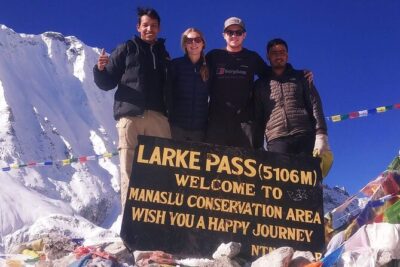
After a short ascent, you reach the north side valley of the Larkya Glaciers. Views of Cho Danda and Larkya Peak come into focus. You walk across glacier moraines with a gradual ascent to the pass. From the pass, you get outstanding views listed for Himlung Himal, Cheo Himal, Kangguru, and Annapurna II.
After taking in the view from Larkya La, the route continues on yak pastures toward Bimtang, with evening mist.
What you gain: this is the big visual payoff day. You also get a shift from glacier terrain to pasture walking, which can feel like the route is changing gears.
What to watch: pass days can be cold, even if the sun is out. Build in buffer time and plan for wind.
Day 11: Bhimtang to Dharapani, riverbank walking and a stone-paved village
You start from Bhimtang to Dharapani through Tilije, a stone paved village. You cross the Dudh Khola and walk along the river bank. You cross another wooden bridge to the north side, then pass a chorten shaped arch and Mani Wall.
Finally, you continue to Thonje village and onward to Dharapani for the night.
What you gain: this is more village-and-river focused than the high wilderness segment. It also feels like you are reconnecting with “living Nepal” after the pass.
What to watch: riverbank walking can be steady but not always easy if the path is uneven or crowded with water runoff.
Day 12: back to Kathmandu via Beshisahar and bus on the Prithivi Highway
First, you drive down to Beshisahar by local sharing jeep for 4 to 5 hours. Then you take a bus along the Prithivi Highway.
You can end in Kathmandu or Pokhara depending on your onward plan. The itinerary states Kathmandu is about 7 to 8 hours by bus, and Pokhara is about 5 to 6 hours, with scenic views along the Marsyangdi and Trishuli river banks, plus green hills, farming terraces, and villages.
What you gain: the return leg is a “settling in” day where you can think back through the trek and see how much the terrain has changed.
What to watch: after 11 days of trekking, a long bus day can feel tiring. Bring a small travel pillow if you like.
Side trips that actually add meaning, not just extra walking
Two add-ons stand out as genuinely tied to culture and viewpoints.
Prok Tibetan Gompas (optional)
On the route days around Ghap, there is an option to visit Tibetan Gompas at Prok. If you care about the religious art and daily presence of monastic life, this is the kind of side trip that deepens the trek beyond geography.
Pung-gyen Gompa (acclimatization day)
On the Samagaun acclimatization day, you can walk to Pung-gyen Gompa and see glacier views. Because it is scheduled when you are already resting your body, it is a smarter time to add a cultural viewpoint excursion.
Where this trek delivers the most value for the right traveler
This trek fits best if you want:
- Authentic village nights in a region preserved by restricted access
- A balance of forest walking, river crossings, and monastery moments
- A guided plan with an English-speaking trekking guide and a private group setup
- A route that builds in acclimatization before the tougher pass section
If you are traveling mainly for brand-name landmarks, you might find it less “instant famous.” But if you want a route where you feel the rhythm of Nepal’s mountain communities, this circuit makes sense.
I also think it works well for couples or small groups who like structure. The private setup means your pace and questions can be handled by the guide, not filtered through a crowd.
Should you book Nepal Trek Ways for this Manaslu Circuit trek?
Yes, I’d consider booking if you match the trek mindset and you like guided structure with cultural focus.
Book it if:
- You want the Manaslu restricted-area experience and a route with real Himalayan variety
- You appreciate an acclimatization day rather than rushing toward the high sections
- You value responsiveness and organization. Past guest feedback specifically praised fast pre-trip answers from Bikash and strong on-the-ground coordination from Hari and Bimal, plus smooth Kathmandu start details like airport pick-up and local excursions
Pause and confirm if:
- You want meal and tea house costs spelled out clearly, because the lists included and excluded items are not perfectly consistent
- You need porter support for your luggage, since porter service is stated as not included
- You need travel insurance. The trip lists insurance as included, but it also lists travel insurance as not included, so check what is actually covered
If you’re okay verifying those points early, this circuit looks like strong value for 12 days of guided walking in a preserved, culturally mixed region.
Latest additions near Kathmandu
- White Water River Rafting – 1 Day★ 4.3 · 3 reviews
- Traditional Momo Making Class★ 5.0 · 10 reviews
- Kathmandu to Pokhara Premium sofa bus ticket★ 4.0 · 17 reviews
- Ghorepani Poon Hill Trek★ 5.0 · 16 reviews
- Amazing 1 Day Trekking Experience in Kathmandu Nepal★ 5.0 · 24 reviews
- Ghorepani Poonhill Trek★ 5.0 · 5 reviews
- Walking tour of real Kathmandu through back streets.★ 5.0 · 3 reviews
- Wildlife Adventure in Chitwan Nepal★ 4.0 · 4 reviews
Manaslu Circuit Treks, compared.
Browse the lists this tour appears in