
Reviewed · MANASLU CIRCUIT TREKS
Manaslu Circuit Trek
High passes change your breathing fast.
This Manaslu Circuit Trek pairs Gurung village life with real high-mountain trekking, not just photos. I also love how the itinerary builds toward the big moment at Larkya La Pass, with proper altitude pacing and monastery stops that feel genuinely local. One consideration: if weather turns bad, crossing the pass can fail, so you should be ready for route shifts and less predictable views.
You also get real help getting there. After your flight lands in Kathmandu, Nepal Mountain Trekkers meets you and handles airport transfers and your early hotel base in Thamel, which makes the whole trip feel organized from day one. In the trek portion, the service focus shows up in the details, and in the way guides like Suman and TB in separate groups prioritize safety and day-to-day comfort.
Best for you if you like a well-run group trek and can handle long travel days and long walking days. The trek is listed for people with moderate physical fitness, and it moves quickly enough that you should pack smart, sleep well, and expect some tough weather moments near higher elevations.
In This Review
- Key things I’d plan around before you go
- First nights in Kathmandu: Thamel comfort and heritage days
- The long road toward Manaslu: why those first hours matter
- From Maccha Khola to Jagat: forests, bridges, and Tatopani recovery
- Deng and Namrung: the view days start stacking up
- Lho and Samagaun: apple country, monasteries, and Manaslu focus
- The altitude rhythm: Samdo rest and Dharmashala acclimatization
- Larkya La Pass: the high point, the big weather test
- From Bimthang to Tilije: rhododendron forest and ridge walking
- Tal via the connection to the Annapurna circuit trail: waterfalls and river crossings
- Getting back to Kathmandu: transport, hotel comfort, and a real farewell dinner
- Price and logistics: what your $1,386.67 actually buys
- Guides and group size: why the people matter on this circuit
- Who this trek suits best, and who should reconsider
- Should you book the Manaslu Circuit Trek?
- FAQ
- What is the duration of the Manaslu Circuit Trek?
- Where does the trip start and where does it end?
- Is airport pickup and drop included?
- Are meals included during the trek?
- Are trekking permits included?
- Is trekking gear provided?
- How big is the group?
- What about Kathmandu sightseeing before the trek?
- Can I cancel for a full refund?
Key things I’d plan around before you go
- UNESCO Kathmandu to start, so you’re not wasting your first days before the mountains
- Long drive into the trek area, including river crossings by road before you ever hike
- Hot springs at Tatopani as an actual recovery break, not a roadside stop
- Careful altitude rhythm, with rest at Samdo and gradual climbs toward higher camps
- Larkya La Pass is the emotional peak, but it’s also the day weather matters most
- Guides plus porter support, and gear rental like sleeping bags and down jackets included
First nights in Kathmandu: Thamel comfort and heritage days
Your trek starts in Kathmandu, and that matters more than it sounds. Your first day begins with an airport pickup through Tribhuvan International Airport, then a direct transfer to your Kathmandu hotel (Hotel Horizon). You get time to reset from travel, and you can keep it easy in Thamel, the practical base for shops, cafés, and quick orientation.
Day two adds real culture and reduces stress later. You’ll meet the Nepal Mountain Trekkers team at their Thamel office, then visit major UNESCO sites with a licensed guide and car or jeep depending on group size. The route includes Kathmandu Durbar Square, Swayambhunath Stupa, Pashupatinath Temple, and Boudhanath Stupa. It’s a lot of walking for a first full day, but it’s also a strong setup: you learn how Kathmandu neighborhoods and religious sites work before you disappear into the mountains.
Here’s what I like about this plan. It’s not random sightseeing. It’s structured through the same company that will manage your permits and trek support later, so you’re dealing with one team instead of juggling vendors.
More Treks in Kathmandu
- Everest Base Camp Trek – 14 Days
★ 5.0 · 1,499 reviews - Everest Base Camp Trek
★ 5.0 · 842 reviews - Everest Base Camp Trekking
★ 5.0 · 485 reviews
The long road toward Manaslu: why those first hours matter
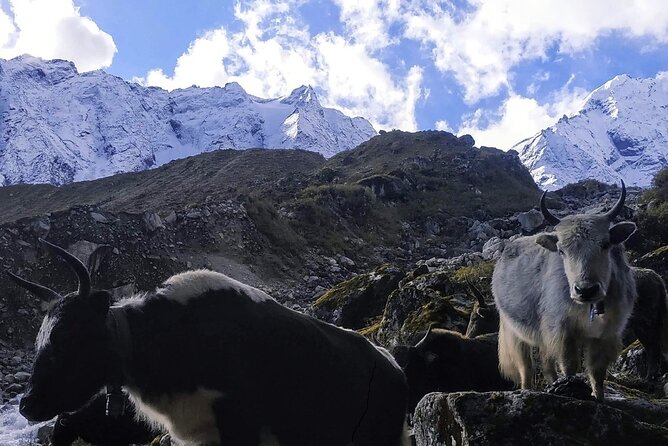
Before trekking even starts, you spend a big block of time traveling from Kathmandu into the trekking region. The drive is described as about 8 to 9 hours to Baseri. Later parts of the trek include additional long drives, including to Machha Khola. This might sound like a hassle until you understand the benefit: it saves you from trekking too soon at the start, when your body is still adjusting to Nepal and to the altitude changes that come next.
Expect the road day to feel long. You’ll be on transport while the scenery changes from city rhythm to river valleys and forest edges. If you tend to get motion-sick, plan for it before you leave Kathmandu, not after.
Also note the river factor. The trek route follows the Budhi Gandaki river in stages, and early travel and later hiking both play with river geography. You’re not just going up and down a trail. You’re repeatedly working with the river’s bends, bridges, and side valleys, which keeps the route interesting.
From Maccha Khola to Jagat: forests, bridges, and Tatopani recovery
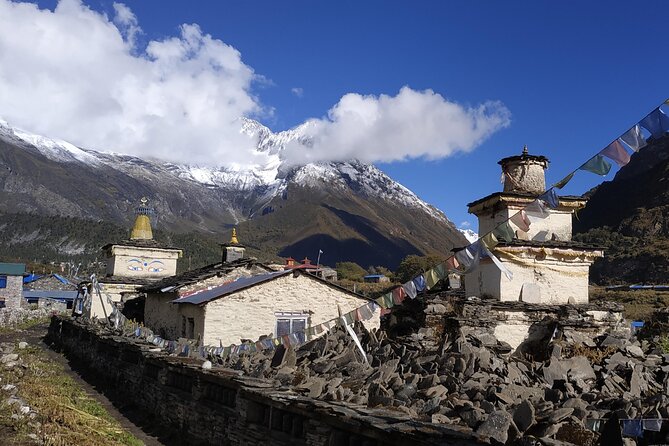
Once the trek begins, your first real hiking day is a long one. You’ll drive to Machha Khola and then start moving. From there, the route crosses suspension bridges, threads through forested sections, and passes Gurung villages. This is where the Manaslu Circuit feels distinct from some more crowded Himalayan routes. The villages are lived-in, with daily rhythms that don’t feel like a stage set.
Day four is a bright spot: Tatopani Hot Spring. After hiking through Maccha Khola toward small settlements, you reach Tatopani and soak in natural hot water. It’s a practical tool for sore legs, especially on a circuit that keeps asking for energy. Don’t underestimate how helpful a hot-spring stop can be when the walking days are long.
Then you move toward Jagat. The route keeps mixing natural scenery with cultural stops as you head through villages and over river streams. The day descriptions include challenges, but they also promise strong natural and cultural exploration. In plain terms: expect some uphill effort, then the satisfaction of reaching a village where life feels steady even as you’re far from cities.
Deng and Namrung: the view days start stacking up
As you go, the trek stops being only about getting from point A to B. It becomes about noticing how the mountains change your day.
After Jagat, you head toward Deng, with river crossings and uphill sections like a chain of shorter climbs. The route notes include views of Singri peak and walking along trails that keep the scenery changing. These days can feel repetitive if you’re expecting one big vista per hour. Instead, think in terms of gradual reward. A ridge view here. A different angle on the valley there. It builds.
Namrung is another highlight zone. You’ll pass by the Budhi Gandaki river again and walk through pasture land, plus see the scenery opening up with mountain views. The trek description specifically calls out “awesome views of Himalayas” and a transition through pasture and river scenery before reaching Namrung. This is also a good day to practice your altitude pacing, because even when you’re not at the highest elevations, your body may already be working harder.
More Manaslu Circuit departures:
- Manaslu Circuit Trek
★ 5.0 · 292 reviews - Manaslu Circuit Trek:
★ 5.0 · 106 reviews - Manaslu Circuit Trek (15 Days)
★ 5.0 · 50 reviews - Manaslu Circuit Trek
★ 5.0 · 35 reviews
Lho and Samagaun: apple country, monasteries, and Manaslu focus
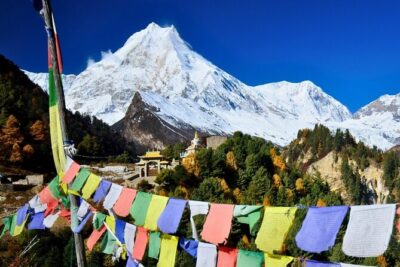
Lho brings an easier half day approach with strong views. You’ll walk to Lho with views of Himalchuli at the head of Hinang Glacier. Then in the afternoon you go up to Ribung Monastery and even climb to a top hill behind it for clearer looks at the Manaslu Massif. If you like sunrise photos, the plan also notes you can walk from the hotel to a viewing point near Ribung Monastery to watch the sun rising on Manaslu.
This is also where I think many people start to feel attached to the route. Not because it’s dramatic every minute, but because the trek keeps linking religious sites, local villages, and mountain angles. It feels like one connected landscape of daily life.
From Lho you push to Samagaun. The trek route includes dense forested land, chortens along terraced farming areas, and views of Ganesh Himal, Himal Chuli, and Siring Himal. In other words, you’ll see multiple named peaks, not just one “main event.”
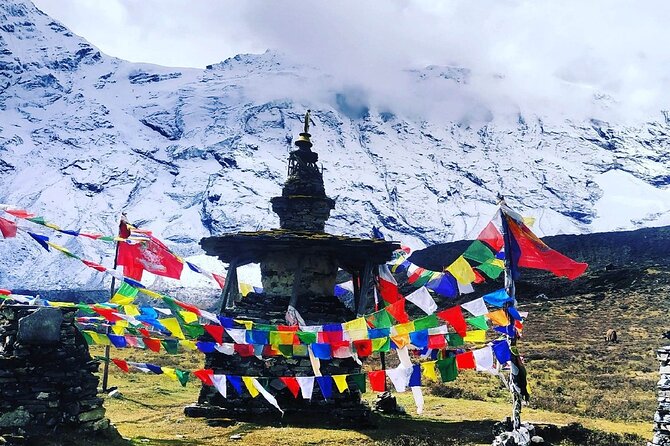
Samagaun also sets you up for a key excursion day. You head to Pungyen Gompa, an ancient monastery and a chance to observe local Buddhism traditions and rituals, plus a small prayer hall. Then you return to Samagaon to sleep. I like this structure because it gives you a cultural deepening without forcing another full extra day of hiking.
The altitude rhythm: Samdo rest and Dharmashala acclimatization
The Manaslu Circuit becomes serious at altitude, so the plan includes acclimatization. After reaching Samagaun, you move onward to Samdo with a day rest for acclimatization described as important.
Samdo is reached after a downhill move toward the Budhi Gandaki river banks. There’s a wooden bridge crossing and climbing sections between river forks. That kind of terrain change can be tiring, but it also helps you get a feel for the river valley before higher elevations.
Then comes Dharmashala. You begin trekking along the river banks, crossing streams and moving toward stone-built guest houses or shelters. The plan specifically mentions that once you get closer to about 5,000m, you have plenty of time to acclimatize during the rest of the day. This matters because altitude problems are more common when trips rush.
A practical tip: on these acclimatization-friendly days, you’re not off-duty. You should treat the day as part of the climb, not as a chance to party. Eat well. Drink carefully. Take it slow. The route’s built-in pacing is a big part of why the trek is manageable for people with moderate fitness.
Larkya La Pass: the high point, the big weather test
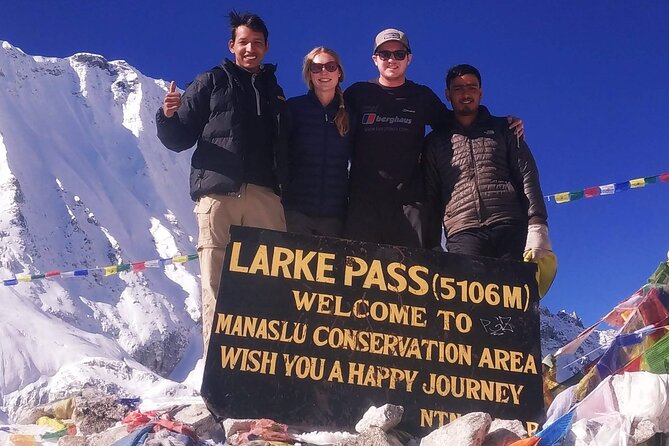
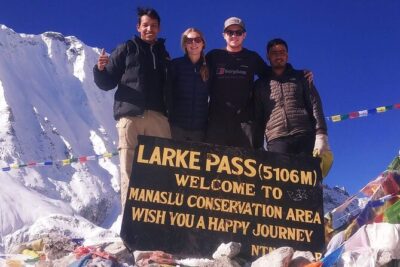
Then you get the day you planned for: Larkya La Pass. The route leaves Dharmashala, climbs gradually through glacier moraines, and promises views of Larka Peak and surrounding valleys. It then turns into steeper terrain as you approach the pass.
At Larkya La Pass, the itinerary description calls out views of Annapurna 2, Cheu Himal, Himlung Himal, and other surrounding peaks, with very close views of Manaslu Himalaya in front of you. This is the kind of moment that just changes your sense of scale.
But I’d treat the pass day as a weather test, not a guaranteed triumph. One recent experience included not being able to cross due to bad weather. That doesn’t automatically mean the trip fails. It does mean you should be flexible, ask your guide about conditions the morning of your high pass day, and be mentally ready for changes if visibility or safety requires it.
After the pass, you descend to Bimthang. The route notes mention re-energizing there with scenery, rhododendron and warm hospitality. This is important because it gives you a landing after a high-effort day. You won’t feel like the entire trek is just one nonstop fight.
From Bimthang to Tilije: rhododendron forest and ridge walking
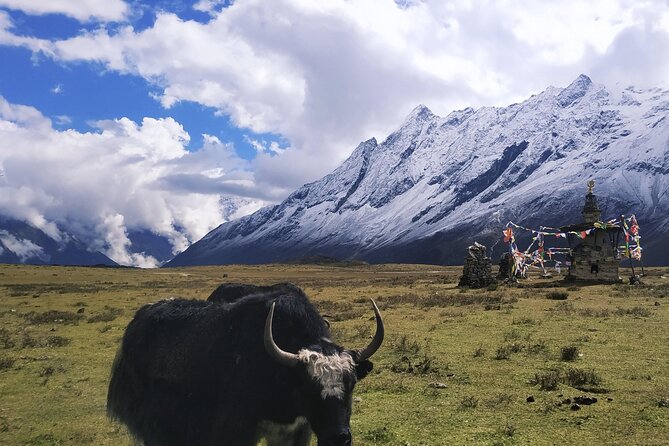
The next section shifts to ridges, pasture land, and forest scenes. You’ll walk on ridges with excellent views of Mt. Manaslu plus Himlung Himal and Lamjung Himal. Then the trail goes down through pasture land of Sangre Kharka, crosses a bridge, and continues into rhododendron forests, with blossom season mentioned for spring months.
Eventually you walk through open areas and climb toward ridges again before arriving at Tilije for an overnight stay. If you like variety, this section delivers it. If you hate walking transitions, you might find the constant up-and-down tiring. That said, it also helps you avoid monotony. You get different scenery types, not just the same valley view all day.
Tal via the connection to the Annapurna circuit trail: waterfalls and river crossings
After Tilije, the trek pushes toward Thonje Village and Tal. Day fourteen notes a healthy tea house meal, then trails toward Thonje Village, crossing a milky white river above a bridge. You then connect to the Annapurna circuit trail at Dharapani, and cross over a Marsyandi River bridge.
The plan also includes waterfalls before arriving at Tal. That’s a nice change of pace after high passes and monastery days. You’re still in trekking country, but the scenery turns more water and settlement focused.
One more practical note: when you join another famous trail, the vibe can shift. The route still feels remote, but you may find more hikers and more movement around the villages. If you prefer quieter camps, you’ll want to keep your expectations about this section realistic.
Getting back to Kathmandu: transport, hotel comfort, and a real farewell dinner
Your last trekking days move you back toward lower elevations and toward civilization. After Tal, you go on to drive arrangements that bring you back to Kathmandu. The route mentions early morning wake-up, tea or coffee, then transport to Besisahar by jeep, lunch there, and then driving to Kathmandu for your overnight in Hotel Green Horizon.
One day is built for decompression. You can relax without a guide and porter, plus do shopping and then enjoy a farewell dinner at a Nepali cultural restaurant before the final packing for departure.
This is where the group experience really pays off. After days on a trail, a dinner with familiar faces and a clear schedule helps you close the trip in a relaxed way, not in scramble mode.
Price and logistics: what your $1,386.67 actually buys
At $1,386.67 per person for about 17 days, the best way to think about value is logistics plus altitude support.
You’re not just paying for hikes. Included features cover:
- Airport pickup and drop
- 4 nights hotel in Kathmandu, plus Kathmandu sightseeing with a licensed guide and vehicle
- All food and lodging during the trek (breakfast, lunch, dinner)
- Permits required for the trek
- Guide and porter, plus an additional first aid medical box and rescue management service
- Trekking gear rental like sleeping bags and down jackets
- Extra branded items like a t-shirt, duffel bag, and trekking map
- Farewell dinner
That package can save you time and confusion. In high-mountain trekking, the “small” things add up fast, and mistakes can get expensive. Having permits handled, guides coordinated, and gear available reduces the chance you show up underprepared.
Now the tradeoffs, clearly. Visa fee to enter Nepal is not included. International flight tickets are not included. Travel insurance and rescue operation costs are not included, even though rescue management service is. Tips for your guide and porter are also not included, and those matter in Nepal. Finally, the trek can be weather dependent near the pass day, which can affect the exact dramatic payoff you imagined.
Guides and group size: why the people matter on this circuit
The Manaslu Circuit is remote enough that leadership quality is not a “nice to have.” It’s core to your experience.
In separate accounts, guides like Mod and Chirring were described as professional, supportive, and patient, with a good vibe while still taking care of everything. Company leaders like Suman and Ramesh also came up as experienced organizers, including for trip planning and keeping the schedule running smoothly. TB was noted for safety and knowledge, and the overall organization was praised as reliable even when plans had to change.
Group size is also capped at a maximum of 20 travelers. That’s big enough for energy and social support, but small enough that you usually feel like you’re trekking with a consistent team instead of being swallowed by a huge crowd.
Who this trek suits best, and who should reconsider
This trek is a strong match if you:
- Like a guided group experience with a clear plan and support
- Want a mix of culture, monasteries, and mountain views, not just a grind upward
- Have moderate physical fitness and can handle long trekking days
- Appreciate acclimatization structure, including the rest day at Samdo
You should think twice if you:
- Have no flexibility for route adjustments if weather affects high pass crossing
- Get motion-sick easily on long driving days
- Are uncomfortable with high altitude, even with acclimatization built in
Should you book the Manaslu Circuit Trek?
Yes, if you want a well-run circuit with enough cultural texture to feel meaningful and enough structure to keep you safe and moving. The included Kathmandu heritage days, permit handling, and the fact that key trekking gear like sleeping bags and down jackets are available on rent make it easier to travel light and start prepared.
I’d book with eyes open about the pass day. Weather can change the outcome of Larkya La Pass crossing, and altitude is real. If you can stay calm and flexible, the upside is huge: monastery visits, Gurung villages, hot springs recovery, and the kind of mountain geometry that makes you stare longer than your camera expects.
FAQ
What is the duration of the Manaslu Circuit Trek?
The trek is listed as about 17 days.
Where does the trip start and where does it end?
It starts at Nepal Mountain Trekkers, Pyramid Galli, Kathmandu, and it ends back at the meeting point.
Is airport pickup and drop included?
Yes, airport pickup and drop service is included.
Are meals included during the trek?
Yes. All food and lodging during the trek are included, with breakfast, lunch, and dinner noted.
Are trekking permits included?
Yes. All required trekking permits are included.
Is trekking gear provided?
Yes. Sleeping bags and down jackets are available on rent, and a trekking map is included.
How big is the group?
The maximum group size is 20 travelers.
What about Kathmandu sightseeing before the trek?
Kathmandu sightseeing around UNESCO world heritage sites is included with a licensed guide and a vehicle.
Can I cancel for a full refund?
Free cancellation is available up to 24 hours in advance for a full refund, based on local time.
Latest additions near Kathmandu
- White Water River Rafting – 1 Day★ 4.3 · 3 reviews
- Traditional Momo Making Class★ 5.0 · 10 reviews
- Kathmandu to Pokhara Premium sofa bus ticket★ 4.0 · 17 reviews
- Ghorepani Poon Hill Trek★ 5.0 · 16 reviews
- Amazing 1 Day Trekking Experience in Kathmandu Nepal★ 5.0 · 24 reviews
- Ghorepani Poonhill Trek★ 5.0 · 5 reviews
- Walking tour of real Kathmandu through back streets.★ 5.0 · 3 reviews
- Wildlife Adventure in Chitwan Nepal★ 4.0 · 4 reviews
Manaslu Circuit Treks, compared.
Browse the lists this tour appears in