
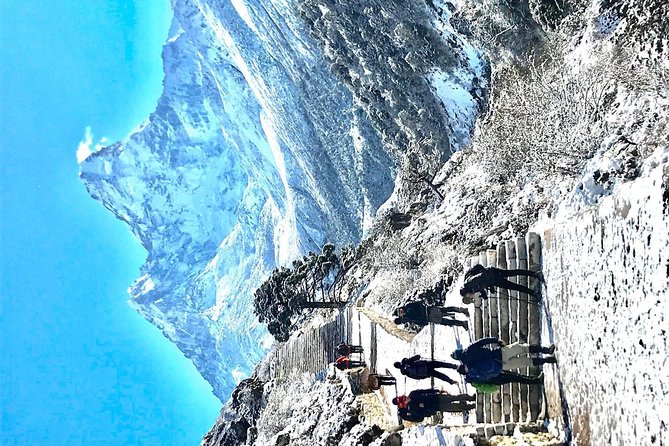
Reviewed · EVEREST BASE CAMP TREKS
Everest Base Camp & Gokyo Ri Trek
One flight later, the Himalaya felt real. I love how this trek is run end-to-end, from a Kathmandu airport meet-and-greet to a trail plan that balances big days with real recovery, with guides like Bibek and Tiger showing up as calm, competent leaders. I also love the big-view sequence, especially Gokyo Ri and the Everest area viewpoints. One drawback to weigh: the itinerary is long, and Cho La is a genuinely serious day with steep glacier travel over icy rock, so you need solid fitness and comfort with cold, exposed terrain.
You’ll spend the trek in local lodge and tea house rooms (standard rooms, non-attached bathrooms), and that basic comfort level is part of the deal in high altitude. What makes it worth it is the way the route threads together villages, glacier valleys, and spiritual landmarks, without turning every day into a marathon. The group size stays manageable, with a maximum of 100 travelers, and the porter system (2 members to 1 porter) keeps the load realistic.
If you want Everest without feeling like you’re doing only the checklist moments, this route gives you variety: Dudh Koshi valley culture, Thame and Khumjung side trips, Gokyo lakes, then the Everest core. You’ll likely enjoy this most if you’re after a classic high-altitude trek that feels authentic, not just a fast scenic drive through mountain towns.
In This Review
- Key things that make this trek work
- Fly-in reality check: Kathmandu, then Lukla, then your first valley day
- Namche to Thame and Khumjung: acclimatization with real Sherpa life
- The Dole and Machhermo section: forests, pastures, and building altitude the smart way
- Gokyo lakes and Ngozumpa Glacier: a different kind of Everest Region beauty
- Gokyo Ri sunrise: 360-degree views, steep effort, and cold before light
- Cho La pass day: the tough glacier traverse you should take seriously
- Lobuche, Gorak Shep, and Kala Patthar: the viewpoint stack in order
- Everest Base Camp excursion: ice pinnacles, crevasses, and a different kind of awe
- The return to Namche and the Lukla farewell: big descents, small joys
- Kathmandu cultural finish: Boudhnath, Pashupatinath, and Patan Durbar Square
- Price, inclusions, and what you should budget beyond the package
- Who should book, and who should think twice
- Should you book Everest Base Camp and Gokyo Ri with Explore Himalaya?
- FAQ
- How long is the Everest Base Camp and Gokyo Ri trek?
- What is included in the price of $2,800 per person?
- What is not included, and what should I budget for?
- What makes Cho La pass day tough?
- Where does the trip start, and how do you get to the trail?
- What kind of rooms and bathrooms should I expect on the trek?
Key things that make this trek work
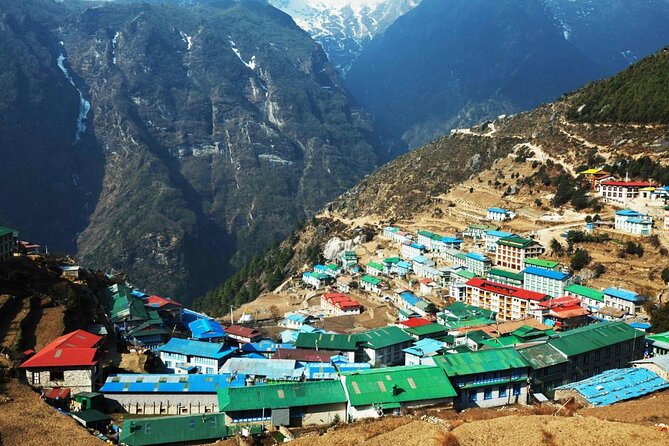
- Gokyo Ri and the 360-degree panorama: an early climb for wide, clear views over Everest Region peaks.
- Cho La pass day is the test: steep, icy trail sections and glacier traverse with crevasse areas.
- Everest Base Camp plus Kala Patthar: two different viewpoint styles, one closer, one higher and iconic.
- Better rhythm with acclimatization stops: Namche rest time plus multiple altitude-adjustment days.
- Guides with real credibility: names that show up repeatedly include Bibek, Rom, Anuj, Bal, Sureman, Tiger, and porters like Ram.
- Lodge life, not luxury: standard rooms, non-attached bathrooms, and hot shower and snacks outside the package.
Fly-in reality check: Kathmandu, then Lukla, then your first valley day
This trek starts the way many Everest treks do, with a flight into the mountains. On arrival in Kathmandu, you get meet-and-greet support at Tribhuvan International Airport and a ride to your hotel, so day one is mostly about settling in, sleeping, and getting your gear sorted.
Then comes Lukla. You fly from Kathmandu to Lukla, and the whole experience shifts from city mode into trekking mode fast. After meeting your crew, you start uphill through the Dudh Koshi Valley on a marked trail, staying in Phakding that night at a lodge. The practical value of this setup is simple: you start the trekking sequence quickly, without needing a long transfer from Kathmandu to trailheads.
One small but important note for your expectations: the trek is designed around lodge and tea house stops. That means basics in your room, and you should treat bathrooms as shared or non-attached. Plan for layers, cold mornings, and the fact that comfort is limited at higher elevations.
More Treks in Kathmandu
- Everest Base Camp Trek – 14 Days
★ 5.0 · 1,499 reviews - Everest Base Camp Trek
★ 5.0 · 842 reviews - Everest Base Camp Trekking
★ 5.0 · 485 reviews
Namche to Thame and Khumjung: acclimatization with real Sherpa life
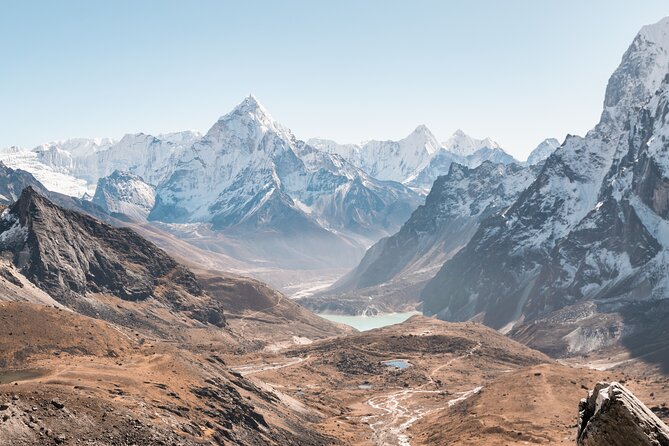
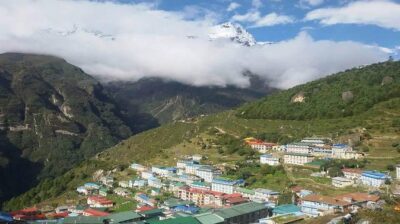
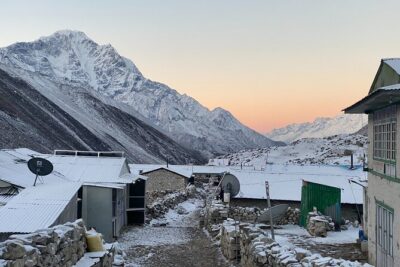
From Phakding, you cross and re-cross river bridges and push up into Namche Bazaar. If the weather is clear, Namche can give your first look at Everest, but even when visibility is mixed, the big win is acclimatization. You get steep hiking, then time to reset.
Namche itself is a mix of trading hub and mountain base. It has plenty of lodges and tea shops, and it can feel lively, especially around the Saturday market. For you, that matters because rest days are easier when you can walk to a viewpoint, buy a few small necessities, and take your meals without stress.
Day four is a rest and acclimatization day with you staying in Namche. This is where the itinerary shows its common sense. Instead of forcing bigger altitude gains every day, you get time to adjust before heading toward quieter villages like Thame.
Then you swing toward the Bhote Koshi Valley and up into Thame. Thame’s feel is calmer than Namche, and you get a spiritual and cultural rhythm, with monasteries and views over the Khumbu. The Thame Gompa sits above the village, and the route area ties into the Mani Rimdu festival season, which adds meaning to the prayer flags and mani stones you pass.
Next comes Khumjung, reached via a quiet trail and with an extra stop by Khunde hospital, associated with Sir Edmund Hillary. If you’re the type who likes your trekking with context, this kind of stop gives you more than photos. You’re seeing how Sherpa communities have organized care and resilience in the Khumbu.
The Dole and Machhermo section: forests, pastures, and building altitude the smart way
Once you leave the Namche-Khumjung area, you keep moving west along a route that gradually changes with altitude. The trek’s middle days are where you get the “I’m actually living in the mountains” feeling.
You pass through prayer-flag ridges and then descend toward the Dudh Koshi river area before climbing again toward places like Dole. The vegetation shift is part of the experience: rhododendron and birch forests show up first, and higher up you move into scrub juniper with hanging mosses and lichens. It’s not just scenery for scenery’s sake. This kind of slow environmental change usually means your body is also adapting to a higher elevation pattern.
Machhermo is a key step toward Gokyo. From Dole, you climb steadily along the valley side. The itinerary specifically notes seasonal summer settlements, called yersas, where yaks graze in summer. You also get recurring mountain view cues, including glimpses of Cho Oyu, plus the familiar Everest-adjacent stars like Kantega and Thamserku. For me, that’s one of the best uses of these days: you’re not at your “final Everest moment” yet, but the peaks start feeling closer and more defined.
You’ll arrive at Machhermo in time for lunch, which matters because it keeps your evenings usable. In high altitude treks, an early, sane dinner plan can beat suffering later.
Gokyo lakes and Ngozumpa Glacier: a different kind of Everest Region beauty
The day you head for Gokyo is where the trek starts feeling distinct from the classic Everest-only version. You follow a scenic path to Pangka, then descend slightly and walk along melting rivers that flow down the west side of the Ngozumpa Glacier.
You pass the first of the holy lakes, and then reach more as the day continues. The itinerary highlights Dudh Pokhari, often called Milk Lake, and you walk by the lakes with reflections of peaks like Cho Oyu and Gyachung Kang in the water. This is important value for your money because it gives your “mountain wow” a variety of moods. The Everest view can feel sharp and dramatic. The lakes tend to feel quieter, more reflective, and easier on the senses.
You stay in the Gokyo area after reaching the third lake and walking by the settlement of Gokyo. The practical benefit is that you’re positioned for the next morning’s climb, the big payoff day: Gokyo Ri.
More Everest Base Camp treks:
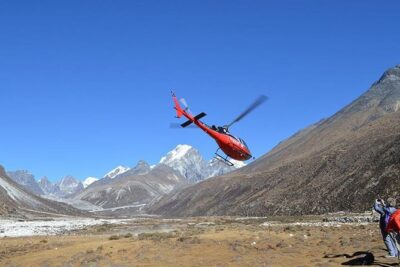
- Everest Base Camp Helicopter Tour landing at Everest View Hotel
★ 5.0 · 668 reviews - Everest Base Camp Trekking – 13 Day
★ 5.0 · 365 reviews - Everest Base Camp Trek
★ 5.0 · 350 reviews - Everest Base Camp Trek -14 Days
★ 5.0 · 321 reviews
Gokyo Ri sunrise: 360-degree views, steep effort, and cold before light
Gokyo Ri is the kind of trek moment that sticks. You leave camp just after first light and take a steep path up the hillside. As you climb, summits like Everest, Lhotse, and Makalu begin to come into view, and the summit viewpoint is described as one of the finest in the Everest region, even compared favorably to Kala Patthar by some accounts.
For you, the key takeaway is not only the view. It’s the pacing. This morning climb is early, steep, and time-limited, so you can plan your energy carefully. You have a full day ahead afterward too: after your summit effort and lunch, you walk to Na, at the foot of the Ngozumpa Glacier.
Cold is a given here. You’ll want warm layers, gloves, and the willingness to move steadily while you wait for the sky to brighten.
Cho La pass day: the tough glacier traverse you should take seriously
If you only remember one day for difficulty, make it Cho La. The itinerary makes that clear: the pass itself is not described as the issue, but the approach and glacier travel are. You deal with steep, icy, glazed rocks and a glacier traverse on the eastern side. The description also calls out crevasses you must pass through before reaching Dzongla.
This is where your physical and mental preparation matters. You should feel comfortable with footing, with cold conditions, and with following your guide closely when the trail turns technical.
The reward is big. From the pass decorated with prayer flags, you get a dramatic view range mentioned in the itinerary, including Ama Dablam, Cholatse, Lobuche East, and Baruntse. Then you reach Dzongla, where views continue and you get settled for the night.
This is also where I’d advise you to keep expectations flexible. Weather and snow conditions can change how a day feels, and a route that includes glacier traverses is simply not the place to rush.
Lobuche, Gorak Shep, and Kala Patthar: the viewpoint stack in order
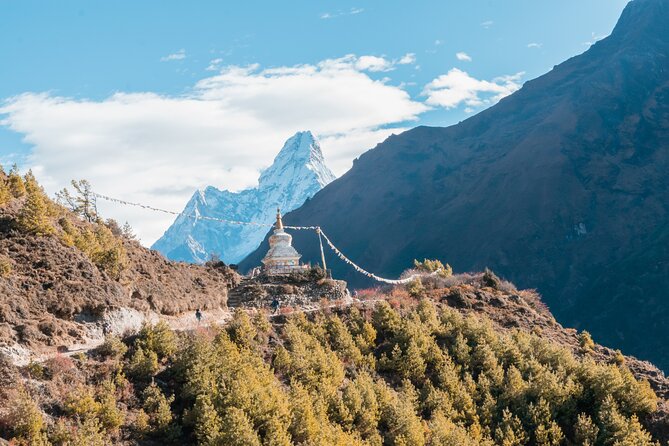
After Dzongla, you continue toward Lobuche. The trail climbs higher onto the terminal moraine of the Khumbu glacier, passing stone monuments built in memory of Sherpas who died on mountaineering expeditions to Everest. It’s a heavy reminder in an otherwise beautiful zone, and it gives the whole trek a more grounded feeling.
Then you move onward toward the iconic viewpoints. To reach Kala Patthar, you start extremely early. You go to Gorak Shep first for lunch, then hike up to Kala Patthar at about 5,554m for one of the best viewpoint moments in the region. The itinerary notes the path is forced to rise to cross a tributary glacier, which tells you it is not just a simple walk. It’s a climb and a work-out.
This is also where you’ll understand why the trek often includes both Kala Patthar and Everest Base Camp. Kala Patthar is about the panoramic over-the-glacier perspective. Base Camp is more intimate, closer to the icefall world.
Everest Base Camp excursion: ice pinnacles, crevasses, and a different kind of awe
Base Camp is a full excursion from Gorak Shep. You walk through terrain described as weaved among ice pinnacles and past crevasses of the Khumbu glacier. On the return, you can take a higher route for a spectacular view of the Khumbu icefall and the South Col route, before trekking back to Pheriche.
The practical value here is pacing. The day is long enough to feel serious, but it’s still structured so you’re not spending an entire day just scrambling. Your guide’s decisions matter, because you’re walking through an environment that is not forgiving. Keep your balance, take your time, and follow the line you’re given.
Also, don’t underestimate how emotionally loud this day can be. Even if you’ve seen Everest photos before, the scale and the ice detail tend to hit in a way that’s hard to describe.
The return to Namche and the Lukla farewell: big descents, small joys
After Everest Base Camp, the trek becomes more about controlled descent and recovery. You head down toward Tyangboche, then cross the Dudh Koshi river and continue toward Kyanjuma, described as a junction linking routes toward Gokyo Valley, Khumjung, and Namche Bazaar.
The itinerary also points out wildlife that you might see in rhododendron forest, including pheasants, griffons, musk deer, and wild goat. You might not see all of it, but the forests are part of why this “return days” stage feels less repetitive than it sounds.
You continue down toward Namche, crossing bridges and descending through pine forests. The trek mentions possible sightings of colorful pheasants and mountain goats. When you arrive back at Namche, it’s a familiar place with a different feeling. You’ve earned the right to be tired and proud.
Finally, you reach Lukla for your last mountain night. The itinerary includes a farewell party with Sherpa guides and porters, where you can sample chang (local beer) and even do a jig with Sherpa dancing. This is one of those non-photo moments that can make the trek feel complete.
Kathmandu cultural finish: Boudhnath, Pashupatinath, and Patan Durbar Square
After the trekking section, you fly back to Kathmandu. The rest of the day is free for your own plans, which is smart because you’re likely to need downtime after high altitude.
Then you get guided sightseeing. The itinerary calls out Boudhnath, including that it’s the largest Buddhist stupa in Nepal, plus Pashupatinath, a popular Hindu shrine dedicated to Lord Shiva. You also visit Patan, also known as Lalitpur, including Patan Durbar Square and Malla era architecture. The itinerary lists several temples there, including Mahaboudha Temple, Kumbeshwor Temple, Krishna Temple, and Golden Temple.
This cultural wrap-up matters because it gives your trek an ending that is more than just going home. You get to shift back into Kathmandu life with context and meaning.
Price, inclusions, and what you should budget beyond the package
At $2,800 per person for a trek that runs about 21 days, the big question is value. Here’s what you actually get in the package:
You get Kathmandu-Lukla-Kathmandu airfare, accommodation during the trek in local lodge and tea house rooms (standard rooms, non-attached bathrooms), and all included meals spelled out as 20 breakfasts, 17 lunches, and 17 dinners. You also get an English speaking local expert guide, porters (ratio listed as 2 members to 1 porter), and permits. Airport transfers and Kathmandu sightseeing are also included, plus 3 nights in Kathmandu in twin sharing with breakfast only.
You also get some operational support value: the tour notes pickup offered and a mobile ticket. And the agency support can be a big deal on the ground, especially if schedules need to shift.
What you should budget for beyond the package is also clear:
- International flights and any other airfares
- Tips for guide, porters, drivers
- Any emergency evacuation or evacuation costs if needed
- Personal expenses like drinks and snacks while walking, hot showers, and internet during the trek
- Your own travel insurance and medical expenses
So, is it worth it? For many people, yes, if you want guided structure on a complex route that includes a glacier pass and multiple high-altitude viewpoints. If you already have trekking experience and can assemble everything independently, the value might feel less obvious. But if you want someone to handle permits, porter logistics, and daily planning, the package fits the reality of this trek.
One extra note from the praise in the feedback I saw: people often highlight smooth management and helpful guides and porters. Names that show up include Rom, Anuj, Bal, Sureman, and Ram, plus chief guide Tiger.
Who should book, and who should think twice
This trek says it suits people with moderate physical fitness. I agree with the direction, but I’d translate that into reality: you should expect long hiking days, cold mornings, and at least one high-stress glacier day over Cho La.
You’ll likely love it if you want:
- A route that combines Gokyo lakes and Everest rather than choosing just one
- A planned acclimatization rhythm with rest and altitude adjustment
- A guided trek where porter support is built into the system
You might think twice if:
- You are not comfortable with glacier travel and icy, steep trail conditions
- You hate basic lodges and non-attached bathroom setups
- You cannot budget for tips and personal expenses outside the package
Should you book Everest Base Camp and Gokyo Ri with Explore Himalaya?
I think you should book this if your priority is a classic Everest Region trek with strong structure and high-impact viewpoints. The combination of Gokyo Ri, a serious Cho La day, then Kala Patthar and an Everest Base Camp excursion gives you a “best-of” feeling without rushing only one part of the region.
Also, the strongest sign of value in the feedback I saw was not fancy promises. It was logistics that felt organized, guide knowledge with names like Bibek, Tiger, and Anuj, and careful support from porters such as Ram. That’s what you want when you’re spending weeks at altitude.
If you do book, pack for cold, accept lodge basics, and go in ready for the Cho La day to be your hardest test.
FAQ
How long is the Everest Base Camp and Gokyo Ri trek?
The tour runs for about 21 days.
What is included in the price of $2,800 per person?
Included are accommodation during the trek in local lodge or tea house rooms, meals, Kathmandu-Lukla-Kathmandu airfare, an English-speaking local expert guide, porters (with the listed ratio of 2 members to 1 porter), and permits during the trek. Kathmandu includes airport transfers by private vehicle and sightseeing, plus 3 nights in Kathmandu in twin sharing with breakfast only.
What is not included, and what should I budget for?
Not included are international flights, tips for guide, porters, and drivers, emergency evacuation costs, and personal expenses like drinks, snacks while walking, hot showers, and internet during the trek. Client insurance and medical expenses are also not included.
What makes Cho La pass day tough?
Cho La is described as involving a steep climb with a glacier traverse on the eastern side, with the trail being steep and glazed by ice. The route also mentions passing through crevasses before reaching Dzongla.
Where does the trip start, and how do you get to the trail?
The start is Tribhuvan Airport in Kathmandu. After meeting support at arrival in Kathmandu, you fly to Lukla (the itinerary describes a short flight) to begin the trekking portion.
What kind of rooms and bathrooms should I expect on the trek?
You stay in local lodge or tea house rooms, described as standard rooms with non-attached bathrooms. In Kathmandu, you get twin-sharing accommodation for 3 nights with breakfast only.
More Gokyo Lakes treks
- Gokyo to Everest Base Camp Trek
★ 5.0 · 113 reviews - Everest Base Camp – Cho La Pass – Gokyo Trek
★ 5.0 · 65 reviews - Everest Gokyo Valley Trek – 12 days
★ 5.0 · 27 reviews - Landing Private Helicopter at Everest base camp & Gokyo for photo
★ 5.0 · 20 reviews
Latest additions near Kathmandu
- White Water River Rafting – 1 Day★ 4.3 · 3 reviews
- Traditional Momo Making Class★ 5.0 · 10 reviews
- Kathmandu to Pokhara Premium sofa bus ticket★ 4.0 · 17 reviews
- Ghorepani Poonhill Trek★ 5.0 · 5 reviews
- Ghorepani Poon Hill Trek★ 5.0 · 16 reviews
- Amazing 1 Day Trekking Experience in Kathmandu Nepal★ 5.0 · 24 reviews
- Walking tour of real Kathmandu through back streets.★ 5.0 · 3 reviews
- Wildlife Adventure in Chitwan Nepal★ 4.0 · 4 reviews
Everest Base Camp Treks, compared.
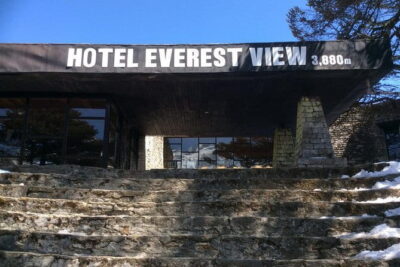
Everest Base Camp Helicopter Tour landing at Everest View Hotel
Read our review →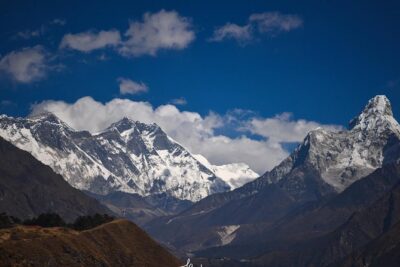
Everest Base Camp Helicopter Tour landing at Hotel Everest View
Read our review →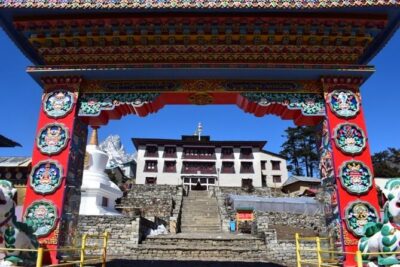
Browse the lists this tour appears in