
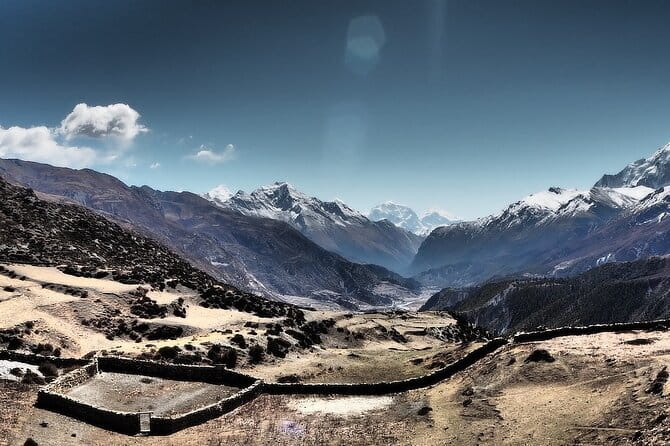
Reviewed · ANNAPURNA CIRCUIT TREKS
Annapurna Circuit Trek in Nepal (9 Days)
Thorong La turns your legs to questions. This 9-day Annapurna Circuit trek blends Thorong La Pass thrills, Tibetan village life, and a plan that keeps you moving with tea house comfort and support.
I really like how the schedule gives you a proper buffer for altitude. The acclimatization day in Manang is built in, with options to hike toward glacial lakes near Gangapurna and visit local monasteries. I also like that core logistics are covered, from a licensed English-speaking guide to permits and your meals.
The main drawback to consider is the commitment level. You should be ready for long walking days and a punishing early start for the 3 AM push toward Thorong La.
In This Review
- Key things that make this Annapurna Circuit Trek work
- Getting from Kathmandu to Dharapani, then stepping into trek life
- Chame and the apple-orchard feel of cool alpine trekking
- Rhododendron forests, suspension bridges, and Paungda Danda’s big rock curve
- Manang: the acclimatization day that makes Thorong La smarter
- Yak Kharka to Thorong Phedi: where your pace gets honest
- Thorong La at 5,416 meters, Muktinath, then the descent to Pokhara
- Price and logistics: what you get for $880, and what you still need to plan
- Your guide and support team, plus the comfort bits that save energy
- Fitness and altitude reality check, without scare tactics
- Should you book this Annapurna Circuit Trek with Recreation Holidays?
- FAQ
- How long is the Annapurna Circuit Trek?
- Where does the trip start and end?
- Is pickup included in Kathmandu?
- What kind of accommodation do we get during the trek?
- Is a guide included, and do they speak English?
- Are trekking permits included?
- What meals are included in the price?
- What about porter services, are they included?
- What is the highest point on the trek?
- Is free cancellation available?
Key things that make this Annapurna Circuit Trek work
- Kathmandu pickup and clear start timing mean you are not guessing how day one will run.
- Tea house stays (8 nights, twin sharing) keep the trek simple and realistic.
- Manang acclimatization day helps you adjust before the high crossing.
- Early Thorong La strategy means you are on the pass when conditions are most favorable.
- Licensed guide plus assistant support for larger groups gives you real on-the-ground help.
- Permits, meals, and a first-aid kit are handled, so you spend less time managing paperwork and more time walking.
Getting from Kathmandu to Dharapani, then stepping into trek life
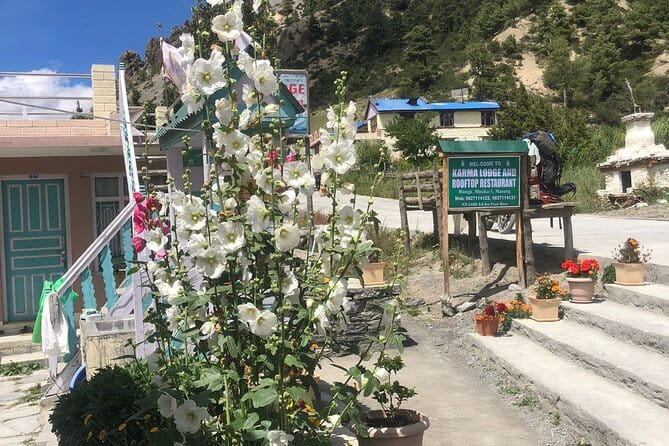
Your trip starts with a pickup in Kathmandu, with departure timing around 6:15 AM and an early push out of town. After that, you ride first by scenic bus, routing through Besisahar and reaching Bhulbhule. From there, you transfer into a shared jeep to get you into the trekking area and set the tone for the days ahead.
This kind of day-one structure matters. You avoid wasting energy on unclear connections, and you arrive ready to hike rather than still sorting out your transportation. It also helps if you are not used to Nepal’s mix of long drives and short walking breaks, because you get one “transition day” to get your rhythm.
At the end of the first full travel block, you settle into the trekking flow with tea house lodging for your nights on route. Think simple rooms, shared dining, and the usual mountain rhythm: early light, warm food, and an evening that feels like it comes faster than you expect.
More Treks in Kathmandu
- Everest Base Camp Trek – 14 Days
★ 5.0 · 1,499 reviews - Everest Base Camp Trek
★ 5.0 · 842 reviews - Everest Base Camp Trekking
★ 5.0 · 485 reviews
Chame and the apple-orchard feel of cool alpine trekking
After your start from the Dharapani area, the route turns toward Chame, a classic section where the air usually feels cooler and sharper. You also get memorable cultural color along the way, including Tibetan villages such as Bagarchhap and Danakyu.
One of the best parts here is how the scenery shifts as you walk. You pass through areas marked by apple orchards, so the trail does not feel like it is only about altitude. It is also about everyday life in the hills, with small communities working around the land and the seasons.
What to watch for: this day can run long (around 12 hours). That does not automatically mean it is extreme, but it does mean your pace and energy management matter. If you tend to sprint early, save that habit for later. Plan for steady effort, frequent pauses for water, and letting the day unfold without rushing it.
Rhododendron forests, suspension bridges, and Paungda Danda’s big rock curve
Day three leans into forests and river-crossing. Expect dense rhododendron and pine, plus meadows and steep ascents that keep you awake in the best way. You will cross multiple suspension bridges before reaching Paungda Danda, known for a dramatic curved rock face.
This is a great day for two reasons. First, it is the kind of walking where you get variety, so the hours feel less repetitive. Second, suspension bridges force you to slow down and pay attention, which can be good when you are still settling into trekking posture.
If you get motion-sensitive, remember this day includes bridge crossings and a lot of foot placement changes. A calm pace helps. Also, since there are forested sections, do not wait until you feel thirsty to drink. The cooler air can trick you.
Manang: the acclimatization day that makes Thorong La smarter
The Manang portion is one of the most important value moments in the whole trip. You head toward Manang with a gradual build: flatter terrain first, then a steady ascent toward Humde. Along the way, you get big views of Annapurna peaks, including Annapurna II, III, and I.
Then comes the reason many people love this operator’s planning approach: you get a dedicated acclimatization day in Manang. You can explore Manang village, hike up to glacial lakes at the base of Gangapurna, or visit local monasteries. That is not just sightseeing. It is time for your body to adapt before you go higher.
Here is the practical truth: the pass day is the dramatic part, but acclimatization is what keeps the dramatic part from becoming a survival story. This plan gives you a structured pause, and that tends to make the hardest days feel more manageable.
Bonus: Manang is also a cultural stop, so you are not only ticking boxes for elevations. You get a sense of how people live in a high region, including the pace of life that fits the altitude.
More Annapurna Circuit departures:
- Annapurna Circuit Trek with Tilicho Lake
★ 5.0 · 368 reviews - Annapurna Circuit Trek
★ 5.0 · 94 reviews - Annapurna Circuit Trek
★ 5.0 · 67 reviews - Annapurna Circuit Trek
★ 5.0 · 49 reviews
Yak Kharka to Thorong Phedi: where your pace gets honest
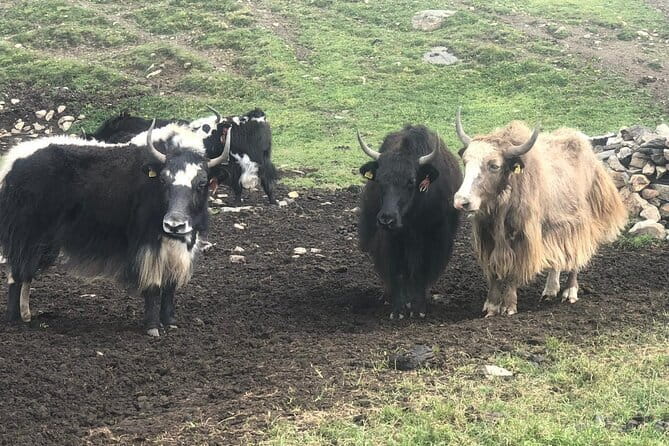
From Manang, you trek onward to Yak Kharka, passing through local settlements and cultivated farmlands. The ascent is described as steady and moderate, which is exactly what you want after acclimatization. You also cross a suspension bridge along the way, keeping the day visually interesting and physically active.
Then day seven sets you up for the pass. You hike to Thorong Phedi in about 4 to 5 hours, with a gradual incline. The altitude makes the pace slower, and the day is less about speed and more about controlled effort.
If you are wondering why this matters, it is simple. Thorong Phedi is your staging area, so the goal is to arrive without exhausting yourself. You want to be tired, not crushed. Hydrate, take breaks, and keep your breathing steady. This is the day where good habits start paying off.
Thorong La at 5,416 meters, Muktinath, then the descent to Pokhara
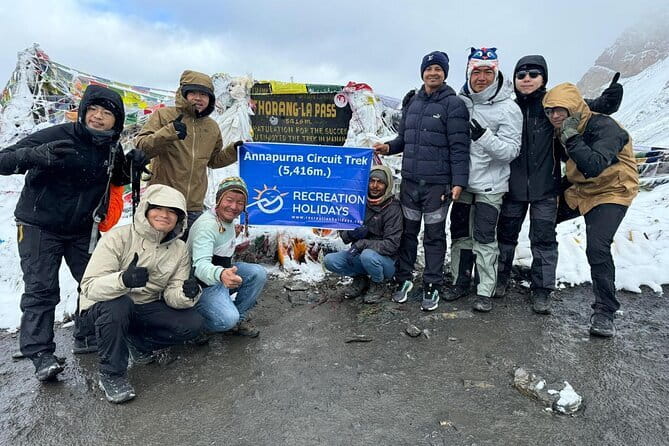
This is your summit push. You start early, around 3 AM, to cross Thorong La, the highest point on the Annapurna Circuit at 5,416 meters. This is the trek’s most thrilling day, with panoramic views at the summit.
Early starts can feel intimidating, but they are practical. Cold mornings often mean clearer conditions and more comfortable walking compared to later heat and shifting weather patterns. Also, starting early reduces the stress of rushing, because you are not trying to “beat the clock” with tired legs and late light.
After crossing, you head toward Muktinath Temple. Even if you focus on the physical challenge, Muktinath gives you a welcome shift. It is a meaningful stop after a long ascent, and it gives your brain something grounding besides just the next step.
Then you finish with a well-earned transition day. From Muktinath, you travel to Pokhara by jeep or bus. The drive descends and treats you to scenic views of the lower Mustang Valley. In the end, you get that classic feeling of closure, a celebratory shift from trekking time to real-world time.
Price and logistics: what you get for $880, and what you still need to plan
At $880 per person, this trek prices itself as a “supported tea house trek” rather than a DIY adventure. For that money, you get a lot of what usually costs time, stress, or both when you travel independently.
Included highlights that matter on a trek like this:
- 8 nights of tea house accommodation, twin sharing
- Licensed, English-speaking guide plus an assistant guide for groups of 8+
- All necessary trekking permits
- Meals: 8 breakfasts, 8 dinners, and 9 lunches
- Local transport: from Kathmandu to Dharapani, and from Muktinath to Pokhara
- A first-aid medical kit
- Emergency evacuation support covered by travel insurance
- Luggage storage during the trek
What is not included (and you need to budget for it):
- Nepal entry visa and international airfare
- Travel and medical insurance
- Kathmandu and Pokhara accommodation
- Private transportation
- Porter services, available on request at $240 per porter (not automatic)
That porter detail is worth thinking about. If you like traveling light, you might be fine without one. If you want less weight on your back for a high pass trek, plan on adding a porter. The operator’s note about “1 porter for every 2 trekkers” also hints they can support that balance if your group structure works.
Your guide and support team, plus the comfort bits that save energy
This trek runs on more than routes and views. It runs on people who keep the plan realistic and safe.
You travel with a licensed, English-speaking guide, and for groups of 8+ there is an assistant guide. That kind of support structure matters on long days, especially when weather, altitude, or fatigue changes the pace. It also helps with logistics like coordinating tea house stays and meal timing so you are not stuck waiting around.
You also get a first-aid kit included, plus emergency evacuation support arranged through travel insurance. That does not mean you will need it. It does mean the operator is thinking about risk management, which is exactly what you want for high-altitude trekking.
One extra “small but nice” touch is luggage storage during the trek. That means you are not hauling every personal item from start to finish. You can keep your essentials handy and let the rest wait safely while you walk.
And if you like a finishing token, there is an achievement certificate available on request.
Fitness and altitude reality check, without scare tactics
This is for people with moderate physical fitness. That is a fair category for a trek that includes:
- Long walking days, including days listed at around 12 hours
- Multiple ascents and steep sections
- The big elevation moment: Thorong La Pass at 5,416 meters
- A slow, careful approach required at altitude, especially as you move toward Thorong Phedi
So, how do you judge fit? Ask yourself if you can comfortably walk for several hours on uneven terrain, and if you can handle early mornings without turning grumpy.
Also, if you are prone to altitude issues, take acclimatization seriously. This trek gives you that Manang buffer, and you should treat it as part of the main event, not downtime.
Should you book this Annapurna Circuit Trek with Recreation Holidays?
You should book if you want:
- A supported tea house trek with permits, meals, and lodging handled
- A plan that takes acclimatization seriously in Manang
- English-speaking guidance and on-the-ground help for pacing and logistics
- A single trek with a defined end at Pokhara, so you do not need to figure out exit transport
You might skip it if:
- You already have your own systems for independent trekking and want full control without included services
- You do not plan to purchase travel and medical insurance, since evacuation support is tied to it
- You want private transport throughout, since private transportation is listed as not included
If you want the Annapurna Circuit experience with less friction and more confidence, this is a solid match. It is not a lightweight vacation, but it is built to help you finish strong, not just finish.
FAQ
How long is the Annapurna Circuit Trek?
The trek runs for about 9 days.
Where does the trip start and end?
It starts in Kathmandu, Nepal, with the end in Pokhara, Nepal.
Is pickup included in Kathmandu?
Yes, pickup is offered. The start time is listed as 6:15 am.
What kind of accommodation do we get during the trek?
You get 8 nights of tea house accommodation on a twin sharing basis.
Is a guide included, and do they speak English?
Yes. The tour includes a licensed, English-speaking guide. An assistant guide is included for groups of 8+.
Are trekking permits included?
Yes. All necessary trekking permits are included.
What meals are included in the price?
The package includes 8 breakfasts, 8 dinners, and 9 lunches during the trek.
What about porter services, are they included?
Porter services are not included. They are available on request for $240 per porter, with 1 porter for every 2 trekkers.
What is the highest point on the trek?
Thorong La Pass is the highest point on the route at 5,416 meters.
Is free cancellation available?
Yes, you can cancel up to 24 hours in advance for a full refund. If you cancel less than 24 hours before the start time, the amount paid will not be refunded.
Latest additions near Kathmandu
- White Water River Rafting – 1 Day★ 4.3 · 3 reviews
- Traditional Momo Making Class★ 5.0 · 10 reviews
- Kathmandu to Pokhara Premium sofa bus ticket★ 4.0 · 17 reviews
- Ghorepani Poon Hill Trek★ 5.0 · 16 reviews
- Amazing 1 Day Trekking Experience in Kathmandu Nepal★ 5.0 · 24 reviews
- Ghorepani Poonhill Trek★ 5.0 · 5 reviews
- Walking tour of real Kathmandu through back streets.★ 5.0 · 3 reviews
- Wildlife Adventure in Chitwan Nepal★ 4.0 · 4 reviews
Annapurna Circuit Treks, compared.
Browse the lists this tour appears in