
Reviewed · ANNAPURNA CIRCUIT TREKS
Annapurna Circuit Trek
One trek, three cultures, and a big high pass. I love how the plan mixes serious mountain goals with real village walking, especially the Tilicho Lake detour and the chance to acclimatize properly in Manang. I also like that you are not just dropped on a trail, you get guides and porters who can help you move smarter as altitude rises. The main consideration is the height, including Thorong La (5,416m), so you should expect cold, early starts, and the need to pace yourself even if you feel strong.
Kathmandu is not just a checkbox either. You start with Thamel for an easy first day, then hit major sights like Pashupatinath, Buddha Stupa, and Kathmandu Durbar Square, before the long drive toward the trek. And based on solid feedback I’ve seen, the guide Bhupal gets highlighted for keeping the group calm and organized, with porters who even handled extra carries when altitude sickness showed up.
In This Review
- Why the Annapurna Circuit feels like a whole Himalayan chapter
- Kathmandu warm-up: Thamel first, temples second, then you’re rolling
- The drive to Besisahar and why “getting there” is part of the story
- Pisang to Manang: the acclimatization sweet spot
- Manang acclimatization day: smart recovery, useful options
- Manang to Sri Kharka and onward: valleys, monasteries, and dust
- Tilicho Base Camp and Tilicho Lake: the emerald payoff
- From Sri Kharka to Yak Kharka and Tare Gumba
- The final stretch to Thorong Phedi: cold valley walking
- Thorong La day: high effort, big views, and careful pacing
- Muktinath and Lubra to Kagbeni: where faith meets travel
- Jomsom to Pokhara by flight, then lakeside decompression
- Price and value: what you really get for $1,560
- Who should book, and who should think twice
- Should you book the Annapurna Circuit Trek with Hit The Himalaya?
- FAQ
- How many days is the Annapurna Circuit Trek?
- What is the highest point on this itinerary?
- Are flights included or is it all overland?
- Are meals included in the trip price?
- What time of year is best for the Annapurna Circuit Trek?
- What fitness level do I need?
- Is the tour private?
- Is cancellation free if I change my mind?
Why the Annapurna Circuit feels like a whole Himalayan chapter
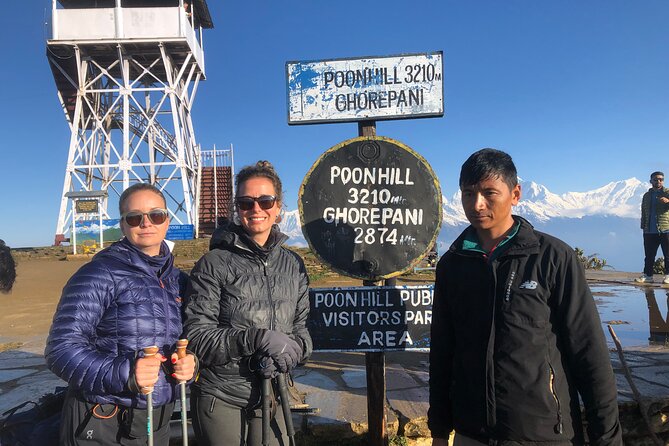
If you want one trek that can deliver big-time mountain scenery and hands-on Himalayan culture, this route has a lot going for it. You climb from river valleys through rhododendron forests and rocky passes, and you pass ethnic communities where daily life is still tied to the mountains.
What makes the Circuit different from many single-focus treks is variety. You get a mix of:
- Mountain power in the distance as you drive and then trek
- Different terrain days, from dusty trails to greener forest sections
- Community stops that feel practical, not staged
You’ll also notice how the itinerary spreads the altitude pressure across multiple days. That matters. You are not trying to go from valley heat straight to a high pass in a single push. Instead, the trek gives you time in Manang to adjust, plus a sequence of camping or lodge nights that gradually increases the effort.
Kathmandu warm-up: Thamel first, temples second, then you’re rolling
Day 1 is a soft landing. After arriving at Tribhuvan International Airport and clearing customs, you transfer by vehicle to your hotel, then you have time to wander Thamel. This is a smart move for any trek, because you can sort last-minute needs, grab snacks, and get your bearings without jet lag chaos.
Day 2 is all about Kathmandu’s temple density and major UNESCO-listed sights. You visit:
- Pashupatinath Temple: one of the best-known pilgrimage sites in Nepal
- Buddha Stupa: for a different spiritual feel from the Hindu sites
- Kathmandu Durbar Square: historic monuments and old-city atmosphere
For planning, this day matters because it sets your pace. You’re not doing a long day hike. You’re sightseeing, keeping your feet moving, and getting a sense of how Kathmandu works before the trail takes over.
More Treks in Kathmandu
- Everest Base Camp Trek – 14 Days
★ 5.0 · 1,499 reviews - Everest Base Camp Trek
★ 5.0 · 842 reviews - Everest Base Camp Trekking
★ 5.0 · 485 reviews
The drive to Besisahar and why “getting there” is part of the story
On Day 3 and Day 4, you transition from city roads to Himalayan roads. Expect a long drive with changing views, including glimpses of the Manaslu and Annapurna mountain ranges and time beside big rivers like the Trishuli and Marshyangdi.
This road segment has two real benefits:
- You start seeing how the Annapurna region is stitched together by valleys and settlements.
- You ease into the trip’s rhythm. By the time you begin trekking in earnest, you already understand the pace of transfers, check-ins, and meal planning.
Downside, you’re on rough roads for hours. The itinerary is clear that some stretches can be winding, bumpy, and narrow. If you are prone to motion sickness, you’ll want to take it seriously, since it will directly affect how you feel when you step out for your first trekking days.
Pisang to Manang: the acclimatization sweet spot
The trek begins to feel real when you reach the higher villages. Day 4 brings you to Upper Pisang, and the next day is your move toward Manang.
Day 5 is a moderate ascent with two possible paths from Pisang to Manang:
- A higher altitude path that is recommended if you can handle the breathing demands
- A lower, more moderate path if you are showing altitude symptoms
That choice is a big deal. Many people regret forcing the harder option just to stay in the same gear they used at sea level. Here, the itinerary explicitly gives you a safer alternative if your body asks for it.
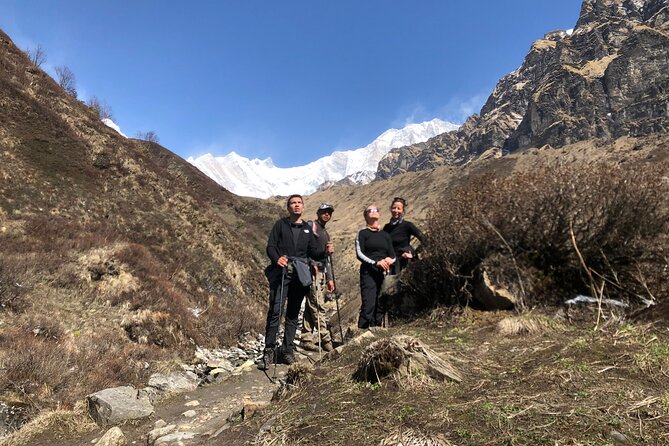
Day 5 also gives you a classic Circuit moment: walking alongside the Annapurna range with views toward peaks you’ll recognize as you plan your future days. When you reach Manang, you get that wide, open sense of being in the high Himalaya, with Annapurna I and related peaks showing through.
Manang acclimatization day: smart recovery, useful options
Day 6 is not a throwaway day. It is the itinerary’s altitude insurance. You stay in Manang to let your body adapt.
You also get side trip options that are designed to help you feel engaged without wrecking yourself for the next segment. The highlights include:
- Ice Lake (about 3,900m) as a popular excursion
- Chongkor viewpoints for glacier scenery
- Nearby monasteries and Gumbas
One detail I really appreciate: there is an option to go to the Himalayan Rescue Association clinic to learn about altitude sickness. Even if you never feel sick, understanding the signs early can change your decision-making later. It is the difference between pushing through feeling off, and adjusting your pace immediately.
This is the kind of day that makes you more likely to enjoy the hard sections later, rather than white-knuckling them.
More Annapurna Circuit departures:
- Annapurna Circuit Trek with Tilicho Lake
★ 5.0 · 368 reviews - Annapurna Circuit Trek
★ 5.0 · 94 reviews - Annapurna Circuit Trek
★ 5.0 · 67 reviews - Annapurna Circuit Trek
★ 5.0 · 49 reviews
Manang to Sri Kharka and onward: valleys, monasteries, and dust
Day 7 takes you from Manang to Sri Kharka. The walk includes:
- Leaving Manang through the western gate
- Trekking down toward a river, crossing it
- Moving through forest sections and village areas like Khangsar
- Reaching Sri Kharka after a dusty, rugged trail and monastery passing
This day is about transition. You trade the big high-town views for the working trails that feel like they are made for residents, not for tourists. It can be hot in spots, then colder as you climb. Pack and layer thinking matters.
Then Day 8 continues the push toward Tilicho Base Camp. The itinerary notes this day is not steep, but it can still feel exhausting because you are on loose stones and areas prone to landslides. That is the kind of footwork day where trekking poles and careful steps can reduce fatigue and knee stress.
Tilicho Base Camp and Tilicho Lake: the emerald payoff
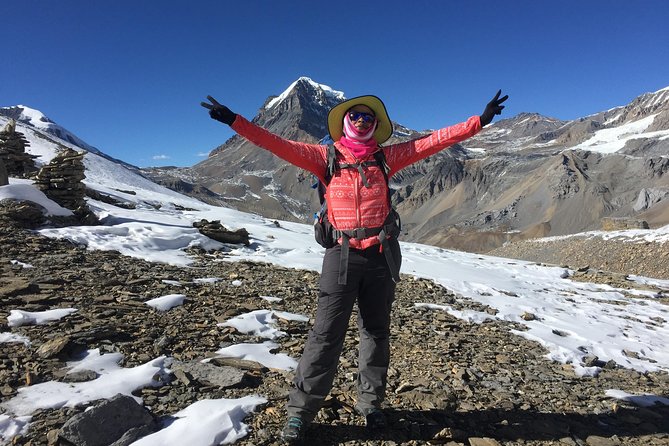
Tilicho is the reason many people remember this trek long after the final pass photo. Day 8 brings you to Tilicho Base Camp. The itinerary points out something practical: after this point you will not see hotels or teahouses on the way to Tilicho Lake. That means you should plan on a self-contained rhythm: rest, hydrate, and keep your energy for the early start.
Day 9 is an early trek to Tilicho Lake. The timing is set for comfort, with less wind in the morning. The first ascent is described as a little demanding, then the reward kicks in when you reach the lake.
What you’ll want to plan for mentally:
- You are not just walking to a view, you are moving into a high-altitude, exposed setting.
- Once you reach the lake, conditions can shift fast, so take your photos but also save energy to retrace back.
You return to Sri Kharka overnight. That matters because it keeps your acclimatization sequence working, instead of letting the lake day become a total exhaustion trap.
From Sri Kharka to Yak Kharka and Tare Gumba
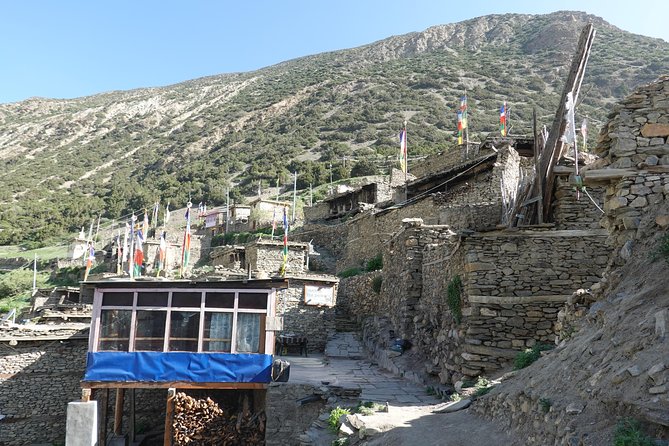
Day 10 is a route from Sri Kharka to Yak Kharka. The itinerary sequence includes:
- Descending to Khangsar village
- Crossing a river
- Climbing into a barren landscape with views over Yak Kharka
You might see wildlife like blue sheep if you are lucky, but the bigger point is how the scenery shifts. This is one of those “your trekking map turns into a real ecosystem” days.
There is also a visit to Tare Gumba, noted as a sacred place for local people. When a trek includes a moment like this, it stops being only about reaching elevation and starts feeling more like you are moving through living culture.
The final stretch to Thorong Phedi: cold valley walking
Day 11 is when the trek tightens. It is the last major pre-pass stretch before Thorong La.
The itinerary emphasizes that you’re progressively acclimatizing above 4,500m. You’ll sleep in Thorong Phedi, after walking through an isolated glacier valley bordered by high mountains. This is exactly the kind of terrain that can make you feel like you are walking in a freezer.
Practical advice for this day:
- Keep layers on until the last possible second
- Hydrate even when you do not feel thirsty
- Eat early at tea houses so you have energy before the cold takes it out of you
The itinerary also recommends sleeping early. That’s not a suggestion for comfort, it’s preparation for the pass day.
Thorong La day: high effort, big views, and careful pacing
Day 12 is the heavy day. You start very early, before sunrise, because the itinerary notes it is calmer in the morning with no wind.
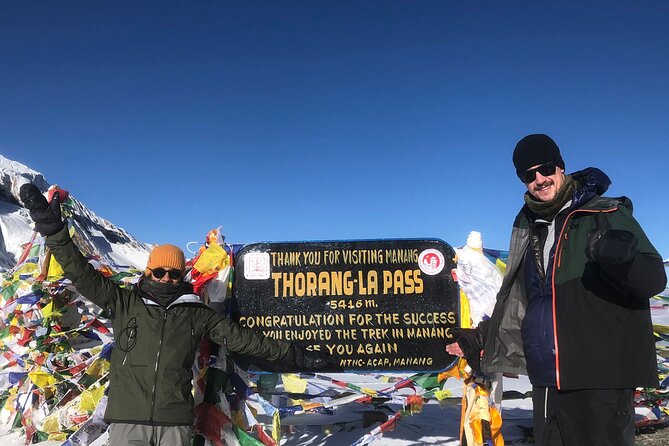
You’ll face a steep start in the first hours. Then you reach High Camp, and the final few hundred meters to the summit are described as difficult. Once you crest Thorong La (5,416m), the itinerary promises a breathtaking view including Dhaulagiri (8,167m) and a distant glimpse toward the old kingdom of Upper Mustang.
The key takeaway is not the postcard. It is how the day is structured:
- Early start for more stable conditions
- Gradual progress up the glacier valley
- A final push that tests legs and lungs, then a long descent afterward
Even if you are fit, altitude changes the rules. Your goal is to arrive, not to win speed points.
Muktinath and Lubra to Kagbeni: where faith meets travel
Day 13 begins with Muktinath Temple. The itinerary describes it as a famous pilgrimage site for both Hindus and Buddhists. That shared spiritual pull is part of why this stop feels meaningful.
After Muktinath, you either:
- Take a vehicle, or
- Trek to Jomsom via Lubra
The itinerary specifically points out that you can see the best view from the top of Lubra, something you would not get from the bus or Jeep viewpoint. That tells you how to choose if you like walking: if you feel decent that day, the trek option likely delivers better sights and more satisfying pacing.
Then you descend to Kagbeni, described as the junction between Upper and Lower Mustang. Road notes say the Muktinath to Jomsom route is mostly paved, with some construction at places. So expect occasional slowdowns.
Jomsom to Pokhara by flight, then lakeside decompression
Day 14 is a turning point because you switch from mountain travel to smoother travel planning. You can go by bus or Jeep, but the itinerary also includes the easy choice: you fly.
The flight is about 25 minutes from Jomsom to Pokhara through the Kaligandaki gorge. There can be delays if winds are strong and visibility is weak, but in general this is a smart use of time. It saves you from an extra day of long road fatigue right after a high pass.
Once in Pokhara, you get lakeside time and an overnight hotel. This part matters more than it sounds. After Thorong La, you need normalcy: a softer meal schedule, flatter walking, and time to breathe.
Price and value: what you really get for $1,560
At $1,560 per person for roughly 15 days, the math is not just about “cost per day.” It is about what the price covers.
From the inclusions, you’re getting:
- Air-conditioned vehicle transfers
- Trek permits and required permits
- Accommodation for the whole trip
- Professional, experienced certified guides and porters
- Flights: Jomsom to Pokhara, and Pokhara to Kathmandu
- Meals: lunch 13 times, dinner 13 times, breakfast 14 times
That is a lot of hidden weight lifted off your planning. Domestic flights and permits alone can be expensive and annoying to organize, especially while you are already managing trekking logistics and altitude gear.
What is not included:
- Personal expenses
- Tips and gratuities
So if you budget only the headline rate, you may feel surprised at the end. I treat tips as part of the real trip cost, especially on a supported trek where porters carry heavy loads.
Who should book, and who should think twice
This trek is a great match if you:
- Want the classic Annapurna Circuit experience but also care about a major detour like Tilicho Lake
- Like structured acclimatization rather than risky speed
- Prefer a supported setup with guides and porters, not a DIY route
You should think twice if you:
- Are worried about serious altitude, because Thorong La is 5,416m and the itinerary includes early cold conditions
- Get motion sickness easily, since the road legs are long and can be rough
It also fits well for people who value a private feel. The tour is private, meaning you are not managing crowd pacing with strangers.
Should you book the Annapurna Circuit Trek with Hit The Himalaya?
I’d book it if you want a well-paced Himalayan story: city culture in Kathmandu, real trekking days with a meaningful acclimatization buffer in Manang, a Tilicho Lake highlight, then the big payoff of Thorong La and Muktinath.
I would also add one practical move before you sign up: ask for the guide Bhupal if your tour dates line up. Based on feedback patterns, he is repeatedly connected with attentive support and calm problem-solving, and that matters when altitude issues show up.
If you are excited by high altitude but you also want a plan that protects you from the most common rookie mistakes, this itinerary’s structure is the value. It gives you the views, and it gives you a better shot at enjoying them.
FAQ
How many days is the Annapurna Circuit Trek?
The trek runs for about 15 days.
What is the highest point on this itinerary?
The itinerary includes crossing Thorong La Pass at 5,416m.
Are flights included or is it all overland?
Flights are included. You fly from Jomsom to Pokhara, then from Pokhara to Kathmandu.
Are meals included in the trip price?
Yes. Lunch is included 13 times, dinner is included 13 times, and breakfast is included 14 times.
What time of year is best for the Annapurna Circuit Trek?
The trek is best visited in spring (April to May) and autumn (September to October).
What fitness level do I need?
The tour is for travelers with moderate physical fitness.
Is the tour private?
Yes. It is a private tour/activity, so only your group participates.
Is cancellation free if I change my mind?
Free cancellation is available up to 24 hours in advance for a full refund. If you cancel less than 24 hours before the start time, the amount paid is not refunded.
Latest additions near Kathmandu
- Traditional Momo Making Class★ 5.0 · 10 reviews
- White Water River Rafting – 1 Day★ 4.3 · 3 reviews
- Kathmandu to Pokhara Premium sofa bus ticket★ 4.0 · 17 reviews
- Ghorepani Poon Hill Trek★ 5.0 · 16 reviews
- Amazing 1 Day Trekking Experience in Kathmandu Nepal★ 5.0 · 24 reviews
- Ghorepani Poonhill Trek★ 5.0 · 5 reviews
- Walking tour of real Kathmandu through back streets.★ 5.0 · 3 reviews
- Wildlife Adventure in Chitwan Nepal★ 4.0 · 4 reviews
Annapurna Circuit Treks, compared.
Browse the lists this tour appears in