
Reviewed · ANNAPURNA CIRCUIT TREKS
Annapurna Circuit Trek
Thorong La makes your lungs work. This popular 14-day route strings together big altitude jumps and fast-changing scenery, with Thorong La Pass as the headline. I especially love the way the trek moves through very different places, from lower valleys toward high, dry stretches, then down again into the Kali Gandaki area. I also love the human support, since the guide team matters here, and one trekker highlighted Gyanu for warmth, patience, and dedication. The main consideration is that you should be ready for long days and real altitude, topping out at 5416m.
You’ll start with a Kathmandu hotel stay and prep time, then move out by vehicle toward the trailhead. I like that the package handles the paperwork and logistics, including TIMS and the ACAP permit, plus an experienced government registered guide and porter to carry your luggage. That means you spend less time on admin and more time on the trail.
The itinerary also keeps variety in your days, with Manang as a key pause point, plus stops like Muktinath Temple and the hot springs at Tatopani. You’ll also have time for viewpoint time around Poon Hill, and Tilicho Lake is listed as a must-do highlight on this version of the circuit. If you’re hoping for a gentle vacation pace, this one will feel more like a workout with rewards.
In This Review
- Key things I’d circle before you book
- The Annapurna Circuit vibe: a trek that changes fast
- Kathmandu prep: sightseeing, gear rhythm, and altitude awareness
- Getting onto the trail: Kathmandu to Jagat and your first big climb
- Chame and Pisang: steady altitude gains and village texture
- Manang rest day: the smart pause before the pass
- The high-country ladder: Ledar, Thorong Phedi, then Thorong La
- Tilicho Lake: an extra mountain goal on this circuit version
- Muktinath, Marpha, and the Kali Gandaki stretch
- Poon Hill and Ghorepani: wide views to close the loop
- Transfers to Pokhara and back to Kathmandu, plus flights
- Price and what you actually get for $1,175
- Who this trek fits best
- Final call: should you book this Annapurna Circuit trek?
- FAQ
- How long is the Annapurna Circuit trek in this package?
- What permits are included?
- Are meals included during the trek?
- Do I have a guide and porter?
- What are the main highlights on the route?
- What altitude will I reach?
- Is cancellation free?
Key things I’d circle before you book
- Thorong La Pass day at 5416m: expect a long push and a serious altitude moment, then a rewarding descent to Muktinath.
- Manang rest day to help you acclimatize: a lighter day gives your body a fighting chance before the higher sections.
- Tilicho Lake is part of the package: it adds another high-mountain goal beyond the classic circuit.
- Muktinath Temple and Marpha: you get both spiritual sites and a distinct village feel, including apple-growing country.
- Tatopani hot springs: built-in recovery time after harder walking days.
- Meals and drinks are handled: coffee or tea with each meal, and meal choices during the trek help you avoid decision fatigue.
The Annapurna Circuit vibe: a trek that changes fast
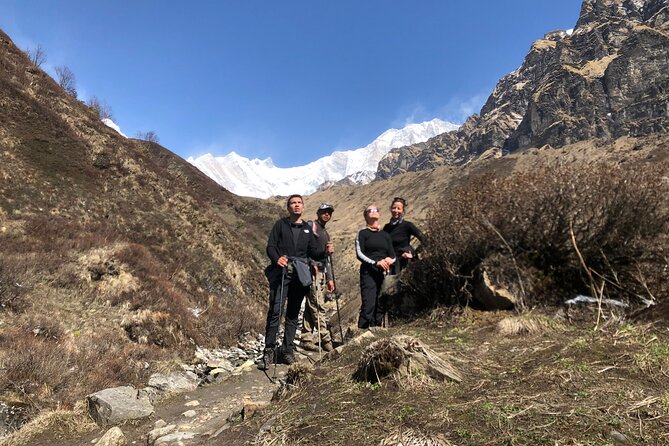
The Annapurna Circuit is famous because it doesn’t just scale one hill. Your route keeps shifting, both in altitude and in how the world looks around you. One day can feel like a totally different climate than the last, moving from greener lower stretches toward drier, more rugged terrain as you climb toward the high pass.
This tour leans into that variety. You’ll hike through valley towns like Jagat and Dharapani, then work your way toward higher villages including Chame, Pisang, and Manang. After that, the program aims straight at Thorong La and continues onward into places like Muktinath and Tatopani, before finishing with viewpoint time at Poon Hill and a transfer to Pokhara.
That structure is good for most people because it mixes effort with purpose. You’re not hiking for hiking’s sake. Each section has a reason, whether it is acclimatization, a cultural stop, or a big altitude objective.
More Treks in Kathmandu
- Everest Base Camp Trek – 14 Days
★ 5.0 · 1,499 reviews - Everest Base Camp Trek
★ 5.0 · 842 reviews - Everest Base Camp Trekking
★ 5.0 · 485 reviews
Kathmandu prep: sightseeing, gear rhythm, and altitude awareness
Most treks start when you begin walking. This one starts earlier, in Kathmandu. You arrive at about 1,350m, then you get a sightseeing and preparation day. That day matters more than it sounds, because it gives you time to confirm documents, get organized for early departures, and set your routine.
You also get a Kathmandu and Pokhara hotel stay included on a bed and breakfast basis. So you’re not scrambling for lodging details after a flight day or after a long transfer day. The trek portion itself also uses mountain accommodations, with options listed for private or shared rooms, and single or double rooms.
One practical note: your start time is listed as 12:15 am. That signals an early schedule, likely tied to your first long vehicle transfer. If you are not great with early mornings, plan ahead, because the program does not ease you in gently.
Getting onto the trail: Kathmandu to Jagat and your first big climb
The first major travel day is a long one: a drive from Kathmandu to Jagat by local transport, around 9 hours, with Jagat listed at 1,300m. Translation: you are losing sleep and time before the first day of hiking. If you tend to feel sluggish after rides, pack your patience for the first day.
Then you hike up toward Danakyu/Dharapani, about 5 hours, reaching around 2,300m. This is a solid first hiking block. It’s not a punishing distance, but it is enough to test your breathing and get your legs warmed up. It also helps you adjust to the fact that your body now needs to work a little harder for every step.
What I like about this early section is that it gives you a taste of the circuit without throwing you into the pass immediately. You start to feel the rhythm of walking uphill, slowing down for altitude, and taking breaks before you hit the highest stages.
Chame and Pisang: steady altitude gains and village texture
From Dharapani, you go to Chame in about 5 hours, reaching roughly 2,670m. After that you hike to the upper Pisang area, about 5 hours, reaching around 3,300m. These days are all about climbing gradually while still seeing the cultural side of the trek.
Manang is part of why this circuit works so well. You’re not just walking through empty stretches. You pass through village areas associated with different religious and cultural influences, and the route includes Tibetan Buddhist villages early on. It’s the kind of contrast that keeps a long trip feeling alive.
The terrain here also begins to hint at what is coming. The higher you get, the more your views become about open ridges and dramatic drop-offs rather than just greenery. It’s not subtle once you look up and realize how quickly you’re rising.
More Annapurna Circuit departures:
- Annapurna Circuit Trek with Tilicho Lake
★ 5.0 · 368 reviews - Annapurna Circuit Trek
★ 5.0 · 94 reviews - Annapurna Circuit Trek
★ 5.0 · 67 reviews - Annapurna Circuit Trek
★ 5.0 · 49 reviews
Manang rest day: the smart pause before the pass
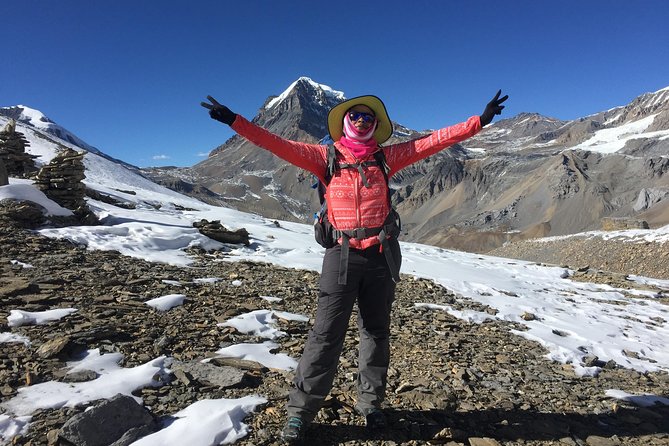
You hike toward higher country, then you reach Ghyaru village and the Manang village, about 6 hours, at around 3,540m. Then you get a rest day to explore Manang.
This rest day is one of the best ideas in the whole plan. Altitude is a slow bully. Even if you feel okay, your body may need time to catch up. Having a day to stay put helps you handle the later stage where the trail climbs quickly and the pass day is long.
Manang itself is also a place where you can feel the circuit’s character shift. The program frames it as a pivot point, and it acts like one. After this day, you are heading into higher numbers: you go from walking and climbing to a more serious push toward Ledar at 4,200m and then toward Thorong Phedi and the pass.
If you are prone to rushing, treat this rest day like part of your training. Take it easy. Eat well. Hydrate.
The high-country ladder: Ledar, Thorong Phedi, then Thorong La
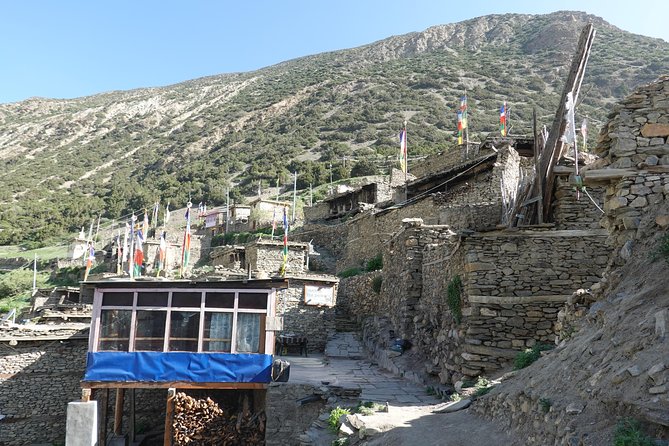
After Manang, the next steps build your altitude base. You hike to Ledar in about 4 hours to around 4,200m. Then you head to Thorong Phedi, about 3 hours, around 4,450m. These are not the longest days, but they come with a cost, because you are working at higher elevation where each breath feels heavier.
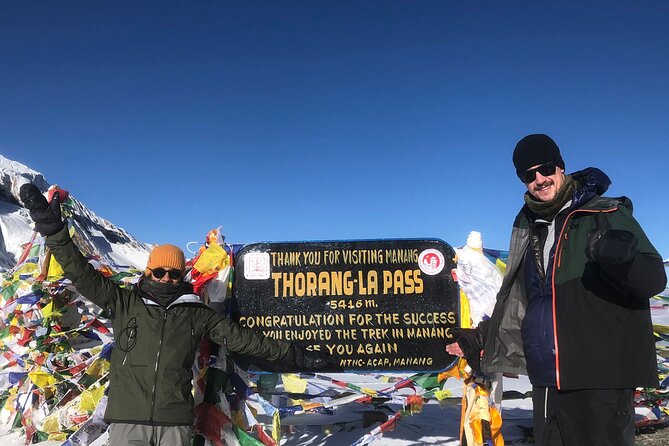
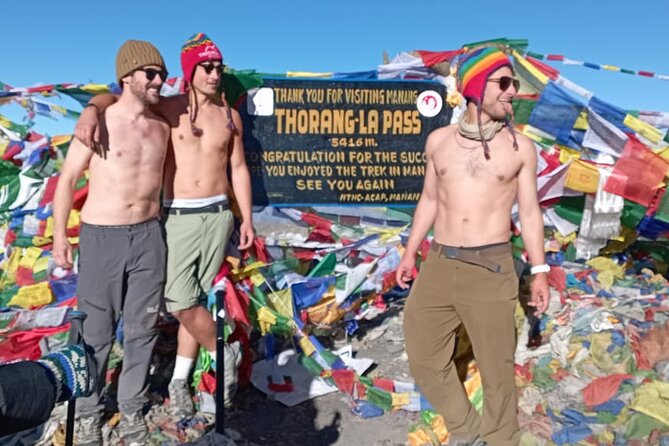
Then comes the big one: a long day to Thorong La Pass at 5,416m, listed as about 8 hours, followed by a trek down to Muktinath. This is the day you plan for, psychologically and physically.
A few practical thoughts for that pass day:
- Start slowly. Your goal is steady rhythm, not speed.
- Expect it to feel longer than you think. High altitude turns time weird.
- Pack your energy for the descent too. The pass is not the end of the day’s work.
Reaching Muktinath right afterward is a nice payoff. It is a cultural stop that signals you have cleared the hardest hurdle. And culturally, spiritually, and simply in terms of motivation, it is a strong moment in the schedule.
Tilicho Lake: an extra mountain goal on this circuit version
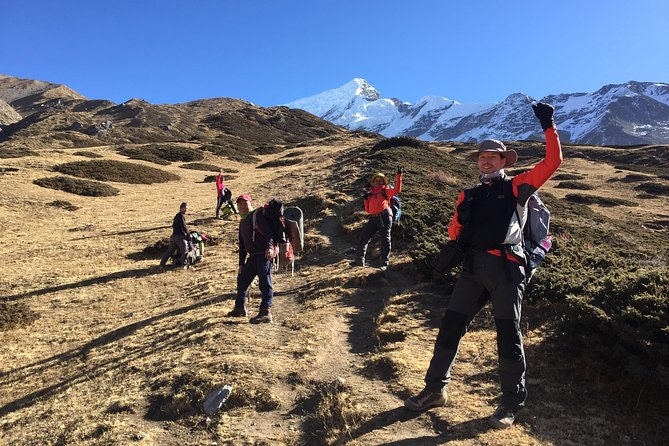
Tilicho Lake is listed as one of the key stops. That matters, because it turns your trip from a straightforward pass-and-descent trek into a circuit that also includes an additional high-altitude destination.
I like extra goals like this when they are truly built into the plan, because they keep you focused. You’re not just waiting for the next village. You have something concrete to work toward, which helps during the slog days.
Because the detailed day-by-day hiking blocks provided here focus heavily on the core circuit towns, I would treat Tilicho Lake as a major highlight that will take real energy. It’s best approached with a calm attitude: you are adding effort, so do not try to “win” the trip with fast pacing. Go with consistent steps and allow the altitude to do its thing.
Muktinath, Marpha, and the Kali Gandaki stretch
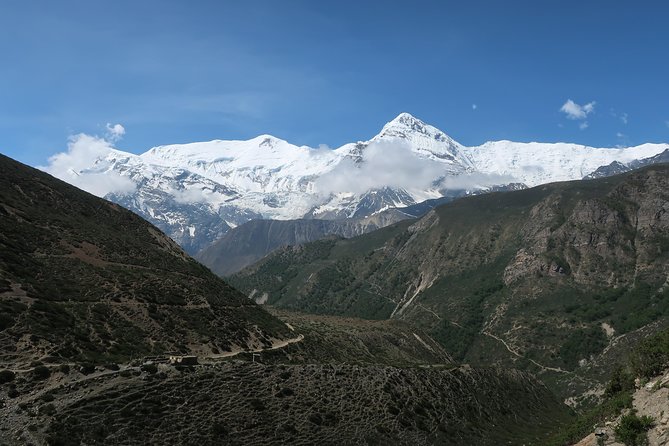
After the pass and arrival around Muktinath, the program continues onward through the Kali Gandaki area, including stops that change the feel again. Muktinath is framed as a key highlight, and it is paired with a cultural journey that continues into the Hindu journey village concept described for the route.
You also get Marpha, described as one of the fascinating villages on the way, with slender cobbled roads and apple plantations. That apple-growing detail is one of those small things that makes the trek feel specific. You’re not just moving through mountain towns. You’re moving through a place with its own rhythm and produce.
Finally, you reach Tatopani, famous for hot springs. The tour lists Tatopani specifically as a highlight, which is a major recovery bonus when your legs are tired from the high pass and the day-to-day climbing.
If you want a trip that mixes effort with moments that feel different, this section does the job.
Poon Hill and Ghorepani: wide views to close the loop
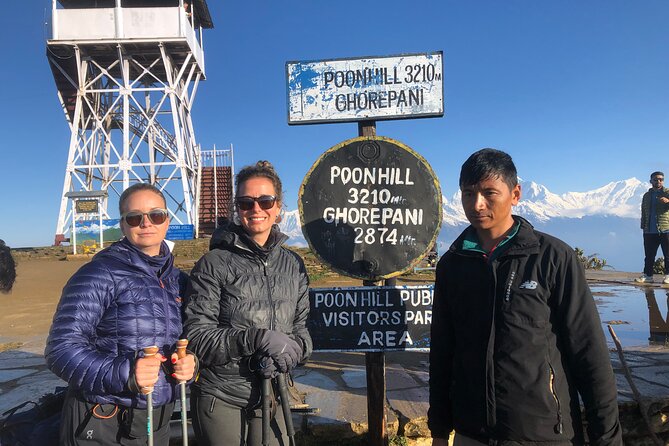
The trek’s endgame includes Poon Hill and the Ghorepani area. Poon Hill is described as a place where you can see more than 20 mountains in the Annapurna and Dhaulagiri ranges. That kind of viewpoint is a practical reward. It turns your hard work into something you can share immediately, and it is also an easy morale lift if you have been living in the world of stone, steps, and sweat.
The program sequence includes stops such as Ghorepani and a viewpoint-style approach. It also mentions other village viewpoints like Gurunghe Hill. The idea is clear: as you descend from the higher elevations, you switch from altitude struggle to view-focused hiking.
By the time you finish this stage, you are ready for movement back to lower elevations and city life.
Transfers to Pokhara and back to Kathmandu, plus flights
Trekking ends, then the plan shifts to travel days. You drive from the trail area to Pokhara, about 6 to 7 hours. Then you take a tourist bus back to Kathmandu, listed around 8 hours. Finally you fly out from Tribhuvan International Airport.
This part matters for value. Many treks feel like two trips at once: a hiking trip and a long-transport trip. Here, the route explicitly includes those transfers, which reduces your burden of finding connections on your own.
One caution: long drives and buses can feel rough after days of hiking. If your body is sensitive, bring simple comfort items like a neck pillow or eye mask, and take advantage of any stop opportunities your transfer schedule allows. Keep water and basic snacks handy if you tend to get hungry between meals, because snacks are not listed as included.
Price and what you actually get for $1,175
The price listed is $1,175 per person, and the big question is whether the package covers enough to justify it. For this trek, the inclusions are fairly strong.
Here is what you should feel good about being included:
- A guide and porter team, with salaries, equipment, food, lodging, and insurance covered
- TIMS and ACAP permits paperwork included
- Tea or coffee with each meal, plus breakfast, lunch, and dinner with menu choices during the trek
- Air-conditioned vehicle support for the included transfers
- Hotel in Kathmandu and Pokhara on a bed and breakfast basis
- Farewell dinner and a souvenir
- A first aid box
What is not included is where you should plan your extra budget. Alcohol, soda/pop, and snacks are not included. International airfare and the Nepal visa fee are not included. Travel insurance is also not included. And meals in Kathmandu and Pokhara are not included beyond the bed and breakfast hotel setup.
In plain terms, this is a trek package built around paying for the core moving parts: permits, experienced staffing, and your trek meals and lodging. The tradeoff is you still need to budget for what you want personally, especially snacks, drinks, and your insurance.
Who this trek fits best
This trek is aimed at people with moderate physical fitness. That doesn’t mean it is easy, it means the plan expects you to handle long hikes, long travel days, and a high pass day at 5416m.
This is a good fit if you want:
- A structured route with permits and staffing handled
- A circuit with both cultural stops and big altitude objectives
- A realistic acclimatization rhythm, especially with the Manang rest day
- View rewards like Poon Hill and spiritual stops like Muktinath
If you are brand new to altitude hiking, or if you know you struggle with long climbs, you might feel stressed here. This tour is not positioned as a gentle stroll.
Final call: should you book this Annapurna Circuit trek?
I think this is a strong choice if you want an organized Annapurna Circuit with the key highlights built in and the annoying logistics taken care of. The included guide and porter support, the permit coverage, and the meal plan are practical wins. And the extra emphasis on meaningful stops like Manang, Thorong La, Tilicho Lake, Muktinath, Tatopani hot springs, and Poon Hill gives the trip shape beyond just reaching the end.
Where you should be careful is the physical side. The schedule includes a long pass day and substantial altitude exposure. If you are not ready for that, you may enjoy the first sections and then feel drained later. If you are ready to take it slow and steady, this itinerary is designed to keep you moving toward real rewards.
If you book, do yourself a favor and plan for an early start, bring what you need for long travel days after hiking, and take the Manang rest day seriously.
FAQ
How long is the Annapurna Circuit trek in this package?
The trip is listed as 14 days (approx.), including time in Kathmandu and Pokhara, the trekking portion, transfers, and a flight out from Tribhuvan International Airport.
What permits are included?
The package includes the necessary documents and paperwork, including TIMS cards and the ACAP permit.
Are meals included during the trek?
Yes. You get coffee and/or tea with each meal, and you can choose breakfast, lunch, and dinner from menus in each place during the trek. A farewell dinner is also included. Meals in Kathmandu and Pokhara are not included.
Do I have a guide and porter?
Yes. The package includes a highly experienced government registered guide and porter, and porter luggage support is included. This is also listed as a private tour/activity, so only your group participates.
What are the main highlights on the route?
Key listed stops include Thorong La Pass, Tilichol Lake, Tatopani Hot Spring, Muktinath Temple, and Poon Hill (plus Ghorepani and other village viewpoints on the way).
What altitude will I reach?
The itinerary lists Thorong La Pass at 5416m. It also includes high points like Thorong Phedi at 4450m and Ledar at 4200m, so you should be ready for real altitude exposure.
Is cancellation free?
The policy is free cancellation. You can cancel up to 24 hours in advance of the experience start time for a full refund, and weather can also affect scheduling, with an alternative date or full refund offered if canceled due to poor weather.
Latest additions near Kathmandu
- White Water River Rafting – 1 Day★ 4.3 · 3 reviews
- Traditional Momo Making Class★ 5.0 · 10 reviews
- Kathmandu to Pokhara Premium sofa bus ticket★ 4.0 · 17 reviews
- Ghorepani Poon Hill Trek★ 5.0 · 16 reviews
- Amazing 1 Day Trekking Experience in Kathmandu Nepal★ 5.0 · 24 reviews
- Ghorepani Poonhill Trek★ 5.0 · 5 reviews
- Walking tour of real Kathmandu through back streets.★ 5.0 · 3 reviews
- Wildlife Adventure in Chitwan Nepal★ 4.0 · 4 reviews
Annapurna Circuit Treks, compared.
Browse the lists this tour appears in