
Reviewed · ANNAPURNA BASE CAMP TREKS
Annapurna Base Camp Trekking
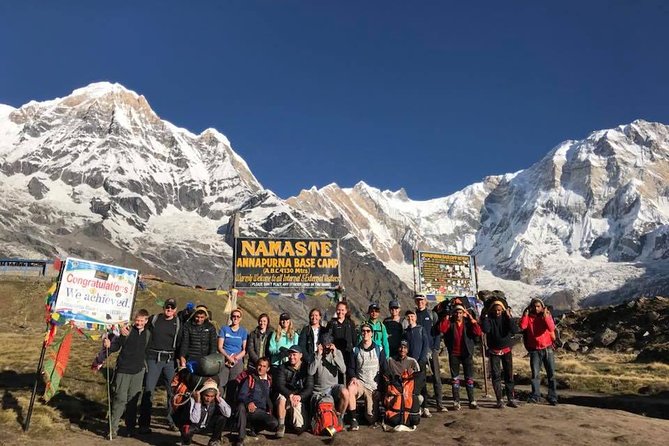
That first crack of morning light over Annapurna is unforgettable. This private 10-day trek is built for limited time, with teahouse comfort, included meals, and a route that climbs to 13,550 ft (4,130 m). If you time it right, spring also brings rhododendron forests into bloom.
I really like the overnight at Annapurna Base Camp. It turns the trek from a quick arrival-and-leave mission into an actual high-mountain night, which changes how the whole place feels. I also like adding Poon Hill to the plan, since it gives you a classic viewpoint day early on, when you’re still fresh.
One consideration: this is still a real mountain trek, and you should be ready for a moderate fitness level and simple teahouse stays (not hotel life). Also, the package is non-refundable, so you’ll want solid travel dates before you book.
In This Review
- Key things that make this Annapurna Base Camp trek special
- Value and logistics: what your $1,180 is buying you
- Day 1 in real life: Kathmandu start, flight to Pokhara, drive to Nayapul
- Days 2 and 3: Poon Hill and Machhapuchhare views before Chhomrong
- Days 4 to 6: Chhomrong to Doban to Deurali, where the trek gets serious
- Day 7: the Annapurna Base Camp day, plus why arriving matters
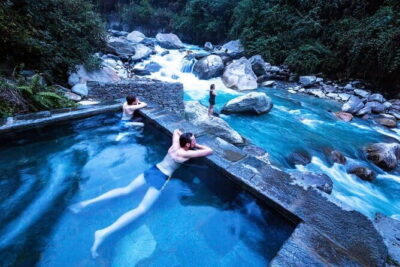
- Day 8 to 9: Bamboo and the Jhinu hot-springs style finish
- Day 10 in Pokhara: museum time and a calmer end
- Guides and team support: why the people matter on ABC
- Best time to go: rhododendron bloom in spring
- Fitness, pacing, and altitude reality check
- Should you book this Annapurna Base Camp trek?
- FAQ
- Where does this trek start and when?
- How long is the Annapurna Base Camp trek?
- What is the highest altitude you reach?
- What kind of accommodation and meals are included?
- Are tents included?
- Does the itinerary include Poon Hill and Annapurna Base Camp overnight?
- Where does the trek end?
- Is this tour private?
- Is the price refundable if I cancel?
Key things that make this Annapurna Base Camp trek special
- Base Camp sleepover gives you time at ABC after the trekking day crowds move on.
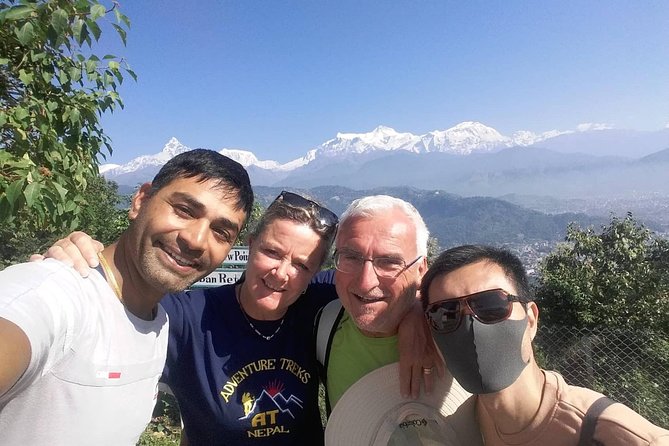
- Poon Hill adds a big viewpoint day early, so effort gets rewarded fast.
- Spring rhododendron season can put the trail under flowering forest cover.
- Private group means your schedule is shaped for your party, not a mixed crowd.
- A realistic 10-day rhythm keeps logistics tight, with teahouses and meals handled.
- A named team feel comes through in guide and porter praise, including Ashok, Hari, Sunil, Homprakash, Prakash, Badal, Rai Badal, Surendra, Durga, and Bobinda.
Value and logistics: what your $1,180 is buying you
At $1,180 per person for an about-10-day private experience, the value here comes from planning and reducing friction. You’re not just “buying a trail.” You’re buying a chain of hard-to-coordinate pieces: transportation from Kathmandu, a guided trekking flow, and organized stays in teahouses along the route with included meals.
A key detail is what is actually included on paper:
- Breakfast is listed for 10 days
- Lunch is listed for 10 days
- Dinner is listed for 9 days
- Tents are not included
That meals plan matters. On trekking routes like this, eating well and on time can be the difference between feeling strong and feeling drained. You still pay attention to what you order, but you’re not figuring out daily logistics from scratch.
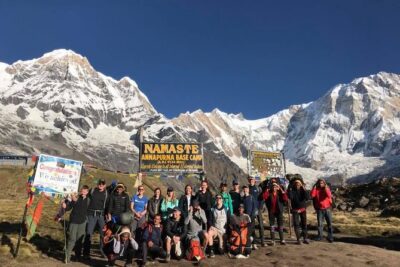
And then there’s the “private” part. Even though you’re trekking a famous route, you’re not doing it as a free-for-all. Your group stays together, and the day-to-day pacing is less stressful. It’s a good fit if you want to focus on the trek and less on running around for checkpoints.
Finally, your climb target is clear: you’ll reach 13,550 ft (4,130 m). Knowing the altitude goal up front helps you decide if you want to train for this, or if you’d rather choose a shorter, lower-altitude adventure.
More Treks in Kathmandu
- Everest Base Camp Trek – 14 Days
★ 5.0 · 1,499 reviews - Everest Base Camp Trek
★ 5.0 · 842 reviews - Everest Base Camp Trekking
★ 5.0 · 485 reviews
Day 1 in real life: Kathmandu start, flight to Pokhara, drive to Nayapul
Your day starts early, with a 6:15 am start from Destination Unlimited Treks, Thamel Rd, Kathmandu 44600. If you’ve ever joined a trek that begins with a chaotic scramble, you’ll appreciate how structured this feels on day one.
What happens next is straightforward:
- A morning flight to Pokhara
- Then a drive from the airport area to Nayapul
Why that sequence is practical: it gets you into trekking country faster. You’re not wasting days on long overland travel before your body even meets altitude. It also means you can spend your first big chunk of energy on the trail instead of in transit.
The downside of early travel is obvious. You’ll want sleep the night before, and you’ll want to keep breakfast simple. The more you treat day one like a normal travel morning, the easier it is to settle into trekking mode.
Days 2 and 3: Poon Hill and Machhapuchhare views before Chhomrong
On day two, you head to Ghorepani via Poon Hill. This is your warm-up viewpoint combo: you get a classic high-mountain look early, while your legs are still adapting to the routine.
This part of the trek also sets expectations for the rest of the journey:
- You’ll be walking longer than you might think
- Weather can shift quickly
- Good views often depend on timing and patience
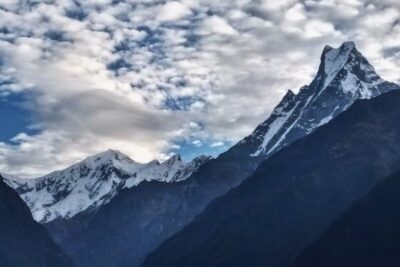
Day three routes you through Machhapuchhare Base Camp and onward to Tadapani. Machhapuchhare is one of those mountains people recognize even if they can’t place it on a map. The big value here is that you’re not only trekking through villages. You’re moving through scenery that feels like a corridor between different mountain moods.
What to watch for: longer travel days can make your pace slip. When you feel tempted to “push,” that’s often when you start breathing harder than you should. Your goal is steady effort, not hero mode.
Days 4 to 6: Chhomrong to Doban to Deurali, where the trek gets serious
Day four takes you to Chhomrong. This is a classic turning point on the Annapurna Base Camp route, and it tends to feel like a step up in the journey’s intensity. It’s not just distance. Your body starts realizing you’re heading toward high altitude.
Day five moves you to Doban via the Annapurna mountain range section. Doban is a reminder that ABC is not just “climb all day, see peaks, repeat.” It’s a layered trek with forest sections, changing angles, and gradual shifts in how the mountains frame the trail.
Day six brings you to Deurali. In most ABC trekking patterns, Deurali is where acclimatization starts to feel real. Even without a written “rest day,” this is part of the gradual build toward ABC. It’s also one of the spots where cold can start biting harder, especially as you climb.
My practical advice here: protect your energy for the last approach. If you overdo days four to six, day seven will feel harder than it needs to.
More Annapurna Base Camp treks:
- Annapurna base camp trek 5 Days
★ 5.0 · 252 reviews - 14-Day Private Annapurna Base Camp Trek
★ 5.0 · 180 reviews - Annapurna Base Camp Trekking
★ 5.0 · 116 reviews - Annapurna Base Camp Trek
★ 5.0 · 111 reviews
Day 7: the Annapurna Base Camp day, plus why arriving matters
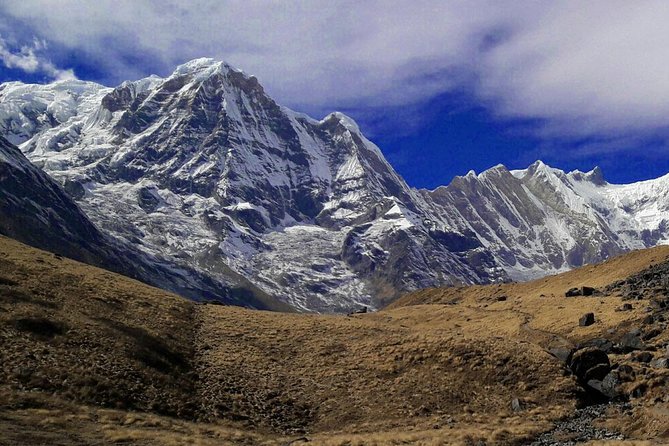
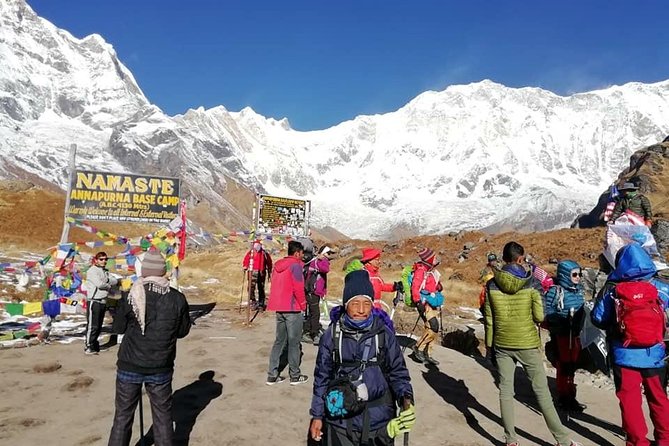
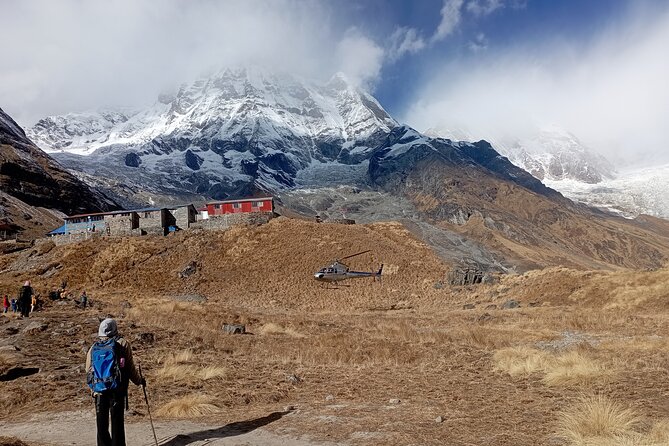
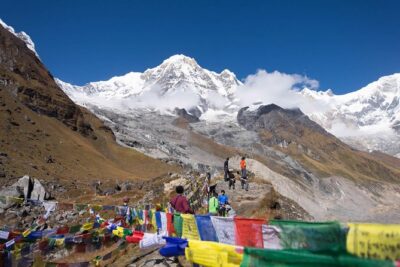
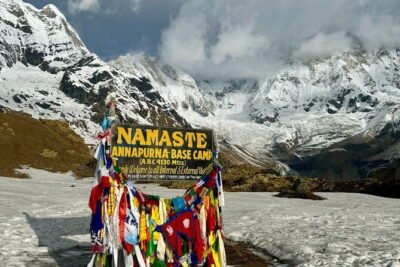
Day seven is your ABC day. After walking up through Deurali, you finally reach Annapurna Base Camp, and the package includes an overnight at a guesthouse at ABC.
That overnight is one of the strongest reasons to pick this trek format. It gives you time to:
- arrive at different times (if conditions allow),
- enjoy the base camp atmosphere beyond daylight hours,
- and wake up thinking, I’m actually here.
Also, ABC is where your senses start to shift from “trail watching” to “mountain living.” It can feel less like a viewpoint stop and more like a destination.
If you get cloud, don’t panic. You might not get perfect visibility every moment, but the experience is still about being on that altitude shelf and seeing how the peaks look when the light changes.
Day 8 to 9: Bamboo and the Jhinu hot-springs style finish
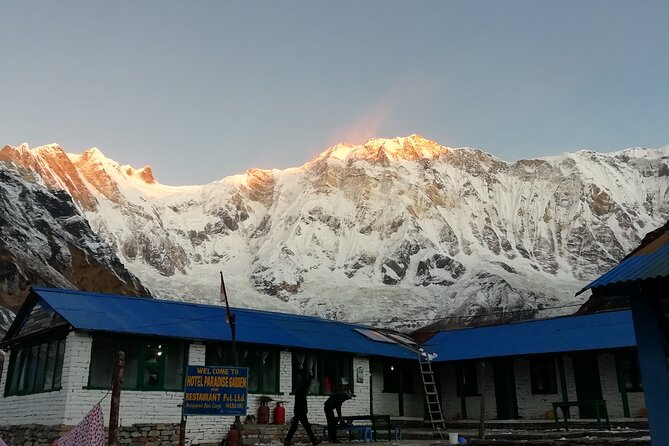
After ABC, day eight takes you to Bamboo. This is your first real “I’m relieved, but still working” day. Descents feel easier than ascents, but they can stress knees if you overstride or ignore your foot placement.
Day nine goes to Jhinu. This section is often the emotional cooldown of the trek: you’re no longer chasing the summit moment. You’re shifting into recovery mode.
Jhinu matters for another reason: you’re finishing with a well-known hot-springs style reward as part of the route experience. Even if you don’t go all-in, the idea is simple: let your legs decompress after days of altitude walking.
Day 10 in Pokhara: museum time and a calmer end
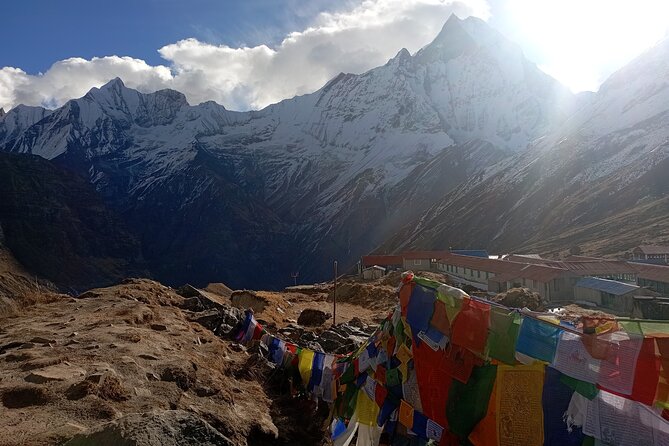
Day ten wraps in Pokhara, with time at the Pokhara Museum. It’s a gentler way to land after the trek, giving your body time to settle while you reset mentally.
Then, you drive to your hotel in Pokhara after trekking, which is a nice practical touch. It removes the “what now?” feeling that can hit on the last day.
Guides and team support: why the people matter on ABC
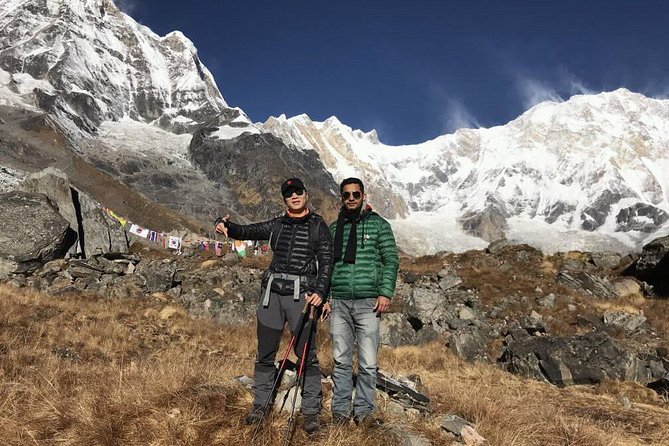
ABC treks succeed or fail based on how you’re supported. This company’s strongest theme in customer feedback is responsiveness and clear guidance from the start, including coordination by Ashok.
You’ll also see real praise for guides and porter teams by name, including:
- Hari
- Sunil
- Homprakash
- Prakash
- Badal and Rai Badal
- porters such as Surendra, Durga, and Bobinda
What that means for you: you can expect your questions to be taken seriously, and you’re likely to get practical trekking help rather than a vague “good luck” handoff.
Even in a private tour, the trail still demands good decisions. A competent guide helps you:
- maintain steady pacing,
- handle route flow,
- and adjust day-to-day choices when weather or energy changes.
Best time to go: rhododendron bloom in spring
The highlight you should keep in mind is spring. If you visit in spring, you have a strong chance to see rhododendron forest in bloom. That’s not just pretty. It can also make the walking feel less monotonous and more alive, because you’re moving through sections that look different day to day.
If you’re trying to time the photos, spring is the season where the trail itself can become a highlight, not only the peaks at the top.
Fitness, pacing, and altitude reality check
This trek is listed as requiring moderate physical fitness. That’s a good sign. It usually means you don’t need to be a mountain athlete, but you do need stamina, steady walking ability, and the willingness to take breaks.
Your altitude endpoint is 13,550 ft (4,130 m). That matters even if you feel strong at lower elevations. Plan to take the “slow and steady” approach, especially during the climb toward Deurali and ABC.
Practical pacing rules that work well on ABC routes:
- keep your effort controlled, not sprinty
- drink regularly, even when you do not feel thirsty
- treat the day like walking first, celebrating views second
Also remember: the trek relies on teahouse stays, so your comfort depends on what you bring. You can’t control altitude, but you can control warmth, footwear fit, and your ability to sleep despite cold.
Should you book this Annapurna Base Camp trek?
You should strongly consider booking if:
- you want a focused 10-day timeline that still includes the big ABC goal,
- you care about having an overnight at Annapurna Base Camp,
- you like having viewpoint payoff early with Poon Hill,
- and you prefer a planned package with meals included and teahouse accommodation.
You might rethink it if:
- you are looking for luxury comfort,
- you’re not comfortable with moderate physical fitness demands,
- or your travel plans are flexible, because the experience is non-refundable and cannot be changed.
For most people who want the Annapurna Base Camp experience without turning the trip into a logistics project, this is a solid, value-forward way to go.
FAQ
Where does this trek start and when?
It starts at Destination Unlimited Treks, Thamel Rd, Kathmandu 44600, Nepal, with a start time of 6:15 am.
How long is the Annapurna Base Camp trek?
The duration is listed as 10 days (approx.).
What is the highest altitude you reach?
The trek climbs to about 13,550 ft (4,130 m).
What kind of accommodation and meals are included?
You stay in teahouses along the route. Meals are included, with breakfast for 10 days, lunch for 10 days, and dinner for 9 days.
Are tents included?
No. Tents are not included.
Does the itinerary include Poon Hill and Annapurna Base Camp overnight?
Yes. It includes a Poon Hill trekking day and an overnight guesthouse stay at Annapurna Base Camp.
Where does the trek end?
It ends in Pokhara, Nepal, and after trekking you drive to your hotel in Pokhara.
Is this tour private?
Yes. It is described as a private tour or activity, with only your group participating.
Is the price refundable if I cancel?
No. The experience is non-refundable and cannot be changed for any reason. If you cancel or ask for an amendment, the amount you paid will not be refunded.
Latest additions near Kathmandu
- White Water River Rafting – 1 Day★ 4.3 · 3 reviews
- Traditional Momo Making Class★ 5.0 · 10 reviews
- Kathmandu to Pokhara Premium sofa bus ticket★ 4.0 · 17 reviews
- Ghorepani Poon Hill Trek★ 5.0 · 16 reviews
- Amazing 1 Day Trekking Experience in Kathmandu Nepal★ 5.0 · 24 reviews
- Ghorepani Poonhill Trek★ 5.0 · 5 reviews
- Walking tour of real Kathmandu through back streets.★ 5.0 · 3 reviews
- Wildlife Adventure in Chitwan Nepal★ 4.0 · 4 reviews
Annapurna Base Camp Treks, compared.
Kathmandu to Annapurna Base Camp (ABC) 5-Day Trek
Read our review →
Browse the lists this tour appears in