
Reviewed · ANNAPURNA BASE CAMP TREKS
Annapurna Base Camp Trek
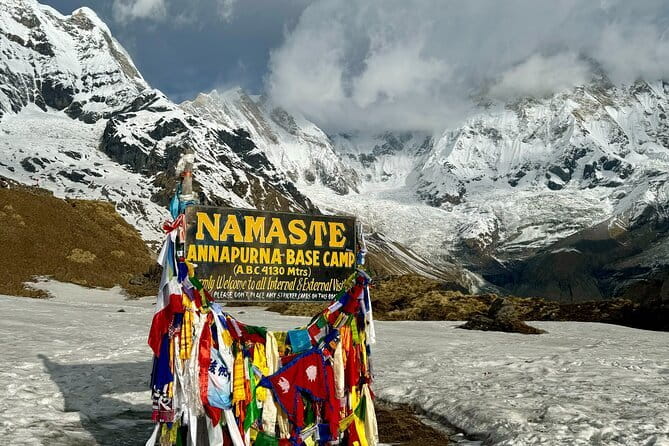
Himalayan views, served with planning. The Annapurna Base Camp Trek mixes classic viewpoint stops like Ghorepani Poon Hill and the climb to Annapurna Base Camp with cultural days in Kathmandu and Pokhara. I like that the route includes both the big scenic payoff and the in-between moments, plus you get real structure through permits, meals, and tea house stays. One consideration: the trek goes up to about 4,130 meters, so you need to take altitude and pacing seriously.
I also like the practical way this trip is set up for how most people actually travel. You get airport-to-hotel-to-airport style pickup by private vehicle, Kathmandu to Pokhara and back by tourist bus, and a couple nights of hotel comfort with breakfast before the walking starts. For trekking days, it’s mostly tea house style, which is part of the charm, but it also means you should be ready for basic facilities and cold mornings.
Finally, I appreciate the human side. Feedback highlights professional guides and porters, including Cecil and Sushil Gurung, with Rabin described as responsive when questions came up before the trek. The only real drawback I see on paper is costs outside the package: drinks, extra Kathmandu meals, and tipping are not included, and solo trekkers may pay extra for porters.
In This Review
- Key highlights worth your attention
- Why This Annapurna Base Camp Trek Feels Like More Than a Walk
- Price and Logistics: What the $935 Actually Buys
- Day-by-Day Guide: What Happens Each Day and Why It Matters
- Day 1: Pasupatinath Temple in Kathmandu
- Day 2: Pokhara Lake and a calmer pace
- Day 3: Birethanti, entering the Annapurna Conservation Area
- Day 4: Ghorepani to Poon Hill viewpoint day
- Day 5: Ghorepani to Tadapani, about 5 hours of walking
- Day 6: Beautiful walk to Chhomrong
- Day 7: Trek to Bambook, moderate walking
- Day 8: Trek to Annapurna Base Camp
- Day 9: Hike to Annapurna Base Camp Trekking
- Day 10: One of the most viewpoint routes in the Annapurna region
- Day 11: Return to Kathmandu by tourist bus
- Day 12: Final departure home
- The Trek Experience: Tea Houses, Changing Views, and Real Altitude
- Guides and Porters: Where This Trip Seems to Shine
- Transport, Hotels, and the Comfort Factor Before and After the Trek
- What You Should Be Ready For on Annapurna Base Camp
- Should You Book This Annapurna Base Camp Trek?
Key highlights worth your attention
- A route that starts with big Kathmandu culture, not straight into a hike.
- Poon Hill viewpoints early on, so you get rewarding scenery before you reach base camp.
- Tea house accommodation and all trek meals included, which simplifies budgeting.
- Permits handled for you, including TIMS and ACAP.
- Strong guide and porter teams, with names like Cecil, Sushil Gurung, and Samu Gurung showing up in the praise.
Why This Annapurna Base Camp Trek Feels Like More Than a Walk
This itinerary is built like a mini trip inside Nepal, not just a single hike. You start in Kathmandu with a stop at Pasupatinath Temple, then shift to Pokhara for time near the lake and the easier rhythm of lakeside Nepal. After that, you transition into the Annapurna region through Birethanti, where you’re entering the Annapurna Conservation Area. That “from city to mountains” arc matters, because it helps you adjust mentally and physically before you start trekking hard.
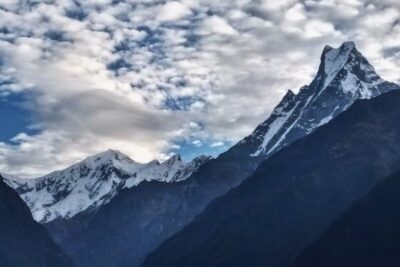
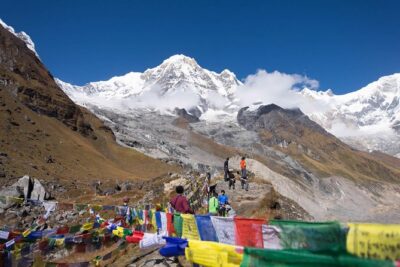
Once the walking begins, the route keeps changing. You move from lower areas into forested paths and hill villages, then toward alpine views as you approach base camp. The trip is also designed around a familiar, high-reward flow: viewpoint day (Poon Hill), village trekking legs (Ghorepani to Tadapani, then on to places like Chhomrong), and then the base camp push. You’re not just staring at a mountain the whole time, you’re seeing how the region’s life changes as you climb.
More Treks in Kathmandu
- Everest Base Camp Trek – 14 Days
★ 5.0 · 1,499 reviews - Everest Base Camp Trek
★ 5.0 · 842 reviews - Everest Base Camp Trekking
★ 5.0 · 485 reviews
Price and Logistics: What the $935 Actually Buys
At $935 per person for roughly 12 days, the value comes from what’s bundled, not from what’s missing. Here’s what you do get:
- All meals during the trek (breakfast, lunch, dinner) plus tea or coffee with meals
- Tea house accommodation during the trek
- Two nights in Pokhara with breakfast
- Two nights in Kathmandu in a Kathmandu Suite Home with breakfast
- Kathmandu to Pokhara and back by tourist bus
- Airport-hotel-airport transfers by private car, van, or bus
- Permits included (TIMS and ACAP)
- Professional licensed trekking guide and an expert local porter
- Government taxes and fees covered
What you should plan for separately:
- Extra meals and accommodation in Kathmandu beyond what’s included
- Drinks, hot or cold (other than tea or coffee included with meals)
- Travel insurance and evacuation insurance
- Personal expenses
- Tipping for guide and porter
- On top of that, single or solo trekkers may pay extra for porters
So, is it good value? For many people, yes, because the big hidden costs in trekking are usually permits, meals, and logistics. Here, those are covered. The main “watch outs” are the items not included, especially drinks and insurance, which can surprise first-timers.
Day-by-Day Guide: What Happens Each Day and Why It Matters
This tour runs about 12 days, with a clear sequence: culture and orientation first, then trekking legs, then a return bus to Kathmandu.
Day 1: Pasupatinath Temple in Kathmandu
Your first day sets the tone with Pasupatinath Temple, one of Kathmandu’s most important and visually striking religious sites. It’s a good way to experience Nepal beyond the mountain hype. The practical upside is you get a grounding start in Kathmandu before your first long travel day.
Potential drawback: if you dislike early starts or big crowds, religious sites can feel intense, especially for the first morning.
More Annapurna Base Camp treks:
- Annapurna base camp trek 5 Days
★ 5.0 · 252 reviews - 14-Day Private Annapurna Base Camp Trek
★ 5.0 · 180 reviews - Annapurna Base Camp Trekking
★ 5.0 · 116 reviews - Annapurna Base Camp Trek
★ 5.0 · 107 reviews
Day 2: Pokhara Lake and a calmer pace
Day 2 shifts to Pokhara and the lake area, which is known as a tourist-friendly and scenic spot. This is where you typically feel the “gear change” from city energy to mountain energy. It’s also a useful buffer day before the trek begins, because your body has a chance to settle.
Day 3: Birethanti, entering the Annapurna Conservation Area
Birethanti is your entry point into the Annapurna Conservation Area. This is one of those days where the travel itself is the lesson: you’re officially transitioning from lower-hill Nepal into the trekking ecosystem of the region.
Day 4: Ghorepani to Poon Hill viewpoint day
Ghorepani and Poon Hill are famous for a reason: they give strong panoramic views without committing you to a full summit climb. This is a smart inclusion early in the itinerary, because it delivers payoff while you’re still fresh.
What to watch for: viewpoint mornings can be cool and slow-moving, because people want the best light. Bring layers and don’t assume it will feel like a casual stroll.
Day 5: Ghorepani to Tadapani, about 5 hours of walking
This day lists about five hours of walking from Ghorepani to Tadapani. That’s long enough to count as real trekking, but it’s also a manageable distance in the middle of the itinerary.
Why it matters: this is the rhythm-building day. If you can pace yourself here, you’ll find the later days mentally easier.
Day 6: Beautiful walk to Chhomrong
Chhomrong is a classic trekking stop in the Annapurna region, and calling this segment a beautiful walk is fitting. This is where the scenery and village life often feel most connected: you’re not just moving through terrain, you’re walking through the living map of the region.
Day 7: Trek to Bambook, moderate walking
Day 7 is described as moderate walking to Bambook. That “moderate” label is helpful because it hints at pacing. It’s a good day to keep your effort steady rather than trying to race.
Day 8: Trek to Annapurna Base Camp
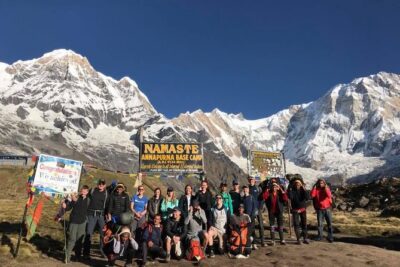
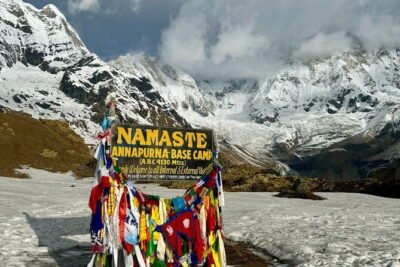
Now you’re heading to Annapurna Base Camp. This is the core goal of the entire trip. The trek reaches about 4,130 meters, so expect thinner air and colder conditions as you climb.
If you’re the kind of person who worries about altitude, this is where your trip decisions matter most: hydrate, take breaks, and don’t push too hard just because you feel excitement.
Day 9: Hike to Annapurna Base Camp Trekking
This day is also associated with Annapurna Base Camp and described as a hike. In practice, this often means additional time around the base camp area, letting you enjoy the views and settle in. It’s not just about reaching the spot, it’s about experiencing it.
Day 10: One of the most viewpoint routes in the Annapurna region
Day 10 is described as another major viewpoint day linked to Annapurna Base Camp trekking. Even if the exact route details vary by weather and conditions, the point is clear: this is built for scenery.
Day 11: Return to Kathmandu by tourist bus
You trade mountain time for transit time. The tourist bus back to Kathmandu gives you a straightforward way to return without extra trekking logistics.
Day 12: Final departure home
Day 12 is your wrap-up day. The activity ends back at the meeting point in Kathmandu.
The Trek Experience: Tea Houses, Changing Views, and Real Altitude
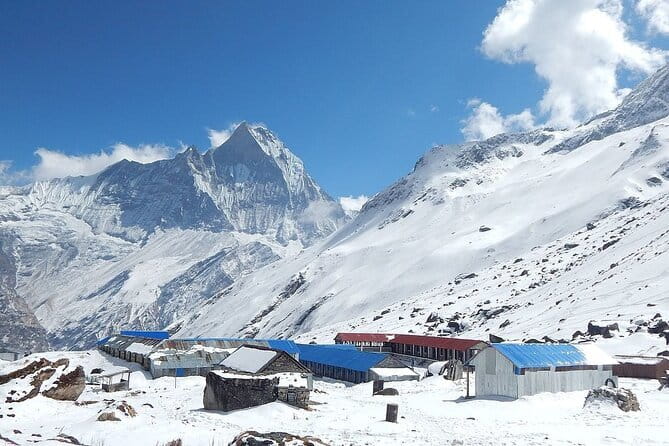
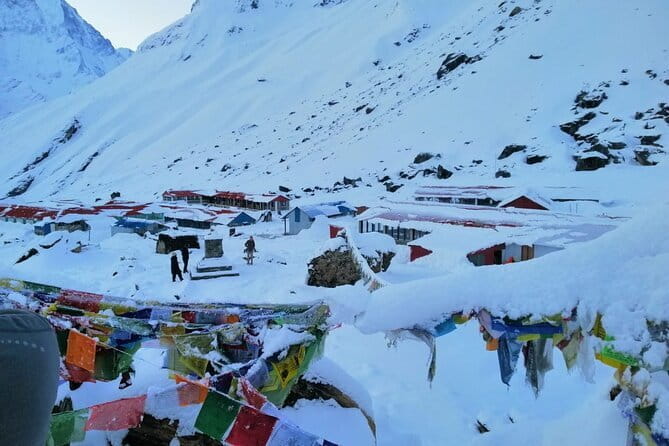
This trip uses tea house accommodation during the trek, with meals included each day. That’s a big quality-of-life factor. It means you’re not constantly budgeting meals or searching for food at the end of a long day. It also shapes the experience: you’ll spend more time with other hikers in simple common areas, and you’ll learn what pace and expectations look like at altitude.
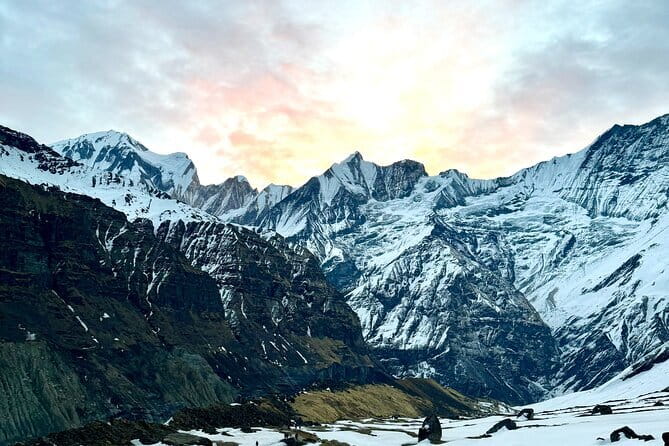
As you climb toward base camp, the scenery is supposed to change a lot. The route passes through terraced fields and rhododendron forests in the broader description, and the kind of variety people describe in this region usually holds true: forested paths, streams, village segments, and then snow-covered mountain views as the air cools.
Altitude is the main reality check. With a destination around 4,130 meters, you need to treat your body gently. The trip is geared toward travelers with moderate physical fitness level, but altitude doesn’t care how fit you are. Even strong hikers can feel rough if they go too fast.
Guides and Porters: Where This Trip Seems to Shine
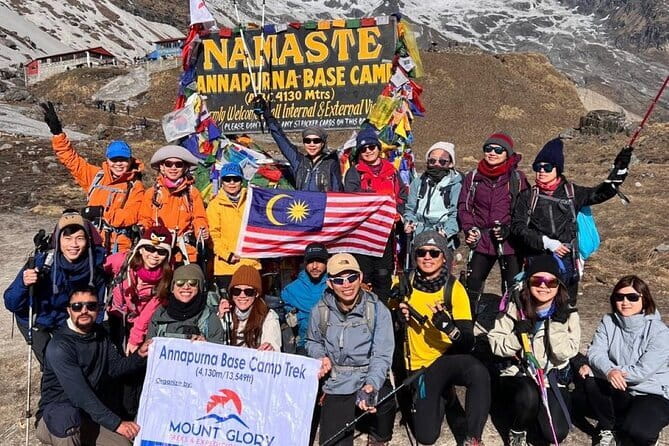
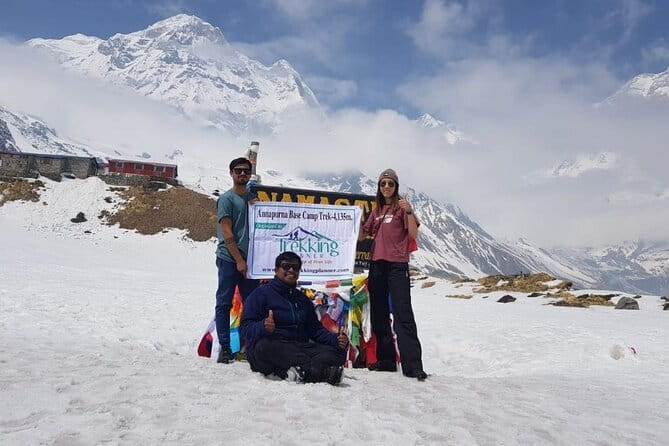
One of the most consistently praised parts of this experience is the team behind it. Names like Cecil and Sushil Gurung come up alongside specific praise for professionalism and safety. Porters such as Samu Gurung, Sujan Gurung, and Bishal are also mentioned, which tells me this company doesn’t treat support staff as an afterthought.
Rabin is another name that shows up as an organizer who stayed responsive before the trip. For you, that matters because trekking goes smoother when you’re not guessing. You want quick answers about packing, timing, and expectations, especially if you’re traveling from abroad.
Private tour note: it’s described as private, so it’s only your group participating. That usually means you can get more individualized attention than you would on a huge joiner trek.
Transport, Hotels, and the Comfort Factor Before and After the Trek
The trip includes a lot of “getting you there” logistics. You’ll have airport, hotel, and airport pickup by private vehicle, and you’re also covered for bus transport between Kathmandu and Pokhara.
The hotel side is also clear:
- Two nights in Pokhara with breakfast
- Two nights in Kathmandu with breakfast at Kathmandu Suite Home
Why this matters: it helps you arrive rested and not scramble for lodging at the last minute. Trekking days take energy. Having proper meal routines and a real bed before and after can make the whole trip feel more doable.
What You Should Be Ready For on Annapurna Base Camp
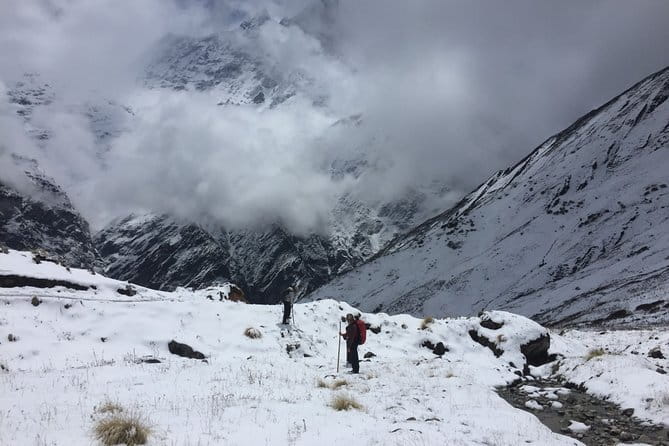
Based on what’s explicitly part of the itinerary and included services, here’s what you should mentally prepare for:
- High altitude conditions near 4,130 meters
- Tea house rhythm for sleeping and meals
- Multiple trekking legs with at least one day specifically listed as five hours (Ghorepani to Tadapani)
- Cool early mornings around viewpoint days like Poon Hill
- Moderate fitness needs for the overall route, including a moderate walking day to Bambook
What I’d personally plan around is your pace and comfort. Don’t treat each day like a personal challenge. You’re aiming for the long view, not just a strong photo.
Should You Book This Annapurna Base Camp Trek?
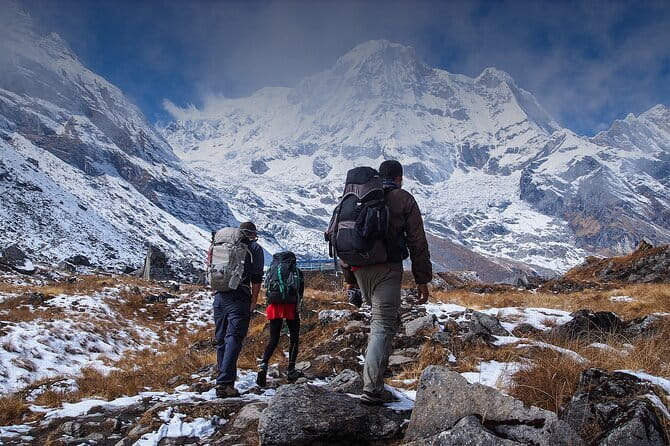
I’d book it if you want a structured Annapurna Base Camp experience with the big logistics handled. The strongest reasons are the bundled trek meals, tea house accommodation, permits (TIMS and ACAP), and the combination of viewpoint trekking plus cultural stops in Kathmandu and Pokhara. It’s also a good pick if you like having a professional guide and porter team, and you care about safety and smooth planning.
I’d hesitate if you hate cold weather at elevation, or if you’re trying to keep costs extremely tight and haven’t planned for the add-ons that are not included, like drinks, travel insurance, and tipping. Also, if you’re a solo traveler, be sure you understand the note about extra porter costs, because that can shift the real total.
If you’re thinking ahead, pack for altitude, plan your pace, and budget a little extra for what’s not included. Do that, and you’re set up for one of Nepal’s most rewarding treks.
Latest additions near Kathmandu
- White Water River Rafting – 1 Day★ 4.3 · 3 reviews
- Traditional Momo Making Class★ 5.0 · 10 reviews
- Kathmandu to Pokhara Premium sofa bus ticket★ 4.0 · 17 reviews
- Ghorepani Poon Hill Trek★ 5.0 · 16 reviews
- Amazing 1 Day Trekking Experience in Kathmandu Nepal★ 5.0 · 24 reviews
- Ghorepani Poonhill Trek★ 5.0 · 5 reviews
- Walking tour of real Kathmandu through back streets.★ 5.0 · 3 reviews
- Wildlife Adventure in Chitwan Nepal★ 4.0 · 4 reviews
Annapurna Base Camp Treks, compared.
Kathmandu to Annapurna Base Camp (ABC) 5-Day Trek
Read our review →
Browse the lists this tour appears in