
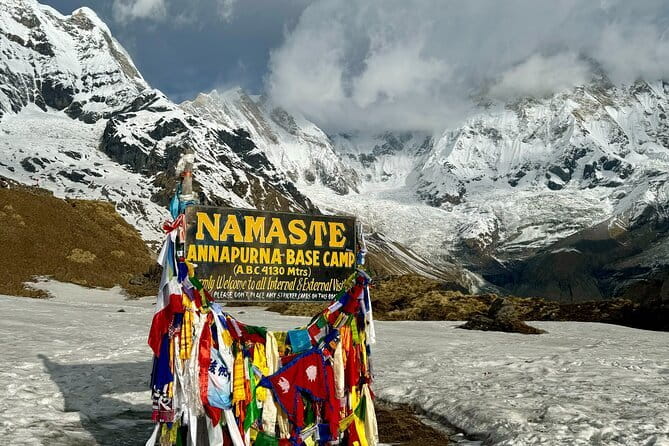
Reviewed · ANNAPURNA BASE CAMP TREKS
Annapurna Base Camp Trek
Annapurna Base Camp rewards your effort. This trek is a classic for a reason: you work your way into the Annapurna Sanctuary, with views that stack up day after day and village life along the way. I especially love the well-run logistics from airport pickup to the final drop-off, and you will likely appreciate the steady support from guides and porters (names like Raj, Ramesh Karki, Maddy, Ganesh, and Shyam come up again and again). The main drawback to plan for is simple, relentless work in altitude, plus lots of steep steps, so you cannot treat it like a casual walk.
I like that the route gives you both payoff scenery and real rhythm. You do sunrise at Poon Hill, cruise through rhododendron and pine forests, hit cultural stops in Gurung and Magar villages, and end with natural hot springs at Jhinu Danda before relaxing in Pokhara. One more consideration: you’ll need to pack and move efficiently, because porters carry your load and the team expects you to keep it reasonable.
In This Review
- Key Things to Know Before You Go
- Annapurna Base Camp in Plain Terms: Why People Keep Coming Back
- Price and Value: What $1,350 Covers (and What It Doesn’t)
- Ace the Himalaya Logistics: The Stuff That Saves Your Energy
- Kathmandu Setup Day 1: Arrive, Sort Paperwork, Sleep High-Quality
- Pokhara Lakeside Day 2: The Bridge Between Cities and Trails
- Trail Starter Day 3: Nayapul to Tikhedhunga
- Ghorepani Day 4: Ulleri, Forests, and the First Big Ridge Feeling
- Poon Hill Sunrise Day 5: One of the Best Payoffs for Effort
- Chhomrong Day 6: Steep Down, Then a Strong Village Stop
- Dovan Day 7: Bamboo, Bamboo, and a River Gorge Walk
- Annapurna Sanctuary Day 8: Machapuchare Base Camp to ABC at 4,130m
- Back Down Day 9: A Controlled Descent to Bamboo
- Jhinu Danda Day 10: Experimental Farm Area and Natural Hot Springs
- Pokhara Return Day 11: The Best Kind of Recovery Walk
- Kathmandu Day 12 and Departure Day 13: Farewell and Fly Home
- Staff Support and the Porter System: Why Your Trek Moves Better
- Meals and Lodging: What the Included Plan Does for You
- Altitude and Fitness: What You Need to Train for (Steps, Not Just Stamina)
- Weather, Timing, and the One Thing You Cannot Control
- Should You Book This Annapurna Base Camp Trek?
- FAQ
- How high does the trek reach at Annapurna Base Camp?
- Where does the trek start and end?
- How long is the Annapurna Base Camp Trek?
- What meals are included during the trek?
- Is an English-speaking guide included?
- How many porters are provided?
- What is not included in the tour price?
- What is the cancellation policy if I need to cancel?
Key Things to Know Before You Go
- ABC reaches 4,130m, so pace and altitude awareness matter.
- Poon Hill sunrise is built into the schedule, giving you an early mountain hit.
- Support is structured: an English-speaking guide plus 1 porter for every two clients.
- Meals on trek are included (breakfasts, lunches, dinners) which lowers day-to-day decision stress.
- Machapuchare Base Camp is a key waypoint, even though climbing Mt. Machapuchhare is not permitted.
- The finish includes comfort time: Pokhara lake boat ride and Jhinu hot springs.
Annapurna Base Camp in Plain Terms: Why People Keep Coming Back
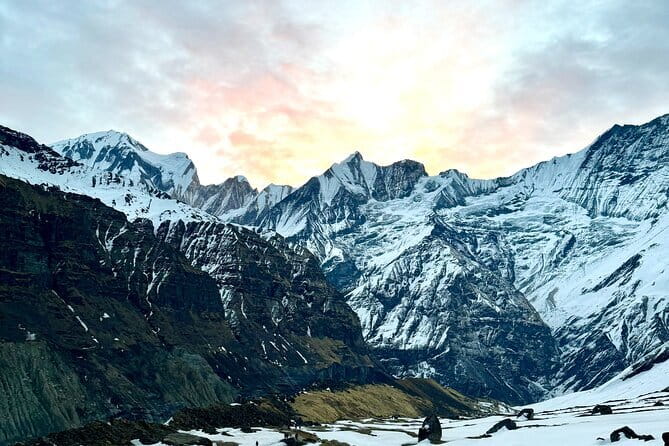
The Annapurna Base Camp trek is popular because it does two things well. First, it delivers big Himalayan scenery, including a proper arrival moment at Annapurna Base Camp at 4,130m. Second, it gives you context, not just photos. You walk through small settlements shaped by the modern hill economy, where teahouses and trails have a routine feel.
You are also getting the “sanctuary” effect. The route is surrounded by major peaks like Annapurna I, Annapurna South, Machapuchhre, and Hiunchuli. That setting is why the trek feels boxed in by mountains as you go, then opens up in dramatic views when you finally reach base camp.
More Treks in Kathmandu
- Everest Base Camp Trek – 14 Days
★ 5.0 · 1,499 reviews - Everest Base Camp Trek
★ 5.0 · 842 reviews - Everest Base Camp Trekking
★ 5.0 · 485 reviews
Price and Value: What $1,350 Covers (and What It Doesn’t)
At $1,350 per person for an approximately 13-day trek, the value comes from what’s bundled together. This price includes airport transfers, hotels in Kathmandu and Pokhara (two nights each), guesthouse lodging on the trek (eight nights), a licensed English-speaking trekking guide, permits, and the main transport legs (tourist bus Kathmandu to Pokhara, vehicle Pokhara to Nayapul).
It also includes a porter system (1 porter for every two clients) and most meals during the trek: breakfast (12), lunch (9), dinner (9). That matters because food and lodging are the daily costs you cannot easily DIY once you are in the hills. You also get a free Ace the Himalaya duffel/kit bag and a sun hat, which helps if you do not already have solid trekking basics.
What’s not included is where you should stay alert:
- Travel insurance that covers emergency high-altitude rescue and evacuation
- Nepal entry visa and international airfare
- Alcoholic and non-alcoholic drinks
- Personal trekking equipment
- Tips for trekking staff and drivers (tipping is expected)
- Lunch and dinner in Kathmandu and Pokhara
If you want a trek where you show up, hike, and let the logistics work in the background, this package makes sense. If you want full freedom to customize lodging, routes, and meal stops every day, you may feel boxed in.
Ace the Himalaya Logistics: The Stuff That Saves Your Energy
A big reason people rate this trek highly is what happens before the first step. You land at Tribhuvan International Airport and meet an airport representative. Then you transfer to your Kathmandu hotel in a private tourist vehicle. That avoids the usual chaos of figuring out transport on your first day in Nepal.
You’ll also have a pre-trip meeting in their office either Day 1 or Day 2. Plan for that. Bring your passport, three copies of passport-size photos, and a readable copy of your travel insurance policy. You’ll clear any due balance and sign the legally binding trip form plus a non-liability disclaimer. It’s paperwork, yes, but it also means the trek is run like a system, not a loose plan.
The trekking team cap is listed as a maximum of 15 travelers. In practice, that usually means a group size where your guide can still manage pace and issues without feeling overwhelmed.
Kathmandu Setup Day 1: Arrive, Sort Paperwork, Sleep High-Quality
Day 1 starts with airport pickup and transfer to a three-star hotel in Kathmandu for two nights total. After you settle, you’ll have the pre-trip meeting either Day 1 or Day 2. That meeting is where your guide and trekking plan are introduced, and where you confirm details like balance due and documents.
This day is not about hiking. It’s about setting you up to start with less stress. For most people, that matters more than they expect, especially if you arrive jet-lagged.
More Annapurna Base Camp treks:
- Annapurna base camp trek 5 Days
★ 5.0 · 252 reviews - 14-Day Private Annapurna Base Camp Trek
★ 5.0 · 180 reviews - Annapurna Base Camp Trekking
★ 5.0 · 116 reviews - Annapurna Base Camp Trek
★ 5.0 · 111 reviews
Pokhara Lakeside Day 2: The Bridge Between Cities and Trails
On Day 2, you get picked up from your Kathmandu hotel at 6:30 am and escorted to the bus station. The bus leaves around 7:30 am, heading to Pokhara. Pokhara is described as smaller and less hectic than Kathmandu, and that’s exactly what you want. Your body needs a calmer start, and your brain needs time to adjust to the switch from city noise to trail rhythm.
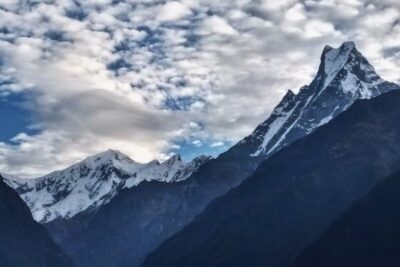
Pokhara also gives you a mountainside perspective right away. The views around Phewa Lake include Annapurna and Machapuchhare in the north, with Dhaulagiri to the west and Lamjung Himal and Manaslu to the east. Even if clouds roll in, the “look out the window” feeling puts you in the right headspace.
Trail Starter Day 3: Nayapul to Tikhedhunga
You start trekking at Nayapul after a one-hour drive from Pokhara. There’s a short walk along the Modi Khola, then you reach Birethanti (1,015m), which is basically your first teahouse-and-shop village. From there the trail climbs steadily to Hille (1,495m), then up to Tikhedhunga at 1,570m.
Today’s walk is labeled as relatively short and easy, and that matches the purpose. Day 3 helps you learn how you feel on uneven steps before the real “many steps” days begin.
Ghorepani Day 4: Ulleri, Forests, and the First Big Ridge Feeling
Day 4 takes you toward Ghorepani (2,840m) through a mix of village and forest walking. You pass Ulleri, a Magar village at 2,070m, then continue through forests of oak and rhododendrons. The climb is steady, and you move through stopping points like Banthanti (2,250m) and Nangethanti (2,460m).
What to watch for is fatigue creep. Even when the day is not labeled as extreme, you’re layering elevation while still learning the rhythm of poles, footing, and breath control.
Poon Hill Sunrise Day 5: One of the Best Payoffs for Effort
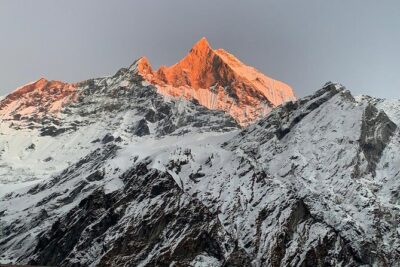
Day 5 is the classic. You start very early with an hour hike up to Poon Hill at 3,210m. This is timed for sunrise, with an unobstructed view of the sunrise over the high Himalayas. You then return for hot breakfast at Ghorepani.
After that, the day turns into work. You climb along ridges through pine and rhododendron forests toward Deurali (2,960m), then descend to Banthanti and continue toward Tadapani.
If you are the type who needs a reason to keep going, Poon Hill is it. You are earning a morning show for your early start, and you get the reward before you spend the afternoon climbing.
Chhomrong Day 6: Steep Down, Then a Strong Village Stop
On Day 6 you leave Tadapani and descend steeply through rhododendron forests. You’ll pass through Gurjung, a Gurung people village, and then reach Chhomrong at 2,140m.
This is one of those days where your legs feel like they have opinions. Downhills can tax your knees, but the payoff is getting to a well-known overnight area in the circuit. Chhomrong also helps you mentally reset, because you are starting to feel that “big trek” scale.
Dovan Day 7: Bamboo, Bamboo, and a River Gorge Walk
Day 7 drops you to the Chomrong Khola, then climbs to Khuldighar at 2,380m, a place that used to be an ACAP check post. Past that, the trail gets steep down a rocky bank, levels out, and continues through bamboo thickets.
You’re also walking on the west side of the river, which can make the day feel varied instead of repetitive. The overnight area is listed as the Himalayan Hotel.
If you like forest texture and shade, this day delivers. If you dislike walking through bamboo corridors, it helps to take a steady pace and focus on rhythm.
Annapurna Sanctuary Day 8: Machapuchare Base Camp to ABC at 4,130m
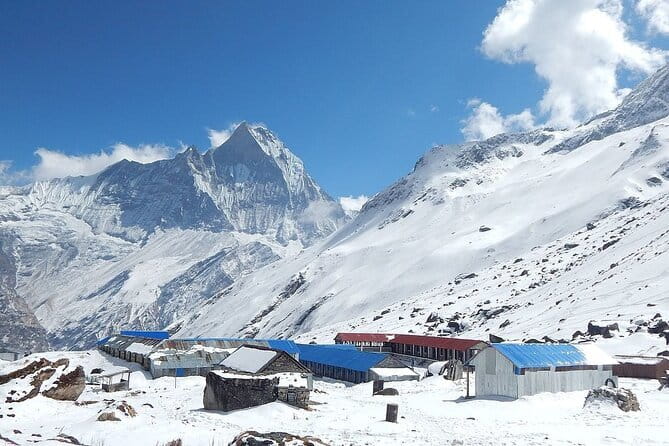
Day 8 is the turning point. The trail climbs past Hinko Cave, through Deurali, and toward Machapuchare Base Camp. The listing notes that Machapuchare Base Camp is not a true base camp for climbing, since climbing Mt. Machapuchhare is not permitted. Still, it works as a major gateway into the sanctuary area.
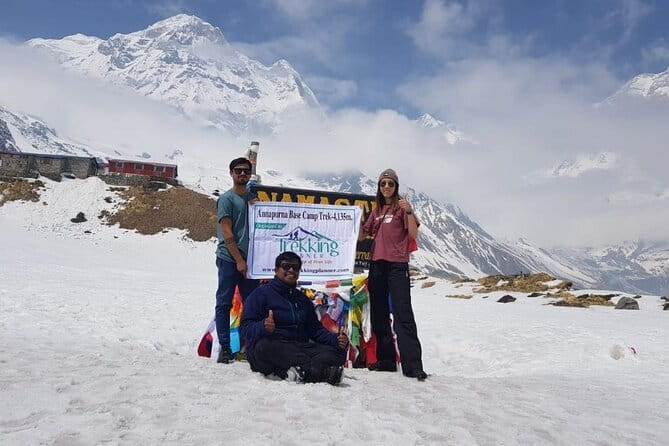
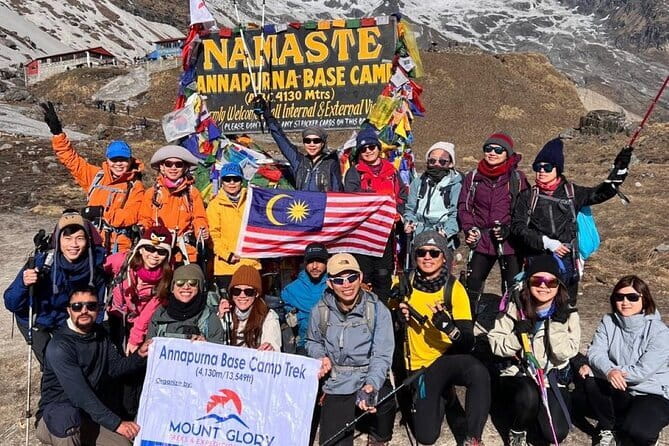
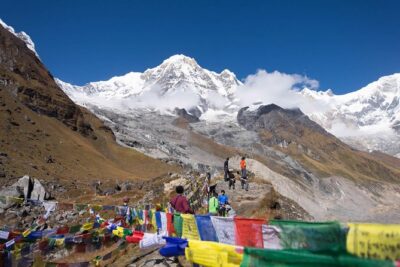
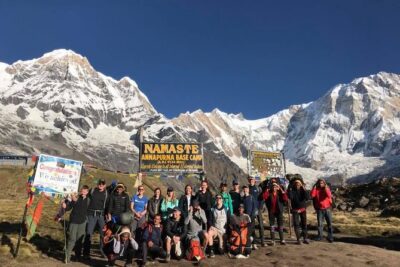
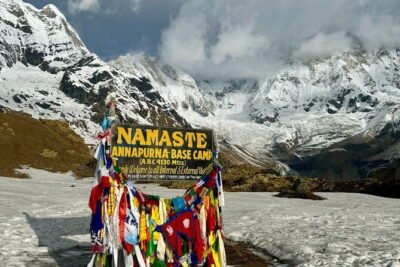
Then you walk about two hours from Machapuchare Base Camp to Annapurna Base Camp at 4,130m. Once you arrive, you’re set up for unobstructed mountain scenery, and this is where the trek earns its name.
Practical thought: the last push is shorter in distance than some other days, but you’ll likely feel the altitude more. Keep moving, keep breathing steady, and let the views hit you when you’re finally there.
Back Down Day 9: A Controlled Descent to Bamboo
Day 9 follows the same trail down, and the listing is blunt about the scale: you drop by around 1,700m to the bank of Modi Khola to Bamboo at 2,345m.
This is the phase where you may feel relieved, but you should still take care on downhills. Descents can feel easy on paper while your legs work hard in the background.
Jhinu Danda Day 10: Experimental Farm Area and Natural Hot Springs
Day 10 continues until Chhomrong, then the trail past Khuldighar includes an experimental sheep farm. After that, you walk through rhododendron and bamboo fields again, then descend steeply from Chomrong to Jhinu Danda.
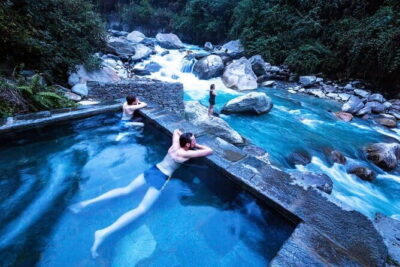
The highlight is the natural hot springs. After days of hiking and gravity pulling on your legs, soaking in warm water can feel like the trek’s built-in recovery tool.
Pokhara Return Day 11: The Best Kind of Recovery Walk
Day 11 is more relaxing than the rest. From Jhinu you walk on the right side of Modi Khola for about 4.5 hours to Birethanti, then on to Nayapul. The route is described as one of the best and most relaxing walks on the entire trek.
Then you drive about one hour back to Pokhara. After checking into your hotel, you walk to Fewa Lake for a boating trip to Barahi Temple. This is a nice emotional reset, moving from teahouse rooms back to lake calm.
Kathmandu Day 12 and Departure Day 13: Farewell and Fly Home
On Day 12 you drive back to Kathmandu in the morning. The evening includes a farewell dinner at a traditional Nepalese restaurant with cultural performances, which is a good way to close the loop between trekking and culture.
On Day 13 the trip ends at Tribhuvan International Airport with an airport representative drop-off.
Staff Support and the Porter System: Why Your Trek Moves Better
The strongest praise across the experience centers on people, not just views. Guides and assistant guides show up as the reason you keep moving when your body gets stubborn. Names that appear in the guide roster include Raj, Ramesh Karki, Maddy, Ganesh, Shyam, and Resham, with assistant guide Bhawishya KC mentioned too.
Porters also get singled out for being helpful, fun, and encouraging, with names like Prakash, Bhagwan, Tenzing, Shantiraj, Ram Prasad, Tika Ram, Lumbu Dai, Dilip, and others.
A practical point from the experience: do not overpack. The advice is to take only what you actually need, because porters carry the load and your job is to keep it reasonable. You’ll likely feel better when your bag is lighter, and the team expects you to follow that logic.
Meals and Lodging: What the Included Plan Does for You
On the trek, guesthouse accommodation is provided in twin-share and dormitory rooms. That is part of the value: you do not have to negotiate lodging each night. The listing also includes meals during the trek: breakfast counts as 12, lunch counts as 9, and dinner counts as 9.
Meals in Kathmandu and Pokhara are not included for lunch and dinner. Alcoholic drinks and other beverages are not included either. So if you like full service dining during the city days, budget for that yourself.
Altitude and Fitness: What You Need to Train for (Steps, Not Just Stamina)
This trek reaches a high point at Annapurna Base Camp (4,130m) and also includes Poon Hill at 3,210m. You should plan your fitness around consistent climbing and lots of steps. One of the clearest pieces of advice from the experience is to do stairs in training, because you will face more steps than you think.
Another training reality from the information shared is that pace often lands around 12 km per day with roughly 1,200m of elevation gain per day on average, totaling about 100 km and around 6,500m of elevation gain across the trek. Those numbers are not a guarantee for every day, but they’re a useful reality check for what your body will likely handle.
If you have moderate physical fitness and you can accept slow, steady effort, you’re in the right zone. If you struggle with steep descents and long step counts, consider improving conditioning before you go.
Weather, Timing, and the One Thing You Cannot Control
The trek is described as requiring good weather, and if the experience is canceled due to poor weather, you are offered a different date or a full refund. That’s important because mountain visibility changes fast.
Because the trek hits sunrise views at Poon Hill and major scenic moments at ABC, you should expect that cloud cover can shift what you see. Bring a flexible attitude, and understand that you are buying access to the trail and the mountain day plans, not a guaranteed clear sky.
Should You Book This Annapurna Base Camp Trek?
I think this trek is a strong pick if you want classic Annapurna scenery with a clear structure: transport sorted, permits handled, guide and porter support organized, and meals mostly taken care of during the hiking days. The logistics praise and the repeated mentions of supportive teams like Maddy, Raj, Ramesh Karki, and others are exactly what you want on a physically demanding trek. The porter ratio also signals real attention to workload management.
I’d hesitate only if you know stairs and steep terrain are a weak point for you, or if you are not comfortable with altitude up to 4,130m. This is not a “casual hike and done” trip.
If that sounds like your kind of challenge, booking is an easy yes.
FAQ
How high does the trek reach at Annapurna Base Camp?
Annapurna Base Camp is listed at 4,130 m (13,549 ft).
Where does the trek start and end?
It starts at Tribhuvan International Airport in Kathmandu and ends with a drop-off at Tribhuvan International Airport for your flight departure.
How long is the Annapurna Base Camp Trek?
The duration is approximately 13 days.
What meals are included during the trek?
Breakfast is included 12 times, lunch 9 times, and dinner 9 times. Lunch and dinner in Kathmandu and Pokhara are not included.
Is an English-speaking guide included?
Yes. A licensed English-speaking trekking guide is included.
How many porters are provided?
The tour provides 1 porter for every two clients.
What is not included in the tour price?
Not included are travel insurance that covers emergency high-altitude rescue and evacuation, international airfare, Nepal entry visa, alcohol, alcoholic and non-alcoholic drinks, personal trekking equipment, and tips for trekking staff and drivers.
What is the cancellation policy if I need to cancel?
You can cancel up to 3 days in advance for a full refund. If you cancel less than 3 full days before the start time, the amount you paid will not be refunded. If the trek is canceled due to poor weather, you are offered a different date or a full refund.
Latest additions near Kathmandu
- White Water River Rafting – 1 Day★ 4.3 · 3 reviews
- Traditional Momo Making Class★ 5.0 · 10 reviews
- Kathmandu to Pokhara Premium sofa bus ticket★ 4.0 · 17 reviews
- Ghorepani Poon Hill Trek★ 5.0 · 16 reviews
- Amazing 1 Day Trekking Experience in Kathmandu Nepal★ 5.0 · 24 reviews
- Ghorepani Poonhill Trek★ 5.0 · 5 reviews
- Walking tour of real Kathmandu through back streets.★ 5.0 · 3 reviews
- Wildlife Adventure in Chitwan Nepal★ 4.0 · 4 reviews
Annapurna Base Camp Treks, compared.
Kathmandu to Annapurna Base Camp (ABC) 5-Day Trek
Read our review →
Browse the lists this tour appears in