
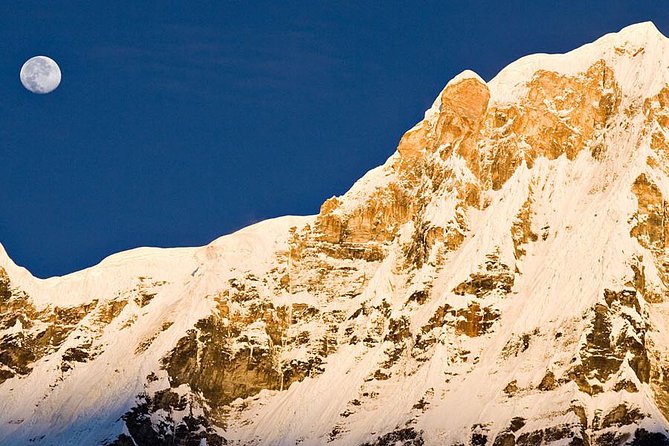
Reviewed · ANNAPURNA BASE CAMP TREKS
Annapurna Base Camp Trek- 11 Days
Big mountains and clear plans make this trek work. This 11-day Annapurna Base Camp itinerary is built for people who want the classic Himalayan scenery without wrestling logistics, starting with airport pickup and private transfers and finishing with easy flights back. I especially like the 2 trekkers to 1 porter setup, because it keeps your pack sensible on long walking days. One real consideration: altitude is the main challenge, with the route reaching Annapurna Base Camp at 4,130m.
You’ll also get culture along the trail, not just views. The trek passes through settlements tied to Gurung, Magar, and Thakali communities, and your route is guided by an English-speaking, government-licensed guide who helps make sense of daily life in the mountains. Add in two nights in Kathmandu and one in Pokhara, and it feels like a full Nepal trip, not just a hike and sprint to the airport.
What ties it together is day-to-day support. You get teahouse lodging, and all meals during the trek, with tea or coffee included, so you can focus on walking, resting, and taking photos instead of budgeting each meal in mountain time.
In This Review
- Key highlights worth knowing before you go
- What you pay, what you still need to budget
- Kathmandu Day 1: your arrival and first mountain view
- Fly to Pokhara, then walk into the hills (Days 2 to 3)
- Chhomrong to Bamboo and on toward Deurali (Days 4 to 5)
- Deurali to Annapurna Base Camp via Machhapuchhre Base Camp (Day 6)
- The return: Bamboo, then Jhinu Danda, then Pokhara again (Days 7 to 9)
- Flying back to Kathmandu and finishing at the meeting point (Days 10 to 11)
- Guide, porters, and why the team setup matters on ABC
- Altitude and weather: your real work is pacing
- Who this trek suits best
- Should you book this Annapurna Base Camp trek?
Key highlights worth knowing before you go
- Private guided trek, not a cattle-call: your group stays together, with an English-speaking licensed guide and porter support.
- Easy travel flow with flights: Kathmandu to Pokhara and back are by plane, with private vehicle transfers around Pokhara.
- Teahouse nights built into the itinerary: you sleep in village lodges each day without the hassle of camp setup.
- Village culture en route: the route runs through areas associated with Gurung, Magar, and Thakali communities.
- The classic ABC approach route: you go via Machhapuchhre Base Camp on the way up.
- Support that solves problems quickly: multiple past trekkers praised fast, friendly help, including extra effort to secure better rooms at tea houses during busy periods.
What you pay, what you still need to budget
This trek is priced at $999 per person for 11 days, and most of what matters on an Annapurna Base Camp trip is covered inside that number. You get airport transfers in a private vehicle, hotel stays in Kathmandu and Pokhara (with breakfast included there), teahouse accommodation during the trek, and all meals during trekking days. You also get the Kathmandu to Pokhara to Kathmandu flights, plus Pokhara to Nayapul and back by private vehicle.
The best value here is the “boring but important” stuff. A licensed English-speaking guide and porter service are included, and staff costs, local taxes, and insurance-like items for the team are part of the package too. That means you’re paying for a system, not just a daily hiking plan.
Still, make a clean list of what is not included, so there are no surprises:
- Nepalese visa fee
- International flights to and from Kathmandu
- Travel and rescue insurance
- Meals in Kathmandu and Pokhara (not listed as included beyond breakfast in those hotels)
- Tips for guide, porter(s), and driver(s)
- Extra night stays if your mountain timing changes
- Personal extras on the trail like battery charging, shower, laundry, and water
Think of the $999 as the trek and domestic logistics bundle. Your total trip cost depends on your flights, visa, and insurance, plus the customary tips and small personal purchases.
More Treks in Kathmandu
- Everest Base Camp Trek – 14 Days
★ 5.0 · 1,499 reviews - Everest Base Camp Trek
★ 5.0 · 842 reviews - Everest Base Camp Trekking
★ 5.0 · 485 reviews
Kathmandu Day 1: your arrival and first mountain view
Day 1 lands you in Kathmandu at about 1,300m. The setup is designed to keep you calm after a travel day. You meet a representative from Alpine Club of Himalaya at the airport, then you head to your Kathmandu hotel for an overnight stay.
That first evening includes a welcome dinner with authentic Nepalese cuisine. It’s a simple touch, but it helps you get oriented quickly. You’ll also start seeing the mood of the city, from the way people move through Thamel to the temple energy around places like Boudha Nath, which some trekkers have had time to fit in during their Kathmandu days.
If you’re arriving early or late, your schedule may shift, because the itinerary still centers on the trek dates. But the core idea is solid: you don’t start walking immediately. You get one night in Kathmandu to reset.
Fly to Pokhara, then walk into the hills (Days 2 to 3)
On Day 2, you take a 30-minute flight to Pokhara, then begin trekking toward Ghandruk. The day is listed as about 5 to 6 hours of walking after the flight, climbing from around 823m up to about 1,940m at Ghandruk.
Ghandruk is a classic starting point because it feels lived-in, not like a remote staging area. You get that first taste of village trekking life, with tea houses ready for hikers and locals used to seeing people arrive with big backpacks and bigger dreams.
Day 3 continues on to Chhomrong, roughly 5 to 6 hours again. This is where the Annapurna Base Camp trek starts to feel more like a real journey. The trail heading to Chhomrong is often where first-time trekkers realize they need a steady pace, not a sprint.
Two things I like about this segment for value-minded travelers:
- You’re not guessing your travel links. Flight and ground transfers are handled.
- The daily walk lengths are serious, but they aren’t an all-day endurance test every single day.
Chhomrong to Bamboo and on toward Deurali (Days 4 to 5)
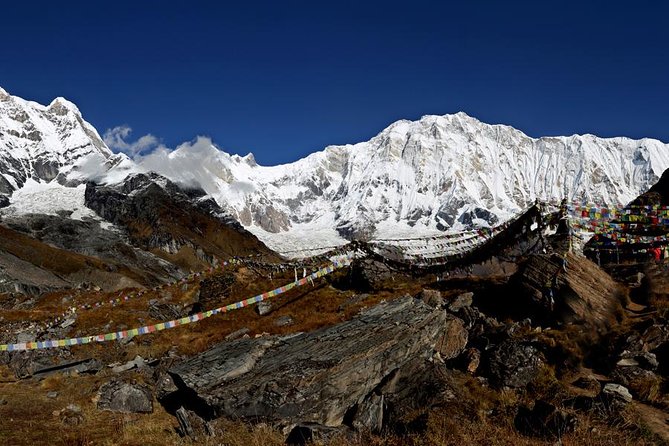
Day 4 is Chhomrong to Bamboo at about 4 to 5 hours, moving you higher to around 2,310m. Day 5 climbs again, Bamboo to Deurali, about 3 to 4 hours, reaching 3,230m.
This stretch is important because it’s the “gear shift” phase. You’ll notice the air feels thinner, and your body slows down even if your mind wants to keep walking. The trek’s structure helps, though, because you’re not doing a sudden jump from low altitude straight into the high camp zone.
You also get repeated practice in the right habits:
- take shorter steps on ascent
- drink regularly
- eat even when your appetite dips
I’d call this the part of the trek where you set yourself up for a safer, more comfortable Day 6.
More Annapurna Base Camp treks:
- Annapurna base camp trek 5 Days
★ 5.0 · 252 reviews - 14-Day Private Annapurna Base Camp Trek
★ 5.0 · 180 reviews - Annapurna Base Camp Trekking
★ 5.0 · 116 reviews - Annapurna Base Camp Trek
★ 5.0 · 111 reviews
Deurali to Annapurna Base Camp via Machhapuchhre Base Camp (Day 6)
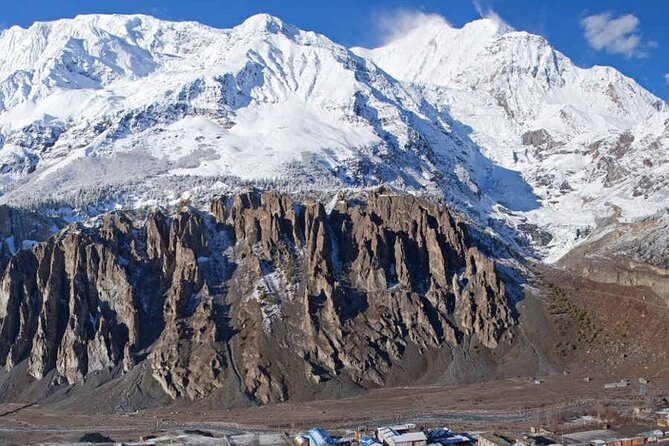
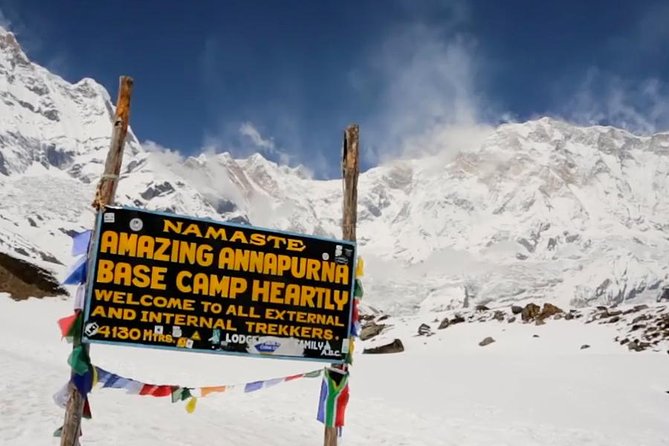
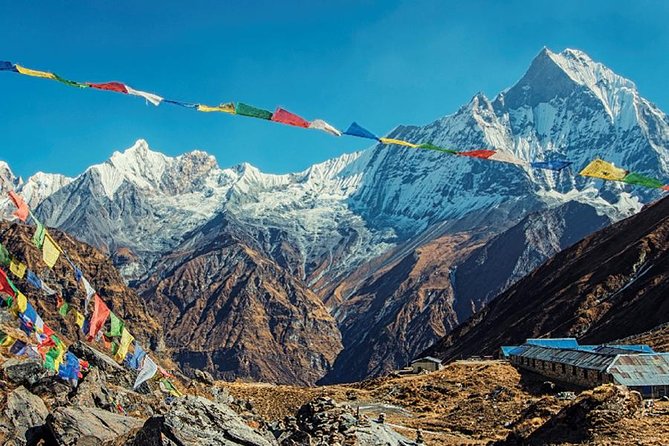
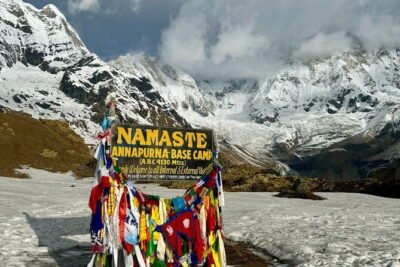
Day 6 is the big push: Deurali to Annapurna Base Camp in about 5 to 6 hours, reaching around 4,130m. Your route goes via Machhapuchhre Base Camp at about 3,700m, which is a major reason this itinerary feels like it delivers the classic scenery rather than just a direct grind.
This is also where altitude becomes real. Even if the trek pace feels steady, your breathing will change. You might find you’re not as talkative on the uphill sections. That’s normal.
What I like about traveling with a guided plan here is that you’re not deciding everything on your own. The guide’s job is to manage pacing and help you make sense of what’s ahead. Past trekkers have praised guides for being approachable, including named staff like Sujan and Tsiring for friendly, responsive support. You may not get the same person, but the service style shows up in the way people describe their experience.
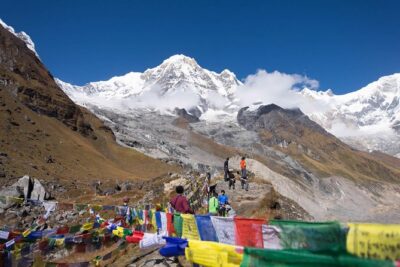
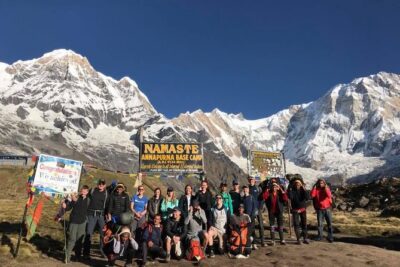
Once you reach Annapurna Base Camp, you’ll be rewarded with the kind of view that makes people sit down even after they’ve already been standing for hours. Just remember: reaching the summit point is not the same thing as finishing the challenge. Plan to take your time on the way down later in the trip.
The return: Bamboo, then Jhinu Danda, then Pokhara again (Days 7 to 9)
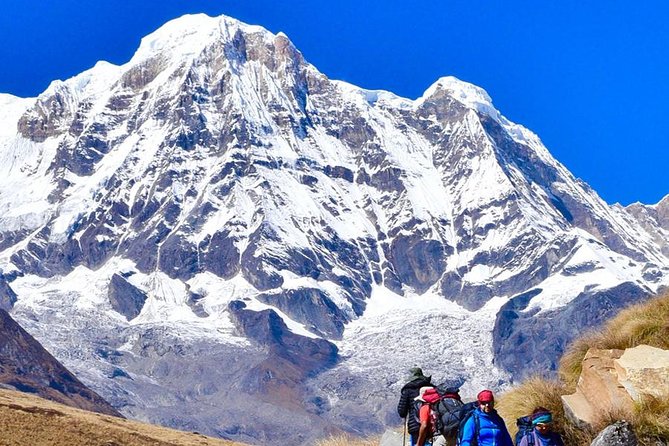
Day 7 is Annapurna Base Camp to Bamboo, listed as 7 to 8 hours. This is a long day because downhill still takes energy. Your quads may complain, and your body keeps working even while the climb angle flips.
Day 8 moves from Bamboo to Jhinu Danda, about 5 to 6 hours, descending to around 1,760m. This is where the trek starts to feel kinder. You’ve already done the hardest altitude work. Now you’re shifting from survival mode back into enjoying the day.
Day 9 is a hybrid finish: trek to Naya Pul (about 6 hours), then drive to Pokhara (about 1 hour). You’re back in a place with more comfort, easier access to supplies, and a real bed waiting.
Two practical tips if you want this part to feel smooth:
- keep snacks handy for the Naya Pul day
- accept that your legs may be slower than you think, even after you’ve been downhill for days
Flying back to Kathmandu and finishing at the meeting point (Days 10 to 11)
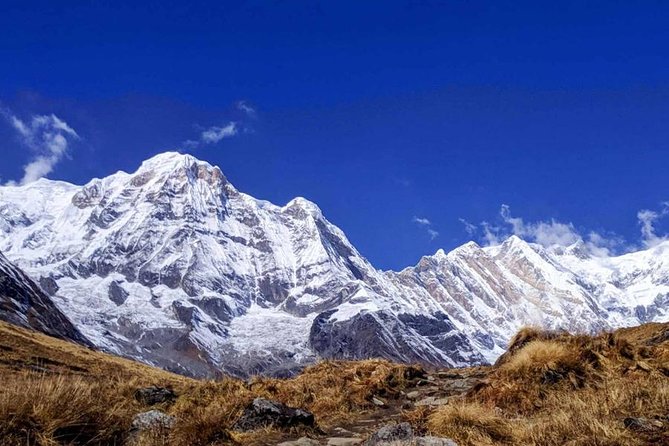
Day 10 is a flight back to Kathmandu. You get that quick reset from mountain air to city air without a long overland slog.
Day 11 is a final departure day, and the activity ends back at the meeting point, Alpine Club of Himalaya Pvt. Ltd., Bagawan Bahal Marg, Kathmandu 44600.
This matters more than people think. When your trek ends far from where you started, you can end up spending your last hours dealing with transport. Here, the plan keeps that final day from turning into admin.
Guide, porters, and why the team setup matters on ABC
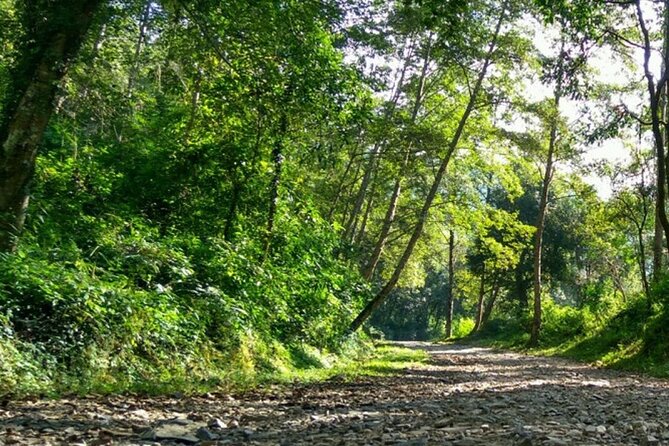
The porter setup is a standout detail: 2 trekkers share 1 porter. On an Annapurna Base Camp trek, that can be the difference between finishing feeling strong and finishing feeling wrecked.
Even when the itinerary times look doable, the reality is the little stuff adds up, like carrying water, extra layers, rain protection, and your daily comfort items. A porter system gives you a buffer.
In the feedback tied to this operator, the common praise is about being friendly and caring, plus quick handling of needs. People also mention good communication and patience from the guide and helpers. Some trips also included extra effort when tea houses were full in peak times, such as trying to secure private rooms.
And if you’re going solo or as a couple, the fact that this is a private tour/activity where only your group participates can feel less stressful. You’re not worrying about who is going slow or who missed the wake-up bell.
Altitude and weather: your real work is pacing
This trek reaches 4,130m at Annapurna Base Camp. It also passes through Deurali (3,230m) and Machhapuchhre Base Camp (3,700m). That’s enough elevation that you should treat every day as a warm-up for the next one.
The good news is the itinerary’s day structure. You have a gradual climb pattern up to Deurali, then a more serious push to ABC. Afterward, you start the descent promptly, dropping back toward Jhinu Danda at 1,760m.
Still, weather can change the experience. In mountain travel, rain and trail disruptions happen. One past trek experience included heavy rain and a landslide affecting traffic lanes after the trek. That’s not a reason to avoid Nepal, but it’s a reason to stay flexible and keep your energy for the trail, not for frustration.
If you’re someone who likes a steady plan, go slow. If you’re someone who hates slowing down, this trek will teach you humility.
Who this trek suits best
This is a great match if:
- you want an 11-day Annapurna Base Camp trek with Kathmandu and Pokhara included
- you prefer guidance and logistics support over planning every transport link yourself
- you’re aiming for teahouse trekking, not a private lodge-only comfort hike
- you have moderate physical fitness and you’re comfortable walking most days
It may not be ideal if:
- you dislike altitude risk and unpredictable mountain weather
- you want lots of free time to explore Kathmandu on your own, because the itinerary has a strong structure tied to flights and trek days
- you’re looking for luxury. Teahouses are part of the deal here, and personal extras like showers and battery charging are not included
Should you book this Annapurna Base Camp trek?
I think you should book if you want the classic Annapurna Base Camp experience with a well-organized support team, predictable daily meals, and domestic transport handled. The biggest value is reducing decision fatigue: flights, transfers, guide, porter ratio, and meal coverage are already in place.
I’d be cautious if you’re expecting a stress-free trek without needing discipline on altitude. This route still asks you to walk through thin air and long days, and weather can influence timing and comfort.
If you’re prepared for altitude, happy to do tea house style trekking, and you want your money going to real mountain support rather than guesswork, this looks like a strong fit.
Latest additions near Kathmandu
- White Water River Rafting – 1 Day★ 4.3 · 3 reviews
- Traditional Momo Making Class★ 5.0 · 10 reviews
- Kathmandu to Pokhara Premium sofa bus ticket★ 4.0 · 17 reviews
- Ghorepani Poon Hill Trek★ 5.0 · 16 reviews
- Amazing 1 Day Trekking Experience in Kathmandu Nepal★ 5.0 · 24 reviews
- Ghorepani Poonhill Trek★ 5.0 · 5 reviews
- Walking tour of real Kathmandu through back streets.★ 5.0 · 3 reviews
- Wildlife Adventure in Chitwan Nepal★ 4.0 · 4 reviews
Annapurna Base Camp Treks, compared.
Kathmandu to Annapurna Base Camp (ABC) 5-Day Trek
Read our review →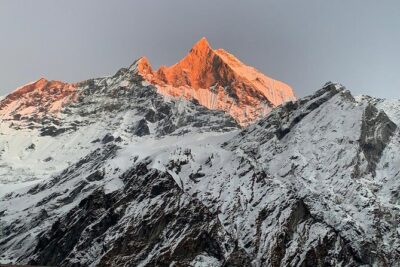
Browse the lists this tour appears in