
Reviewed · ANNAPURNA BASE CAMP TREKS
Annapurna Base Camp Trek
Twelve days to stand under Annapurna. What I love about this trek is the 360-degree panorama at Annapurna Base Camp and the human pace through Gurung villages like Ghandruk and Chomrong. It starts in Pokhara with lake views, then steps you into bamboo and forest trails until the mountains finally take over the horizon.
The main thing to consider is effort. The day that pushes on toward Machhapuchre Base Camp and then up to Annapurna Base Camp is the most strenuous, and you’ll also work through plenty of steep ups and downs, including the famous 2500-step descents and climbs around Chomrong. Add in cold mountain weather, and you’ll want to pack for layers and stay ready for early starts.
In This Review
- Key Highlights Before You Go
- Orientation in Kathmandu: A 7 pm briefing and a flexible first day
- Pokhara Lake Time: Fewa boating, Tal Barahi, and big mountain views
- Nayapul to Ghandruk: Forest walking, village culture, and the Gurung Museum option
- Chomrong and the Chere Danda area: Steep sections plus iconic step energy
- Bamboo nights, 2500 steps, and the Himalayan Hotel landmark
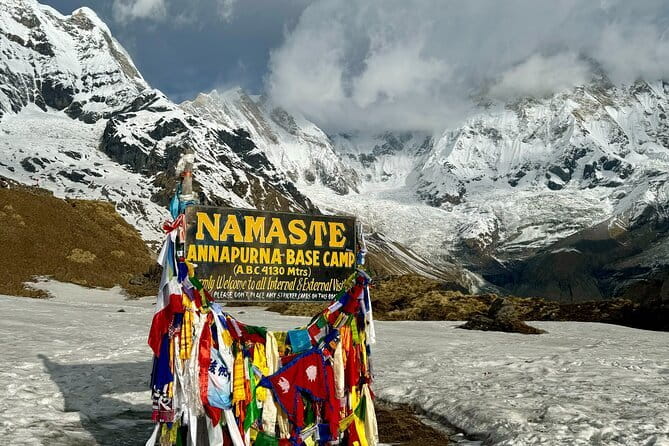
- The big day: Bagar, Machhapuchre Base Camp, and Annapurna Base Camp’s 360 panorama
- Coming down smart: Bamboo return, Jhinu hot springs, and the last downhill to Pokhara
- Kathmandu closer: Farewell dinner, Thamel shopping, and an airport drop on time
- Price and Logistics: What $810 covers, and what you should budget
- Trek Difficulty, Weather, and Who This Works For
- Should You Book This Annapurna Base Camp Trek?
- FAQ
- How many days is the Annapurna Base Camp trek?
- Where do we start the trek after arriving in Nepal?
- What day is the most strenuous?
- Are meals included during the trek?
- How do you handle transportation between Kathmandu and Pokhara?
- Is travel insurance required?
- Is this a private tour?
Key Highlights Before You Go
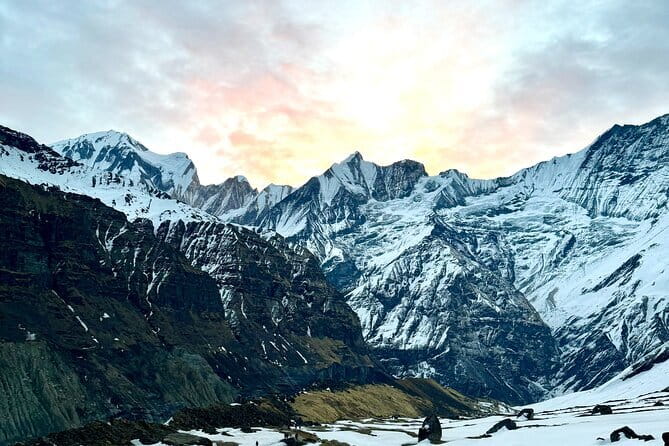
- Annapurna Base Camp’s 360-degree panorama as the payoff for the hard day
- Gurung village culture in Ghandruk and Chomrong, including a museum option
- A route with variety: bamboo forests, rhododendron-like woodland areas, hot springs, and tea houses
- Pokhara first, trek second with Fewa Lake boating and Tal Barahi Temple time
- Support built in: English-speaking guide, shared porter (1 porter to 2 trekkers), and included trekking permits
- A team you can trust: the trek leaders named Khem and Shree come up positively in feedback for being responsive and professional
Orientation in Kathmandu: A 7 pm briefing and a flexible first day
Your trip begins in Kathmandu with an airport pick-up and a hotel drop-off, then a pre-trip orientation and briefing around 7 pm. This is a smart setup because it gives you time to confirm gear needs, walking pace, and logistics before you’re staring at mountain trails the next morning.
If you arrive early, you can also make good use of the day around Thamel and Ason market, and you might even catch a Nepali film. Those small choices matter because Kathmandu can be an adjustment, and a low-stress evening helps you wake up calmer.
Overnight: Kathmandu.
More Treks in Kathmandu
- Everest Base Camp Trek – 14 Days
★ 5.0 · 1,499 reviews - Everest Base Camp Trek
★ 5.0 · 842 reviews - Everest Base Camp Trekking
★ 5.0 · 485 reviews
Pokhara Lake Time: Fewa boating, Tal Barahi, and big mountain views
Pokhara is your decompression stop before the trek proper. After breakfast, you drive there, check in, and get time to explore the lakeside area. I like that this isn’t just sitting around. You get Fewa Lake boating, plus a visit to Tal Barahi Temple.
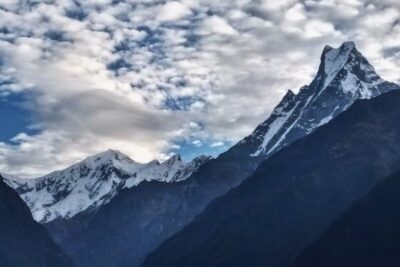
If the weather is clear, Pokhara’s viewpoints can treat you to Mt. Fishtail along with Annapurna and Dhaulagiri mountain-range views to the north. Even if visibility is mixed, the lakeside stroll is still worth it because it turns your first Nepal days into a “settle in” rhythm, not just a scramble.
Overnight: Lakeside hotel in Pokhara.
Nayapul to Ghandruk: Forest walking, village culture, and the Gurung Museum option
The trek starts after you’re driven to Nayapul. From there, you walk through dense forest and some steep terrain before reaching Ghandruk, via Birethanti. This first hiking day is more about getting your legs ready than chasing every photo from the start.
What makes Ghandruk special is the village feel. This is one of the key Gurung settlements, and the route gives you time to slow down when you arrive. If you have time, you can also visit the Gurung Museum. I like that touch because it gives context for what you’re seeing, not just a quick pass through a town.
Overnight: Ghandruk.
Chomrong and the Chere Danda area: Steep sections plus iconic step energy
From Ghandruk, the trekking rhythm becomes more up-down. You head toward Kimrung Danda, descend to Kimrung Khola, then climb again after crossing the river. A further walk leads you to Chere Danda, and finally a gentler stretch brings you to Chhomrong at the base of the Annapurna massif.
Chhomrong is one of those places where the mountains feel close, and the village sits in a sweet spot between wild trail and real community life. The day is also a preview of what’s coming later: you’ll do short climbs and descents, then settle into another overnight village.
Overnight: Chhomrong.
More Annapurna Base Camp treks:
- Annapurna base camp trek 5 Days
★ 5.0 · 252 reviews - 14-Day Private Annapurna Base Camp Trek
★ 5.0 · 180 reviews - Annapurna Base Camp Trekking
★ 5.0 · 116 reviews - Annapurna Base Camp Trek
★ 5.0 · 111 reviews
Bamboo nights, 2500 steps, and the Himalayan Hotel landmark
This part of the trek keeps you moving, but with different textures. You descend through about 2,500 steps toward Chhomrong Khola, then climb steeply to Sinuwa. From there, the trail passes through forest to Kuldihar, and you continue down toward Bamboo.
Then the trek turns into a “feature day” through dense, colder bamboo forest. One highlight here is reaching the Himalayan Hotel, which is an iconic landmark for trekkers. After that, the forest opens and you can see a glacial river below, which makes the whole effort feel more real.
You’ll also reach Hinku Cave, after climbing through a drier section of forest, then the trail descends closer to the river and rises gently toward Deurali. This sequence is a good reminder: Annapurna Base Camp isn’t one straight hike. It’s a whole chain of micro-environments, and you’ll feel that change in your body as much as in the scenery.
Overnights: Bamboo, then Deurali.
The big day: Bagar, Machhapuchre Base Camp, and Annapurna Base Camp’s 360 panorama
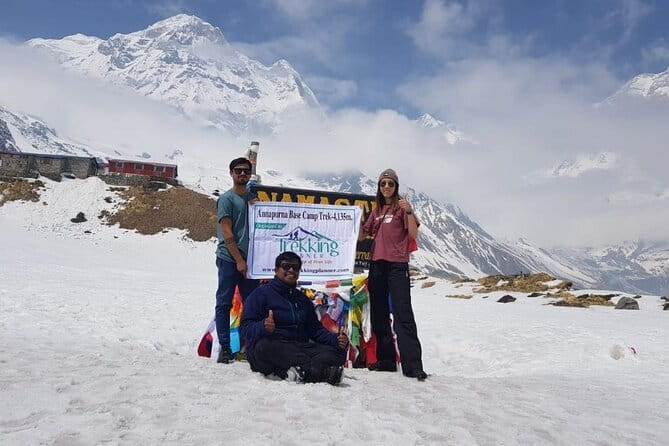
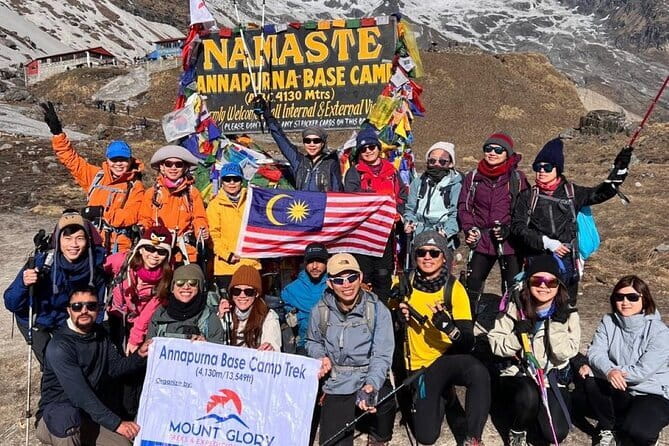
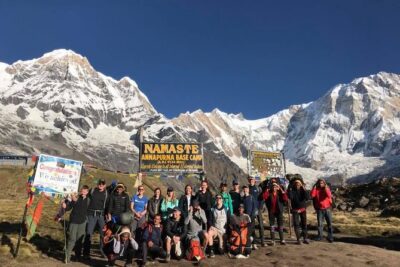
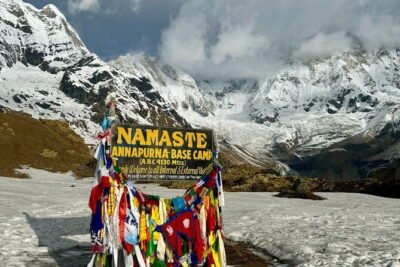
Day 7 is the most strenuous day in the trek, and the pacing reflects that. You start early from Bagar, hike toward Machhapuchre Base Camp (MBC), then move on to Annapurna Base Camp (ABC), the main highlight.
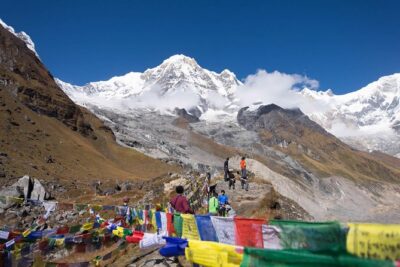
This is not the day to rush. Your best move is to accept the grind. The reward is the “arrive and breathe” moment: sparse vegetation, wide sanctuary trails, and the sense that the mountains are finally the main characters. At ABC, the 360 panorama is described as phenomenal, and this is where the entire trek makes sense as one continuous story rather than a series of separate walks.
If you want a practical tip, plan your energy for the last push. The day is long, and because it’s the hardest, it’s worth protecting your focus and staying warm once you stop moving.
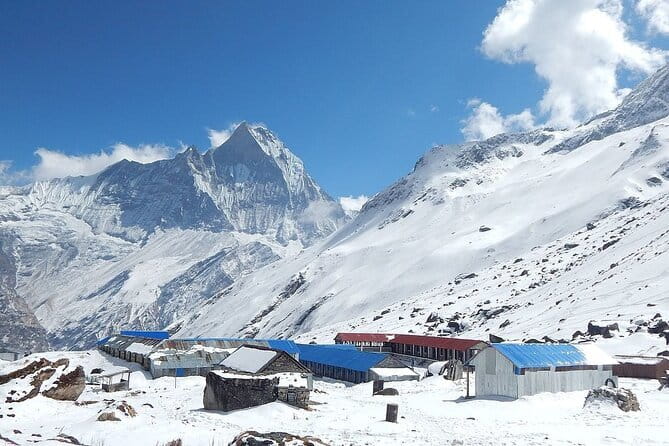
Overnight: Annapurna Base Camp.
Coming down smart: Bamboo return, Jhinu hot springs, and the last downhill to Pokhara
After the big summit day, the trek offers a break in intensity. You retrace your way back toward Bamboo, and the walk is primarily downhill and relatively easy. That doesn’t mean it’s effortless. Your legs still feel every step, but it’s a mentally easier day because you’re headed toward familiar trails.
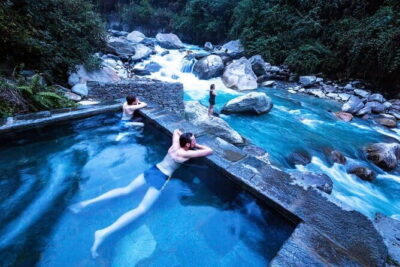
Next, you head uphill to Kuldighar, then descend to Chhomrong Khola and continue the route back toward Chhomrong. From there you go down to Jhinu Danda, where one of the region’s most popular natural hot springs sits about 20 minutes on foot away. This is a great “reset” stop. It’s the kind of payoff that makes the earlier cold hours feel worth it.
On the final trekking day, you walk downhill from Jhinu back to Nayapul, then drive to Pokhara and transfer to your hotel.
Overnights: Bamboo, Jhinu Danda, then Pokhara.
Kathmandu closer: Farewell dinner, Thamel shopping, and an airport drop on time
Your last two days are about soft landings. You drive back to Kathmandu early, with time in Thamel to pick up souvenirs and Nepali handmade products.
There’s also a Nepali cultural farewell dinner included in Kathmandu, with local cuisine and performances. I like this kind of included evening because it adds meaning to the trip without adding extra planning. After days on the trail, you can just enjoy the night.
On the final day, you’ll be dropped at the airport about 3 hours before your scheduled flight, which is the kind of buffer you’ll appreciate in a country where timings and traffic can be unpredictable.
Price and Logistics: What $810 covers, and what you should budget
This package is $810 per person for about 12 days (approx.). For that price, you get more than just guiding. You’re covered with:
- 2 nights in Kathmandu and Pokhara on a standard Tourist hotel basis, BB plan in those cities
- 8 nights in trekking lodges/tea houses during the walking portion
- Daily breakfast, lunch, and dinner during the trek
- A private car for airport and hotel transfers
- Long-distance transport Kathmandu to Pokhara and back on a tourist bus
- A government-certified, English-speaking trekking guide
- A porter setup: shared porter (1 porter to 2 trekkers)
- Trekking permits and entry fees
- A duffel bag
- A farewell dinner in Kathmandu with local cuisine and performances
What is not included matters because it affects your real cost. You’ll need:
- Travel insurance that covers helicopter rescue in an emergency
- Tips for guide and porter
- Personal expenses like drinks and laundry
- Trip cancellation charges, or any extension costs if circumstances change
So does $810 feel like good value? In my view, yes, if you want the convenience of permits, meals, guide support, and transport handled for you. The trek is expensive mostly because it’s logistically heavy, and this package takes care of a lot of those moving pieces up front.
Trek Difficulty, Weather, and Who This Works For
The tour is a good fit for people with moderate physical fitness who can handle steep climbs, steep descents, and early starts. The walking is not described as gentle overall, and the itinerary includes long days, a most-strenuous day, and step-heavy segments.
Weather is also a factor. The experience requires good weather, and if it has to be canceled due to poor conditions, you’ll be offered a different date or a full refund. This is important because Annapurna can shift from clear to cloudy fast, and your trip timing will affect comfort.
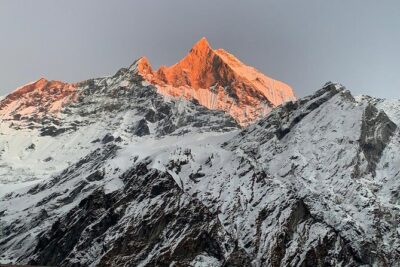
In the reviews, people repeatedly emphasize cold conditions and the payoff of early light, including notes about Annapurna shining in sunrise. Translation: if you want the best mountain mood, you need to tolerate chilly mornings and keep going even when you’d rather stay warm.
Should You Book This Annapurna Base Camp Trek?
I’d book it if you want a focused classic: Kathmandu pre-brief, Pokhara lake time, and a guided walk with meals, permits, and porter support built in. The included farewell dinner and the practical guide support make it feel structured, not chaotic.
I would hesitate if you’re not ready for the most strenuous day that includes hiking toward Machhapuchre Base Camp before reaching ABC, or if you’re tight on ability to handle steep up and down, including the 2,500 steps sections. And if you’re not willing to buy travel insurance that covers helicopter rescue, you’ll want to sort that before you pay anything.
If you match the fitness and weather reality, this is a strong way to reach Annapurna Base Camp without spending your time juggling logistics.
FAQ
How many days is the Annapurna Base Camp trek?
The trek is listed as 12 days (approx.) including time in Kathmandu and Pokhara.
Where do we start the trek after arriving in Nepal?
You drive to Nayapul, and the trek begins from there.
What day is the most strenuous?
Day 7 is the most strenuous day. It includes hiking toward Machhapuchre Base Camp (MBC) and then continuing to Annapurna Base Camp (ABC).
Are meals included during the trek?
Yes. The package includes daily breakfast, lunch, and dinner during the trek.
How do you handle transportation between Kathmandu and Pokhara?
There is long distance transportation between Kathmandu and Pokhara (and back) by a tourist bus, plus private car airport and hotel transfers in Kathmandu.
Is travel insurance required?
Yes. Travel insurance must cover helicopter rescue in case of emergency.
Is this a private tour?
Yes. This is described as a private tour/activity, so only your group participates.
Latest additions near Kathmandu
- White Water River Rafting – 1 Day★ 4.3 · 3 reviews
- Traditional Momo Making Class★ 5.0 · 10 reviews
- Kathmandu to Pokhara Premium sofa bus ticket★ 4.0 · 17 reviews
- Ghorepani Poon Hill Trek★ 5.0 · 16 reviews
- Amazing 1 Day Trekking Experience in Kathmandu Nepal★ 5.0 · 24 reviews
- Ghorepani Poonhill Trek★ 5.0 · 5 reviews
- Walking tour of real Kathmandu through back streets.★ 5.0 · 3 reviews
- Wildlife Adventure in Chitwan Nepal★ 4.0 · 4 reviews
Annapurna Base Camp Treks, compared.
Kathmandu to Annapurna Base Camp (ABC) 5-Day Trek
Read our review →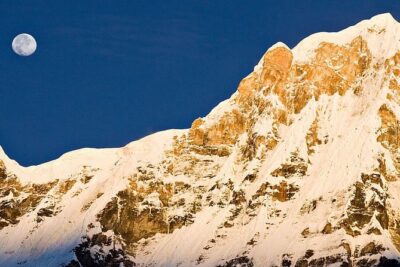
Browse the lists this tour appears in