
Reviewed · ANNAPURNA BASE CAMP TREKS
Annapurna Base Camp Trek
Mountains change your headspace fast. This Annapurna Base Camp trek works the Annapurna Sanctuary route in a clockwise direction, with classic village days and big-mountain photo moments tied to Poon Hill.
I especially like how the itinerary mixes comfort and realism: guesthouse nights in places like Ghandruk, Chhomrong, Bamboo, and Deurali, with an English speaking guide and the kind of local guidance that keeps you moving safely at altitude. I also like the payoff in Kathmandu after the trekking, including a guided day at major UNESCO World Heritage sites. The one drawback to plan around is altitude and trail conditions, since high elevations can be tough and some sections can be slippery in wet weather.
In This Review
- Key highlights I’d plan around
- Annapurna Sanctuary trekking, why this route stays famous
- Kathmandu arrival and briefing, the calm before the climb
- Flight to Pokhara, ride to Nayapul, first ascent from Ulleri to Ghandruk
- Chhomrong and Bamboo days, village life plus real trail work
- Day 3: from early village trails to Chhomrong
- Day 4: stairs, a suspension bridge, and a turn into bamboo
- Deurali and the approach to Annapurna Base Camp, where the views get serious
- Day 5: bamboo forest, glacial river views, and a high-altitude overnight at Deurali
- Day 6: Deurali to Annapurna Base Camp via Machhapuchhre Base Camp
- Retracing to Bamboo, then Jhinu Danda hot springs, then onward to Siwai
- Day 7: Base Camp back to Bamboo
- Day 8: full day ups and downs, then Jhinu Danda hot springs
- Day 9: trekking down to Siwai and transfer to Pokhara
- Kathmandu again, a guided UNESCO day to reset your senses
- Price and value: what $1,440 covers, and what you still need to budget
- Altitude, slippery footing, and gear you actually need
- Who this trek suits best, and who should choose differently
- Should you book this Annapurna Base Camp Trek with Oriental Journeys?
- FAQ
- What time does the trek start?
- How long is the Annapurna Base Camp trek?
- Is an English speaking guide included?
- Is a porter included, and how much can they carry?
- Are meals and hot showers included during the trek?
- Can I cancel and get a full refund?
Key highlights I’d plan around
- Clockwise Annapurna Sanctuary route that follows the classic river-valley walking style
- Poon Hill included for some of the most reliable early viewpoint moments
- Machhapuchhre Base Camp link on the way to Annapurna Base Camp, with multiple peak views
- Teahouse trekking with porter support (1 porter for two guests, up to 30 kg each)
- Jhinu Danda hot springs day after a long back-and-forth trekking rhythm
- A full Kathmandu UNESCO day after you recover from the trek
Annapurna Sanctuary trekking, why this route stays famous
The Annapurna Base Camp trek is often called the Annapurna Sanctuary trek for a reason. You’re not just walking between viewpoints. You’re moving through a high-country bowl of river valleys, gorges, narrow glacier valleys, and steep ridgelines. The scenery changes often, too. One day you’re in rhododendron-type forest and village lanes. Another day you’re near fast river stretches, and later you’re staring up at huge walls with waterfalls dropping down.
What makes this version especially appealing is the way it’s built around a clockwise itinerary. That routing matters because it influences your daily effort, your pacing, and how the trail unfolds as you climb toward the sanctuary. The route also includes Poon Hill, so you have a strong chance of catching early light over the Annapurna region before the main high-altitude push.
Now, the honest part. This is “moderate grade,” but “moderate” doesn’t mean easy. High altitude can challenge you, and the walking can be slippery when conditions are wet. If you’re the type who hates adjusting your pace, you’ll need to practice patience from the first long stair sections.
More Treks in Kathmandu
- Everest Base Camp Trek – 14 Days
★ 5.0 · 1,499 reviews - Everest Base Camp Trek
★ 5.0 · 842 reviews - Everest Base Camp Trekking
★ 5.0 · 485 reviews
Kathmandu arrival and briefing, the calm before the climb
Your first day is set up to reduce stress. After landing at Tribhuvan International Airport (1,300 m), an Oriental Journeys representative meets you and takes you to a hotel in Thame. There’s a briefing session and an introduction with your guide.
You’ll also want to note the meeting time. The start time listed is 7:00 am. That matters for your sleep schedule and your breakfast timing. Trekking days get early fast, so plan to go to bed without a long night out.
From a value standpoint, I like that this is not a chaotic handoff. Even if you’re arriving tired, you’re met, briefed, and pointed in the right direction before you start the airport connections that lead to the trekking trail.
Flight to Pokhara, ride to Nayapul, first ascent from Ulleri to Ghandruk
Day 2 is where you switch from city time to trail time. Your guide picks you up from your hotel, then you fly about 30 minutes from Kathmandu to Pokhara. After that, there’s a private vehicle arrangement in Pokhara to drop you at Nayapul.
From Nayapul, you take a local vehicle to Ulleri for about an hour drive, then your trek starts by climbing. The day’s finish is Ghandruk area (Fat Ghandruk at 1,940 m), with an overnight in a teahouse lodge.
What I like about this structure is that it eases you in. You begin with manageable uphill effort before you hit the deeper valley walking and the steeper day-to-day stepping later. But there’s a drawback: the early climb means your legs should already feel warm and ready. If you show up with tight calves or you rush the steps, you’ll pay for it later.
Practical tip: pack your day bag so your essentials are reachable without digging. You’ll appreciate that when you’re climbing and stopping often.
Chhomrong and Bamboo days, village life plus real trail work
Days 3 and 4 are about getting into rhythm and seeing how the Annapurna region works up close.
More Annapurna Base Camp treks:
- Annapurna base camp trek 5 Days
★ 5.0 · 252 reviews - 14-Day Private Annapurna Base Camp Trek
★ 5.0 · 180 reviews - Annapurna Base Camp Trekking
★ 5.0 · 116 reviews - Annapurna Base Camp Trek
★ 5.0 · 111 reviews
Day 3: from early village trails to Chhomrong
You start after breakfast and move through areas described as friendly and culturally rich, including Gurung community life and local hospitality. You finish the day at Chhomrong, staying in a local lodge.
Chhomrong is one of those high-visibility trekking towns. It’s also where your body starts to realize this is not just a scenic walk. Expect stairs, short steep patches, and plenty of chances to stop and adjust your pace.
Day 4: stairs, a suspension bridge, and a turn into bamboo
Day 4 begins with a descent out of Chhomrong via about 2,500 stone steps, plus a crossing over the Chhomrong Khola on a swaying suspension bridge. There’s time for photography along the way, which is nice because the bridge crossing can be a highlight rather than just a chore.
After that, near Sinuwa there’s uphill trekking. You pass through forest, reach Kuldihar, then take an easier downhill walk to Bamboo, where you stay at a teahouse.
This bamboo section is where I’d slow down and pay attention to footing. The trail through damp or cold bamboo forest can make your shoes feel heavier and your steps less stable. If you’ve ever had “almost slippery” trail days ruin a trip, treat this day as your early practice run for careful walking.
Deurali and the approach to Annapurna Base Camp, where the views get serious
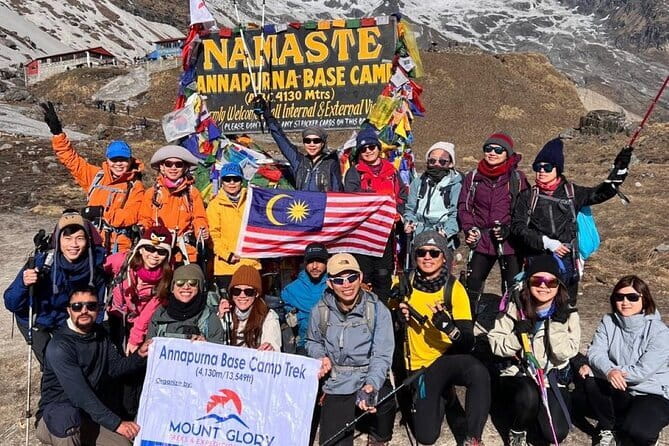
Day 5 and Day 6 are the heart of the climb toward the sanctuary.
Day 5: bamboo forest, glacial river views, and a high-altitude overnight at Deurali
Day 5 continues through damp and cold bamboo forest, then offers views described as glacial river scenery that can genuinely make your breath slow down in the best way. You can visit Hinku Cave on the way, and later you get close enough to the river before climbing again toward Deurali.
You’ll also see stretches with waterfalls near vertical rock faces. You stay overnight in Deurali.
This day is important for acclimatization. Even with the itinerary doing a steady progression, you’ll still want to keep your effort controlled. If you push too hard, you’ll feel it more on the next day when the altitude climbs.
Day 6: Deurali to Annapurna Base Camp via Machhapuchhre Base Camp
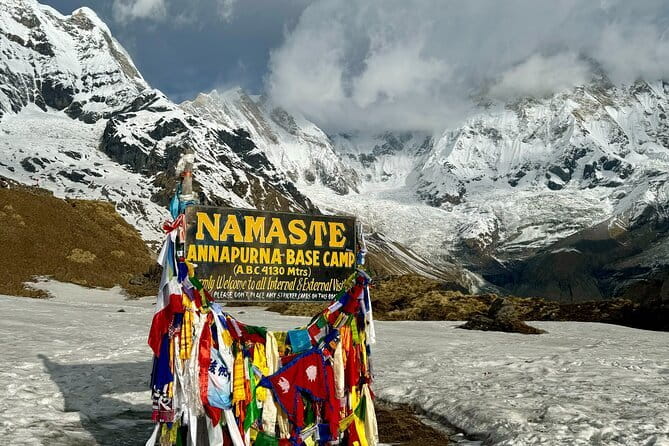
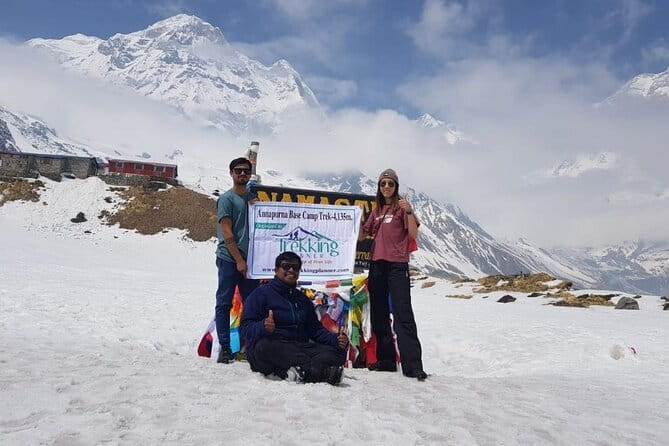
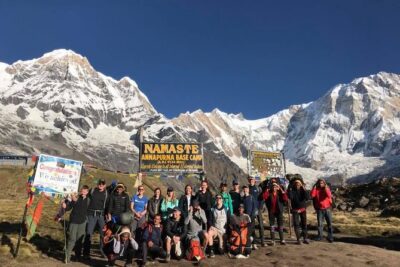
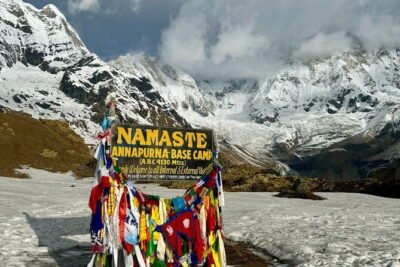
Day 6 is a big one, listed as 5 to 6 hours from Deurali to Annapurna Base Camp, via Machhapuchhre Base Camp. You overnight at Annapurna Base Camp.
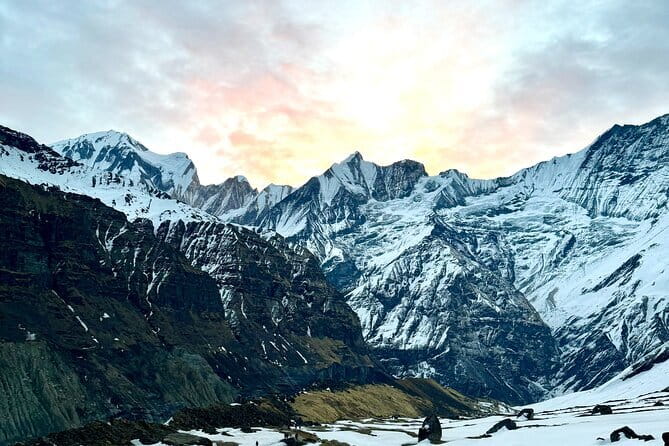
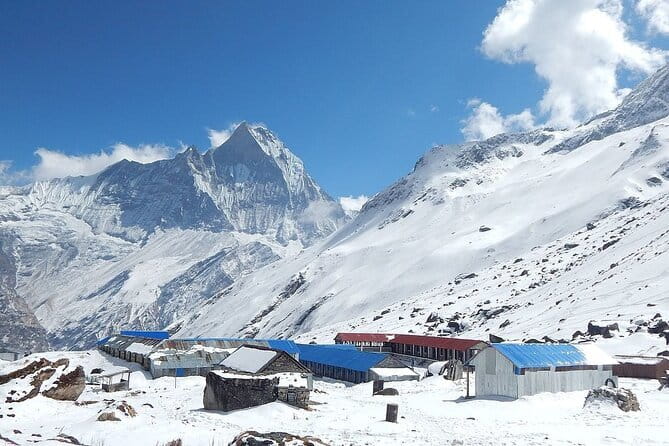
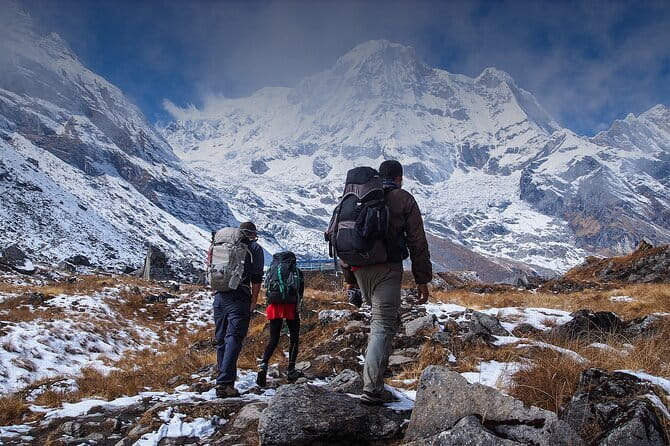
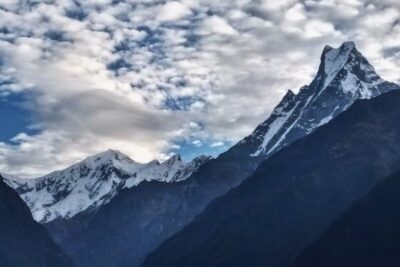
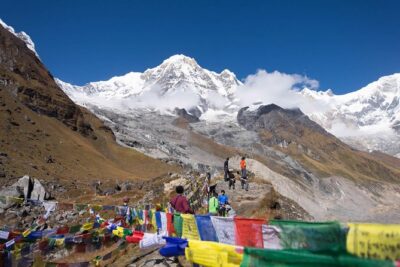
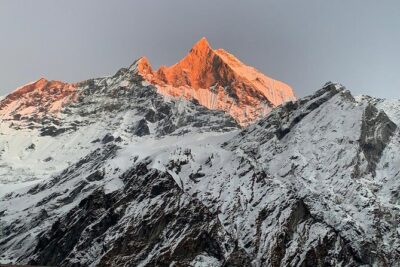
The route is described as a gentle climb through a river bed and a steep trail over to the mountain side. The big reward is the view lineup: Machhapuchhre (which many people come for), plus Hiunchuli, Annapurna South, Annapurna I, Annapurna III, Gandharvachuli, and Gangapurna.
Here’s the practical reality. Even if the hike time seems reasonable, the altitude makes everything feel slower. I’d plan to move steadily, not aggressively. If you feel a headache or dizziness, tell your guide early. This trip includes guide support, guide insurance, and a first aid kit, but the main safety tool is your own early communication.
Retracing to Bamboo, then Jhinu Danda hot springs, then onward to Siwai
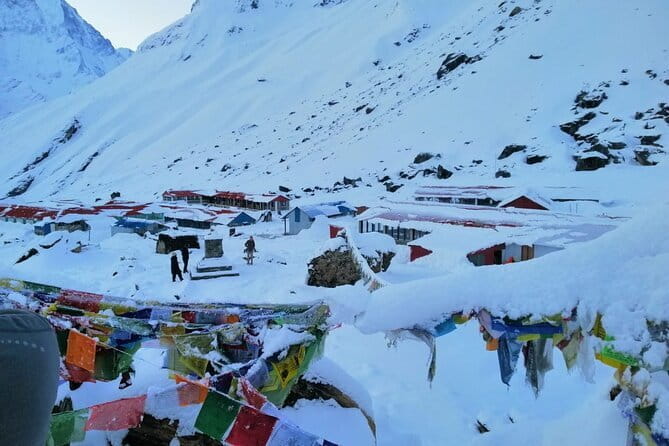
Day 7 through Day 9 is a rhythm change. After the summit-style high moment of reaching Base Camp, you shift into recovery and then back into walking variety.
Day 7: Base Camp back to Bamboo
You can spend a few minutes in the morning taking photos of mountains and surroundings. Then you retrace your steps from Annapurna back to Bamboo, described as an easy downhill walk. The landscapes and scenery are still a big deal, just in a different mood.
This is the day your knees will remember. Easy downhill does not mean no strain. Bring a mindset of controlled steps and don’t treat it like a race.
Day 8: full day ups and downs, then Jhinu Danda hot springs
Day 8 is described as ups and downs for the whole day. You go from Bamboo up to Kuldighar, then downhill to Chhomrong Khola, then up again to Chhomrong. Finally, you descend to Jhinu Danda.
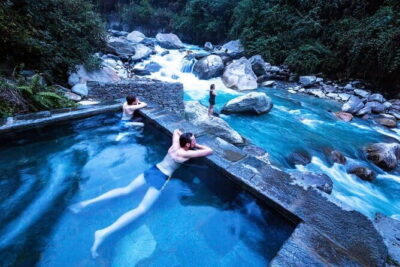
After checking in, you can walk a few minutes to enjoy hot spring bath. That’s a rare treat on trekking routes, and it’s the kind of reward that helps your whole body feel less angry by nightfall.
Day 9: trekking down to Siwai and transfer to Pokhara
You trek down to Siwai, then catch a vehicle to Pokhara.
This is one of those “you’ll be glad it’s over” days for many people, because the long descent and travel transition can feel like a time jump. But it also signals you’re done with the main altitude portion.
Kathmandu again, a guided UNESCO day to reset your senses
Day 10 brings you to Kathmandu. If you fly, there might be time for site visits the same day, but driving takes about 5 to 6 hours, so plan for a slower pace.
Day 11 is a full day Kathmandu Valley tour with an English speaking guide. You visit UNESCO listed World Heritage sites: Pashupatinath, Boudhanath, Swayambhu, and Kathmandu Durbar Square.
This works well after a trek like Annapurna Base Camp. Trekking can be all air, rock, and effort. Kathmandu gives you dense culture and history in a human-scale way, and it’s scheduled as a guided day, not a solo navigation puzzle.
Price and value: what $1,440 covers, and what you still need to budget
At $1,440 per person for a 12-day trek package, the value comes from what’s included, not just the trek days. This is not a bare-minimum arrangement.
Here’s what’s covered:
- Airport pickup and drop (international)
- Lodge guesthouse accommodation during the trek
- 2 nights in Kathmandu on bed and breakfast
- An English speaking guide and guide salary plus insurance
- Annapurna Conservation Area fees and TIMS card (Trekker’s information Management System)
- A first aid kit
- Accommodation as per the itinerary
- Meals included are dinners (4), breakfasts (7), and lunches (2)
- Kathmandu valley tour with an English speaking guide
What’s not covered:
- Domestic flights (Kathmandu to Pokhara is mentioned, but flights are listed as not included)
- Trekking equipment and personal expenses
- Not included: 3 meals per day during the trek (including tea or coffee)
- A porter is listed but not included as an extra you hire. The trip includes a porter arrangement 1 porter for two guest, up to 30 kg maximum per porter
- Hot shower during trek (explicitly not included)
- Temple or monastery entrance fees
- Tips and gratuities
- Travel insurance and emergency rescue costs
So should you budget extra? Yes. Even with lodge stays and some meals included, you’ll likely pay for extra meals and drinks at tea houses. And you should expect you’ll handle temple entry costs during the Kathmandu day if any are required.
From a value perspective, I like that permits and conservation fees are included. That’s one of the common “surprise costs” on trekking deals, and this package lists them up front.
Altitude, slippery footing, and gear you actually need
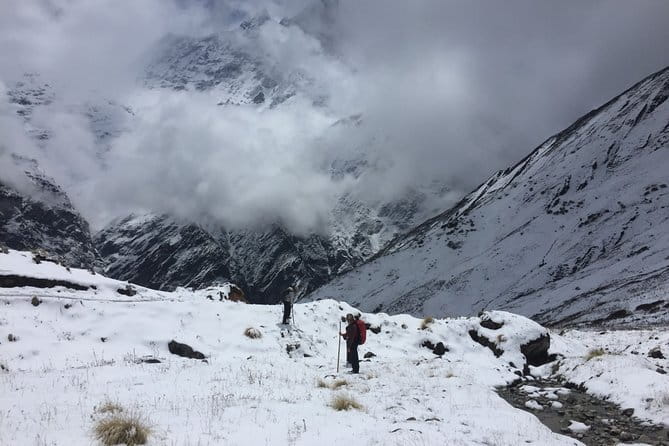
This trek operates in all weather conditions. That means you should be ready for cold and wet. High altitude might be a challenge, and slippery trail sections are part of the deal.
Also pay attention to the tour’s guidance on who should skip it:
- Persons with back problems are not recommended
- People with heart complaints or other serious medical conditions are requested not to take part
- This package is not recommended for pregnant women
- Not accessible for wheelchair users
Even if you’re healthy, you’ll still want the right gear. The dress code listed is formal in phrasing, but the items are very practical. Bring warm layers like a down jacket and fleece jacket, a warm hat and gloves, trekking boots, warm socks, thermal undergarments, and a Goretex jacket for rain. Also pack sunglasses and sun/cold creams, a water bottle, a head light, and a day bag. A sleeping bag is also listed.
My favorite “small” advice from experience here is shoe prep. If you’re going to be on stone steps and damp forest trails, your footwear must grip well. The itinerary includes lots of stairs and downhill sections, plus a suspension bridge crossing, so stability matters.
If you plan smart with your pack weight, your porter setup helps. Since the porter carries up to 30 kg and is arranged as 1 porter for two guests, you’re encouraged to travel lighter. That’s not just comfort. It reduces the risk of overpacking junk you don’t need.
Who this trek suits best, and who should choose differently
This Annapurna Base Camp trek is described as moderate grade, with a requirement for a moderate physical fitness level. It’s also a private tour/activity, meaning it’s just your group.
This suits you if:
- You want a classic Annapurna Sanctuary walking route, not just a quick high-altitude day
- You like teahouses and the steady rhythm of lodge mornings and evenings
- You want Poon Hill included in the plan
- You want a guide team you can rely on, with English support
- You want Kathmandu culture time built in after the trek
It’s not the best fit if:
- You expect hot showers during the trekking days (not included)
- You want fully included meals three times daily during the trek
- You have medical constraints mentioned in the notes
- You want wheelchair accessibility (not available)
- You’re unwilling to handle altitude and slippery trail days
One more note based on how this trek has been praised. People consistently point to the guide experience as a major factor. In past accounts of this trek with Oriental Journeys, names like Aneel came up as an incredible guide, and the broader team including Machhindra Achary and Radhika shows up in how the operation responds to guests. That matters because good guidance is not just friendliness, it’s pacing, route confidence, and practical reassurance.
Should you book this Annapurna Base Camp Trek with Oriental Journeys?
If your goal is a classic Annapurna Base Camp trek with Poon Hill, real village days, and a guided UNESCO Kathmandu reset at the end, I think this package is a solid choice. The inclusion of conservation and permit items, plus a guide and porter setup, makes it feel organized instead of pieced together.
I’d skip it or adjust expectations if you need unlimited meals included, hot showers during the trek, or you’re worried about altitude and footing challenges. In that case, you’ll be happier with a plan that’s more flexible on pacing and comfort.
If you do book, prep early. Train a bit for stairs and downhill walking, pack for cold and wet conditions, and take acclimatization seriously. Do that, and Annapurna Base Camp tends to feel less like a checklist and more like a real achievement.
FAQ
What time does the trek start?
The meeting start time is listed as 7:00 am.
How long is the Annapurna Base Camp trek?
The duration is listed as 12 days (approx.).
Is an English speaking guide included?
Yes. The package includes an English speaking guide during the trekking.
Is a porter included, and how much can they carry?
A porter arrangement is included as 1 porter for two guests, with a maximum of 30 kg per porter for your luggage.
Are meals and hot showers included during the trek?
Breakfasts (7), lunches (2), and dinners (4) are included, but 3 meals per day during the trek are not included. Hot shower during the trek is also not included.
Can I cancel and get a full refund?
Yes. You can cancel up to 24 hours in advance for a full refund. If you cancel less than 24 hours before the start time, you will not receive a refund.
Latest additions near Kathmandu
- Traditional Momo Making Class★ 5.0 · 10 reviews
- White Water River Rafting – 1 Day★ 4.3 · 3 reviews
- Kathmandu to Pokhara Premium sofa bus ticket★ 4.0 · 17 reviews
- Ghorepani Poon Hill Trek★ 5.0 · 16 reviews
- Amazing 1 Day Trekking Experience in Kathmandu Nepal★ 5.0 · 24 reviews
- Ghorepani Poonhill Trek★ 5.0 · 5 reviews
- Walking tour of real Kathmandu through back streets.★ 5.0 · 3 reviews
- Wildlife Adventure in Chitwan Nepal★ 4.0 · 4 reviews
Annapurna Base Camp Treks, compared.
Kathmandu to Annapurna Base Camp (ABC) 5-Day Trek
Read our review →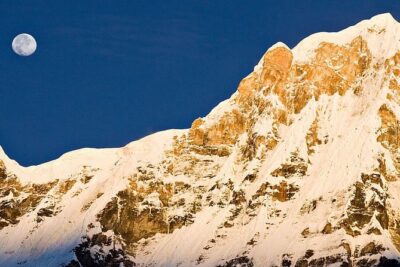
Browse the lists this tour appears in