
Reviewed · ANNAPURNA BASE CAMP TREKS
Annapurna Base Camp Trek
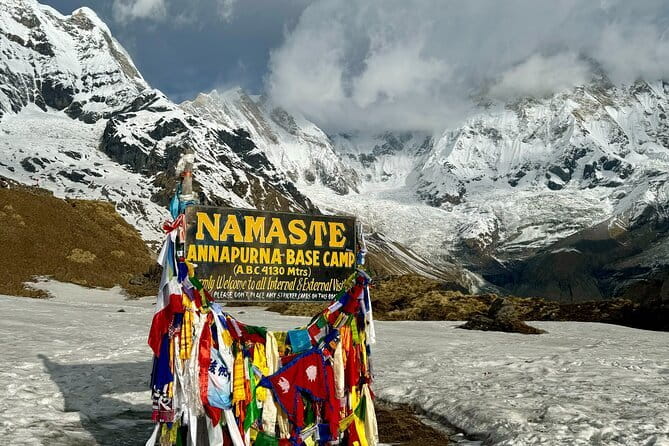
Annapurna is a long, honest climb. This 13-day Annapurna Base Camp trek stitches together city comfort in Kathmandu and lakeside resets in Pokhara, then turns into real time in rhododendron forests and the sacred Annapurna Sanctuary, ending at about 4,130m. It also includes a classic sunrise morning from Poon Hill, with big views of peaks like Dhaulagiri and Machhapuchhre.
I love that the trip is set up as a steady rhythm, with early starts on trek days and lodge nights planned all the way to Base Camp. I also love the practical value: airport transfers, Kathmandu and Pokhara hotels, a guide, permits, and essential fees are all included in the package price.
One thing to think through: meals during the trek are not included, and you’ll be sleeping in twin-share local lodges, which can be basic compared with hotels at home.
In This Review
- Key things to know before you go
- Annapurna Base Camp in plain terms: why this trek keeps its fans
- Price and logistics: where the $650 value actually shows up
- Kathmandu arrival and Pokhara reset: the comfortable start you’ll feel grateful for
- Nayapul to Tikhedhunga and Ghorepani: stairs, villages, and forest walking
- Poon Hill sunrise, Tadapani, and the long forest readjustment
- Machhapuchhre Base Camp to Annapurna Base Camp at 4,130m: your big day
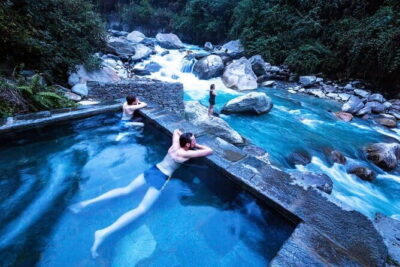
- Descent back to Jhinu Danda and the hot springs mercy break
- Guides, flexibility, and what you can count on in this operator
- Who this trek suits best, and how to prepare without drama
- Should you book this Annapurna Base Camp trek?
- FAQ
- Where is the meeting point and what time does the trek start?
- How long is the Annapurna Base Camp trek?
- What is the total price per person?
- What’s included in the trip price?
- Are meals during the trek included?
- Is vegetarian food available?
- Are porters included?
- What accommodation style should I expect on the trail?
- What are the key highlights of the trek days?
- What is the cancellation policy?
Key things to know before you go
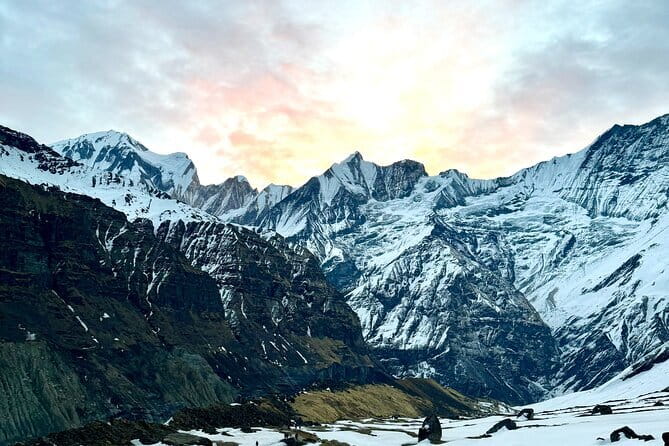
- Poon Hill sunrise at 3,210m: fast uphill, then a view sweep across multiple major Himalayas
- Annapurna Sanctuary context: a sacred area tied to Hindu and Buddhist beliefs, opened to foreigners only in 1956
- Hot springs option at Jhinu Danda: a short 15-20 minute walk when your legs need mercy
- Permits and essential fees are included: fewer last-minute errands before you start hiking
- Twin-share lodge nights: plan for simple rooms and expect the rhythm of tea houses
- Altitude climbs are staged: Base Camp sits at 4,130m, but the route builds gradually
Annapurna Base Camp in plain terms: why this trek keeps its fans
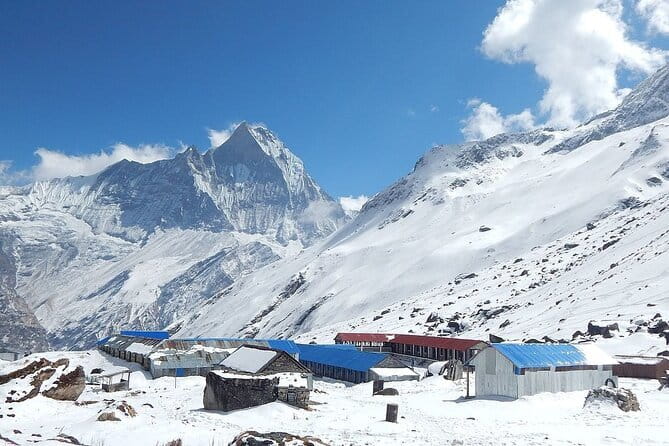
The Annapurna Base Camp trek is one of those routes that sounds dramatic, because it is. You gain height through forested valleys, then you level up into colder, rockier scenery near the sanctuary. The route also gives you a neat mix of ecosystems, because you go from lower, wetter slopes into areas shaped by rain shadow and higher elevations where the air feels thinner.
The spiritual angle is real here, too. The sanctuary is described as sacred to both Hindus and Buddhists, believed to be the abode of their deities, and it wasn’t opened to foreigners until 1956. Even if you’re hiking for views (most of us are), that background changes how you notice the trail. You tend to move a little slower and pay more attention.
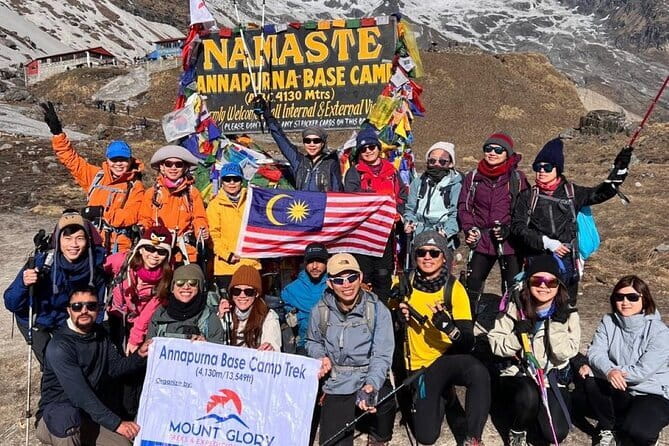
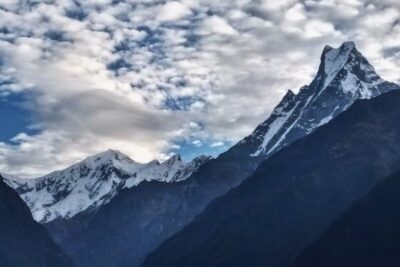
What really sells the experience is the way the itinerary is built around sightlines. Poon Hill gives you a sharp sunrise moment. Machhapuchhre Base Camp adds a “this looks close enough to touch” feeling, even though summit access is not permitted. Then, on the big day, you reach Annapurna Base Camp at 4,130m for the reward everyone remembers.
Possible drawback: this trek is beautiful, but it is not a stroll. There are stone stair climbs and steep sections, and your legs will know about it.
More Treks in Kathmandu
- Everest Base Camp Trek – 14 Days
★ 5.0 · 1,499 reviews - Everest Base Camp Trek
★ 5.0 · 842 reviews - Everest Base Camp Trekking
★ 5.0 · 485 reviews
Price and logistics: where the $650 value actually shows up
At $650 per person, this is the kind of price that makes sense only if the inclusions are doing real work. In this package, a lot of the common add-ons are already handled.
Included items that matter on the ground:
- Airport pick up and drop off by private vehicle in Kathmandu
- Kathmandu and Pokhara hotels (2 nights each), both with breakfast
- Eight nights in twin-share local lodges during the trek
- An experienced trekking guide
- Transport between Kathmandu and Pokhara by tourist bus, plus local vehicle transfers to and from trekking points
- All essential trekking permits and entrance fees
- First aid medicines carried by your guide
- Welcome dinner and a farewell dinner with cultural dance performance
What is not included:
- Meals during the trek (you’ll pay for food day by day)
- Tips to the trekking guide
- Porters are available, but only at an additional price
So the real value question for you is food. If you’re the kind of hiker who snacks constantly and eats a hearty breakfast and full dinners every day, you’ll spend more than you might expect. If you plan your budget and keep your meals reasonable at the lodges, the package price can feel fair and well balanced.
Also worth noting: the operator offers a pickup option and a mobile ticket, and this is described as a private tour/activity, meaning only your group participates. That generally means less waiting around for other schedules.
Kathmandu arrival and Pokhara reset: the comfortable start you’ll feel grateful for
Day 1 is straightforward and helpful: you land, you get picked up at Tribhuvan Airport, and you transfer to a hotel. Your guide meets you there, gives a brief about what’s coming, and helps you prep your gear. That matters because the day you start hiking is not the day you want to realize your gloves are at home.
Day 2 moves you to Pokhara with a scenic drive following the Trisuli River, with lunch stops along the way. When you arrive, you check in and get free time at Lakeside by Phewa Lake, including the option to relax and even go boating if you feel like it.
This is your buffer day. Use it to:
- Sort your layers (warm for early mornings, breathable for climbs)
- Test your daypack weight
- Do an easy walk around Lakeside so you don’t wake up stiff tomorrow
This trip also pairs city comforts with real trek logistics. That balance is part of why it works well for people who want adventure, but not chaos.
Nayapul to Tikhedhunga and Ghorepani: stairs, villages, and forest walking
The trek officially starts once you’re driven to Nayapul (with the route stepping through Birethanti and onward). Day 3 includes the first big “you’re really on the trail now” shift. You trek to Birethanti, a riverside village at the confluence of the Modi and Bhurungdi Kholas, then climb above Sudame and continue up the valley side toward Tikhedhunga.
What makes this section special:
- It’s your acclimation phase in walking form, not just a waiting game
- You get the first close-up feel of river valleys and village life
- You build hiking rhythm before the steeper summit days
Day 4 ramps things up. You take a steep climb via stone staircase to Ulleri, a Magar village at about 2,070m. Then you walk gradually through oak and rhododendron forests toward Banthanti around 2,250m, continuing to Nagethanti and eventually Ghorepani.
A practical note: the stone staircase section can feel like it’s never ending. Bring trekking poles if you use them, and take your breaks early, not only after you’re exhausted.
Ghorepani is a key stop because it sets up Day 5, the Poon Hill sunrise push. You’re not just “sleeping somewhere.” You’re positioning for the payoff.
More Annapurna Base Camp treks:
- Annapurna base camp trek 5 Days
★ 5.0 · 252 reviews - 14-Day Private Annapurna Base Camp Trek
★ 5.0 · 180 reviews - Annapurna Base Camp Trekking
★ 5.0 · 116 reviews - Annapurna Base Camp Trek
★ 5.0 · 111 reviews
Poon Hill sunrise, Tadapani, and the long forest readjustment
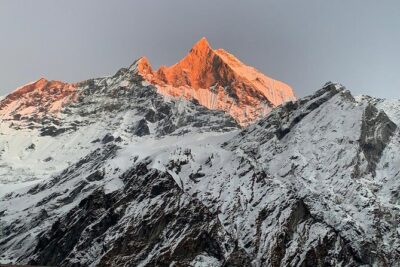
Day 5 is short and intense in the morning: an early hike of about 45 minutes to Poon Hill at 3,210m. Then you get the sunrise moment with a wide, unobstructed view. The view list is impressive in the way that only the Himalayas can deliver: Dolpo toward the far western region, Mt. Dhaulagiri, the Annapurnas, Machhapuchhre (fishtail), and Manaslu.
After Poon Hill, you continue along a ridge through pine and rhododendron forest to Deurali, then descend toward Banthanti and turn off to Tadapani.
Here’s what I like about this day from a hiking-planning viewpoint: it mixes one big reward with a later descent and regroup. You’re getting your “wow” early, then you still have meaningful walking ahead without it turning into a single all-day grind.
Day 6 shifts you to Sinuwa. You start with steep downhill through rhododendron forest to a Gurung community village, then the path becomes fairly easy as you move up to Sinuwa at about 2,300m.
Day 7 keeps the tempo moving. You drop down to Sinuwa Khola, then climb to Khuldighar (about 2,380m). After that, the trail gets more technical with rocky banking and then you walk through bamboo and rhododendron thickets to reach Deurali hotel.
If you tend to get cold easily, these forest days are where you’ll feel the temperature swing. Start warm, then adjust as you climb.
Machhapuchhre Base Camp to Annapurna Base Camp at 4,130m: your big day
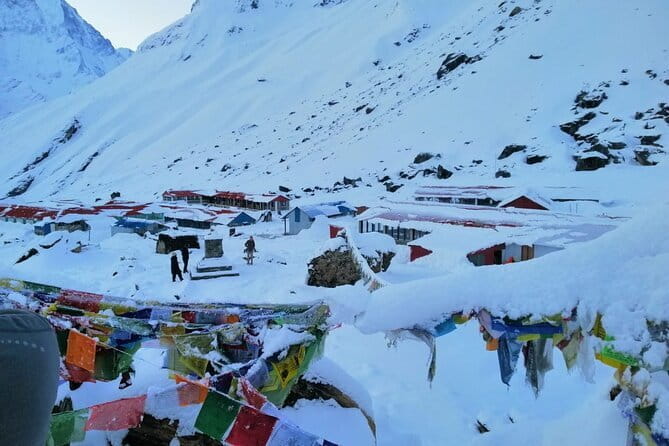
Day 8 is the centerpiece. You climb through forest and cross Hinku Cave, then continue past Deurali and through to Machhapuchhre Base Camp. This is described as not a true base camp since summiting Machhapuchhre is not permitted.
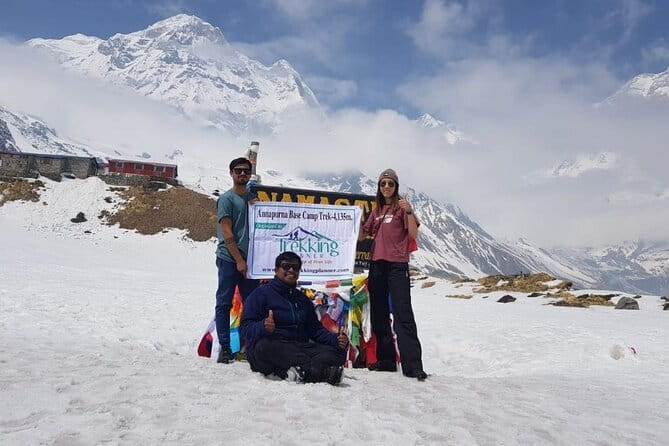
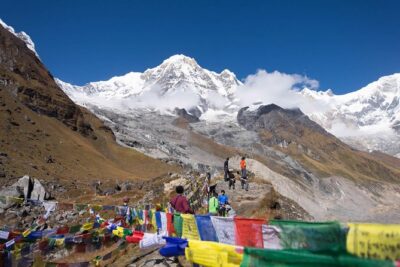
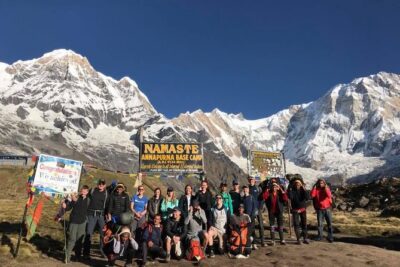
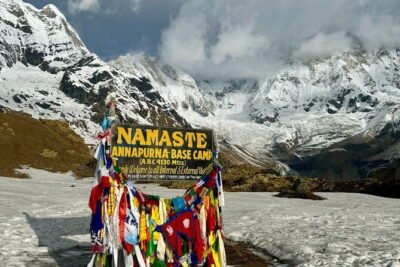
Then, about two more hours of walking brings you to Annapurna Base Camp at 4,130m. This is the point where the Annapurna sanctuary feeling becomes unmistakable: the trail sits surrounded by icy peaks in the wider sanctuary area, and you get unobstructed views once you arrive.
What I’d tell you to do on this day:
- Don’t rush. Take your time at Machhapuchhre Base Camp if it’s visible and clear
- Save energy for the final push to Base Camp
- Expect breathlessness. Altitude is part of the experience, not an optional feature
The main drawback to this day is also the main truth: it’s harder than the days before it, even if you’ve kept a good pace. Your success will come from steady walking and smart resting, not from speed.
Descent back to Jhinu Danda and the hot springs mercy break
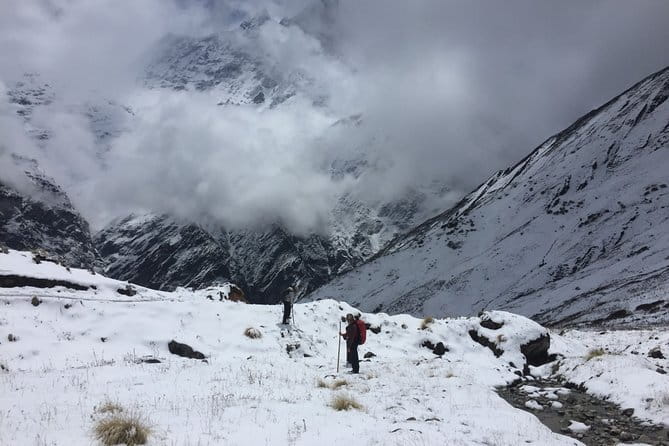
Day 9 is a downhill day. You retrace steps from Annapurna Base Camp back toward Bamboo. The schedule describes it as downhill and not very difficult, and you also get the benefit of not having to “think” about the route as much because you’re going back the same way.
Day 10 continues the return with a mix of ups and downs. You go uphill from Bamboo to Kuldighar, then downhill toward Chhomrong Khola. After that, you climb stone steps to Chhomrong and then descend to Jhinu Danda for the night.
This is where Jhinu Danda earns a special mention: hot springs are described as just a 15-20 minute downhill walk from there. After the stair climbing and the day’s effort, it’s a simple way to help your body recover without turning the trip into a separate excursion.
Day 11 transitions out of trekking. You walk up to Nayapul, then take a bus ride back to Pokhara. Lunch is provided on the way, and you arrive with enough daylight to relax at your hotel.
Day 12 returns to Kathmandu by tourist bus. You can choose flight on the return side, but this day specifically is bus time. After reaching Kathmandu, you can rest or walk around Thamel. The day ends with a farewell dinner at a typical local restaurant with cultural dance performance.
Day 13 is the wrap: you get dropped at Kathmandu International Airport for your flight home.
Guides, flexibility, and what you can count on in this operator
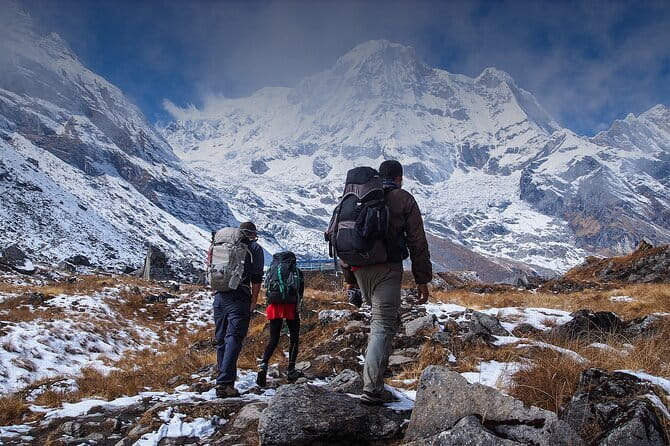
One of the clearest strengths in the provided info is the attention to coordination and people. The operator involved is Glorious Himalaya Trekking Pvt. Ltd., and the included trekking support is built around having an experienced guide plus first aid medicines on the trek.
Names you might come across in this team include Ganesh (owner), and guides mentioned include Prakash, Keshab, Jiban, and Buddhi. Porters are also named in the info, such as Amar, Azay, and Ashok. That matters because it’s not just “a guide exists.” The pattern is that individuals are responsive and supportive, and they’re described as handling changes when situations demand it.
For you, the practical takeaway is: ask questions before and during the trek. If you feel unwell or the weather shifts, it sounds like the team can adapt the route rather than forcing a rigid plan. You should still expect the main goal to stay the Annapurna Base Camp experience, but flexibility can protect your trip.
Also, remember that porters are available at an additional price. If you want to hike with less carrying, budgeting for that can be a smart way to keep energy for acclimatization and the Base Camp day.
Who this trek suits best, and how to prepare without drama
This trip is stated as requiring a moderate physical fitness level. That’s about right for ABC if you’re not brand new to hiking, because you’ll face:
- Stone stair climbs and steep sections early on
- A long, high day to 4,130m
- A mixed descent with steps and rocky trail
Packing matters because the itinerary includes early mornings and changing temperatures. I’d plan for:
- Warm layers for higher altitude
- Rain protection, especially since parts of the route include forested valleys that can hold moisture
- Trekking poles if your knees hate stairs (mine do)
- A daypack you can comfortably carry all day since you’re mostly using lodges along the way
One more thing: you can request vegetarian options at booking, but the package still lists meals during the trek as not included. So assume you’ll be paying for breakfast and dinners along the route unless your arrangements say otherwise.
If you want a smooth “from the airport to the mountains” experience, this fits well. If you’re the type who wants luxury hotels during the trek, be aware you’re signing up for local lodge living, twin-share rooms, and basic amenities.
Should you book this Annapurna Base Camp trek?
I’d say book it if you want a well-structured ABC route with the important logistics handled: permits included, guide included, Kathmandu and Pokhara hotels included, and clear planning for the main hiking days plus the Poon Hill sunrise.
I’d think twice if meals during the trek are a big deal for your budget, because you’ll be paying those daily. Also, if stair climbing scares you, know that the route includes stone stair sections, especially early in the Ghorepani lead-in.
If you like your adventure organized, with enough support to focus on hiking and views, this price can feel like good value. Just go in with realistic expectations about lodges and altitude, and you’ll have a trip that feels like it belongs in your personal highlights.
FAQ
Where is the meeting point and what time does the trek start?
The meeting point is Tribhuvan Airport in Kathmandu, Nepal, and the start time is 6:30 am.
How long is the Annapurna Base Camp trek?
The duration is listed as 13 days (approx.).
What is the total price per person?
The price is $650.00 per person.
What’s included in the trip price?
Included items are dinner, airport pick up and drop off by private vehicle, welcome dinner with cultural dance performance, 8 nights of twin sharing local lodges during the trek, 2 nights in Kathmandu and 2 nights in Pokhara hotels with breakfast, an experienced trekking guide, long-range transport by tourist bus between Kathmandu and Pokhara, private transport from and to trekking points, first aid medicines carried by the guide, all fees and taxes, permits and entrance fees, and an adventure certificate after trip completion.
Are meals during the trek included?
No. Meals during the trek are not included.
Is vegetarian food available?
Yes, vegetarian option is available. You should advise at the time of booking.
Are porters included?
Porters are not included in the base package price. They are available at an additional cost.
What accommodation style should I expect on the trail?
You’ll have 8 nights of twin sharing local lodges during the trek, plus hotels in Kathmandu and Pokhara as specified.
What are the key highlights of the trek days?
The schedule includes a sunrise hike to Poon Hill, trekking through villages and rhododendron forests, reaching Annapurna Base Camp at about 4,130m, and hot springs at Jhinu Danda.
What is the cancellation policy?
Free cancellation is available up to 24 hours in advance for a full refund. If you cancel less than 24 hours before the experience start time, the amount you paid will not be refunded.
Latest additions near Kathmandu
- White Water River Rafting – 1 Day★ 4.3 · 3 reviews
- Traditional Momo Making Class★ 5.0 · 10 reviews
- Kathmandu to Pokhara Premium sofa bus ticket★ 4.0 · 17 reviews
- Ghorepani Poon Hill Trek★ 5.0 · 16 reviews
- Amazing 1 Day Trekking Experience in Kathmandu Nepal★ 5.0 · 24 reviews
- Ghorepani Poonhill Trek★ 5.0 · 5 reviews
- Walking tour of real Kathmandu through back streets.★ 5.0 · 3 reviews
- Wildlife Adventure in Chitwan Nepal★ 4.0 · 4 reviews
Annapurna Base Camp Treks, compared.
Kathmandu to Annapurna Base Camp (ABC) 5-Day Trek
Read our review →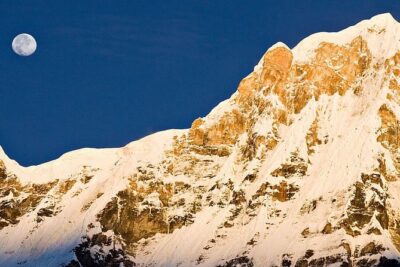
Browse the lists this tour appears in