
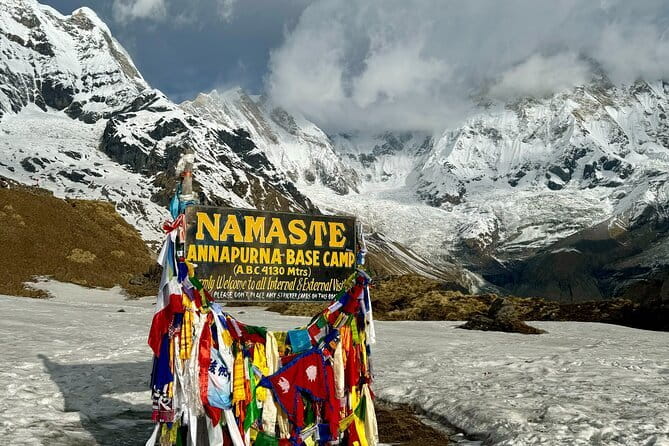
Reviewed · ANNAPURNA BASE CAMP TREKS
Annapurna Base Camp trek
One look at the route profile and you get why this trek lasts. Annapurna Base Camp sends you through rhododendron forests, bamboo groves, terraced farmland, and isolated villages, all with tea house nights and a local English-speaking guide guiding the rhythm. I like that the small group stays capped at 10, so the trip feels organized without feeling crowded.
What I like most is the “ready to hike” setup: permits are included (Annapurna Conservation Area permit plus TIMS Card), and meals are built into the plan (breakfast, lunch, dinner). That means less scrambling and more time thinking about your next step, not your next document.
The main drawback to consider is the cold at higher elevations, especially around base camp. Even if you’re fit, you will feel it when the nights get really chilly, and you should plan for basic tea house conditions (for example, hot shower and Wi-Fi are not included).
In This Review
- Quick hits before you go
- Why Annapurna Base Camp Feels Like a Whole Nepal Story
- The Trek Rhythm: What “6 Hours a Day” Really Means
- Kathmandu Timing, Pickup, and Getting Started Without Chaos
- Permits and Local Guides: What You’re Paying For
- Tea Houses, Meals, and the Mountain Reality Check
- Reading the Route: Rhododendron Forests to Bamboo Groves
- Reaching the Foot of Annapurna and Why Base Camp Feels Different
- Service That Actually Changes Your Day-to-Day Experience
- Price and Value: When $999 Covers the Right Stuff
- Who Should Book This Trek (and Who Might Find It Hard)
- What to Do Before You Go (So the Trek Feels Like a Win)
- Should You Book This Annapurna Base Camp Trek?
- FAQ
- How long is the Annapurna Base Camp trek?
- How many hours do I hike each day?
- Is this a small-group trek?
- What permits are included?
- What meals are included on the trek?
- Does the tour include hotel pickup and drop-off?
Quick hits before you go
- Small group size (max 10) keeps things flexible and easier to manage on trail
- About 6 hours of walking daily fits a moderately challenging pace
- Permits handled for you includes the Annapurna Conservation Area permit and TIMS Card
- Tea house stays give you a classic, off-grid trekking feel
- English-speaking professional local guide helps you understand what you see
- Meals included reduce daily cost surprises, but drinks are not
Why Annapurna Base Camp Feels Like a Whole Nepal Story
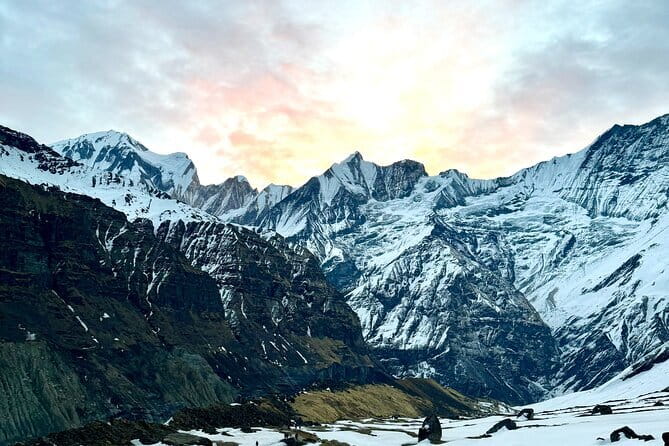
This is a classic Nepal trek for a reason. You are not just moving through scenery, you are moving through layers of climate and daily life, from lower foothill farms up toward the Annapurna region’s high-country feel. Over roughly 14 days, the walk blends nature, culture, and history in a way that is hard to replicate on a short tour.
I like the way the route diversity is spelled out in plain terms: rhododendron forests, bamboo groves, terraced farmland, and isolated villages. That matters because it turns the trek into more than “hike, repeat.” One day feels different from the next, even when your routine stays similar.
And because the group is small, you can actually enjoy the slow parts too, like the times you pause for photos or just to watch how people live at the edges of the trail. Tea house trekking is simple by design, and that simplicity is part of the charm.
More Treks in Kathmandu
- Everest Base Camp Trek – 14 Days
★ 5.0 · 1,499 reviews - Everest Base Camp Trek
★ 5.0 · 842 reviews - Everest Base Camp Trekking
★ 5.0 · 485 reviews
The Trek Rhythm: What “6 Hours a Day” Really Means
Expect trekking or hiking for around 6 hours each day. That is a meaningful target, but it is not an all-day slog. The advantage of that daily structure is mental. You can plan your pace and rest windows, then get into the next day without feeling like you are always behind.
This is also described as moderately challenging. Translation: it works best for active travelers who can walk steadily and handle changing altitude over multiple days. If you expect flat, short days, this will test you. If you are used to hiking, you will likely find it very doable and satisfying.
Tea house trekking changes how you experience those hours. You do not just finish your day and vanish. You arrive, share space with other trekkers, then sleep in a basic mountain setup. That creates a rhythm you can lean into, but it is not the place for luxury expectations.
Kathmandu Timing, Pickup, and Getting Started Without Chaos
The trip starts in Kathmandu, with hotel pickup and drop-off included, and with a schedule window running from 5:15 AM to 10:45 PM (Monday through Sunday). That wide range is helpful because it reduces the chance you get stuck waiting for a narrow meeting time.
The tour also notes you are near public transportation, and that there is round-trip by public transportation. In practical terms, this is not a complicated, private-transfer extravaganza. It is more like, get you where you need to be, then focus on the trek.
Why this matters: on a trek like this, the last thing you want is to waste your energy wrestling logistics. Smooth early days make it easier to arrive mentally ready to walk, not still in “arranging mode.”
Permits and Local Guides: What You’re Paying For
Your price is $999.00 per person, and it is not only about the hiking. It includes the big must-haves that often add up fast on your own: accommodation as per itinerary, meals as per itinerary, local taxes, and the permits (Annapurna Conservation Area permit and TIMS Card).
You also get a government registered local guide who speaks English. That is a high-value feature for Annapurna Base Camp because the trek is not just about distance. It is about understanding what you are seeing. A good guide helps you connect dots between the route, the terrain, and the way communities survive and adapt at different elevations.
The small-group limit to a maximum of 10 matters here too. With fewer people, the guide can spend time on the details that matter to your pace and comfort, like when to slow down, when to push a little, and how to handle day-to-day conditions.
More Annapurna Base Camp treks:
- Annapurna base camp trek 5 Days
★ 5.0 · 252 reviews - 14-Day Private Annapurna Base Camp Trek
★ 5.0 · 180 reviews - Annapurna Base Camp Trekking
★ 5.0 · 116 reviews - Annapurna Base Camp Trek
★ 5.0 · 111 reviews
Tea Houses, Meals, and the Mountain Reality Check
Tea houses are part of the daily system. You will stay in tea houses during the trek, which is often the simplest way to keep the trek moving at high altitudes where full hotels are not realistic.
Meals are included as breakfast, lunch, and dinner. That is a big deal for value and convenience. You do not have to negotiate every meal stop or figure out food logistics along the way. Still, drinks are not included, and additional food and drinks are not covered unless specified.
The basics are also limited. Wi-Fi, hot showers, and battery charging are not included. That does not mean you will be miserable, it just means you should plan your expectations and your comfort strategy. If you need constant connectivity or warm showers to feel human, you’ll have to adjust your plan or bring the mindset of a trek, not a resort vacation.
Reading the Route: Rhododendron Forests to Bamboo Groves
One of the best things about this trek is how the route is described like a series of textures. You move through rhododendron forests, bamboo groves, and terraced farmland, plus you pass through isolated villages along the way.
Here’s how to think about it while you walk:
- In forested stretches, you often get natural shade and softer light for photos. It is a great time to slow down and look at the details, leaves, branches, and how paths thread through trees.
- In bamboo areas, the air can feel cooler and the scenery feels more patterned. You may notice how the trail funnels you into steady rhythm.
- Terraced farmland reminds you that this is not a wilderness theme park. People work these slopes, and the villages you pass are the point where trail life meets local life.
And yes, you will have plenty of time for photos and videos. The trek is set up to explore, not just to rush toward a single checkpoint.
Reaching the Foot of Annapurna and Why Base Camp Feels Different
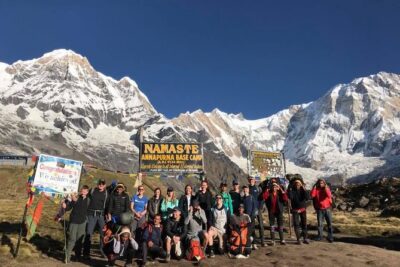
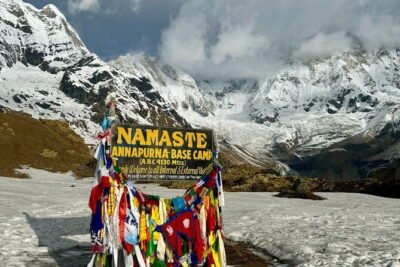
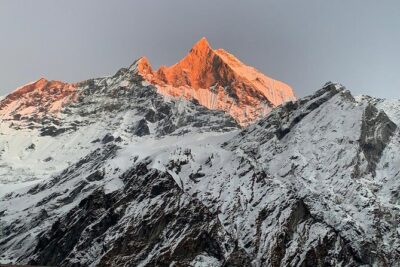
The ultimate goal is to reach the foot of Annapurna, which is the emotional peak of the trek. This section of the journey tends to feel more exposed as altitude rises. Even without overpromising, you should plan for colder nights and sharper mountain air.
The trip description and the field notes from past trekkers both point to one reality: it can be really cold up at base camp. That is a key consideration, because cold is not only uncomfortable, it also affects energy and how quickly you recover between walking days.
My advice is to treat base camp like the culmination of preparation. If you handle the climb days patiently, base camp rewards you with perspective. And since tea house trekking keeps you in mountain routines, you are not just arriving, you are earning it day by day.
Service That Actually Changes Your Day-to-Day Experience
The operational support is one of the strongest parts of this trek. The operator is Nepal Trekking Experts Pvt. Ltd., and names tied to strong service show up again and again: Rajesh is described as responsive before and during the trip, and guides like Ganesh, Basanta, Resham, Amit, Prakash, Rajan, and Milan are credited with patient, careful care.
You can think of guide quality as more than personality. It shows up in practical ways:
- Someone who can brief you on what to do and what to avoid before the hike helps you move smarter from the start.
- Someone who adapts when conditions change keeps the trip from becoming stressful.
- Someone who watches your comfort and safety helps you finish stronger.
Porter support also matters. Names like Chhwang, Gautam, and Santos are associated with caring, professional help. For your comfort, that can mean less burden and more energy for the trail itself. Even when the trek is “moderately challenging,” your body still needs recover time, and strong support helps.
One more service point: there is flexibility. Past trekkers described being able to customize the itinerary, and support that handled delays and even sickness before the start. Not every trek provider handles disruption equally well, so this is worth factoring into your decision.
Price and Value: When $999 Covers the Right Stuff
At $999, this is not the cheapest way to do Annapurna Base Camp, but it is also not a splurge when you count what’s included.
You are getting:
- Accommodation as per itinerary
- Meals: breakfast, lunch, dinner
- Permits: Annapurna Conservation Area permit plus TIMS Card
- Hotel pickup and drop-off
- Round-trip by public transportation
- An English-speaking professional local guide
- Local taxes
The value sweet spot is that you are not paying again and again for the basics that make trekking possible. If you try to assemble everything yourself, permits, guide time, and meal structure can become a surprise patchwork. Here, the trip is set up like a workable system.
At the same time, you should plan for costs not included. Drinks, souvenirs photos, temple or monastery entrance fees, and personal extras are outside the package. And because Wi-Fi and battery charging are not included, you may want to bring an offline mindset and power plan.
Who Should Book This Trek (and Who Might Find It Hard)
This trek is best for active, adventurous travelers who are comfortable walking roughly 6 hours a day and have a moderate fitness level. It is also suited to small-group travelers who want a guide and structure, not a solo DIY experience.
You’ll probably enjoy it if you like:
- Tea house trekking and basic mountain living
- Learning from a local guide about the Nepal Himalaya
- A route with multiple “types” of scenery, forests, farms, villages
- A pace that is challenging but not extreme
You might think twice if you:
- Have very limited walking stamina
- Need hot showers and Wi-Fi as daily essentials
- Are not prepared for cold conditions near base camp
What to Do Before You Go (So the Trek Feels Like a Win)
Because the trek includes most meals and the permits are handled, your pre-trip work is mostly about your body and your packing mindset.
Focus on conditioning for steady walking, not just short workouts. If you can do hikes that build your endurance, you will feel better on day-to-day hours.
Also, treat cold as a real factor. Since base camp nights can be really cold, make sure you plan for warm layering and comfort in tea house conditions, where you cannot rely on hot showers or battery charging.
Finally, use the guide support. The trip is built around an English-speaking professional local guide who can explain what you should do on trail. If you ask questions early, you tend to get a smoother experience later.
Should You Book This Annapurna Base Camp Trek?
If you want a well-structured Annapurna Base Camp trek with permits included, tea house stays, an English-speaking guide, and a small group that tops out at 10, I think this is a strong fit. The price looks more reasonable when you count the meals, accommodation, guide, pickup, and the required access permits.
I would only hesitate if cold nights or basic tea house comfort would ruin your trip. If those parts sound tolerable, then this is exactly the kind of classic Nepal walking experience that pays off, because you spend 14 days moving through forests, farms, and villages, then you reach the foot of Annapurna with real bragging rights.
FAQ
How long is the Annapurna Base Camp trek?
The trek is about 14 days (approx.).
How many hours do I hike each day?
You should expect to trek or hike for around 6 hours each day.
Is this a small-group trek?
Yes. The maximum group size is 10 travelers.
What permits are included?
The package includes the Annapurna Conservation Area permit and the TIMS Card.
What meals are included on the trek?
Meals included are breakfast, lunch, and dinner, following the itinerary.
Does the tour include hotel pickup and drop-off?
Yes. Hotel pickup and drop-off are included, and it also includes round-trip public transportation.
Latest additions near Kathmandu
- White Water River Rafting – 1 Day★ 4.3 · 3 reviews
- Traditional Momo Making Class★ 5.0 · 10 reviews
- Kathmandu to Pokhara Premium sofa bus ticket★ 4.0 · 17 reviews
- Ghorepani Poon Hill Trek★ 5.0 · 16 reviews
- Amazing 1 Day Trekking Experience in Kathmandu Nepal★ 5.0 · 24 reviews
- Ghorepani Poonhill Trek★ 5.0 · 5 reviews
- Walking tour of real Kathmandu through back streets.★ 5.0 · 3 reviews
- Wildlife Adventure in Chitwan Nepal★ 4.0 · 4 reviews
Annapurna Base Camp Treks, compared.
Kathmandu to Annapurna Base Camp (ABC) 5-Day Trek
Read our review →
Browse the lists this tour appears in