
Reviewed · ANNAPURNA BASE CAMP TREKS
Annapurna Base Camp Trek
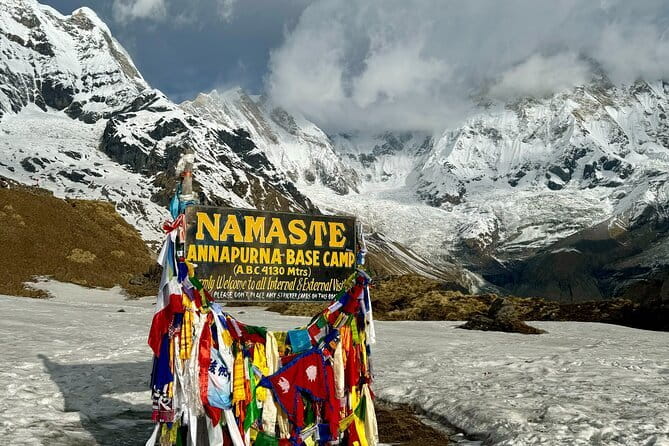
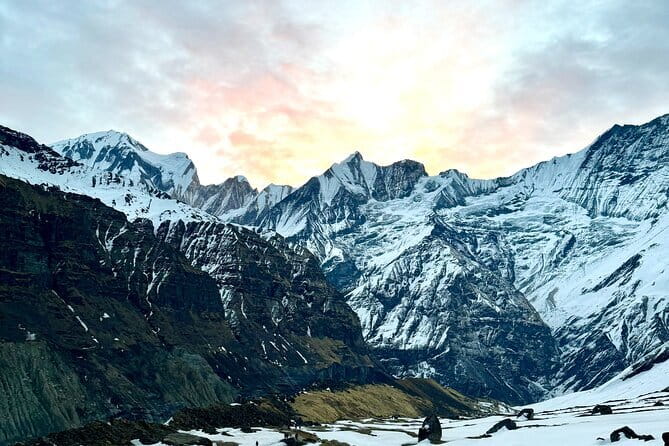
Seven days to stand under Annapurna giants. What makes the Annapurna Base Camp trek so compelling is how fast the route changes from village trails to big-mountain drama, plus the chance to watch the peaks glow at Annapurna Base Camp sunrise. I also like that your trip is managed with a real licensed mountain guide and permits handled up front, so you spend less time worrying and more time walking. One consideration: the start is early (4:45 am) and the trek depends on good weather.
You’ll hike at a moderate pace, with cultural stops in Gurung villages along the way, and you’ll get a well-timed break at Jhinu hot spring on the return. The price of $699.67 per person looks fair when you see what’s included: meals, guide support, 7 nights on the trek, and the core paperwork for the area.
In This Review
- Key highlights that matter on this ABC trek
- What this 7 day Annapurna Base Camp trek is really like
- Getting there with an early 4:45am start
- Day 1 Ghandruk: terrace walking and Fish Tail views from Pokhara
- Day 2 to Chhomrong: Kimrong Danda ridge and forest trails
- Day 3 toward Bamboo: Modi River gorge and the Sinuwa Danda rhythm
- Day 4 near Himalaya Hotel and Hinku cave: Annapurna South and Huin-Chuli pressure
- Day 5 to Annapurna Base Camp: the big walk, then back toward Bamboo
- Day 6 Jhinu Danda hot spring: sore legs, warm water, grand scenery
- Day 7 back to Pokhara: Siwai walk, drive out, and a final museum stop
- Price and value: what $699.67 includes, and what you must budget
- Guides and porters: what the best teams do on ABC
- Fitness and altitude reality for a moderate ABC trek
- Who this trek is best for (and who should think twice)
- Should you book this Annapurna Base Camp trek?
- FAQ
- How long is the Annapurna Base Camp trek on this tour?
- Where is the trek located and what is the usual starting point?
- What time does the trek start each day?
- What’s included in the price?
- What is not included?
- Is cancellation allowed?
Key highlights that matter on this ABC trek
- Government-licensed mountain guide, plus permit handling (ACAP and TIMS)
- Real village-to-village trekking through places like Ghandruk and Chhomrong
- Himalaya Hotel and Hinku cave area approach under Annapurna South and Huin-Chuli
- A focused Base Camp day built around reaching the sanctuary core
- Jhinu Danda hot spring stop for sore legs and a view at the same time
- Most essentials included (meals, accommodation, guides, transport), but not the add-ons like bottled water and shower/hot water
What this 7 day Annapurna Base Camp trek is really like
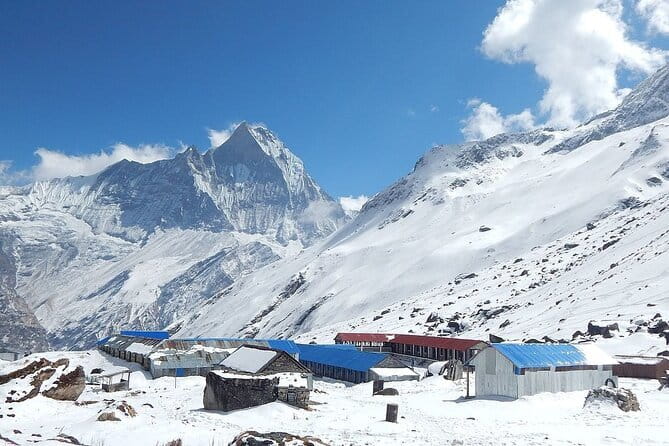
This is a classic Annapurna Sanctuary trek with a “progressive wow” factor. You start in the foothills around Pokhara, then the walking gradually tightens into forests and ridges before it finally opens up into the glacial, high-altitude feeling you came for.
You’re not just walking for pictures. The route keeps nudging you toward bigger perspective moments, like ridge viewpoints and river gorges, then saving the biggest payoffs for the final days at Base Camp. And because meals and accommodations are included, you’re not juggling logistics every evening.
The best part is that it’s structured for a 7 day schedule. That means fewer travel days on paper, but it also means you’ll want to take pace seriously. If you go too fast, the altitude will punish you.
More Treks in Kathmandu
- Everest Base Camp Trek – 14 Days
★ 5.0 · 1,499 reviews - Everest Base Camp Trek
★ 5.0 · 842 reviews - Everest Base Camp Trekking
★ 5.0 · 485 reviews
Getting there with an early 4:45am start
Your day begins at 4:45 am at the meeting point, and that early start isn’t random. It helps you make the most of the daylight once you’re already in trekking mode and moving between trail sections.
You’ll also get pickup offered and included ground transportation tied to the route. That matters because the Annapurna region is not a “drive up, walk from a parking lot” place. You’ll transfer to trail access points and then return to Pokhara later, which keeps this trek feeling like a true journey rather than a patchwork of local rides.
If you’re the type who needs a slow ramp-up, plan your mindset. Early starts are easier if you pack smart the night before and keep your morning routine simple.
Day 1 Ghandruk: terrace walking and Fish Tail views from Pokhara
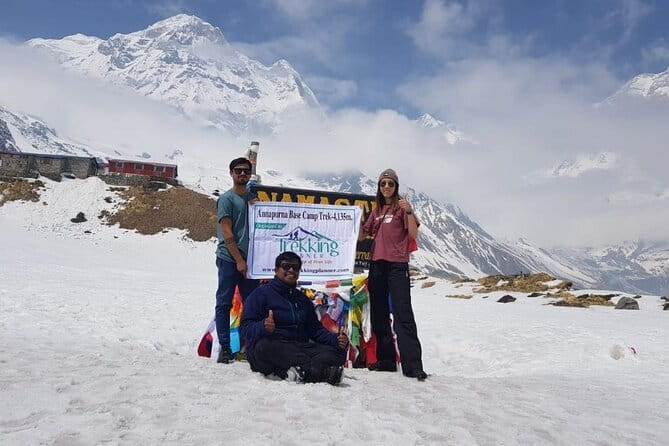
Most trips start with an overnight in Pokhara, where you’re positioned for big Annapurna-region views, including Machhapuchhre, the Fish Tail. After breakfast, you drive to begin the first walking day, and that first leg sets expectations in the best way: manageable effort, plus scenery that keeps unfolding.
Ghandruk is where the trek turns from “getting there” into “you’re in it.” The village feel here is part of the experience. You’ll be walking past terraced fields and through the rhythm of daily life, then settling in for the night after your first real climb.
What I like about Day 1 is the balance. You ease into altitude reality without throwing you straight into the hardest sections.
Day 2 to Chhomrong: Kimrong Danda ridge and forest trails
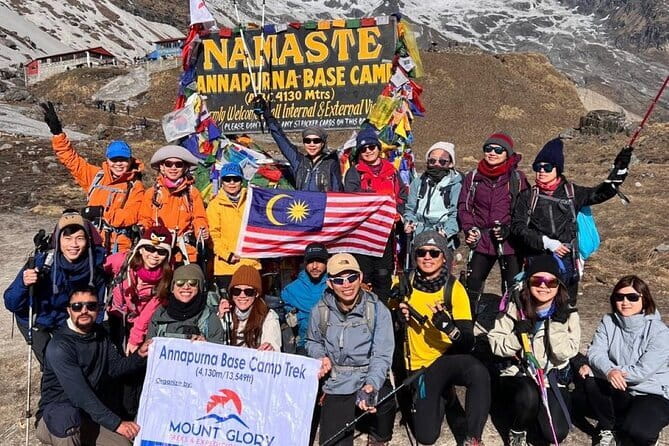
On Day 2, the trek builds with a gradual climb and then a more obvious push toward ridgelines. The route passes Kimrong Danda, which gives you that classic ridge feeling, where the valley drops away and you can see how your next trail will thread through the terrain.
From there, it’s downhill movement into cooler, forested paths that lead you toward the area around Kimrong River and farm villages before you reach Chhomrong. Chhomrong is one of the trek’s big cultural waypoints, and it also tends to feel like a hub: you get energy here, even if your legs are already learning the rhythm.
Trade-offs? It’s not a day to skip breaks. Take them. This is the day where a smart pace sets you up for the later long walk days.
More Annapurna Base Camp treks:
- Annapurna base camp trek 5 Days
★ 5.0 · 252 reviews - 14-Day Private Annapurna Base Camp Trek
★ 5.0 · 180 reviews - Annapurna Base Camp Trekking
★ 5.0 · 116 reviews - Annapurna Base Camp Trek
★ 5.0 · 111 reviews
Day 3 toward Bamboo: Modi River gorge and the Sinuwa Danda rhythm
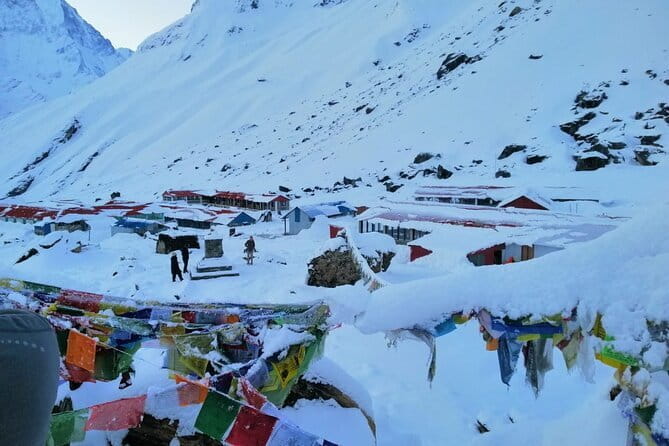
Day 3 shifts into a more rugged walking feel. After descending from Chhomrong, you climb again to Sinuwa Danda (a ridge), and then you’re in a pattern of ups and downs through deep, winding forest trails.
The destination for the night is the Bamboo area, reached after walking into the Modi River gorge feel. This kind of trail often tests your technique more than your strength. If you keep your steps steady and avoid sprinting downhill, you’ll likely feel better later.
This is also where the guide support matters. A strong guide helps you pace, plan meal breaks, and keep your head in the right place. In past trekking groups with this operator, guides like Suraj and Anos have been praised for planning meals and accommodation with an eye for how people are doing physically.
Day 4 near Himalaya Hotel and Hinku cave: Annapurna South and Huin-Chuli pressure
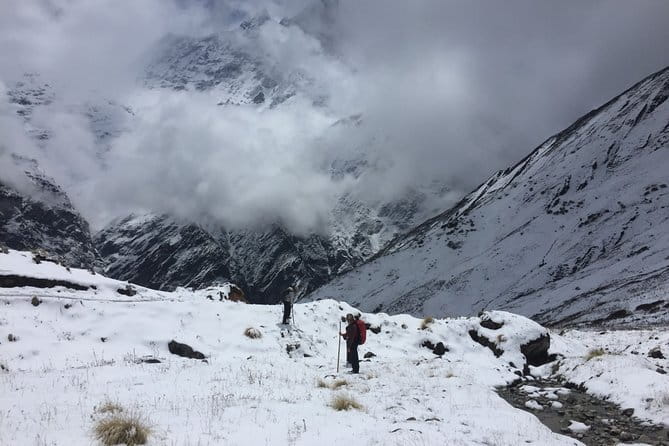
Day 4 is where the Annapurna story gets louder. Your walking route takes you close to the Himalaya Hotel area and near Hinko cave, under the presence of Annapurna South and Huin-Chuli peaks.
What you gain here is the sense that you’re moving into the Annapurna sanctuary proper. The air feels different, the views get more “up-close,” and the walking becomes more about positioning yourself for the final Base Camp push.
Also, this day acts like a staging step. You’re not at Base Camp yet, but you’re close enough to feel the change in priorities: keep conserving energy, drink water, eat on schedule, and don’t treat every viewpoint like an excuse to stop for 45 minutes.
Day 5 to Annapurna Base Camp: the big walk, then back toward Bamboo
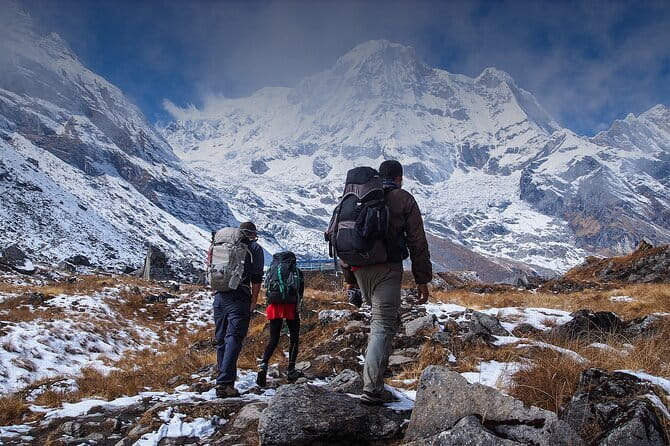
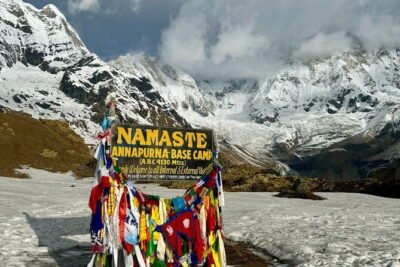
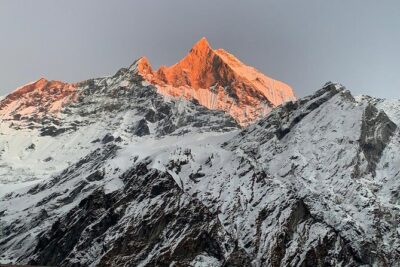
Day 5 is the emotional peak of the trek. You’ll spend time at Annapurna Base Camp, with the special highlight being the views around the towering peaks and glaciers, plus the appeal of sunrise conditions depending on weather and timing.
Practically, this day tends to be long. The route includes a long walk, around six hours for the Base Camp segment, then a return descent with short ups to reach Bamboo again. That return matters because it helps you keep the circuit workable in a 7 day schedule.
If you only think about the destination, you’ll miss the value of the whole day. The real win is that you get the sanctuary moment, then you still keep momentum toward recovery before the hot spring day.
Day 6 Jhinu Danda hot spring: sore legs, warm water, grand scenery
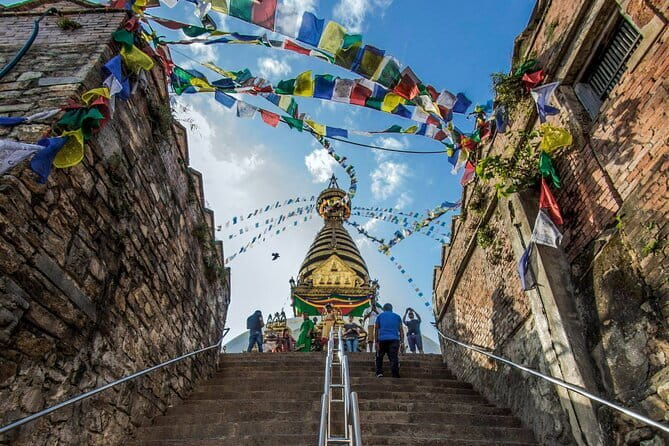
Day 6 starts with the return walking pattern, bringing you back toward Chhomrong via ups and downs. Then you switch trails again for the final part of the day, aiming for Jhinu on a ridge.
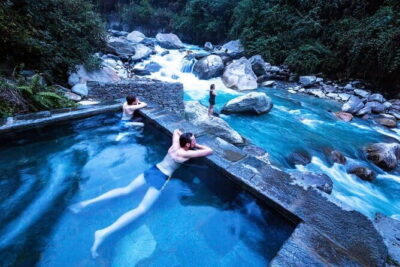
The highlight is Jhinu Danda hot spring, which is exactly the kind of “earned reward” stop that makes this trek feel humane. You’re not just doing the hardest work, you’re getting a built-in recovery moment with scenery that helps reset your brain.
One realistic note: hot springs are part of the culture and the comfort, but they aren’t a magic fix. Hydrate, wash up when you can, eat well, and let your body do the rest overnight.
Day 7 back to Pokhara: Siwai walk, drive out, and a final museum stop
The last day is about finishing clean. You trek about four hours to Siwai, then you drive to Pokhara for a couple of hours. The walking is described as downhill through low, warm farm areas, which is a nice change of pace after the colder higher sections.
There’s also a stop at Pokhara Museum, with admission included. It’s not required for your trekking “success,” but it gives you a chance to ground the day in local context before you leave Nepal’s trail world behind.
This is the day where I’d treat your schedule gently. Don’t plan big extra activities right after the trek unless you’re confident you’ll feel good.
Price and value: what $699.67 includes, and what you must budget
This trek is priced at $699.67 per person, and it’s often booked about 26 days in advance. To judge value, look at what you get that would cost you time or money if you planned it yourself.
Included essentials:
- Three meals daily during the trek (breakfast, lunch, dinner)
- A government license holder mountain guide
- Permits for the area (Annapurna Permit ACAP and TIMS Card)
- 7 night accommodation during the trek
- Seasonal fruits during the trek
- All ground transportation for the Pokhara access and return legs
Not included, so plan for these:
- Your travel and rescue insurance
- Bar bills, laundry
- Phone calls, battery recharge
- Bottled water, hot water, shower
- Tips for your guide
Here’s the practical takeaway: this price is most valuable if you want the core trekking work handled for you. If you’re the kind of traveler who loves planning every permit detail and arranging your own guide, DIY can sometimes be cheaper. But if you want a smooth run with fewer moving parts, this package makes sense.
Guides and porters: what the best teams do on ABC
The strongest praise points here are about how guides handle people, not just routes. Guides named Suraj, Anos, and Laku have been highlighted for being friendly, attentive, and capable at the everyday tasks that make a trek feel safe and fun, like meal timing and accommodation planning.
I also like that communication before the trip can be easy and responsive. In at least one case, a coordinator named Anjan used email and then moved the conversation to WhatsApp for convenience. That matters on a trek where you want answers quickly and clarity ahead of time.
And yes, it helps to request a specific guide or porter team in advance during hiking season, if your operator offers that option. One group mentioned porters Sonam and Necha taking great care of them, which is a real reminder that porters often shape how comfortable your trip feels.
Fitness and altitude reality for a moderate ABC trek
The trek is described as a moderate trekking region and geared toward people with moderate physical fitness. “Moderate” in Nepal usually means you’ll hike daily with some climbs and descents, and you should expect your legs to work, not just your lungs.
If you get winded easily, you don’t need panic. You need pacing. Take breaks before you’re wiped out. Eat regularly. Keep a steady tempo rather than chasing speed.
Also, the schedule includes early starts, long walking days, and colder air as you go higher. If you can handle hiking for several hours at a time and you’re comfortable with gradual altitude gain, you’re likely in the right zone.
Who this trek is best for (and who should think twice)
This is a strong fit if you want:
- A guided Annapurna Base Camp trek that handles permits and core logistics
- Village and forest walking, not just a straight line to a summit
- A planned recovery moment at Jhinu hot spring
- A 7 day itinerary that still includes the key Base Camp experience
Think twice if:
- You’re not comfortable with early mornings and long daily hikes
- You don’t plan for weather changes, since the experience requires good weather
- You don’t want to manage add-on costs like bottled water, phone charging, and hot water
Should you book this Annapurna Base Camp trek?
If you want a well-run, guided version of Annapurna Base Camp that includes the big-ticket logistics, I think this is a smart buy. The strongest value comes from the package approach: licensed guide support, ACAP and TIMS permits, meals, and accommodation, plus the route design that hits Ghandruk, Chhomrong, the Base Camp moment, and then Jhinu hot spring.
I’d book it if your goal is reaching Base Camp with less hassle and more walking focus. I would hesitate if you enjoy independent planning, or if you know early starts and daily hikes will feel stressful. Either way, get your fitness ready and pack for changing mountain weather, because that part is never optional on the Annapurna trails.
FAQ
How long is the Annapurna Base Camp trek on this tour?
It is approximately 7 days.
Where is the trek located and what is the usual starting point?
The trek is in Nepal, and the trek starts from Nayapul, with the itinerary also beginning walking beyond Pokhara after an overnight.
What time does the trek start each day?
The meeting point start time is 4:45 am.
What’s included in the price?
Included are three meals during the trek (breakfast, lunch, dinner), a government licensed mountain guide, the Annapurna Permit (ACAP) and TIMS Card, all ground transportation related to the route, 7 night accommodation on the trek, and seasonal fruits during the trek.
What is not included?
Not included are travel and rescue insurance, bar bills, phone calls, laundry, battery recharge, bottled water, hot water, shower, and tips for the guide.
Is cancellation allowed?
Yes, there is free cancellation up to 24 hours in advance for a full refund, and if canceled due to poor weather you’ll be offered a different date or a full refund. Service animals are allowed.
Latest additions near Kathmandu
- White Water River Rafting – 1 Day★ 4.3 · 3 reviews
- Traditional Momo Making Class★ 5.0 · 10 reviews
- Kathmandu to Pokhara Premium sofa bus ticket★ 4.0 · 17 reviews
- Ghorepani Poon Hill Trek★ 5.0 · 16 reviews
- Amazing 1 Day Trekking Experience in Kathmandu Nepal★ 5.0 · 24 reviews
- Ghorepani Poonhill Trek★ 5.0 · 5 reviews
- Walking tour of real Kathmandu through back streets.★ 5.0 · 3 reviews
- Wildlife Adventure in Chitwan Nepal★ 4.0 · 4 reviews
Annapurna Base Camp Treks, compared.
Kathmandu to Annapurna Base Camp (ABC) 5-Day Trek
Read our review →
Browse the lists this tour appears in