
Reviewed · ANNAPURNA BASE CAMP TREKS
Annapurna Base Camp Trek
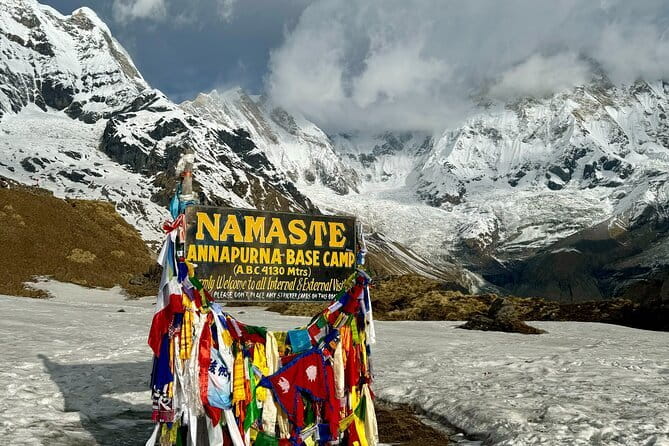
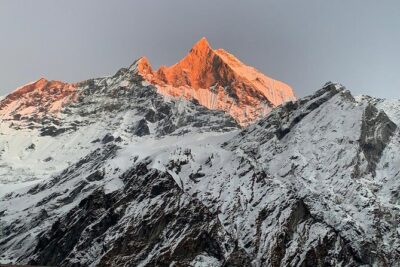
Annapurna Base Camp feels almost spiritual. This 14-day trek strings together Kathmandu and Pokhara with village-to-village days, forests, and big mountain moments, ending at 13,550 feet at Annapurna Base Camp. I also like how the trip is built around real support in the field, with guides such as Kumar Thapa and Jeevan earning praise for calm problem-solving, humor, and genuine care.
What makes it work for you is the pacing of the route. You spend most days in the lower Himalayas, then you test your grit with steep climbs and long hours, especially as you near 10,000 feet and beyond. The one thing to take seriously is altitude and leg strain, because even with a sensible itinerary, you still climb for hours and the air gets thin.
You’ll also enjoy the classic Annapurna “story arc.” You get big viewpoints like Poon Hill, hot-spring downtime at Jhinu, and the warm finish of returning to Pokhara and Kathmandu for food and sightseeing.
In This Review
- Key highlights to know before you go
- The route makes the mountains feel personal
- Kathmandu prep days: enough time to get organized
- Pokhara transfer: the day you switch modes
- From Nayapool up toward Tikhedhunga: your warm-up that still counts
- Ghorepani and Poon Hill: the sunrise viewpoint that earns its reputation
- Chomrong and Himalaya Hotel: where the trail starts to test your grit
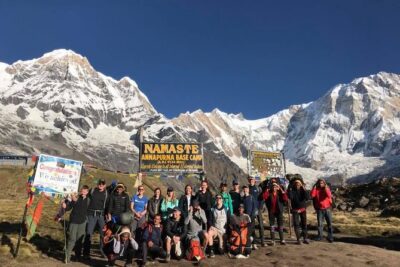
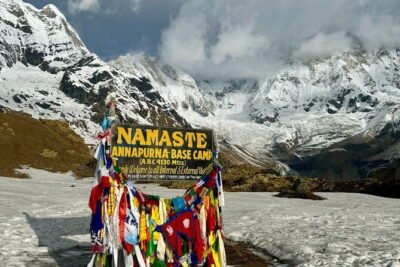
- Annapurna Base Camp: 13,550 feet and the feeling of arrival
- Bamboo to Jhinu Hot Springs: the descent that still needs attention
- Pokhara and Kathmandu finishing days: clean wrap-up, good food, real rest
- Price and logistics: what you’re really paying for
- Altitude strategy: how to protect your legs when the air thins
- Who this trek fits best
- Should you book this Annapurna Base Camp trek?
- FAQ
- Where is the trek based, and when does it start?
- How do I travel between Kathmandu and Pokhara?
- What kind of accommodation is included?
- Are guides and porters included?
- Do I need travel insurance for this trek?
- Do I need to bring trekking equipment myself?
- What is the cancellation window for a full refund?
Key highlights to know before you go
- Licensed guiding and local support on every trek day, not just when things go smoothly
- Porters are included (one each for a pair), so your pack stays manageable
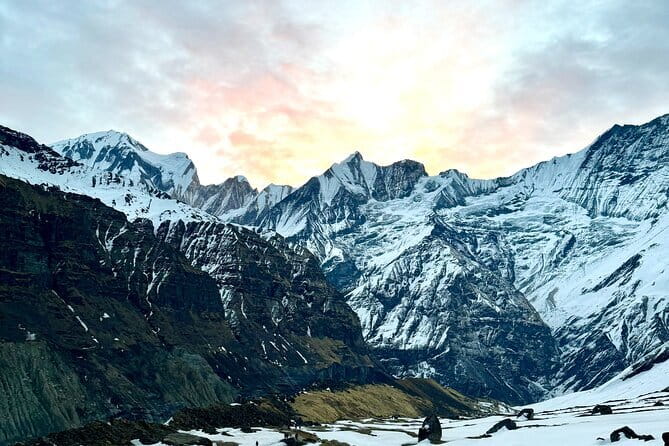
- Poon Hill hike gives you that early payoff over the Annapurna region
- Annapurna Base Camp at 13,550 feet is the defining goal, with a night at a guesthouse near the action
- Jhinu Hot Springs is a real recovery stop after hiking down
- Village routing keeps you moving through hill communities rather than only trail-to-trail monotony
The route makes the mountains feel personal
This Annapurna Base Camp trek is designed to feel like you are traveling through places, not just stacking walking days. Starting from the Kathmandu valley, you move to Pokhara first, then gradually step into the higher valleys around Annapurna. That matters. The trail gets your body moving, but it also keeps your eyes busy, with hilltop villages, forest sections, and viewpoints above deep gorges.
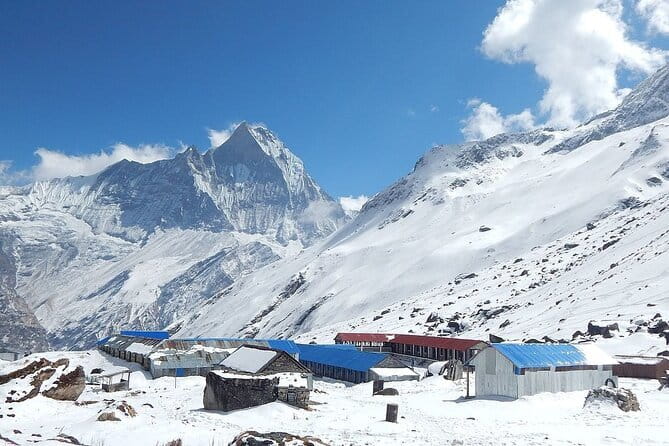
The big emotional payoff is Annapurna Base Camp. Locals treat this area as the home of the gods, and you do not need a religious background to understand why people come here with reverence. At 13,550 feet, you are close enough to feel the scale, but also close enough to look around and notice the human side of the trek, the guesthouses, the effort, the small routines that hold the day together.
More Treks in Kathmandu
- Everest Base Camp Trek – 14 Days
★ 5.0 · 1,499 reviews - Everest Base Camp Trek
★ 5.0 · 842 reviews - Everest Base Camp Trekking
★ 5.0 · 485 reviews
Kathmandu prep days: enough time to get organized
You start with arrival and an overnight in Kathmandu, then two days that are all about getting ready. That includes sightseeing around the Kathmandu Valley and a pre-trip meeting before you head out.
For you, this Kathmandu setup is practical. It means you can handle gear questions, ask the guide what to expect, and get used to Nepal time before the trek starts. Also, the hotel portion is on a twin-sharing basis at a three-star property with breakfast included. You are not paying trek prices for the head start day, which is a small but real value point.
If this is your first multi-day trek, these “buffer” days matter. The altitude comes later, but nerves can hit earlier than that. A clear plan helps.
Pokhara transfer: the day you switch modes
The move from Kathmandu to Pokhara is by tourist bus, and the route gives you a sense of changing scenery and elevation. You also do the return bus later, after the trek wraps, with sightseeing in Pokhara along the way.
I like that Pokhara is not an afterthought here. You get a real night there before the trek, and you get time again after. That helps you reconnect to civilization without rushing. And because the trek is long, these extra hours in a comfortable town help you feel like you are traveling, not just escaping.
From Nayapool up toward Tikhedhunga: your warm-up that still counts
Your trek begins with a drive to Nayapool, then the first walking day takes you up to Tikhedhunga, around 5,060 feet. This is early enough that you can settle into the rhythm, but it is still an ascent day, so it is not a freebie.
Here is what you want to watch for. The first day sets your pace. If you start too fast, your legs will complain later. If you start calm, you give your body time to learn the rhythm of uphill walking, step after step, with frequent rests that keep you moving steadily.
You stay in guesthouses on a twin-sharing basis, which means you should expect simple comfort. The upside is that these places are part of the trek culture. You eat local meals, meet staff and other trekkers, and learn how to read the weather for the next day.
More Annapurna Base Camp treks:
- Annapurna base camp trek 5 Days
★ 5.0 · 252 reviews - 14-Day Private Annapurna Base Camp Trek
★ 5.0 · 180 reviews - Annapurna Base Camp Trekking
★ 5.0 · 116 reviews - Annapurna Base Camp Trek
★ 5.0 · 111 reviews
Ghorepani and Poon Hill: the sunrise viewpoint that earns its reputation
Next you trek up to Ghorepani, around 9,416 feet. Then comes the hike to Poon Hill, about 10,535 feet, followed by a descent to Tadapani.
This is one of the most memorable sections of the Annapurna region for a reason: the viewpoint payoff usually hits when you are still fresh enough to enjoy it. Poon Hill is the classic “eyes on the prize” stop. Even if your legs feel a bit stiff, the view is the kind of reward that makes you forget your pace for a minute and just look.
Practical tip: treat this day like a two-part workout. The first part is climbing to the viewpoint. The second part is moving on afterward to Tadapani. Do not run the morning uphill like you are chasing a finish line. Save your energy for the full day.
Chomrong and Himalaya Hotel: where the trail starts to test your grit
After Tadapani, you head to Chomrong at about 7,120 feet, then onward to Himalaya Hotel around 9,678 feet. This is when the trek begins to feel more demanding, not just because of height, but because the effort builds.
Chomrong is the kind of place where you notice the Annapurna massif more clearly. The air gets thinner. Your breathing changes. Your legs learn that the climb is not just distance, it is time. When you see that you have hours of climbing ahead, you slow down and let the hike come to you.
This is also where the included support really matters. You have porters to help carry loads (one porter per pair), which means your own pack weight stays reasonable. That helps you stay strong through the longer climbs.
Annapurna Base Camp: 13,550 feet and the feeling of arrival
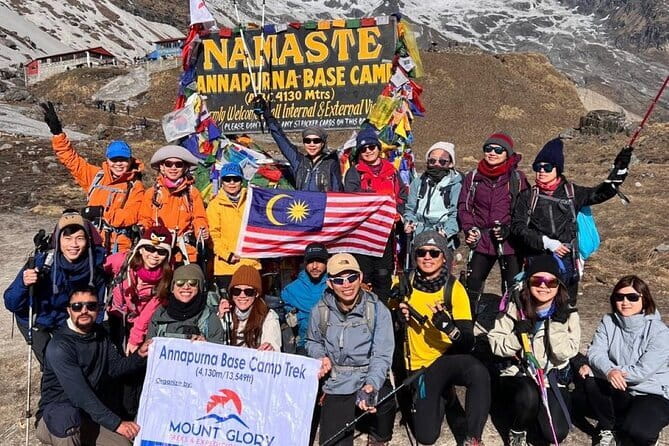
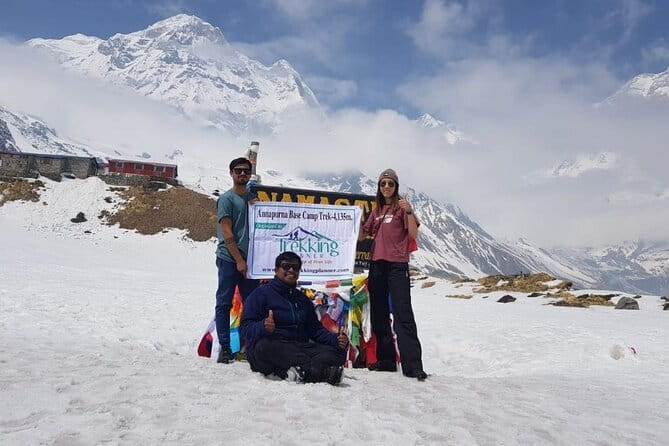
Day after day, the trek keeps pointing you toward the base camp zone. Then you finally trek to Annapurna Base Camp, at about 13,550 feet, and spend the night at a guesthouse nearby.
This is the defining moment. You are walking on the foot of the Annapurna massif, past towering heights that go well above 21,000 feet in the region. Even if you have seen mountain photos before, being there changes the scale. The place feels divine to locals, and the vibe is serious enough that even casual trekkers tend to speak a little softer.
One more reality check: your body might feel wrecked by this point, especially if you pushed hard earlier. That is normal. You are not required to feel energetic at arrival. What matters is showing up, taking a breath, and giving yourself time to enjoy the surroundings.
Bamboo to Jhinu Hot Springs: the descent that still needs attention
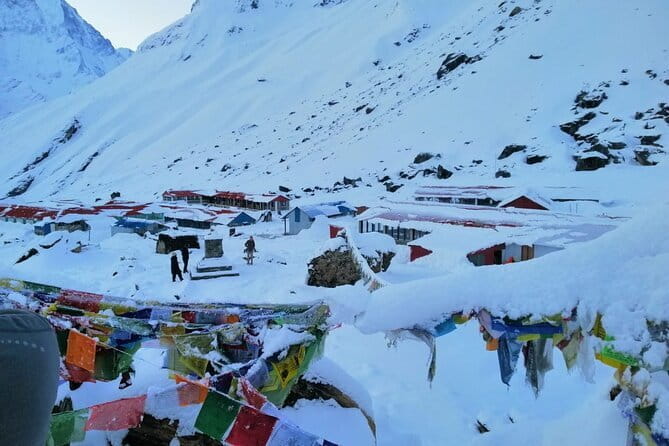
After Base Camp, you trek to Bamboo around 7,695 feet, then continue to Jhinu Hot Spring at about 5,840 feet. Then you return to Nayapool and drive back to Pokhara.
This portion is about relief, but also about control. Descent days can hurt in a different way than climbs. Your knees and shins do more work, and you can get sloppy if you feel tired. Keep your steps smaller when the trail gets steep. Focus on balance. Your future self will thank you.
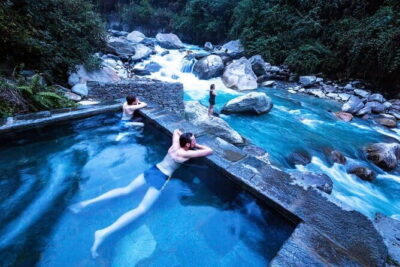
Then you get the best kind of payoff after a long trek day: Jhinu Hot Springs. It is a recovery stop you actually feel. After all that walking, warm water helps your muscles loosen and your mood reset.
Pokhara and Kathmandu finishing days: clean wrap-up, good food, real rest
Once you are back in Pokhara, you have time for sightseeing and another overnight at a hotel. Then the next day is a drive back to Kathmandu, with a farewell dinner and a final overnight before departure.
I like finishing like this. You do not just drop into a travel scramble right after the hardest hiking. Instead you get time to eat well, wash the dust off properly, and share the trek story while it is still fresh.
The farewell dinner is not a small detail. On a long trek like this, it becomes a checkpoint where you stop “doing” and start “absorbing” what you did.
Price and logistics: what you’re really paying for
At $1,300 per person for 14 days, this is not a budget walk, but it also does not pretend to be luxury. The best way to judge value is to match cost to what is included.
Here is what you are getting that saves real money or stress:
- Three-star Kathmandu hotel with breakfast on a twin-sharing basis
- Guesthouses on the trek on a twin-sharing basis
- Local government-licensed guides
- Porters (one each for a pair of travelers) plus local support staff
- Pickup offered and a mobile ticket
Now for what is not included:
- Travel insurance (mandatory)
- International airfare and Nepal visa fees
- Trekking equipment
That equipment gap is one place to be honest with yourself. If you show up without gear, you can buy or rent items in Kathmandu, but that is extra hassle and cost. If you plan carefully before you arrive, you protect both your budget and your energy.
Also, the trek’s difficulty note is real: you will do climbs for hours and you will go over 10,000 feet. You are not buying a lightweight hike. You are buying an organized, guided way to do it with support where it counts.
Altitude strategy: how to protect your legs when the air thins
Your altitude range runs roughly from 4,600 feet at Kathmandu up to 13,550 feet at base camp. Even though many days sit in the lower Himalayas, the trek still includes time above 10,000 feet with long climbing days.
So how do you handle that without making it complicated?
- Keep a steady pace, even when you feel good.
- Take the scheduled breaks seriously. They are built into how the trek works.
- Plan to feel leg pressure on the climbs. Do not try to power through pain.
If you have a medical condition, you need to tell the guides in advance and talk with your doctor before you travel. This is one of those trips where “I’ll figure it out later” can be a mistake. Your travel insurance also covers emergency rescue or evacuation, but you must have it in place before you arrive because it cannot be taken in Nepal.
Who this trek fits best
This itinerary is best for people with moderate physical fitness who want a real trek without extreme technical complexity. It is also a strong choice for:
- First-time trekkers who want a structured route, licensed guidance, and porter support
- Groups that value flexibility and problem-solving on the ground
- Anyone who wants the Annapurna story, not just one summit day
It might not be the best fit if you hate long descents, have trouble with steep walking for hours, or are not prepared for altitude to make your breathing work harder.
Should you book this Annapurna Base Camp trek?
If you want a classic Annapurna Base Camp experience with Kathmandu and Pokhara tied in, this is a solid pick. The most convincing reasons are the combination of licensed guides, porters, and a route that mixes village life, major viewpoints like Poon Hill, and a meaningful finish with Jhinu Hot Springs.
My main caution is simple: altitude and climbing time. This is not a casual stroll, even with sensible pacing. If you train a bit beforehand and show up ready for long walking days, you’ll be in the right lane.
FAQ
Where is the trek based, and when does it start?
The tour is based in Kathmandu, Nepal, and the start time is 7:45 am.
How do I travel between Kathmandu and Pokhara?
You travel by tourist bus, including a drive from Kathmandu to Pokhara and later a drive back to Kathmandu after the trek.
What kind of accommodation is included?
Kathmandu includes a three-star hotel on a twin-sharing basis with breakfast. During the trek you stay in guesthouses on a twin-sharing basis.
Are guides and porters included?
Yes. You get local government-licensed guides, and porters are included to help you trek (one porter each for a pair of travelers), plus local support staff.
Do I need travel insurance for this trek?
Travel insurance is not included, and it is compulsory. It is mandatory for emergency rescue and evacuation, and you cannot take it in Nepal.
Do I need to bring trekking equipment myself?
Yes. Trekking equipment is not included. If you forget items, you can purchase or rent them in Kathmandu for a small fee.
What is the cancellation window for a full refund?
You can cancel up to 24 hours in advance of the experience start time for a full refund. If you cancel less than 24 hours before the start time, the amount paid is not refunded.
Latest additions near Kathmandu
- White Water River Rafting – 1 Day★ 4.3 · 3 reviews
- Traditional Momo Making Class★ 5.0 · 10 reviews
- Kathmandu to Pokhara Premium sofa bus ticket★ 4.0 · 17 reviews
- Ghorepani Poon Hill Trek★ 5.0 · 16 reviews
- Amazing 1 Day Trekking Experience in Kathmandu Nepal★ 5.0 · 24 reviews
- Ghorepani Poonhill Trek★ 5.0 · 5 reviews
- Walking tour of real Kathmandu through back streets.★ 5.0 · 3 reviews
- Wildlife Adventure in Chitwan Nepal★ 4.0 · 4 reviews
Annapurna Base Camp Treks, compared.
Kathmandu to Annapurna Base Camp (ABC) 5-Day Trek
Read our review →
Browse the lists this tour appears in