
Reviewed · ANNAPURNA BASE CAMP TREKS
Annapurna Base Camp Trek
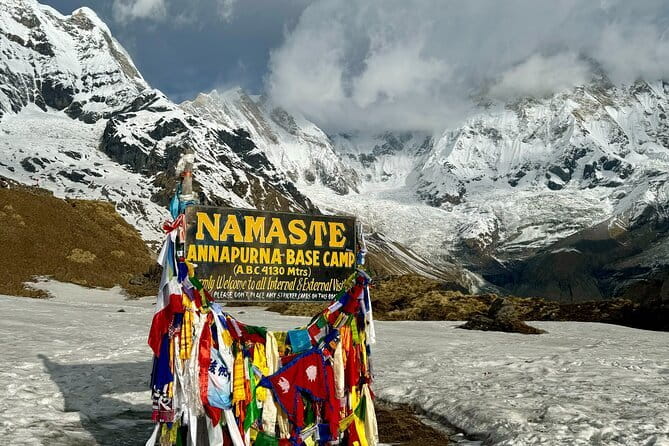
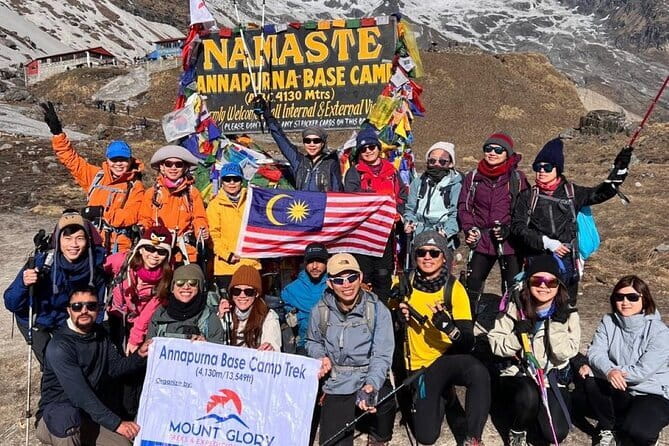
Four thousand meters later, you finally understand scale. This 11-day Annapurna Base Camp short trek is a clean mix of big Himalayan payoff and village life, starting with a quick flight to Pokhara and ending back in Kathmandu. I particularly like the way the trek is supported, with the kind of steady guidance that helped my group feel confident. I also love the moment you reach Annapurna Base Camp at 4,130 m, where the peaks feel close enough to point at. One thing to consider is that the walking days can be long, and the altitude gets real once you move toward Deurali and the base camp area.
The rhythm is practical: airport pickup, Kathmandu and Pokhara hotels, meals on trek, and even rental gear like a sleeping bag and down jacket. When you arrive, people are ready for you, including Suman greeting the group at the airport, and then the trek team lines everything up so you can focus on the trail. My biggest takeaway is that the experience feels personal, not vague, thanks to the professionalism of guides and the help of your porter, including Shiva as guide and Bishal as porter in one standout group experience.
In This Review
- Key highlights and what matters most
- Kathmandu to Thamel Hotel: Your Trek Starter Kit
- A 30-Minute Flight to Pokhara, Then Lakeside Reset
- From Nayapul to Jhinu Danda: Hot Springs and River Valleys
- Chhomrong to Bamboo and Deurali: Forests, Steps, and Thin Air
- Machhapuchhre Base Camp to Annapurna Base Camp (4,130 m): The Big Payoff
- Sunrises, Bamboo Lodge, and Easier Return Days
- Jhinu Danda Again, Then Down to Nayapul and Pokhara
- Kathmandu Finish at Durbar Square
- Price and Inclusions: Is $906.67 Worth It?
- Should You Book This Short Annapurna Base Camp Trek?
- FAQ
- Where does the trek start and end?
- How long is the Annapurna Base Camp short trek?
- What is included in the price?
- What is not included?
- Do you provide trekking permits in advance?
- Are meals included during the trek?
- Is pickup offered?
- What is the group size limit?
- What porter support is provided?
- What altitude do you reach at Annapurna Base Camp?
Key highlights and what matters most
- Shiva-style guide support that keeps the day moving and the plan clear
- Bishal-style porter care with a set limit of 30 kg per porter (for 2 trekkers)
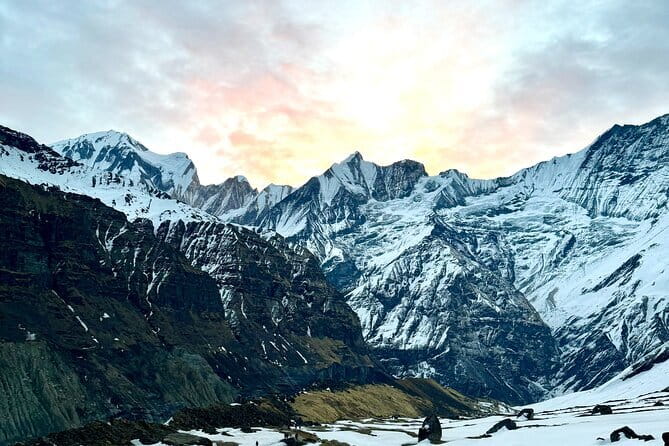
- 4,130 m Annapurna Base Camp views once the path opens and vegetation thins
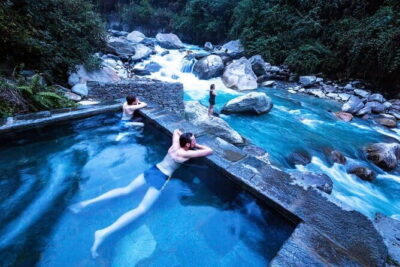
- Jhinu Danda hot springs where you can soak after a steep day of trekking
- Machhapuchhre Base Camp detour for a strong photo payoff before the final turn
Kathmandu to Thamel Hotel: Your Trek Starter Kit
Your experience begins right after you land in Kathmandu at Tribhuvan International Airport. A representative picks you up after you clear immigration, then drives you to your hotel in Thamel, a practical base because it is close to food, gear shops, and the general hum of Nepal’s tourist core.
I like that this first day is about getting organized, not getting stressed. You sleep in Kathmandu for three nights, so you are not forced into an immediate “rush to the trail” mindset. If you arrive tired, that matters. Your hotel is included for the stay, and the trek briefing comes early the next morning, which helps you understand how the days will feel.
One small detail that can make a big difference later: after briefing and breakfast, you are already set for the first big shift in scenery when you head toward Pokhara. You are not left guessing.
More Treks in Kathmandu
- Everest Base Camp Trek – 14 Days
★ 5.0 · 1,499 reviews - Everest Base Camp Trek
★ 5.0 · 842 reviews - Everest Base Camp Trekking
★ 5.0 · 485 reviews
A 30-Minute Flight to Pokhara, Then Lakeside Reset
Pokhara is your next anchor, reached the day after your Kathmandu briefing. Instead of spending the whole day on land, you take a short flight of about 30 minutes from Kathmandu to Pokhara, then settle into a hotel with two nights included.
Pokhara is also where you get your mental gear shift. You go from Kathmandu’s streets to Lakeside, a lively area with modern comforts but still very much tied to local culture. I find that mix helpful because you can eat well, walk around at an easy pace, and adjust before the trail.
Your day also includes a couple of stops on the road out of Kathmandu, including a well-known picnic spot and a spiritual temple that is believed to fulfill wishes. Even if you are not the ceremonial type, this is useful because it breaks up the travel and gives you a gentle landing into Nepali rhythms.
From Nayapul to Jhinu Danda: Hot Springs and River Valleys
The trekking starts from Nayapul, reached by a drive from Pokhara that takes about an hour and a half. Nayapul is the gateway to the Annapurna region routes, and once you step into the trail system, you understand why this area is so popular: it moves through villages and river corridors instead of dumping you into wilderness immediately.
On the way to Jhinu Danda, you follow the Modi River for a gradual climb. You pass through small settlements, then you get that classic foothills feel, with terraces, steps, bridges, and a steady mix of nature and people. You also stop in Jhinu Danda, where the natural hot springs are the reward at the end of the day. This is not just a nice-to-have. A soak here is practical, especially because your feet and lower legs will feel the difference once you start gaining more altitude over the coming days.
A consideration: even early on, the trail includes climbs and descents and plenty of steps near village stretches. If your fitness is only moderate, pace yourself and don’t sprint the first days. The plan is shorter than the long ABC treks, but it still asks your legs to work.
Chhomrong to Bamboo and Deurali: Forests, Steps, and Thin Air
From Jhinu Danda, you work toward Chhomrong and then into bamboo and rhododendron zones. This part of the trek is where you really see the Annapurna region’s “layers.” You start with village terraces and stone stair sections, then you pass through bamboo forest stretches, and later the vegetation begins changing again as you climb.
You go through a progression of places that are all useful for your pacing:
- Chhomrong village area, which you reach after crossing river sections and using stone stair paths
- Siruwa village, after bamboo and rhododendron sections
- Bamboo village and the Bamboo Lodge area, where you spend a night
Bamboo Lodge matters because it is a higher-elevation stopping point before the push upward. You also get the change in trail character: more steep marching, more uneven ground, and fewer “flat relief” moments. This is the section where it helps to rely on your guide for route timing and energy management.
Then comes Deurali. You trek through steep parts and past waterfalls, and the trail opens into wider views as you go. Hinku Cave is mentioned along the way, and you also get the shift toward rockier terrain and less vegetation as you approach Deurali village. This is the phase where altitude starts to influence how you breathe, even if you are moving slowly. Your guide and the overall group pace matter here.
More Annapurna Base Camp treks:
- Annapurna base camp trek 5 Days
★ 5.0 · 252 reviews - 14-Day Private Annapurna Base Camp Trek
★ 5.0 · 180 reviews - Annapurna Base Camp Trekking
★ 5.0 · 116 reviews - Annapurna Base Camp Trek
★ 5.0 · 111 reviews
Machhapuchhre Base Camp to Annapurna Base Camp (4,130 m): The Big Payoff
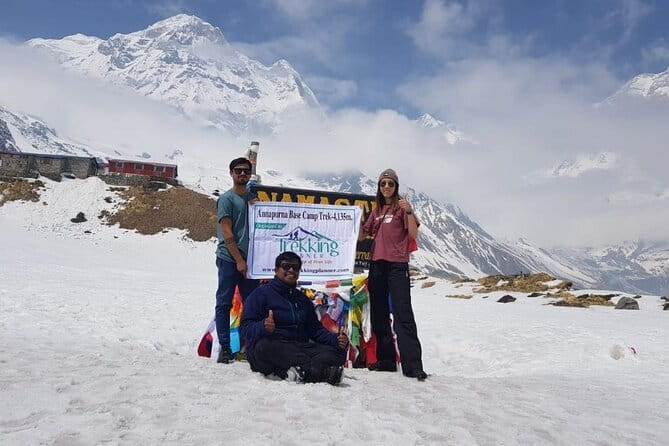
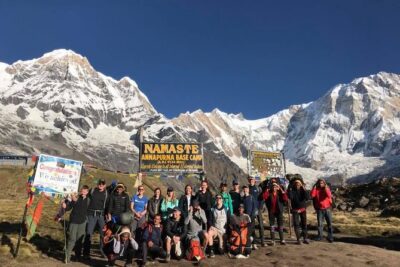
The climb into the base camp area is the main event. Today your route reaches Annapurna Base Camp by going through Machhapuchhre Base Camp, and the views start stacking up in a very real way.
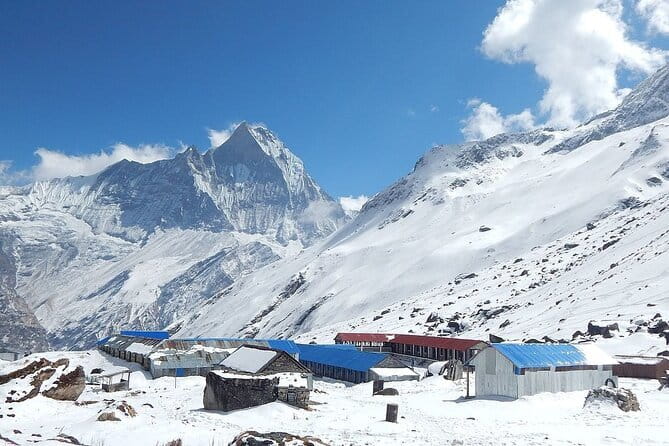
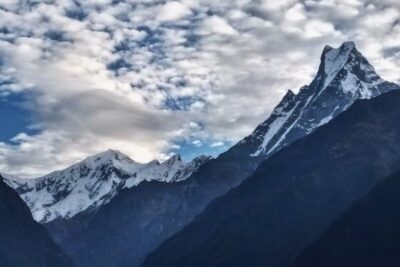
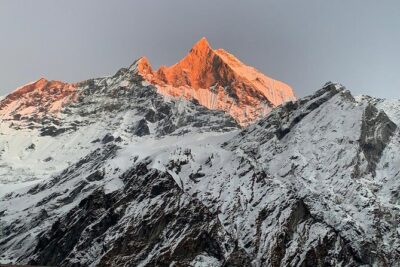
You pass Bagar and continue to the stoppage at Machhapuchhre Base Camp. From there, you get strong views of Fishtail Mountain and multiple peaks in the Annapurna region, including Hiuchuli, Annapurna South, Annapurna I, Annapurna III, and Gagapurna. Even if you are not a peak-spotter, this is the point where the trail turns from “walking through scenery” into “walking toward a wall of mountains.”
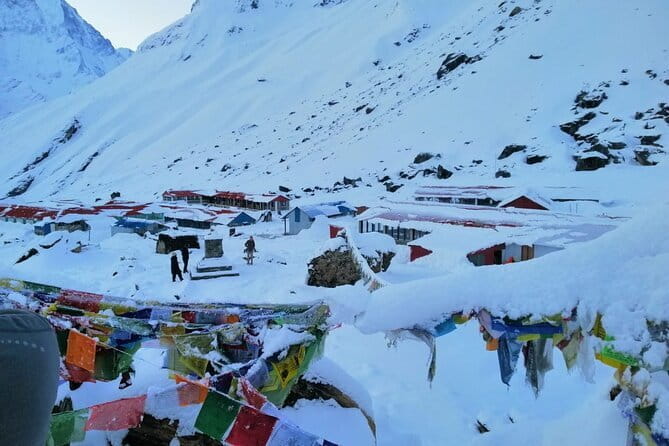
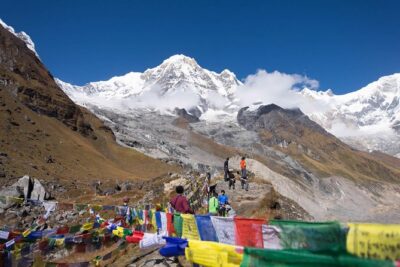
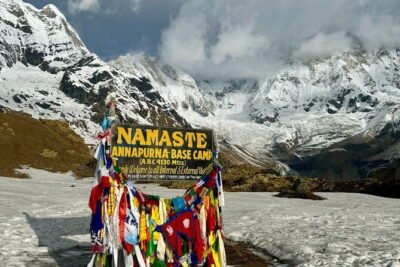
Then you turn toward the base camp itself. The route branches away from the Modi River, vegetation becomes sparse, and the path widens before you reach Annapurna Base Camp at 4,130 meters. This is where the experience changes tone. You get an overnight stay, which is important because it lets you take in the view in more than one lighting moment. You are not just arriving for a quick look and leaving.
One practical consideration: your comfort at base camp depends heavily on layers and weather variability. That is one reason this trip includes rental down jacket and sleeping bag gear. It reduces the “I hope I packed enough” stress, especially if you are traveling with limited luggage.
Sunrises, Bamboo Lodge, and Easier Return Days
After your base camp night, you start heading back toward Bamboo. Day 7 begins with leaving the foothills views and moving down via a trail that follows the Modi River on a relatively easier downhill march.
A big plus here is that the trek includes a sunrise moment over the Himalayas on the return day. I like these early-day highlights because you get one last strong view before fatigue catches up, and it also helps you keep a routine.
You also pass through areas prone to avalanche, plus settlements like Dovan and Deurali, and you cross a wooden bridge before reaching Bamboo. These details matter because the trail is not just scenic, it is managed by local knowledge and route design. Your guide helps you focus on the “where” and “when,” not on guesswork.
On Day 8, you retrace parts of the path and include a stop at Khuldighar, a village with a helipad, then continue through Sinuwa and past settlements like Tilche and Chhomrong. From there you head to Taulung and a trail junction area that connects onward routes. You then end the day back at Jhinu Danda, giving you another shot at the hot spring soak.
Jhinu Danda Again, Then Down to Nayapul and Pokhara
Retracing the route is sometimes a mental trick. You might think it will feel boring, but in this trek it actually works because the valley views keep shifting with your position. From Jhinu Danda, you trek down toward Nayapool through the Modi Khola valley.
Expect farms with crops, wooden and suspension bridges, and lots of hillside stone staircase walking as you go toward lower elevations. The mountain is still there to accompany you along the descent, but the effort becomes more about staying steady and careful on the downward steps.
Once you reach Nayapool, the trek part ends and you transition back to Pokhara. This is when you can finally breathe a little. You head into the Lakeside area again, which is a nice reward after days of trail immersion.
Kathmandu Finish at Durbar Square
Day 10 brings the return to Kathmandu by scenic drive, about 5 to 6 hours. This drive gives you one more look at terraced fields and valley patterns before you return to the medieval capital.
In Kathmandu, you get a hotel again and then time to explore Kathmandu Durbar Square. This is a practical cultural finish after trekking. It is stone paved and busy, and it gives you a way to pick up small souvenirs while you reflect on the trek.
Then Day 11 ends with transfer to Tribhuvan International Airport at least three hours before your onward flight, so you do not run into last-minute chaos.
Price and Inclusions: Is $906.67 Worth It?
At $906.67 per person for 11 days (approx.), this is not a “cheap trek,” but it can be strong value if you want the essentials handled for you.
Here is what you effectively get in your price:
- Hotels in Kathmandu and Pokhara (3 nights Kathmandu, 2 nights Pokhara)
- All lodging and meals during the trek, with breakfast, lunch, and dinner included
- A professionally trained English-speaking guide, plus an assistant guide and porter
- Permits included, specifically TIMS and Annapurna Conservation Area (ACAP) fees
- Rental trekking gear, including sleeping bags and a down jacket
- Airport pickup and drop service
- Transportation costs within the program
- A farewell dinner
- First aid medical box
- VAT and company service charge included
The big value point is that you are not paying separately for the things that usually add up: permits, guide support, and core trekking logistics. Also, the porter structure helps keep you traveling with a reasonable load. The limit is 30 kg per porter, shared for up to 2 trekkers, which you can feel in how your body handles daily walking.
What is not included is also clearly laid out: visa fee, international flights, extra meals in Kathmandu and Pokhara beyond what is stated, travel insurance and rescue costs, personal expenses, and tips for guides and porters. So if you want a single all-in budget, you should plan extra funds for those items.
Should You Book This Short Annapurna Base Camp Trek?
I think you should book this trek if you want a focused route to Annapurna Base Camp that does not waste days. The trip is a good match if you have moderate physical fitness, want a guided experience with real support, and care about having the logistics handled, from permits to meals to gear rental.
It might not be the best fit if you strongly dislike long walking days or if you want a completely low-pressure pace. The trek includes steep sections, stone stair segments, and altitude changes that will challenge your breathing, especially on the way up toward Deurali and base camp.
If you do decide to go, my biggest practical advice is simple: go slow early, save your energy for the high section, and lean on your guide. Based on one of the strongest experience accounts, having Shiva as a guide and Bishal as a porter made the difference between just finishing and actually feeling good about it.
FAQ
Where does the trek start and end?
It starts at Nepal Mountain Trekkers, Pyramid Galli, Kathmandu 44600, Nepal. It ends back at the same meeting point.
How long is the Annapurna Base Camp short trek?
The duration is 11 days (approx.).
What is included in the price?
Included are airport pickup and drop, hotel stays in Kathmandu and Pokhara, all lodging and foods during the trek (B, L, D), trekking permits (TIMS and ACAP), guides and porters, a first aid medical box, rental sleeping bag and down jacket, and transportation costs within the program.
What is not included?
Visa fee to enter Nepal, international flight tickets, extra baggage charges, foods in Pokhara and Kathmandu, extra nights due to itinerary changes, travel insurance and rescue operation costs, personal expenses, and tips for guides and porters.
Do you provide trekking permits in advance?
Yes. TIMS card and Annapurna Conservation Area (ACAP) fees are included.
Are meals included during the trek?
Yes. Breakfast, lunch, and dinner are included during the trek.
Is pickup offered?
Yes, airport pickup and drop service is included.
What is the group size limit?
The maximum group size is 15 travelers.
What porter support is provided?
There is an assistant trekking guide and porter, with 1 porter for 2 trekkers and a maximum load of 30 kg per porter.
What altitude do you reach at Annapurna Base Camp?
Annapurna Base Camp is at an altitude of 4,130 meters above sea level.
Latest additions near Kathmandu
- White Water River Rafting – 1 Day★ 4.3 · 3 reviews
- Traditional Momo Making Class★ 5.0 · 10 reviews
- Kathmandu to Pokhara Premium sofa bus ticket★ 4.0 · 17 reviews
- Ghorepani Poon Hill Trek★ 5.0 · 16 reviews
- Amazing 1 Day Trekking Experience in Kathmandu Nepal★ 5.0 · 24 reviews
- Ghorepani Poonhill Trek★ 5.0 · 5 reviews
- Walking tour of real Kathmandu through back streets.★ 5.0 · 3 reviews
- Wildlife Adventure in Chitwan Nepal★ 4.0 · 4 reviews
Annapurna Base Camp Treks, compared.
Kathmandu to Annapurna Base Camp (ABC) 5-Day Trek
Read our review →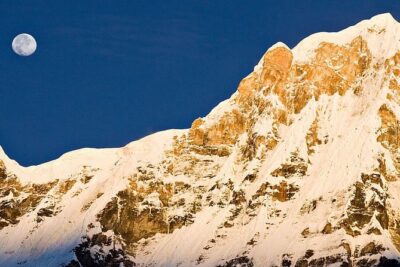
Browse the lists this tour appears in