
Reviewed · ANNAPURNA BASE CAMP TREKS
Annapurna Base Camp Trek – 11 Days
Annapurna Base Camp begins with a bus ride. This 11-day classic out of Kathmandu gives you big Himalayan views and daily chances to walk past ethnic villages. The trip blends nature with real local life, and the fact that permits and a licensed guide are handled for you means less time on paperwork and more time on the trail.
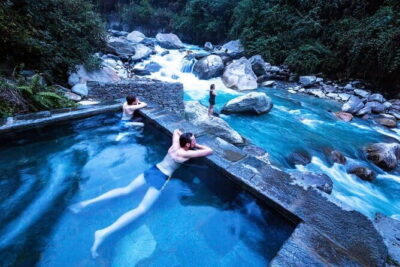
I also love the built-in wow stops. The early push to Poon Hill is all about sunrise over the Annapurna and Dhaulagiri ranges, and later you get a real reward at Jhinu Danda with a chance to soak in the hot spring after hiking.
One drawback to plan for is spending after you arrive. The package includes major trekking gear, but it does not cover drinks like tea, coffee, soda, alcohol, or laundry, so you will want a daily budget for those.
In This Review
- Key highlights you will feel on the trail
- Why Annapurna Base Camp still feels like a classic
- Price and what you truly get for $986
- Included gear: what you can pack less of (and what you still must bring)
- Your trek pacing: daily hiking style and what to expect
- Day 1-2: Kathmandu to Pokhara, then Nayapul to Birethanti
- Day 3-4: Rhododendron forests to Ghorepani, Poon Hill sunrise
- Day 5: Kimrong Khola crossing and Jhinu Danda hot spring
- Day 6: Chhomrong Khola, stone stairs, and a Sinuwa day
- Day 7: Deurali to Machhapuchhre Base Camp area (3700m)
- Day 8: Leaving the moraine route and following Modi Khola through fir and rhododendron
- Day 9: Sinuwa, Upper Chhomrong stairs, and another Jhinu Danda dip
- Day 10-11: Nayapul to Pokhara, then back to Kathmandu
- Guides, staff, and the human part of this trek
- Accommodations and meals: what “best available guesthouses” means in real life
- Who this trek suits best
- Should you book this Annapurna Base Camp Trek?
- FAQ
- How long is the Annapurna Base Camp trek?
- Where does the trek start and end?
- What time does the experience start?
- What is included in the price?
- Do I need my own trekking equipment?
- Is this trek private?
- What fitness level do I need?
- Can I cancel for a full refund?
- What happens if weather is poor?
Key highlights you will feel on the trail
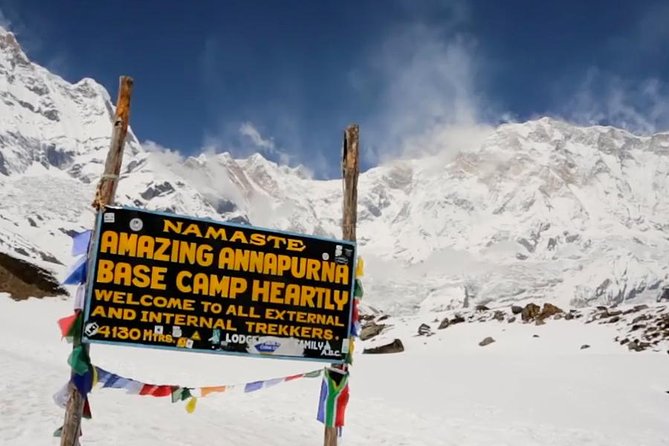
- Poon Hill sunrise over Annapurna and Dhaulagiri, with sightings of Nilgiri and Lamjung Himal
- Jhinu Danda hot spring stop, perfect for sore legs
- Machhapuchhre Base Camp area (3700m) and moraine-style walking days
- Licensed English speaking guide plus an oxymeter to check pulse and oxygen saturation
- Down jacket, sleeping bag, and duffel included, so you travel lighter than you expect
- Guesthouses along the way, mainly twin sharing, with meals covered for most days
Why Annapurna Base Camp still feels like a classic
The Annapurna Base Camp Trek stays famous for a reason: it gives you variety every day, not just one view at the end. You start low, walk through terraced areas and villages, then climb into forests where rhododendron is the star of the show. As you gain elevation, the air changes, the footing gets more stair-like, and the scenery shifts from human-scale settlements to big mountain drama.
What I like here is the blend. You get cultural moments in the villages you pass through, and you also get the pure trekking rhythm: climb, descend, cross rivers, repeat. The route also builds anticipation slowly. Days that start in forests lead you toward higher viewpoints, and the famous mornings are timed so you are not just hiking, you are also watching.
One practical upside, especially if you are new to long treks, is that this plan is designed to keep you moving steadily without pretending every day is easy. Even the tougher days are broken into sections like suspension bridge crossings, stone stair climbs, and forest walks, which makes the day feel manageable.
More Treks in Kathmandu
- Everest Base Camp Trek – 14 Days
★ 5.0 · 1,499 reviews - Everest Base Camp Trek
★ 5.0 · 842 reviews - Everest Base Camp Trekking
★ 5.0 · 485 reviews
Price and what you truly get for $986
At $986 per person for an 11-day trek, this is not a budget throwaway. But the value sits in what is included, not just the number.
Here is what is covered in the essentials:
- Down jacket, sleeping bag, and duffel bag (huge savings if you would otherwise rent or buy in Nepal)
- Surface transfer in Nepal between Kathmandu and Pokhara, and also back again at the end
- Permits and entry fees for the trek
- Best available guesthouse accommodation, mostly twin sharing
- A local government licensed English speaking trekking guide
- Support for staff, including food, accommodation, insurance, equipment, medicine, and transport
- Oxymeter for pulse and oxygen saturation checks
- First aid medical kits
Food is also largely included:
- Breakfast (10), lunch (9), dinner (8)
What is not included matters for how much you will spend day to day:
- Drinks, alcohol, and laundry are extra
- Your own personal trekking equipment is extra
- Travel insurance is extra
- Tips for trekking staff are extra
- International airfare is extra
So the real decision is not just whether $986 sounds right. It is whether you want a package that handles the “boring but essential” parts, like permits, guide, accommodations, and the gear you would otherwise figure out alone. If you want less Nepal logistics stress, the price starts to make sense fast.
Included gear: what you can pack less of (and what you still must bring)
This trek includes key cold-weather gear:
- a down jacket
- a sleeping bag
- a duffel bag
That is a big deal in Nepal. Down layers and a proper sleeping bag can cost real money if you are buying late or renting wrong-sized gear. Having it included also makes packing simpler, especially if you are flying in from somewhere cold-weather optional.
Still, you will need to bring your personal trekking equipment. The most important takeaway is this: make a checklist for yourself now, not at the airport. The package handles big items, but it does not magically cover everything you might need day to day on the trail, like your own footwear and smaller gear.
Your trek pacing: daily hiking style and what to expect
Most days on this route follow a pattern:
- start with a walk segment that is often longer than you think
- move through rhododendron forest or village paths
- cross at least one river section, including suspension bridge stretches
- finish with a climb or descent that can feel stair-heavy as elevation rises
You will also notice a “temperature rhythm.” In lower areas, the trail can feel lively and greener. Higher up, nights can feel colder and mornings can be crisp, which is exactly why that down jacket and sleeping bag inclusion is so valuable.
The walking difficulty is not only about distance. It is also about repeated stone stairs and changes in footing as you move from forest to higher zones. Your calves will get plenty of work, and it will not be surprising if you wake up a bit stiff more than once.
More Annapurna Base Camp treks:
- Annapurna base camp trek 5 Days
★ 5.0 · 252 reviews - 14-Day Private Annapurna Base Camp Trek
★ 5.0 · 180 reviews - Annapurna Base Camp Trekking
★ 5.0 · 116 reviews - Annapurna Base Camp Trek
★ 5.0 · 111 reviews
Day 1-2: Kathmandu to Pokhara, then Nayapul to Birethanti
You start early from Kathmandu at 6:15 am, with a surface transfer that takes you through the Prithvi Highway corridor to Pokhara. This first drive is more than transportation. It sets the tone, because you see rivers, terraced farms, and villages rolling by for hours.
Day 2 is where the trek becomes real. You drive to Nayapul, cross the suspension bridge over the Modi River, and then walk toward Birethanti and onward. That bridge moment matters because it is your first clear “we are in trekking mode now” signal. Suspension bridges in Nepal are not just photo stops. They are also a quick test of balance after the first day of travel.
Tip for you: on day 1 and 2, keep your pace calm. It is tempting to march to impress yourself. Instead, focus on steady steps. This makes your later forest climbs feel less punishing.
Day 3-4: Rhododendron forests to Ghorepani, Poon Hill sunrise
Day 3 heads through thick rhododendron forests and past villages like Banthanti and Nangethanti. You also get more stone-stair walking as you approach Ghorepani. This is a great day if you like old-school trekking scenes. You are not just climbing, you are moving through a living hillside ecosystem where seasons show up in the vegetation.
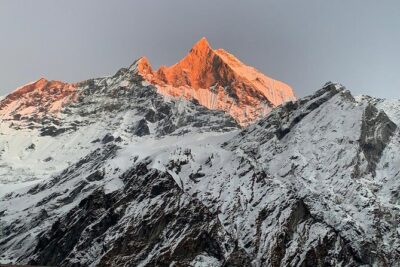
Day 4 starts before sunrise with an ascent toward Poon Hill. The payoff is the classic early view over the Annapurna and Dhaulagiri ranges, including Nilgiri (7061m) and Lamjung Himal (6983m). Even if clouds show up, the morning effort usually gives you a sense of scale that you do not get from ground level alone.
What I’d watch for: early starts feel great when you are motivated, then tough when you are sleep-deprived. Bring the layers you need for a cold pre-dawn climb, and trust that you will warm up once you get moving.
Day 5: Kimrong Khola crossing and Jhinu Danda hot spring
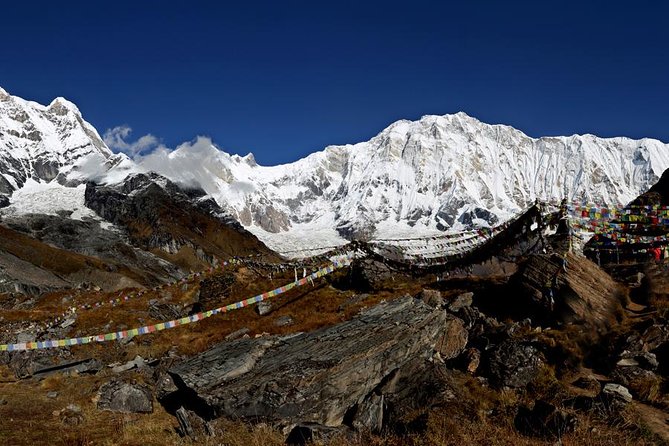
Day 5 brings a gentler rhythm compared to the sunrise morning, but it still keeps you hiking. You ascend and descend on a forested trail, then cross the suspension bridge over Kimrong Khola. After that, you reach Jhinu Danda.
The best part here is the hot spring. This is one of those moments where the trek stops being only effort and turns into recovery. Even a short soak can help your legs feel less angry for the next day.
A practical note: hot springs can also mean people, so go with the flow and plan for a little waiting time depending on conditions.
Day 6: Chhomrong Khola, stone stairs, and a Sinuwa day
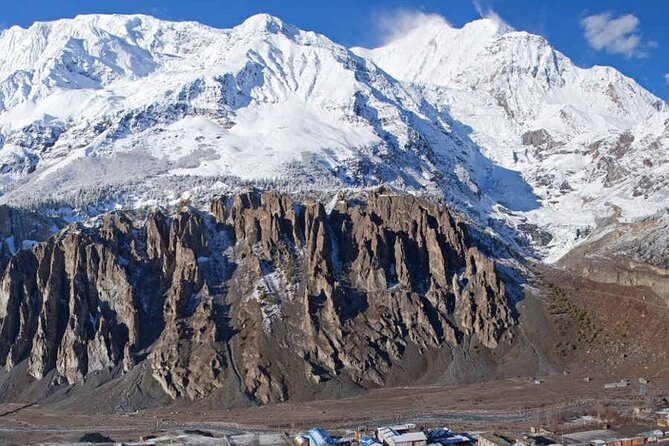
Day 6 is a classic “forest plus stairs” day. You walk through rhododendron forest with mention of orchids and ferns, then descend stone stairs. After crossing Chhomrong Khola, you ascend toward Sinuwa, and the day continues with more stair-like walking.
Why this day matters: it reinforces the trekking skill you will use all week, consistent foot placement on uneven ground. If you get the rhythm right, you arrive less wrecked and more ready to enjoy the view days ahead.
Day 7: Deurali to Machhapuchhre Base Camp area (3700m)
Day 7 is a big elevation day. You ascend to Deurali, then move along stone stairs to reach the area of Machhapuchhre Base Camp (3700m). From there, you walk along moraines, which are the rocky debris formations left behind by glaciers.
This is not a “walk on a smooth road” kind of day. Moraine terrain often feels like the land is uneven on purpose. The good news is the views tend to match the effort. You are also entering a zone where the mountains start looking closer and more sculpted.
What to keep in mind: your breathing is your pace setter. Let the guide set the tempo and use the oxymeter checks as a reassurance tool, not as a reason to push harder.
Day 8: Leaving the moraine route and following Modi Khola through fir and rhododendron
Day 8 starts with descending toward Machhapuchhre Base Camp through the moraine route. You then follow trails alongside Modi Khola, including forest sections of rhododendron and fir.
This is an important psychological day because it reminds you that the hike is not only about the highest point. It is also about movement with purpose. The river valley path often feels like a visual reward after the rougher high-ground walking.
If you are the type who gets anxious on unfamiliar trails, this day can feel comforting because you are moving through a recognizable trekking rhythm again, forests, river sounds, and steady steps.
Day 9: Sinuwa, Upper Chhomrong stairs, and another Jhinu Danda dip
Day 9 mixes up-and-down sections. You first ascend to Sinuwa, then head down to Chhomrong Khola before climbing stone stairs to upper Chhomrong. After that, you descend again to Jhinu Danda and you get another chance to enjoy the warm hot spring dip.
This is a “legs management” day. It is also a morale day. By now you know the rhythm of guesthouse nights, you know how to manage your layers, and you know where you can gain energy during short breaks.
Day 10-11: Nayapul to Pokhara, then back to Kathmandu
After the trek, Day 10 becomes your return to lower elevation. You descend to Nayapul via trails along Modi Khola, with scenic walks back toward towns and greenery. Then you drive to Pokhara for the evening, with time to relax and reset.
Day 11 sends you back to Kathmandu early, again by tourist bus, and you arrive to finish the trek where you started.
If you want to make this smoother on yourself, keep your packing simple on day 10 night. You will likely be tired, and you will want to know exactly where your travel items are for the final ride.
Guides, staff, and the human part of this trek
This trip runs with a local government licensed English speaking guide, plus trekking staff who are supported with food, accommodation, insurance, equipment, medicine, and transport.
The reviews data you provided highlights a strong pattern: people remember the guide and the team. Names that came up include Dhakal Saroj, Mansing with porters Kul and Nishan, and multiple positive mentions of Prakash. Other guide names that appeared include Shiva and Naba.
That matters for your experience because trekking success is not only weather and terrain. It is decision-making, pacing, and how someone handles the human side when you are tired or unsure. If there is one consideration from your mixed feedback, it is that you should confirm who your guide will be and what to expect from them before you start. A friendly conversation helps, but professionalism on the trail is what you feel most.
Also, the inclusion of an oxymeter is practical. It gives you objective feedback about pulse and oxygen saturation during the climb, which can help you stay calmer and pace better.
Accommodations and meals: what “best available guesthouses” means in real life
You will stay in guesthouses along the route, mainly twin sharing. Guesthouses on trekking routes are usually basic, clean enough, and more about location than luxury. What you can count on in this package is consistency and coverage, since accommodations are included and handled for you.
Meal coverage is substantial:
- 10 breakfasts, 9 lunches, 8 dinners included
That means you are not constantly budgeting meals in the middle of nowhere. Still, drinks are extra. I recommend budgeting for water and any extras you like, because hydration and tea can be the difference between feeling fine and feeling drained at altitude.
Who this trek suits best
This trek is described as requiring moderate physical fitness, which fits people who are comfortable walking daily on uneven ground but not necessarily training like a mountaineer.
It is a solid fit if:
- you want the classic Annapurna Base Camp route with big viewpoint moments
- you prefer guided support, permits, and guesthouse planning handled for you
- you travel with less cold-weather gear because the down jacket and sleeping bag are included
- you like villages and forests as much as the mountain views
It might be a tougher fit if:
- you are expecting a fully cushy experience with lots of rest days
- you hate stair-like walking and repeated elevation changes
- you want all drinks and extras included in the price
Should you book this Annapurna Base Camp Trek?
I think this is a good booking if you want a guided, gear-supported version of the classic Annapurna Base Camp route and you value having permits, accommodations, and meals mostly taken care of. The strongest value points are the included down jacket and sleeping bag, the licensed guide, and the oxygen-check tool, plus the itinerary highlights like Poon Hill sunrise and Jhinu Danda hot spring.
My advice before you say yes is simple: plan your extra spending for drinks and tips, and make sure you know your trekking gear list for what is not included. If you do that, you will spend your energy where it belongs, on the trail, the mornings, and the view.
FAQ
How long is the Annapurna Base Camp trek?
The trek duration is listed as approximately 11 days.
Where does the trek start and end?
The trek starts in Kathmandu, Nepal, and ends back at the meeting point.
What time does the experience start?
The start time is 6:15 am.
What is included in the price?
It includes down jacket, sleeping bag, duffel bag, surface transfers to and from Kathmandu, trekking permits and entry fees, guesthouse accommodations (mainly twin sharing), a licensed English speaking trekking guide, trekking staff costs, an oxymeter, first aid kits, and meals (breakfast 10, lunch 9, dinner 8).
Do I need my own trekking equipment?
Yes. Personal trekking equipment is not included.
Is this trek private?
Yes. It is listed as a private tour or activity, with only your group participating.
What fitness level do I need?
Travelers should have a moderate physical fitness level.
Can I cancel for a full refund?
Free cancellation is listed. You can cancel up to 24 hours in advance for a full refund.
What happens if weather is poor?
The experience requires good weather. If it is canceled due to poor weather, you will be offered a different date or a full refund.
Latest additions near Kathmandu
- White Water River Rafting – 1 Day★ 4.3 · 3 reviews
- Traditional Momo Making Class★ 5.0 · 10 reviews
- Kathmandu to Pokhara Premium sofa bus ticket★ 4.0 · 17 reviews
- Ghorepani Poon Hill Trek★ 5.0 · 16 reviews
- Amazing 1 Day Trekking Experience in Kathmandu Nepal★ 5.0 · 24 reviews
- Ghorepani Poonhill Trek★ 5.0 · 5 reviews
- Walking tour of real Kathmandu through back streets.★ 5.0 · 3 reviews
- Wildlife Adventure in Chitwan Nepal★ 4.0 · 4 reviews
Annapurna Base Camp Treks, compared.
Kathmandu to Annapurna Base Camp (ABC) 5-Day Trek
Read our review →
Browse the lists this tour appears in