
Reviewed · ANNAPURNA BASE CAMP TREKS
Annapurna Base Camp Trek
Annapurna Base Camp turns a hike into a story. This trip gives you classic Annapurna scenery, from village trails and Gurung life in valleys like Ghandruk to big-mountain drama around the Annapurna Conservation Area and Machhapuchhre (the Fish Tail). Two things I like a lot are the built-in rhythm of the itinerary, especially the Poon Hill morning hike for early views, and the way the trip leans on one main guide, often listed as Damu (Damodar) from Mission Summit, for planning and day-to-day problem solving.
One real consideration: weather in the Annapurna region can be unpredictable. Even when you expect one season, you can still get cold snaps and surprises that change how the day feels.
In This Review
- Key Highlights Worth Knowing Up Front
- Why Annapurna Base Camp Feels So Famous
- The 14-Day Flow: How Travel, Trek, and Recovery Work Together
- Kathmandu Arrival at 1,350 m, Then Another Reset Later
- Pokhara Staging: The 220 km Reality Check
- Days 3 to 7: Villages, Viewpoints, and the Poon Hill Morning
- Day 3: Nayapul to Hille (1,496 m)
- Day 4: Hille to Ghorepani (2,840 m)
- Day 5: Poon Hill hike, then to Tadapani (2,520 m)
- Day 6: Tadapani to Sinuwa (2,340 m)
- Day 7: Sinuwa to Deurali (3,230 m)
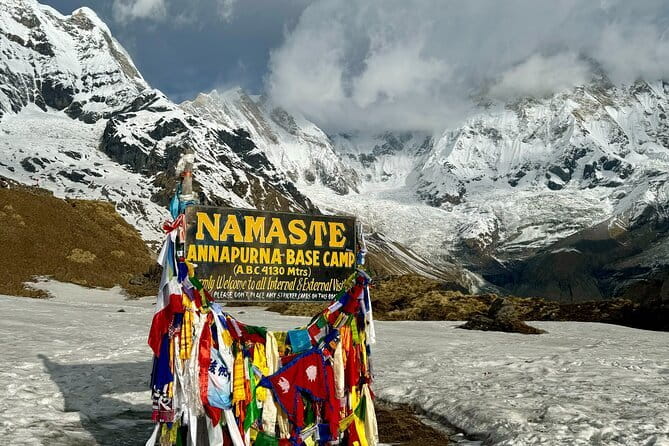
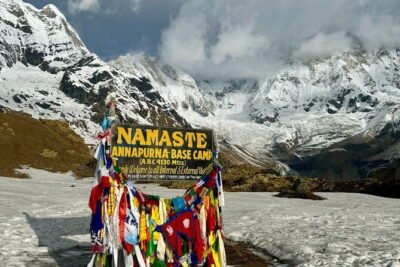
- Day 8 to the Endpoint: Reaching Annapurna Base Camp at 4,130 m
- The Descent Back: Bamboo, Chomrong, and Jhinu-Danda
- Day 9: Annapurna Base Camp to Bamboo (2,050 m)
- Day 10: Bamboo to Jhinu-Danda (1,700 m) via Chomrong
- Kathmandu Again: What the Rest Day Really Does for You
- Guides and Porters: The Difference Between a Trek and a Smooth One
- Price and Logistics: Is $769.24 Good Value Here?
- What to Pack and How to Handle Altitude Without Panic
- Who This Private Annapurna Base Camp Trek Fits Best
- Should You Book This Annapurna Base Camp Trek?
- FAQ
- How long is the Annapurna Base Camp trek?
- What is included in the price?
- What is not included?
- Where does the tour start and end?
- Is this a private tour?
- What is the cancellation policy?
Key Highlights Worth Knowing Up Front
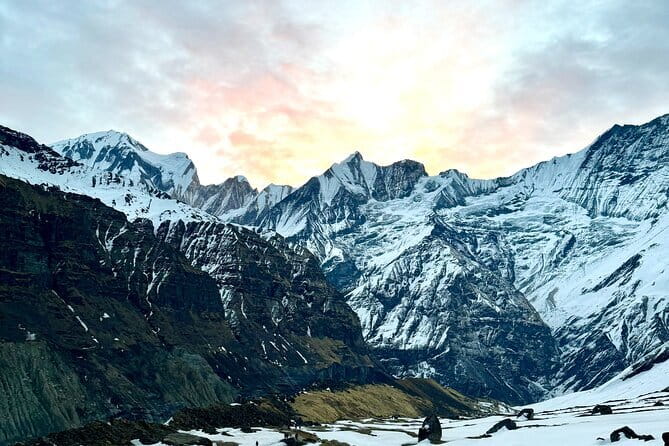
- Poon Hill at the start of your trekking arc: you get a morning viewpoint that helps you read the mountains early.
- A real climb to Annapurna Base Camp, 4,130 m: you earn the endpoint with steady altitude progression.
- Private group setup: it is only your group, so the pace and needs are more likely to be handled directly.
- Damu and team support: several past trekkers specifically called out Damu’s planning, English, and helpful guidance, plus experienced porter support (examples include Bahta).
- Balanced schedule with a Kathmandu rest day: you get time to reset after the trek before departure.
Why Annapurna Base Camp Feels So Famous
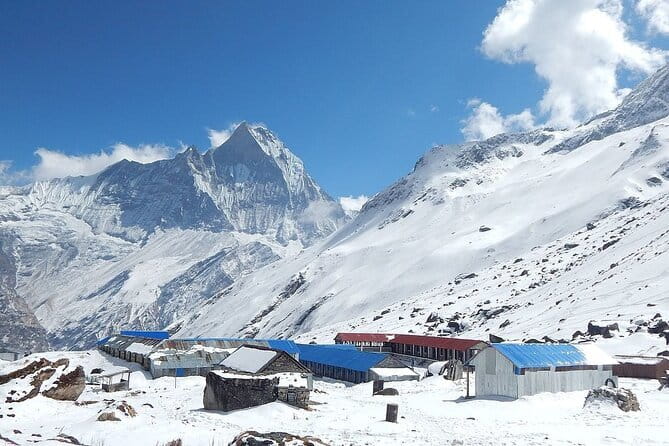
The Annapurna region is one of Nepal’s top trekking playgrounds for a reason. You are not just walking through scenery, you are moving through a living landscape. The route runs inside the Annapurna Conservation Area, which matters because it sets the tone. This is a protected region with villages, trail culture, and a long tradition of visitors sharing the path with locals.
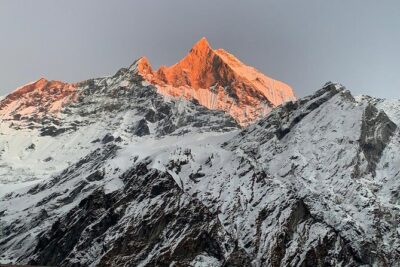
You also get mountain variety. The Annapurna range dominates the horizon in waves. Machhapuchhre, the Fish Tail mountain above Pokhara, is part of the wider picture even when you are deep on trekking trails. And along the way, valleys and settlements like the Ghandruk area (Gurung communities) bring a human scale. You stop for meals, you see everyday life, and the trekking feels less like a theme park.
More Treks in Kathmandu
- Everest Base Camp Trek – 14 Days
★ 5.0 · 1,499 reviews - Everest Base Camp Trek
★ 5.0 · 842 reviews - Everest Base Camp Trekking
★ 5.0 · 485 reviews
The 14-Day Flow: How Travel, Trek, and Recovery Work Together
This is not a nonstop “walk all day” itinerary. It is a sequence of days that mix driving, hiking, and recovery so your body and your expectations stay aligned.
Most trips like this have two separate challenges. The first is logistics, getting you from Kathmandu into the trekking zone. The second is altitude, which is mostly about slow adaptation over several days, not one dramatic push. This itinerary is structured to support both.
A typical rhythm looks like this:
- Kathmandu arrival to set expectations and rest
- A long drive down toward Pokhara as your staging point
- Several trekking days that gradually step you upward
- A push to Annapurna Base Camp, then a descending return with more village time
- A final unwind in Kathmandu before you fly out
If you like travel days planned and predictable, this style helps. If you hate sitting in a vehicle, you should at least mentally budget for two longer drives: Kathmandu to Pokhara, and Pokhara back to Kathmandu.
Kathmandu Arrival at 1,350 m, Then Another Reset Later
You arrive in Kathmandu around 1,350 m. That is not high enough to feel like altitude therapy, but it is enough to remind you this is not a casual stroll country. Kathmandu also gives you the easiest access to supplies and trekking mindset prep.
Then there is a second chance to breathe later: there is a rest day in Kathmandu after the trek. That part is more valuable than it sounds. After days on steep and uneven trails, your feet and legs need downtime. A rest day also gives you room to handle any minor gear issues, laundry, or just sleep.
Also note the tour is described as private. That usually means less waiting around for other schedules and more direct attention to your pacing and comfort.
Pokhara Staging: The 220 km Reality Check
On day two, you drive to Pokhara, about 220 km and roughly 6 hours, reaching around 860 m. This drive is a classic Nepal transition day. You start thinking in terms of hills and viewpoints rather than the dense city streets of Kathmandu.
Pokhara also functions like a mental gear shift. Once you are there, the trek feels closer to real life. The next step is driving onward toward the trailhead, then starting on foot. In practical terms, it means you get a clear handoff from road travel into trekking logistics.
More Annapurna Base Camp treks:
- Annapurna base camp trek 5 Days
★ 5.0 · 252 reviews - 14-Day Private Annapurna Base Camp Trek
★ 5.0 · 180 reviews - Annapurna Base Camp Trekking
★ 5.0 · 116 reviews - Annapurna Base Camp Trek
★ 5.0 · 111 reviews
Days 3 to 7: Villages, Viewpoints, and the Poon Hill Morning
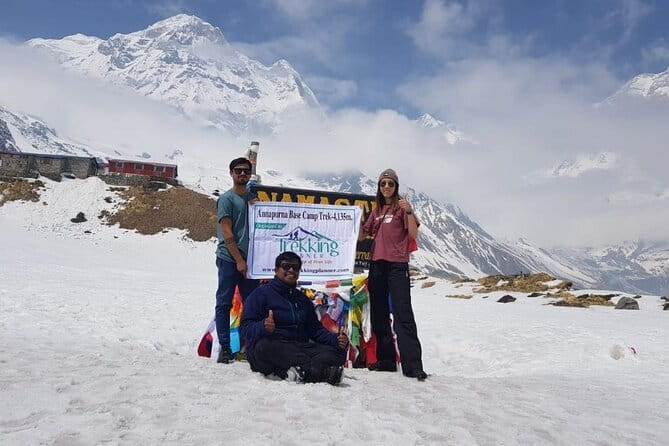
These early trekking days are where the trip teaches you how it wants to be experienced. You are walking through settlements, not only up ridgelines. That makes the hike feel more grounded and easier to manage mentally, even when the climbs are steady.
Day 3: Nayapul to Hille (1,496 m)
You drive to Nayapul, then hike to Hille, about 4 hours. This is a good first day for settling into your rhythm. You are building stamina without jumping into extreme altitude.
Day 4: Hille to Ghorepani (2,840 m)
Next you hike to Ghorepani, around 2,840 m for about 7 hours. Ghorepani matters because it is a base area for viewpoints. By the time you reach it, you are starting to feel the thin air more than you did on lower stages.
Day 5: Poon Hill hike, then to Tadapani (2,520 m)
The standout morning is the hike to Poon Hill for early views. Then you trek onward to Tadapani, around 2,520 m, about 5 hours.
This day is valuable because it changes how you experience the next section. Seeing the mountains from a viewpoint early on helps you understand what you are walking toward. It also sets up a morale boost at the point where altitude begins to feel real.
Tadapani is also a nice pivot spot. It is high enough to feel like the mountains, but not so high that you feel slammed by the next big climb.
Day 6: Tadapani to Sinuwa (2,340 m)
You drop slightly to Sinuwa at 2,340 m and hike around 5 hours. That small adjustment can make your next climb feel more manageable.
Day 7: Sinuwa to Deurali (3,230 m)
Then you head up to Deurali at 3,230 m for about 7 hours. This is where the itinerary starts to compress effort into fewer, steeper days. If you have never trekked at altitude before, this is the segment where you should keep your pace gentle and consistent.
Day 8 to the Endpoint: Reaching Annapurna Base Camp at 4,130 m
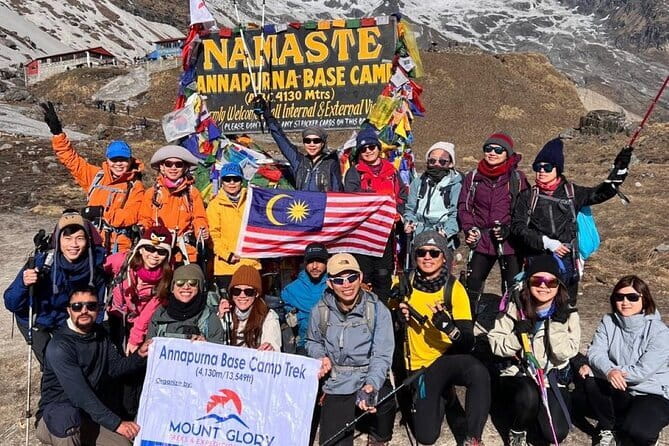
Day 8 is the big moment, hiking to Annapurna Base Camp at 4,130 m in about 4 hours. That time estimate can look short, but do not treat it like an easy walk. At this elevation, even a moderate climb can feel heavy.
What makes Base Camp special is the feeling of arrival at the center of the Annapurna world. The trail has pulled you upward through villages and ridgelines, and suddenly you are at the place trekkers aim for. It is the reward, but it also comes with the altitude reality check.
Practical advice for this day:
- Go slow on any steep sections, especially in the early part of the day.
- Keep breathing steady rather than trying to “move fast.”
- Expect it to feel colder than you think, even in good weather.
A key note from past trekkers is that conditions can change. One person described unexpected snow and cold during their trek. That does not mean it will happen every time, but it does mean you should dress for winter-like conditions at elevation.
The Descent Back: Bamboo, Chomrong, and Jhinu-Danda
After Base Camp, you pivot from altitude effort to leg effort. Descending can be just as tiring because your knees and shins do the work.
Day 9: Annapurna Base Camp to Bamboo (2,050 m)
You hike to Bamboo at 2,050 m in about 6 hours. This is a welcome drop in altitude, but it comes with uneven footing. You will likely feel more “work” in your legs than you expected.
Day 10: Bamboo to Jhinu-Danda (1,700 m) via Chomrong
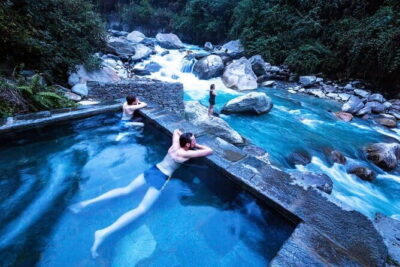
You go to Jhinu-Danda (1,700 m) in about 6 hours, passing through Chomrong. This day is both scenic and lively because Chomrong is a well known trekking hub in the region. Jhinu-Danda is also a strong finishing-village style stop, lower in altitude and easier on your body.
What to watch on these descent days:
- Take short breaks before pain fully sets in.
- Pay attention to where your foot lands on rocky steps.
- Hydrate and eat even if you feel less hungry.
Kathmandu Again: What the Rest Day Really Does for You
After trekking ends and you return by road, you get another full shift back in Kathmandu. There is a day set aside for rest. Use it. Do something simple: sleep, eat well, walk a little, shower, and let your body calm down.
This kind of recovery day also helps you enjoy the last travel phase. Otherwise you can end up feeling like you never got your energy back before departure.
Guides and Porters: The Difference Between a Trek and a Smooth One
Here is where this trip’s reputation gets its strength. Multiple past trekkers singled out Damu (often shown as the founder or owner of Mission Summit) for careful planning, good communication, and patience in answering questions. People also described him as having a friendly personality, even humorous, which matters when you are tired and the mountains are doing their thing.
Porter support is another big deal in your comfort level. One review explicitly mentioned a porter named Bahta. When you have an experienced porter team, you spend less mental energy on gear. It also helps you keep your own stride steady.
For you, the practical takeaway is simple: a guide who plans well can reduce stress. A good guide also helps you make micro-decisions, like when to slow down, how to pace yourself, and how to respond when the weather feels off.
Price and Logistics: Is $769.24 Good Value Here?
The listed price is $769.24 per person for a roughly 14-day program. To judge value, look at what is included and what you must pay yourself.
Included:
- Breakfast
- Air-conditioned vehicle
- All fees and taxes
Not included:
- Lunch, dinner, snacks
- Bottled water
- Coffee and/or tea
- Alcoholic beverages
So what are you really buying? You are buying a lot of the expensive moving parts of Nepal travel: the transport chain (especially the longer drives), entry and local charges, and the support structure that makes the trekking sequence work.
Your biggest personal cost outside the package will be meals and drinks. Since lunch and dinner are not included, budget for daily food at tea houses or lodges along the route and in cities. Bottled water is also on you, which can add up if you buy every bottle.
If you want predictable logistics, private attention, and fewer headaches coordinating a multi-day route, the package price can make sense. If you are trying to keep every cost to the absolute minimum and plan your own food strategy, you might find cheaper ways to do the trek, but they often come with more coordination work.
What to Pack and How to Handle Altitude Without Panic
The itinerary climbs to Deurali (3,230 m) and peaks at Annapurna Base Camp (4,130 m). You do get days that step you upward gradually, plus a couple of lower stretches, but altitude still needs respect.
A sensible packing plan for this kind of trip usually includes:
- Warm layers for high elevation, especially early mornings and Base Camp conditions
- A rain shell or pack cover, because mountain weather can shift fast
- Hiking boots or shoes with good grip for rocky descents
- A small daypack for layers and essentials
- Sunscreen and sunglasses, because high altitude sun can be harsh
Also, bring a simple attitude: pace first, pride later. With routes like this, people do well who treat each climb as training, not a contest.
Who This Private Annapurna Base Camp Trek Fits Best
This trek is listed for people with moderate physical fitness. That makes it a strong choice if you are comfortable hiking several hours a day and handling uneven trails.
It is also a good fit if you like:
- A guided route with clear day-to-day structure
- A private group experience, so the pace and needs get handled directly
- A mix of viewpoints and culture, not just one long, monotonous climb
You might want to think twice if you:
- Hate long road travel days (Kathmandu to Pokhara is about 6 hours, then you drive again later)
- Are not comfortable with cold, unpredictable weather at higher elevations
Should You Book This Annapurna Base Camp Trek?
I’d book it if you want Annapurna Base Camp with a plan that is structured, guided, and designed to keep your trip on track from Kathmandu to Base Camp and back. The combination of Poon Hill morning scenery, steady altitude stages, and the emphasis on a strong guide like Damu is a real advantage. Past trekkers also highlighted how much their experience improved with careful organization and helpful porter support, including named porter support like Bahta.
If your main goal is maximum flexibility with no structure at all, you may find this package style less appealing. But for most people who want the “wow” of the Annapurna mountains without turning the logistics into a second job, this setup looks like a solid value.
FAQ
How long is the Annapurna Base Camp trek?
It is approximately 14 days.
What is included in the price?
Breakfast, an air-conditioned vehicle, and all fees and taxes are included.
What is not included?
Lunch, dinner, snacks, bottled water, coffee or tea, and alcoholic beverages are not included.
Where does the tour start and end?
It starts in Kathmandu, Nepal, and ends back at the meeting point.
Is this a private tour?
Yes. It is listed as a private tour/activity, and only your group will participate.
What is the cancellation policy?
You can cancel for a full refund if you cancel up to 24 hours in advance of the experience start time. If you cancel less than 24 hours before, the amount paid is not refunded.
Latest additions near Kathmandu
- White Water River Rafting – 1 Day★ 4.3 · 3 reviews
- Traditional Momo Making Class★ 5.0 · 10 reviews
- Kathmandu to Pokhara Premium sofa bus ticket★ 4.0 · 17 reviews
- Ghorepani Poon Hill Trek★ 5.0 · 16 reviews
- Amazing 1 Day Trekking Experience in Kathmandu Nepal★ 5.0 · 24 reviews
- Ghorepani Poonhill Trek★ 5.0 · 5 reviews
- Walking tour of real Kathmandu through back streets.★ 5.0 · 3 reviews
- Wildlife Adventure in Chitwan Nepal★ 4.0 · 4 reviews
Annapurna Base Camp Treks, compared.
Kathmandu to Annapurna Base Camp (ABC) 5-Day Trek
Read our review →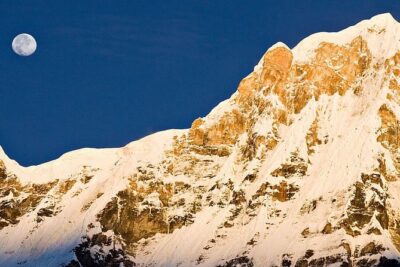
Browse the lists this tour appears in