
Reviewed · ANNAPURNA CIRCUIT TREKS
20 Days Annapurna Circuit Trek
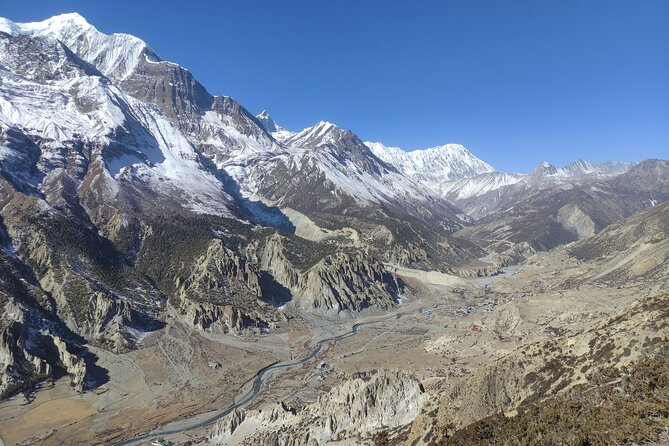
One circuit, three climates, and a big pass. That mix of culture and high-altitude drama is why this trek pulls people in: you get the Annapurna massif ring, steep gorge-side trails, and the moment you earn yourself at Thorong La Pass (5,416m). I also really like the practical support built into the trek, including a government-licensed guide plus a porter arranged at a 2 guest to 1 porter (25 kg max) ratio. The main thing to consider is that this is not a casual hike, especially for the long, cold, strenuous pass day.
You start with Kathmandu culture, then ease into the mountains with a drive toward the Pokhara highway and into the trekking rhythm. You’ll also move with a group that stays private, so your schedule can follow the day’s realities instead of being forced into a one-size-fits-all pace. I like that this trip builds in acclimatization time in Manang, because that’s when most first-time circuit trekkers most need a breather.
At $1,200 per person, the value comes from what’s actually included: guide and porter, key permits like ACAP and TIMS, plus meals on the trekking days and airport transfers and Kathmandu sightseeing. The catch is you still need to budget for things not covered, like visa, international flights, drinks, tips, and entry fees for temples in Kathmandu.
In This Review
- Key highlights from this Annapurna Circuit experience
- First taste of Nepal: Kathmandu temples and square life
- Getting onto the trail: drives, staging, and the rhythm shift
- Dharapani to Chame: terraced starts, then cooler air and forest walking
- Chame to Pisang and onward to Manang: the views sharpen
- Yak Kharka to Thorong High Camp: building toward the pass
- Thorong La Pass and Muktinath: the circuit’s big earned moment
- Descending into Marpha via Ekale Bhatti: Kali Gandaki brings you a different world
- Tatopani and Ghorepani: forest returns, plus a famous bridge crossing
- Poon Hill sunrise from Tikhedhunga: the easy win before Pokhara
- Pokhara leisure days: lakes, lake views, and decompression time
- Staff support that changes the whole feel of the trek
- Price and Logistics: what $1,200 covers and what you must plan for
- Who this private Annapurna Circuit trek suits best
- Should you book the 20 Days Annapurna Circuit trek with this operator?
- FAQ
- What is the duration and price of this Annapurna Circuit trek?
- Where does the trek start, and what time does it begin?
- Is airport pickup and drop included?
- What does the package include for trekking logistics?
- What is not included in the price?
- Can I get a refund if I cancel?
Key highlights from this Annapurna Circuit experience
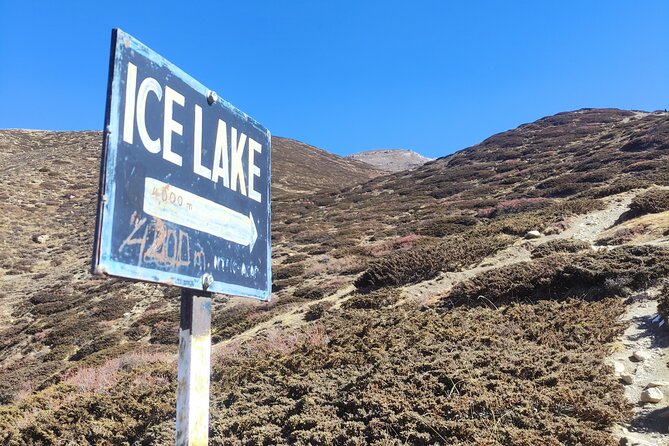
- Thorong La Pass (5,416m) timing: an early start so you can be at the top before the cold wind blows.
- Manang acclimatization day: an entire day to explore Manang’s flat-roofed houses and adjust before higher terrain.
- Permit and tracking included: ACAP permit and a TIMS card are part of the package.
- Kali Gandaki valley variety: you’ll see the circuit’s shift from barren, high places down toward greener forest zones.
- Comfort support model: licensed guide, porter carrying up to 25 kg, plus private-group pacing.
First taste of Nepal: Kathmandu temples and square life
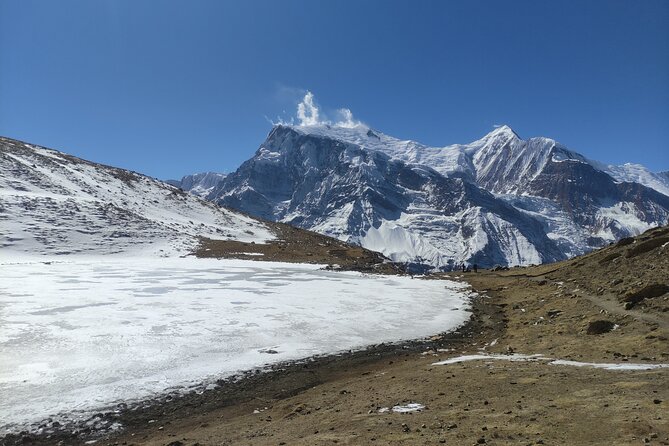
Your trek energy starts in Kathmandu, and the program doesn’t waste time. You land at Tribhuvan Airport, then a representative meets you outside the terminal and gets you to your hotel. After that, you get a guided sightseeing run by car that hits three big spiritual and historical anchors.
First up is Pashupatinath Temple on the Bagmati River. This is the largest and most popular Hindu temple in the world, and it draws tens of millions of devotees each year. Even if you’re not there for religious tourism, it’s a powerful place to understand how Nepal’s Hindu tradition lives in daily routines, not just in museums.
Next comes Boudhanath Stupa, known for the calm, iconic Buddhist eyes. It’s a UNESCO World Heritage Site from 1979, and it’s one of those locations where you can feel the pace slow down. Then you finish with Kathmandu Durbar Square, where past kings lived around the square. The old royal compounds, courtyards, and carved stonework help you connect the trekking days later to the people whose heritage shaped the villages you’ll pass.
Practical consideration: the temple entry fees for places like Pashupatinath, Boudhanath, and Kathmandu Durbar Square are not included (fees are listed, and they vary by nationality status). So if you’re traveling as a non-local visitor, budget a little extra on Day 2.
More Treks in Kathmandu
- Everest Base Camp Trek – 14 Days
★ 5.0 · 1,499 reviews - Everest Base Camp Trek
★ 5.0 · 842 reviews - Everest Base Camp Trekking
★ 5.0 · 485 reviews
Getting onto the trail: drives, staging, and the rhythm shift
Before your boots are truly busy, you do a long transport day. After Kathmandu, you take a scenic drive along the foothills surrounding the Kathmandu valley and aim toward the Pokhara highway. You don’t just “get there,” you transition, slowly trading city sights for hill views.
By Day 3, you’re reaching Syange (823m/2699ft) for an overnight stop. The itinerary notes a long travel day, including about 10 hours from Kathmandu plus earlier driving segments. That matters because many people underestimate what a “travel day” does to your legs. Plan to use that night to hydrate, eat well, and take an early sleep, not to stay out late.
Then on Day 4, you finally start trekking from Besisahar. You get steep bits right away for about the first half hour, then the path moves into lush farm terraces. Waterfalls, gorge scenery, and snow-capped peaks are all part of the early-day visual package.
This is where your trekking mindset starts to matter. The circuit is beautiful, but your body needs time to learn the repeat pattern: uphill pressure, short breath resets, downhill focus, and steady pacing.
Dharapani to Chame: terraced starts, then cooler air and forest walking
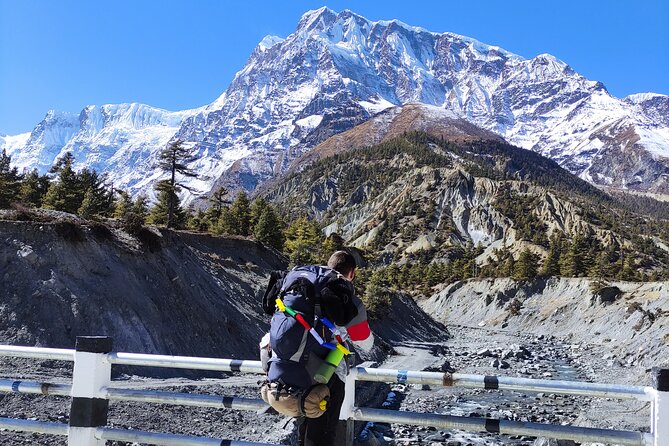
The early trek days are a good lesson in how the Annapurna Circuit changes fast. Day 4 leads you to Dharapani (around 6 hours of walking on the schedule). Expect a steep start, then a move into farm terraces and lush surroundings.
Day 5 shifts the vibe. From Dharapani, the program notes a change in vegetation and cooler air as you trek through forests. You pass through forest walking before reaching Bagarchhap and then continue onward toward Chame. This is the day you’ll likely notice how the temperature can swing even when you’re not at the highest elevations yet.
Why I like this section: it’s a gentle way to build hiking legs while still feeling like you’re progressing. You don’t go from city to extreme altitude in one jump.
What to watch: forest and early-portion trail days can still be slippery. I’d treat the footing seriously, especially after any mist or rain, because hiking injuries start with small slips.
Chame to Pisang and onward to Manang: the views sharpen
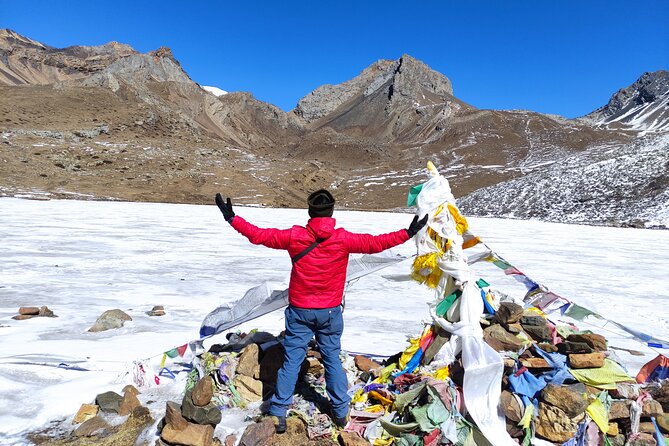
Day 6 takes you from Chame to Pisang (3200m). The walk is listed as 5 to 6 hours, and you follow the northern bank route as you go. This is also the day when the itinerary starts emphasizing high snow-capped peak views more consistently.
Day 7 pushes you toward Manang (the trek schedule lists about 5 hours). From Pisang onward, the trail is described as offering constant views of high peaks, followed by a steep climb for about half an hour before reaching the village of Manang.
Then you get a big win on Day 8: an acclimatization day in Manang. The itinerary specifically says you’ll explore Manang, and it mentions the village style with about 500 flat-roofed houses. This matters because it’s not just sightseeing. Manang is a chance to let your body adjust before higher, rougher terrain.
How to use your acclimatization day well: stay active but don’t turn it into an extra long hike. I like using a day like this to walk, check the weather, and plan mentally for the pass day later.
More Annapurna Circuit departures:
- Annapurna Circuit Trek with Tilicho Lake
★ 5.0 · 368 reviews - Annapurna Circuit Trek
★ 5.0 · 94 reviews - Annapurna Circuit Trek
★ 5.0 · 67 reviews - Annapurna Circuit Trek
★ 5.0 · 49 reviews
Yak Kharka to Thorong High Camp: building toward the pass
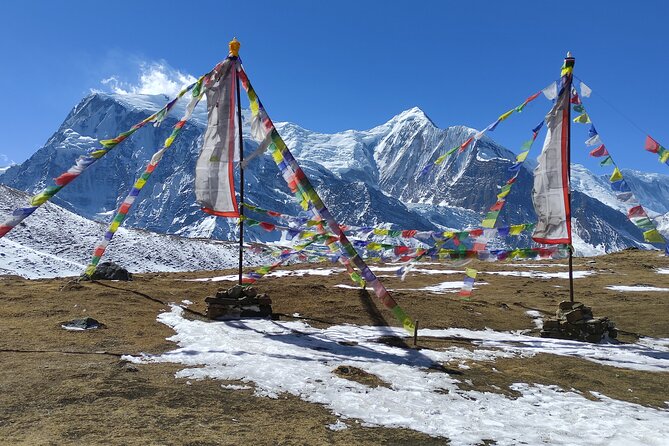
Day 9 brings you to Yak Kharka. The schedule notes a slow climb for about an hour, and the views open up to peaks like Annapurna II, Gangapurna, Tilicho, and Chuli. Then the trail heads into barren winds, which is your first clear signal that the trekking world is changing from green and forested to thin air and stark ground.
Day 10 is longer in feel, even if it’s listed as 6 hours. You trek to reach the last settlement of Ledar, and the schedule frames it as a slow climb winding into grand viewpoints of the Annapurna II, Gangapurna, Tilache, and Chuli peak.
Why this part is valuable: it’s when you learn whether you can handle steady uphill effort and how your breathing responds. If you rush here, the pass day will punish you. If you pace it, the next day feels more manageable.
Thorong La Pass and Muktinath: the circuit’s big earned moment
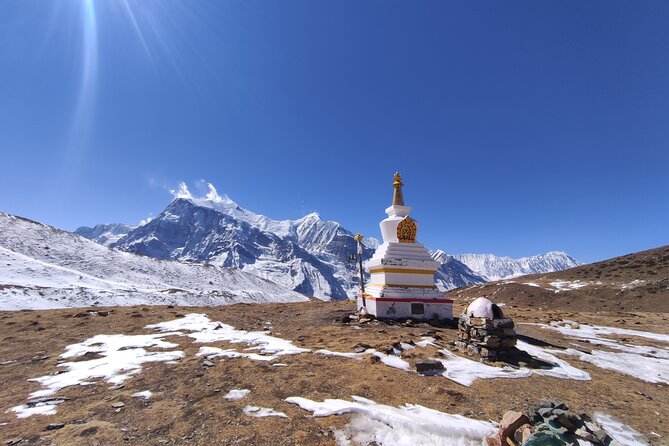
Day 11 is your pass day. The itinerary is explicit that you start early after breakfast so you can reach the top of Thorong La Pass (5,416m) before the cold wind starts to blow.
That timing detail is not small. Cold wind at altitude is not just uncomfortable, it also drains energy quickly. So treat morning as the serious part of the day. Keep hands protected, move with purpose, and don’t waste effort on unnecessary stops.
After crossing the pass, you descend to Muktinath Temple at around 3,800m. The schedule calls this the longest day in terms of trekking. You also get teahouses for refreshment at the bottom, with a couple hours of trekking time on the schedule segment once you reach the descent area.
This day is a mix of achievement and payoff. The achievement is the pass crossing. The payoff is seeing Muktinath as a sacred village stop, which helps the trek feel tied to real places and real traditions rather than just elevation numbers.
Descending into Marpha via Ekale Bhatti: Kali Gandaki brings you a different world
Day 12 drops about 1,200m to the river valley floor of the Kali Gandaki River, with Marpha as the next stop. The itinerary includes a brief stop at Ekale Bhatti, described as a lonely teahouse settlement with only a few teahouses. That’s the kind of stop that feels like you’re stepping into the circuit’s quieter heart.
You might expect the descent to feel purely easier, and sometimes it is. But steep downhill can also be tough on knees and ankles. I like using descending days as an opportunity to focus on controlled steps, shorter strides, and regular hydration.
Day 13 continues the descent and river-following rhythm, heading from Marpha toward Tukuche village, with Lete listed as a stop. You’re shown as walking enjoyably downstream along Kali Gandaki. The itinerary notes spectacular views of Tukuche and Dhaulagiri from this stretch, which tells you you’re not losing the scenery even as you drop in altitude.
Tatopani and Ghorepani: forest returns, plus a famous bridge crossing
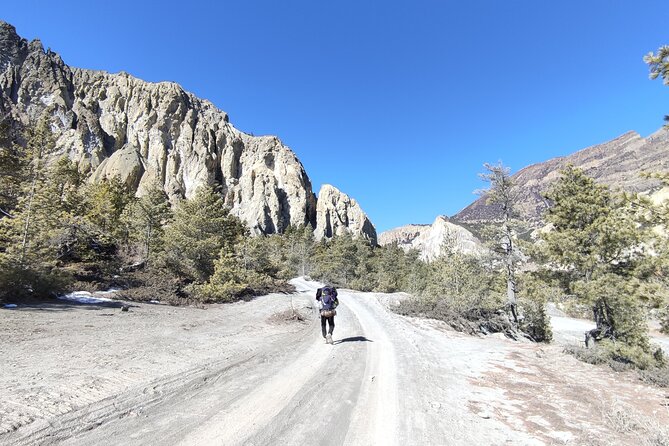
Day 14 is where the circuit’s climate shift becomes obvious again. The itinerary describes a dramatic change in vegetation, from dry, arid desert turning into pine and conifer forests. You also pass between the two giant peaks of Dhaulagiri and Annapurna.
You reach Tatopani after about 6 hours. Tatopani is famous enough that many trekkers remember it even before they arrive, but even if you only care about the walking, this day is about contrast. One side of your brain sees high barren terrain. The other side starts recognizing forest texture and cooler shade.
Day 15 takes you from Tatopani to Ghorepani (2860m) in about 6 to 7 hours. You cross a suspension bridge over the Kali Gandaki River, and that’s the kind of moment where you feel both the journey’s scale and the river’s power.
Then you arrive in Ghorepani, which sets you up for Day 16’s sunrise mission.
Poon Hill sunrise from Tikhedhunga: the easy win before Pokhara
Day 16 starts with Tikhedhunga as the stop point, and the schedule mentions a one-hour hike to Poon Hill (3,195m) if the weather permits. The goal is sunrise with panoramas ranging across Dhaulagiri, Annapurna, and the Mt. Manaslu range.
If the pass day feels like a test, Poon Hill is the reward. You’re not chasing the highest point on the route, but you are getting an iconic viewpoint and a classic mountain-hour experience.
After sunrise and the climb, you continue onward toward Tikhedhunga, and the trek segment listed for the day takes about 5 hours.
Day 17 moves you down to Pokhara after about 7 hours. The itinerary highlights rural farm villages and views of cascading waterfalls nearby. Then you arrive in a place that feels like a reset.
Pokhara leisure days: lakes, lake views, and decompression time
Day 18 is a leisure day in Pokhara. The itinerary suggests sightseeing around lakes, naming Phewa Lake, Begnas Lake, and Rupa Lake as options you can take depending on your mood.
This matters because after days of hiking and altitude changes, “doing nothing” is part of the experience. You’ll likely appreciate the chance to wash up, stretch out, and eat without counting steps.
Day 19 sends you back to Kathmandu by bus for about 8 hours. The route is described as scenic and includes sights along the Trisuli and Marsyangdi River. Then Day 20 finishes with a transfer back to the international airport, with a representative dropping you around 3 hours before your flight.
Staff support that changes the whole feel of the trek
The Annapurna Circuit can be challenging even when everything goes smoothly. What makes this kind of trek enjoyable, day after day, is a calm team that keeps things organized.
This private tour includes an experienced trekking guide with a government license and a porter. The porter arrangement is clearly laid out: 2 guests to 1 porter, with a 25 kg max load. That load rule is important. It means you can focus on walking rather than turning your bag into your second heart.
Also, there’s real value in communication. In past experiences shared about this company, the owner is noted as speaking Chinese very well, and guides like Jaya have been praised for being caring and attentive, with porters like Malik and Dinesh also mentioned for support. I can’t promise who you will get, but I would absolutely ask your operator ahead of time about your guide and confirm any language support you might need. It reduces stress, and stress reduction on a circuit trek is not a luxury.
Price and Logistics: what $1,200 covers and what you must plan for
Let’s talk money in a way that helps you decide.
Your price is $1,200 per person. That’s not just “a ticket for a route.” It includes airport pickup and drop, Kathmandu sightseeing by car, and the transport legs into the trekking area (Kathmandu to Besisahar by regular bus, then Besisahar to Syange by sharing jeep). It also includes the permits you need to trek in the Annapurna region: Annapurna Conservation Area Project Permit (ACAP) and TIMS (Trekkers Information Management system).
Meals are included too, with a schedule that lists 18 breakfasts, 15 lunches, and 15 dinners. The wording suggests not every single day has a full set of included meals, so you should still budget for the gaps. Drinks are not included, and you’ll also want cash for personal expenses and any extra comforts in teahouses.
What is not included is also clear. You’re responsible for visa and international flights, plus tips for staff. Temple entry fees in Kathmandu are extra, with fees listed for Pashupatinath, Boudhanath Stupa, and Kathmandu Durbar Square. Rescue and evacuation costs are also not included, and that’s a big one to take seriously when you’re trekking high.
Value check: if you want a guided, permit-ready, private-group circuit with porter help and meals, this package looks reasonably priced. If you already have your own guide and permits, and you plan to self-manage every transport and meal, then it becomes harder to judge. But for many first-time circuit trekkers, the included structure is the value.
Who this private Annapurna Circuit trek suits best
I’d point this trek toward a few types of travelers:
- People with moderate physical fitness who want a structured trek with a professional guide and porter support.
- First-time Nepal visitors who want the Kathmandu orientation handled and a clear plan into the mountains.
- Trekkers who prefer private-group pacing over crowded routes.
It may not fit if you want total freedom to change routes daily. This is private, but it still follows a planned sequence with acclimatization in Manang and the pass crossing timing.
Should you book the 20 Days Annapurna Circuit trek with this operator?
If you want an Annapurna Circuit that’s organized enough to let you focus on walking, views, and village moments, I think it’s a strong choice. The included permits, TIMS card, and ACAP support reduce bureaucratic hassle. The guide and porter setup also makes a meaningful difference when you hit the long pass day and the steep descents afterward.
I’d only hesitate if you hate the idea of extra costs for temple entry fees and meals not fully covered every day, or if you’re not ready for early starts and cold wind timing around Thorong La. If that sounds like you, plan for the realities, and you’ll be rewarded with one of the most famous high-mountain treks in Nepal.
FAQ
What is the duration and price of this Annapurna Circuit trek?
The trek is approximately 20 days and costs $1,200 per person.
Where does the trek start, and what time does it begin?
It starts at the Great Adventure Treks & Expedition meeting point in Kathmandu, with start time listed as 8:15 am.
Is airport pickup and drop included?
Yes. Airport pickup and drop are included, and you are transferred back to the international airport at the end of the trip.
What does the package include for trekking logistics?
You get a government-licensed trekking guide and a porter. The porter plan is 2 guests to 1 porter with a 25 kg max load, plus ACAP and TIMS permits.
What is not included in the price?
Not included are visa and international flight ticket, drinks, personal nature expenses, tips, rescue and evacuation costs, any other special accommodation, and temple entrance fees.
Can I get a refund if I cancel?
You can cancel up to 3 days in advance for a full refund. If you cancel less than 3 days before the experience starts, the amount paid is not refunded.
Latest additions near Kathmandu
- White Water River Rafting – 1 Day★ 4.3 · 3 reviews
- Traditional Momo Making Class★ 5.0 · 10 reviews
- Kathmandu to Pokhara Premium sofa bus ticket★ 4.0 · 17 reviews
- Ghorepani Poon Hill Trek★ 5.0 · 16 reviews
- Amazing 1 Day Trekking Experience in Kathmandu Nepal★ 5.0 · 24 reviews
- Ghorepani Poonhill Trek★ 5.0 · 5 reviews
- Walking tour of real Kathmandu through back streets.★ 5.0 · 3 reviews
- Wildlife Adventure in Chitwan Nepal★ 4.0 · 4 reviews
Annapurna Circuit Treks, compared.
Browse the lists this tour appears in