
Reviewed · ANNAPURNA BASE CAMP TREKS
14 days Annapurna Base Camp Trek
Some mornings feel like magic. This Annapurna Base Camp trek mixes Poon Hill sunrise with mountain villages, plus porter support that makes the steep bits feel doable. I like the way the trip builds in culture first, then ramps up walking, and I also like the practical team details like a licensed English-speaking trek leader and shared porter loads. The main drawback to plan for is the altitude and the big daily walking distances, especially on the days with lots of stone steps.
You’ll start in Kathmandu with a day of major UNESCO sites, then head to Pokhara before your trek proper. Along the way you’ll sleep in simple lodge rooms, eat what the mountain teahouses offer, and hit Annapurna Base Camp either by day hike or the tough 3 A.M. sunrise option. If you have moderate fitness and you can handle long hours on the trail, this is a strong value way to do Annapurna.
One thing to know up front, you still pay extra for some monument entrance fees, and you’ll need to budget tipping and your own trekking gear.
In This Review
- Key things I’d note before you go
- Annapurna Base Camp, with a Kathmandu warm-up you actually use
- Kathmandu to Pokhara: the switch from temples to trailheads
- Day 4 to Ulleri: the first real climb, and why it matters
- Ghorepani and the rhododendron forests: comfort walking before Poon Hill
- Tadapani to Chhomrong: river crossings and the Fishtail reveal
- Day 8 to Bamboo Village: the stone-step reality check
- Deurali and Macchapuchare Base Camp: getting closer to the big peaks
- Annapurna Base Camp day: the 3 A.M. sunrise option, and the slower approach
- The return trek: stone steps down, hot springs up (a rare treat)
- Day 12 to Nayapul, then jeep to Pokhara: finish strong
- Back to Kathmandu, then fly out: the pacing that avoids the last-minute scramble
- Price and logistics: what you pay for, what you still handle yourself
- Who this trek suits best, and who should think twice
- Should you book this Annapurna Base Camp trek?
- FAQ
- What is the meeting point and start time for this trek?
- Are pickups and transfers included?
- Are permits for Annapurna included?
- How are porter services handled, and how much can a porter carry?
- Are UNESCO entrance fees included in the price?
- What is the cancellation window for a full refund?
Key things I’d note before you go
- Poon Hill sunrise timing that gets you above the tree line early, with panoramic views
- Annapurna Base Camp views from the sanctuary ring of peaks, including Machhapuchhre and multiple Annapurna summits
- Chhomrong, Sinuwa, and Bamboo Village route rhythm, including a day with 2000+ stone steps
- Jhinu hot springs at Jhinu after the return trek, a built-in reward for sore legs
- Permits handled for Annapurna Conservation Area and TIMS, so you do less paperwork
- Porter system where one porter carries up to 18 kg, shared between two clients
Annapurna Base Camp, with a Kathmandu warm-up you actually use
This trek is built for moderate trekkers who want big mountain payoff without doing extreme technical routes. The “wow” moments are obvious, Annapurna Base Camp, the Poon Hill viewpoints, and the long wall of peaks around the sanctuary. But what makes the trip feel balanced is the front-loaded city days, which help you adjust to Nepal before you start climbing.
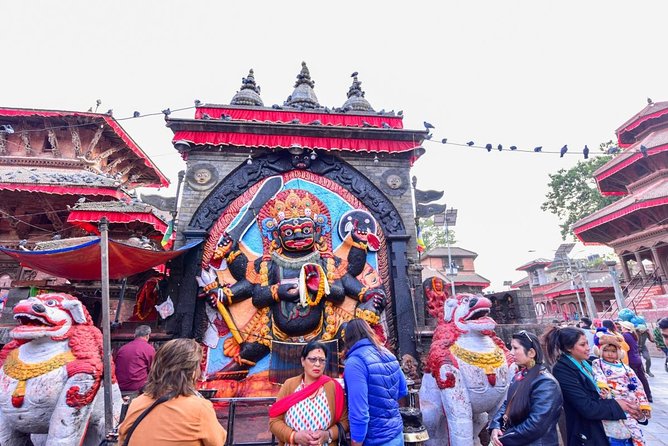
Kathmandu is not just a waiting room. You get a full day at Kathmandu Durbar Square, then Swayambhunath, also called the Monkey Temple, and then Boudhanath Stupa, one of the largest stupas in the world. If you like travel that mixes moving your body with learning how people live and worship, this start is a good fit.
Two practical notes. First, entrance fees for those UNESCO sites are not included, so bring a bit of cash for the monuments. Second, you’ll be on your feet in Kathmandu too, walking courtyards, stairs, and streets, before the real trek begins.
More Treks in Kathmandu
- Everest Base Camp Trek – 14 Days
★ 5.0 · 1,499 reviews - Everest Base Camp Trek
★ 5.0 · 842 reviews - Everest Base Camp Trekking
★ 5.0 · 485 reviews
Kathmandu to Pokhara: the switch from temples to trailheads
On day three, you head to Pokhara Lakeside. The plan gives you a slow, scenic reset before the trekking grind, with a stop that’s built around relaxing time and views over the lake area. It’s a smart buffer day, because the next day starts with driving to Nayapul and then hiking uphill.
In practice, this is where you’ll take care of small trek tasks. You’ll check your gear, ask your trek leader what to expect on the first climbs, and get your head around lodge life, where your day centers on tea houses, rest stops, and early dinners.
Day 4 to Ulleri: the first real climb, and why it matters
After a drive to Nayapul, your hike begins toward Ulleri. The trail rises through terraced farm fields and you’ll pass through Tikhedhunga before the harder, straight uphill section to Ulleri. This is the day that makes your legs understand the plan.
What I like here is that you start with manageable steepness and clear terrain before you hit the deeper rhythm of the Annapurna region. You’re also moving through working landscapes, with farmland and local settlements, not just a single long uphill corridor.
The consideration is simple. If you rush and try to “power through,” you’ll pay for it later. Go slow, use short steps, and let your breathing set the pace.
Ghorepani and the rhododendron forests: comfort walking before Poon Hill
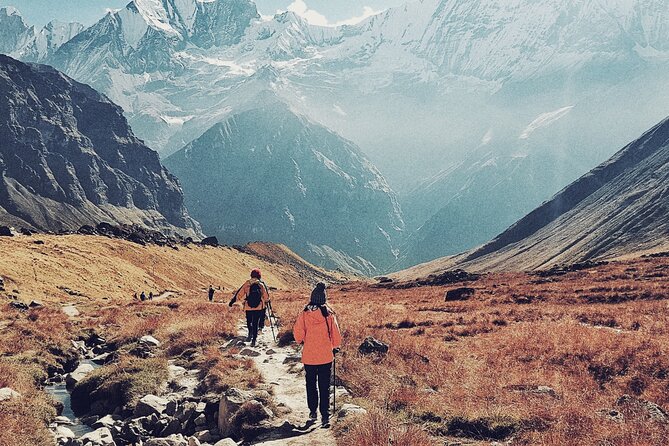
Your next day pushes forward through rhododendron and pine forests toward Ghorepani. You’ll move across little bridges, pass through village areas, and reach higher viewpoints where you can see Dhaulagiri, Mt. Dhaulagiri at 8167 m, along with other mountain ranges.
Then comes the Poon Hill day, which is the classic Annapurna “first big viewpoint” move. Early in the morning you hike from Ghorepani to Poon Hill at 3210 m to catch the first sunlight, then you descend and continue onward to Tadapani at 2650 m.
This is one of the best parts of the trip if you like sunrise travel, because the payoff is panoramic and very visual. It also teaches you something important about altitude. You’ll learn how your body responds to early starts and cold air, which makes the later Annapurna Base Camp morning feel less like a shock.
More Annapurna Base Camp treks:
- Annapurna base camp trek 5 Days
★ 5.0 · 252 reviews - 14-Day Private Annapurna Base Camp Trek
★ 5.0 · 180 reviews - Annapurna Base Camp Trekking
★ 5.0 · 116 reviews - Annapurna Base Camp Trek
★ 5.0 · 111 reviews
Tadapani to Chhomrong: river crossings and the Fishtail reveal
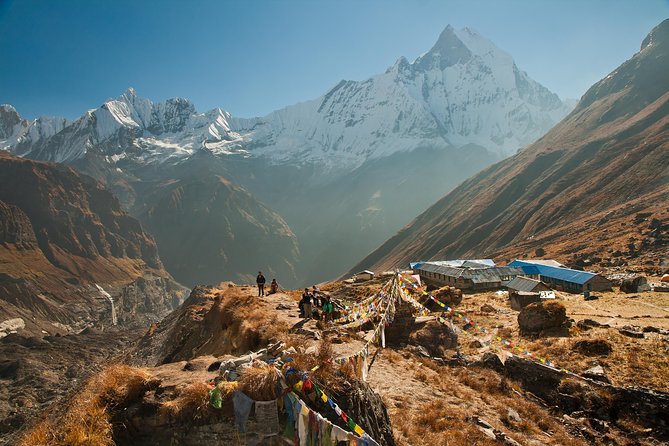
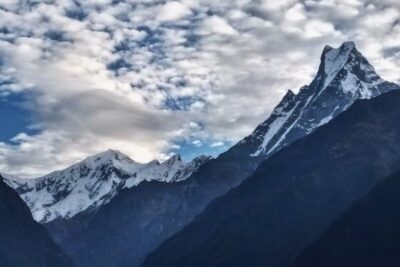
From Tadapani, you descend, cross the Kimrung River, and walk along rice fields and small settlements. Then you climb up to Chhomrong, where you can take in views of Fishtail and Annapurna South.
Chhomrong is a key village stop on this route, and it’s also emotionally important. You’ve been walking for days, and now the scenery shifts from “pretty valley trekking” to “real Himalaya drama.” The steepness and the views combine to make this a high-energy day.
Day 8 to Bamboo Village: the stone-step reality check
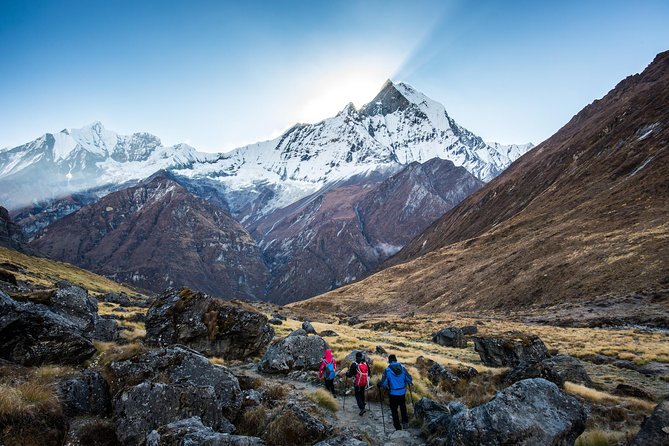
This is the day you’ll talk about later, because it mixes a big descent with a hard ascent. You climb down 2000+ stone steps to cross the Chhomrong River, then you work your way up toward Sinuwa. After rest, you descend again through rocky steps and bamboo forests to reach Bamboo Village at 2300 m.
Bamboo Village has a fun angle too. It’s known for lemur colonies, and with luck you might spot them in the trees. It’s not something you should count on, but it’s a nice example of how these places have their own character beyond the hiking.
From there you continue to Dovan. This segment tends to feel easier, and that’s a gift after a day like the Chhomrong step stretch.
Deurali and Macchapuchare Base Camp: getting closer to the big peaks
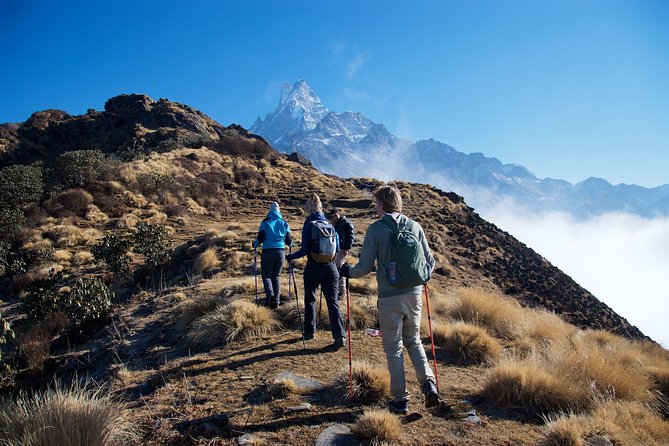
Your hike next heads to Deurali, taking you through rhododendron and bamboo forests. After crossing Hotel Himalaya, you face a steep climb through a drier forest before reaching Hinku Cave. You drop closer to the river, then climb again to Deurali at 2920 m.
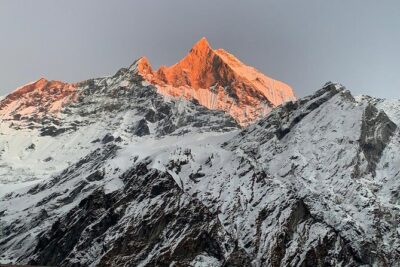
From Deurali, you continue along the Modi Khola river area for scenery, then ascend to Macchapuchare Base Camp, MBC. This is where you get an especially striking look at Fishtail, and you’ll notice how its shape can change depending on the angle.
What I like about this day is the variety. Forest, cave area, riverwalking, and viewpoint hiking, all in one move. You also get a gradual sense of the Annapurna sanctuary area approaching, without jumping straight into maximum altitude stress.
Annapurna Base Camp day: the 3 A.M. sunrise option, and the slower approach
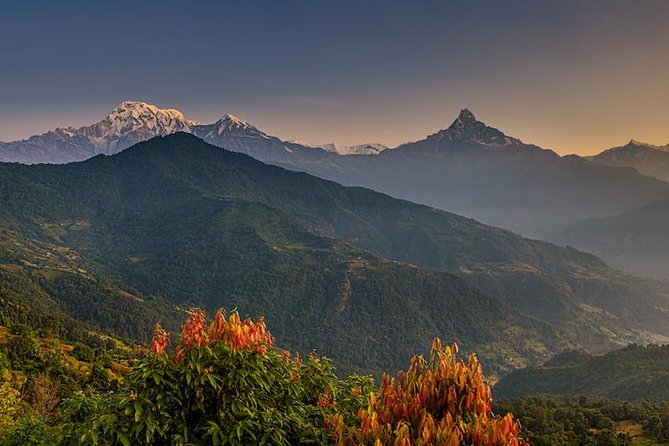
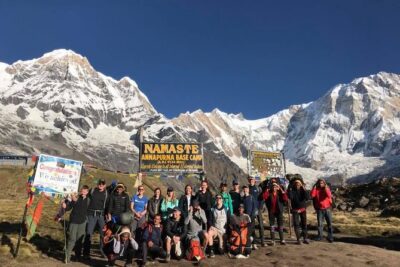
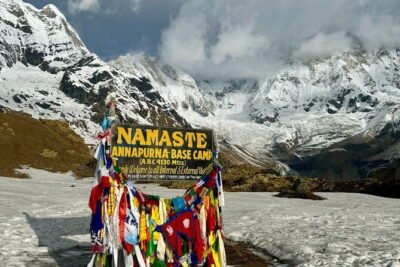
You have two ways to reach Annapurna Base Camp: a sunrise run or a more relaxed morning. If you want the sunrise at ABC, you’ll wake up early around 3 A.M. You then hike up for about 2 hours and you need to move carefully, because altitude matters.
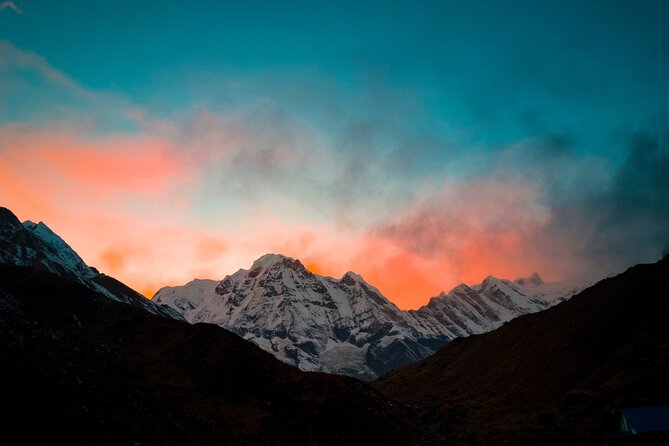
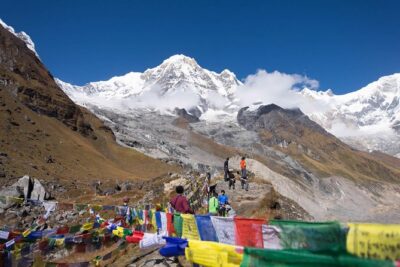
When you arrive, it’s the classic Annapurna sanctuary setting, an oval-shaped plateau surrounded by a ring of mountains. You’ll have strong views of Machhapuchhre, also known as Mt. Fishtail, Hiunchuli, Annapurna South, Annapurna I, Annapurna III, Gandharvachuli, and Gangapurna.
A key practical point, sunrise or not, you’ll be doing real physical work at high altitude. The trip is moderate overall, but the ABC morning is not the place to “hero hike.” Keep pace controlled, drink water, and accept that your body will ask for patience.
The return trek: stone steps down, hot springs up (a rare treat)
After reaching base camp, you head back, passing places like Himalaya, Dovan, and Bamboo. You’ll descend, then you’ll climb up to Sinuwa via stone stairways and continue toward Chhomrong River. The final push on this section goes left toward Jhinu.
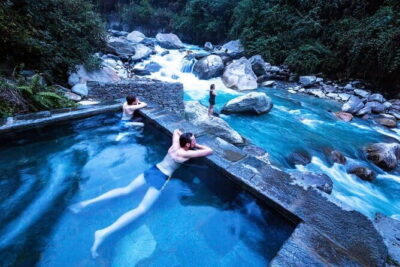
Jhinu brings a payoff that feels almost unfair after hard walking. You’ll have hot springs where you can ease fatigue. If your legs are stiff, this is one of the most memorable parts of the entire route, because it turns the return journey into something you look forward to, not just something you endure.
Day 12 to Nayapul, then jeep to Pokhara: finish strong
Your last trekking day starts with descending down stone staircases and moving through villages, farmlands, and tea houses. You’ll make your way back to Nayapul, where a private jeep picks you up and transfers you to Pokhara.
This “wrap-up” day matters more than people think. You’re not just walking less, you’re also mentally switching from trek mode back to normal travel mode. You’ll likely appreciate the chance to reset with a proper meal and rest in Pokhara.
Back to Kathmandu, then fly out: the pacing that avoids the last-minute scramble
After a night in Pokhara, you’ll have breakfast and then drive back to Kathmandu. The plan brings you back in the late afternoon, and you’ll stay the night at your hotel.
On departure day, you’re transferred to Kathmandu International Airport about 3 hours before your flight. You’ll also get guided help to the check-in hall, which is one less stress point on your final morning.
Price and logistics: what you pay for, what you still handle yourself
The cost listed is $1,028.41 per person for about 14 days. For many people, the value comes down to what’s included for the trek itself, not just the hiking.
Included highlights:
- 3 nights in Kathmandu at a 4-star property, Yatri Suites & Spa or similar, plus 2 nights at Hotel Crystal Palace or similar
- 8 nights on trek in local lodge rooms on a room-only basis
- Annapurna Conservation Area permits, TIMS, and other necessary permits
- All transportation listed in the plan, including transfers between Kathmandu, Pokhara, and trek starting areas
- Porters with a shared system, one porter carries up to 18 kg shared between two clients
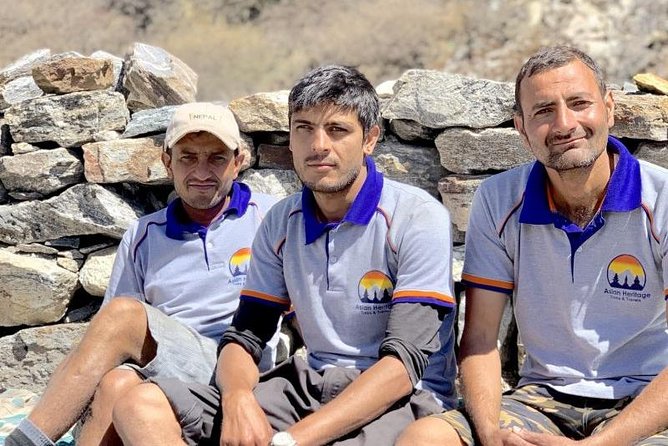
- An English-speaking, government-licensed trek leader
- Mobile ticket and pickup offered
What you must plan to pay for:
- Your personal trekking gear and personal expenses
- Food and drinks along the route, since lodge stays are room-only
- Tipping for guide, porter, and drivers
- Entrance fees for world heritage sites in Kathmandu
- No emergency rescue evacuation insurance is included
To me, the biggest value driver is that you’re not managing permits and logistics alone, and you’re getting real human support through the licensed trek leader and porter system. If you’ve never done an Annapurna-style trek, that support matters.
If you have your own gear and you’re comfortable handling meals on the trail, the remaining costs are mostly predictable. If you hate paying extra in small chunks, budget carefully for entrances in Kathmandu and meals during the trek.
Who this trek suits best, and who should think twice
This is a good fit if you’re a moderate trekker who wants to see the best-known Annapurna icons, from Kathmandu’s UNESCO sites to Annapurna Base Camp. The route includes long hiking days, and it includes a day with a serious step-heavy descent and ascent, so you should feel ready for lots of walking.
It may be less ideal if you’re new to trekking at altitude, or if you prefer shorter hiking days with minimal stairs. Also, if you can’t manage early starts, the sunrise option at Poon Hill and the 3 A.M. ABC choice will affect your comfort level.
A small plus for practical travelers: service animals are allowed, and the hotels are listed as near public transportation.
Should you book this Annapurna Base Camp trek?
I’d book it if you want a well-supported, moderate Annapurna Base Camp experience with organized logistics. The mix of Kathmandu cultural sights, Pokhara reset time, and a structured trek through villages like Ghorepani, Chhomrong, Bamboo, and Deurali makes it easier to feel like you got a full Nepal trip, not just a single long day of hiking.
I’d hesitate if you dislike paying extra for entrance fees and you don’t want to budget for food on the trail and tipping. Also be honest about altitude and stairs. If you can handle long walking days and you’ll pace yourself, you’re in good shape for the base camp payoff.
If you want, tell me your fitness level and whether you plan to do the 3 A.M. ABC sunrise. I can help you decide if this schedule matches your style and what to prioritize day to day.
FAQ
What is the meeting point and start time for this trek?
You meet at Tribhuvan Airport in Kathmandu, Nepal, with a start time of 8:30 am.
Are pickups and transfers included?
Yes. The trip includes transfers, pickup offered, and all transportation as mentioned in the itinerary, including airport and intercity drives.
Are permits for Annapurna included?
Yes. The price includes Annapurna Conservation Area permits, TIMS, and other necessary permits.
How are porter services handled, and how much can a porter carry?
One porter can carry up to 18 kg of luggage, shared between two clients.
Are UNESCO entrance fees included in the price?
No. Entrance fees for world heritage sites, including sites visited in Kathmandu, are not included.
What is the cancellation window for a full refund?
You can cancel up to 6 days in advance of the experience for a full refund, as long as you cancel at least 6 full days before the experience’s start time.
Latest additions near Kathmandu
- White Water River Rafting – 1 Day★ 4.3 · 3 reviews
- Traditional Momo Making Class★ 5.0 · 10 reviews
- Kathmandu to Pokhara Premium sofa bus ticket★ 4.0 · 17 reviews
- Ghorepani Poon Hill Trek★ 5.0 · 16 reviews
- Amazing 1 Day Trekking Experience in Kathmandu Nepal★ 5.0 · 24 reviews
- Ghorepani Poonhill Trek★ 5.0 · 5 reviews
- Walking tour of real Kathmandu through back streets.★ 5.0 · 3 reviews
- Wildlife Adventure in Chitwan Nepal★ 4.0 · 4 reviews
Annapurna Base Camp Treks, compared.
Kathmandu to Annapurna Base Camp (ABC) 5-Day Trek
Read our review →
Browse the lists this tour appears in