
Reviewed · ANNAPURNA BASE CAMP TREKS
14-Day Annapurna Base Camp Trek from Kathmandu
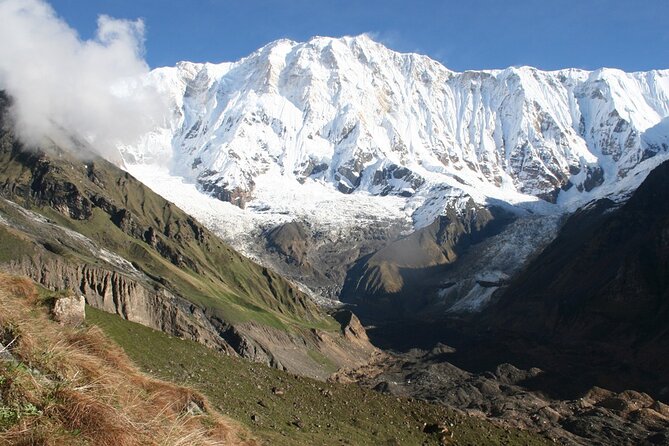
Stone steps and big Himalayan views. This is a classic Annapurna Base Camp trek built around culture and altitude done smart. You go from Kathmandu’s temples to Pokhara’s lake life, then into rhododendron forests, bamboo corridors, and villages where prayer flags and chortens mark the trail.
I especially like how the route earns its big moments without rushing. The Poonhill sunrise push on Day 6 gives you a mountain-view wake-up call, then you roll downhill to reset your legs. I also like that the trek is run as a real group trip, with a small maximum group size, plus an experienced guide and support staff who keep things organized from start to finish.
The main drawback to plan for is effort. This trek includes steep sections and lots of stone stair travel, plus you’ll reach 4170 m at Annapurna Base Camp, so you need to take pace and rest seriously. Budget-wise, the headline price covers a lot, but extras like your visa, travel insurance, and tips can add up.
In This Review
- Key things that make this trek worth your time
- Why This Annapurna Base Camp Route Feels Balanced
- Kathmandu Valley and Pokhara Setup Days (Days 1 to 3)
- The First Trek Days: Tikhedunga, Ulleri, and Tadapani (Days 4 to 6)
- Chomrong to Sinuwa: Forest Steps and a Real Gateway Feeling (Days 7 to 8)
- Into the Sanctuary and Up to Annapurna Base Camp (Days 9 to 10)
- Return Descent, Dovan Back Down, and Hot Springs Relief (Days 11 to 12)
- Pokhara to Kathmandu Finish: Scenic Bus Ride, Then Airport Transfer (Days 13 to 14)
- Price and What $950 Really Covers (And What Might Cost Extra)
- Guides, Group Size, and the Support That Makes It Feel Under Control
- Fitness Reality Check: Moderate Ability, Lots of Stairs
- Should You Book This Annapurna Base Camp Trek?
- FAQ
- Where does the trek start and do I get airport pickup?
- How long is the trek?
- What permits and entries are included?
- What transport is included between Kathmandu and Pokhara, and back?
- What meals are included?
- Is travel insurance or the Nepal visa included?
Key things that make this trek worth your time
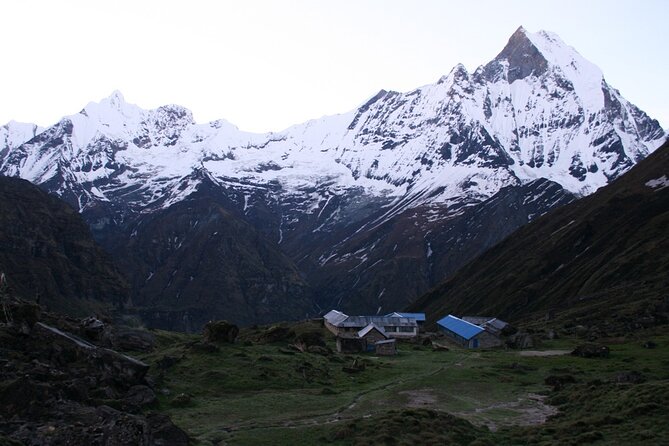
- Poonhill sunrise (Day 6), timed for early mountain views over a huge range of peaks
- Stone stairs plus suspension bridge crossings, giving you that real Annapurna trail feel
- A structured return route (not just maxing out one hard downhill day) to help leg fatigue
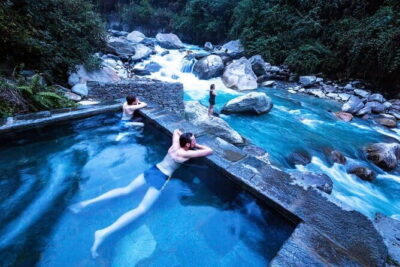
- Hot springs on Day 11 in the middle of the descent back toward Pokhara
- Small group size up to 14, which usually makes the day-to-day feel more manageable
Why This Annapurna Base Camp Route Feels Balanced
Annapurna Base Camp is famous for the payoff, but the best part of this itinerary is how it strings that payoff together with steady variety. You move through terraced hills, then subtropical forest zones, then cooler Buddhist and animistic mid-hills where prayer flags and chortens show up in everyday life.
What I like is the way the scenery changes by altitude and season mood. You’ll see rhododendron and bamboo forests, then alpine meadows as you get higher. That natural “climb and transition” pattern helps you stay mentally engaged, not just physically busy.
There’s also a clear logic to the way days are spaced. You get a big viewpoint day, then you keep trekking, and later you reach the base camp area after you’ve already gained height in smaller steps. For most hikers, that is exactly what you want: time for your body to adjust while still moving forward.
More Treks in Kathmandu
- Everest Base Camp Trek – 14 Days
★ 5.0 · 1,499 reviews - Everest Base Camp Trek
★ 5.0 · 842 reviews - Everest Base Camp Trekking
★ 5.0 · 485 reviews
Kathmandu Valley and Pokhara Setup Days (Days 1 to 3)
Day 1 is a straightforward arrival: you get met and greeted, then transferred to your hotel, and the evening is free to get food, sleep, and your bearings. You’ll want to use that time for a simple checklist, like charging devices and making sure you have the right layers for cooler mornings.
Day 2 is your Kathmandu Valley sightseeing day, with a professional guide escorting you to major landmarks like Kathmandu Durbar Square, Monkey Temple, Pashupatinath Temple, and Boudhanath Stupa. You also get time to shop for trekking equipment. This matters more than it sounds, because Kathmandu can be the place where last-minute gear fixes save your trek later.
Day 3 turns into a scenic transit day. You drive from Kathmandu toward Pokhara along the Trisuli and Marsyangdi River routes, viewing peaks like Ganesh Himal and Manaslu during the drive. Pokhara then sets the tone for what follows: lakes, caves, and Hindu and Buddhist temples, all with mountains watching from close range.
Practical note: transit days can make you feel like you’re doing “nothing,” but it’s actually a good time to recover from jet lag and prepare your body for trekking.
The First Trek Days: Tikhedunga, Ulleri, and Tadapani (Days 4 to 6)
Day 4 starts the trek after a drive to Nayapul, about an hour and a half away. Then you hike toward Tikhedunga (1577 m) via Birethanti (1065 m). This portion is described as fairly easy and flat-out compared to what comes later. You’re walking through small villages and settlements, which is a nice way to break in your rhythm before the steeper effort.
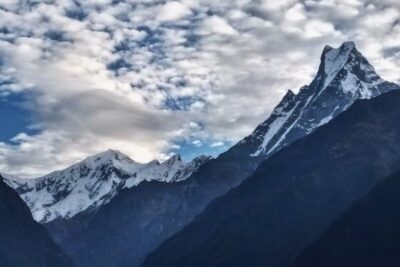
Day 5 is where the trek starts asking for commitment. You ascend steeply for about the first two hours, then move through places like Ulleri (2070 m) and Banthanti. The reward here is the mountaintop drama you get on the route, including views of Machhapuchhare (Fish Tail), Hiunchuli, and Annapurna to the south. After that initial push, the trail eases into rhododendron and shadowy forest sections, with bird life and a calmer feel leading you up to the day’s camp.
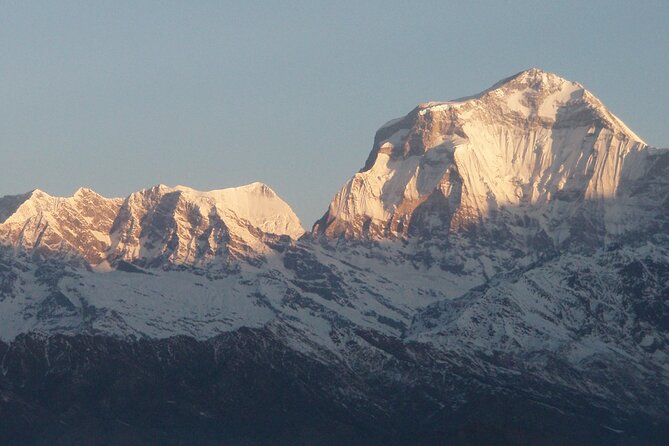
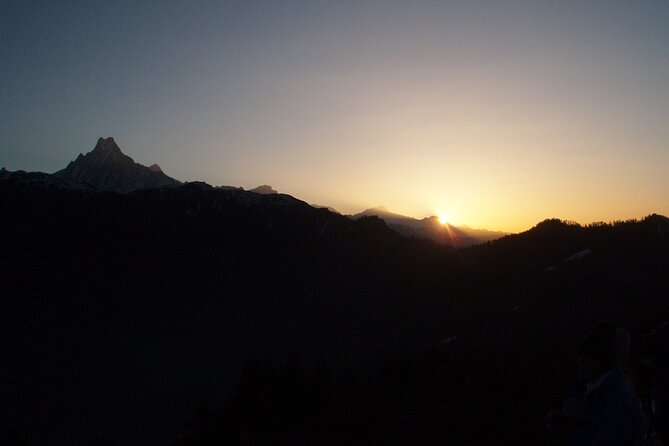
Day 6 is the famous one: you hike to Poonhill (3232 m) for sunrise views. The list of peaks you may see is long, including Dhaulagiri, Annapurna I and South, Machhapuchhare, and multiple other snowcapped summits. Even if you’re not a peak-spotting expert, the value is more basic: bright morning light on the range, then breakfast and a downhill recovery.
After sunrise, you descend to Ghorepani for a hot breakfast, then continue trekking to Tadapani (2650 m). The route through rhododendron is called out as especially colorful in spring when the flowers bloom.
Small drawback: early wake-ups can be rough. Dress for cold mornings, and keep your breakfast simple so you’re ready for the climb.
Chomrong to Sinuwa: Forest Steps and a Real Gateway Feeling (Days 7 to 8)
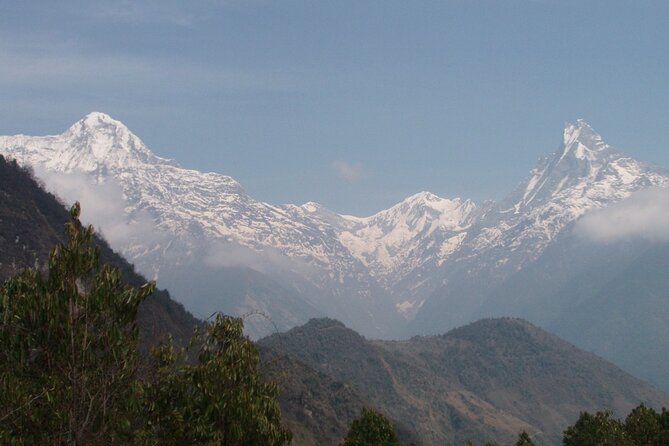
Day 7 starts by descending gently through rhododendron and oak forest, with birdsong in the mix. Then you hit a steep climb, and eventually reach Chomrong, a village positioned as a gateway area for the higher Annapurna Base Camp approach and set at the base of Himalchuli.
What makes Day 7 feel meaningful is the shift from “getting there” trekking to “this is the main act” trekking. Chomrong is where many hikers start feeling the trek’s bigger altitude story, and this itinerary uses it that way.
Day 8 begins after a hot breakfast, and the trail is described as descending on a stone stairway for the first part, then crossing Chhomrong Khola on a suspension bridge. That bridge crossing is one of those practical Annapurna moments: you’re paying attention to footing, and you’re also getting views and airflow you do not get on flat paths.
After the crossing, you climb out of the side valley. You pass bamboo, rhododendron, and oak on the west bank before reaching Sinuwa (2350 m). The day includes long stone staircase descents into deeper bamboo and rhododendron forests as you work toward the Bamboo and Dovan area.
Practical advice: stone stairs are the day’s main opponent, not the altitude. If your knees get cranky, take shorter steps, and avoid rushing on downhills.
More Annapurna Base Camp treks:
- Annapurna base camp trek 5 Days
★ 5.0 · 252 reviews - 14-Day Private Annapurna Base Camp Trek
★ 5.0 · 180 reviews - Annapurna Base Camp Trekking
★ 5.0 · 116 reviews - Annapurna Base Camp Trek
★ 5.0 · 111 reviews
Into the Sanctuary and Up to Annapurna Base Camp (Days 9 to 10)
Day 9 is where the trek tightens in focus. The valley widens and you begin to see gates to the sanctuary area. The itinerary notes crossing two avalanche tracks on a narrow trail that runs against cliffs. That detail matters, because it explains why this isn’t just a scenic walk. You need steady attention on the path.
After that, you reach Bagar (3310 m), described as a green meadow with some abandoned hotels. Then you continue through alpine meadows, with the trail gently rising as you approach base camp.
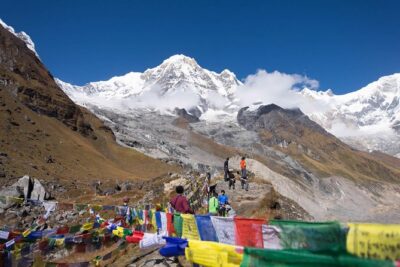
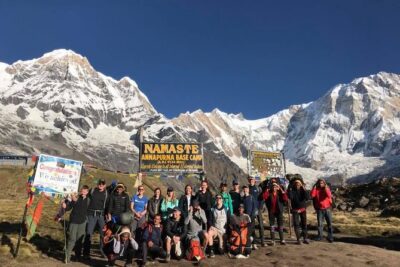
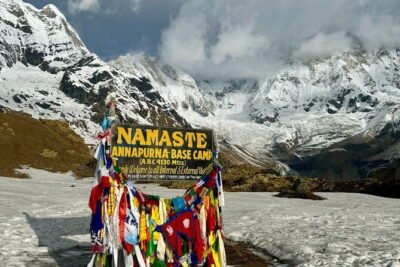
The target day follows through to the big moment: you reach Annapurna Base Camp at 4170 m. The best way to think about this part is simple, you are trading energy for elevation, and your body will likely feel it. Take it slow at the top and save your big photo energy for when you find clear views.
Day 10 is the base camp visit day, not just a “touch and go.” After breakfast, you visit the base camp and surrounding views, and then you trek back toward Dovan in about six hours. The itinerary calls out that going down can be tough for some trekkers due to shaky legs, so this route gives you a less brutal one-day push.
If you’re a camera person, this is your time to linger. When clouds cooperate, the base camp views can be astonishing. If clouds don’t cooperate, staying calm and warm still counts as a win.
Return Descent, Dovan Back Down, and Hot Springs Relief (Days 11 to 12)
Day 11 turns the page from “climb” to “rebuild your legs.” You trek downhill toward Bamboo through rhododendron, oaks, and bamboo. Then you have a steep uphill stretch for about an hour to reach Sinuwa, followed by gradual descent.
The route continues toward Chhumrong Khola, then involves an almost one-hour stretch on stone staircase down to Chhumrong. The day ends with a steep descent to Jhinudanda, and you finally reach your rooms at the guest house.
Then comes one of the most practical perks on the schedule: hot springs. The itinerary includes time for a refreshing bath in warm natural hot water. That’s not just comfort, it can also help you reset your body for the final travel day.
Day 12 is your easy landing back toward civilization. After breakfast, you walk through a descent and flat land until Birethati, stop for lunch, then continue walking about 30 minutes to Nayapul, where a car or van is waiting to take you back to Pokhara.
If you’ve got any tightness from all the stairs, Day 12 is a chance to breathe and notice how much better you feel when you’re no longer climbing.
Pokhara to Kathmandu Finish: Scenic Bus Ride, Then Airport Transfer (Days 13 to 14)
Day 13 is a tourist bus departure from Pokhara at 7 AM. The drive takes about six hours and passes satellite towns, rural settlements, gushing rivers, and terraced green views. It’s a change of pace, but it still keeps the trip moving in a structured way.
When you arrive back in Kathmandu, you’re set up for Day 14, which is simply an airport transfer for your international departure. After two weeks in the mountains, it’s oddly calming to have a straightforward ending.
One last practical tip: keep your last-day energy for sleep and hydration. You do not need to rush into “post-trek sightseeing mode” right away.
Price and What $950 Really Covers (And What Might Cost Extra)
At $950 per person, this trek is priced around mid-range for a guided Annapurna Base Camp program, especially because it includes several things that usually cost extra when you piece them together.
Here’s what the price does include:
- 13-night accommodations during the tour
- Kathmandu sightseeing with a professional guide
- Annapurna conservation entry and TIMS permit
- Ground transportation from Kathmandu to Pokhara and back by tourist bus
- Meals included: breakfast 12 times, lunch 9 times, dinner 8 times
- Entrance fees in Kathmandu on Day 2 (NPR 2600, about $25)
- An experienced guide, plus the group structure that keeps logistics from becoming your job
Now the likely extras to budget for:
- Nepal entry visa fee
- Travel insurance, which is compulsory and not included
- Alcoholic and nonalcoholic drinks
- Any meals not specified in the itinerary
- Tips for guide, porter, and driver
- Trekking porter if you need one
This is the part I want you to take seriously: if you hate the idea of extra costs, confirm your tip expectations and whether you plan to hire a porter. Even if you pack light, some hikers still prefer porter support to protect their energy for altitude.
Guides, Group Size, and the Support That Makes It Feel Under Control
This trek runs with a maximum of 14 travelers, which is a sweet spot for a group trek. It’s big enough for a shared vibe, but small enough that you’re not swallowed by the crowd. That helps on narrow paths and in situations where the guide needs to coordinate the group pace.
The feedback style in the reviews you shared is consistent: guides and porters are described as supportive, friendly, and focused on safety. Names that show up in that positive feedback include Raj, Bier, Bhim, Suraj, Indra, Soraj, Amrit, and Pralad, with porters like Sangam and Ruslen specifically credited. The common thread is that people felt well looked after from Kathmandu onward, with good communication and help arranging tea houses and meals during the trek.
That matters because Annapurna can be unpredictable day to day, especially with weather and trail conditions. A strong guide team is what turns a “plan” into a workable route you can trust.
Fitness Reality Check: Moderate Ability, Lots of Stairs
The program is designed for travelers with moderate physical fitness level. That is not the same as easy. Your work includes steep climbs, long descents, and frequent stone stair segments, especially around Chomrong and in the middle of the return.
If you’re deciding whether you can handle it, think in terms of endurance and leg management:
- Can you handle repeated up and down days without pushing too hard?
- Can you manage stair-heavy descents without your knees feeling wrecked?
- Are you comfortable with early starts and getting by with tea house meals?
This trek can feel tough, but the pacing design includes rest and route choices that are meant to prevent the worst leg overload, like the Day 10 decision to return to Dovan rather than pushing too hard.
Should You Book This Annapurna Base Camp Trek?
If you want a guided trek that mixes major sightseeing in Kathmandu, a proper Pokhara reset, and a classic Annapurna Base Camp route with viewpoint highlights, this one makes a lot of sense. The big reasons I’d book it are the organized support, the Poonhill sunrise payoff, and the way the itinerary manages descent and leg fatigue with practical day planning.
If you’re looking for a mostly flat, gentle hike, this probably won’t fit. Between altitude at 4170 m, steep sections, and plenty of stone stairs, you need to go in with realistic expectations and a steady pace. If you already know you hate paying for add-ons like porter support, or you do not have your insurance and visa lined up, sort that out early.
If you match the fitness level and you like the idea of moving through villages, forests, and prayer-flag country toward one of Nepal’s signature trekking destinations, then yes, I’d seriously consider booking.
FAQ
Where does the trek start and do I get airport pickup?
The meeting point is Tribhuvan Airport, Kathmandu, Nepal. The tour includes a met and greeted airport representative who transfers you to your hotel.
How long is the trek?
The duration is 14 days (approx.) including the Kathmandu and Pokhara travel days and the trek itself.
What permits and entries are included?
The tour includes Annapurna conservation entry and TIMS permit. It also includes Kathmandu sightseeing entrance fees on Day 2 (NPR 2600, about $25).
What transport is included between Kathmandu and Pokhara, and back?
You use ground transportation from Kathmandu to Pokhara and back by tourist bus as part of the included itinerary.
What meals are included?
The package includes 12 breakfasts, 9 lunches, and 8 dinners. Meals not specified in the itinerary are not included.
Is travel insurance or the Nepal visa included?
No. Travel insurance is compulsory but not included, and the Nepal entry visa fee is also not included.
More day tours out of Kathmandu
- Nagarkot Sunrise View and Day Hiking from Kathmandu
★ 5.0 · 471 reviews - Private Bhaktapur and Nagarkot Day Tour From Kathmandu
★ 5.0 · 305 reviews - Day Trip to Bhaktapur and Panauti from Kathmandu
★ 5.0 · 184 reviews - From Kathmandu: 1 hour Panoramic Everest Flight
★ 4.4 · 175 reviews
Latest additions near Kathmandu
- White Water River Rafting – 1 Day★ 4.3 · 3 reviews
- Traditional Momo Making Class★ 5.0 · 10 reviews
- Kathmandu to Pokhara Premium sofa bus ticket★ 4.0 · 17 reviews
- Ghorepani Poon Hill Trek★ 5.0 · 16 reviews
- Amazing 1 Day Trekking Experience in Kathmandu Nepal★ 5.0 · 24 reviews
- Ghorepani Poonhill Trek★ 5.0 · 5 reviews
- Walking tour of real Kathmandu through back streets.★ 5.0 · 3 reviews
- Wildlife Adventure in Chitwan Nepal★ 4.0 · 4 reviews
Annapurna Base Camp Treks, compared.
Kathmandu to Annapurna Base Camp (ABC) 5-Day Trek
Read our review →
Browse the lists this tour appears in