
Reviewed · ANNAPURNA BASE CAMP TREKS
10 Days Private Annapurna Base Camp Trek
If big mountain views are your goal, this route delivers.
You’ll get Annapurna Sanctuary drama, plus Modi River scenery through villages and forest gorges. I love that the trek mixes culture and nature, not just steps to a viewpoint. One heads-up: it can feel challenging for amateur walkers because you’re doing several days of climbs and long descents, often on stone steps or through dense forest.
This is a private trip, so the pace and stops can be shaped around your group. You also get a licensed guide and a porter, with practical support that shows up most on the hard parts, especially if you have mixed fitness in the group. If you like planning that actually works on the ground, this itinerary is built around getting you to the base camp zone while still giving you time to enjoy the way there.
In This Review
- Key highlights to expect on this Annapurna Base Camp trek
- From Kathmandu to Pokhara: river drives and setting your legs
- Days to Ghandruk: Modi River steps, Gurung culture, and first serious views
- Chhomrong: the gateway village energy (and why it matters)
- Himalaya Hotel, Dovan, Bamboo: forest trekking that feels like a canyon walk
- Annapurna Sanctuary and base camp: glacier views and the weather reality check
- The long downhill rhythm back to Sinuwa, Bamboo, and Jhinu Danda
- Landruk and Tolka: suspension bridges, farmland, and big peak angles
- Dhampus and the final descent: last panoramas before Pokhara
- Price and logistics: what $1,100 buys you (and what it doesn’t)
- Guides and pace: why the right person makes the trek feel easier
- Should you book this Annapurna Base Camp private trek?
- FAQ
- Where is the meeting point for this Annapurna Base Camp trek?
- How long is the trek?
- What does the price include?
- What is not included in the trip cost?
- Is this a private tour?
- Are permits included?
- How do you return to Kathmandu at the end?
- Is the trek suitable for everyone?
- Does weather affect the experience?
- Is pickup offered?
Key highlights to expect on this Annapurna Base Camp trek
- Private guiding and porter support so you’re not guessing, especially on steeper, messier sections
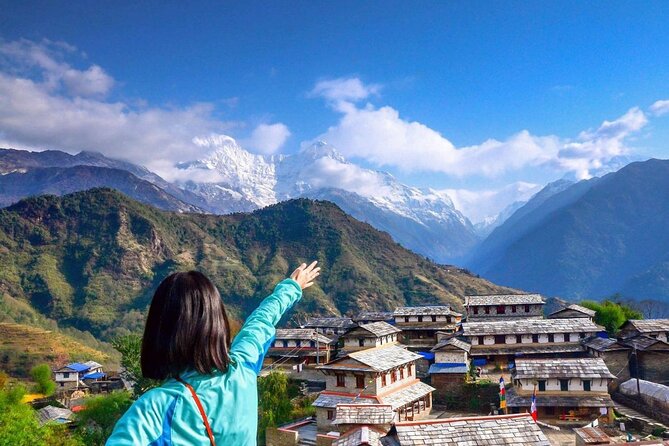
- Gurung villages like Ghandruk and Chomrong, with culture stops such as the Gurung museum and ACAP HQ
- Modi River walks through gorge scenery, including bamboo, rhododendron, and oak forest stretches
- Annapurna Sanctuary and base camp payoff, with glacier views and a ring of high peaks
- Hot springs at Jhinu Danda, an easy morale boost near the river
- Best-finish views from Dhampus, overlooking Annapurna, Manaslu, Lamjung, and Machhapuchare
From Kathmandu to Pokhara: river drives and setting your legs
Your trek life starts with a long but scenic drive from Kathmandu to Pokhara. You’ll pass villages and get mountain glimpses along the way, and the drive itself is part of the intro. Expect viewpoints over hills plus stops in the Trisuli and Marsyangdi river corridors, which makes day one feel like an orientation rather than just transportation.
Pokhara is your reset button. The plan includes two nights in Pokhara, so you’re not trying to start the hike right out of the taxi. I like this. It gives you time to manage gear, pick up a few last basics you forgot, and get sleep that actually helps when the trail gets steep.
A practical note: the trek continues with a drive beyond Pokhara into Annapurna region country. If you tend to get carsick on twisty mountain roads, pack something you trust, because the route will include several road legs over the course of the trip.
More Treks in Kathmandu
- Everest Base Camp Trek – 14 Days
★ 5.0 · 1,499 reviews - Everest Base Camp Trek
★ 5.0 · 842 reviews - Everest Base Camp Trekking
★ 5.0 · 485 reviews
Days to Ghandruk: Modi River steps, Gurung culture, and first serious views
Ghandruk is where this trek starts to feel iconic. You drive out past the Pokhara valley with big peak views in the background, then the trail world shifts toward the Modi River corridor. From Bhirethati, the walk begins easier and flatter, then you gradually earn your altitude with stone-paved steps.
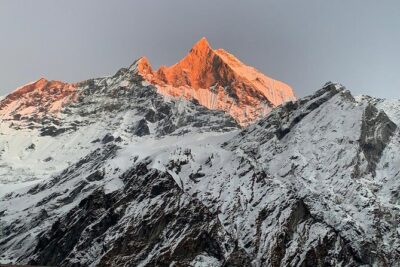
What makes this day special is how it builds in “chapters.” You get an easy riverside section to Syauli Bazaar, then you climb through terraced village paths up to Kimche, and finally you finish at Ghandruk. The views are part reward, part navigation aid: when you can see Annapurna South, Hiunchuli, and Machhapuchare (Fish Tail) from the village area, you’re not hiking blind.
Ghandruk also offers real cultural value, not just a photo stop. You can visit the Gurung museum, and you’ll have a chance to see ACAP headquarters and talk with local people about community life. This is the kind of detour that makes you understand the region, not just pass through it.
One consideration: since this day includes both walking time and a real climb, pack your energy early. Start slow, save your big effort for the stepier sections, and don’t burn your legs because you want to “catch up” with the pace you think you should be keeping.
Chhomrong: the gateway village energy (and why it matters)
Chhomrong is often described as a gateway for a reason. It’s the last permanent Gurung village in the trekking corridor before you move deeper toward the sanctuary and base camp zone.
The walking pattern today keeps things varied. You start with an uphill push toward Kyomrong and Chomro, then you go down toward the river system again, then back up to Gurjung, and finally climb into Chhomrong. That up-down rhythm can feel tiring, but it’s also a good way to settle into trail motion without one single brutal push all day.
Chhomrong itself matters because it changes the feel of everything around you. The village sits at a practical “transition point,” and once you’re there, you know the next days are about altitude, forest shifts, and moving toward the Annapurna Sanctuary walls.
If you’re a planner, this is also a good day to mentally prepare for the forest and river gorge days ahead. You’re building stamina for repetitive elevation changes, and this is where most people find their pacing system.
Himalaya Hotel, Dovan, Bamboo: forest trekking that feels like a canyon walk
After Chhomrong, the route drops over terraced fields to cross the river areas, then climbs again toward Sinuwa-Danda, a small lodge area with broad views over rolling hills. From there, you go into dense forest until you reach Bamboo, a lodge settlement in a Modi River gorge.
This is a day where the trail environment does a lot of the work for you. You’re not just climbing, you’re moving through changing vegetation zones. The trail passes through bamboo, rhododendron, and oak forests, and the river keeps reappearing as a steady reference point.
You’ll also spend time at or around Dovan and finish at a lodge area near the forested gorge, specifically Himalaya Hotel. I like this kind of night stop. The setting tends to be calmer than the bigger village centers, and it’s a comfortable base for the higher, wilder-feeling day that comes next.
Trade-off: forest days often mean less wind and more humidity on the trail. If you run hot, you’ll want breathable layers and a way to manage sweat, because that effort can feel bigger than it looks on paper.
More Annapurna Base Camp treks:
- Annapurna base camp trek 5 Days
★ 5.0 · 252 reviews - 14-Day Private Annapurna Base Camp Trek
★ 5.0 · 180 reviews - Annapurna Base Camp Trekking
★ 5.0 · 116 reviews - Annapurna Base Camp Trek
★ 5.0 · 111 reviews
Annapurna Sanctuary and base camp: glacier views and the weather reality check
Then comes the payoff day. You head from the forested gorge area up toward the sanctuary zone, following the Modi River upstream. The vegetation shifts as you gain altitude, so the trail feel changes. You move from lush pockets into higher alpine shrubs and a more open, dramatic feel.
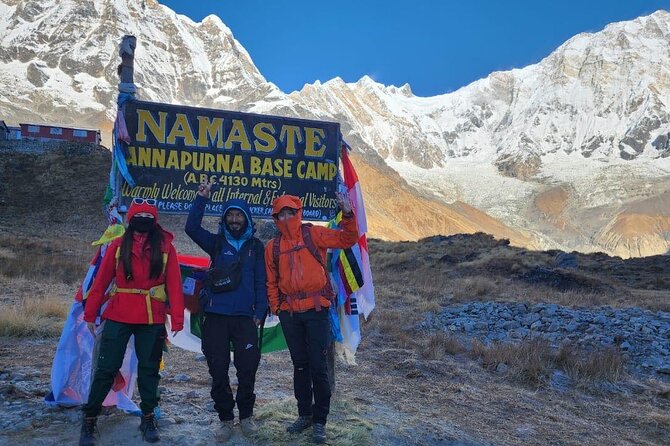
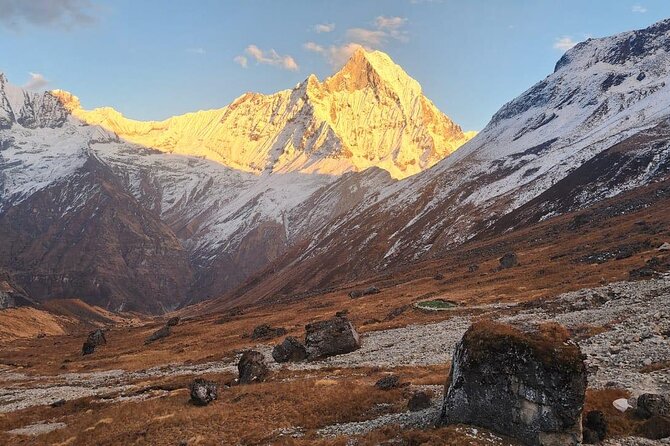
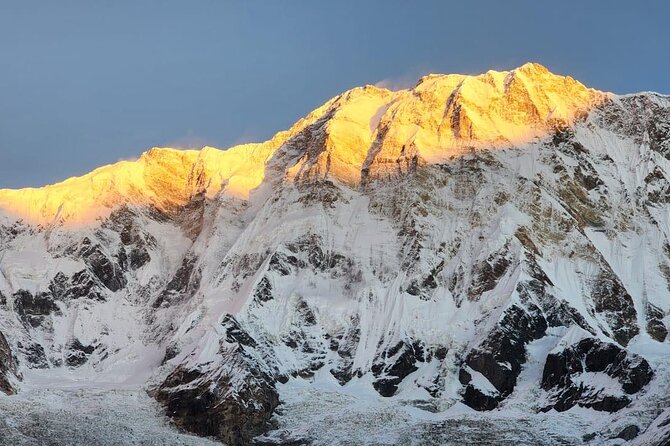
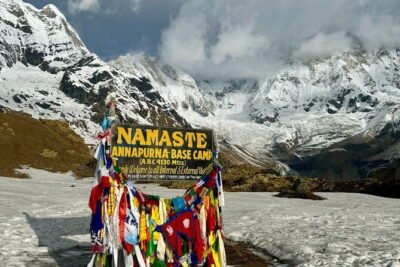
The route includes a strong lead-in walk and a last steep climb toward Machhapuchare Base Camp, and then you continue on to Annapurna Base Camp. At the destination, you’ll get that huge Annapurna glacier view, framed by a valley ringed with white mountain walls. This is where Annapurna I, Annapurna III, Annapurna South, and Machhapuchare (Fish Tail) are part of the wider picture.
Important reality check: this experience is weather-dependent. The trek requires good weather, and that makes sense. When clouds move in, visibility can drop fast, and you’ll want the clearest sky possible for the base camp viewpoint payoff.
So plan your expectations accordingly. Even with great weather, mountain views can come and go with cloud cover. If you can, keep your flexibility mentally on this day. Your effort is big, and the best reward arrives when the weather cooperates.
The long downhill rhythm back to Sinuwa, Bamboo, and Jhinu Danda
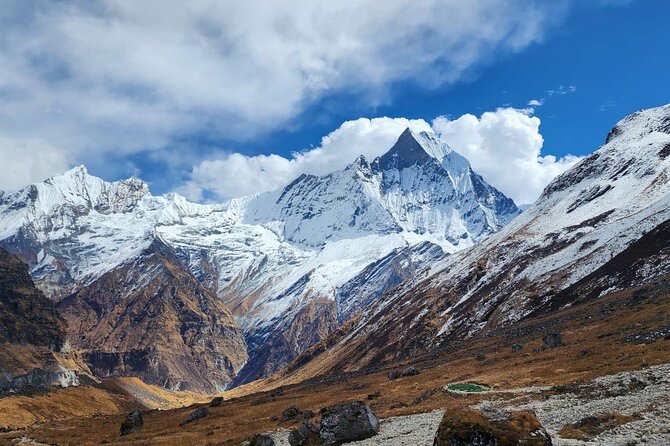
After base camp time, you’re not done. The next days work like a trail recalibration. You descend from higher areas back toward lower zones, passing places like Deurali and moving through forest sections. You’ll also pass Machhapuchare Base Camp again on the way down, which gives you a “same place, different perspective” moment.
One of the smartest parts of this plan is the inclusion of time around Bamboo and Sinuwa after the big peak day. It keeps your body moving but not constantly grinding on the steepest gradients. You’ll walk through winding paths and gorge-adjacent scenery again, which can feel easier than the ascent days while still delivering beautiful, varied trekking.
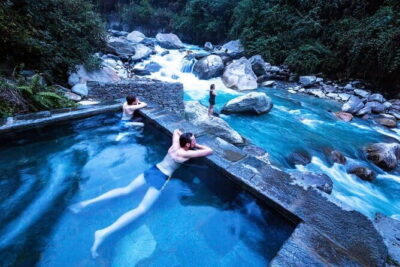
Then you reach Jhinu Danda, famous for hot springs. From Bamboo you climb short but steep to Khuldi Ghar, then you move through dense forest and descend toward Chomrong khola, cross bridges, and do an uphill to Chomrong ridge before dropping to Jhinu Danda. The reward is a hot-spring option within about a 20-minute walk downhill near the river.
This is genuinely valuable. After days of walking, a warm soak is a mental reset. It’s not a luxury spa, but it helps you recover so you can enjoy the later villages instead of just surviving them.
Landruk and Tolka: suspension bridges, farmland, and big peak angles
From Jhinu Danda, you get a long descent to the Modi River, and yes, there’s a suspension bridge. That bridge moment matters because it signals a shift from gorge forest energy to farmland village life.
You’ll move past farm fields and then climb briefly toward Landruk, a larger village stop. After that, you’ll walk through gentle winding paths to Tolka, with views such as Annapurna South and Hiunchuli.
This is a good stretch for people who want their legs to feel like legs again. The climbs aren’t gone, but the day’s rhythm feels more manageable than the forest and sanctuary zone days. It also sets you up nicely for the final approach to Pokhara viewpoints.
Dhampus and the final descent: last panoramas before Pokhara
The trek’s final day has a classic finish: you head from Tolka through forest areas and toward Deurali, then you do a downhill through Pothana, finishing with a ridge viewpoint at Dhampus before continuing down to Phedi and driving back toward Pokhara.
You’ll see a wide panorama from Deurali, including Dhaulagiri, Annapurna South, Hiunchuli, and Machhapuchare, and then Dhampus adds a broader vista that includes Annapurna-Manaslu-Lamjung with Machhapuchare in the mix.
This is your “last look” day. It’s also the last chance to soak in the sense of scale, because from the ridges, the trekking corridor finally looks like a connected map rather than a string of daily goals.
You also get the comfort of transport at the end, including a short drive from Phedi back to Pokhara. That matters. By this stage, you’re tired, and not having to guess your way down to town keeps the ending smooth.
Price and logistics: what $1,100 buys you (and what it doesn’t)
At $1,100 per person, this is priced like a private, supported trek, not a bare-bones budget walk. Here’s what you’re getting that justifies the cost:
- A license holder guide plus a porter (set up for a 2 clients to 1 porter ratio)
- Accommodation during the trek plus rooms in Pokhara and the Phedi-Pokhara area via private transport legs
- Food support: breakfast (8), lunch (8), dinner (7) during the trek schedule
- Required trekking paperwork included: trekking permit and TIMS card
- Insurance coverage for the trip staff and included transport segments
What’s not included is also clear: drinks, grocery items, and tips are on you. If you’re the type who likes soft drinks, coffee, or lots of snacks during breaks, it will add up fast. I’d budget for that so you don’t get surprised halfway through.
Value-wise, I like the private setup because it reduces stress. You’re not stuck in a random hiking line. Your guide can adjust pace to your group, which is something the reviews strongly hint at with guides like Kumar and Sukman being praised for being responsible and responsive to different walking levels.
Guides and pace: why the right person makes the trek feel easier
This kind of trek is as much about decision-making as it is about steps. You’re moving through villages, forest zones, and high-value viewpoint days. A good guide helps you pace uphill effort, manage stops, and keep the day plan realistic.
Names that show up positively in feedback include Kumar, Sukman, Pande, and Koumar. The common theme is support: guides who help you adapt to your ability and keep things organized. For you, that means fewer moments of confusion and more time spent actually enjoying the scenery.
Porter support is also not a small detail. When you’re carrying less weight, your breathing stays steadier, and you’re less likely to arrive cranky at lodge stops.
Fitness reality check: the trek is described as suitable for people with moderate physical fitness. Still, based on what’s said about difficulty for less experienced walkers, don’t assume it will feel easy just because it’s guided. If you can handle daily multi-hour walking with climbs and descents, you’re in the right zone.
Should you book this Annapurna Base Camp private trek?
Book it if you want a well-supported private trek with real village culture, Modi River scenery, and a high-impact destination day at Annapurna Base Camp. It’s especially a good fit if you like the idea of having a licensed guide, a porter, and included permits and meals, so you can focus on walking and enjoying the region.
I wouldn’t book if you’re looking for a very gentle stroll. This is still a mountain trek, and the “hard parts” show up in climbs, long days, and the altitude-sensitive sanctuary day. If you’re an absolute beginner, I’d consider building up with a shorter trek first, or make sure your group is comfortable with steep steps and long descents.
If your priority is big views plus practical comfort, this private 10-day plan is a strong choice. And if you can request a guide, the names Kumar and Sukman stand out from feedback, which is a smart little signal when you’re picking a team.
FAQ
Where is the meeting point for this Annapurna Base Camp trek?
The meeting point is View Nepal Treks & Expedition P. Ltd., Thamel Marg 24, Kathmandu 44600, Nepal. The activity ends back at this same meeting point.
How long is the trek?
The duration is about 10 days.
What does the price include?
It includes a licensed guide and a porter, trekking breakfast, lunch, and dinner, trekking accommodation, and two nights of room in Pokhara and the Phedi-Pokhara area via private transport. It also includes trekking permits (including TIMS card), guide and porter food and salary, and insurance.
What is not included in the trip cost?
Drinks, grocery items, and tips for the guide and porter are not included. If you need accommodation in Kathmandu, it costs $40 USD extra per night.
Is this a private tour?
Yes. It is private, meaning only your group participates.
Are permits included?
Yes. The trekking permit and TIMS card are included.
How do you return to Kathmandu at the end?
On day 10, you can take a scenic flight back to Kathmandu, or you can take a tourist bus in the morning and arrive in the afternoon.
Is the trek suitable for everyone?
The trek is for people with moderate physical fitness.
Does weather affect the experience?
Yes. The experience requires good weather. If it’s canceled due to poor weather, you’ll be offered a different date or a full refund.
Is pickup offered?
Pickup is offered as part of the experience.
Latest additions near Kathmandu
- White Water River Rafting – 1 Day★ 4.3 · 3 reviews
- Traditional Momo Making Class★ 5.0 · 10 reviews
- Kathmandu to Pokhara Premium sofa bus ticket★ 4.0 · 17 reviews
- Ghorepani Poon Hill Trek★ 5.0 · 16 reviews
- Amazing 1 Day Trekking Experience in Kathmandu Nepal★ 5.0 · 24 reviews
- Ghorepani Poonhill Trek★ 5.0 · 5 reviews
- Walking tour of real Kathmandu through back streets.★ 5.0 · 3 reviews
- Wildlife Adventure in Chitwan Nepal★ 4.0 · 4 reviews
Annapurna Base Camp Treks, compared.
Kathmandu to Annapurna Base Camp (ABC) 5-Day Trek
Read our review →
Browse the lists this tour appears in