
Reviewed · ANNAPURNA CIRCUIT TREKS
10 Days Annapurna Circuit Trek
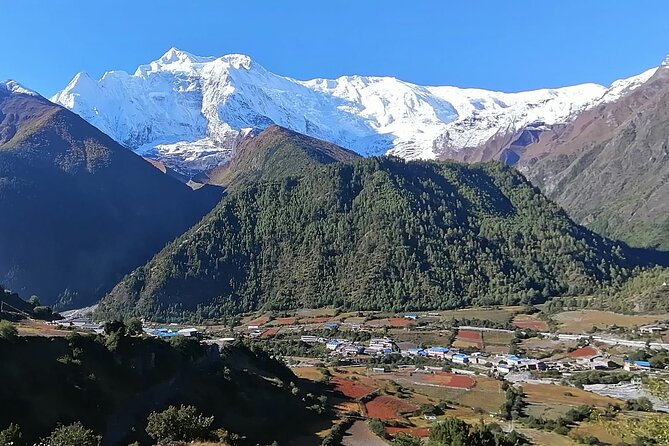
This trek delivers a big mountain loop with culture built in, and it starts with a long but scenic day leaving Kathmandu behind. You’re looking at roughly 160 to 230 kilometers of walking across the Annapurna massif, plus that signature high point, Thorong La. Manang district views and the Thorong La 5416m day are the obvious highlights.
What I like most is the mix of mountain walking and human scale stops, from village time in Manang to the holy pause at Muktinath. I also like that the trip is designed around you having steady support, with a guide plus a porter setup of 1 porter for 2 people, and meals lined up across the days.
One consideration: the itinerary includes real altitude work, including a highest point day. If you have any history with altitude, you will want to take it slow, drink enough, and trust your team’s safety calls.
In This Review
- Key highlights worth planning around
- A 10-day circuit that balances effort with breathing room
- Day 1 Kathmandu to Besisahar, plus Manakamana Temple time
- Days 2 to 4: Manang district build-up, pine forest walking, big peak payoffs
- Day 2: Tyanja to Kopar, then Chame views
- Day 3: narrow valley, bridges, and Paungda Danda
- Day 4: pine forests into Manang, with close-up peaks
- Day 5: Manang village life and Gangapurna Lake time
- Days 6 to 7: Gunsang, Yak-Kharka, then the tough climb to Thorung Phedi
- Day 6: Marshyangdi valley climbing, Gunsang, then Yak-Kharka
- Day 7: east bank of Jorsang Khola to Thorung Phedi
- Day 8: Thorong La 5416m and Muktinath temple stop
- Day 9: Kali Gandaki Valley descent, arid scenery, and Tibetan villages
- Day 10: fly Jomsom to Pokhara, then Fewa Lake time
- Price and logistics: is $1,430 good value?
- Guides, safety habits, and what the team gets praised for
- Altitude and weather reality checks for Thorong La
- Who should book this trek, and who should be cautious
- Should you book this Annapurna Circuit trek?
- FAQ
- What is the duration of the 10 Days Annapurna Circuit Trek?
- Where does this trek start and when?
- What is the per-person price?
- How many travelers are in the group?
- What is included in the tour price?
- What is not included?
- Does the itinerary include a flight?
- Is there a stop at Thorong La Pass and Muktinath Temple?
- What fitness level is recommended?
- What is the cancellation rule?
Key highlights worth planning around
- Manang Village and Gangapurna Lake give you a calmer rhythm than the pass days, with mountain life right in front of you
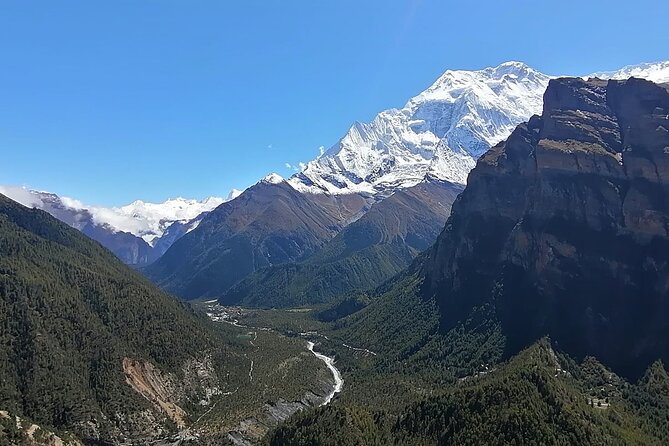
- Thorong La 5416m is the real summit moment, and you get views over the Dhaulagiri range from up high
- Support that matches the route, with guides and porters plus a simple meal plan each day
- Kali Gandaki Valley descent follows the drama of the mountains into arid country and Tibetan-style villages
- End with a flight, Jomsom to Pokhara, so you keep energy for lakeside time at Fewa Lake
A 10-day circuit that balances effort with breathing room
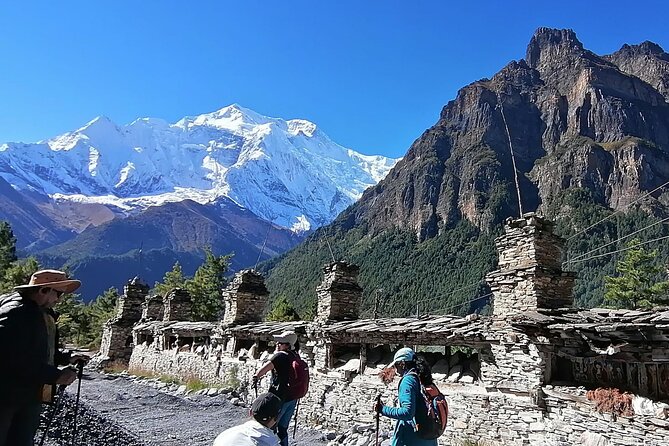
The Annapurna Circuit is famous for two things: altitude and scenery. This version keeps the pacing practical, with overnight stops that make sense for acclimatization, instead of forcing you to grind every single day. You’ll still work, especially on the push toward Thorung Phedi and then over Thorong La, but the schedule gives you a rhythm to adjust.
Another thing I appreciate is how the itinerary weaves “places” into the route, not just walking. You’re not only crossing ridges, you’re also moving through forest sections, high meadows, and then down into the Kali Gandaki Valley. That matters because it keeps the trek feeling like a journey, not a single long hike line.
Finally, this tour is small, with a maximum of 15 travelers. Smaller groups tend to feel easier to manage, and you notice it when the team moves quickly on logistics and slow down when you need time.
More Treks in Kathmandu
- Everest Base Camp Trek – 14 Days
★ 5.0 · 1,499 reviews - Everest Base Camp Trek
★ 5.0 · 842 reviews - Everest Base Camp Trekking
★ 5.0 · 485 reviews
Day 1 Kathmandu to Besisahar, plus Manakamana Temple time
Your day starts early, with pick-up around 7:15 am from Himalayan Trekking and Tours in Kathmandu. After that, it’s about a 7-hour drive (around 185 km) toward Besisahar. This long transfer is the “reset” day, you’re getting into position for the trek without wasting daylight trying to coordinate everything on your own.
The itinerary also includes a stop at Manakamana Temple. Even if you’re more of a hiking person than a temple person, it’s a good way to break up the drive and get a taste of Nepal’s spiritual life before the trail takes over.
Practical note: this is a transport-heavy start day. If you’re prone to feeling stiff after sitting, bring a comfy layer for the vehicle, and plan to move a bit as soon as you stop in Besisahar.
Days 2 to 4: Manang district build-up, pine forest walking, big peak payoffs
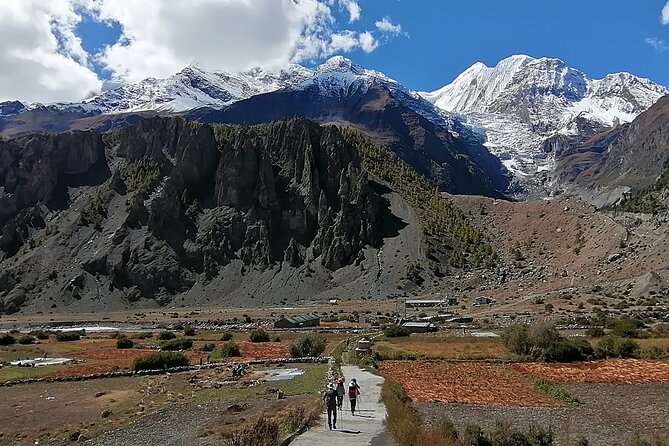
These days are where the trek starts to feel like Nepal’s mountain world is getting closer by the hour. You’ll climb in stages, including routes that cut through forest and river-adjacent sections, and you’ll gain altitude while the views sharpen.
Day 2: Tyanja to Kopar, then Chame views
The trail climbs to Tyanja at 2,360m, then continues through forest toward Kopar at 2,590m. When you reach Chame, the headquarters of the Manang district, you’re rewarded with fine views of Annapurna II. Chame is a strong waypoint because it marks a shift from lower forest walking into a higher, more dramatic zone.
More Annapurna Circuit departures:
- Annapurna Circuit Trek with Tilicho Lake
★ 5.0 · 368 reviews - Annapurna Circuit Trek
★ 5.0 · 94 reviews - Annapurna Circuit Trek
★ 5.0 · 67 reviews - Annapurna Circuit Trek
★ 5.0 · 49 reviews
Day 3: narrow valley, bridges, and Paungda Danda
Day 3 has a mood change. You walk through deep forest in a steep, narrow valley, then cross rivers on bridges, including a long bridge around 2,910m, and another at 3,040m. Near the bridges and the terrain changes, you start seeing the rock face presence of Paungda Danda in a way that makes you understand why this route is so memorable.
Day 4: pine forests into Manang, with close-up peaks
Day 4 brings aromatic pine forest walking, then you approach Manang with big-name views coming in close: Gangapurna, Annapurna II and III, Tilicho, Chulu east, and Pisang Peak. That’s a lot of mountain information in one day, which is exactly why this section is so satisfying. It’s not only distance, it’s seeing what you’ll later feel at higher altitude.
Possible drawback here: as the views get better, your pace can accidentally speed up. Keep your breathing steady. If you rush, altitude will charge you back later.
Day 5: Manang village life and Gangapurna Lake time
Day 5 is about slowing down just enough to absorb where you are. You explore Manang village, and you go to Gangapurna Lake, which is described as a “real experience” of mountain life and lake scenery.
Why this stop matters: it breaks the pass rhythm. After several trekking days, you get a chance to look at how people actually live in these elevations, what life looks like when mountains are your everyday backdrop. It’s also a good day for photos, because the lighting in Manang-area valleys can be surprisingly flattering.
One more practical angle: if you’re watching your energy for Thorong La, this is a day to be social but not reckless. Enjoy the village time, but don’t treat it like a full-day sightseeing spree that drains your legs.
Days 6 to 7: Gunsang, Yak-Kharka, then the tough climb to Thorung Phedi
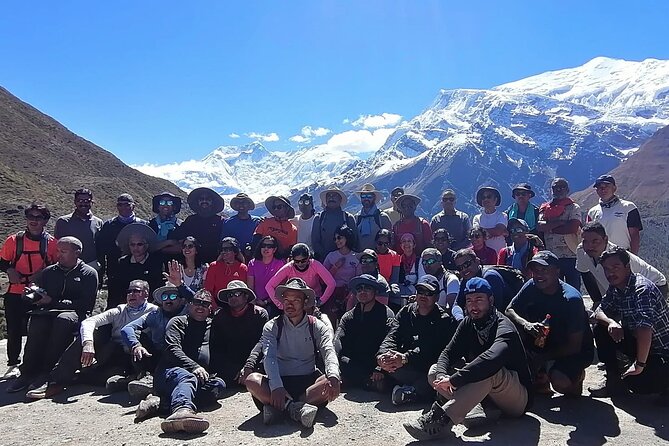
This is the section where the trek turns serious. The terrain feels more exposed, and the walking gets more demanding.
Day 6: Marshyangdi valley climbing, Gunsang, then Yak-Kharka
You leave Manang behind and start climbing toward the Marshyangdi valley. The itinerary calls out strenuous ascends, then you reach Gunsang village and continue to Yak-Kharka. You arrive at Ledar before sunset, which matters because arriving with daylight gives you a chance to settle in before the cold hits.
Day 7: east bank of Jorsang Khola to Thorung Phedi
Day 7 follows the east bank of the Jorsang Khola and heads for Thorung Phedi. The route is called out as tough, narrow paths with unstable slopes. This is the part where you want good footing habits and calm pacing.
I also like that the itinerary builds in an overnight at Thorung Phedi. That isn’t a luxury. It’s the setup for Thorong La morning, where you’ll likely be tired, cold, and working your way upward. When you sleep close to the pass start, you waste less energy on a last-minute scramble.
Day 8: Thorong La 5416m and Muktinath temple stop
Day 8 is the dramatic centerpiece. You hike toward Thorong La (5,416m), the highest point of the trek. The description emphasizes rocky ridges and an expansive view: you can spot the Dhaulagiri range from up high.
If you’re trying to picture how Thorong La feels, think less about one big moment and more about steady effort. It’s a long day physically, and the air can make simple tasks feel like work. The pass day is where a good guide makes a difference, especially because the safest approach is usually the slowest one.
After the pass, you continue to Muktinath Temple. The itinerary calls it one of the holy and powerful temples in the Mustang region. Even if your religion is different, a temple stop in a high mountain corridor gives the day a grounded sense of meaning, not just elevation for elevation’s sake.
Practical note: admission for the Thorong La pass and the temple stop is marked as not included, so plan for extra small ticket costs on this day.
Day 9: Kali Gandaki Valley descent, arid scenery, and Tibetan villages
After the pass, the route shifts gears. Day 9 begins with descending down the Kali Gandaki Valley through arid landscapes. You cross Jharkot and Khingar, which are described as Tibetan villages, then you follow the valley floor for much of the way until reaching the Jomsom side of the route, setting you up for the next day’s flight.
This day can be tricky even when it’s a descent. Knees get cranky, and the ground can be uneven. Because the tour includes dinner and lunch on the trek days, you can focus on moving safely rather than budgeting each meal stop in the middle of the valley.
Value here: the Kali Gandaki descent gives you a different kind of scenery than the lush forest-to-high-meadow story earlier. The valley feels wider and drier, and the village names along the way help you track your route, not just your feet.
Day 10: fly Jomsom to Pokhara, then Fewa Lake time
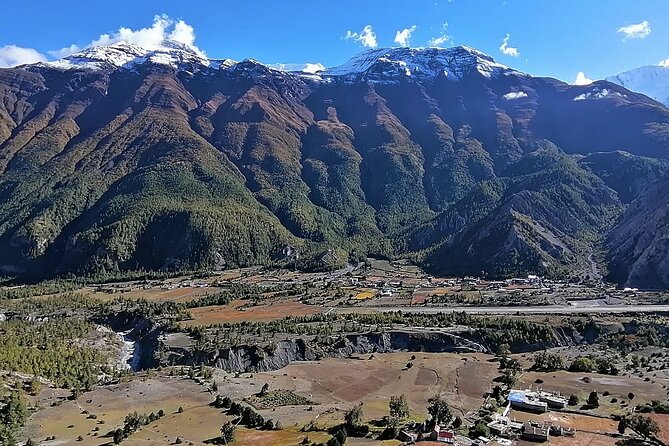
Day 10 turns the trek into a transition vacation. After breakfast, you catch a morning flight to Pokhara. The itinerary calls out a spectacular flight, flying above the Kali Gandaki Gorge and seeing views of Dhaulagiri and Annapurna ranges.
Then you get free time in Pokhara, including the classic Fewa Lake boating option. This is a smart way to end the loop because it uses your regained energy. You don’t need to cram in another long hike to feel like you earned a reward.
If you’re thinking about what to do with the day, keep it light. You’ve already done the big altitude event. In Pokhara, it’s about comfort, food you actually feel excited about, and letting your legs cool down.
Price and logistics: is $1,430 good value?
At $1,430 per person, you’re not paying just for steps on a map. You’re paying for a bundled service package: guide and porters, meals across the trek days, private transportation, and a key transport shortcut at the end.
Here’s what stands out as value in the included list:
- A guide and porter team, with 1 porter assigned for every 2 people, which reduces weight stress for you
- Sleeping bag included, so you do not have to source one last minute
- Domestic flight (Jomsom to Pokhara) included, which helps you avoid an extra day of trekking
- Meals built in, including lunches and dinners on the trek days, plus multiple breakfasts
- All fees and taxes included, which usually means fewer awkward surprises mid-trip
- Coffee and/or tea included, a small thing that becomes a big comfort on colder mornings
What is not included is also clear: bottled water, alcohol, and any air-conditioned vehicle. Also, specific admission items on Day 8 are marked not included, so budget small extra costs near Thorong La and Muktinath.
In plain terms: this price feels most fair if you want the convenience of a guided, supported route and a flight-based finish, instead of assembling pieces yourself.
Guides, safety habits, and what the team gets praised for
The reviews connected to this company repeatedly highlight the same kind of strength: thoughtful organization and guides who treat the trip as both an adventure and a responsibility.
Names that show up in praise include Babo and Resham as local guides, plus Surya’s team as an organizer. Rojit is specifically mentioned as a friendly porter. That’s useful because it points to the practical stuff that matters on a trek: being helpful with your questions, adjusting when you need it, and keeping logistics smooth enough that your brain can focus on altitude and footing.
One review also mentions altitude issues and how the team responded at the first signs of trouble. I take that as a reminder to do your part: communicate early, keep breathing calm, and don’t wait for a problem to become obvious. A good guide helps, but you also need to be honest about how you feel.
Altitude and weather reality checks for Thorong La
Even with a solid itinerary, Thorong La is serious. You start with a highest point of 5,416m, and you should plan for cold, thin air, and a slower pace than you expect. The itinerary design helps, but it does not change physics.
So here’s how I’d manage expectations:
- Go slower than you think you should on the climb toward the pass
- Keep warm layers ready for early morning start from Thorung Phedi
- Stay hydrated, since cold air can trick you into feeling less thirsty
- If you feel altitude symptoms, speak up quickly, not after you push farther
Also remember the trek involves narrow sections and unstable slopes on the way to Thorung Phedi. Good shoes, careful steps, and steady movement matter as much as ambition.
Who should book this trek, and who should be cautious
This trek fits best if you want:
- A classic Annapurna Circuit style experience with real elevation and iconic viewpoints
- A guided plan with porter support and meals handled
- A small group feel, up to 15 travelers
It may not be the best match if you:
- Struggle with altitude and are not able to adjust your pace
- Need highly flexible day-by-day routing, since the itinerary is structured around passes and overnight stops
- Prefer fully independent travel without guided support
That said, the trip description says you should have moderate physical fitness. “Moderate” here usually means you’re comfortable hiking multiple hours per day and you’re willing to go slow when the air gets thin.
Should you book this Annapurna Circuit trek?
Yes, if you want a structured, high-value guided loop with Thorong La as the main goal, and you like ending with an efficient flight into Pokhara. The combination of guide and porter support, included meals, a provided sleeping bag, and the Jomsom to Pokhara flight makes this feel like good planning bought in advance.
I’d hesitate if your altitude tolerance is unknown and you’re hoping for an easy stroll. This route includes a real summit day, plus narrow, unstable sections on the lead-up. If that sounds like your kind of challenge, book it. If it scares you, consider a shorter or less high itinerary first.
If you do book, your biggest win will be simple: pace yourself from the first days, listen to the team, and treat Thorong La day as a careful climb, not a race.
FAQ
What is the duration of the 10 Days Annapurna Circuit Trek?
The trek is listed as 10 days approximately.
Where does this trek start and when?
It starts in Kathmandu at Himalian Trekking and Tours. The start time is listed as 7:15 am.
What is the per-person price?
The price is listed as $1,430.00 per person.
How many travelers are in the group?
The tour has a maximum of 15 travelers.
What is included in the tour price?
Included items list: coffee and/or tea, sleeping bag, private transportation, all fees and taxes, guide and porters (1 porter for 2 people), domestic flight (Jomsom to Pokhara), and meals including breakfast, lunch, and dinner.
What is not included?
Not included: bottled water, alcoholic beverages, and air-conditioned vehicle. Some admission items are also marked not included for Day 8.
Does the itinerary include a flight?
Yes. The tour includes a domestic flight (Jomsom to Pokhara), and Day 10 specifically says you will fly to Pokhara in the morning.
Is there a stop at Thorong La Pass and Muktinath Temple?
Yes. Day 8 includes Thorong La (5416m) and a stop at Muktinath Temple.
What fitness level is recommended?
The tour description says travelers should have a moderate physical fitness level.
What is the cancellation rule?
The policy states free cancellation is available, and you can cancel up to 24 hours in advance for a full refund. If you cancel less than 24 hours before, the amount paid will not be refunded.
Latest additions near Kathmandu
- White Water River Rafting – 1 Day★ 4.3 · 3 reviews
- Traditional Momo Making Class★ 5.0 · 10 reviews
- Kathmandu to Pokhara Premium sofa bus ticket★ 4.0 · 17 reviews
- Ghorepani Poon Hill Trek★ 5.0 · 16 reviews
- Amazing 1 Day Trekking Experience in Kathmandu Nepal★ 5.0 · 24 reviews
- Ghorepani Poonhill Trek★ 5.0 · 5 reviews
- Walking tour of real Kathmandu through back streets.★ 5.0 · 3 reviews
- Wildlife Adventure in Chitwan Nepal★ 4.0 · 4 reviews
Annapurna Circuit Treks, compared.
Browse the lists this tour appears in