
Reviewed · ANNAPURNA BASE CAMP TREKS
10 Days Annapurna Base Camp Trek from Kathmandu
A sunrise over Annapurna keeps pulling you back. This 10-day trek is built around Annapurna Base Camp highlights, with village walking and real mountain payoff, not just bus rides and boxes. I especially like that you get an English-speaking trekking guide plus the route is paced with multiple full trekking days, so you actually experience the Annapurna region’s villages and trails. One thing to consider is that meals are not included, so your daily budget for food will be on you.
You will start early, and the travel days are long. I like the Kathmandu to Pokhara setup, including hotel pickup, a tourist bus, and a lakeside stay where Fewa Lake is walkable. The possible drawback is simple: for a moderate-fitness trek, you still need to handle steep stairs, long descents, and early mornings without expecting a relaxed stroll the whole way.
In This Review
- Key highlights you’ll care about
- Annapurna Base Camp in 10 days: the big picture
- Kathmandu to Pokhara transfers and lakeside hotel location
- First trek days through Ghandruk, Kimrung, and Chhomrong
- Stone stairs, suspension bridges, and the forest to Doban and Bamboo
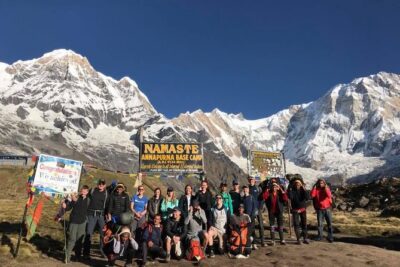
- Deurali to Machhapuchre Base Camp, then up to Annapurna Base Camp
- Sunrise at Base Camp, 360-degree views, and the descent to Bamboo
- Jhinu Danda hot spring option and the endgame to Nayapul
- Pacing, fitness, and altitude reality check for ABC
- What is included, and where your budget goes next
- Your guides and team support: Prakash and Bisham, and small details that matter
- Who this 10-day ABC trek suits best
- Should you book this 10-day ABC trek with Couch Adventure Nepal?
- FAQ
- What time is the Kathmandu pickup?
- How do we get from Kathmandu to Pokhara?
- Is the Pokhara hotel included, and where is it?
- How long are the trekking days?
- Do I need trekking permits or TIMS?
- Is an English-speaking guide included?
- Are meals included?
- Is the trek private?
- How does the return from the mountains work?
- What is the full refund deadline for cancellations?
Key highlights you’ll care about
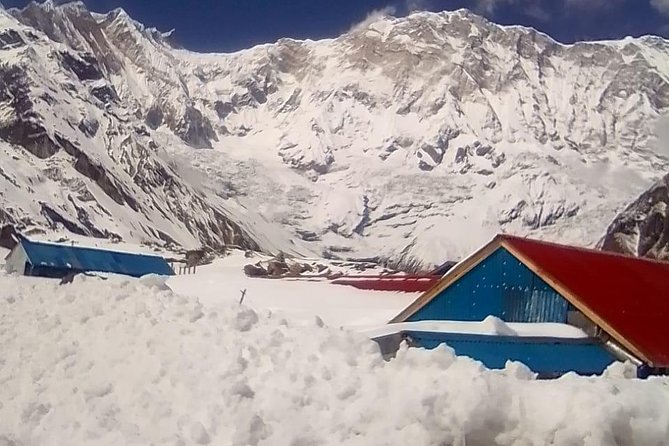
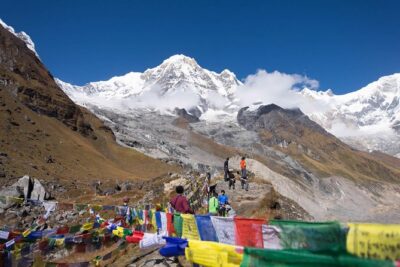
Sunrise at Annapurna Base Camp so you see the peaks shift color and get a wide 360-degree view.
Village-to-sanctuary trail mix including stone-paved paths, suspension bridge crossings, and forest sections.
Machhapuchre Base Camp viewpoint day where you get major peak views before the final push to base camp.
Convenient start and finish with Kathmandu pickup at 6:30am, tourist bus transfers, and an end on the Kathmandu return route.
Strong guide support (Prakash and Bisham) praised for being friendly, helpful, and organized, which matters a lot on a multi-day trek.
Annapurna Base Camp in 10 days: the big picture
This is Annapurna Base Camp in a practical time window. You’re not trying to conquer every peak in sight. You’re walking through a classic trail circuit, reaching the sanctuary area, then landing where the view is the reason you came.
What makes this itinerary feel workable is the mix of day lengths and terrain types. You’ll have longer trekking days with up and down walking, plus at least one day that’s focused on getting you up to Machhapuchre Base Camp and then continuing toward Annapurna Base Camp. It’s the kind of structure that helps you build rhythm while still giving you those signature moments.
The mountain names you’ll see along the way include Hiunchuli, Annapurna South, Gangapurna, Annapurna III, and Machhapuchhare (the Fish Tail). That list matters because it tells you the scenery isn’t random. You’re repeatedly walking into viewpoints where major summits show up.
More Treks in Kathmandu
- Everest Base Camp Trek – 14 Days
★ 5.0 · 1,499 reviews - Everest Base Camp Trek
★ 5.0 · 842 reviews - Everest Base Camp Trekking
★ 5.0 · 485 reviews
Kathmandu to Pokhara transfers and lakeside hotel location
Day 1 is a travel day that tries to feel organized. You’re picked up from your hotel in Kathmandu at 6:30am, then driven to the bus station for the tourist bus. You also get a scenic bus ride to Pokhara, about 7 hours, which is a very common way trekkers position themselves before the trail.
In Pokhara, you transfer to a hotel in the Lakeside area, and Fewa Lake is described as walk-able distance. That’s not a small detail. After a long day, having a lakefront stroll you can do without another complicated plan is a real quality-of-life upgrade.
You also return to Pokhara later, and that matters again. Day 9 includes a private car transfer from Nayapul back to Pokhara, then a quick final hop to the Lakeside area hotel. In other words, the trek ends with a less chaotic finish than some routes.
If you care about comfort on the bus, here’s a practical tip: when you request seats, ask directly about comfort options like sofa seating. One booking experience described easy acceptance of that kind of request, so it’s worth trying.
First trek days through Ghandruk, Kimrung, and Chhomrong
Your trail begins after the Pokhara arrival, and Day 2 sets the village tone. You trek to Ghandruk, described as a typical Gurung village, along a stone-paved track. These early village days are where the trek stops being just a route on a map and turns into a real place you’re moving through.
Day 3 focuses on the kind of terrain ABC trekkers expect: uphill efforts, then descents through forest sections, then more climbing. You’ll go through a trail that drops to Kimrung Khola inside a forest, then climb back up again toward Chere Hill. This is the day type that teaches you how to pace: steady effort going up, careful foot placement down, and keep moving even when the trail feels repetitive.
By Day 4, you’re in the Chhomrong zone style of trekking. Expect thousands of stone staircases and a suspension bridge crossing. After that, there’s a climb back toward Sinwa Village and then another stretch through mild forest trail time to Bamboo and onward toward Doban on the Modi River bank. This kind of day is where a good guide makes a difference, because they can keep you on time and help you read the trail when conditions change.
Stone stairs, suspension bridges, and the forest to Doban and Bamboo
Day 4 is the heart of the “trail feels real” experience. Stone steps and bridge crossings are part of Annapurna’s character, and you’ll see that in the way the route is described: stair descents to the Chomrung river area, suspension bridge crossing, then climbing again to Sinwa.
What I like about this part of the itinerary is that it gives your legs variety. You’re not spending every day on the same kind of ground. You get stair-heavy hiking, river-area walking, and forest sections. Variety helps mentally, and it helps your body because every muscle doesn’t get hit the same way every hour.
By the time Day 4 reaches Doban and Day 5 points you to Deurali, you’ll be transitioning from village views to more mountain-forward scenery. Day 5 is listed as a trek to Deurali via mountain trails with views. That’s where you start feeling the trek tightening around the goal.
This is also the part of the trek where you’ll want to pay attention to your gear and your footcare. You’ll likely be stepping down often, and stair descent can be rough if your shoes or socks are not already dialed in.
More Annapurna Base Camp treks:
- Annapurna base camp trek 5 Days
★ 5.0 · 252 reviews - 14-Day Private Annapurna Base Camp Trek
★ 5.0 · 180 reviews - Annapurna Base Camp Trekking
★ 5.0 · 116 reviews - Annapurna Base Camp Trek
★ 5.0 · 111 reviews
Deurali to Machhapuchre Base Camp, then up to Annapurna Base Camp
Day 6 is a two-stage mountain payoff day. First, you trek to Machhapuchre Base Camp. The description is very clear about the view potential here: Hiunchuli, Annapurna South, Annapurna I, Annapurna III, Gandharvachuli, Gangapurna, and Machhapuchhare (Fishtail) as the iconic shape.
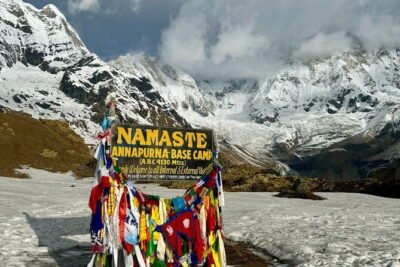
Then you start another uphill climb to Annapurna Base Camp, listed as about 2 hours from Machhapuchre Base Camp to the destination. That “shorter final push” framing is important. It means you’re not suddenly facing a marathon when you’re already tired from the early mountain day. The effort is still real, but it’s broken into two clear parts.
If you want the most meaningful experience possible, treat Day 6 like a focus day. Slow down on the uphill sections, keep water and snacks consistent, and don’t burn everything on the first steep bits. When you arrive at base camp, you’re there for a reason, so save enough energy to actually enjoy the moment.
Sunrise at Base Camp, 360-degree views, and the descent to Bamboo
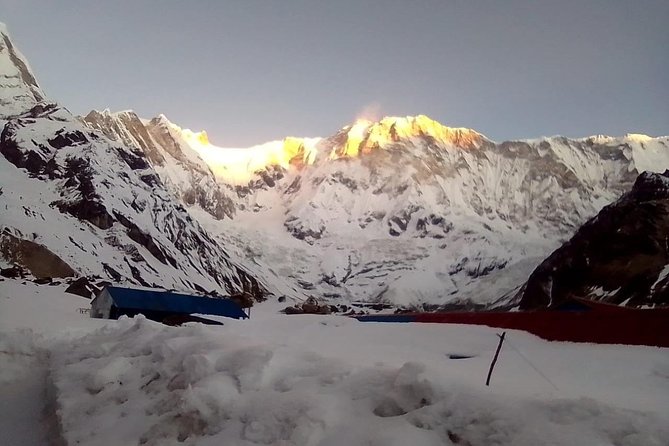
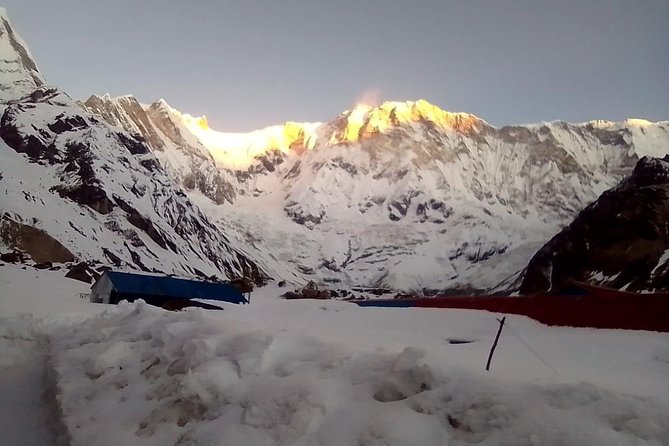
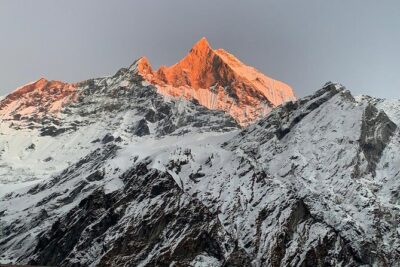
Day 7 is built for the big moment: sunrise from Base Camp. The route notes that the royal peaks change color from white to orange. That’s not just poetic. In the Himalaya, light can make the peaks look almost different from one minute to the next, and sunrise is when the contrast is strongest.
The day also includes the part trekkers tend to remember most: a 360-degree view from base camp, with Annapurna South, Hiunchuli, Annapurna I, Gangapurna, and Machhapuchre among the visible peaks. You’ll then start the trek back down to Bamboo.
This is where the itinerary becomes practical. Getting up early to watch sunrise is a commitment, but the flip side is that you still get a long downhill walking day right after. That helps you transition from “climb mode” into “finish mode” without losing the mountain focus you earned.
One more tip here: bring something warm even if daytime feels okay. Sunrise starts early, and mountain air tends to feel cold quickly once the sun is still working its way up.
Jhinu Danda hot spring option and the endgame to Nayapul
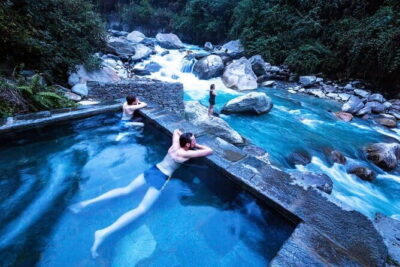
Day 8 shifts away from peak drama and into recovery-friendly rhythm. You trek to Chomrung and then continue down to Jhinu Danda. There’s also an optional hot spring stop mentioned as about 15 minutes from the village.
That hot spring option is the classic ABC recovery move. It won’t magically erase sore calves, but it can make the last push feel more humane. If you’re the type who enjoys a ritual, this is it.
Day 9 brings you to the endgame. You trek down to Nayapul, then transfer to Pokhara by private car (about 1 hour 10 minutes), then get back to your Lakeside hotel. This is a good layout because it lets your body finish with trekking effort, then you immediately switch into vehicle recovery.
Day 10 ends with the return to Kathmandu by tourist bus, about 7 hours, with the trek fully wrapped before that final long ride.
Pacing, fitness, and altitude reality check for ABC
The tour says you should have moderate physical fitness. That’s not a guarantee of comfort, it’s a helpful screening level. What you’re really signing up for is multiple hiking days around the 5 to 6 hour range, plus real elevation changes, including stair sections and downhill stretches.
A major part of ABC success is pacing. Don’t treat steep uphills like sprints. Likewise, don’t treat downhills like opportunities to relax. Downhill steps can quietly drain energy, and they can irritate knees if you rush or if your footwear is not supportive enough.
Altitude is part of the reality, especially once you’re in the sanctuary-to-base-camp stretch, and the itinerary reflects that with built-in time to adjust through gradual segments. Still, you should go in expecting fatigue. If you’ve done hikes before, you’ll recognize the pattern: tiredness is normal, and slow consistency is the winning strategy.
What is included, and where your budget goes next
Here’s where the price makes sense. The tour cost is $586.67 per person, and it includes a lot of the “logistics tax” trekkers usually end up paying separately.
Included items:
- Hotel pickup and drop off
- Tourist bus transfer Kathmandu to Pokhara and back
- Pokhara Lakeside accommodation in a 2-star hotel
- Basic guest house accommodation during the trek
- Pokhara to Nayapul and back by private car
- Trekking permit and TIMS
- An English-speaking trekking guide during the trek
- A private trip setup (only your group participates)
Not included items are the standard ones trekkers must plan for:
- All meals and drinks
- Rescue cost in an emergency
- Gratitude (optional)
For value, the key is permits plus a guide plus most transport being handled. That’s not small. You’re paying for the route and the people who keep it organized, not just for a walking plan. The main budget gap is food and drinks, so plan for daily spending on meals even if you’re trying to keep costs controlled.
Your guides and team support: Prakash and Bisham, and small details that matter
The most praised aspect in real-world trip experiences is how well the team supports you. Names that come up include Prakash and Bisham (also written as Bishum in one account). Both are described as friendly, helpful, and professional, and the overall vibe is that support feels personal, not robotic.
That matters on a trek. You’re dealing with changing weather, trail conditions, and timing. When the guide is calm and responsive, you waste less energy worrying about what comes next, and you spend more energy on the walk itself.
A second practical detail: comfort requests for transport. One booking account described that a sofa seat request on the Kathmandu-Pokhara bus was handled easily. If you’re sensitive to bus comfort or you’re traveling with a group and want everyone to ride well, ask early and be direct.
Finally, accommodation and vehicles are also mentioned as being “perfect” in at least one booking. You’ll still want to set expectations for basic guest house stays during the trek, but the overall transfer and lodging arrangement looks to be part of the operator’s strength.
Who this 10-day ABC trek suits best
This trip fits you best if:
- You want Annapurna Base Camp as a clear goal, not an endless multi-week expedition
- You like village trekking as much as mountain views
- You prefer a guided setup with permits and TIMS handled
- You are fine with long travel days (bus to Pokhara, bus back to Kathmandu)
- You want a private experience for your group, not a crowded cattle-car trekking style
It might be less ideal if you want meals included, want a very light walking schedule, or expect zero cold early mornings. The itinerary is built for trekking days, not for lounging.
Should you book this 10-day ABC trek with Couch Adventure Nepal?
I’d book if your top priorities are organization, an English-speaking guide, and getting to the real mountain moments on a tight 10-day plan. The inclusion list is strong, especially permits and TIMS, plus transport and lodging structure in Pokhara.
I would hesitate only if you are not comfortable handling several days of stair-heavy walking and long downhill sections, or if your budget for meals and drinks is tight. The route is rewarding, but it’s still a trek, not a guided walk in a park.
If you decide to go, do one thing that improves almost everything: pack for early mornings and cold conditions, plan your daily food budget, and pace like you’re in this for the long view, because on ABC days, that attitude pays off.
FAQ
What time is the Kathmandu pickup?
Pickup is scheduled for 6:30am in Kathmandu.
How do we get from Kathmandu to Pokhara?
You take a tourist bus from Kathmandu to Pokhara (about 7 hours).
Is the Pokhara hotel included, and where is it?
Yes. You get 2-star hotel accommodation in the Lakeside area of Pokhara, where Fewa Lake is described as walkable.
How long are the trekking days?
The days are listed with trek times around 5 to 6 hours for most trekking days, with some shorter segments depending on the day.
Do I need trekking permits or TIMS?
Yes, but they are included in this tour: you get a trekking permit and TIMS.
Is an English-speaking guide included?
Yes. The tour includes an English speaking trekking guide during the trek.
Are meals included?
No. All meals and drinks are not included and you’ll purchase them separately.
Is the trek private?
Yes. It is listed as a private trip, meaning only your group participates.
How does the return from the mountains work?
After trekking to Nayapul, you transfer to Pokhara by private car (about 1 hour 10 minutes), then you return to your Lakeside hotel.
What is the full refund deadline for cancellations?
You can cancel up to 3 days in advance for a full refund. For a full refund, you must cancel at least 3 full days before the experience start time.
More day tours out of Kathmandu
- Nagarkot Sunrise View and Day Hiking from Kathmandu
★ 5.0 · 471 reviews - Private Bhaktapur and Nagarkot Day Tour From Kathmandu
★ 5.0 · 305 reviews - Day Trip to Bhaktapur and Panauti from Kathmandu
★ 5.0 · 184 reviews - From Kathmandu: 1 hour Panoramic Everest Flight
★ 4.4 · 175 reviews
Latest additions near Kathmandu
- White Water River Rafting – 1 Day★ 4.3 · 3 reviews
- Traditional Momo Making Class★ 5.0 · 10 reviews
- Kathmandu to Pokhara Premium sofa bus ticket★ 4.0 · 17 reviews
- Ghorepani Poon Hill Trek★ 5.0 · 16 reviews
- Amazing 1 Day Trekking Experience in Kathmandu Nepal★ 5.0 · 24 reviews
- Ghorepani Poonhill Trek★ 5.0 · 5 reviews
- Walking tour of real Kathmandu through back streets.★ 5.0 · 3 reviews
- Wildlife Adventure in Chitwan Nepal★ 4.0 · 4 reviews
Annapurna Base Camp Treks, compared.
Kathmandu to Annapurna Base Camp (ABC) 5-Day Trek
Read our review →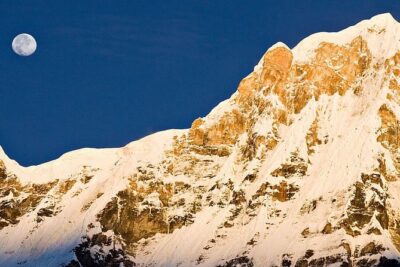
Browse the lists this tour appears in