
Reviewed · GOKYO LAKES TREKS
Gokyo Lakes, Gokyo Ri Trekking Package – 10 Days
Gokyo Lakes has a way of slowing your brain down. This trek takes you deep into the Everest region for blue-green lakes and a high, early climb to Gokyo Ri with big 8,000-meter views. I like how the route feels less crowded than the classic Everest Base Camp path, while still delivering that iconic Himalayan drama.
Two parts stand out right away: the big lake day around Gokyo Lakes and the “you had to be there” sunrise viewpoint from Gokyo Ri (5,357 m). One drawback to think about is the physical demand, especially the steep 600-meter push for sunrise and the fact that weather matters for the high passes and flights.
If you want Everest scenery without living on the main tourist treadmill, this is the kind of trip that rewards steady steps and early starts. It also helps that the operator Breeze Adventure is praised for being friendly, reliable, and organized, including airport pickup and smooth drop-off.
In This Review
- Key Highlights to Know Before You Go
- Why the Gokyo Lakes Route Feels Like a Real Change of Scenery
- Price and Inclusions: What This Package Really Covers
- Day 1 to Day 3: Lukla Flight In, Sagarmatha Park Entry, and Namche Acclimatization
- Day 1: Kathmandu to Lukla, then Phakding
- Day 2: Phakding to Namche Bazaar via Monjo, Jorsalle, and bridges
- Day 3: Namche acclimatization, Sagarmatha Museum, Khumjung, and Everest Viewpoint
- Day 4 to Day 6: Pasang Sherpa’s Trail to Dole, Machhermo, and the Lake Day
- Day 4: Namche to Dole, with the junction for Gokyo
- Day 5: Dole to Machhermo, above the tree line
- Day 6: Gokyo Lakes and a visit up toward Ngozumpa Glacier
- Gokyo Ri at Sunrise, Then the Descent: Days 7 to 10
- Day 7: Climb for sunrise at Gokyo Ri, then move back to Machhermo
- Day 8: Down to Namche Bazaar, mostly downhill with one climb
- Day 9: Namche to Lukla, with the last big Everest goodbye
- Day 10: Fly Lukla area to Manthali, then drive back to Kathmandu
- What You’ll Learn Along the Way: Culture, Trails, and Route-Specific Details
- Pace, Altitude, and Weather: The Real Considerations (Not Scary Stuff)
- Service and Group Feel: What the Operator Gets Right
- Who Should Book This Gokyo Lakes and Gokyo Ri Trek
- Should You Book This Trek?
- FAQ
- What is the duration of the Gokyo Lakes, Gokyo Ri Trekking Package?
- Does the tour include transportation from Kathmandu?
- Are meals included during the trek?
- Is Gokyo Ri included, and what altitude is it?
- How big is the group?
- Are shower and electronic charging fees included?
Key Highlights to Know Before You Go
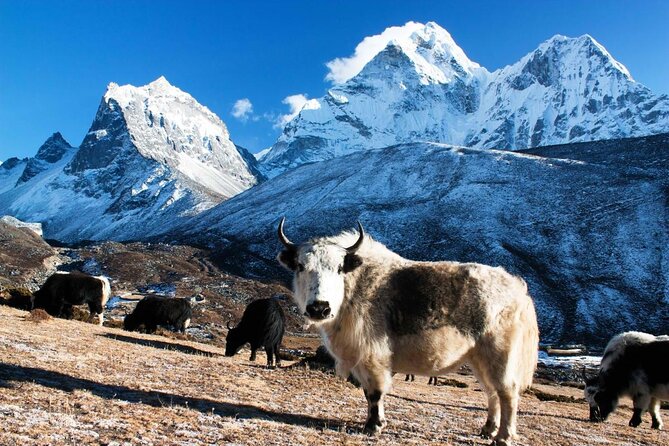
- Less-crowded vibe for the Everest region, with a more intimate route away from the more populated Everest Base Camp trekking flow.
- Sunrise at Gokyo Ri (5,357 m), reached by a steep climb, with four major peaks in view (Everest, Cho Oyu, Lhotse, Makalu).
- Ngozumpa Glacier visits, including time near the glacier after lunch at the lakes area.
- Acclimatization in Namche Bazaar, plus a smart hike to the Sagarmatha National Park Museum and Khumjung Village.
- Wildlife odds on the route, with a real chance to spot musk deer between Phortse Thanga and Dole.
- Small group size (max 15), which usually means less waiting and smoother logistics on trek days.
Why the Gokyo Lakes Route Feels Like a Real Change of Scenery
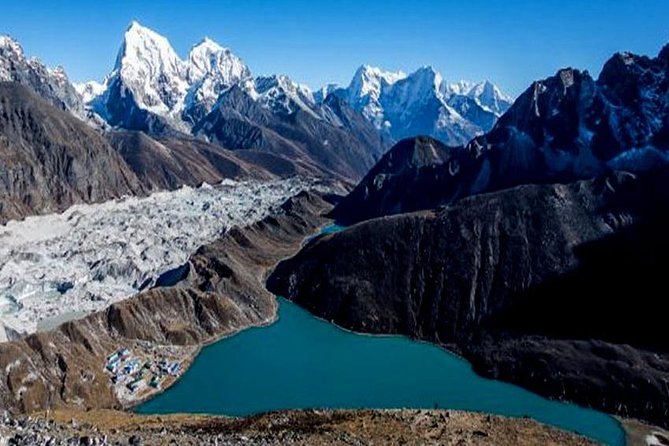
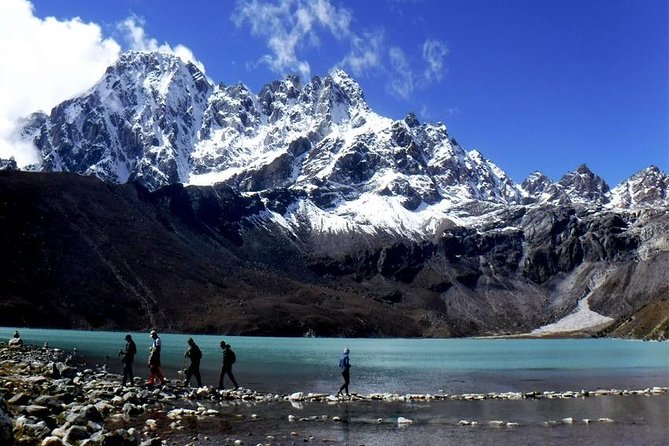
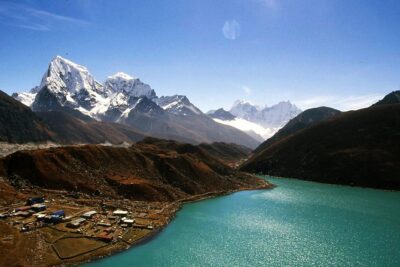
The Everest region is famous for a reason, but the Gokyo Lakes trek changes the look of the whole trip. Instead of spending your days mainly staring at ridges and base-camp views, you spend time in the Gokyo Valley with steep walls and those striking lake colors that look almost unreal when the light is right.
I also like the way this route shifts the focus from the most crowded highlights to a quieter, more “local rhythm” feel. You still pass through major hubs like Namche Bazaar, but then the trek peels away toward Gokyo, where Sherpa villages and small paths start to do more than just fill space between big moments.
And then there’s the view payoff. Gokyo Ri is not a gentle viewpoint. It’s a steep morning climb designed for sunrise timing, and the payoff is seeing multiple major peaks laid out together. From this area, you also get a clear connection to the glaciers, especially the Ngozumpa Glacier, which the itinerary explicitly includes.
More Treks in Kathmandu
- Everest Base Camp Trek – 14 Days
★ 5.0 · 1,499 reviews - Everest Base Camp Trek
★ 5.0 · 842 reviews - Everest Base Camp Trekking
★ 5.0 · 485 reviews
Price and Inclusions: What This Package Really Covers
At $1,686.67 per person for about 10 days, this trek sits in the “serious trekking trip” category. The value comes from what’s included day to day, not from vague promises. Here’s what you’re getting based on the package details:
- Airport transportation: Transportation to and from Tribhuvan Airport is included.
- On-trek support: A first aid kit is included.
- Taxes and service: Service charge and government taxes are included.
- Meals: Breakfast 10 times, lunch 10 times, and dinner 9 times are included.
- A post-trek celebration dinner in Kathmandu is included.
That meal count matters more than it sounds. Trek days are long, and meal planning in remote areas can turn into stress fast. Having set meals built into the package helps you focus on pace, acclimatization, and enjoying the scenery.
What is not included is equally important for budgeting. You should plan for shower and electronic charging fees at guest houses, plus alcoholic drinks, chocolates, and tea and coffee, and of course international airfare and personal expenses.
One more value point: this is a small group trek with a maximum of 15 travelers, which usually makes it easier to move as a unit, especially on narrower trails or during transitions between villages.
Day 1 to Day 3: Lukla Flight In, Sagarmatha Park Entry, and Namche Acclimatization
Day 1: Kathmandu to Lukla, then Phakding
Your trek starts with a morning flight to Lukla from the Kathmandu domestic airport. The itinerary highlights that you get views from the plane right away, which is smart because it turns the first day into anticipation instead of paperwork and waiting. After landing, you move through Sherpa villages with mani stones and prayer wheels, then reach Phakding.
This first day is a gentle “on-ramp.” You’re not doing a huge hike, but you are getting your body used to the idea that you’re now in the Everest region, not just visiting it.
A consideration: flying schedules and mountain weather can be unpredictable in the Himalaya. The package also notes the experience requires good weather, so keep flexibility in mind.
More Gokyo Lakes treks:
- Gokyo to Everest Base Camp Trek
★ 5.0 · 113 reviews - Everest Base Camp – Cho La Pass – Gokyo Trek
★ 5.0 · 65 reviews - Everest Gokyo Valley Trek – 12 days
★ 5.0 · 27 reviews - Landing Private Helicopter at Everest base camp & Gokyo for photo
★ 5.0 · 20 reviews
Day 2: Phakding to Namche Bazaar via Monjo, Jorsalle, and bridges
Day 2 is where the trek starts to feel like the Everest region. You head toward Namche Bazaar, crossing multiple suspension bridges and following the Dudh Koshi River. You also pass small Sherpa villages and get a first “real” sense of the area’s layout.
You trek through Monjo, which is described as the point where you officially enter Sagarmatha National Park. Lunch at Jorsalle breaks the day, and later you cross the highest suspension bridge of the Everest region. That moment is useful because it’s one of those landmarks that makes the route feel real and measurable, not just theoretical.
The day ends with an overnight in Namche at a guest house. This is also where you’ll likely start paying attention to pace. Even if you feel fine, your body is adjusting to altitude, not just distance.
Day 3: Namche acclimatization, Sagarmatha Museum, Khumjung, and Everest Viewpoint
Day 3 is a true acclimatization day, not a “let’s keep walking no matter what” day. You start in Namche and take a short hike up to Sagarmatha National Park Museum and Khumjung Village. The museum and monastery area are described as a memorable stop, including a famous reference in the monastery.
You also get Everest Viewpoint time, and the itinerary calls out strong views of Everest, Lhotse, Nuptse, Ama Dablam, and more. There’s also a stop at the Everest hotel for a cup of tea, which is a small detail, but it helps you feel like you’re living inside the culture of the place, not just passing through.
The drawback to keep in mind: acclimatization hikes still take effort. If you rush them, you’ll feel it. If you keep it calm, you’ll set yourself up better for the higher days.
Day 4 to Day 6: Pasang Sherpa’s Trail to Dole, Machhermo, and the Lake Day
Day 4: Namche to Dole, with the junction for Gokyo
Day 4 is a turning point. After breakfast you ascend to the top of Namche, then head toward a junction where the route splits from the Everest Base Camp trek. Taking the Gokyo direction, you climb toward Mong La Danda, and the itinerary specifically notes that the trail was built by Pasang Sherpa using donations from trekkers.
That’s the kind of detail I love because it explains why some trails feel maintained and others feel improvised. It also gives you a story you can carry while you walk.
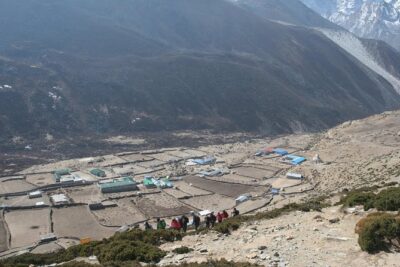
Along the way you get strong views of Ama Dablam and Thamserku, then descend to Phortse Thanga for lunch. The route passes through birch and juniper forests before reaching Dole, a small village with gorgeous views of Thamserku.
The itinerary points out a practical wildlife angle: between Phortse Thanga and Dole, you have your best chance to see musk deer. You won’t control wildlife sightings, but this is the right time and place to be quiet and watchful.
Day 5: Dole to Machhermo, above the tree line
Day 5 climbs gradually from Dole to Machhermo over about 4 hours. You can see Cho Oyu after about 15 minutes from Dole, and there are small rest points in villages like Lafarma and Luza.
By the time you reach Machhermo, the itinerary says you’re above the tree line. That matters because it changes how the day feels: fewer visual breaks, more open air, and usually cooler, sharper conditions. Machhermo is described as quiet and near a river, so this is one of those days where your environment feels more exposed, more “high” and less sheltered.
This is a good day to pace yourself and save energy. The real highlight is still coming.
Day 6: Gokyo Lakes and a visit up toward Ngozumpa Glacier
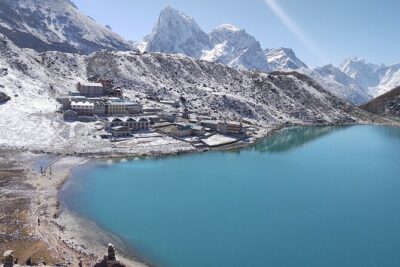
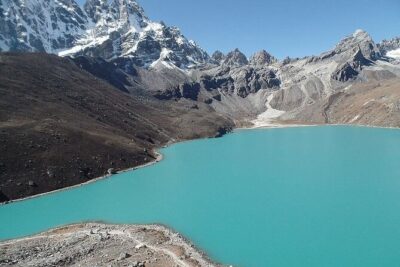
Day 6 is the heart of the trek for many people. After an early start, you take a tea break on the way and then reach the first lake about an hour later, with the second lake nearby. Another hour and you see the third lake.
The lakes are described as mesmerizing in a blue-green hue. You also get a special view angle for Cho Oyu from the area. Lunch is at the lakes, and then you walk up toward the Ngozumpa Glacier, which is described as the longest glacier in Nepal.
One key emotional note is included in the route description: the glacier is melting rapidly due to climate change, so you’re seeing it at a moment in its changing timeline. Whether you’re a serious photo person or not, this is the kind of place that makes time feel larger.
Then you continue to Gokyo Village for the overnight.
Gokyo Ri at Sunrise, Then the Descent: Days 7 to 10
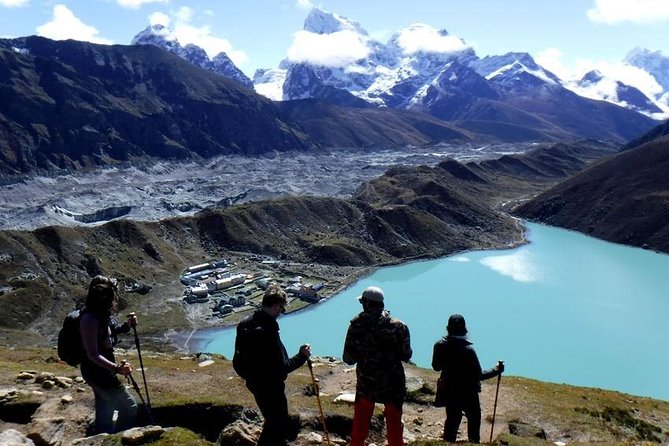
Day 7: Climb for sunrise at Gokyo Ri, then move back to Machhermo
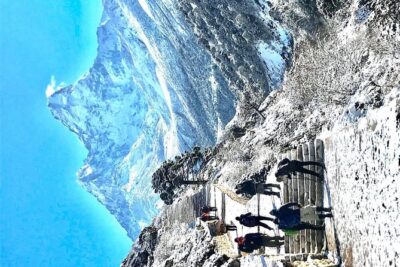
You start early again, aiming to reach Gokyo Ri before sunrise. The plan is clear: a steep 600-meter climb designed for that early light.
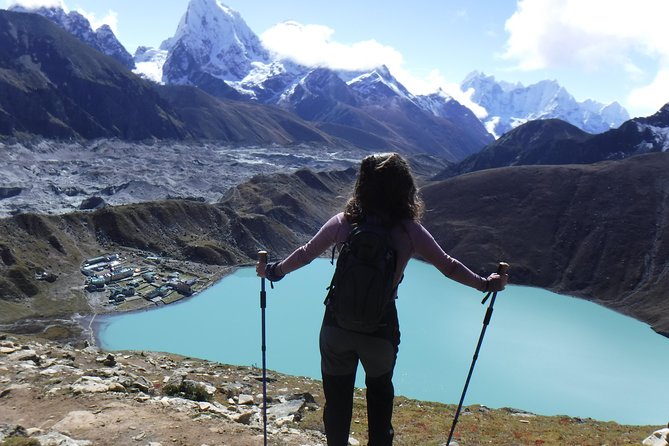
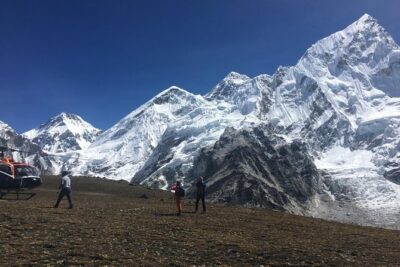
From the viewpoint, you’re promised a lineup of four big 8,000-meter peaks: Everest, Cho Oyu, Lhotse, and Makalu. Even if you already know the names from maps, seeing them together changes your brain’s sense of scale.
After you come down, you head back to Gokyo village for breakfast. Then you trek to Machhermo in time for lunch and spend the night again.
A consideration here is comfort and timing. Early starts make some people feel great and others feel grumpy. If you handle mornings well, this day will feel like a reward. If you don’t, plan to bring your “I can do hard things” mindset.
Day 8: Down to Namche Bazaar, mostly downhill with one climb
Day 8 is a recovery day in the sense that it’s mostly downhill. The itinerary says the route is mostly descending, with a 40-minute climb from Phortse Thanga to Mong La Danda. After that, the trail is relatively easy toward Kyanjuma and then back to Namche Bazaar.
You stop in Namche with time to explore and buy souvenirs before leaving the Everest region.
This day matters because it gives you a mental win. You’re moving back toward lower altitude and more familiar services, but you’re still in the mountain rhythm.
Day 9: Namche to Lukla, with the last big Everest goodbye
On Day 9, you start with mountain views while you head down toward Lukla. You get the chance to see the last views of Everest and then spend the day crossing bridges and passing Sherpa villages.
The itinerary mentions six suspension bridges today, plus walking to Phakding for lunch and then continuing to Lukla. The pacing here is more about keeping steady legs than chasing views. Still, the day usually feels emotional because it’s the day the trek starts to feel like it’s ending.
You spend the last night of the trek in Lukla.
Day 10: Fly Lukla area to Manthali, then drive back to Kathmandu
Final day is all about transitioning. You walk to Tenzing-Hillary airport, fly to Manthali, then drive to Kathmandu, which takes about 5 hours. The itinerary says you’ll pass local villages along the way.
This is a long travel day, but it’s a welcome one. You’re out of altitude pressure and back into roads and normal meals, and you can finally exhale.
What You’ll Learn Along the Way: Culture, Trails, and Route-Specific Details
If you’re the type who remembers trips by small moments, this itinerary gives you several that feel grounded in the region.
In Namche and Khumjung, the Sagarmatha National Park Museum stop is described as memorable, with a famous monastery reference. That’s paired with sweeping views from places like Everest Viewpoint, plus time at the Everest hotel for tea, which helps tie the scenery to how people actually live around it.
On the walking side, Day 4 includes the detail that the trail to Kyanjuma was built by Pasang Sherpa using donations. Trail-building stories like that are more than trivia. They make you walk with a different mindset, like you’re using infrastructure that was maintained by people you meet along the way.
Then there’s the wildlife angle. The route gives you your best chance to see musk deer between Phortse Thanga and Dole. Even if you don’t see anything, the fact that the itinerary calls out a specific corridor is helpful. It means your guide likely knows where to pay attention.
I also like that the trek repeatedly gives you moments to reset, not just suffer through distance. Tea breaks, lunch stops in the villages, and the long lake day all add structure. That structure can be the difference between a trek that feels tough and one that feels fun.
Pace, Altitude, and Weather: The Real Considerations (Not Scary Stuff)
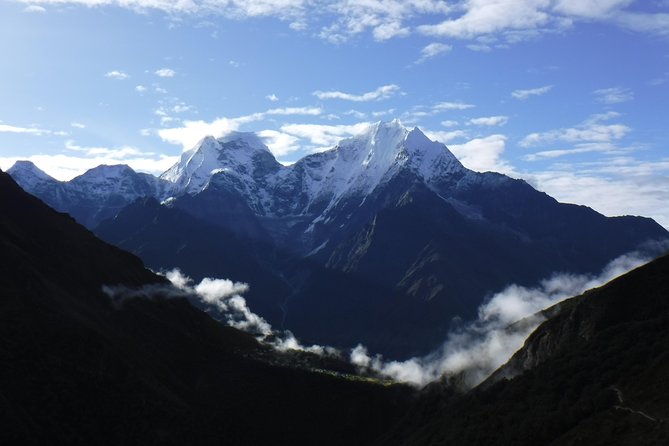
This trek is listed for people with moderate physical fitness. That’s a fair signal because you’re doing sustained walking days plus a few sharper climbs.
The altitude piece is handled in the itinerary in a practical way:
- Day 3 is explicitly an acclimatization day in Namche Bazaar.
- Day 7 includes a steep climb for sunrise, but you have time built into the schedule before and after.
- You also spend time progressing gradually toward higher areas like Machhermo and the lakes.
The biggest day from a physical standpoint is Day 7 with the 600-meter climb. That’s where you should be honest about your stamina early. If you’re unsure, think about whether you can maintain effort for steep uphill without sprinting.
Weather is another real factor. The tour description says the experience requires good weather. In the Everest region, that can mean visibility for views and safety margins for travel segments. If your dates land in a shoulder or off-season window, conditions can vary. In feedback I saw, off-season trekking could bring clear spells and fewer people, and it also meant wildlife sightings like musk deer felt more likely. If you can be flexible with expectations, the trek can feel extra rewarding in those quieter stretches.
Finally, there’s a climate reality built into the experience. The itinerary notes the Ngozumpa Glacier is melting rapidly due to climate change. That’s not just background. It gives meaning to why you’re walking there now, not later.
Service and Group Feel: What the Operator Gets Right
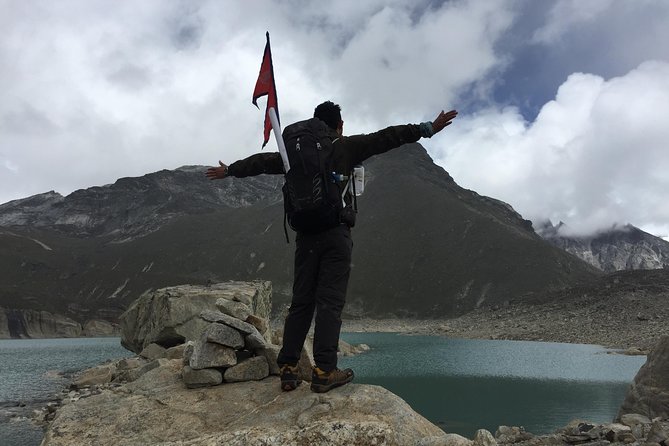
When a trek is run well, you don’t think about logistics. You think about peaks, lakes, and breathing. Breeze Adventure is consistently praised for being friendly and reliable, and for making the trip feel handled from start to finish.
In particular, the names that show up around guidance and planning are a good sign. Guides such as Lhakpa, Sarki Sherpa, and Pemba are mentioned in connection with caring, experienced support, and a fun, capable vibe. On the office side, Kishwor is described as professional and responsive, even before trips are fully confirmed.
You also get small-group structure with a maximum of 15 travelers, which tends to reduce delays and keep the trekking flow smoother.
One thing to remember: the itinerary includes a post-trek celebration dinner in Kathmandu. That’s not a random add-on. It’s a nice way to close the loop after days of shared effort, especially when you’re coming down from Gokyo and transitioning back to city life.
Who Should Book This Gokyo Lakes and Gokyo Ri Trek
This is a strong fit if you want:
- Gokyo Lakes and Gokyo Ri as the centerpiece, not an optional side trip.
- Classic Everest-region scenery, but with a route that feels less packed.
- A trek that mixes culture stops like Namche and Khumjung with high-view payoff.
- A small group setup and a service team that handles airport transfers and meal planning.
It might not be the best match if you:
- Want an easy walk with little climbing, because Day 7 is steep.
- Are very sensitive to early mornings, since the sunrise climb is built into the plan.
- Need a trip that runs in all weather. The package is clear it needs good conditions.
Should You Book This Trek?
If you’re drawn to the lakes and you want the big sunrise viewpoint from Gokyo Ri, I’d say this trek is worth serious consideration. The itinerary is built around the right rhythm: acclimatization in Namche, a gradual push to the lake area, and then a calculated sunrise climb before the descent.
Book it if you’re ready to work a bit for altitude views and you like trips where the details matter, like musk deer corridors and the trail story tied to Pasang Sherpa. Skip it if you’re looking for a low-effort stroll or you cannot handle the realities of weather-dependent mountain travel.
Either way, you’ll come away with that specific kind of memory you only get in the Everest region, lakes in the foreground and major peaks stacked in the distance.
FAQ
What is the duration of the Gokyo Lakes, Gokyo Ri Trekking Package?
The trek lasts about 10 days.
Does the tour include transportation from Kathmandu?
Yes. The package includes transportation to and from Tribhuvan Airport, and on the final day it includes a drive from Manthali to Kathmandu after your flight.
Are meals included during the trek?
Yes. It lists breakfast 10 times, lunch 10 times, and dinner 9 times.
Is Gokyo Ri included, and what altitude is it?
Yes. The highlight is reaching Gokyo Ri (5,357 meters / 17,575 feet) before sunrise.
How big is the group?
The tour has a maximum of 15 travelers.
Are shower and electronic charging fees included?
No. Shower and electronic charging fees at guest houses are not included.
Latest additions near Kathmandu
- Traditional Momo Making Class★ 5.0 · 10 reviews
- White Water River Rafting – 1 Day★ 4.3 · 3 reviews
- Kathmandu to Pokhara Premium sofa bus ticket★ 4.0 · 17 reviews
- Ghorepani Poon Hill Trek★ 5.0 · 16 reviews
- Amazing 1 Day Trekking Experience in Kathmandu Nepal★ 5.0 · 24 reviews
- Ghorepani Poonhill Trek★ 5.0 · 5 reviews
- Walking tour of real Kathmandu through back streets.★ 5.0 · 3 reviews
- Wildlife Adventure in Chitwan Nepal★ 4.0 · 4 reviews
Gokyo Lakes Treks, compared.
Landing Private Helicopter at Everest base camp & Gokyo for photo
Read our review →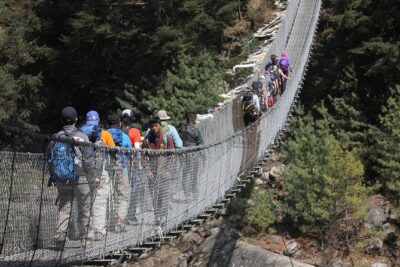
Browse the lists this tour appears in