
Reviewed · GOKYO LAKES TREKS
Gokyo Lakes And Renjola Pass Trek – 12 Days
A high-pass detour through the Khumbu changes everything. This Gokyo Lakes trek takes the usual Everest-region route and pushes it further by adding Renjo La Pass, one of those viewpoints that most people never get to reach. I especially like that the trip builds toward big panorama moments, first at Gokyo Ri and then again at the pass.
Two things I really like: the plan to reach Gokyo Ri for a wide view of major 8,000+ peaks, and the fact you cross Renjo La Pass instead of turning back down the Gokyo Valley. One thing to consider is that you are spending real time at very high altitude, including an early rise for the pass, and the trek requires good weather to run smoothly.
In This Review
- Key Points You’ll Care About
- Why This Trek Feels Different Than a Standard Gokyo Route
- A practical note on expectations
- The Real Stars: Gokyo Ri and Renjo La Pass Heights
- Why the glacier proximity matters
- From Kathmandu to Lukla: How the Logistics Support the Trek
- Group size and what it means for your day
- The Trek’s Flow: Gokyo Lakes to Gokyo Ri, Then Renjo La, Then Down via Thame and Namche
- Stage 1: Lukla and the approach past the six lakes
- Stage 2: Gokyo Ri, the peak-view day
- Stage 3: Early rise to Renjo La Pass
- Stage 4: Descend to Lukla via Thame and Namche Bazaar
- What “Professional, Experienced Support” Really Means in Practice
- A tip you can use before you go
- Value for the Price: Is About $1,800.62 Worth It?
- When this trek is especially good value
- When it might not be the best value for you
- Weather, Timing, and the Reality of High Pass Days
- How to think about weather risk
- Who This Trek Suits Best
- Should You Book This Gokyo Lakes and Renjo La Pass Trek?
- FAQ
- How many days is the Gokyo Lakes and Renjo La Pass trek?
- What is the starting point and meeting point for this tour?
- What is the price per person?
- Is pickup available from Kathmandu?
- How many travelers are in a group?
- What altitude do Gokyo Ri and Renjo La Pass reach?
- What physical fitness level do you need?
- What is the cancellation policy?
Key Points You’ll Care About
- Renjo La Pass adds a rare viewpoint compared with the more common Gokyo turns
- Gokyo Ri is built for peak spotting, with views of Everest region giants
- Small group size (max 15) makes the trek feel more controlled and personal
- Experienced team support is repeatedly highlighted, including guide Mr. Sarki Sherpa
- The route finishes with classic Khumbu stops, descending through Thame and Namche Bazaar
Why This Trek Feels Different Than a Standard Gokyo Route
Most Everest-region trekkers either go to Gokyo and return, or they stitch together an approach that stays pretty familiar. This one keeps the core Gokyo Lakes experience, then flips the script by going onward and up to Renjo La Pass. That matters because you are not just collecting viewpoints, you are changing your angle on the mountains.
The payoff is that the trek turns into a two-stage viewing plan. First you work up to the dramatic sky-line views from Gokyo Ri, then you get another major panorama on the way over Renjo La. If you love that moment when a trail suddenly opens into a new view, you’ll probably like the rhythm here.
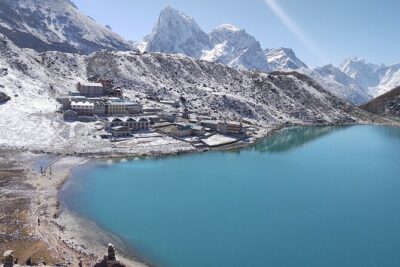
And yes, it is still a Gokyo Lakes trek. The route takes you past the six lakes along the way, so you still get the signature feel of the Gokyo Valley area rather than treating it as a quick detour.
More Treks in Kathmandu
- Everest Base Camp Trek – 14 Days
★ 5.0 · 1,499 reviews - Everest Base Camp Trek
★ 5.0 · 842 reviews - Everest Base Camp Trekking
★ 5.0 · 485 reviews
A practical note on expectations
This is a trek for people with at least moderate physical fitness. That wording matters: it means the trip is not a stroll, but it also suggests it is not trying to be the hardest trek in Nepal. You still need to respect altitude, pacing, and rest, but the overall framing is aimed at trekkers who prepare sensibly.
The Real Stars: Gokyo Ri and Renjo La Pass Heights
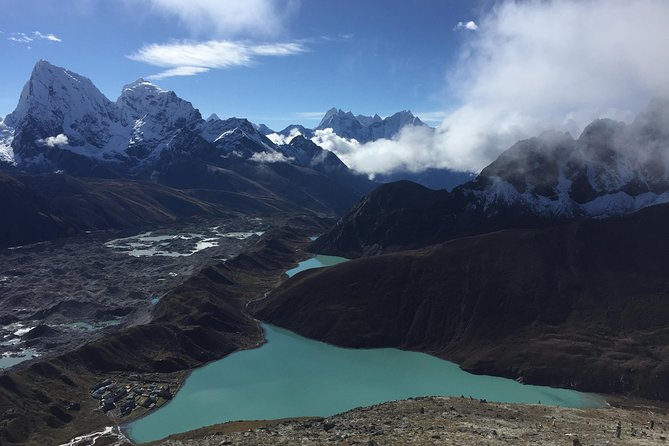
If you care about the Everest-region views, the numbers help you plan your expectations.
- Gokyo Ri: 5,357m (17,575ft)
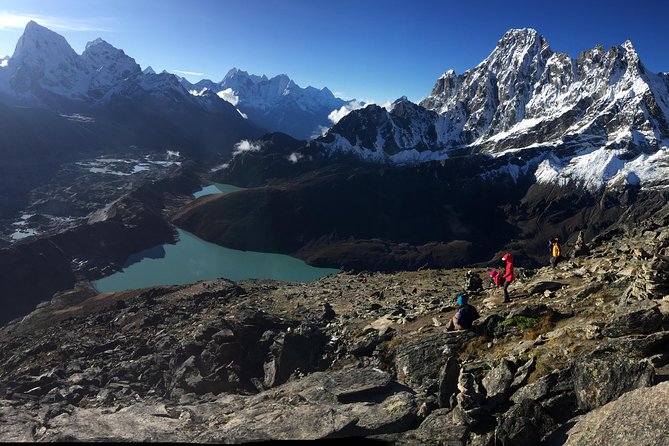
From here you get a panoramic view of four 8,000+ meter peaks: Mt. Everest, Lhotse, Makalu, and Cho Oyu. It also sits just west of the Ngozumpa Glacier, which is a huge presence in this part of the Khumbu.
- Renjo La Pass: 5,345m (17,536ft)
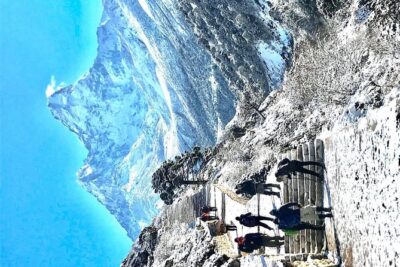
This is the big second climb, and the trek includes an early rise to reach it. Your reward is another sweeping view of the Ngozumpa Glacier and distant peaks.
What I like about this pairing is that it is not just about going higher. It is about getting two different angles on the same mountain world. One viewpoint focuses on a clean peak panorama, and the next adds glacier scale and a sense of space as you look outward from the pass.
Why the glacier proximity matters
The trek explicitly connects both major viewpoints to the Ngozumpa Glacier. Even if you are not a glacier geek, that detail helps you understand what kind of scenery you’ll be walking through. You’re not heading into a shaded valley of clouds and trees. You’re working in a wide, high-altitude mountain setting where the glacier becomes a landmark.
More Gokyo Lakes treks:
- Gokyo to Everest Base Camp Trek
★ 5.0 · 113 reviews - Everest Base Camp – Cho La Pass – Gokyo Trek
★ 5.0 · 65 reviews - Everest Gokyo Valley Trek – 12 days
★ 5.0 · 27 reviews - Landing Private Helicopter at Everest base camp & Gokyo for photo
★ 5.0 · 20 reviews
From Kathmandu to Lukla: How the Logistics Support the Trek
The meeting point is Breeze Adventure Pvt. Ltd, Thamel Marg, Kathmandu 44600, Nepal. Pickup is offered, and the tour uses a mobile ticket.
From a practical travel point of view, Thamel is an advantage. It is where many trekking services cluster, so you are not scrambling across the city to meet guides and sort final details. And because this trek ends back at the meeting point, the “start and finish in the same place” setup is convenient.
The trekking part begins at the Lukla Airport. That tells you the route is designed around flying into the Khumbu rather than doing the long approach by road. For most visitors, that is a major value point because it compresses travel time while still giving you that classic high-mountain trail feeling.
Group size and what it means for your day
This experience has a maximum of 15 travelers. A group that size can move more comfortably than larger trekking crowds, and it also gives your guide room to manage pace, questions, and adjustments. In the mountains, that matters more than people expect.
The Trek’s Flow: Gokyo Lakes to Gokyo Ri, Then Renjo La, Then Down via Thame and Namche
Even without an ultra detailed daily schedule, the route structure is clear and it makes sense for altitude and views.
Stage 1: Lukla and the approach past the six lakes
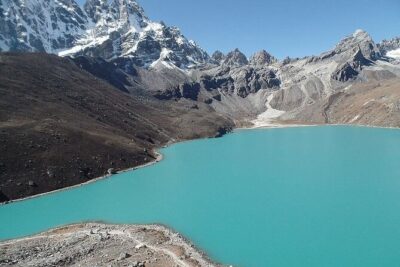
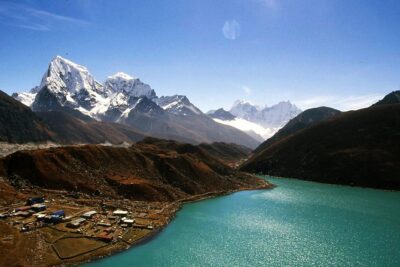
You start at Lukla Airport and work your way through the Gokyo area. The route takes you past the six Gokyo Lakes, which is the signature anchor of the trek.
I like having the lakes early in the journey because it keeps the scenery goal concrete. It also helps you settle into trekking mode: you’re moving forward, getting frequent scenery reminders, and building altitude step by step.
Possible drawback here: because the lakes are a central attraction, you may feel a little “view pressure.” That’s not a problem if you keep your pace steady and don’t rush just to tick off photo spots.
Stage 2: Gokyo Ri, the peak-view day
After reaching the Gokyo area, the trek includes time at Gokyo Ri. This is positioned as one of the best view moments of an Everest-region trek, and the peak list confirms why. Seeing Everest, Lhotse, Makalu, and Cho Oyu in one wide panorama is the kind of thing that turns a long hike into a memory you keep.
This is also where your eyes will start to “map” the region. You’ll start recognizing how the glacier and peaks line up, so when Renjo La day comes, you won’t just be chasing altitude. You’ll be chasing a second chapter of the same big story.
Stage 3: Early rise to Renjo La Pass
Next comes the part that makes this trek stand out: Renjo La Pass (5,345m). The plan calls for an early rise, which is common for high passes, because conditions can be best earlier in the day.
On this day, you’ll see the Ngozumpa Glacier again, plus distant peaks. Practically, the early start is also a chance to get ahead of weather changes later in the day, which matters because the experience notes that it requires good weather.
Consideration: if you hate early mornings, this is your honest heads up. For the pass experience to be worth it, you’ll probably need to be ready when the guide is ready.
Stage 4: Descend to Lukla via Thame and Namche Bazaar
After Renjo La, you descend to Lukla via Thame and Namche Bazaar. This is a clever finish because you get two different vibes.
- Thame gives you a quieter, more local mountain feel in many trekking itineraries.
- Namche Bazaar brings you back to the well-known hub energy, with more services and the sense that you’re near the end of the high trek.
Even if you came only for the passes and peaks, I think this descent route is a value add. It makes the trek feel like a full Khumbu circuit rather than a straight out-and-back mission.
What “Professional, Experienced Support” Really Means in Practice
The reviews emphasize safety and comfort, and that is not a small thing in the Himalaya.
One reviewer specifically thanked the team for ensuring safety and comfort throughout the trek. Another reviewer highlighted flexibility, saying the team could adjust the plan on the fly. A third review included a specific thank-you for the guide Mr. Sarki Sherpa, calling out his help directly.
From the info you have here, that combination points to a trek where you should feel supported in two key ways:
- You get confident leadership, especially at high altitude decision points.
- If conditions or timing shift, the team has enough experience to adapt without turning your trek into chaos.
A tip you can use before you go
Even when a trek is well run, it pays to be emotionally and physically ready for change. This itinerary depends on weather, and high altitude days depend on how you feel on the morning of a climb. If the guide asks you to slow down, or to adjust, that is usually the smart choice, not an inconvenience.
Value for the Price: Is About $1,800.62 Worth It?
This trek costs $1,800.62 per person for a trek described as about 12 days. The price is not low, and it’s not meant to be. The real question is what you get for the money, and you do get something specific.
You are paying for:
- A route that adds Renjo La Pass instead of turning back after the Gokyo Lakes
- Time at Gokyo Ri with a clear, famous peak panorama
- A small-group cap of 15 travelers
- A service team that reviewers credit for safety, comfort, and flexibility, including Mr. Sarki Sherpa in one shout-out
What I would do before booking, though, is sanity-check the inclusions. The tour data you have here confirms pickup is offered and you get a mobile ticket. It does not list everything else, so you should verify what the total price covers, especially the trekking logistics that can swing the value up or down.
When this trek is especially good value
If your goal is “maximum Everest region viewpoints with a real pass crossing,” then this trek has a built-in focus. You’re not just walking to famous places, you’re climbing a high pass that most people skip.
When it might not be the best value for you
If your main goal is just to see Gokyo Lakes and keep altitude exposure lighter, you might find that the Renjo La add-on is more intensity than you want. In that case, the standard Gokyo approach could be a better match.
Weather, Timing, and the Reality of High Pass Days
The experience notes that it requires good weather. That matters because:
- Visibility affects your views at Gokyo Ri and Renjo La
- Pass days can be more sensitive to wind, clouds, and conditions
The trek also includes an early rise for Renjo La, which is another clue that timing is part of the design, not just tradition.
How to think about weather risk
Weather risk is the Himalaya tax. The practical way to handle it is to go in prepared for either changes in timing or the possibility of cancellation or date swapping if weather is truly not workable. The good news is that the program is clearly set up around that reality, rather than pretending weather doesn’t matter.
Who This Trek Suits Best
This trek seems best for you if you:
- Have moderate physical fitness
- Want more than the typical Gokyo route, and you actively want the pass crossing
- Care about big viewing days, especially Gokyo Ri with its four-peak panorama
- Like the idea of finishing through Thame and Namche Bazaar rather than only returning through the same trail world
It’s also a good match if you value team support. The review highlights about safety and comfort, plus the specific mention of Mr. Sarki Sherpa, suggest you won’t be thrown into the trek alone.
Should You Book This Gokyo Lakes and Renjo La Pass Trek?
Yes, you should book it if your priority list includes the Renjo La Pass experience and you want a trek where the big views are scheduled and intentional. The route design gives you two major panorama moments tied to the glacier and the big 8,000+ peak lineup, and the small-group size helps keep things workable.
Maybe wait or choose a different option if you:
- Are not comfortable with high altitude exposure at around 5,345m to 5,357m
- Know you will struggle with early mornings on key climb days
- Prefer a more straightforward out-and-back trek style with fewer weather-sensitive moments
If you do book, I recommend you ask your operator what the price includes in detail, confirm how the team handles weather days, and share any health concerns early. This is the kind of trek where planning ahead makes the trip feel smoother, and your views more reliable.
FAQ
How many days is the Gokyo Lakes and Renjo La Pass trek?
The duration is listed as approximately 12 days.
What is the starting point and meeting point for this tour?
You meet at Breeze Adventure Pvt. Ltd, Thamel Marg, Kathmandu 44600, Nepal. The trekking route begins at Lukla Airport, and the activity ends back at the same meeting point.
What is the price per person?
The price is listed as $1,800.62 per person.
Is pickup available from Kathmandu?
Yes, pickup is offered.
How many travelers are in a group?
The tour has a maximum of 15 travelers.
What altitude do Gokyo Ri and Renjo La Pass reach?
Gokyo Ri is listed at 5,357m (17,575ft) and Renjo La Pass is listed at 5,345m (17,536ft).
What physical fitness level do you need?
The trek is described as suitable for travelers with a moderate physical fitness level.
What is the cancellation policy?
Free cancellation is available. You can cancel up to 24 hours in advance for a full refund. If you cancel less than 24 hours before the experience starts, the amount paid is not refunded. The experience also requires good weather, and if canceled due to poor weather, you are offered a different date or a full refund.
Latest additions near Kathmandu
- White Water River Rafting – 1 Day★ 4.3 · 3 reviews
- Traditional Momo Making Class★ 5.0 · 10 reviews
- Kathmandu to Pokhara Premium sofa bus ticket★ 4.0 · 17 reviews
- Ghorepani Poon Hill Trek★ 5.0 · 16 reviews
- Amazing 1 Day Trekking Experience in Kathmandu Nepal★ 5.0 · 24 reviews
- Ghorepani Poonhill Trek★ 5.0 · 5 reviews
- Walking tour of real Kathmandu through back streets.★ 5.0 · 3 reviews
- Wildlife Adventure in Chitwan Nepal★ 4.0 · 4 reviews
Gokyo Lakes Treks, compared.
Landing Private Helicopter at Everest base camp & Gokyo for photo
Read our review →
Browse the lists this tour appears in