
Reviewed · GOKYO LAKES TREKS
Gokyo Lakes and Gokyo Ri Trek
Turquoise lakes are your reward. This trek in Nepal’s Everest region routes you from Kathmandu to Lukla and up to Gokyo Ri for some of the most dramatic mountain panoramas around. I like the way the program trades a busier Everest Base Camp feel for a quieter glacial valley and big wide-open sightlines.
What I like most is the human pacing and altitude setup. The acclimatization day in Namche Bazaar includes time up high enough to help your body, plus side trips like the Everest View Hotel area and Khumjung. And for guide care, stories about guide Krishna keep showing up, with check-ins and making sure you’re comfortable in the tea houses along the way.
One thing to consider: the route still includes long climbing days, and Gokyo Ri is a continuous, strenuous ascent. Add in weather reality around the high mountains, and you’ll want a calm mindset and solid basic fitness.
In This Review
- Key Highlights Worth Your Attention
- Why Gokyo Lakes Feel Like an Upgrade from the Usual Everest Route
- Kathmandu First: Temples, Jet Lag, and Getting Your Bearings
- Getting to Trek Country: Lukla Flight and a Calm Start in Phakding
- Sagarmatha National Park Entry and the Namche Climb
- Namche Bazaar Acclimatization: Everest View Hotel and Khumjung
- Ama Dablam Views and the Route Shift Toward Machhermo
- First Taste of the Gokyo Basin: Terminal Moraine to the Lakes
- Gokyo Ri Summit Day: Strenuous Climb, Huge Reward
- The Return Loop: Phortse Tenga, Biodiversity, and Namche Again
- Back Down to Lukla: Long Day, Dudh Koshi Rhythm, and Flight Home
- Guides, Comfort, and Real Altitude Issues
- Price and Value: What Your $1,706.67 Buys You
- Who This Trek Fits Best, and Who Might Struggle
- Final Verdict: Should You Book It?
- FAQ
- How long is the Gokyo Lakes and Gokyo Ri Trek?
- What does the tour cost?
- Is pickup offered in Kathmandu?
- Where do I redeem my ticket for the tour?
- What is the maximum group size?
- Are meals included?
- What is not included in the price?
- What fitness level is required?
- Are service animals allowed?
- Is cancellation free, and is the trip weather dependent?
Key Highlights Worth Your Attention
- Gokyo Ri summit payoff: a hard climb with wide views of major 8000-meter peaks plus the glacier and lakes below.
- Smart acclimatization in Namche Bazaar: active time up high instead of only resting.
- Glacial-lake day with moraine and iron bridges: you walk into a real-world system of ice, rock, and turquoise water.
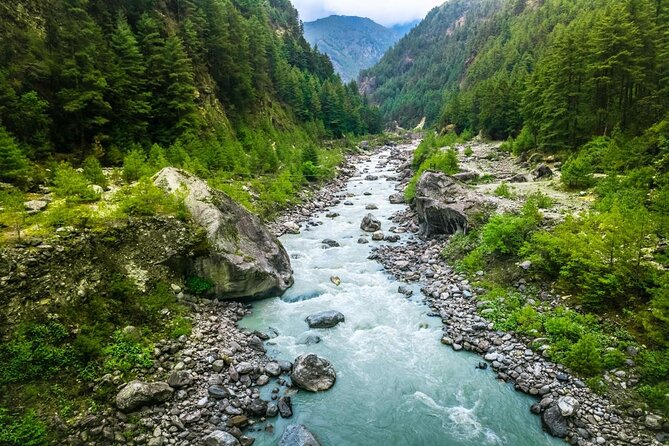
- Dudh Koshi river valley trekking: forests, suspension bridges, and classic Everest-region scenery early on.
- Small group (up to 10): easier logistics and a calmer rhythm on narrow mountain trails.
Why Gokyo Lakes Feel Like an Upgrade from the Usual Everest Route
If you’ve heard the Everest trek talk for years, you know how popular it can get. This Gokyo Lakes and Gokyo Ri route gives you the same Everest-region ambition, but it points you toward a different kind of wow.
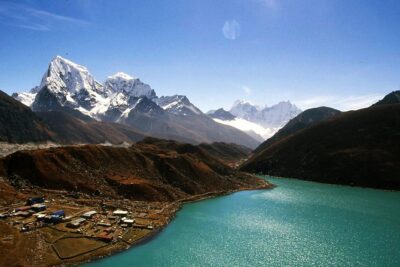
Instead of chasing one signature endpoint, you build your experience like a slow reveal. You start in the Dudh Koshi river valley, climb into Sagarmatha National Park terrain, settle into Namche Bazaar for acclimatization, then gradually move toward the Gokyo basin. After that, the days start shifting from village trails to glacier scenery, especially around the terminal moraine area and the lake chain.
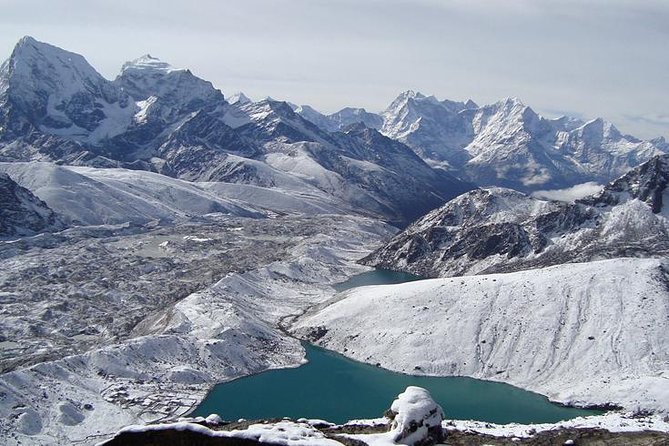
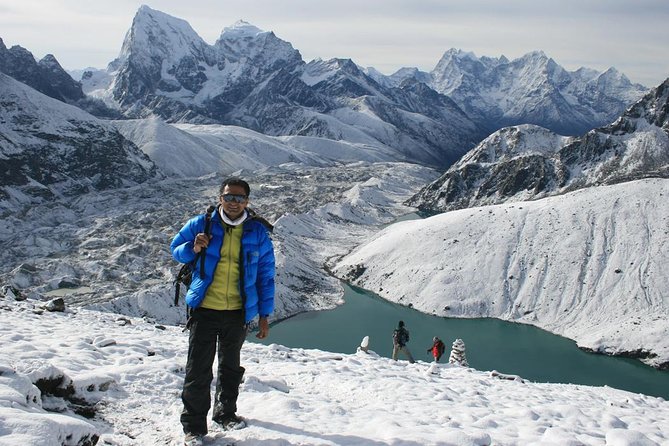
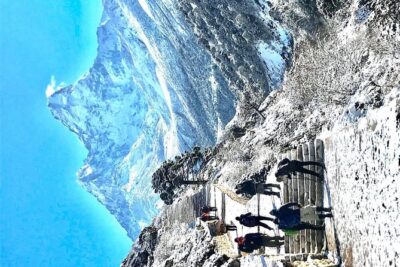
And then you hit the day that people remember. Gokyo Ri is described as a continuous and strenuous climb, but the payoff is spelled out clearly: views of multiple over-8000-meter peaks (including Cho Oyu and Lhotse), plus Everest itself, with the Ngozumba glacier and the lakes right under you. That is the kind of visual payoff you plan a vacation around.
More Treks in Kathmandu
- Everest Base Camp Trek – 14 Days
★ 5.0 · 1,499 reviews - Everest Base Camp Trek
★ 5.0 · 842 reviews - Everest Base Camp Trekking
★ 5.0 · 485 reviews
Kathmandu First: Temples, Jet Lag, and Getting Your Bearings
Day 1 is simple and useful. You land in Kathmandu, get transferred to your hotel, and have time to rest or wander Thamel and Durbar Square. This matters more than it sounds. If you’re missing a trekking item, Thamel is where you handle it.
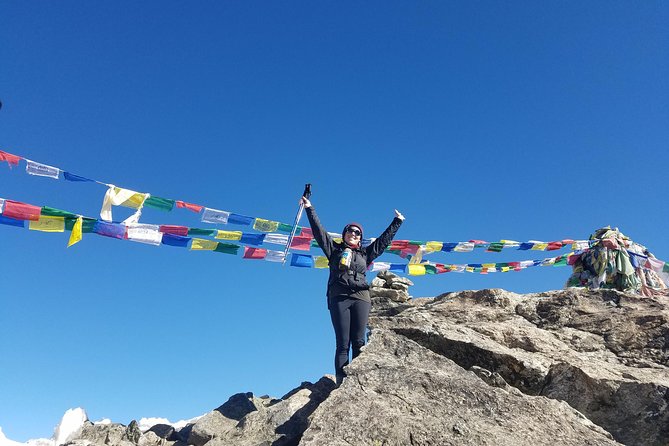
Day 2 sets a strong Nepal context. You visit Pashupatinath Temple, then Boudhanath Stupa, then Swoyambhu Mahachaitya (Monkey Temple). The mix is smart because it blends Hindu sacred space, Buddhist pilgrimage culture, and a city panorama from higher ground. It also helps break the travel day heaviness. Even if you’re tired, you can still pace yourself, see the prayer flags and wheels, and use the viewpoints to mentally reset before trekking.
Practical tip from how this program is structured: don’t try to “cover everything.” You’ll feel better doing one section deeply, then grabbing food and turning in early.
Getting to Trek Country: Lukla Flight and a Calm Start in Phakding
On day 3, you fly from Kathmandu to Lukla, arriving at Tenzing-Hillary Airport. The itinerary frames the flight as a short, scenic step that transitions you from green hills to major Himalayan massifs. Once you land, you meet the trekking team, make arrangements, and begin with a short acclimatization trek.
That first trek is Phakding, and it is the right kind of “warm up.” You trek along the Dudh Koshi River, and you end up descending and gradually climbing through places like Chaurikharka. Early forest segments show up too, including rhododendron, fir, and birch in the description. This is not just scenery time. It’s your body learning the rhythm of walking at altitude, before the bigger pushes arrive.
Sagarmatha National Park Entry and the Namche Climb
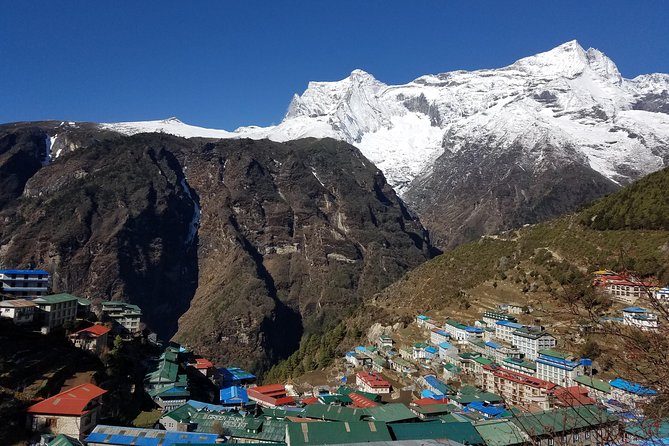
Day 4 moves you deeper into national park territory. The route includes check of permits at Monjo, and then the path leans into classic Everest-region textures: dense forests, rivers, and suspension bridges. The itinerary also mentions several cross points over the Dudh Koshi and views of Mt Thamserku from Benkar village.
At the end of the day, you reach Namche on switchbacks. That last stretch is the kind of finish that tests your legs, even if you feel okay earlier. The good news is that you’re building toward a planned acclimatization day, not just pushing onward and hoping.
Also, there’s an “Irish Pub” listed as a stop in this day’s flow. That’s a useful reminder of how flexible mountain trekking food breaks can be. You’re not only eating in tea house rooms. Sometimes you stop at a social, warming point on the trail route before the final climb into Namche.
More Gokyo Lakes treks:
- Gokyo to Everest Base Camp Trek
★ 5.0 · 113 reviews - Everest Base Camp – Cho La Pass – Gokyo Trek
★ 5.0 · 65 reviews - Everest Gokyo Valley Trek – 12 days
★ 5.0 · 27 reviews - Landing Private Helicopter at Everest base camp & Gokyo for photo
★ 5.0 · 20 reviews
Namche Bazaar Acclimatization: Everest View Hotel and Khumjung
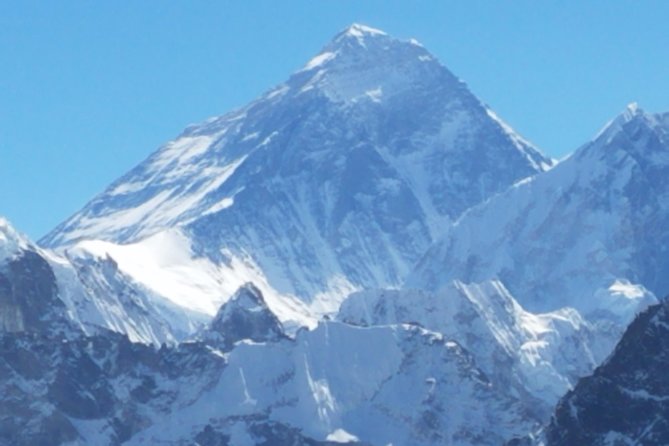
Day 5 is one of the most important days on the whole plan because it’s explicitly built for acclimatization. Instead of a full rest day, the program recommends being active and exploring. That matches what your body needs at altitude: movement, not boredom.
Namche Bazaar is the base, and you have options including a side trip to the Everest View Hotel area. The itinerary mentions views of Everest, Ama Dablam, Nuptse, Lhotse, and other peaks. This is a confidence builder day. You look, you walk a bit, and you remind your body that the next climbs are possible.
You can also hike to Khumjung, with stops linked to Khunde Hospital and a school called the Schoolhouse in the clouds. Even if you don’t spend hours there, it gives meaning to the altitude work. You’re not just climbing a mountain. You’re moving through a living Sherpa community.
Ama Dablam Views and the Route Shift Toward Machhermo
Day 6 is a shorter morning segment from Namche up toward Kyangjuma for views of Ama Dablam, Thamserku, and Katenga. Then day 7 reduces the trekking stress a bit by keeping the walk shorter.
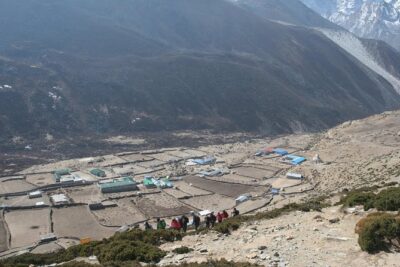
Day 7 gets you to Machhermo via places like Lhabarma and Luza. The itinerary highlights the confluence of streams from Kyajo Ri and Pari Lapche areas, plus mountain views. More importantly, you’re starting to see the transition from “trail trekking” to “glacial valley preparation.” The towns and paths matter, because they set how you handle the next day’s lake-country approach.
First Taste of the Gokyo Basin: Terminal Moraine to the Lakes
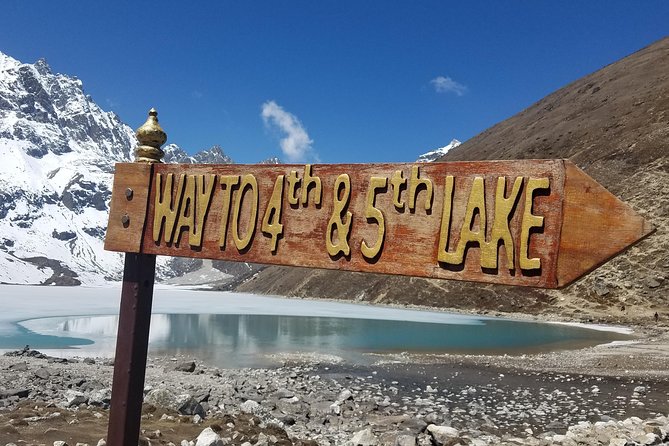
Day 8 is your first real Gokyo-lake approach. It starts with an ascent from Machhermo to Phangka, then the valley opens up. The description calls out a climb down toward a river, then a steep climb to the terminal moraine formed by the Ngozamba Glacier.
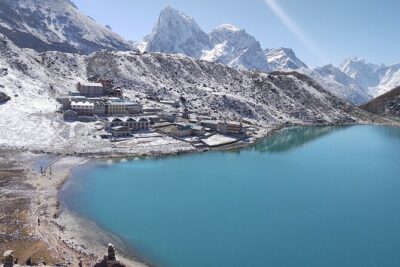
That moraine and the crossing of it is more than a dramatic photo moment. It signals that you’re entering a glacier-shaped landscape where the ground can feel different, and the walking becomes more about careful footing than just distance. Then an iron bridge marks the start of the Gokyo Lake valley.
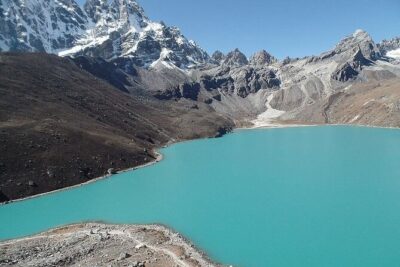
The lake chain walk starts with Longpongo, then continues toward Taboche Tso. Even on day 8, you can feel why the Gokyo Lakes are considered a top destination in this region. The turquoise tones appear as a pattern, not a single postcard.
Gokyo Ri Summit Day: Strenuous Climb, Huge Reward
Day 9 is the big day. The itinerary states that you’ll ascend Gokyo Ri with a continuous and strenuous climb. The plan emphasizes a slow and steady summit approach, which is exactly how you survive long altitude effort.
At the top, you get the peak list. The views include Cho Oyu (8153m), Lhotse (8501m), Makalu (8475m), Thamserku (6808m), Louche (6145m), and Everest (8848m) among others. Below you, you can see the Ngozumba glacier and the Gokyo lakes.
The day also includes hiking to the fourth lake, Thonak Tsho. That detail matters because it gives you more than just summit views. You get a mix of high point panoramas and direct time in the lake scenery.
The Return Loop: Phortse Tenga, Biodiversity, and Namche Again
Day 10 starts the descent back toward Namche-side trails. The program describes a slower, gradual descent from Gokyo village, passing through Machhermo and Luza before reaching Dole. You also get views of Thamserku, Cho Oyu, and Kangtega. You pass chortens, iron bridges, and terraces. This is when the trek starts to feel like you’re traveling through memory, because the terrain is familiar but the light and energy are different.
Day 11 brings a sharper slope to Phortse Tenga and a walk rich in biodiversity. The itinerary mentions wildflowers and rhododendron, and wildlife such as pheasants, mountain goats, and musk deer. You finish back toward Namche Bazaar, described as the Sherpa capital, past an army camp hill.
Again, an “Irish Pub” is listed on day 11 as a stop. That tells you the program is built around real-world breaks, not just marching lines. It’s also a reminder that you’ll likely spend time sitting, eating, and talking with your group during the return period.
Back Down to Lukla: Long Day, Dudh Koshi Rhythm, and Flight Home
Day 12 is a longer trekking day. It’s set up as a return from the Gokyo area down to Lukla by following the Dudh Koshi River and through forests as the trail becomes easier. The itinerary also mentions Buddhist prayer stones, prayer flags, monasteries, and chortens along the way.
This day is important because it is where people often feel the cumulative fatigue. The good part is that the descent is framed as gradually easier, not a sudden drop-off.
Day 13 is your flight back to Kathmandu, with time for rest, shopping for souvenirs, and a farewell dinner that ends the trekking portion of the trip.
Guides, Comfort, and Real Altitude Issues
The strongest praise tied to this style of trekking is about support and comfort. In the trek story about this route, Krishna is singled out for checking in on how you’re doing and making sure you’re comfortable in each tea house during the trek. That kind of attention matters because at altitude, small comfort issues become big ones fast.
There’s also a specific altitude-sickness story in the broader set of experiences connected to this company style of guiding. In that account, Suresh Guranag acted quickly when someone developed acute mountain altitude sickness. He contacted company owner Paul Gurang, and they arranged and prepaid a helicopter for response. You should not assume helicopter help is automatic for every situation, but it does suggest you’re not walking into a plan with zero emergency coordination.
Practical takeaway for you: treat the mountain seriously. Go slow on summit efforts, report symptoms early, and follow the guide’s pace. This trip is designed around acclimatization, but nature still has its own schedule.
Price and Value: What Your $1,706.67 Buys You
At $1,706.67 per person for about 14 days, you’re paying for more than guiding. You’re paying for the whole “system” that gets you from Kathmandu into the Everest region with organized trekking days, an acclimatization structure, and meals.
The included meals are clearly listed: breakfast 12 times, lunch 11 times, and dinner 11 times. If you’ve trekked before, you know meals at elevation add up quickly, and they also affect energy and how steady you feel.
Also, permits and key site admissions are marked as included on multiple days. The itinerary explicitly calls out permit checks at Monjo, and admissions are included for the Kathmandu temple days.
Small group size, maximum 10 travelers, is a quiet value point too. It usually means fewer logjams on trail stops, fewer bottlenecks at tea houses, and more flexibility if someone needs extra time.
If you’re cost-checking, do it against what you avoid: coordination headaches, meal planning chaos, and guessing how to handle acclimatization days.
Who This Trek Fits Best, and Who Might Struggle
This trek is pitched as an easier alternative to the famous Everest Base Camp trek, with emphasis on stunning panoramic views without too much physical challenge. But you should still read the whole plan honestly.
You will have strenuous work on Gokyo Ri, described as a continuous climb. You also have multiple long travel days, including the return down to Lukla.
So, I’d say it fits best if you:
- want the Everest region without the same crowds and route pressure
- enjoy lake and glacier scenery as much as peak views
- can handle long days with steady pacing and basic stamina
You might think twice if you:
- know you struggle with high altitude climbs even with acclimatization
- want a trip with very short walking days every time
The program lists moderate physical fitness as the standard you should have, and you’ll feel that on summit day.
Final Verdict: Should You Book It?
Yes, if your goal is big, high-quality mountain views plus a glacial lake experience that feels distinct from the standard Everest circuit. The route logic is strong: temple and city reset in Kathmandu, early Dudh Koshi trekking rhythm, acclimatization in Namche Bazaar, then a gradual move into the Gokyo basin with an intentional summit day.
I’d book it if you’re excited by a trek where the hardest effort happens on one standout day, and the rest of the itinerary builds toward it with reasonable pacing.
Skip it or choose a different option if you’re seeking a vacation with minimal climbing or if altitude has been a repeated problem for you. This one asks you to take the mountain seriously, but it also gives you the structure to do it smartly.
FAQ
How long is the Gokyo Lakes and Gokyo Ri Trek?
It is approximately 14 days.
What does the tour cost?
The price is $1,706.67 per person.
Is pickup offered in Kathmandu?
Yes, pickup is offered.
Where do I redeem my ticket for the tour?
The ticket redemption point is Kathmandu 44600, Nepal.
What is the maximum group size?
The maximum group size is 10 travelers.
Are meals included?
Yes. Breakfast is included 12 times, lunch is included 11 times, and dinner is included 11 times.
What is not included in the price?
All personal expenses and services not included in the offer are not included.
What fitness level is required?
The tour notes that travelers should have a moderate physical fitness level.
Are service animals allowed?
Yes, service animals are allowed.
Is cancellation free, and is the trip weather dependent?
There is free cancellation up to 24 hours in advance for a full refund. The trek requires good weather, and if it is canceled due to poor weather, you will be offered a different date or a full refund.
Latest additions near Kathmandu
- White Water River Rafting – 1 Day★ 4.3 · 3 reviews
- Traditional Momo Making Class★ 5.0 · 10 reviews
- Kathmandu to Pokhara Premium sofa bus ticket★ 4.0 · 17 reviews
- Amazing 1 Day Trekking Experience in Kathmandu Nepal★ 5.0 · 24 reviews
- Ghorepani Poonhill Trek★ 5.0 · 5 reviews
- Ghorepani Poon Hill Trek★ 5.0 · 16 reviews
- Walking tour of real Kathmandu through back streets.★ 5.0 · 3 reviews
- Wildlife Adventure in Chitwan Nepal★ 4.0 · 4 reviews
Gokyo Lakes Treks, compared.
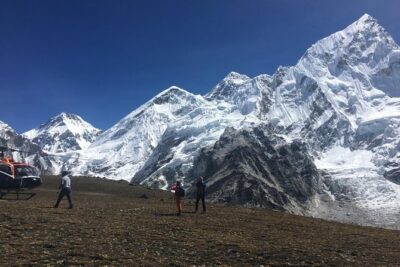
Landing Private Helicopter at Everest base camp & Gokyo for photo
Read our review →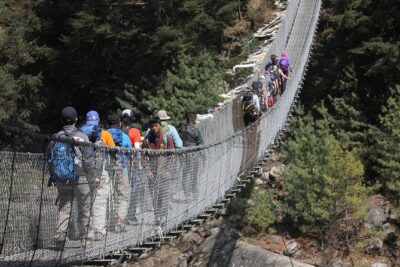
Browse the lists this tour appears in