
Reviewed · GOKYO LAKES TREKS
Gokyo Lake Trek
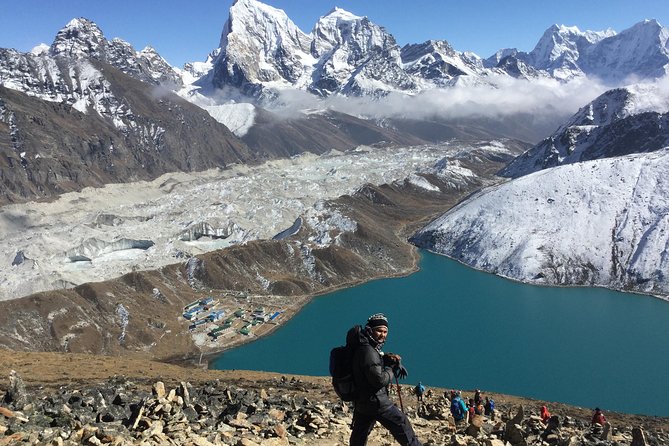
Gokyo Ri turns the Everest region into your classroom. This Gokyo Lake Trek is built for huge mountain payoff, with Gokyo Lake at 4,750 m and big-sky views of Everest and friends along the way. I like that it mixes classic Sherpa village stops with the quieter, lake-focused side of Khumbu.
Two things I really like: first, you get to see the Himalaya from multiple angles, especially during the early hike up to Gokyo Ri for panoramic views. Second, the support feels hands-on, with clear communication from guides like Urja and Ashish, plus real altitude-safety attention when you reach Machhermo, where a doctor briefs trekkers about mountain sickness.
The main consideration is effort and cold. This is a real trekking program, with long walking days and high-altitude conditions, and you should plan for limited creature comforts, since hot showers and battery charging are not part of the package.
In This Review
- Key highlights worth getting excited about
- Getting going from Kathmandu, with a start that makes sense
- Lukla flight to Namche Bazaar, where you feel the altitude
- Suspension bridges, Sagarmatha National Park, Everest View Hotel, and Khumjung
- Dole to Machhermo: the altitude talk that you actually want
- Gokyo Glacier and the lakes: Cho Oyu and that unreal stillness
- The return hike: lakes and Everest views, then the descent rhythm
- Back to Kathmandu: Lukla to Manthali, then a culture day
- Price and logistics: where the value shows, and where you still pay
- What to pack, and how to keep yourself comfortable at altitude
- Should you book the Gokyo Lake Trek?
Key highlights worth getting excited about
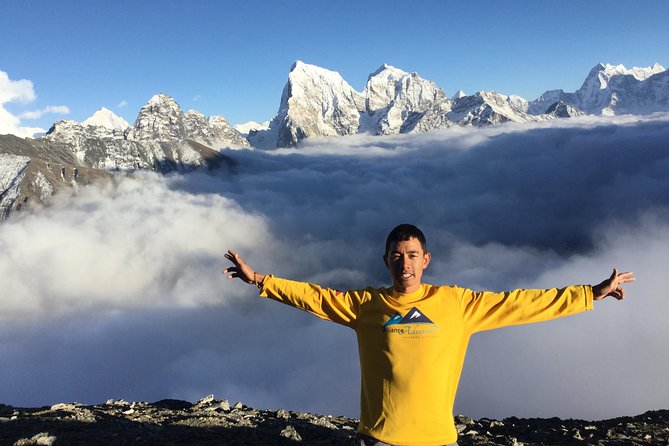
- Gokyo Ri for panoramic, near-360-degree Himalayan views
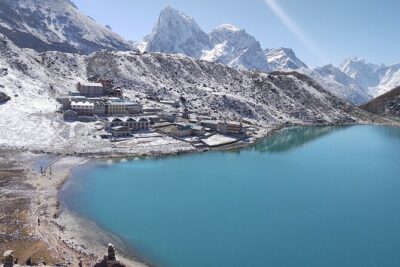
- Gokyo Lake at 4,750 m plus glacier-and-lake scenery days
- Machhermo altitude-sickness briefing by Himalayan rescue volunteers and a doctor
- Classic Khumbu walking rhythm through Namche Bazaar and suspension bridges
- Route access in the Everest region with views of Everest, Lhotse, Nuptse, Cho Oyu, Ama Dablam, and more
- Support that keeps logistics simple with guides, helpful porters, and permits handled
Getting going from Kathmandu, with a start that makes sense
You begin in Kathmandu with a warm welcome and a briefing at your hotel. Day 1 is mostly about getting your bearings and easing into Nepal time. It is not a push day, and that is a good thing, because you still have to manage jet lag and paperwork.
On Day 2, you do a half-day city tour and then drive to Manthali Airport. A nice detail is that the plan tries to avoid a miserable super-early wake-up, because if you drive to Manthali on Day 2, you can skip that 2 am start the next morning. For many people, that one tweak can make the whole trek feel more human.
This trek also includes your Kathmandu hotel stays (2 nights with breakfast), plus welcome and farewell dinners. That matters because it keeps your energy steady before you trade hot showers for sleeping in the mountains.
More Treks in Kathmandu
- Everest Base Camp Trek – 14 Days
★ 5.0 · 1,499 reviews - Everest Base Camp Trek
★ 5.0 · 842 reviews - Everest Base Camp Trekking
★ 5.0 · 485 reviews
Lukla flight to Namche Bazaar, where you feel the altitude
The trek proper starts when you fly to Lukla, a short flight of about 15 minutes, if weather allows. This is a classic Nepal reality, so plan for the fact that flights can depend on conditions. If weather is poor, you might have to try more than once to reach Lukla.
Once you arrive, the walking shifts into Sherpa rhythm quickly. Day 3 is a full half step into the trekking life, with about 5 hours on the trail, mixing village life, local culture, and mountain views.
Day 4 is where the day really gets moving. You cross five suspension bridges, and one is described as a particularly high one, the kind of bridge that makes you stop thinking about your feet and start thinking about your camera. If visibility is good, this section can also offer a view of Mt. Everest. The big goal at the end of the day is Namche Bazaar, and the trail is described as mostly climbing to get there. Namche is a “mini market” town, with coffee spots and bakeries, which is a welcome break when you have been hiking.
One practical tip for Namche: treat it like an altitude pause, not a sightseeing sprint. Even if you feel okay, you want your body to adjust, because the higher you go later, the less you want to gamble.
Suspension bridges, Sagarmatha National Park, Everest View Hotel, and Khumjung
Day 5 is your cultural and viewpoint combo day. You start with breakfast, then hike into the Sagarmatha National Park area, visit Everest View Hotel, and stop by Khumjung Village, including Hillary School.
This is a strong day because it blends two kinds of payoff:
1) You get better chances for Everest-area views as you move through the park and viewpoint points.
2) You also see how the Sherpa community organizes education and community life, not just the postcard scenery.
Khumjung is small, but it has that familiar trekking-town feel, where you can grab simple supplies and reset your legs with a relaxed walk and a coffee. You will still have altitude in the back of your mind, but the day is paced as a “move and look” day, not a grind day.
Day 6 then brings a longer hike, around 7 hours, with more climbing. The trail goes below the mountains while still keeping Everest-region views around, and you might spot animals such as Himalayan goats if you are lucky. It is a reminder that you are not just walking between landmarks, you are in an environment that supports real wildlife.
Dole to Machhermo: the altitude talk that you actually want
On Day 7, you walk from Dole to Machhermo, about 5 hours. If the weather is clear, you get “amazing” Himalayan scenes over snow peaks. This is also the day where the trek includes a briefing from Himalayan Rescue Association volunteers, along with a doctor who talks specifically about altitude sickness.
That part is more than a lecture. It is practical information delivered at the point where you are already pushing higher. You can use that guidance immediately, because you will soon be heading toward the Gokyo Glacier and lakes. Even if you think you feel fine, that kind of briefing helps you recognize early warning signs and act quickly.
One small drawback: Machhermo is not a place you visit and then forget. You are here because the trek plan needs the acclimatization rhythm and because the terrain is moving you toward higher, colder zones. So bring layers you trust, and keep your hydration and pacing steady.
More Gokyo Lakes treks:
- Gokyo to Everest Base Camp Trek
★ 5.0 · 113 reviews - Everest Base Camp – Cho La Pass – Gokyo Trek
★ 5.0 · 65 reviews - Everest Gokyo Valley Trek – 12 days
★ 5.0 · 27 reviews - Landing Private Helicopter at Everest base camp & Gokyo for photo
★ 5.0 · 20 reviews
Gokyo Glacier and the lakes: Cho Oyu and that unreal stillness
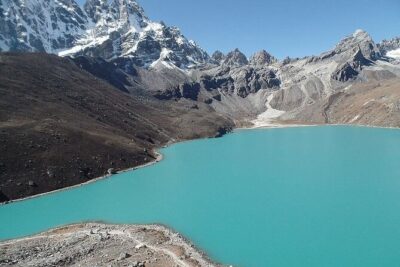
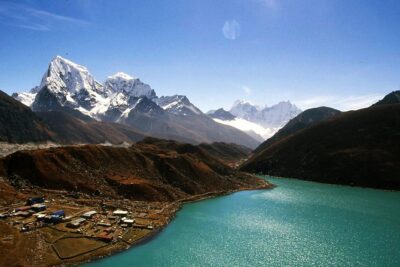
Day 8 is the big visual shift day. You trek through the Gokyo Glacier area with views described alongside Mt. Cho Oyu and Gokyo Lakes, surrounded by mountains. It is one of those days where the scenery is not just “nice,” it feels like the center of the trip.
You are walking for about 5 hours, and the day is built to connect you with the lake zone. Since the trek is emphasizing Gokyo Lake at 4,750 m, you will feel that change in altitude in your body, not only in your photos.
Day 9 is the headline day: early breakfast, then hike up to Gokyo Ri. The goal is panoramic views, including Everest and Makalu, with 360-degree Himalayan views described for clear conditions. If you are still feeling good after that, there is also an optional extension to the 5th Lake.
This is a day that many people dream about. But the real value is how the trek sets you up for it. You are not jumping straight from Kathmandu to a summit. You walk through Namche, build acclimatization, and then earn the views. That makes the payoff feel more earned, and it helps you manage the cold morning start.
The return hike: lakes and Everest views, then the descent rhythm
Day 10 starts with breakfast and returns along a similar way to grab lakes and mountain pictures again, then continues walking down toward your next destination for about 7 hours. This is one of those “it looks like a victory lap, but your legs are already tired” days. You will likely get some gorgeous photos, but focus on steady steps, because the descent can still be hard on knees.
Day 11 brings more walking below the mountains, described with views of Thamserku and Kusumkhangaru, plus Ama Dablam. You also get another set of moments for your last capture of Everest, and Namche Bazaar appears again, with that mini-market feeling. This is a mental shift day. The trek is moving toward the end, so it is common to feel a little emotional, even if you do not call it that.
Day 12 is described as the last steps of Hillary and Mt. Everest, finishing with a celebration in Lukla with your guide and potter. That kind of closing ritual is not just sentimental. It is a practical moment to confirm your last-day details and make sure nothing is left behind.
Back to Kathmandu: Lukla to Manthali, then a culture day
Day 13 is travel back down. You take a flight to Manthali Airport and then drive around 4 hours back to Kathmandu, with about 5 hours total. After all that hiking, you will feel the change immediately. It is also a great time to catch up on sleep, eat a real meal, and let your body settle.
Day 14 switches gears again: your guide leads you through Nepal history and culture. Nepal is described as multi-cultural, and this day is designed as an easier finish. Then you get a farewell dinner, which helps close the loop on a trek that has been mostly about movement, altitude, and weather.
Day 15 is your wrap-up day: last-minute shopping for family and friends, and you are guided to prepare for a safe flight home.
Price and logistics: where the value shows, and where you still pay
The price is listed at $1,785 per person for this roughly 15-day trek. What makes that number feel reasonable is that the package covers a lot of the “quiet costs” people often forget.
Included items you can count on:
- Transport from arrival to departure, plus private ground transportation
- Kathmandu hotels (2 nights) with breakfast
- Trek accommodations and most meals on the trail (breakfast, lunch, dinner, plus tea and coffee)
- Warm down jacket and sleeping bag for the trek, and trekking walking poles that are returned after
- Guide support and helpful potters, with insurances for guide and porters
- Trekking permit and TIMS cards
- A medical kit bag for the trek
- A waterproof trekking duffel bag and company t-shirt
- Welcome and farewell dinners
Things not included that you should plan for:
- Cold drinks (like bottled soda or water), phone calls, laundry, and bar bills
- Tips for guide and potters
- Travel and high-altitude sickness insurance
- Hot shower and battery charging along the trekking
So here is the practical way to think about value: you are paying for less decision fatigue. Permits, gear, many meals, and a lot of logistics are handled. You still have personal spending (drinks, tips, charging options), but the big framework is organized.
Also note the trek starts with a meeting in Kathmandu around 6:00 am, so you want an early-morning mindset on Day 2 and beyond.
Finally, it is a private tour activity, meaning your group is the only one participating. That often helps with pacing and communication, because you are not trying to manage a big mixed group.
What to pack, and how to keep yourself comfortable at altitude
This trek gives you key gear for cold, but you still need to show up prepared. The guidance is clear:
- Windproof outer jacket and warm down-filled jacket are recommended, and you should use what is provided.
- Bring gloves, a hat or cap, sunglasses, sunblock, and lip balm for intense high-altitude sun.
- Wear comfortable trousers (and loose skirts for women, if that’s your style) during the day.
- Use lightweight trekking shoes and warm wool or thermal socks.
- Thermal undergarments for night can be helpful if you get cold easily.
- Pack a flashlight and spare batteries.
One more practical note: the trek asks you to train with hiking when you have free time. That matters more than people think. If you can do steady hikes before your trip, the days that are “mostly climbing” feel challenging but not crushing.
Also, you will need flight details and passport information, including a passport copy and passport-size photo, for the trekking permit and TIMS card. Nepal visa can be applied on arrival in Kathmandu airport immigration, and the listed fee is USD 25 for 15 days (or USD 40 for 30 days).
Should you book the Gokyo Lake Trek?
I would book this if you want the Everest region without only chasing base-camp style trekking. You get a lake-focused adventure, glacier walking, and a real “big view” summit moment at Gokyo Ri, plus Sherpa towns like Namche and cultural stops like Khumjung and Hillary School.
I would think twice if you:
- Do not handle cold well, since there is no hot shower and you will be at high altitude.
- Get discouraged by long trekking days, since several days run around 5 to 7 hours and include climbing.
- Are relying on calm, predictable flights, because Lukla travel is weather dependent.
If you are fit enough for moderate trekking, want strong guides and organized logistics, and are excited by Gokyo Lake at 4,750 m plus panoramic ridgeline views, this is a smart choice. Just train a bit first, pack for sun and cold, and treat pacing as part of the experience, not a distraction.
Latest additions near Kathmandu
- White Water River Rafting – 1 Day★ 4.3 · 3 reviews
- Traditional Momo Making Class★ 5.0 · 10 reviews
- Kathmandu to Pokhara Premium sofa bus ticket★ 4.0 · 17 reviews
- Ghorepani Poon Hill Trek★ 5.0 · 16 reviews
- Amazing 1 Day Trekking Experience in Kathmandu Nepal★ 5.0 · 24 reviews
- Ghorepani Poonhill Trek★ 5.0 · 5 reviews
- Walking tour of real Kathmandu through back streets.★ 5.0 · 3 reviews
- Wildlife Adventure in Chitwan Nepal★ 4.0 · 4 reviews
Gokyo Lakes Treks, compared.
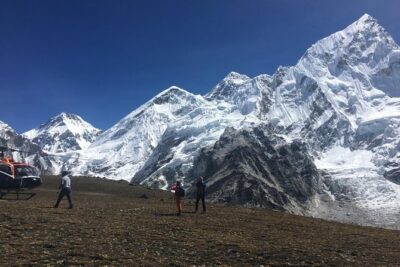
Landing Private Helicopter at Everest base camp & Gokyo for photo
Read our review →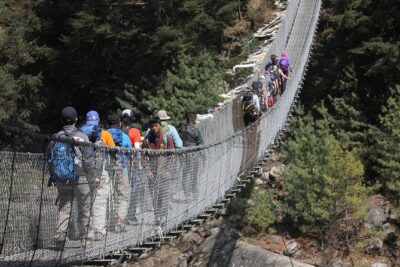
Browse the lists this tour appears in