
Reviewed · ANNAPURNA BASE CAMP TREKS
From Pokhara: 10-Day Poon Hill and Annapurna Base Camp Trek
Two sunrises in one trek.
This route is interesting because you get the big Annapurna view twice: first from Poon Hill, then from Annapurna Base Camp. I like how the trail slowly shifts from terraced fields and warm village days to colder, thinner air inside the Annapurna Sanctuary. The one drawback to plan for is that weather can turn quickly, with rain and cloud cover possible even in months that are usually considered good.
What makes the experience feel practical is the support built in. You travel with a professional English-speaking trekking guide, you sleep in guest houses along the way, and you are covered with trekking permits plus an emergency first aid kit carried by your guide. If you get matched with guides like Biru, Arjun, or Bikram, you can also expect calm, organized guidance and help with pace, questions, and route decisions.
The trek is not a casual walk. You will do early mornings, steep sections like the Ulleri steps, and long days that can add up, even if the average walking time is in the 3 to 6 hour range. Still, it is a great fit if you want real village life on the way up, and a serious sense of accomplishment when the sanctuary opens at the end.
In This Review
- Key highlights that matter on the ground
- Why this Poon Hill to Annapurna Base Camp trek feels worth the effort
- Pokhara to Nayapul to Tikhedhunga: start with Modi Khola momentum
- Ulleri steps to Ghorepani: rhododendron woods and first big-range views
- Poon Hill sunrise to Tadapani: the early climb that changes your mood
- Chhomrong: Gurung village life and Machhapuchhre’s famous shape
- Bamboo via suspension bridge and bamboo-rhododendron corridors
- Deurali and the Modi Khola valley: steady ascent toward the sanctuary
- Deurali to Annapurna Base Camp: entering the sanctuary at 4,130m
- Base Camp to Bamboo: morning views, then a calmer rhythm down
- Bamboo to Jhinu Danda: forests down to natural hot springs
- Jhinu Danda to Nayapul to Pokhara: finish with the drive out
- Price and value: what $310 covers, and what you should budget for
- Guides, pace, and why your day-to-day comfort matters
- Weather seasons and what to prepare for on the Annapurna trail
- Packing and trail rules that keep things smooth
- Who should book this trek, and who should not
- Should you book this Pokhara to Poon Hill and Annapurna Base Camp trek?
- FAQ
- What is included in the trek price?
- Are meals included during the trek?
- Do I need travel insurance?
- How do I get from Pokhara to the start of the trek?
- Where will we sleep during the trek?
- What is the total duration of the trek?
- Is the trek suitable for everyone?
- What is the best time to go for clearer mountain views?
Key highlights that matter on the ground
- Poon Hill sunrise access: included entry and a trail designed for early light over the Annapurna range
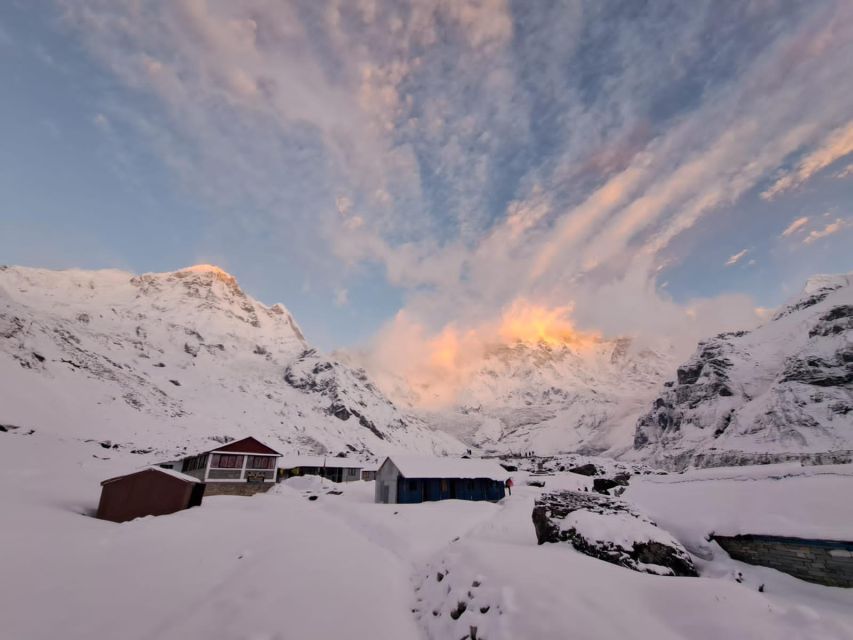
- Annapurna Base Camp at 4,130m: a clear destination day, with Machhapuchhre Base Camp passed on the way
- Village-to-sanctuary progression: terraces and hamlets on lower days, then rhododendron valleys and high alpine views
- Guest house comfort built in: you do not need to plan where to sleep each night
- Guide-led pacing and safety: professional guidance plus permit handling and an emergency first aid kit
Why this Poon Hill to Annapurna Base Camp trek feels worth the effort
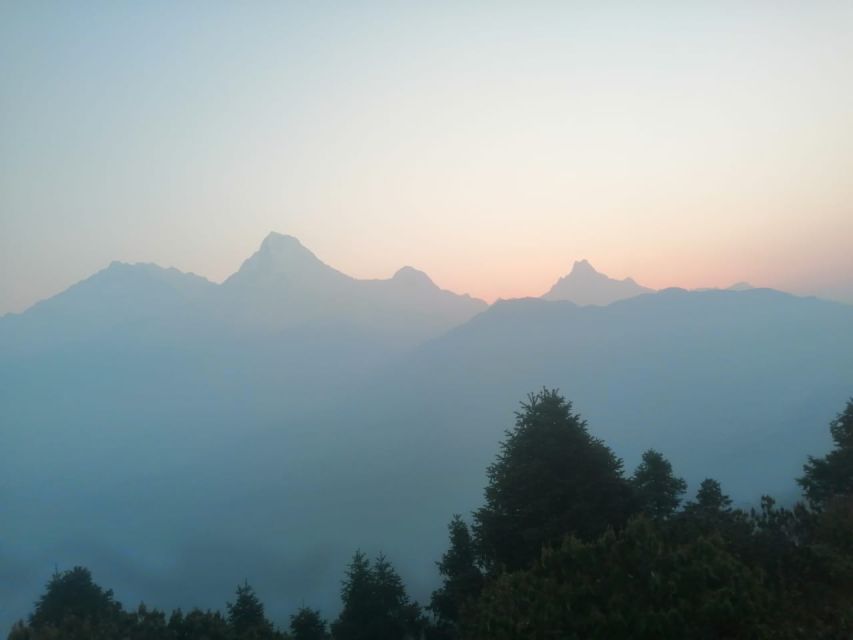
This is a trek that earns its drama. Day by day, the scenery gets harder to explain because it changes so much, from Modi Khola village paths to thick rhododendron woods, to the high amphitheater feeling of the sanctuary. And you do not just hike to one view. You start with the classic Poon Hill sunrise panorama, then you go deeper to reach base camp.
I like that the route includes both the poetic moments and the useful ones. The sunrise climbs are built into the schedule, but so are recovery-friendly downhill stretches and overnights in places like Chhomrong, Bamboo, and Deurali where you can stabilize your energy.
One more thing I appreciate is the sense of “being looked after” without turning the trek into a bus tour. You are in a private group, guided by a professional who handles permits and official documents, coordinates your guest house stays, and stays focused on keeping you moving safely in mountain conditions.
More Treks in the Annapurna Region
- Pokhara: 7 Day Annapurna Base Camp Trek
★ 4.9 · 38 reviews - Pokhara: 2 & 3 Days Ghorepani Poon Hill Private Guided Trek
★ 4.9 · 27 reviews - Pokhara: 1-Day Scenic Australian Camp & Dhampus Guided Hike
★ 4.9 · 24 reviews
Pokhara to Nayapul to Tikhedhunga: start with Modi Khola momentum
Your trek begins with a morning drive from Pokhara to Nayapul, about 1.5 hours. Then you start walking along the Modi Khola, and within a short time you feel the trail shift away from city rhythm and into village rhythm.
You follow small settlements and terraced fields, with the path doing a nice warm-up job before the steeper days. The goal for the night is Tikhedhunga at 1,577m, which is a practical altitude for settling in.
What to watch for: this first day is mostly about getting your legs going. It is not the day to “test your limits.” Comfortable shoes and steady pacing matter more here than speed.
Ulleri steps to Ghorepani: rhododendron woods and first big-range views
Day 2 is where the trek starts reminding you it is in the Himalaya, not just in the hills. You climb the steep stone steps known as Ulleri, and even if you are in good shape, those steps are enough to make your legs feel it.
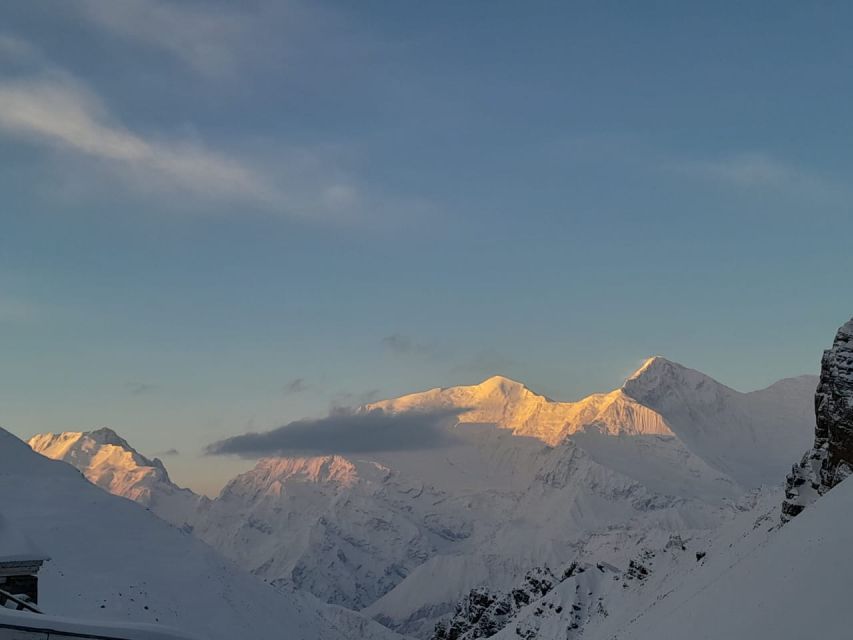
After that, the trail eases into rhododendron forests and charming villages as you head toward Ghorepani at 2,874m. Ghorepani is one of the classic base points for Annapurna views, and the panorama you get from here can include the Annapurna and Dhaulagiri ranges, depending on cloud cover.
Why Ghorepani matters: it sets you up for Poon Hill the next morning, and it gives you time to rest and prepare your early wake-up routine. Also, it is one of the places where guest houses help you avoid decision fatigue. You arrive, check in, eat, and reset.
Poon Hill sunrise to Tadapani: the early climb that changes your mood
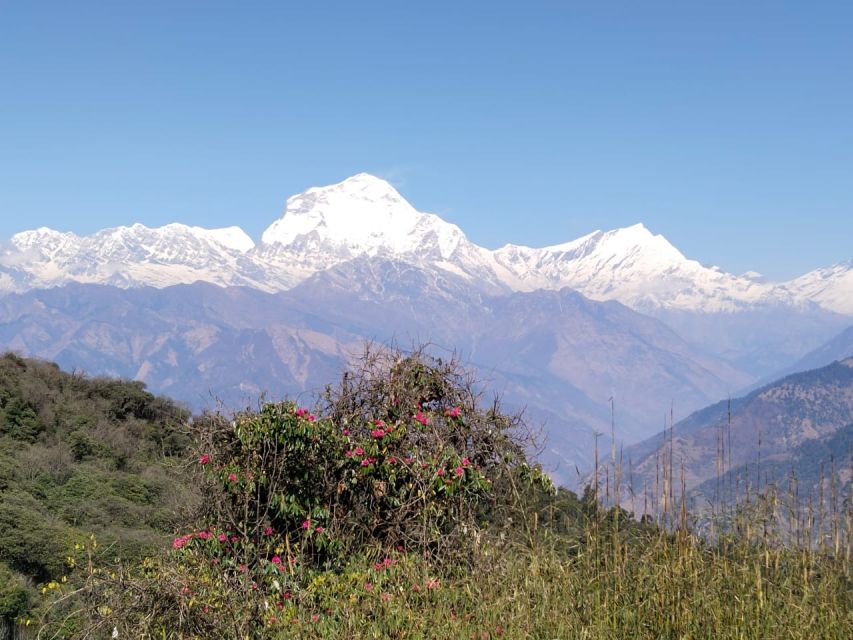
The biggest emotional payoff comes on day 3. You wake up early and hike up to Poon Hill at 3,210m for sunrise over the Annapurna. This is the moment the route is famous for: wide views, snow-capped peaks catching the first light, and that unmistakable feeling of being tiny in a good way.
After sunrise, you descend back to Ghorepani for breakfast, then continue onward through rhododendron-filled valleys. The destination for the night is Tadapani at 2,630m.
What I think you will love: the contrast between the sunrise intensity and the following forest walk. After that first big morning, the trail becomes more about breathing, moving steadily, and enjoying the woods.
A practical consideration: because the sunrise climb starts early, you need layers. Even if the day later feels mild, the early hours can be cold.
More Annapurna Base Camp treks:
- Annapurna Base Camp Heli Tour
★ 5.0 · 7 reviews - Pokhara: 7-Day Annapurna Base Camp Via PoonHill & Hot Spring
★ 5.0 · 6 reviews - Pkr/Kathmandu: 5-Day Annapurna Base Camp & Hot spring Trek
★ 5.0 · 6 reviews - Pokhara: Amazing 7-Day ABC Trek with Natural Hot Spring
★ 5.0 · 5 reviews
Chhomrong: Gurung village life and Machhapuchhre’s famous shape
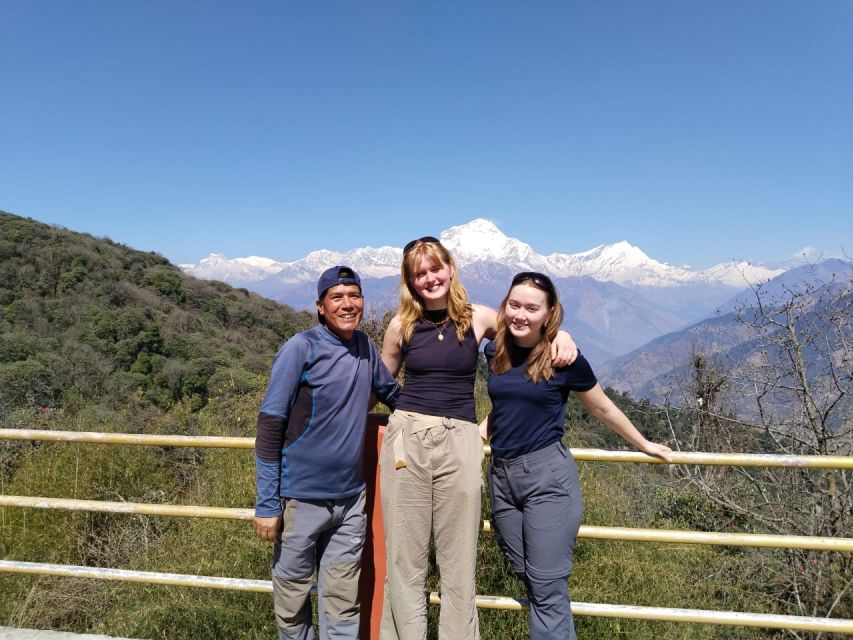
Day 4 takes you into the Chhomrong area, one of the trekking highlights for both scenery and culture. You start with a gradual descent through lush forest, pass through Gurjung village, then work your way down and back up toward Chhomrong at 2,170m.
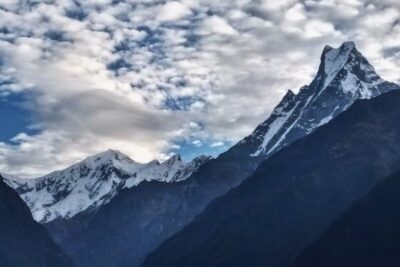
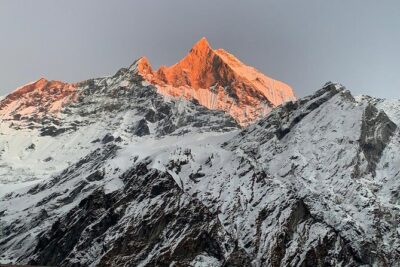
Chhomrong is a large Gurung village, and it is also known for strong views of Annapurna South and Machhapuchhre, the Fishtail peak. This is where the trek begins to feel like you are surrounded, not just looking at mountains in the distance.
Why it is valuable: you are not only hiking through scenery. You are spending real nights in communities, and the rhythm of village life becomes part of the day. It also helps you break up the altitude climb so the next high segment does not feel like an instant jump.
Bamboo via suspension bridge and bamboo-rhododendron corridors
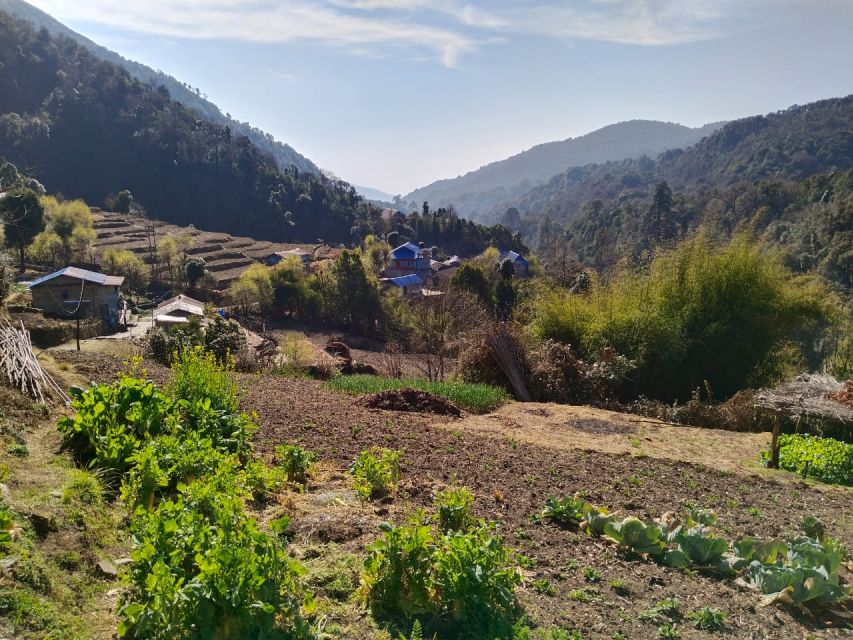
On day 5 you descend toward the Chhomrong Khola and cross a suspension bridge. That crossing is usually a mental checkpoint. After it, the trail keeps moving you toward the Bamboo area at 2,310m.
From there you climb to Sinuwa and continue through thick bamboo and rhododendron forests. This is the day you tend to feel the forest more than the peaks, and that is a good thing. It gives your mind a different pace, especially if you are sensitive to the higher-altitude intensity building up.
What can be tiring here: long stretches of climbing. Bamboo trails can feel deceptively tough underfoot, so keep your effort even and take breaks before you feel drained.
Deurali and the Modi Khola valley: steady ascent toward the sanctuary
Day 6 keeps you in the Modi Khola valley as you trek through bamboo forests and toward higher ground. You will pass the Himalayan Hotel and Hinku Cave, which act as natural landmarks along this climb.
The overnight stop is Deurali at 3,230m, and this day is mostly about steady, sensible ascent. Deurali sits at a height where you start to feel the air thinning, so pace control becomes more important than pushing through.
If you are prone to altitude discomfort, this is where you need to be extra honest with your guide. In one past experience, a guide named Arjun adjusted the plan and extended the trek by three days after altitude issues, which shows how flexible guidance can be when your body needs it.
Deurali to Annapurna Base Camp: entering the sanctuary at 4,130m
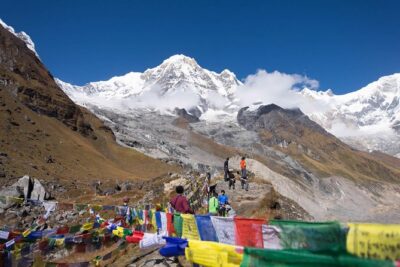
Day 7 is your big destination day. You trek through a narrow valley that opens into the Annapurna Sanctuary, and the mountains start to feel much larger and closer.
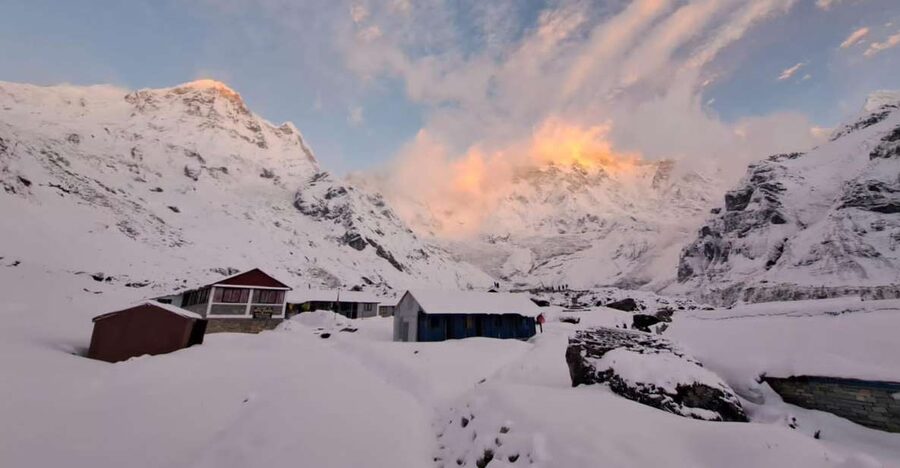
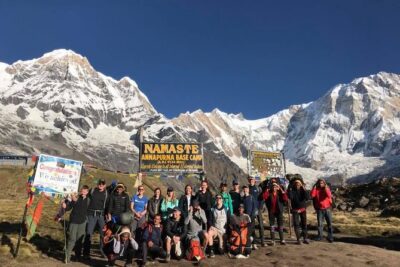
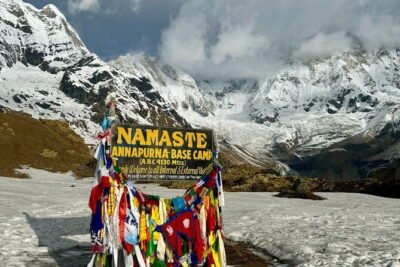
You pass Machhapuchhre Base Camp around 3,700m, then continue to Annapurna Base Camp at 4,130m. Arriving at base camp means you are surrounded by towering peaks including Annapurna I, listed at 8,091m, plus the bigger constellation of the region.
What this day changes: it turns hiking into witnessing. The final approach is still “just steps,” but the setting shifts your attention. The view is the point.
A key consideration: you arrive at high altitude, so expect cold and wind even if the lower days felt comfortable. Also, keep your energy for resting and staying hydrated.
Base Camp to Bamboo: morning views, then a calmer rhythm down
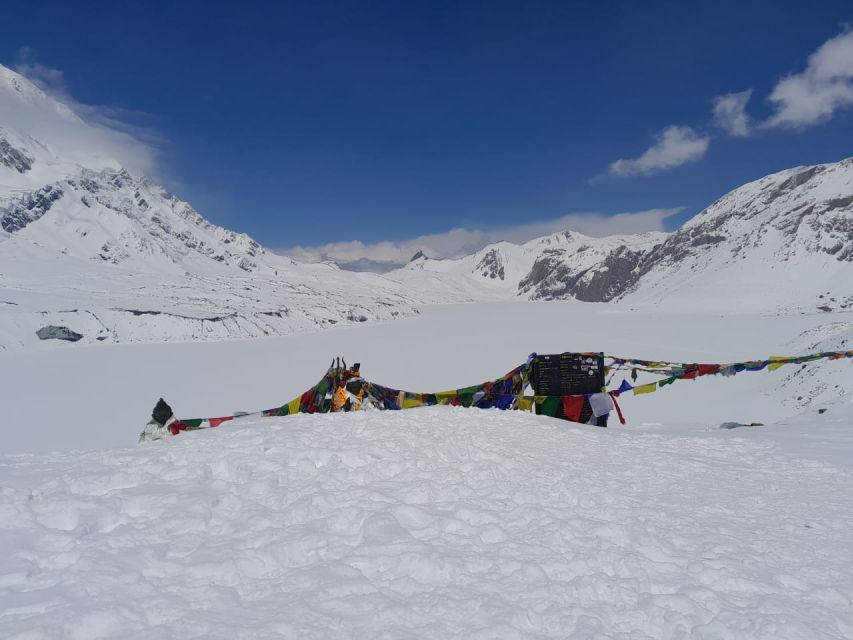
Day 8 brings a second chance to see peaks in morning light. You wake early for sunrise views from base camp, then you descend from Annapurna Base Camp. The return route takes you through Deurali and Bamboo.
This day often feels like a mental reset. You still earned the view, but now you get to enjoy a longer descent, which can feel kinder on the body than uphill trekking.
What to watch: downhill fatigue on knees and ankles. Even if the day is easier than day 7, your legs need support. Take the descents slowly and use good foot placement.
Bamboo to Jhinu Danda: forests down to natural hot springs
Day 9 focuses on recovery, and that is a gift near the end. You descend through forests, stop at Chhomrong for lunch, then continue to Jhinu Danda at 1,780m.
The highlight here is the natural hot springs at Jhinu Danda, a classic way to soothe muscles after several intense hiking days. It is also a nice altitude drop, which helps your body feel more normal.
Practical note: hot springs are great, but they do not replace sleep. Plan to treat this as a full recovery day, not just a quick soak.
Jhinu Danda to Nayapul to Pokhara: finish with the drive out
On day 10, you trek from Jhinu Danda down to Nayapul and then drive back to Pokhara. This is a straightforward end, and it helps you transition back into normal life without adding extra travel stress.
You’ll likely feel a mix of tired and proud. That is normal. This trek is long enough to bond with the rhythm of your days, and short enough that you still feel grounded at the finish.
Price and value: what $310 covers, and what you should budget for
At $310 per person for 10 days, the value comes from what is handled for you. The price includes a professional English-speaking trekking guide, trekking permits and official documents, private hotel pickup and drop-off in the Pokhara area, and the Pokhara to Nayapul round-trip transfer by private car. It also includes accommodation in guest houses, an emergency first aid kit with your guide, a private tour setup, and entrance at Poon Hill.
What is not included is also important. Food and drinks are for purchase, and travel insurance is on you. Emergency rescue is covered by your insurance, which matters because mountain situations are not cheap.
Then there is the small-but-real “high altitude comfort” cost factor. One experience shared a budget range of about 30 to 40 USD per day at higher altitudes if you want heater, WiFi, battery charging, or hot shower. That is not required, but it is useful to know if you like creature comforts.
So the honest way to judge the price: you are paying for logistics and safety support, not luxury. If you keep meals simple and use guest house basics, this can feel like a fair deal for a route that includes both sunrise climbing and a high destination day.
Guides, pace, and why your day-to-day comfort matters
A big reason these treks succeed is pacing. You can hike the same route and have completely different experiences depending on whether you are rushed or supported.
In the experiences shared, guides like Biru were praised for being patient and well-organized, taking care of accommodation bookings and focusing on comfort and safety. Another guide, Bikram, was praised for tailoring pace for a slow hiker, and for making sure the plan for each day was clear.
You should still do your part. Go slower than you think you need on the first half, especially on steep sections like Ulleri. If you feel altitude symptoms, tell your guide early. The trek can be adjusted in some cases, as shown by an example where Arjun extended the trek by three days after difficulty with altitude.
Weather seasons and what to prepare for on the Annapurna trail
The trek can be done throughout the year, but the best window is typically spring (March to May) and autumn (September to November). Those seasons tend to offer more stable weather and clearer mountain views.
Still, you are in the mountains, so expect unpredictability. Even when the month is considered good, you might run into rain or cloud cover that hides peaks for a day or two.
Your best practical strategy is to pack for change. Bring warm layers for early starts, and expect that sunshine might appear and vanish quickly. Your guide’s local experience helps you keep moving even when conditions are not perfect.
Packing and trail rules that keep things smooth
Here is what you should bring for this trek:
- Passport or ID card
- Comfortable shoes for steep stone steps and forest paths
- Travel insurance
- Passport-sized photo
A few rules are also part of the reality of trekking in Nepal:
- Pets are not allowed
- Plastic bottles are not allowed
This matters because it affects what you carry day to day. I recommend planning your water strategy so you are not relying on disposable bottles during the climb.
Who should book this trek, and who should not
This trek is a great match if you want classic Annapurna highlights in one trip. You get Poon Hill sunrise, village trekking through places like Tikhedhunga, and a real high-altitude destination day at Annapurna Base Camp. If you like structured itineraries with guest houses, and you want a guide to handle permits and logistics, it is a strong choice.
It may not be suitable if you are pregnant, or if you use a wheelchair. Also, if you know you cannot handle long climbs and early mornings, you might need a shorter or gentler route.
Should you book this Pokhara to Poon Hill and Annapurna Base Camp trek?
Book it if you want a balanced adventure with built-in support. The included guide, permits, transfers, guest houses, and Poon Hill access take a lot of planning off your plate, while the route still feels authentic and varied from day to day.
Skip it or choose another option if your schedule is tight and weather would stress you out, or if you are not comfortable with steep steps and high altitude conditions. If you do book, go in with a “slow and steady” mindset, pack for cold mornings, and treat the base camp day and the hot springs day as the two big anchors of the whole trip.
FAQ
What is included in the trek price?
The price includes hotel pickup and drop-off, a professional English-speaking trekking guide, trekking permits and official documents, Pokhara to Nayapoul and back transfer by private car, guest house accommodation, an emergency first aid kit with your guide, a private tour, and entrance at Poon Hill.
Are meals included during the trek?
No. Food and drinks are available for purchase.
Do I need travel insurance?
Yes. Travel insurance is not included, and emergency rescue is covered by your travel insurance.
How do I get from Pokhara to the start of the trek?
You get a morning drive from Pokhara to Nayapul (about 1.5 hours), and then you begin trekking from Nayapul.
Where will we sleep during the trek?
You stay in guest houses each night along the route.
What is the total duration of the trek?
The trek duration is 10 days.
Is the trek suitable for everyone?
No. It is not suitable for pregnant women or wheelchair users, and pets are not allowed.
What is the best time to go for clearer mountain views?
Spring (March to May) and autumn (September to November) are the best seasons for more stable weather and clearer views, though conditions in the mountains can still change quickly.
More treks out of Pokhara
- From Pokhara: Day Hiking Australian Camp & Dhampus
★ 5.0 · 17 reviews - Mardi Himal Trek -5 Day Short Trek From Pokhara
★ 5.0 · 8 reviews - Helicopter tour to Annapurna Base Camp from Pokhara -1 Day
★ 5.0 · 5 reviews - From Pokhara: Annapurna View Day Hike
★ 5.0 · 3 reviews
More Poon Hill treks
- Pokhara: 2-Day Short & Sweet Ghorepani Poon Hill Guided Trek
★ 5.0 · 6 reviews - Pokhara: 3-Day Ghorepani, Poon Hill and Ghandruk Guided Trek
★ 4.4 · 4 reviews - Pokhara: Poon Hill Trek
★ 5.0 · 3 reviews - Pokhara: 3 days Trek to Poon hill
★ 5.0 · 3 reviews
Latest additions near Annapurna Region
- Mardi Himal Trek -5 Day Short Trek From Pokhara★ 5.0 · 8 reviews
- Pokhara: Poon Hill Trek★ 5.0 · 3 reviews
- Pokhara: Day Hiking to Australian Base Camp with Lunch★ 5.0 · 4 reviews
- Pokhara: Hike To Australian Base Camp★ 3.5 · 4 reviews
- Pokhara: Annapurna Foothills Private Day Hike with Transfers★ 5.0 · 3 reviews
- From Pokhara: Annapurna View Day Hike★ 5.0 · 3 reviews
- Pokhara: Amazing 7-Day ABC Trek with Natural Hot Spring★ 5.0 · 5 reviews
- Pokhara: 7-Day Annapurna Base Camp Via PoonHill & Hot Spring★ 5.0 · 6 reviews
Annapurna Base Camp Treks, compared.

Kathmandu to Annapurna Base Camp (ABC) 5-Day Trek
Read our review →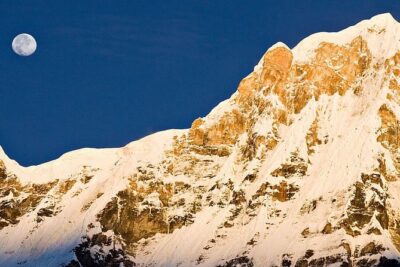
Browse the lists this tour appears in