
Reviewed · MARDI HIMAL TREKS
Mardi Himal Trek -5 Day Short Trek From Pokhara
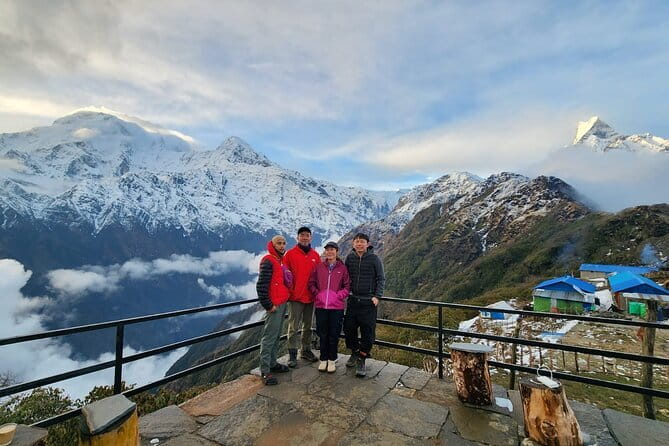
Mardi Himal has a way of feeling off-script. This short trek takes you through changing terrain in the Annapurna region and aims you at standout viewpoints of Mardi Himal and Mt. Machhapuchhre, with time to soak in sunrise-like panoramas. I like that it also focuses on real Himalayan life, not just peak photos.
Two things I really like are the blend of mountain drama and community trail time. You’ll pass through rhododendron forest and reach High Camp viewpoints, then later drop into the Gurung-settled village of Siding. The other big win is having a guide crew that knows how to make a first serious trek feel manageable, with examples like Sim supporting someone through leeches and everyday trail stress.
One consideration before you book: this is a demanding-at-altitude hike, and the walking days are long (up to about 12 hours). Even with a good pace and a supportive guide, you should plan for altitude and weather shifts, and talk to your doctor ahead of time.
In This Review
- Key things to know before you go
- Why Mardi Himal Feels Different Than the Usual Annapurna Options
- Price and What You Actually Get for $499 in Nepal
- Starting From Pokhara Lakeside, Then Settling Into Trek Rhythm
- Day 2 Low Camp at 2,970m: Your First Taste of Real Annapurna Terrain
- Day 3 High Camp Views: When the Trek Gets Shorter, Mentally Easier
- Day 4 Up to Mardi Base Camp: The Big Uphill and the Optional View Choice
- Day 5 Downhill to Siding Village: Culture in the Return Flow
- Altitude, Weather, and Pace: How to Stay Comfortable at 3,532m
- Guides, Private Group Size, and Why It Matters on Short Treks
- Who This Mardi Himal Short Trek Fits Best
- Should You Book This 5-Day Mardi Himal Trek?
- FAQ
- What time and where does the trek start in Pokhara?
- How long is the Mardi Himal trek?
- Is pickup offered?
- What’s included in the $499 per person price?
- What is not included?
- What trekking altitude should I expect?
- Do I need travel insurance to join?
- What is the cancellation policy?
Key things to know before you go
- The main payoff is the Mardi Himal viewpoint experience, with a realistic 5-day structure that targets High Camp and then a push toward Mardi Base Camp.
- Long day hiking is built in, including high-altitude walking at roughly 3,532 m (11,588 ft) with extreme weather variation possible.
- Gurung and Magar culture show up in the route, especially once you reach Siding, where village life takes center stage.
- Small group size matters here: maximum 10 people per booking, and it’s a private group, so your guide can actually respond to your pace.
- Meals and permits are included, which makes it easier to budget. You still handle personal expenses and your own visa needs.
- Guide support is a real part of the value, with past guides like Raj, Varat, Subas, Ashok, and Sim mentioned as key to first-timer comfort.
Why Mardi Himal Feels Different Than the Usual Annapurna Options
Mardi Himal is one of those treks where the mountains do not just sit there looking pretty. You walk through forests, then you get into grass and open views, then you start seeing peaks layer after layer. That changing “frame” is a big part of why this route can feel satisfying even on a short timetable.
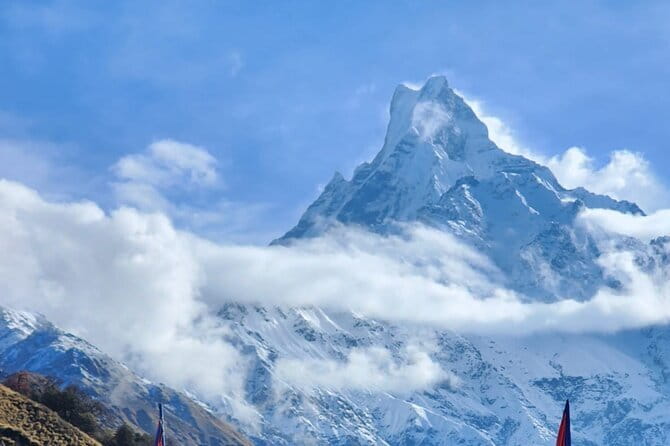
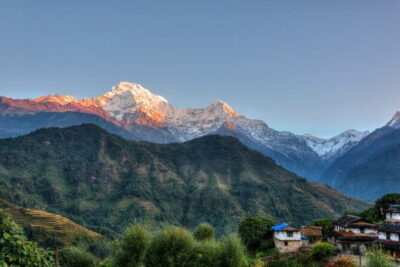
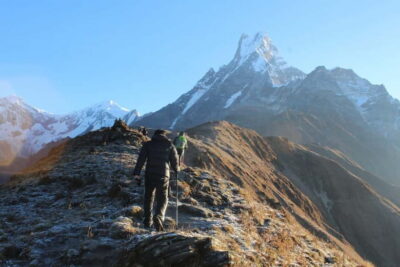
The focus is also smart. Instead of trying to do everything at once, the plan funnels you toward the Mardi Himal area and major surrounding giants: Annapurna massif, Hiunchuli, Gangapurna, and of course the famous Mt. Machhapuchhre, plus other faces you can spot from higher viewpoints. Machhapuchhre is the mountain most people recognize quickly, and seeing it in context with Mardi Himal is the point.
I also appreciate that the trek includes genuine village time, including the Gurung-settled stop in Siding. On many “short trek” itineraries, culture gets treated like a quick photo stop. Here, it’s part of the downhill story, which changes the mood of the final day.
More Treks in the Annapurna Region
- Pokhara: 7 Day Annapurna Base Camp Trek
★ 4.9 · 38 reviews - Pokhara: 2 & 3 Days Ghorepani Poon Hill Private Guided Trek
★ 4.9 · 27 reviews - Pokhara: 1-Day Scenic Australian Camp & Dhampus Guided Hike
★ 4.9 · 24 reviews
Price and What You Actually Get for $499 in Nepal
At $499 per person for a 5-day short trek, the value mainly comes from what’s bundled in the package. Your core costs are covered: trekking permit, trek accommodations, and meals (4 breakfasts, 5 lunches, and 4 dinners). You also get a tour guide and private transportation, plus pickup is offered from the Pokhara Lakeside meeting point.
That matters because short treks can get surprisingly pricey once you start adding permits, guide time, lodging, and meals. Here, the package approach means you can plan around a known number and focus your energy on training, packing, and picking the right altitude-ready gear.
The parts you should plan to pay yourself are also clearly listed. Personal expenses are not included, and you are responsible for visa requirements and insurance. The program also notes that you must show proof of travel insurance that covers medical expenses, including emergency repatriation, on day one. If you skip that, you risk delays or issues when you arrive.
Finally, this is a small private experience with a maximum of 10 people per booking. That often reduces the “herd hiking” feeling and makes it easier to keep your pace steady.
Starting From Pokhara Lakeside, Then Settling Into Trek Rhythm
Your day starts from Pokhara Lakeside at 7:45 am. That early start is practical. In Nepal trekking, timing matters because weather can flip quickly, and road travel plus trail transitions usually feel smoother when the day begins early.
Day 1 is listed with Lakeside as the stop, and the itinerary then ramps up into major hiking days starting Day 2. Even without a detailed route description for Day 1, you should treat it as the “setup day.” Expect orientation, likely a transfer toward your trail start, and the first block of walking rhythm building.
Extra luggage handling is also a quiet convenience. You can leave extra gear in Kathmandu or Pokhara hotel, and the provider will handle it so you can travel lighter on the trail. For a 5-day trek, that’s not a minor detail. Less weight means less fatigue, which means you enjoy the viewpoints more.
Day 2 Low Camp at 2,970m: Your First Taste of Real Annapurna Terrain
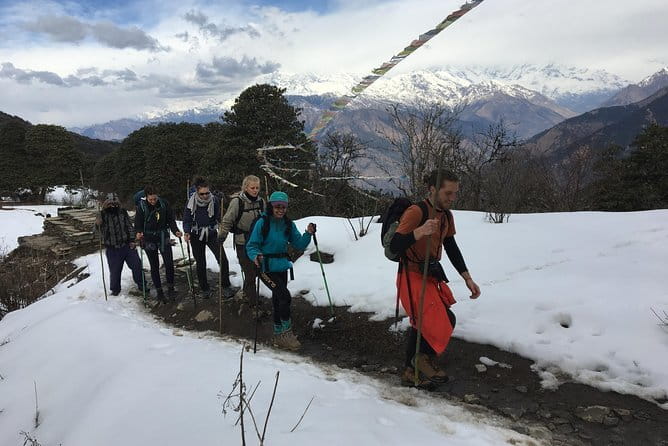
Day 2 is where the trek really turns on. You’ll trek to Low Camp (2,970 m), with an estimated 12-hour day. Even if you do not push hard, 12 hours at altitude is still a long day. Your goal should be steady effort, frequent small breaks, and drinking regularly.
This is also likely your first strong introduction to the Annapurna region vibe on the move. The route is described as passing through rhododendron forest and moving through diverse landscapes. Rhododendron season can change the look of the trail dramatically, but even outside peak bloom, the forest cover generally gives you a more comfortable early walking feel than exposed ridgelines.
One benefit of a longer Day 2 early on is that you get to stop, acclimate through time spent at camp, and then look back at what you already climbed. That makes Day 3 feel more like progress than punishment.
More Mardi Himal treks:
- Pokhara: 4-Day Mesmerizing Mardi Himal Guided Trek
★ 4.8 · 9 reviews - Pkr. Backpacker Group Dep.: 4 Day Mardi Himal Base Camp Trek
★ 4.8 · 3 reviews - Pokhara: 4-Day Mardi Himal Trek
★ 4.9 · 59 reviews - Private Mardi Himal Trek
★ 5.0 · 42 reviews
Day 3 High Camp Views: When the Trek Gets Shorter, Mentally Easier
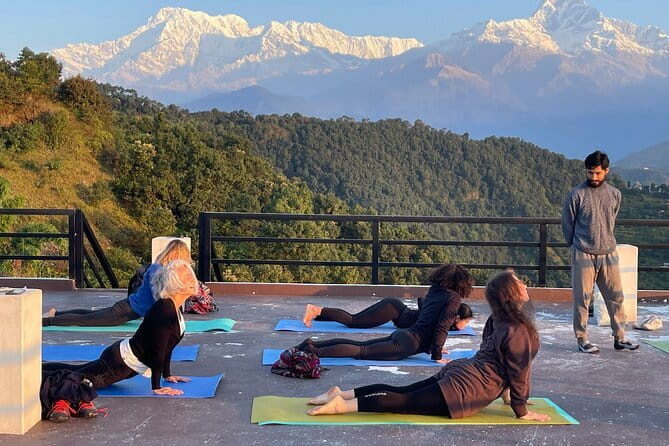
Day 3 takes you to High Camp (12 hours). What makes this day interesting is the way the plan is described: leaving the forest trail behind and tracing steps into more open fields and grasslands. That transition is often when you start feeling like you are stepping into the “real view” part of the trek.
The itinerary also notes that the walk today is quite short compared to the previous days. Shorter can mean less muscle fatigue even if the altitude stays serious. It also gives you more time to enjoy the Annapurna Himalayas view from High Camp, which is specifically called out as spectacular.
This is also the day where you want to pay attention to how your body reacts. If you get headache, nausea, unusual shortness of breath, or you feel unusually off, your best move is to tell your guide right away and adjust your pace. A good guide is not just there to lead, they help you read the day.
If your group includes yoga instruction, you might see it used here as a practical recovery tool, since one past trip specifically mentioned a Trek and Yoga combination. That can be helpful for stretching tight calves and calming your breathing before the next climb.
Day 4 Up to Mardi Base Camp: The Big Uphill and the Optional View Choice
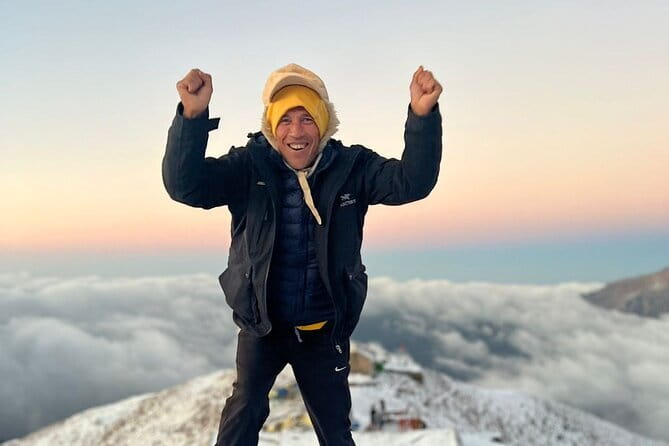
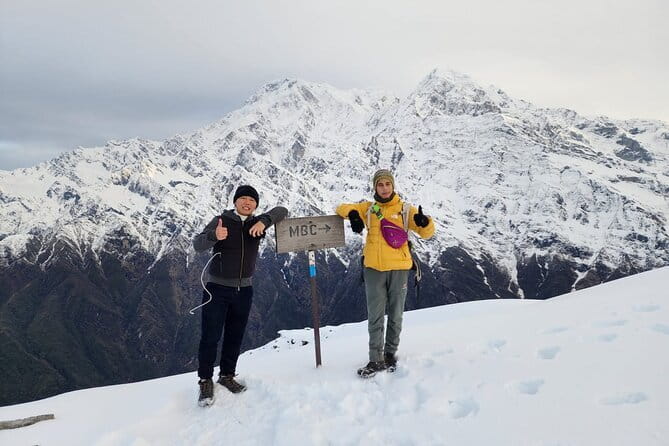
Day 4 is the summit day feel, even though it is a short trek. You start early and hike from High Camp toward Mardi Base Camp. The itinerary describes this as an uphill walk to the top, and the views are the headline.
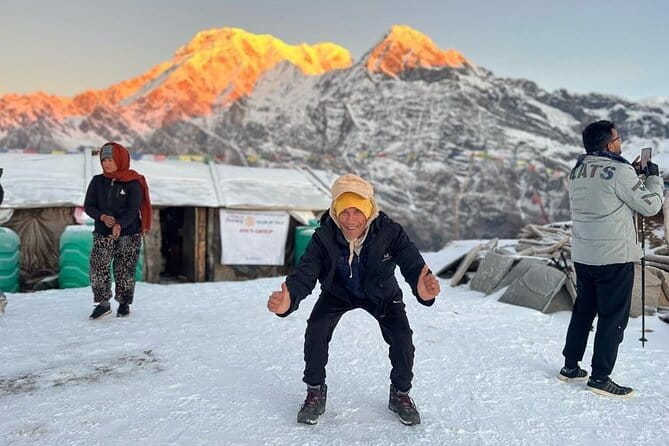
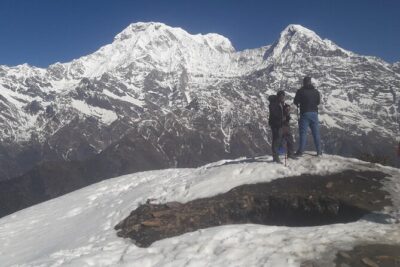
From the top and viewpoints, you can see peaks including Mardi Himal (5,553 m), Annapurna I (8,091 m), Annapurna South (7,219 m), Hiunchuli (6,441 m), Baraha Shikhar (7,647 m), Mt. Machhapuchhre (6,997 m), and Lamjung Himal (6,983 m). That is a lot of “who’s who” for a 5-day itinerary, and the trick is that you are not just looking at one peak. You are getting a cluster view, which makes your photos feel more complete.
There is also an option: you can hike up to the upper viewpoint only. That matters because your legs might be fine, but the altitude might not be. If you want the best views without turning Day 4 into a forced march, the upper viewpoint option can be the sweet spot.
After your time in the mountains, you return for an overnight stay at High Camp, or you can go further to Badal Danda or Low Camp depending on how your route is paced. The itinerary notes an overnight at High Camp as the standard, so plan for that.
My practical take: treat the viewpoint time like part of the hike, not downtime. Bring a layer for wind, stay hydrated, and do not spend 45 minutes standing still without moving. Even at camp elevations, cold air and wind can make you feel worse if you stop and tense up.
Day 5 Downhill to Siding Village: Culture in the Return Flow
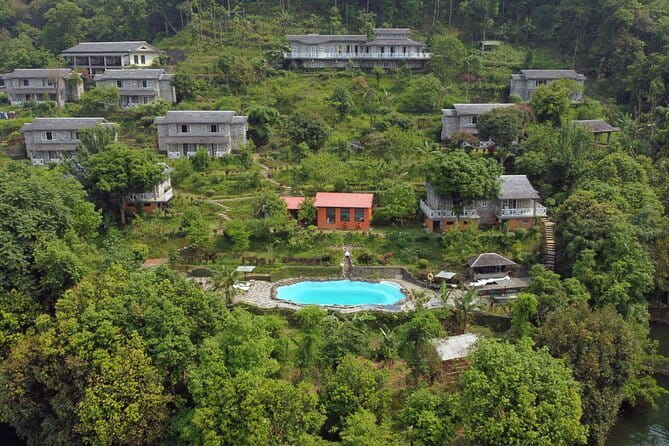
Day 5 is a contrast day. You descend to Siding, described as a traditional village with an ethnic Gurung settlement. The itinerary says it is mostly a downhill walk until you reach Siding, with overnight there.
Downhill sounds easy, but it can be hard on muscles and joints, especially after several long days. One review specifically pointed out that a steep descent on stone steps can be a big load. You cannot fully remove that risk in any short trek, but you can manage it with trekking poles, careful foot placement, and shorter step lengths.
The value here is that culture is not tacked on at random. Siding is where you see the typical village lifestyle and traditions in an area you have been hiking through for days. The trek’s story finishes with people and daily life, not just a final view and a bus ride.
If you are traveling for a honeymoon or celebrating something special, this day also tends to feel meaningful because the pace slows emotionally. You’re coming down, but you’re still inside the human side of the mountains.
Altitude, Weather, and Pace: How to Stay Comfortable at 3,532m
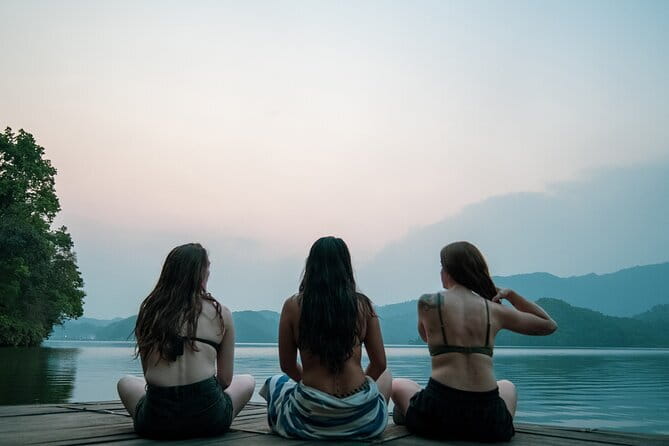
The trek includes a warning about altitude and weather. You will be walking at demanding altitudes of approximately 11,588 ft (3,532 m), and extreme variations in weather are possible. The provider also notes that adverse health effects can happen regardless of age and gender, so you should discuss the trip with your doctor prior to departure.
Here is how I’d use that information practically. If you are not already hiking regularly, start conditioning early. Focus on uphill walking, stair work, and time on your feet. Then on-trail, keep your pace slightly slower than your ego wants. Short trek days feel harder when you overreach early.
Also pack for quick temperature swings. High-altitude cold can hit fast, and wind can make it worse. Your guide will likely help you interpret conditions in real time, but your clothing choices determine how comfortable you are during long breaks and viewpoint pauses.
Finally, use the guide relationship. Past guide experiences you can learn from include Sim making a first trek feel safer and supported, and Ashok and porter Roshan being described as warm and helpful. When conditions or bugs become unpleasant, a good team can help you handle it. It can also prevent you from spending energy on panic.
Guides, Private Group Size, and Why It Matters on Short Treks
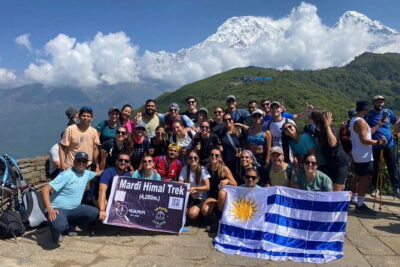
This trek is capped at a maximum of 10 people per booking, and it is private. That is a meaningful detail for a 5-day timeframe. When the group is small, your guide can notice who is falling behind, who needs extra breaks, and who is moving too fast.
The guide impact comes through in the names people shared from past trips. Raj is praised for support that helps a first-time trek feel manageable. Varat is described as professional and reliable. Subas is called sweet and helpful. Sim is specifically credited for safety and comfort on the trail, including dealing with leeches. Ashok appears in another account alongside porter Roshan, with both described as warm and helpful.
Even if you do not get one of those exact names, the pattern is clear: the service quality is tied to the human team and their attention to day-by-day comfort. That is what makes short treks feel less stressful. You are not just paying for routes. You are paying for someone who can manage risk, pace, and morale.
Who This Mardi Himal Short Trek Fits Best
This is a great match if you want a serious taste of the Annapurna region without needing a longer trek plan. It’s also a solid pick for first-time trekkers who are comfortable with long hiking days, because the itinerary includes time at camp and it is guided.
If you are traveling with limited vacation days, this 5-day structure can work well because it concentrates the major view days: High Camp viewpoint time on Day 3, and the Mardi Base Camp push on Day 4.
It may not be ideal if you have limited experience with steep descents. Day 5 is mostly downhill to Siding, and steep stone steps can be tough on muscles.
If you want a trip that mixes mountain views with real village life, this one does that better than most short options. You get Gurung culture on the way out, and you also see the shift from forest to open ridges, which helps the trek feel like a full arc.
Should You Book This 5-Day Mardi Himal Trek?
I think you should book it if three things are true. First, you can handle long days of hiking with altitude at around 3,532 m. Second, you want a guided, organized experience that includes permits, accommodations on trek, and most meals. Third, you care about more than just a summit photo, and you want the return-day culture of Siding.
Skip it or ask for a plan change if your biggest risk is downhill strain. Make sure you bring trekking poles, and ask your guide how they plan to pace the descent to reduce step stress.
One last practical note: required insurance coverage and proof of insurance are part of the participation requirements. Get your paperwork handled before you arrive, so your first morning is about walking, not problem-solving.
If you’re aiming for big Annapurna views with Mt. Machhapuchhre in the mix, plus the feeling of being in the mountains rather than just passing through them, this 5-day Mardi Himal trek is a very reasonable way to do it.
FAQ
What time and where does the trek start in Pokhara?
The meeting point is Pokhara Lakeside (Lakeside Rd, Pokhara) at 7:45 am.
How long is the Mardi Himal trek?
The duration is listed as about 5 days.
Is pickup offered?
Yes, pickup is offered, and the meeting point is Pokhara Lakeside.
What’s included in the $499 per person price?
Included are private transportation, a tour guide, trekking permit, accommodation on trek, and meals (4 breakfasts, 5 lunches, and 4 dinners).
What is not included?
Personal expenses are not included.
What trekking altitude should I expect?
The trek notes walking at demanding altitudes of approximately 11,588 ft (3,532 m), with the possibility of extreme weather variation.
Do I need travel insurance to join?
Yes. Travel insurance that covers medical expenses and emergency repatriation is required, and proof must be shown to the tour leader on the first day.
What is the cancellation policy?
You can cancel up to 24 hours in advance for a full refund. If you cancel less than 24 hours before the start time, the amount paid is not refunded.
More treks out of Pokhara
- From Pokhara: Day Hiking Australian Camp & Dhampus
★ 5.0 · 17 reviews - From Pokhara: 10-Day Poon Hill and Annapurna Base Camp Trek
★ 5.0 · 7 reviews - Helicopter tour to Annapurna Base Camp from Pokhara -1 Day
★ 5.0 · 5 reviews - From Pokhara: Annapurna View Day Hike
★ 5.0 · 3 reviews
Latest additions near Annapurna Region
- Pokhara: Poon Hill Trek★ 5.0 · 3 reviews
- Pokhara: Day Hiking to Australian Base Camp with Lunch★ 5.0 · 4 reviews
- Pokhara: Hike To Australian Base Camp★ 3.5 · 4 reviews
- Pokhara: Annapurna Foothills Private Day Hike with Transfers★ 5.0 · 3 reviews
- From Pokhara: Annapurna View Day Hike★ 5.0 · 3 reviews
- Pokhara: Amazing 7-Day ABC Trek with Natural Hot Spring★ 5.0 · 5 reviews
- Pokhara: 7-Day Annapurna Base Camp Via PoonHill & Hot Spring★ 5.0 · 6 reviews
- Pokhara: 5-Day Annapurna Base Camp Trek with Hot Spring★ 5.0 · 3 reviews
Mardi Himal Treks, compared.
Mardi Himal Trek – 8 Days | Hidden Gem of the Annapurnas
Read our review →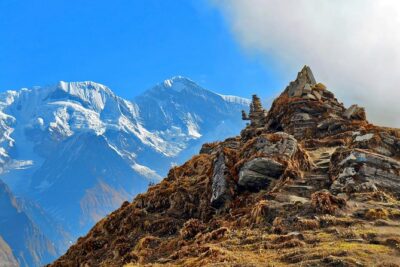
Browse the lists this tour appears in