
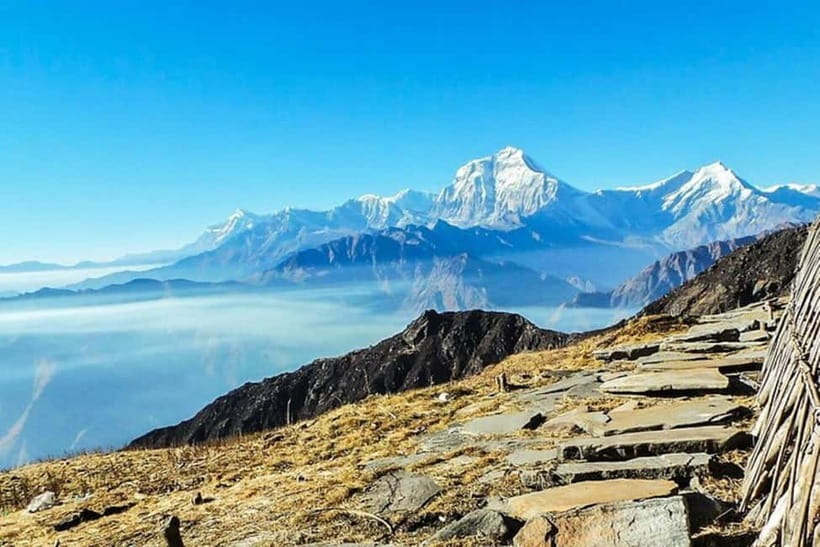
Reviewed · POON HILL TREKS
Pokhara: Poon Hill Trek
Golden sunrise hits Poon Hill fast. I like the Poon Hill sunrise spectacle and the real village feel of Ghandruk, and this trek is a great fit for a short Nepal mountain trip. One thing to plan for: meals are not included, so you’ll want to budget for teahouse food during the days on trail.
You’ll move at a steady pace with a guide, stay in tourist-standard lodges, and use round-trip transport from Pokhara. It’s a private group with English support, and the route is built to keep the days scenic without turning into a long, punishing expedition.
In This Review
- Quick hits
- Why this 4-day Poon Hill route is a smart Nepal intro
- Price and what you truly get for $208
- Day 1: From Nayapool to Ulleri, Magar community welcome
- Day 2: Ulleri to Ghorepani through rhododendron and village life
- Day 3: Sunrise at Poon Hill, then the long-feeling move to Ghandruk
- Day 4: Ghandruk sunrise light, Gurung breakfast, then back to Pokhara
- Lodges, guides, and the comfort level that matters
- Permits, timing, and what to pack (so you don’t overthink it)
- Who this trek suits best, and who should think twice
- Should you book this Poon Hill trek?
- FAQ
- What is the duration of the Pokhara Poon Hill Trek?
- Where does the trek start and end?
- What is included in the price?
- Are meals included?
- Is the group private and is there an English guide?
- What permits are covered?
- Do I need to bring my passport?
- Are large bags allowed on the trek?
- What is the cancellation policy?
Quick hits
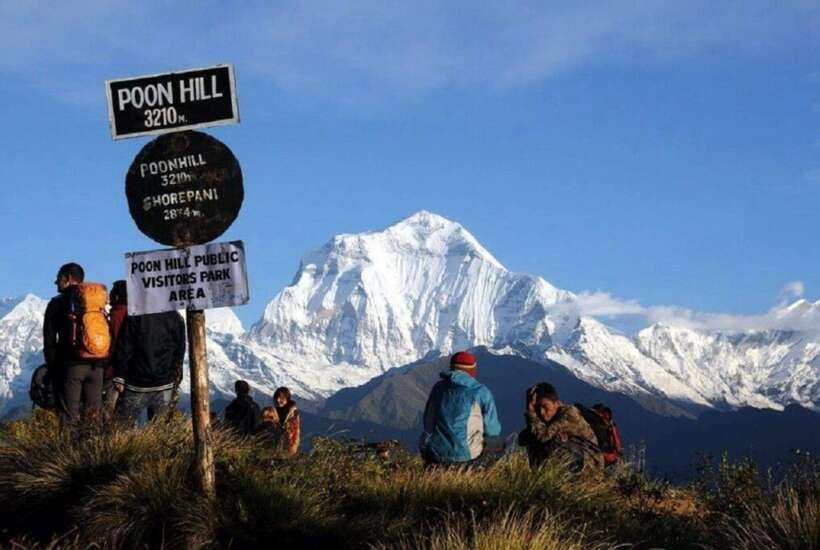
- Poon Hill sunrise views over Annapurna and Dhaulagiri are the headline moment
- Ghandruk village culture gives you a true Gurung home-base
- Rhododendron forest hiking adds color (and shade) on the way up
- Teahouse comfort in the tourist-standard lodge style, not camping
- On-trail help from your guide can make the difference when legs get tired
Why this 4-day Poon Hill route is a smart Nepal intro
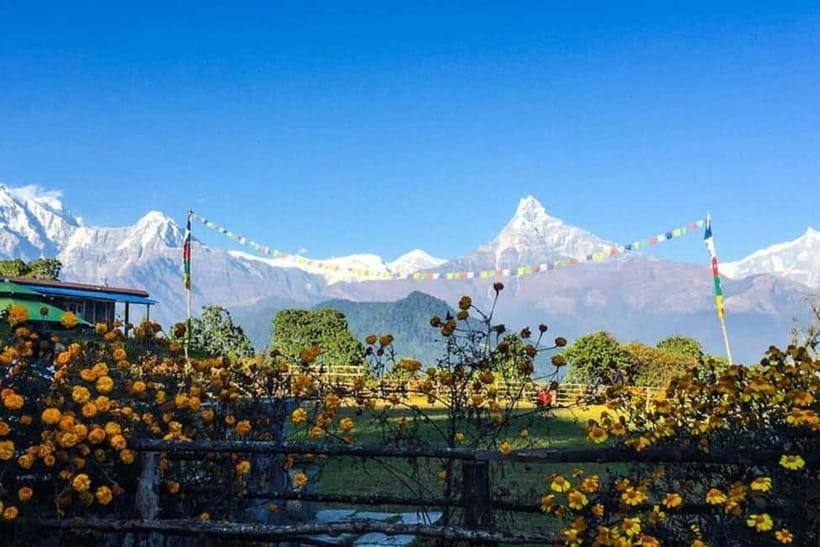
If you want Himalaya views without committing to a long trek, this one fits the bill. The route links small communities and classic viewpoints, and it does it in a timeframe that works well if you’re short on vacation days or you want a first taste of trekking in Nepal.
I like the balance here: you get early-morning mountain payoff, but you’re not racing your body the whole time. Most days land in the 5 to 6 hour walking window, which is enough time to feel like you’re trekking, yet still leaves you time to slow down for photos, short breaks, and actually enjoying the villages.
Also, the cultural angle is real, not a side quest. You pass through Magar community hospitality in Ulleri, and later you spend time in Ghandruk, a Gurung village where daily life, traditions, and community warmth are part of the trek experience. For many people, that’s what turns sunrise photos into a memory that lasts.
More Treks in the Annapurna Region
- Pokhara: 7 Day Annapurna Base Camp Trek
★ 4.9 · 38 reviews - Pokhara: 2 & 3 Days Ghorepani Poon Hill Private Guided Trek
★ 4.9 · 27 reviews - Pokhara: 1-Day Scenic Australian Camp & Dhampus Guided Hike
★ 4.9 · 24 reviews
Price and what you truly get for $208
This trek is listed at $208 per person for 4 days, and the value comes down to what’s included versus what you’ll still pay yourself.
Included items that matter on a trek like this:
- Private accommodation in tourist-standard lodges
- Hotel pickup and drop-off in Lakeside Pokhara (and airport, where applicable)
- Round-trip transportation
- Government permits, TIMS, and taxes
- A professional trekking guide (English) with guide support
- A first-aid kit
- Luggage storage in Pokhara during the trek
- Option for trekking gear support like poles, a trekking bag, or a duffel bag if you need it
What’s not included:
- All meals, around $20 per person per day
- Optional gratuity
So the real budget picture is pretty simple. You’re paying for logistics, permits, a guide, and lodging, then you’re choosing meals at the teahouses along the way. If you eat budget-style, you can keep meal costs manageable. If you prefer more variety or feel like treating yourself each day, that’s where your total will rise.
For first-timers, the included permits and guide support are a big deal. Paperwork and trail navigation can be stressful when you’re new to Nepal trekking, and having that handled makes the experience calmer.
Day 1: From Nayapool to Ulleri, Magar community welcome
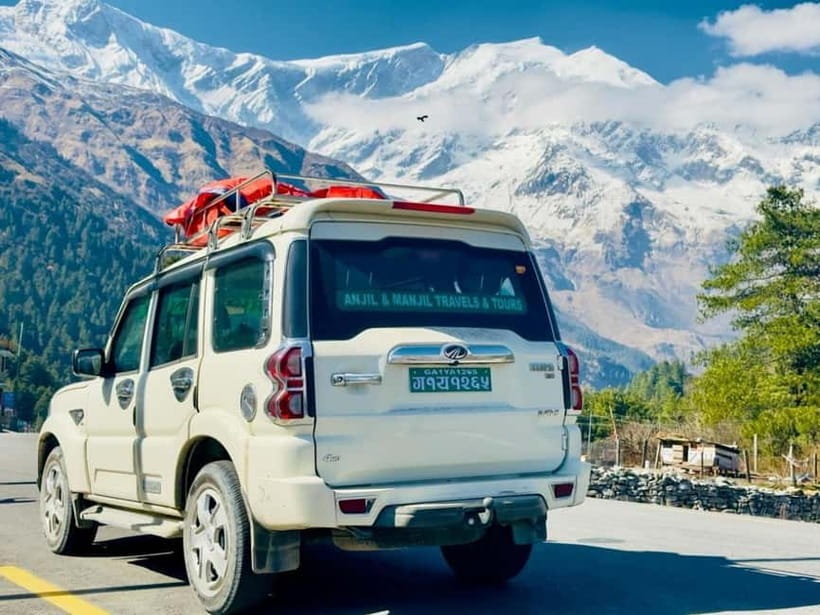
You start with a vehicle transfer from Pokhara to Nayapool, then begin hiking toward Ulleri. The trekking time is about 5 to 6 hours, and your elevation climb starts right away, so warm layers and steady pacing matter.
Ulleri is where the trek shifts from just scenery into people. You’ll spend the night there and get a taste of Magar community hospitality. Even with a short route, the itinerary is built so you don’t just walk from viewpoint to viewpoint. You actually settle in, eat dinner, and sleep in a mountain village rhythm.
A practical drawback to consider on Day 1: it’s often the day when your legs feel the most stiff, because you’re starting the climb after travel. Go slow early, and don’t treat the first hours like a fitness test.
Day 2: Ulleri to Ghorepani through rhododendron and village life
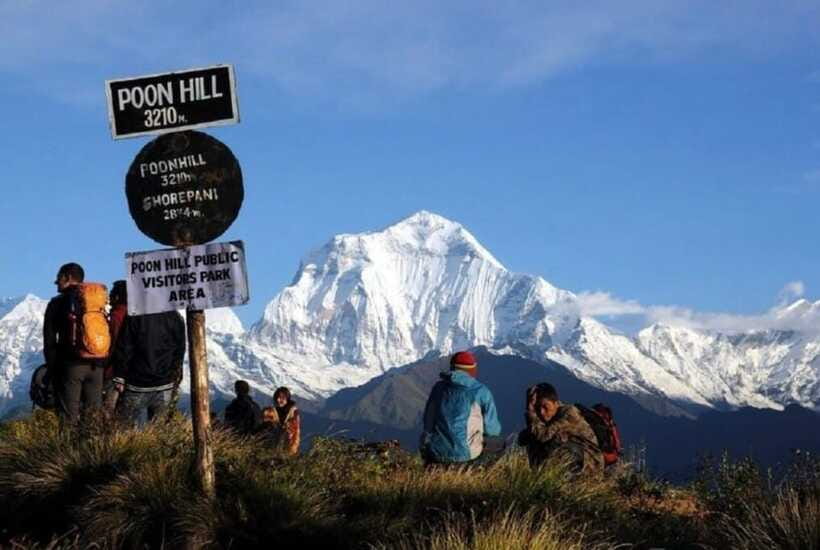
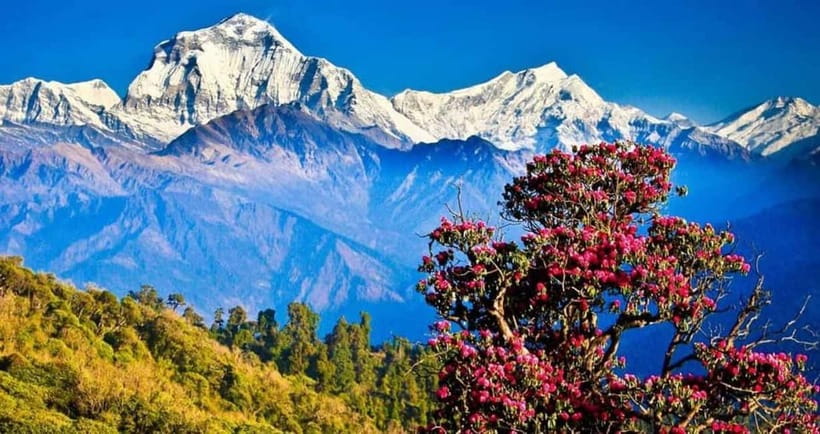
Today is another 5 to 6 hour day, and the focus is classic Annapurna-region trail scenery. As you hike toward Ghorepani, you move through rhododendron forests, which is great for both visual variety and walking comfort, since the trees can cut the harshest light and help on warmer mornings.
Along the way, you’ll pass more local villages, and you might spot wildlife. The trekking route doesn’t promise specific animals, but the fact that the trail crosses a lived-in hillside ecosystem means you should keep your eyes open for birds and other mountain creatures.
Lunch happens at Nangethati, which is useful because it breaks the day into chunks. Then you settle in at Ghorepani, a key stop because it puts you in position for the Poon Hill sunrise on the next day.
If you’re sensitive to altitude, Day 2 is a good day to practice smart trekking habits: drink consistently, take short pauses instead of long ones, and keep your breathing under control. You don’t need to “push” for this itinerary to feel like an adventure.
More Poon Hill treks:
- From Pokhara: 10-Day Poon Hill and Annapurna Base Camp Trek
★ 5.0 · 7 reviews - Pokhara: 2-Day Short & Sweet Ghorepani Poon Hill Guided Trek
★ 5.0 · 6 reviews - Pokhara: 3-Day Ghorepani, Poon Hill and Ghandruk Guided Trek
★ 4.4 · 4 reviews - Pokhara: 3 days Trek to Poon hill
★ 5.0 · 3 reviews
Day 3: Sunrise at Poon Hill, then the long-feeling move to Ghandruk
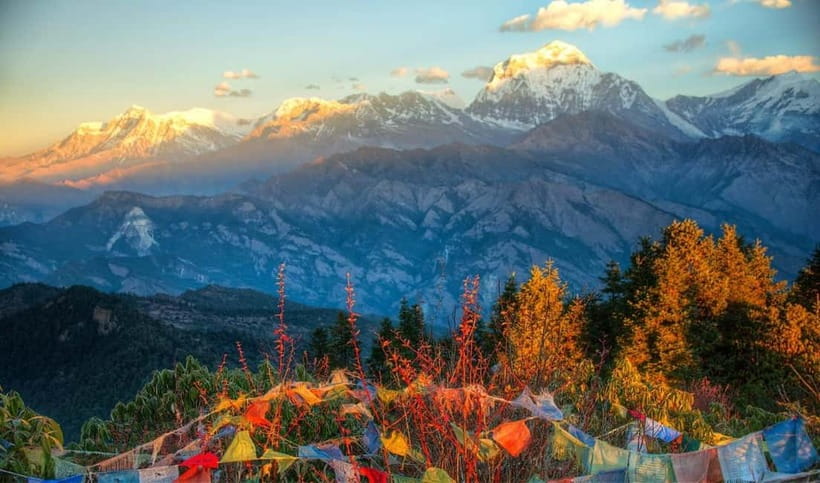
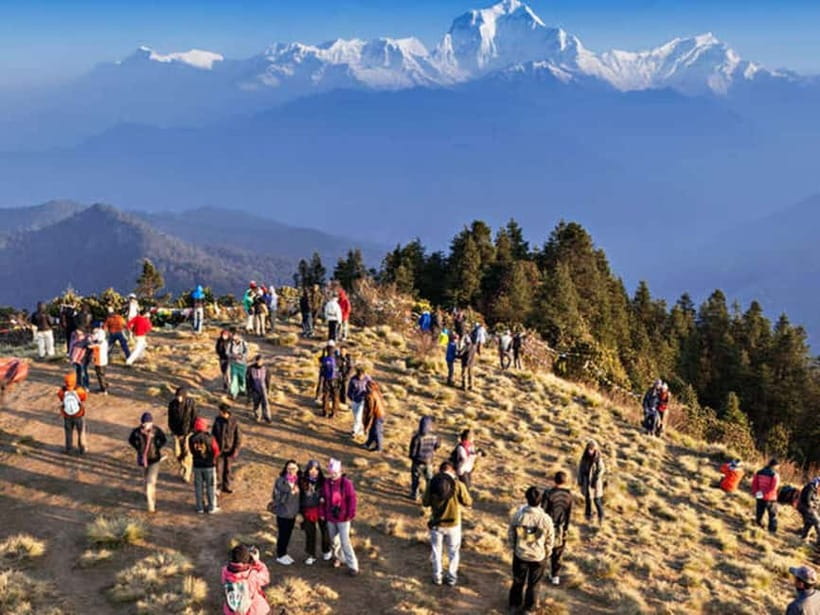
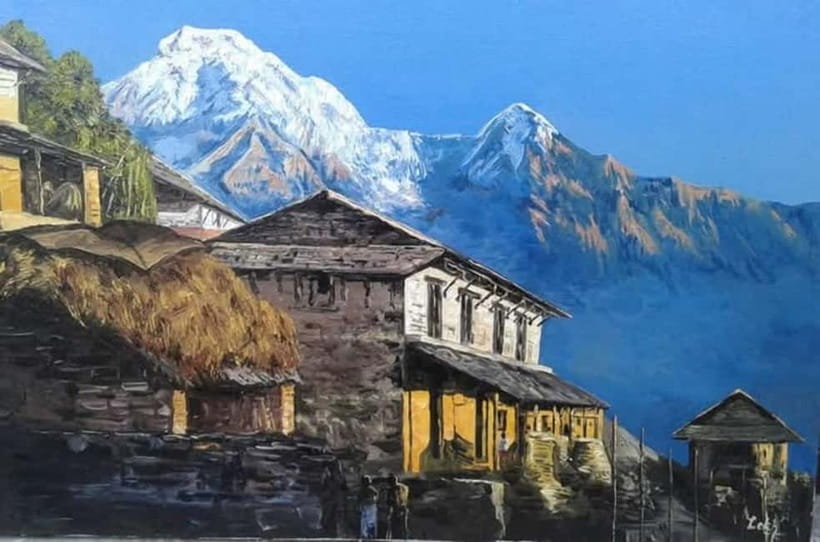
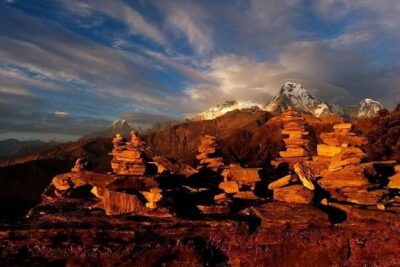
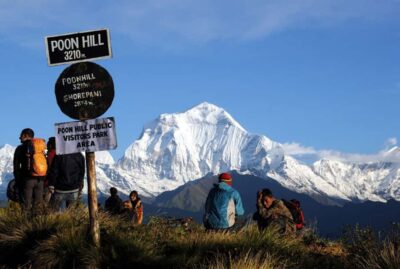
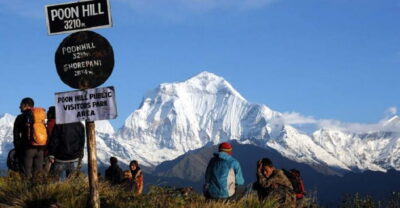
This is the day with the most obvious payoff. You’ll hike up to Poon Hill for sunrise, at about 3,210 meters. The viewpoint looks out across the Annapurna massif range and Dhaulagiri. From here, you may be able to see multiple peaks, including Annapurna I, Dhaulagiri I, Annapurna South, Machapuchare, Himchuli, and more, depending on weather and visibility.
Then comes the rhythm change. After sunrise viewing, you hike back down to your lodge area, take breakfast, and continue trekking toward Ghandruk at around 1,940 meters. Lunch is arranged at Tadapani, and you’ll walk about 5 to 6 hours total for the day.
What makes this day special is that it turns the trek into two experiences:
1) A mountain-moment morning
2) A village-life afternoon
Also, keep expectations realistic. Sunrise views are weather-dependent. You can do everything right and still get clouds. Your best move is to dress for cold and wait patiently, because conditions can shift. If you’re cold or tired, ask your guide for help with timing and pacing.
One extra detail that can make Day 3 smoother: in some groups, your guide may be Gobinda, who has been known to help with carrying needs when someone’s energy dips, and even give a foot massage during cramping from stair climbing. When your body starts to complain, that kind of practical support can take the edge off fast.
Day 4: Ghandruk sunrise light, Gurung breakfast, then back to Pokhara
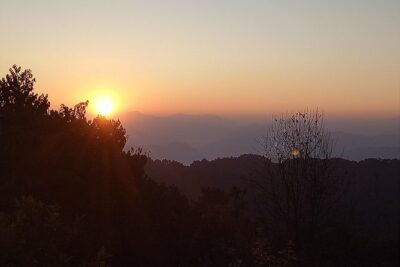
Day 4 starts with the calmer payoff side of the trek. You’ll enjoy the sun’s first ray over Ghandruk, and this part matters because you’re not just viewing mountains. You’re seeing a living village settle into a new day.
You’ll have a traditional Gurung breakfast, which ties the route together nicely. After that, you hike downhill to Nayapool for transport back to Pokhara. The down day usually feels easier than the up days, but it can still be tough on knees and quads, so trekking poles help if you have them.
If you’re deciding how much to push on the final descent, choose comfort over speed. The last thing you want is to rush and feel worn out in Pokhara at the end of an otherwise rewarding trip.
Lodges, guides, and the comfort level that matters
This trek uses tourist-standard lodges with private accommodation. That’s a meaningful difference from rougher trekking styles, especially if you want the experience without sleeping in places where basic warmth and comfort are uncertain.
You’ll also have a professional guide, with English support, plus the kind of practical assistance that makes a short trek feel manageable. One of the best signs of a solid operator is what happens when you’re tired, not when everything is perfect. In practice, that can look like a porter helping with the extra weight of your gear.
In at least some groups, the porter Sundeep has carried a bag of clothes for the trekkers, which is the sort of small relief that keeps you moving smoothly. Another support detail to appreciate: your guide provides food, accommodation, insurance, salary, transportation, and equipment support. That reduces your mental load.
Meal tip based on the structure: since meals aren’t included, you’re choosing your budget and your variety. You can usually keep it simple with basic teahouse meals, and save money by not ordering a lot of extras each day.
Permits, timing, and what to pack (so you don’t overthink it)
Permits and required paperwork are handled for you, including government permits, TIMS, and taxes. You’ll still need to bring your passport details.
What to bring:
- Passport (copy accepted)
- Passport-sized photo
You should also pack smart for a trek where large bags are not allowed. The trek includes luggage storage in Pokhara during the walking days, so you can travel light on the trail without losing your main items.
Not allowed:
- Luggage or large bags on the trek
- Pets (assistance dogs allowed)
Gear options:
- You may be able to get trekking pole, duffel bag, or trekking bag support if you require it.
Season matters. The route is best during spring and autumn, when you’re more likely to get clearer sky for sunrise. Even then, cold mornings at higher points are common, so layers are not optional.
One more practical tip: practice responsible trekking habits. Stay mindful on trails, follow local guidance, and treat the villages with respect. The people you meet are part of why this trek works.
Who this trek suits best, and who should think twice
This is a strong pick for:
- First-time trekkers who want a shorter, scenic Himalaya introduction
- People who care about culture as much as mountain views
- Anyone who prefers comfortable lodge stays over camping
It may not be a fit if:
- You’re pregnant (the trek is not listed as suitable)
- You use a wheelchair (not listed as suitable)
- You’re expecting meals included in the price (they are not)
The itinerary is built around manageable trekking difficulty, but “manageable” still means uphill walking, stairs, and cold early starts for sunrise.
Should you book this Poon Hill trek?
I think you should book it if you want the Annapurna views, the sunrise moment at Poon Hill, and a real village experience in a 4-day timeframe. The included permits, English guide, lodge accommodation, and Pokhara logistics do real work for you, and the itinerary structure helps you enjoy the day instead of just surviving it.
I’d pass if you dislike early mornings, you hate paying for meals separately, or you’re looking for a fully hands-off experience with zero physical effort. But if you’re ready to walk 5 to 6 hours on most days and trade your comfort zone for mountain light and community stops, this is an efficient, high-reward Nepal trek.
FAQ
What is the duration of the Pokhara Poon Hill Trek?
The trek runs for 4 days.
Where does the trek start and end?
It starts with pickup in Lakeside Pokhara, travels to Nayapool, then returns to Nayapool and drops you back in Pokhara after the final hiking day.
What is included in the price?
The price includes private tourist-standard lodge accommodation, pickup and drop-off in Lakeside Pokhara, round-trip transportation, government permits and TIMS, taxes, a professional English trekking guide, a first-aid kit, luggage storage in Pokhara, and guide support including foods, accommodation, insurance, salary, transportation, and equipment. Duffel bag or trekking pole or trekking bag may be provided if required.
Are meals included?
No. All meals are available for purchase on the trail, approximately $20 per person per day.
Is the group private and is there an English guide?
Yes, it’s a private group and the live tour guide is English.
What permits are covered?
Government permits, TIMS, and taxes are covered.
Do I need to bring my passport?
Yes. A passport (copy accepted) and a passport-sized photo are required.
Are large bags allowed on the trek?
No. Luggage or large bags are not allowed on the trek, but luggage storage is available in Pokhara during trekking.
What is the cancellation policy?
You can cancel up to 24 hours in advance for a full refund.
Latest additions near Annapurna Region
- Mardi Himal Trek -5 Day Short Trek From Pokhara★ 5.0 · 8 reviews
- Pokhara: Day Hiking to Australian Base Camp with Lunch★ 5.0 · 4 reviews
- Pokhara: Hike To Australian Base Camp★ 3.5 · 4 reviews
- Pokhara: Annapurna Foothills Private Day Hike with Transfers★ 5.0 · 3 reviews
- From Pokhara: Annapurna View Day Hike★ 5.0 · 3 reviews
- Pokhara: Amazing 7-Day ABC Trek with Natural Hot Spring★ 5.0 · 5 reviews
- Pokhara: 7-Day Annapurna Base Camp Via PoonHill & Hot Spring★ 5.0 · 6 reviews
- Pokhara: 5-Day Annapurna Base Camp Trek with Hot Spring★ 5.0 · 3 reviews
Poon Hill Treks, compared.
4-Day Ghorepani, Poonhill & Ghandruk Mountain Trek
Read our review →
Browse the lists this tour appears in