
Reviewed · EVEREST BASE CAMP TREKS
Everest Base Camp Yoga Trek – 15 Days
Yoga in the shadow of Everest feels real. This 15-day trek blends daily yoga with a guided Himalayan journey, starting with UNESCO sights in Kathmandu and then moving through the Khumbu villages toward Everest Base Camp. The big idea is simple: you start each day with guided practice, then spend the rest of the hours walking, adjusting, and looking up.
I especially like how the trip balances spirit and logistics. You get Kathmandu’s Buddhist and Hindu landmarks before the mountains, and then you have real acclimatization built in around Namche and Dingboche. A small potential drawback: you are still doing a serious high-altitude trek with cold conditions, plus the return day depends on early Lukla flying when weather cooperates.
In This Review
- Key Highlights to Know Before You Go
- Yoga Trekking: What Makes This One Different on the Ground
- Kathmandu Warm-Up: Swayambhunath, Boudhanath, and Durbar Square
- Fly to Lukla and Start Walking Through Phakding
- Namche Bazaar: Acclimatization That Actually Makes Sense
- Up and Through the Khumbu Villages: Tengboche to Dingboche
- Dughla, Chukpo Lari Memorials, and the Road to Gorakshep
- Everest Base Camp Day and the Gorakshep Overnight Setup
- Kala Patthar Sunrise: The Moment You Will Remember
- Heading Home: Periche to Namche, Then Monjo Exit
- Lukla Back to Kathmandu and One Last Taste of Thamel
- Price and Value for $1,699: What You’re Actually Paying For
- Who Should Book This Everest Base Camp Yoga Trek
- Should You Book It?
- FAQ
- How long is the Everest Base Camp Yoga Trek?
- Where does the trip start and end?
- Is yoga included every day?
- What group size should I expect?
- What meals are included?
- Are park fees included?
- Is there free cancellation?
Key Highlights to Know Before You Go
- Daily yoga with an instructor who travels with you, so it is not just a one-time workshop.
- Kathmandu UNESCO warm-up, including Swayambhunath (Monkey Temple) and Boudhanath Stupa, before the flight to Lukla.
- Small group size (max 8), which usually makes pacing, questions, and group focus feel calmer.
- Acclimatization days in Namche and Dingboche, with optional hikes to help you adjust.
- Kala Patthar sunrise viewpoint, one of the trek’s most famous photo and awe moments.
- Two “faces” of the trip: the cultural city start and then the glacier-and-valley trekking days.
Yoga Trekking: What Makes This One Different on the Ground
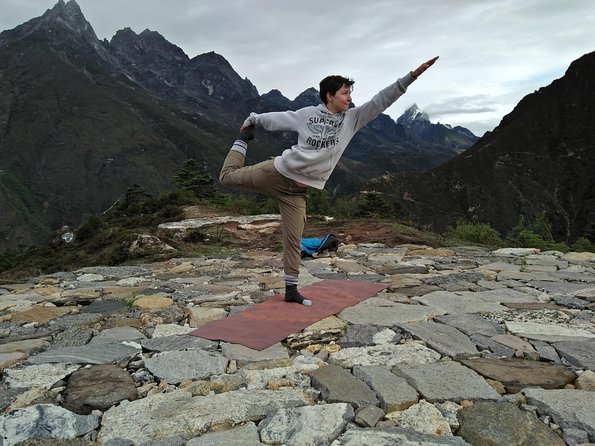
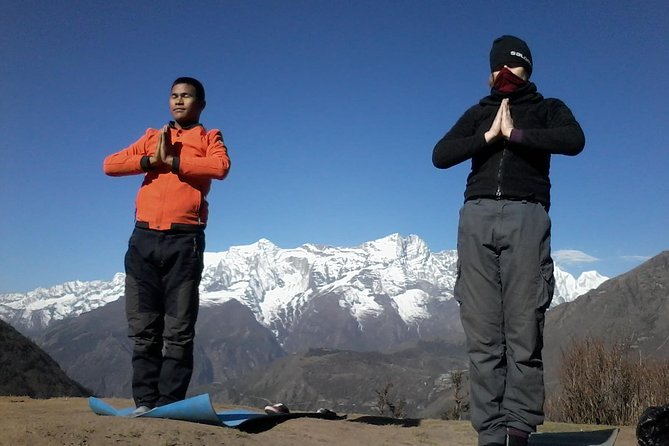
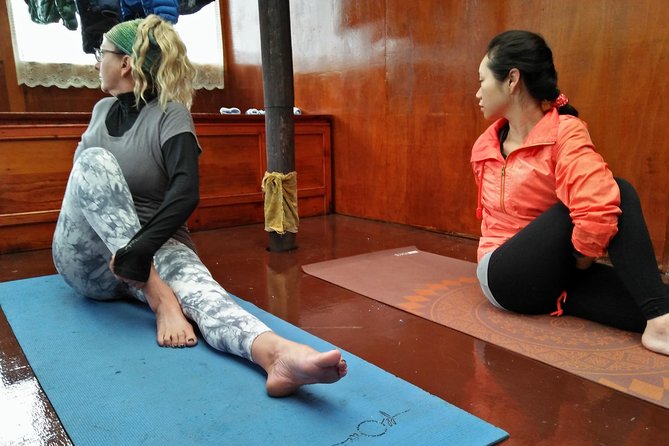
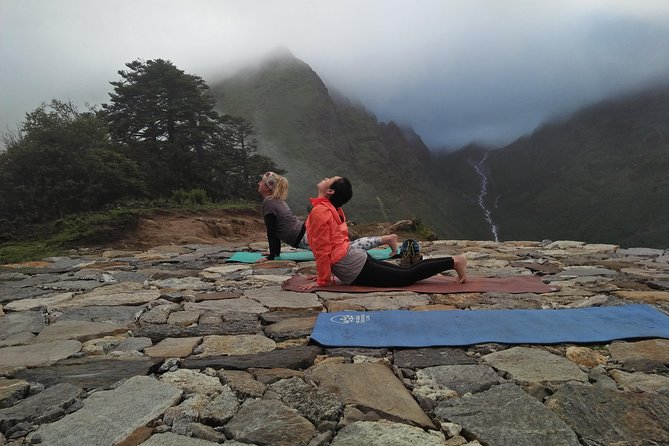
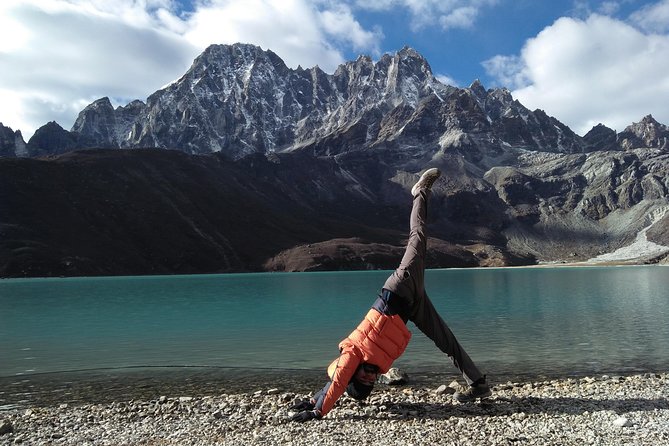
Most Everest Base Camp treks are built around moving fast, surviving cold, and keeping your lungs happy. This one adds a daily layer that changes how you feel while doing the same hard work. Each day begins with yoga guided by an instructor who travels for the full trek, not a quick class in Kathmandu and then you are on your own.
Think of it as a training tool plus a mindset tool. The practice is described as centering your mind and body so you are present in the mountain environment. On a trek like this, that kind of start matters because your energy is limited, and your body needs you to work with it, not fight it.
Still, yoga does not cancel the physical challenge. You’ll still climb, descend, and deal with altitude. If you plan to treat yoga like a gentle bonus only, you might be surprised by how much cold and effort can squeeze your flexibility and recovery.
More Treks in Kathmandu
- Everest Base Camp Trek – 14 Days
★ 5.0 · 1,499 reviews - Everest Base Camp Trek
★ 5.0 · 842 reviews - Everest Base Camp Trekking
★ 5.0 · 485 reviews
Kathmandu Warm-Up: Swayambhunath, Boudhanath, and Durbar Square
Your trip begins in Kathmandu with airport pickup and an overnight stay, then a full day of sightseeing before the trekking start. This city day is not filler. It’s your chance to understand the spiritual lens of the route you are about to walk through.
You visit Swayambhunath, also called the Monkey Temple, where Hindu and Buddhist elements mix in the same religious space. It’s also a great orientation moment because you get city views from the temple area, which helps you mentally shift from city altitude to mountain altitude.
Then you head to Boudhanath Stupa, one of the largest stupas in the world. You’ll see pilgrims circling the stupa, chanting Buddhist mantras, and watching how faith shows up in daily life. The trip also includes other Kathmandu highlights such as Durbar Square, which makes the whole day feel like you are walking through Nepal’s layers, not just ticking sites.
Practical note: this is a full sightseeing day before an early flight schedule. Wear comfortable shoes and keep water handy. You want your legs fresh for the next day’s trekking logistics.
Fly to Lukla and Start Walking Through Phakding
After sorting gear and packing the day before, you leave early for Lukla, the gateway to the Everest region. The route uses a scenic flight in a carefully loaded twin otter, landing at Tenzing-Hillary Airport (LUA) in Lukla.
Once you land, you meet other trek members and start with an introductory walk to Phakding. This is your first real taste of Khumbu walking rhythms: steady steps, occasional suspension bridges, and frequent moments where the valley pulls your eyes forward even when you are working hard to breathe.
This early stage is also where small mistakes show up. If your boots are wrong, your socks are not working, or you carried too much on day one, you feel it quickly. Keep your daypack light, and treat this section like an easy setup, not a final test.
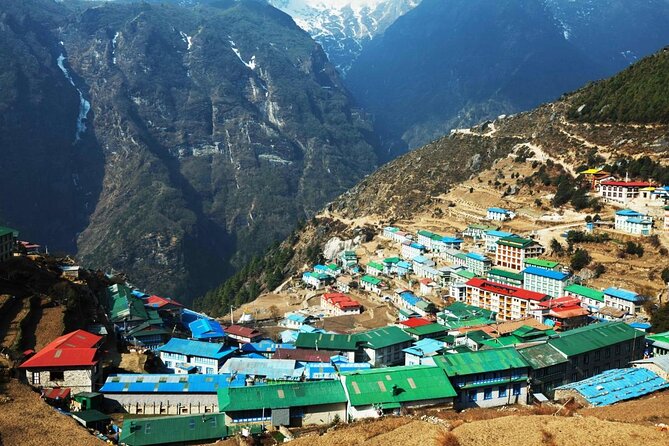
Namche Bazaar: Acclimatization That Actually Makes Sense
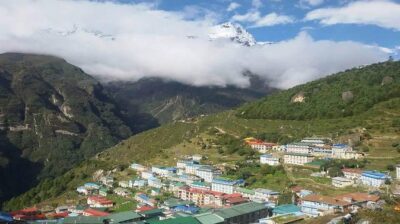
You trek toward Namche Bazaar along the Dudh Koshi River, passing suspension bridges and moving through valleys and forests with gompas along the way. Stops like Benkar and Monjo help break up the distance, and the route includes points where you pause for views of big peaks.
Crossing the high bridge over the confluence of Dudh Koshi and Bhote Koshi is a memorable kind of moment. It’s the terrain telling you, clearly, that you are in a serious place.
Then comes the key piece: you spend a rest and acclimatization day in Namche. This is where the trek shows it’s planned. Namche is busy, full of shops, and known for a lively Saturday market. You also visit the Sherpa cultural museum, which helps you connect names like Sherpa to real history, mountaineering context, and local traditions.
On top of that, you get an early day hike option to help your body adjust before the next altitude jump. The best advice here is not to chase altitude for ego. Take the hike as slow practice. You want to feel better at the top, not wrecked.
More Everest Base Camp treks:
- Everest Base Camp Helicopter Tour landing at Everest View Hotel
★ 5.0 · 668 reviews - Everest Base Camp Trekking – 13 Day
★ 5.0 · 365 reviews - Everest Base Camp Trek
★ 5.0 · 350 reviews - Everest Base Camp Trek -14 Days
★ 5.0 · 321 reviews
Up and Through the Khumbu Villages: Tengboche to Dingboche
Leaving Namche, you start with a short but steep climb, then move onto a more leveled stretch through forests to settlements like Kenjoma and Sanasa. You keep getting glimpses of Everest along the way, but the real goal is progression without overdoing it.
Later you head down toward the Dudh Koshi riverbed, then climb back up to places like Phunke Tenga, where water-driven prayer wheels mark the trail. These details matter because they slow you down in a good way. When you notice the small things, you stop spending all your energy staring at your feet.
From Tengboche, the route moves toward Dingboche with a focus on scenery and wildlife. You pass Deboche, where views include Ama Dablam, Lhotse, Nuptse, and more. You also get wildlife crossings in the trek narrative, with references to musk deer, monal, and blue sheep. Whether you spot them or not, the point is the habitat richness around this part of the trail.
Another plus: Dingboche is your second acclimatization “pause with purpose.” You have an extra day with short hikes like a trip toward Nangkartshang Gompa for views and local cultural features. There’s also an option to hike to the hill behind Dingboche for big-peak perspectives, including six-thousand meter class views.
If you are new to altitude trekking, this is where you learn your pace. You don’t need to win the day. You need to make the next day easier.
Dughla, Chukpo Lari Memorials, and the Road to Gorakshep
Past Dingboche you continue with gradual ascent, walking through grazing areas and past chortens, mani walls, and stupas. This section keeps the trek feeling full, but not chaotic. You see the way people live around these paths, and you start noticing how often faith objects appear along the trail.
The route highlights views such as Taboche Peak and Ama Dablam, and it moves into glacial valleys. Then you reach Dughla, described as the last settlement before pushing further toward the base camp area.
One of the most meaningful stops is Chukpo Lari, a high-ground area with monuments built in remembrance of mountaineers. It’s not just scenery. It’s a reminder that Everest is not a game. Even when you feel strong that day, you should keep respect at the center of your choices, including how fast you hike.
Eventually you move toward Gorakshep. This part is where the walking environment changes. The trail includes lateral moraines of the Khumbu Glacier, references to an Italian research center, and cautious travel around ice pinnacles and crevasses. You’ll appreciate why this is done with local guidance.
Everest Base Camp Day and the Gorakshep Overnight Setup
This is the day you came for. You trek from Lobuche early in the morning toward Everest Base Camp, reaching Gorakshep for lunch and overnight.
The route goes over Lobuche Pass and through the section where glaciers like Changri Nup and Khumbu sit close together. You’ll feel the terrain getting more exposed. That changes your experience, because wind and cold can become bigger factors than steepness.
The key thing to keep in mind is pace. The trek description explicitly warns to be careful with altitude and acute mountain sickness. In plain terms: if you feel off, you slow down. If you feel worse, you stop. This trip is built to help you acclimatize, but you still own your body’s signals.
Once you reach the base camp region, you are not just walking to a spot. You’re walking to the end of a long string of altitude transitions. It’s that contrast, mountain by mountain, that makes it hit.
Kala Patthar Sunrise: The Moment You Will Remember
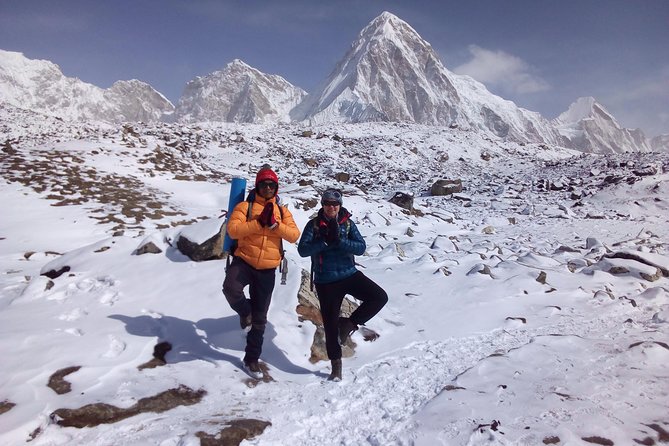
The next morning is the famous push: Kala Patthar sunrise from Gorakshep, before daybreak. This is one of the most rewarding parts of the trip because you get a close-up perspective on Everest and the surrounding peaks.
The trek narrative emphasizes the view of Everest plus Mount Pumori, Lhotse, Nuptse, and Changtse, along with the Khumbu Glacier and the Southeast face. If you love photography, this is also where you learn patience. The best light comes when you are already standing there, waiting, hoping, and breathing carefully.
After sunrise, you return to the lower altitudes. That is not a letdown. It’s recovery. And on this kind of trek, recovery is part of the experience.
Heading Home: Periche to Namche, Then Monjo Exit
Your return starts with departure from Periche and moving back toward Namche Bazaar mostly downhill, but described as gradual so you do not strain shaky legs and ankles. This is smart. Plenty of people get too excited on the way down and pay for it later.
Along the trail, you’ll likely meet more people moving the opposite direction: porters, trekkers, locals, and animals like yak used for carrying goods. You also pass through dense forests, waterfalls, and prayer-flag suspension bridges. You see gompas and monasteries, then come across rural settlements and villages.
When you reach the Namche area, the trek continues toward Monjo. On this section, you exit Sagarmatha National Park after descending steeply from Namche, crossing the riverbed area at the confluence of Dudh Koshi and Bhote Koshi, then crossing a high suspension bridge.
You then pass through places like Benkar, Phakding, Ghat, Nursing, and Chheplung, with mani walls and prayer wheels along the way. The last part back toward Namche is another reminder that the trail keeps its personality even when you think you’re done.
Lukla Back to Kathmandu and One Last Taste of Thamel
After days in the Khumbu region, you fly back to Kathmandu from Lukla early in the morning. The description notes weather-related disturbances can affect timing, so you take the flight that starts early when conditions allow.
That’s followed by a transfer to your Kathmandu hotel and time to rest. Later, you can stroll around Thamel, the familiar tourist neighborhood packed with shops and easy access to food, coffee, and souvenirs.
This is where you decompress. You’ve walked in thin air. Now you get thick city air and a chance to sit without pulling your legs out of bed like you are 100 years old.
Price and Value for $1,699: What You’re Actually Paying For
The price listed is $1,699 per person, for a roughly 15-day trek. For many Everest programs, the cost is mostly about logistics and risk management: guides, park fees, and the flights that make the trek possible. Here, the value also includes a distinctive daily yoga component plus a focused cultural start in Kathmandu.
Here’s what is included based on the trip details:
- Accommodation as per the schedule
- National park fees
- Airport and departure tax handling
- All taxes, fees, and handling charges
- A local guide
- Coffee or tea
- Meals: breakfast is included every day, with 12 lunches and 12 dinners noted in the package
You do not need to plan every meal on the trekking days, which matters when you’re tired and cold. It also means you can pack and move without constantly asking what’s open at altitude.
Also consider group size. With a maximum of 8 travelers, the trek is not crowded. That often makes it easier to keep an organized pace, especially with yoga sessions at the start of each day.
On the other hand, you should plan for what is not included. Alcoholic drinks and drinks are separate. More importantly, you still need the right trekking gear for cold, wind, and altitude. One review mentioned January cold, but with proper gear there were no major problems. That lines up with what you should assume for high elevation.
Who Should Book This Everest Base Camp Yoga Trek
You’ll probably love this trek if you want Everest Base Camp plus something steady and grounding each morning. The daily yoga is not a gimmick here. It’s the structure that helps you pace your body and your mind on a long route.
It’s also a good match if you like culture, not just views. The Kathmandu day gives you Swayambhunath and Boudhanath, plus Durbar Square style heritage, before you ever reach the mountains.
This is not the right choice if you want a purely rugged, no-frills trekking grind. Yoga adds time and routine, and the trek still includes significant altitude walking and cold exposure.
Finally, you should have at least moderate physical fitness, since the route involves climbs and long trekking days. If you have health concerns related to altitude, you should talk to a professional before you go.
Should You Book It?
If you want the classic Everest Base Camp experience but with a guided wellness routine and a meaningful Kathmandu cultural start, I think this is a strong option. The combination of daily yoga, planned acclimatization days, and a small group size makes the overall experience feel organized without stripping away the sense of adventure.
I’d book it if yoga is a real priority for you and you are comfortable with cold and altitude. I would hesitate if you are looking for a lighter trek, because the route still climbs to the Everest region and includes the Kala Patthar sunrise push.
If you do go, start early, walk slow, and keep your attitude flexible when weather changes flight timing.
FAQ
How long is the Everest Base Camp Yoga Trek?
It’s listed as approximately 15 days.
Where does the trip start and end?
You start in Kathmandu, Nepal, and you return to Kathmandu near the end of the trek for departure from Tribhuvan International Airport.
Is yoga included every day?
Yes. Each day begins with yoga practice under the guide of an instructor who travels with you for the duration of the trek.
What group size should I expect?
The tour notes a maximum of 8 travelers.
What meals are included?
Breakfast is included (15 breakfasts). Lunch and dinner are included as well, with 12 lunches and 12 dinners listed.
Are park fees included?
Yes. National Park fees are included.
Is there free cancellation?
Free cancellation is offered, with a full refund if you cancel at least 24 hours in advance of the experience start time.
More Yoga & Meditation in Kathmandu
- 500 hours Advanced Yoga Teacher Training at Nepal Yoga Home (Every 1st of month)
★ 5.0 · 185 reviews - 200 Hours Yoga Teacher Training at Nepal Yoga Home (starts on 1st of everymonth)
★ 5.0 · 125 reviews - 3 night 4 Day Yoga & Ayurveda Retreat to Detox the Body & Mind, Nepal
★ 5.0 · 37 reviews - 21 days Himalayan yoga retreat in Nepal in Kathmandu
★ 5.0 · 28 reviews
Latest additions near Kathmandu
- White Water River Rafting – 1 Day★ 4.3 · 3 reviews
- Traditional Momo Making Class★ 5.0 · 10 reviews
- Kathmandu to Pokhara Premium sofa bus ticket★ 4.0 · 17 reviews
- Amazing 1 Day Trekking Experience in Kathmandu Nepal★ 5.0 · 24 reviews
- Ghorepani Poonhill Trek★ 5.0 · 5 reviews
- Ghorepani Poon Hill Trek★ 5.0 · 16 reviews
- Walking tour of real Kathmandu through back streets.★ 5.0 · 3 reviews
- Wildlife Adventure in Chitwan Nepal★ 4.0 · 4 reviews
Everest Base Camp Treks, compared.
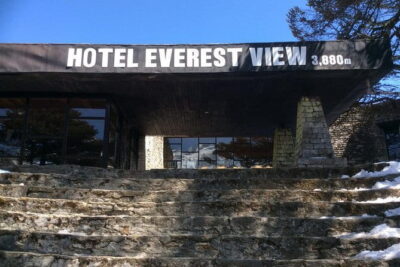
Everest Base Camp Helicopter Tour landing at Everest View Hotel
Read our review →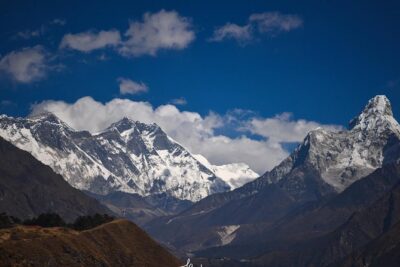
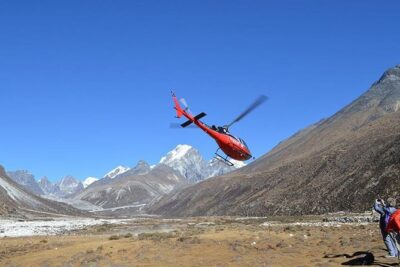
Everest Base Camp Helicopter Tour landing at Hotel Everest View
Read our review →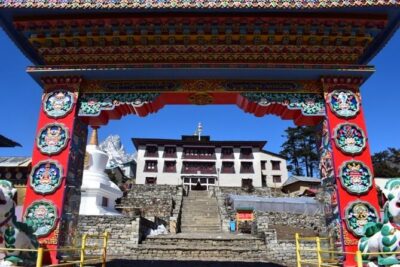
Browse the lists this tour appears in